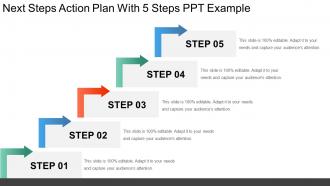
Próximos pasos Plan de acción con 5 pasos Ejemplo de ppt
Try Before you Buy Download Free Sample Product
Audience
Editable
of Time
Los hechos que se muestran en nuestro Plan de acción de Próximos pasos con 5 pasos Ppt Ejemplo son absolutamente precisos. Ayudan a evitar la desinformación.
Características de estas diapositivas de presentación de PowerPoint:
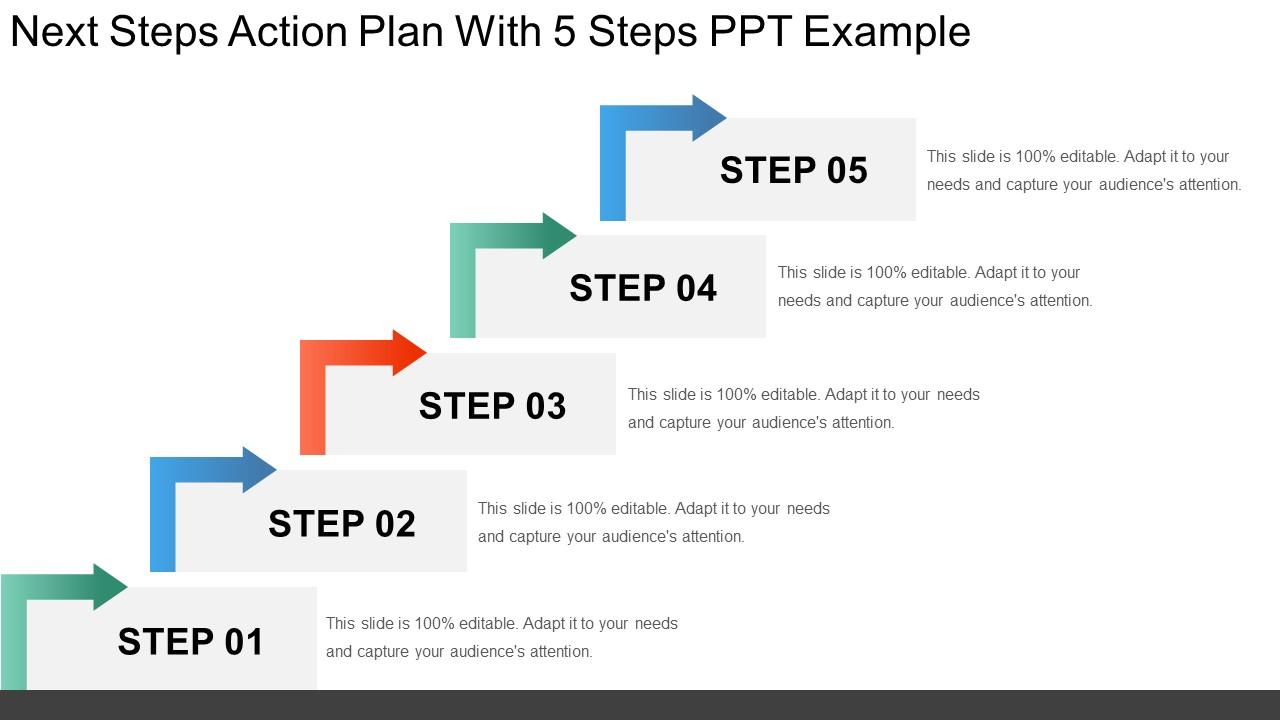
Presentando el plan de acción de los próximos pasos con un ejemplo de ppt de 5 pasos. Este es un plan de acción de los próximos pasos con un ejemplo de ppt de 5 pasos. Este es un proceso de cinco etapas. Las etapas de este proceso son los siguientes pasos.
People who downloaded this PowerPoint presentation also viewed the following :
Próximos pasos Plan de acción con 5 pasos Ejemplo de ppt con las 5 diapositivas:
Permita que las personas descifren los sesgos involucrados con nuestro Ejemplo de plan de acción de pasos siguientes con 5 pasos. Familiarícelos con el diario.
FAQs for Next steps action plan with 5
Your action plan template needs specific tasks with clear owners and realistic deadlines - that's the foundation. Add measurable outcomes so you know if you're actually getting anywhere. Dependencies are huge too because getting blindsided by roadblocks is the worst. Priority levels help when things get chaotic (which they will). Don't forget progress tracking and resource/budget notes. Weekly check-ins work pretty well for most stuff. Keep it detailed enough that people can't wiggle out of accountability, but not so complex that everyone ignores it completely.
Dude, visual stuff is a game changer for action plans. People just get it faster when they can see how tasks connect instead of reading through boring bullet points. I'm a huge fan of simple timelines or even just color-coding things by priority. Flowcharts work great too if you're not dealing with anything super complex. Trust me, I've watched so many plans die because they were just walls of text that everyone ignored. A basic Kanban board shows who's doing what and when - your team will actually use it instead of letting it collect digital dust.
Don't make your action plan super vague - like saying "improve communication" when you mean "send team updates every Friday by 3pm." I've seen people cram 20+ action items into one plan and surprise, nothing gets done. Always assign owners to each task because nobody wants to be "that person" who assumes someone else will handle it. Deadlines are non-negotiable too. Without them you're basically just daydreaming on paper. Keep it tight - maybe 5-7 concrete steps max, with real people attached to real dates.
Honestly, you gotta get people involved from day one instead of springing stuff on them later. Figure out who's actually impacted - not just the obvious people, but like the ones who never speak up in big meetings too. I'd do some smaller workshops or just grab coffee with them individually. Some folks hate meetings anyway, so give them other ways to chime in. The whole point is making them feel like they're building this thing WITH you, not just rubber-stamping your ideas. Oh and definitely send them a timeline showing when you'll actually use their feedback - people get cynical if they think you're just checking boxes.
Track completion rates and timeline stuff first - that's your bread and butter. Quality matters too though, like are people actually hitting the goals you set or just checking boxes? Watch who's updating their progress regularly because crickets usually means something's wrong. Honestly, the outcome metrics are where the magic happens - revenue, customer happiness, whatever you're actually trying to move. Don't overthink it with a crazy complex system. Just grab a simple dashboard, check it weekly, and pivot when things look off. Makes it way easier to catch problems before they snowball.
Honestly, it's pretty straightforward - just swap out the details to match whatever industry you're in. Tech teams obsess over sprints and user testing. Healthcare? They're all about compliance checks and keeping patients safe. Manufacturing focuses on production deadlines and quality control stuff. The basic bones stay the same though - you still need objectives, timelines, who's doing what. Just change up the language so it actually makes sense to your coworkers. I'd start by figuring out what "winning" looks like for your specific situation, then work backwards from there. Way easier than trying to force some generic template into your world.
Think of timeline visualization like GPS for your project - shows you the route and where traffic jams might hit. You'll spot which tasks are blocking others and whether your deadlines are actually doable. Honestly, trying to track everything in your head is just setting yourself up to fail. The visual part is what makes it click - way easier than staring at some endless to-do list. Stakeholders love it too since they can instantly see progress without bugging you every five minutes. Start with your biggest milestones first, then fill in the smaller stuff around them.
Try Asana or Monday.com - they're lifesavers for breaking everything into actual tasks with deadlines. The templates are clutch because who wants to rebuild the same workflow every damn time? Dashboards let you see progress instantly without digging through a million updates. Set up those automated reminders or stuff will definitely slip through. I'd start simple with just one tool first - don't overwhelm your team right away. Calendar integration keeps everyone on the same page without those annoying "where are we on this?" meetings. Once people get used to it, you can add more bells and whistles.
Honestly, the trick is getting super specific about what you can realistically pull off. Like instead of "improve marketing strategy," go with "finish market research by Friday." Way clearer. I used to set these crazy ambitious deadlines and just ended up frustrated every time. Make sure each goal has one person responsible and you can actually measure if it worked. Oh, and always add buffer time - stuff takes forever compared to what you think. Start with maybe 3-5 priorities max, then figure out realistic timeframes based on what your team's already juggling.
Honestly, just bake the feedback right into your plan from the start. Pick your review dates - could be weekly, monthly, whatever works - and figure out who's actually gonna give you input. I always throw in a "what went wrong" section because let's be real, something always does. Don't just assume people are happy with how things are going. Ask them! Track whatever metrics matter most. The worst thing is scrambling for feedback only when stuff hits the fan. Make it part of your routine instead of waiting until you're already behind.
Honestly, just match it to who you're talking to. Execs want bare bones - action, owner, deadline, done. Project teams need more meat though, so throw in priorities and dependencies. Those traffic light colors are kinda cheesy but people eat that stuff up. With clients, skip the table completely and just walk them through it like a story. Give them context so they get why each step matters. I always start super simple because you can add details later if they want more, but you can't take back information overload once you've lost them.
Ditch the wishy-washy words like "consider" or "explore" - they're useless. Your stakeholders need to know exactly what to do next. So instead of "the database should be updated," write "Sarah will update the database by Friday." Way clearer, right? I'd also stick with active voice and assign everything to specific people. Put realistic deadlines on every single task. Oh, and here's something I learned the hard way - if you wouldn't actually follow through on an action item yourself, nobody else will either. Make sure each step connects to your main goal. Keep the tone conversational but direct. Nobody wants to read something that sounds like a legal contract.
You gotta assign responsibilities or everything turns into a mess. Nobody knows who's doing what, and then surprise - nothing gets done because everyone thought someone else was handling it. When each task has a clear owner, people actually feel accountable. Way easier to follow up too since you know exactly who to bug about progress. Honestly, I've seen so many projects fail just because of this. Without owners, your action plan is basically a fancy to-do list that sits there looking pretty while deadlines whoosh by. One person per task, even if others help out.
Dude, visuals are a game-changer for getting stakeholders on board. People need to *see* how you'll hit your goals - timelines, progress charts, whatever works. Way better than drowning them in bullet points (learned that the hard way lol). Simple flowcharts show the path from A to B. Resource charts help them picture their part in winning. Keep it clean though - one solid visual per main point. Nobody wants to decode messy slides. Honestly, half the battle is just making your plan feel real instead of some abstract wishlist.
Honestly, you've got to nail down who's doing what with real deadlines - none of that "sometime this quarter" nonsense. Weekly check-ins are a must, otherwise stuff just disappears into the ether (learned this the hard way). Throw everything into Asana or even a basic spreadsheet so everyone can see what's happening. The trick is making it feel like teamwork instead of you breathing down people's necks. Oh, and book that first check-in ASAP while everyone's still motivated!
-
Very unique and reliable designs.
-
Best Representation of topics, really appreciable.