

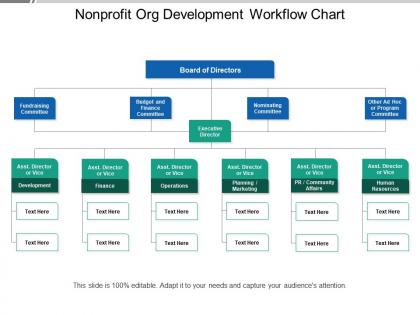
Nonprofit org development workflow chart




Try Before you Buy Download Free Sample Product
 Impress Your
 Audience
 100%
100% Editable
 Save Hours
 of Time


The organizational structure is the core of every nonprofit organization. Make your own organizational structure with our nonprofit org development workflow chart PPT template. Nonprofit organizations consist of a board of directors and executive, managerial and administrative positions. The first step is to think about the best structure to run the organization. Your board and staff should understand their own roles and responsibilities and how they help further the mission of your organization which can be highlighted in a visually appealing manner using our nonprofit org development workflow chart Presentation slideshow. You can simply add your own content directly with a variety of customization choices as our design slide is completely editable. This nonprofit org development workflow chart PPT layout has been specifically designed by our experts to provide a never seen and felt before presentation experience. We also have designs available that can be perfect for the presentation. Ensure injuries don't happen with our Nonprofit Org Development Workflow Chart. Advise folks on how to avoid incidents.
People who downloaded this PowerPoint presentation also viewed the following :
Nonprofit org development workflow chart with all 5 slides:
Function calmly with our Nonprofit Org Development Workflow Chart. They create an air of equanimity.

FAQs for Nonprofit org
So you'll need to do a needs assessment first - boring but crucial. Then work on your mission statement and file for 501c3 status (which honestly takes forever). Board recruitment should happen early because those people become your lifeline for everything else. After that, tackle strategic planning and set up your fundraising systems. The whole thing usually takes 6-12 months, sometimes longer if paperwork gets stuck. Oh, and don't skip researching what your community actually needs - I know it's tempting to jump into the exciting parts but you'll regret it later.
Look at your mission statement first - who are you actually trying to help? Then dive into what you already know: your current donors, volunteers, people following you on social media. What do they have in common? I know surveys are annoying to create, but just ask your supporters straight up why they care about your cause. You'll be surprised what you learn. Check out similar nonprofits too - sometimes you can spot gaps they're missing. Once you figure out your main audience segments (maybe 2-3 groups), make simple profiles for each one. Makes everything so much easier when you're actually reaching out for donations or volunteers.
Okay so strategic planning is literally your GPS for everything else you'll do. It tells you what you're actually trying to accomplish, which means you can figure out if your programs and fundraising are working or just... existing. I've watched too many nonprofits chase random opportunities without any real direction - total mess. Your plan drives funding decisions and keeps your board from getting distracted by every cool idea that pops up. Also shapes how you design programs. Honestly, nail down that 3-5 year roadmap first before jumping into development work.
Make your goals SMART - specific, measurable, achievable, relevant, time-bound. So instead of "increase donations," try "raise $50K from individual donors by Q4." Way easier to track progress that way. Honestly, I've watched too many nonprofits crash and burn with these fluffy, inspiring goals that sound great but you can't actually measure. Pick maybe 3-5 big goals max or you'll burn out your team. Start with whatever data you're already collecting - don't overcomplicate it. Then build goals around stuff you can realistically track without hiring a whole analytics team.
Honestly, most nonprofits are sitting on a treasure trove of donor data they're totally ignoring! Track your donor patterns - who gives when, how much, what causes they care about. Then segment your database based on that stuff. Different donors respond to different approaches, so use that info to personalize your asks and timing. Also figure out which communication channels actually work - email, social, direct mail, whatever. Seasonal trends are huge too. My advice? Don't try to tackle everything at once. Pick one thing to focus on first, like email open rates, then build from there. You'll be surprised how much it helps.
Honestly, just treat them like real people instead of walking wallets. Write actual thank-you notes by hand. Share stories about what their money accomplished - like, specific stuff, not vague "changing lives" BS. Stay in touch even when you don't need cash (this is where most orgs screw up). Invite them to see your work firsthand. Ask what they think about new programs. Remember if their kid just graduated or whatever. Best fundraisers I've met? They genuinely give a damn about their donors as humans, not just their bank accounts.
Dude, you absolutely have to get your community involved from the start - like when you're figuring out what problems actually need solving, not just when you want their money later. I've watched so many nonprofits crash because they built programs nobody asked for. Have your stakeholders help shape the mission and validate your ideas first. Host some listening sessions or focus groups before you lock anything in - seriously, it'll save you so much trouble. Plus these people become your best volunteers and advocates once they're invested. Oh, and they're way better at spreading word about your impact than you'd think.
Honestly, relationships beat blasting your message everywhere. Share real stories on social media - like actual behind-the-scenes stuff showing your work in action. Local partnerships are clutch - team up with businesses, schools, other nonprofits for that cross-promotion magic. Email newsletters work if they're personal and story-focused, not just "please donate" every time (ugh). Also, local news outlets eat up feel-good nonprofit stories - seriously, they need content. Oh, and pick maybe two things you can actually stick with instead of burning yourself out trying everything. Quality over quantity wins here.
CRM systems like Salesforce or DonorPerfect will automate your donor tracking and gift management - seriously cuts down on data entry hell. Online platforms make spontaneous giving way easier for people. Email automation is clutch for nurturing relationships without you having to manually reach out constantly. I'd honestly start with just digitizing your donor database first, then build from there. Analytics help you catch giving patterns you'd probably miss otherwise. Oh, and the reporting features alone will save you tons of time once everything's connected. It's one of those things that feels overwhelming at first but totally worth it.
Be transparent from the start - people giving money or receiving help want to know what's actually happening with it. Get a diverse board and watch out for conflicts of interest (honestly, this is where so many orgs mess up). Put your mission first, not personal stuff. Don't promise more than you can deliver just to get funding - that always bites you later. The people you're helping aren't just photo ops for your website, treat them with real dignity. Oh, and build these habits into your policies early because changing culture later is brutal.
Most nonprofits track a combo of hard numbers (people served, money raised, behavior shifts) plus softer stuff from surveys and interviews. They measure outputs (what they actually did) and outcomes (what changed because of it) - though real impact measurement is honestly a pain and costs money. Logic models help map how activities connect to bigger goals, but here's the thing: pick metrics that actually align with your mission, not just whatever's easiest to count. Oh, and don't try to measure everything at once. Start simple and add complexity later as you figure out what matters most.
Oh man, where do I start? Donor fatigue is brutal - people get tired of constant asks. Money's always tight, and you're basically fighting other nonprofits for the same pot of grant funding. Measuring whether your fundraising actually works is weirdly hard too. Staff keeps leaving because let's be real, the pay usually sucks compared to corporate jobs. Some board members are amazing, others... not so much. Most places I've seen have terrible donor tracking systems which makes everything harder. My advice? Get multiple funding streams going and invest in decent donor software early. Trust me on that last part - you'll thank yourself later when you're not drowning in spreadsheets.
Oh dude, stories are everything for nonprofits! Way more powerful than boring stats nobody cares about. Like, imagine telling donors about "improved employment outcomes" versus sharing how Maria landed her dream job after your program - totally different impact, right? Start interviewing your people now and build up a collection of real stories from beneficiaries, volunteers, staff. Then use those everywhere - fundraising letters, grant apps, donor meetings. Just keep it specific and authentic though. Vague "we help people" stuff falls flat. I actually wish more organizations got this - most are terrible at storytelling.
Look, your volunteers are basically your secret weapon for fundraising. They're the ones doing event planning, donor research, all that stuff. But here's the thing - they've got connections you'll never have access to otherwise. I'm talking major gift prospects in their social circles. Don't just treat them like free help though, that's where most people mess up. Match their actual skills to roles that matter. Give them clear job descriptions tied to your fundraising goals. Recognize what they do. Keep them around long-term and they'll become your best ambassadors.
Honestly, partnering up can be a total game-changer for nonprofits. You're basically doubling (or tripling) what you can accomplish - shared grants, promoting each other's stuff, getting skills your team doesn't have. Funders eat this up too because it shows you're not just doing your own thing in isolation. The trick is finding orgs that complement what you do, not ones you're competing against for the same donors. I'd start by making a list of similar groups in your area and just grab coffee with them. You never know what might click - sometimes the best partnerships happen when you're not even trying to force it.
No Reviews