Nursing Delegation Ppt Powerpoint Presentation Show Designs Cpb

Rating:
100%
Nursing Delegation Ppt Powerpoint Presentation Show Designs Cpb
Slide 1 of 6
Favourites Favourites

Try Before you Buy Download Free Sample Product

Audience Impress Your
Audience
Editable 100%
Editable
Time Save Hours
of Time
The Biggest Sale is ending soon in
0
0
:
0
0
:
0
0
Rating:
100%
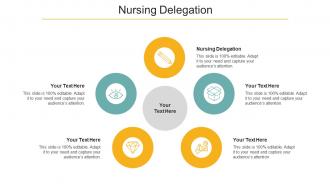
Presenting Nursing Delegation Ppt Powerpoint Presentation Show Designs Cpb slide which is completely adaptable. The graphics in this PowerPoint slide showcase five stages that will help you succinctly convey the information. In addition, you can alternate the color, font size, font type, and shapes of this PPT layout according to your content. This PPT presentation can be accessed with Google Slides and is available in both standard screen and widescreen aspect ratios. It is also a useful set to elucidate topics like Nursing Delegation. This well structured design can be downloaded in different formats like PDF, JPG, and PNG. So, without any delay, click on the download button now.

People who downloaded this PowerPoint presentation also viewed the following :

FAQs for Nursing Delegation Ppt Powerpoint Presentation

Effective nursing delegation principles include assessing patient needs and staff competencies, clearly communicating tasks and expectations, ensuring proper supervision and follow-up, maintaining accountability, and delegating appropriate tasks to qualified personnel. These principles enable healthcare teams to optimize patient care delivery, enhance workflow efficiency, and maintain safety standards, with many hospitals finding that structured delegation frameworks ultimately improve patient outcomes while reducing nurse workload stress.

Nurses can assess delegation appropriateness by evaluating task complexity, required clinical judgment, team member competency levels, patient stability, and legal scope of practice guidelines. Through systematic assessment frameworks, nurses ensure unlicensed assistive personnel handle routine tasks like vital signs and hygiene, while retaining critical responsibilities such as medication administration and care planning, ultimately optimizing patient safety and care efficiency.

Communication serves as the foundation of effective nursing delegation, encompassing clear task instructions, defined expectations, established timelines, ongoing feedback mechanisms, and comprehensive documentation protocols. Through structured communication frameworks, healthcare teams minimize errors, enhance patient safety, and ensure accountability, with many hospitals finding that standardized delegation communication ultimately delivers improved care coordination and reduced liability risks.

Nurses ensure proper delegation competency through comprehensive skills assessments, structured training programs, ongoing supervision, and regular performance evaluations. Healthcare institutions increasingly implement competency-based frameworks that combine initial certification with continuous monitoring, enabling nurses to delegate confidently while maintaining patient safety standards, ultimately streamlining care delivery and enhancing operational efficiency across medical teams.

Common barriers to effective delegation in nursing practice include inadequate training, fear of liability, lack of trust in team members, unclear role definitions, and insufficient communication protocols. These challenges often stem from hierarchical workplace cultures, time constraints during busy shifts, and concerns about patient safety, with many healthcare institutions finding that structured delegation training and clear accountability frameworks significantly improve both nurse confidence and patient outcomes.

Nurses maintain accountability through clear task specification, defined expectations, regular check-ins, and open communication channels while documenting delegation decisions and outcomes. This approach empowers team members by providing autonomy within structured guidelines, fostering professional growth through mentorship and feedback, ultimately enhancing patient care quality and team efficiency in healthcare settings.

Nurses must consider scope of practice regulations, liability concerns, patient safety standards, competency verification requirements, and proper documentation protocols when delegating tasks. These legal and ethical frameworks ensure appropriate task assignment by matching delegate qualifications with patient needs, maintaining accountability chains, and protecting both patient welfare and nursing licenses, ultimately delivering safer care while minimizing professional liability risks.

Technology enhances nursing delegation through electronic health records, automated task assignment systems, real-time communication platforms, mobile alerts, and workflow management software. These digital tools streamline responsibility tracking, ensure proper skill matching, and enable instant updates between supervisors and staff, ultimately delivering faster patient responses and reduced administrative burden.

Strategies include comprehensive delegation training programs, mentorship partnerships between experienced and novice nurses, simulation-based practice scenarios, regular competency assessments, and structured feedback systems. These approaches enhance decision-making skills, build confidence in task assignment, and improve communication clarity, with many healthcare institutions finding that systematic delegation education ultimately delivers safer patient outcomes and increased operational efficiency.

Nursing delegation varies significantly across healthcare settings, with hospitals requiring more complex, multilevel delegation due to acuity and staffing diversity, while outpatient clinics typically involve simpler, routine task delegation. Hospital environments enable RNs to delegate to LPNs, CNAs, and unlicensed personnel across multiple departments, whereas clinic settings often streamline delegation within smaller teams, ultimately delivering more efficient resource allocation and enhanced patient care coordination.

Effective delegation enhances patient care quality by optimizing resource allocation, reducing response times, and ensuring appropriate skill matching for specific tasks. When implemented strategically, delegation enables registered nurses to focus on complex clinical assessments while leveraging support staff for routine care, ultimately delivering improved patient safety, faster recovery times, and more comprehensive monitoring across healthcare units.

Feedback mechanisms can be integrated through regular check-ins, structured reporting systems, and open communication channels between delegating nurses and delegates. These systems enhance patient safety, improve care quality, and build competency by providing real-time performance insights, identifying training needs, and fostering collaborative learning environments that ultimately strengthen team effectiveness and patient outcomes.

Poor delegation in nursing creates communication breakdowns, role confusion, uneven workloads, and decreased trust among team members, ultimately undermining collaborative care delivery. These dynamics lead to increased staff turnover, compromised patient safety, and reduced operational efficiency, with many healthcare institutions finding that addressing delegation skills through structured training and clear protocols significantly enhances team cohesion and patient outcomes.

Delegation transforms nursing leaders from direct care providers to strategic coordinators who oversee workflows, mentor staff, and ensure quality outcomes across multiple patients simultaneously. Through effective delegation, nursing leaders enhance team efficiency, develop staff competencies, and maintain comprehensive oversight, while freeing themselves to focus on complex decision-making, resource allocation, and patient safety protocols that ultimately improve care delivery.

Training resources for nursing delegation include online certification courses, simulation-based workshops, mentorship programs, professional development seminars, and competency-based modules through healthcare institutions. These educational approaches enhance delegation effectiveness by strengthening decision-making skills, improving communication techniques, and building confidence in task assignment, with many healthcare organizations finding that structured training programs ultimately deliver better patient outcomes and increased operational efficiency.

Ratings and Reviews

100% of 100
Write a review
Most Relevant Reviews
  1. 100%

    by Smith Flores

    The customer care of SlideTeam is very responsive. I was having a payment issue and they fixed it for me in no time.
  2. 100%

    by Damien Murray

    The PPT layout is great and it has an effective design that helps in presenting corporate presentations. It's easy to edit and the stunning visuals make it an absolute steal! 

2 Item(s)

per page: