


Omnichannel Strategies For Digital Banking Powerpoint Presentation Slides




Try Before you Buy Download Free Sample Product
 Impress Your
 Audience
 100%
100% Editable
 Save Hours
 of Time


The omnichannel banking approach merges digital and personal channels for a seamless customer experience. Check out our professionally designed Omnichannel strategies for digital banking deck, which showcases various banking services offered to customers for easy banking solutions access. It has reduced the need for physical bank branches, which saves customers time. Our branchless banking services PPT provides different omnichannel banking services with a gap analysis based on challenges faced by the traditional banking system. The benefits include electronic wallets, IVR and API bill payments, kiosks, chatbots, live chats, and video branch banking services. It further contains the operational and financial impact of these omnichannel banking services. Lastly, our Omnichannel banking technologies module exhibits the dashboards for evaluating the performance of these banking services. Customize this 100 percentage editable presentation with our highly skilled research or design team. Get access to this powerful template now.
People who downloaded this PowerPoint presentation also viewed the following :
Content of this Powerpoint Presentation
Slide 1: This slide displays the title Omnichannel Strategies for Digital Banking.
Slide 2: This slide displays the title Agenda for Omnichannel Strategies for Digital Banking.
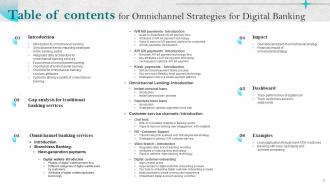
Slide 3: This slide exhibit table of content.
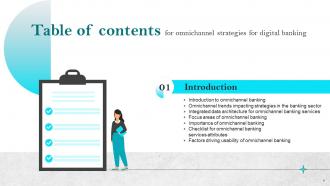
Slide 4: This slide showcase table of content that is to be discuss further.
Slide 5: This slide covers brief summary about omnichannel banking services used by top banks.
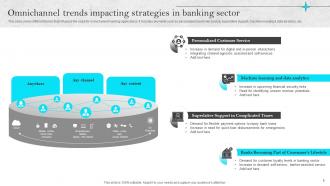
Slide 6: This slide covers different trends that influence the need for omnichannel banking applications.
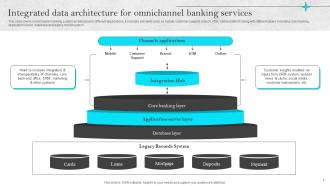
Slide 7: This slide covers omnichannel banking system architecture for different applications.
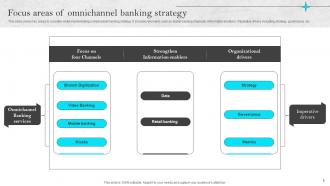
Slide 8: This slide covers key areas to consider while implementing omnichannel banking strategy.
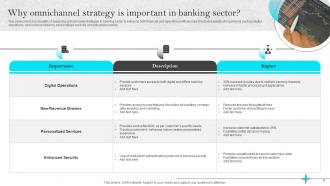
Slide 9: This slide covers top benefits of deploying omnichannel strategies in banking sector to enhance both financial and operational efficiencies.
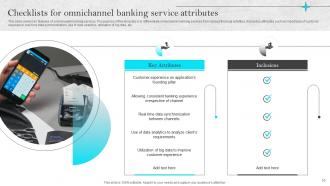
Slide 10: This slide covers key features of omnichannel banking services.
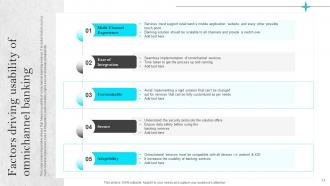
Slide 11: This slide covers imperative drivers that helps in usability of omnichannel banking services.
Slide 12: This slide showcase table of content that is to be discuss further.
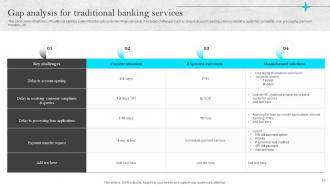
Slide 13: This slide covers drawbacks of traditional banking system that disrupts customers financial needs.
Slide 14: This slide showcase table of content that is to be discuss further.
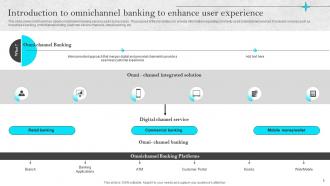
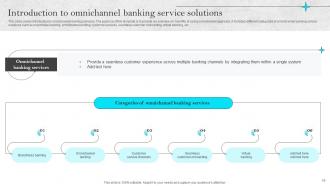
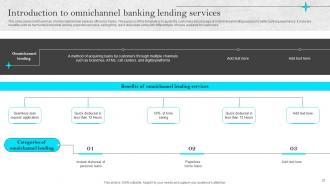
Slide 15: This slide covers introduction to omnichannel banking services.
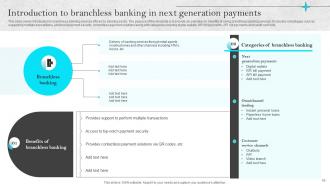
Slide 16: This slide covers introduction to branchless banking services offered by banking sector.
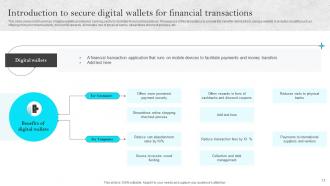
Slide 17: This slide covers brief summary of digital wallets provided by banking sector to facilitate financial transactions.
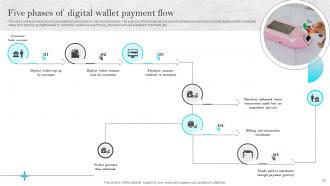
Slide 18: This slide covers process of using e-wallets for paying bills or merchant payments.
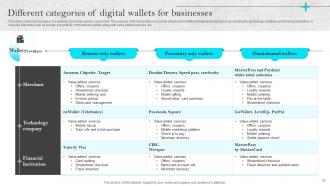
Slide 19: This slide covers various types of e-wallets commonly used by customers.
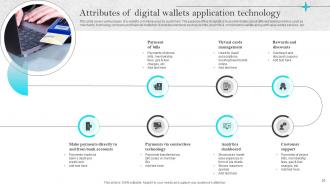
Slide 20: This slide covers various types of e-wallets commonly used by customers.
Slide 21: This slide showcase table of content that is to be discuss further.
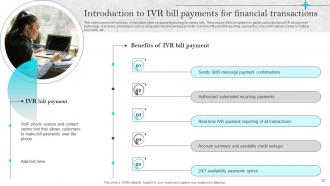
Slide 22: This slide covers brief summary of interactive voice response technology for paying bills.
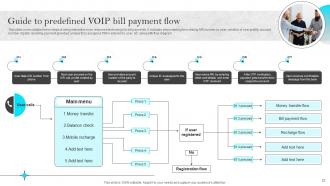
Slide 23: This slide covers detailed wise steps of using interactive voice response technology for bill payments.
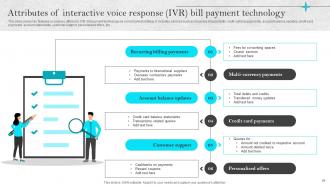
Slide 24: This slide covers key features or services offered by IVR bill payment technology via omnichannel strategy.
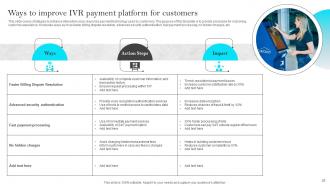
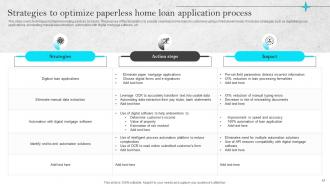
Slide 25: This slide covers strategies to enhance interactive voice response payment technology used by customers.
Slide 26: This slide showcase table of content that is to be discuss further.
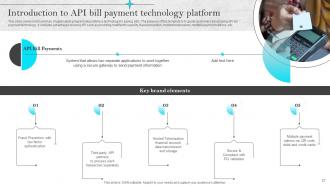
Slide 27: This slide covers brief summary of application programming interface technology for paying bills.
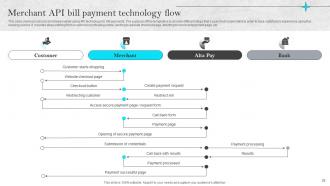
Slide 28: This slide covers process to be followed while using API technology for bill payments.
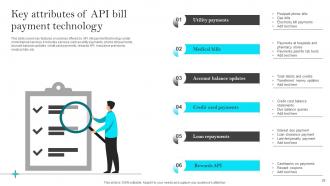
Slide 29: This slide covers key features or services offered by API bill payment technology under omnichannel services.
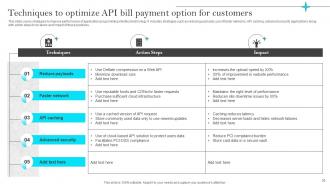
Slide 30: This slide covers strategies to improve performance of application programming interface technology.
Slide 31: This slide showcase table of content that is to be discuss further.
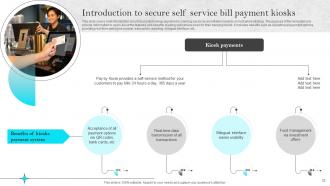
Slide 32: This slide covers brief introduction about kiosks technology launched by banking sector as an initiative towards omnichannel strategy.
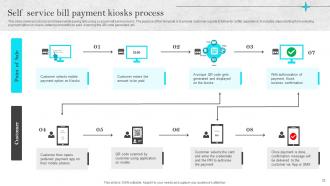
Slide 33: This slide covers process to be followed while paying bills using a secure self service kiosks.
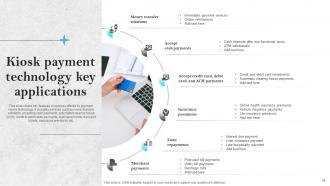
Slide 34: This slide covers key features or services offered by payment kiosks technology.
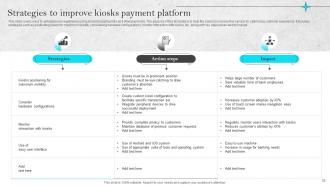
Slide 35: This slide covers ways to enhance user experience using kiosks for paying bills and other payments.
Slide 36: This slide showcase table of content that is to be discuss further.
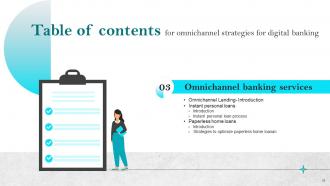
Slide 37: This slide covers brief summary of omnichannel loan services offered by banks.
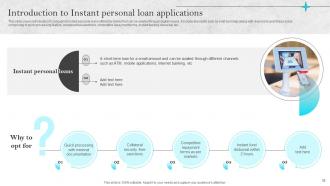
Slide 38: This slide covers introduction to concept of instant personal loans offered by banks that can be availed through digital means.
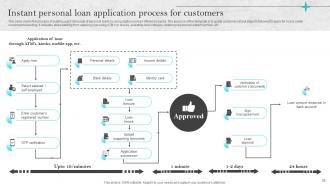
Slide 39: This slide covers the process of availing quick disbursal of personal loans by using digital services offered by banks.
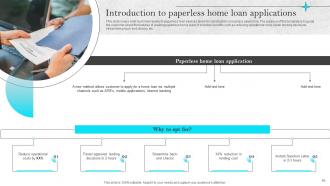
Slide 40: This slide covers brief summary related to paperless loan services taken for construction or buying a new home.
Slide 41: This slide covers techniques to improve lending services by banks.
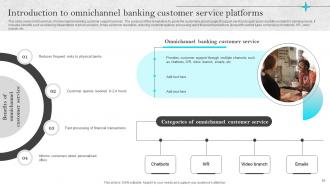
Slide 42: This slide covers brief summary of omnichannel banking customer support services.
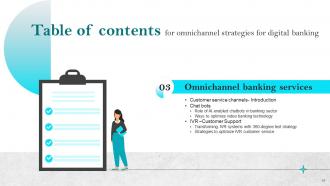
Slide 43: This slide showcase table of content that is to be discuss further.
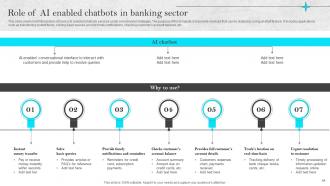
Slide 44: This slide covers brief introduction of bank’s AI enabled chatbots services under omnichannel strategies.
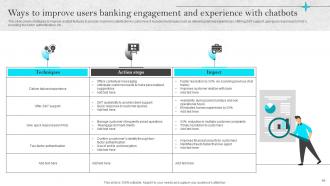
Slide 45: This slide covers strategies to improve chatbot features to provide maximum satisfaction to customers.
Slide 46: This slide covers different tests that improves the efficiency of IVR systems by banks.
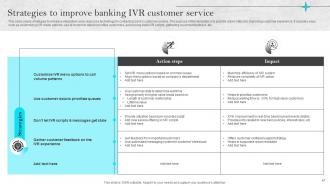
Slide 47: This slide covers strategies to enhance interactive voice response technology for contacting bank’s customer service.
Slide 48: This slide showcase table of content that is to be discuss further.
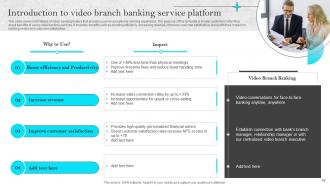
Slide 49: This slide covers brief details of video banking feature that provides user an exceptional banking experience.
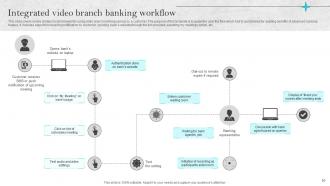
Slide 50: This slide covers series of steps to be followed for using video branch banking service by a customer.
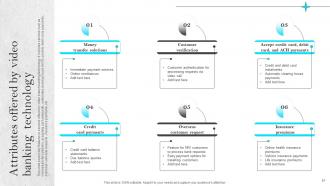
Slide 51: This slide covers key features or services offered by video branch banking technology.
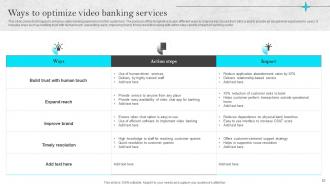
Slide 52: This slide covers techniques to enhance video banking experience for the customers.
Slide 53: This slide showcase table of content that is to be discuss further.
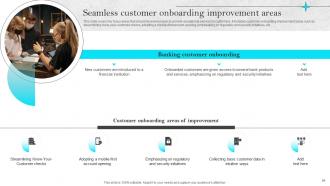
Slide 54: This slide covers key focus areas that should be worked upon to provide exceptional services to customers.
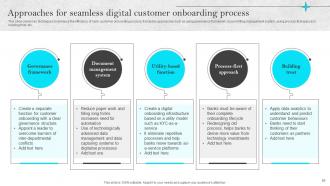
Slide 55: This slide covers key techniques to enhance the efficiency of bank customer onboarding process.
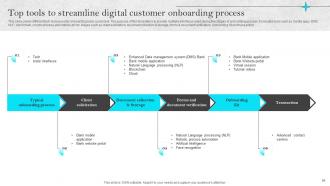
Slide 56: This slide covers different tech tools used for onboarding bank customers.
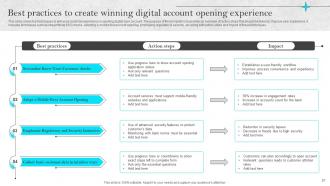
Slide 57: This slide covers top techniques to enhance customer experience in opening digital bank account.
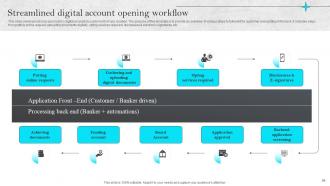
Slide 58: This slide covers process to open bank’s digital account by customer from any location.
Slide 59: This slide showcase table of content that is to be discuss further.
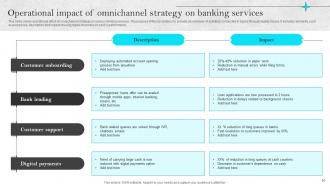
Slide 60: This slide covers operational effect of omnichannel strategy on various banking services.
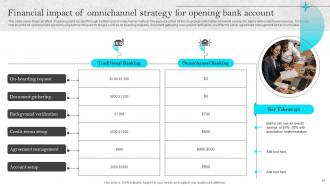
Slide 61: This slide covers financial effect of opening bank account through traditional and omnichannel method.
Slide 62: This slide showcase table of content that is to be discuss further.
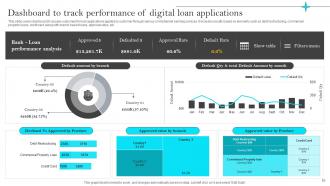
Slide 63: This slide covers dashboard to assess outcomes for loan applications applied by customer through various omnichannel banking services.
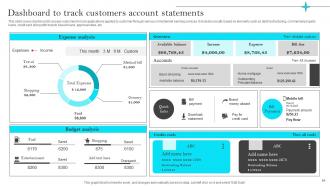
Slide 64: This slide covers dashboard to assess outcomes for loan applications applied by customer through various omnichannel banking services.
Slide 65: This slide showcase table of content that is to be discuss further.
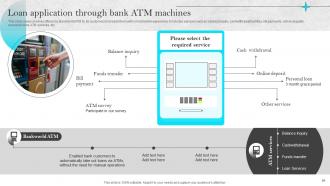
Slide 66: This slide covers services offered by BankWorld ATM to its customers to provide them with omnichannel experience.
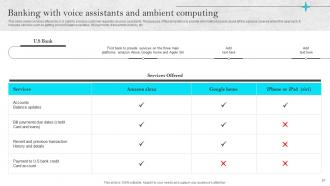
Slide 67: This slide covers services offered by U.S bank to process customer requests via voice assistants.
Slide 68: This is the icons slide.
Slide 69: This slide presents title for additional slides.
Slide 70: This slide presents your company's vision, mission and goals.
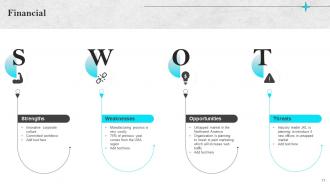
Slide 71: This slide dusplay SWOT Financial.
Slide 72: This slide display Financial.
Slide 73: This slide shows details of team members like name, designation, etc.
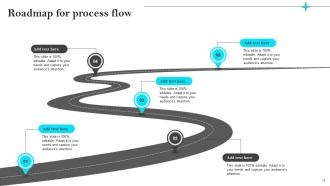
Slide 74: This slide showcase Roadmap for process flow.
Slide 75: This slide shows Circular process.
Slide 76: This slide exhibit Timeline.
Slide 77: This slide depicts 30-60-90 days plan for projects.
Slide 78: This is thank you slide & contains contact details of company like office address, phone no., etc.
Omnichannel Strategies For Digital Banking Powerpoint Presentation Slides with all 83 slides:
Use our Omnichannel Strategies For Digital Banking Powerpoint Presentation Slides to effectively help you save your valuable time. They are readymade to fit into any presentation structure.















FAQs for Omnichannel Strategies For Digital Banking
Honestly, it's all about making sure your customer's info follows them everywhere. Like if they start a loan app on their phone, then hit up an ATM, then talk to someone in the branch - their progress should just be there automatically. Real-time data syncing is crucial, plus you want the same look and feel across everything. Single sign-on is probably the biggest thing though - people get so annoyed having to log in multiple times. Oh and shared transaction history obviously. The whole point is removing those annoying gaps between channels. Start there and you'll be golden.
So omnichannel banking means customers can start something on their phone, hop onto the website later, then call support - and nobody has to repeat their whole story. Which is huge because that stuff is so annoying. Everything just follows them around. You'll see faster resolutions since agents aren't playing catch-up, plus you can actually make decent recommendations because you're seeing what they're really doing, not just random pieces. Honestly, I'd start with getting your customer data synced up first - that's where most people mess up.
Oh totally - tech is everything for omnichannel banking. Without solid APIs connecting your mobile app, website, branches, and call centers, you're screwed. Data integration is where most banks mess up though, especially with those ancient legacy systems that hate talking to each other. But honestly, when it actually works? Customers can literally start something on their phone and walk into a branch to finish it. Pretty smooth. I'd say modernize your core platform first - that's like 80% of the battle right there.
Look, the biggest thing banks mess up is making customers repeat the same info everywhere. Someone starts a loan on their phone, walks into a branch, and boom - they're filling out forms like they're a new person. It's ridiculous honestly. You need one customer database that actually talks to itself across every channel. ATMs, mobile app, tellers - all seeing the same stuff in real-time. And stop making people log in seventeen times! Map out where customers currently get stuck switching between channels. That's where you'll find the worst pain points to fix first.
Ugh, where do I even start? Legacy systems are probably your worst nightmare - banks usually have like 5 different platforms that barely communicate. Your customer data ends up scattered everywhere, so good luck giving people a smooth experience. Training staff becomes this massive headache since they need to know every single touchpoint. Compliance gets messy too when you're juggling interactions across channels. The upfront tech costs are honestly brutal. But here's what I'd do - map out your customer journey first and tackle the biggest pain points. Way easier than trying to fix everything at once.
So here's the thing - data integration pulls together everything customers do across your mobile app, website, branches, call centers into one complete picture. No more treating each channel like they're talking to a stranger! You'll actually know their preferences and conversation history. Think of it like finally getting all those puzzle pieces in the same box instead of hunting around for them. Honestly, the personalized recommendations and being able to anticipate what they need? Game changer. I'd start by figuring out where your data's currently stuck in silos, then look for easy wins to connect them first.
Honestly, cross-channel consistency is everything here. Your staff needs to see the full customer story - mobile app, phone calls, in-person visits, all of it. Role-playing works surprisingly well for this stuff. Get everyone understanding the complete journey instead of just their little slice. Tech training matters too so handoffs don't feel clunky between channels. I'd start with hands-on workshops where teams tackle real scenarios that jump around different touchpoints. Oh, and make sure people actually know how to use your systems - sounds obvious but you'd be shocked how often that gets skipped.
Dude, omnichannel banking is honestly a game-changer for keeping customers around. You'll see like 15-20% better retention rates compared to old-school single-channel stuff. Think about it - when people can hop from their phone to the website to calling in without having to explain their whole situation again, they're not gonna bail for your competitors. Makes total sense, right? The key is making sure customer info actually talks between all your different systems. I've seen too many banks mess this up and wonder why people get frustrated. Remove that friction and customers stick around way longer.
Honestly, start with multi-factor authentication everywhere - mobile, web, branches, the whole thing. End-to-end encryption is non-negotiable for data transmission. Real-time fraud monitoring needs to work across all your channels too. The biggest headache? Keeping security policies consistent. Your customers shouldn't get weaker protection just because they called instead of using the app - that's just asking for trouble. Oh, and don't sleep on API security since everything's connected these days. Regular audits and solid incident response plans are clutch, but make sure they cover every touchpoint, not just individual channels.
So here's what I'd do - grab feedback from everywhere your customers touch you. App store reviews, branch comment cards, call center notes, even Twitter rants (those are actually goldmines). The real magic happens when you find where people get stuck switching between channels. Like, they start a mortgage app online then have to completely restart when they walk into a branch? That's just bad design, honestly. Plot out all these annoying spots and tackle the worst ones first based on how often they happen. Quick wins there will make people way happier almost immediately.
Start with customer satisfaction scores - that's what matters most. Then dig into channel adoption rates and how people move between touchpoints without having to repeat themselves (super annoying when that happens). Track completion rates for stuff like loan apps across digital vs branch visits. Customer lifetime value is huge since good omnichannel should increase retention. Cost per transaction by channel helps with the operational side. The data gets messy quick though. I'd set up a simple dashboard with these basics and check it monthly. Don't overthink it initially - you can always add more metrics later once you see what's actually useful.
Your mobile app is like the hub where everything connects. Most people check it daily, so it's gotta talk to your branches, ATMs, and website smoothly. When someone starts a loan app on their phone, they should finish it at the branch without redoing everything - seriously, nothing's more annoying than that. Keep the experience consistent everywhere. Oh, and let people book appointments through the app too. That way they can prep their accounts before showing up. The whole point is making sure customer info follows them around wherever they go.
Honestly, omnichannel banking is just about not making your customers jump through hoops. Like, someone starts applying for a loan on their phone during lunch, finishes it later on their laptop, then swings by the branch with questions - and nobody makes them explain their whole situation again. People expect that flow now, especially the tech-savvy ones. They want instant everything too - notifications, transfers, chat support that actually remembers who they are. The data piece is pretty cool though - you can track all those touchpoints to predict what they'll need next. I'd tackle the friction between channels first.
Look, the trick is making everything feel connected - your app, website, branches, emails, all of it. Use customer data so when someone starts a loan app on their phone, branch people can jump right in where they stopped. Nobody wants to repeat their whole story again, right? Most banks are honestly terrible at this basic coordination still. Try sending targeted stuff based on what people actually do - like if someone always comes in person, maybe send them a quick mobile deposit tutorial. Oh and behavioral triggers work great for timing. Bottom line: make it feel like one bank talking to them, not a bunch of random departments.
Chase and Bank of America are solid examples - Chase lets you start loan apps on your phone then finish at the branch without any hassle. BofA's virtual assistant thing (Erica) handles over a billion customer questions across all their platforms, which is pretty insane when you think about it. DBS in Singapore went almost completely digital but still kept their branches working together smoothly. The main thing these banks figured out was connecting all their departments instead of having everything work separately. Oh, and they all started by getting their customer data organized first - that seems to unlock everything else you'd want to do.
-
Thank you SlideTeam for such an excellent service.
-
“One of the best experiences with SlideTeam for my presentation.Everything on time, communication is efficient and price is reasonable. All good in one place.”