Onboarding Process Workflow After Employee Hiring
Try Before you Buy Download Free Sample Product
Audience
Editable
of Time
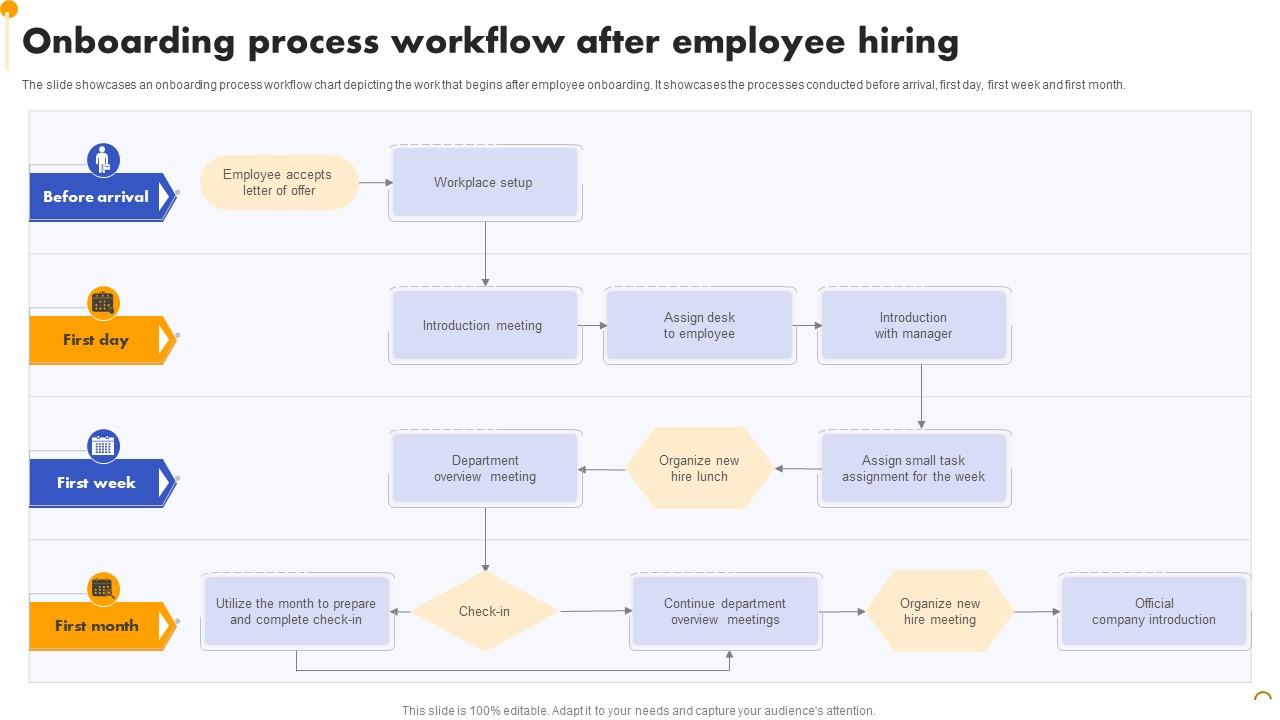
The slide showcases an onboarding process workflow chart depicting the work that begins after employee onboarding. It showcases the processes conducted before arrival, first day, first week and first month.
People who downloaded this PowerPoint presentation also viewed the following :
Onboarding Process Workflow After Employee Hiring with all 6 slides:
Use our Onboarding Process Workflow After Employee Hiring to effectively help you save your valuable time. They are readymade to fit into any presentation structure.
FAQs for Onboarding Process Workflow
Honestly, you want them feeling useful fast - nobody likes that awkward "am I doing this right?" limbo period. Get the boring stuff sorted first - system logins, who does what, basic expectations. But don't forget the social side either, like actually introducing them to people they'll work with regularly. I always think explaining how decisions really get made (versus what the org chart says) helps tons. Show them team quirks too - maybe Sarah always responds better over Slack than email, stuff like that. If they're asking good questions and jumping into conversations by week three, you've nailed it.
So I've been using presentation templates for onboarding and they're seriously helpful. New hires get the same solid info every time - company overview, role stuff, team intros, all that. Your managers don't have to start from scratch each time either, which is nice because honestly some people just aren't natural presenters. Just swap in the role-specific details and you're good. People actually remember more when it looks professional and organized too. I'd start with maybe 3-4 basic templates that cover your main onboarding topics. Way easier than winging it every time.
Your company culture is honestly everything when it comes to onboarding. Don't just dump policies on people - that's so boring. Instead, weave your actual values into orientation and pair new folks with mentors who really get your vibe. I've watched too many places mess this up by being super formal about everything. New hires connect way faster when they see the real culture from day one. Oh, and they'll actually want to stay longer too. Pick maybe 3 or 4 key cultural moments you can build into that first week.
Honestly, retention rates are your best bet - check how many people stick around at 90 days, 6 months, and a year. Those numbers don't sugarcoat anything. Time-to-productivity matters too (basically how long until they're actually useful lol). I'd also do quick surveys at 30, 60, 90 days to see how they're really feeling. Manager feedback is huge since they deal with the day-to-day stuff. Don't go crazy tracking everything though - pick maybe 2-3 metrics that match whatever's currently broken in your process. Start there and build up.
Honestly, most onboarding fails come down to communication being terrible. New people get zero guidance or way too much info dumped on them at once. IT setup is always a mess - I swear half the time people show up and don't even have a working computer. Some managers are amazing at welcoming new hires, others basically ignore them for weeks. Then there's all the boring admin stuff that gets screwed up constantly. Missing passwords, incomplete forms, you name it. Just make a basic checklist and have one person actually responsible for walking people through everything instead of passing them around like a hot potato.
Skip the boring PowerPoint decks - nobody wants that on day one. Try Loom for walkthrough videos instead, new people can actually pause and rewatch stuff. Prezi or Canva keeps things way more visual and interesting. Oh, and Mentimeter's pretty cool for adding polls during presentations. Honestly? Break everything into chunks under 10 minutes. Mix short videos with actual hands-on activities rather than just talking at people forever. Always leave room for questions too - that's when you actually learn what's confusing them. Way better than sitting through one massive presentation that puts everyone to sleep.
Dude, you've gotta get people involved or they'll just zone out completely. Throw in polls, quick discussions, maybe some Q&A breaks - anything to stop them from becoming zombies. I swear, nothing's worse than watching someone's soul leave their body during a boring presentation. Every 10-15 minutes, mix it up with something interactive. It actually helps info stick better when their brains are engaged. Plus you'll instantly know if they're confused about something instead of finding out weeks later. Even simple stuff like "raise your hand if..." works way better than talking at them for an hour straight.
Honestly, just focus on the basics without info-dumping on them. Start with company culture and what their actual job looks like day-to-day. Throw in the practical stuff - who they should bug for help, where to find things, basic tools they'll need. I learned this the hard way, but giving them small tasks early on really helps. Nobody wants to sit through slide after slide of text (we've all been there). Make it visual and let them ask questions. Oh, and definitely get them a buddy - that's like the best thing you can do for someone new.
Honestly, just start with check-ins after week 1 and month 1 - maybe throw in a 90-day one too. Quick surveys work, or just grab coffee and ask what's actually helpful vs what's total chaos. Most places don't do this at all (which is wild to me), then act shocked when new people quit. Oh, and make some way for anonymous feedback since nobody wants to trash their new job to their boss's face. The real trick though? Actually fix stuff when multiple people complain about the same thing. Otherwise you're just collecting complaints for fun.
Honestly, remote onboarding takes way longer because you're missing all those random coffee conversations that actually matter. Like, you can't just pop by someone's desk to check how they're doing. The upside? Everything gets documented super well since you have to be so intentional about it. You'll need to schedule tons of check-ins that would just happen naturally in an office - kind of annoying but necessary. Video calls are a must, not just phone calls. Oh and you basically have to over-communicate everything. Try setting up some casual virtual hangouts too, even though they're never quite the same as the real thing.
Start with your base template, then swap generic stuff for what each team actually needs. Finance gets compliance training, marketing gets creative briefs - you know the drill. Honestly, companies overcomplicate this way too much. Just focus on tailoring the checklist items and first projects to match what each department cares about. Some roles need longer ramp-up too, so adjust timelines accordingly. Oh and definitely ask department heads what trips up their new hires most - that's where you'll get the real insights. Way more useful than guessing what people need.
Honestly, start by auditing what you've got now - you'll probably cringe at some of it. Mix up your communication styles since people absorb info differently (some need visuals, others prefer reading). Include pronouns when people introduce themselves and don't assume everyone has the same tech setup at home. I'd definitely set up buddy systems with diverse mentors so new people actually see themselves reflected. Oh, and make training flexible timing-wise. The biggest thing though? Just watch your language in all the materials - ditch anything that sounds exclusionary or makes assumptions about people's backgrounds. Safe spaces for dumb questions are clutch too.
Honestly, try turning your onboarding into mini-games! Quiz questions after each section where people earn points work really well. Progress bars are weirdly addictive too - everyone loves watching that percentage go up. You could do scavenger hunts where they dig through company materials to unlock slides, or team competitions around policies and values. Just don't go overboard with the cheesy factor, you know? Oh, and maybe start with one gamified thing per presentation rather than going all-out immediately. See what actually lands with your team first.
Honestly, most places totally drop the ball after week one. Set up mentorship programs and regular manager check-ins - that's clutch. Make sure they can actually find stuff when they need it (good documentation saves everyone's sanity). Learning platforms help too if you've got budget for that. Schedule those 30/60/90 day reviews because problems always surface later. The real trick? Don't wait for them to come to you. Block time on your calendar to reach out first. New people won't always speak up when they're struggling, which is totally normal but can bite you later.
Honestly, mentorship programs are a game-changer because they cover all the stuff formal onboarding misses. Like how things *actually* work around there, not just what's in the handbook. New people need someone they can ask the "stupid" questions to without looking clueless in front of their boss. Mentors help with the unwritten rules and introduce them to the right people too. I've seen companies do this for 90 days and it really helps with keeping people around - way better than just throwing them into orientation and hoping for the best.
-
The presentations are very helpful. I am always able to get appropriate templates for the different topics related to my profession.
-
What a stunning collection of customizable templates! Really a time-saver..Â