


Online Marketing Strategies For Brand Promotion Powerpoint Presentation Slides




Try Before you Buy Download Free Sample Product
 Impress Your
 Audience
 100%
100% Editable
 Save Hours
 of Time


Digital marketing is the promotion of brands and connecting with potential customers using the internet and other digital communication channels. Check out our professionally created Online Marketing Strategies for Brand Promotion PowerPoint presentation showcasing statistics, comparative assessment for B2B and B2C marketing, RACE framework, six pillars, and digital promotion process. It covers significant types of SEO techniques, keyword search intent, factors affecting keyword ranking, tools, and a checklist for website optimization. This Social media marketing deck depicts major platforms for PPC advertisements, cost per click, and PPC campaign plan. It includes an action plan for social media marketing SMM, strategies, a checklist for social media influence, a monthly calendar schedule, etc. This Content marketing PowerPoint Presentation also depicts social media platforms for influencer marketing, types, and purchase funnel for influencer advertising. Lastly, it represents roles and responsibilities, a training plan for digital marketing, and impact and metric dashboards for digital promotion. Download our 100 percentage editable and customizable template, which is also compatible with Google Slides.
People who downloaded this PowerPoint presentation also viewed the following :
Content of this Powerpoint Presentation
Slide 1: This slide displays the title Online Marketing Strategies for Brand Promotion.
Slide 2: This slide displays the title Agenda.
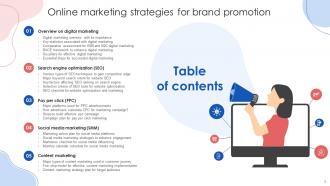
Slide 3: This slide exhibit table of content.
Slide 4: This slide exhibit table of content.
Slide 5: This slide exhibit table of content- Overview on digital marketing.
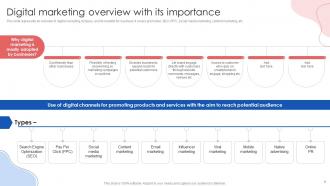
Slide 6: This slide represents an overview of digital marketing, its types, and its benefits for business.
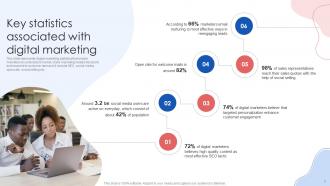
Slide 7: This slide represents digital marketing statistics that enable marketers to understand market, make marketing related decisions and respond to customer demand.
Slide 8: This slide represents differentiation for B2B and B2C digital marketing so that marketers can build required strategies to attract potential customers.
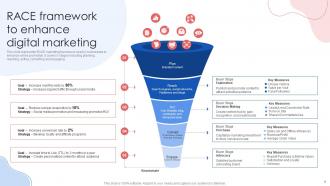
Slide 9: This slide represents RACE marketing framework used by businesses to enhance online promotion.
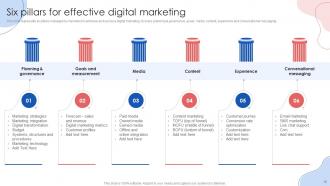
Slide 10: This slide represents six pillars managed by marketers to enhance and success digital marketing.
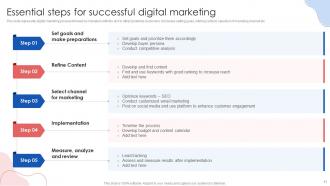
Slide 11: This slide represents digital marketing process followed by marketers with the aim to attract potential customers.
Slide 12: This slide exhibit table of content- Search engine optimization (SEO)
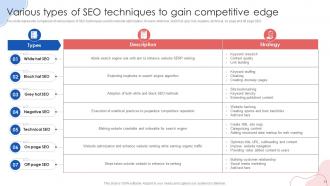
Slide 13: This slide represents comparison of various types of SEO techniques used for website optimization.
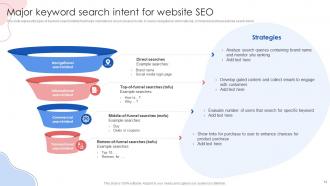
Slide 14: This slide represents types of keyword search intents that helps marketers to boost conversion rate.
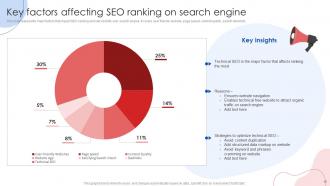
Slide 15: This slide represents major factors that impact SEO ranking and site visibility over search engine.
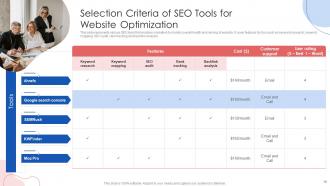
Slide 16: This slide represents various SEO tools that enables marketers to monitor overall health and ranking of website.
Slide 17: This slide represents four level process checklist for optimization for search engine and marketing of website.
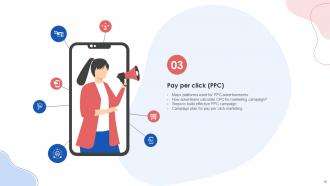
Slide 18: This slide exhibit table of content- Pay per click (PPC).
Slide 19: This slide represents comparison of key platforms for PPC advertisement suited towards specific business objective.
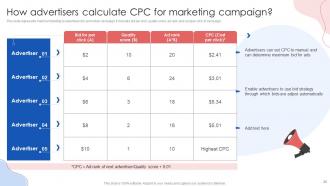
Slide 20: This slide represents maximum bidding by advertisers for promotion campaign. It includes bid per click, quality score, ad rank and cost per click of campaign.
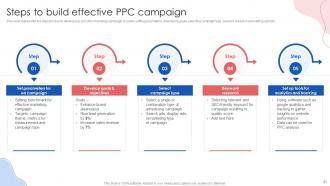
Slide 21: This slide represents five step process to develop pay per click marketing campaign.
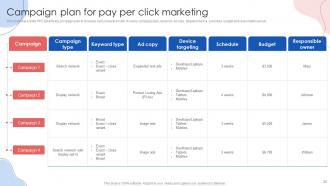
Slide 22: This slide represents PPC advertising campaign plan to increase user conversion rate.
Slide 23: This slide exhibit table of content- Social media marketing (SMM).
Slide 24: This slide represents action plan for social media marketing on various platforms. It covers target audience, type of content and action plan.
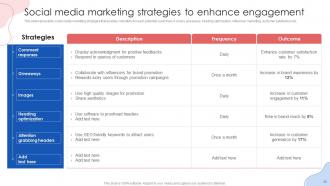
Slide 25: This slide represents social media marketing strategies that enables marketers to reach potential customers.
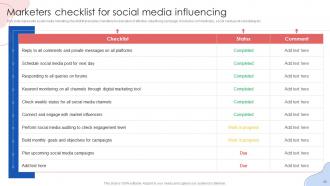
Slide 26: This slide represents social media marketing checklist that enables marketers for execution of effective advertising campaign.
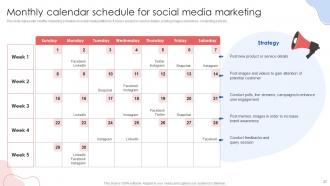
Slide 27: This slide represents monthly marketing schedule on social media platforms.
Slide 28: This slide exhibit table of content- Content marketing.
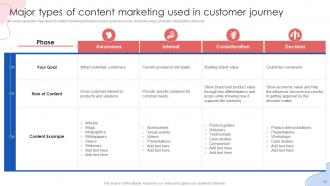
Slide 29: This slide represents major types of content marketing techniques used in customer journey. It includes blogs, podcasts, infographics, videos etc.
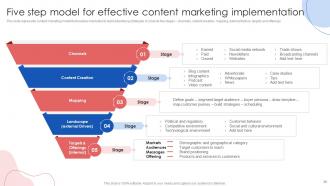
Slide 30: This slide represents content marketing model that enables marketers to build advertising strategies.
Slide 31: This slide represents content marketing plan for different target segment. It covers target users, content focus, channels, frequency and responsible owner.
Slide 32: This slide exhibit table of content- Email marketing.
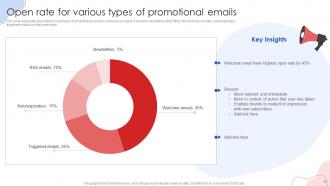
Slide 33: This slide represents open rate for major types of email that are sent to customers by brand.
Slide 34: This slide represents software solutions for email marketing used by marketers for promotion.
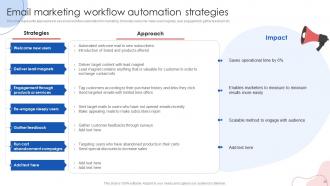
Slide 35: This slide represents approaches to use email workflow automation for marketing.
Slide 36: This slide exhibit table of content- Influencer marketing.
Slide 37: This slide represents social media platforms that are preferred b marketers for influencer advertisements. It covers Instagram, Facebook, YouTube etc.
Slide 38: This slide represents different types of influencers for promotion.
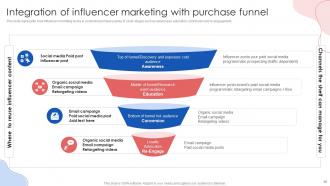
Slide 39: This slide represents how influencer marketing works in customer purchase journey.
Slide 40: This slide exhibit table of content- Digital marketing team.
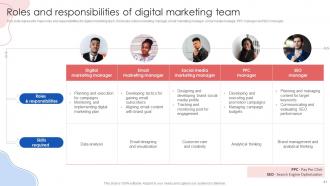
Slide 41: This slide represents major roles and responsibilities for digital marketing team.
Slide 42: This slide represents training program plan for marketing team.
Slide 43: This slide exhibit table of content- Impact of digital marketing.
Slide 44: This slide represents performance indicators showcasing impact of digital marketing post implementation.
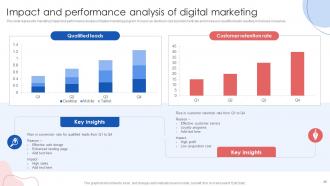
Slide 45: This slide represents marketing impact and performance analysis of digital marketing program.
Slide 46: This slide exhibit table of content- Dashboard.
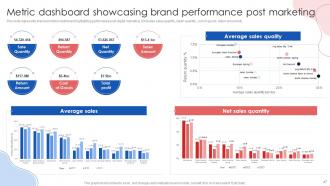
Slide 47: This slide represents brand promotion dashboard highlighting performance post digital marketing.
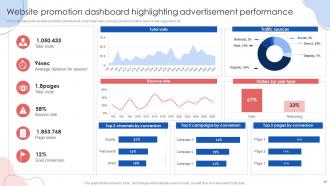
Slide 48: This slide represents website promotion dashboard. It covers total visits, average session duration, bounce rate, page views etc.
Slide 49: This slide represents website promotion dashboard. It covers total visits, average session duration, bounce rate, page views etc.
Slide 50: This is the icons slide.
Slide 51: This slide presents title for additional slides.
Slide 52: This slide shows about your company, target audience and its client's values.
Slide 53: This slide presents your company's vision, mission and goals.
Slide 54: This slide exhibits ideas generated.
Slide 55: This slide displays Venn.
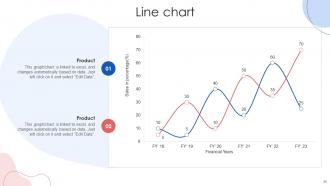
Slide 56: This slide exhibits yearly profits stacked line charts for different products.
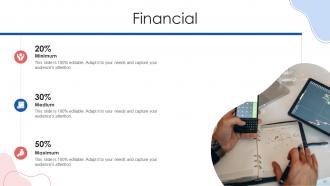
Slide 57: This slide display Financial.
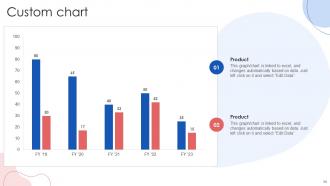
Slide 58: This slide display Custom chart for different products.
Slide 59: This slide depicts posts for past experiences of clients.
Slide 60: This is thank you slide & contains contact details of company like office address, phone no., etc.
Online Marketing Strategies For Brand Promotion Powerpoint Presentation Slides with all 65 slides:
Use our Online Marketing Strategies For Brand Promotion Powerpoint Presentation Slides to effectively help you save your valuable time. They are readymade to fit into any presentation structure.

























FAQs for Online Marketing Strategies For Brand Promotion
Honestly, content marketing and local SEO are your best bets - way more bang for your buck than paid ads. Email's clutch too since you actually own that list (social algorithms are trash and change constantly). If you're local, definitely get your Google My Business dialed in first. Pick maybe 2 social platforms where your people actually are instead of trying to be everywhere. Oh and create stuff that genuinely helps customers solve problems. Don't spread yourself crazy thin though. Master one thing, then add more.
Honestly, you can't just slap SEO on at the end - it works way better when it's baked into everything from the start. Do your keyword research first, then use those insights for your content, social posts, even your ad copy. Write blog posts that actually help people (Google's pretty smart about catching keyword spam now). Fast loading + mobile-friendly site is non-negotiable for rankings. Oh, and track your organic traffic with everything else so you can see how it boosts your other campaigns. Consistency across all your channels is what really moves the needle.
Think of social media as your megaphone for all your other marketing stuff. It pushes people to your website, gets your brand out there, and you can actually talk back and forth with customers instantly. The targeting is crazy good too - you can dial in exactly who sees what. Honestly, I'm obsessed with the data you get from it. But here's the thing - don't spread yourself thin across every platform. Pick maybe 2 or 3 where your people actually spend time. Figure out where your customers are already scrolling around, then go hard on those spots instead of trying to be everywhere.
Honestly, just track the stuff that actually matters for your bottom line - conversion rate, customer acquisition cost, and lifetime value. Those vanity metrics like CTR? Total waste of time imo. ROAS is huge too - shoot for at least 3:1 or you're basically bleeding money. I'd set up weekly reports comparing all your channels side by side. Makes it super obvious where to move your budget. Oh, and don't get caught up in making your dashboard look fancy - focus on what's actually driving revenue.
So personalization is huge - segment your lists and send stuff that actually matters to each group based on what they've done before. Interactive things work really well too, like polls or just asking people to reply back. Timing's probably more important than most people think, so test different send times. The emails that feel like actual conversations instead of ads always do better in my experience. Oh and don't try to do everything at once - pick one thing to focus on this week and see how your open rates change. Start small but be consistent about it.
Honestly, influencer marketing works because people actually trust these creators - way more than they trust random ads popping up everywhere. Their followers are genuinely engaged and will actually listen when they recommend something. Traditional advertising? Most people just scroll past it now. But when someone you follow says "hey, try this," it feels like a friend giving advice. Micro-influencers are where I'd start though - they're cheaper and often get better engagement than the mega-famous ones. You're basically tapping into communities that would cost a fortune to reach through normal advertising, and the whole thing feels less pushy.
Think of content marketing as the engine that powers everything else you're doing. You create one solid blog post or video, then boom - your social media has something worth posting, your emails aren't just sales pitches, and your ads actually convert because people recognize you. I swear, most companies skip this step and wonder why their marketing feels so scattered. SEO gets better since you're publishing regularly, plus you start looking like you actually know what you're talking about instead of just pushing products. Oh, and try repurposing one piece across three channels this week - it's a game changer.
Honestly, Google Analytics is where I'd start - it's free and handles most of your tracking needs once you figure it out. For ads, Google Ads and Facebook Ads Manager are obvious picks since they're built into the platforms. Email marketing tools like Mailchimp usually come with decent analytics too. HubSpot's nice if you want everything centralized, but damn it gets expensive fast. You could honestly just stick with Google Analytics for months and be fine. Add other tools later when things get complicated. Oh, and actually look at your data regularly - I've seen too many people set everything up then never check it!
Dude, you seriously can't skip mobile optimization anymore. Most people browse on their phones - we're talking like 60%+ of all web traffic. Google's algorithm totally favors mobile-friendly sites too, so your SEO will tank if you ignore this. I actually watched a friend's business lose sales because their checkout was a nightmare on mobile (so frustrating to watch). Test your site on different phones first. Then fix the slow loading and wonky navigation stuff. Trust me, it's worth the effort.
Honestly, AI personalization and voice search are where it's at right now. Short-form video is blowing up too - even my mom's on TikTok now, which is wild. Interactive stuff like polls gets people actually engaging instead of just scrolling past. Micro-influencers are way better than the big names anyway since their followers actually care. Privacy stuff matters more now that cookies are basically dead. Oh, and start by looking at what content you're already making - probably needs more video or interactive bits mixed in.
Honestly, most people mess this up by not knowing who they're actually trying to reach. Figure out your goals first, then find where your customers are scrolling - Google if they're searching for something specific, Instagram/Facebook for everything else. Start small with your budget and test different ads. I learned this the hard way, but you can't just launch something and walk away. Keep tweaking your targeting and copy based on what's actually working. Track how much each customer costs you and always run A/B tests on your creatives. Once you find winners, that's when you throw more money at it.
Honestly, most people mess up by trying to reach literally everyone - that's a recipe for disaster. You'll blow your budget so fast it's not even funny. Pick your audience first, then build around that. Analytics are huge too but people just ignore them after launching campaigns. Also don't spread yourself too thin across every platform - I'd rather see someone crush it on Instagram and TikTok than be mediocre on five different channels. Consistency matters way more than you think. Oh and actually check what's working! Sounds obvious but trust me, most don't.
Honestly, start by grouping your customers - like who buys what, their age, that sort of thing. Then make different content for each group. Cart abandoners get reminder emails, loyal customers get special perks, you know? Social media targeting is where it's at though, way more effective than people realize. Your website should show different stuff based on who's visiting, and definitely personalize those email subject lines. Oh and product recommendations too - those work great. Don't go crazy at first, just pick two groups and see what clicks before adding more campaigns.
Honestly, just be straight with people - nobody likes getting tricked. Make sure you're upfront about sponsored posts and partnerships because regulators are getting super strict about that stuff. Don't collect personal data without asking first, and let people control what you have on them. Skip the fake "only 3 left!" nonsense and misleading product claims. Kids and older folks need extra consideration too. I always think about whether I'd be annoyed if someone marketed to me the same way. Oh, and definitely check your current campaigns - you might find some questionable tactics you didn't even realize were sketchy.
So A/B testing is basically comparing two versions of whatever you're putting out there - could be email subject lines, ads, landing pages, buttons, you name it. I thought it was overhyped at first, but man, the results don't mess around. You'll get actual proof of what makes people click instead of just guessing. The trick is testing one thing at a time though, otherwise you won't know what actually moved the needle. Maybe start with two different headlines on your next email? That's pretty easy and you'll probably see a clear winner pretty quick.
-
The website is jam-packed with fantastic and creative templates for a variety of business concepts. They are easy to use and customize.
-
Love the template collection they have! I have prepared for my meetings much faster without worrying about designing a whole presentation from scratch.