


Online marketing strategies seo smo sem ppt model
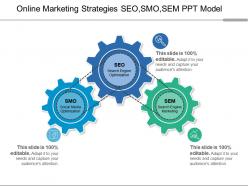
Introducing Online Marketing Strategies SEO SMO SEM PPT Model PPT template. Get this template to depict the different fields to which online marketing is related like advertising, content marketing, search engine optimization, affiliate programs, and many more. The online marketing PPT template model acts as a key for acquiring more customers as well as retain them for a longer period with some interesting campaigns. The digital marketing PowerPoint slide is an ideal slide for every media agency, marketer, marketing professionals and startup owners. Illustrate the entire strategic marketing system, and describe various methodologies related to online marketing by using the online marketing strategy slide for PowerPoint. By employing our professionally designed online marketing tool PowerPoint slide, a user can narrate his brand's story along with that he can engage with his audience in a revolutionary way through various online marketing tools. You can make your viewers understand about digital marketing importance using this digital marketing strategies PPT template design.






-

- Google Slides is a new FREE Presentation software from Google.
- All our content is 100% compatible with Google Slides.
- Just download our designs, and upload them to Google Slides and they will work automatically.
- Amaze your audience with SlideTeam and Google Slides.
-

Want Changes to This PPT Slide? Check out our Presentation Design Services
-

- WideScreen Aspect ratio is becoming a very popular format. When you download this product, the downloaded ZIP will contain this product in both standard and widescreen format.
-

- Some older products that we have may only be in standard format, but they can easily be converted to widescreen.
- To do this, please open the SlideTeam product in Powerpoint, and go to
- Design ( On the top bar) -> Page Setup -> and select "On-screen Show (16:9)” in the drop down for "Slides Sized for".
- The slide or theme will change to widescreen, and all graphics will adjust automatically. You can similarly convert our content to any other desired screen aspect ratio.
Compatible With Google Slides

Get This In WideScreen
You must be logged in to download this presentation.


Do you want to remove this product from your favourites?
PowerPoint presentation slides
Presenting Online Marketing Strategies SEO SMO SEM PPT Model. Customize the slide as per your needs. Match it to your organizational presentation theme. Alter the colors, font style, font type and the background of the slide. The slide can be saved into formats like JPG, JPEG, PNG and PDF file formats. It goes well with the Google Slides and with the major Microsoft versions. Can be viewed on a standard screen and widescreen size because of its splendid pixel quality.

People who downloaded this PowerPoint presentation also viewed the following :
Online marketing strategies seo smo sem ppt model with all 5 slides:
Acceptance of your ideas grows with our Online Marketing Strategies Seo Smo Sem Ppt Model. Folks will begin to come around.
-
Topic best represented with attractive design.
-
Very unique and reliable designs.
