


Online Restaurant International Market Report Powerpoint Presentation Slides
Our Online Restaurant International Market Report template is designed to provide valuable insights for restaurateurs looking to expand their existing restaurant or start a digital brand at a low cost. The template offers an industry overview of the cloud kitchen market, including statistical highlights, market size, and growth rate. It also explores the market landscape for virtual restaurants, discussing market drivers, restraints, and challenges. The global cloud kitchen market is segmented by type, product, nature, and region, providing a comprehensive analysis of the market dynamics, including the impact of COVID-19, trending technologies, growth factors, and the growth rate of cloud kitchens and online food delivery. The presentation further includes a market analysis section that assesses multiple market frameworks such as SWOT analysis and Porters five forces analysis. It also showcases the kitchen as a service model, forecasting its growth and adoption by restaurant size. Lastly, the PPT outlines various dashboards for managing cloud kitchen operations, financials, and performance. Gain access to this comprehensive resource and leverage the potential of the cloud kitchen market.
Our Online Restaurant International Market Report template is designed to provide valuable insights for restaurateurs looki..




















-

- Google Slides is a new FREE Presentation software from Google.
- All our content is 100% compatible with Google Slides.
- Just download our designs, and upload them to Google Slides and they will work automatically.
- Amaze your audience with SlideTeam and Google Slides.
-

Want Changes to This PPT Slide? Check out our Presentation Design Services
-

- WideScreen Aspect ratio is becoming a very popular format. When you download this product, the downloaded ZIP will contain this product in both standard and widescreen format.
-

- Some older products that we have may only be in standard format, but they can easily be converted to widescreen.
- To do this, please open the SlideTeam product in Powerpoint, and go to
- Design ( On the top bar) -> Page Setup -> and select "On-screen Show (16:9)” in the drop down for "Slides Sized for".
- The slide or theme will change to widescreen, and all graphics will adjust automatically. You can similarly convert our content to any other desired screen aspect ratio.
Compatible With Google Slides

Get This In WideScreen
You must be logged in to download this presentation.


Do you want to remove this product from your favourites?
PowerPoint presentation slides
Enthrall your audience with this Online Restaurant International Market Report Powerpoint Presentation Slides. Increase your presentation threshold by deploying this well crafted template. It acts as a great communication tool due to its well researched content. It also contains stylized icons, graphics, visuals etc, which make it an immediate attention grabber. Comprising sixty nine slides, this complete deck is all you need to get noticed. All the slides and their content can be altered to suit your unique business setting. Not only that, other components and graphics can also be modified to add personal touches to this prefabricated set.

People who downloaded this PowerPoint presentation also viewed the following :
Content of this Powerpoint Presentation
Slide 1: This slide introduces Online Restaurant International Market Report. State your company name and begin.
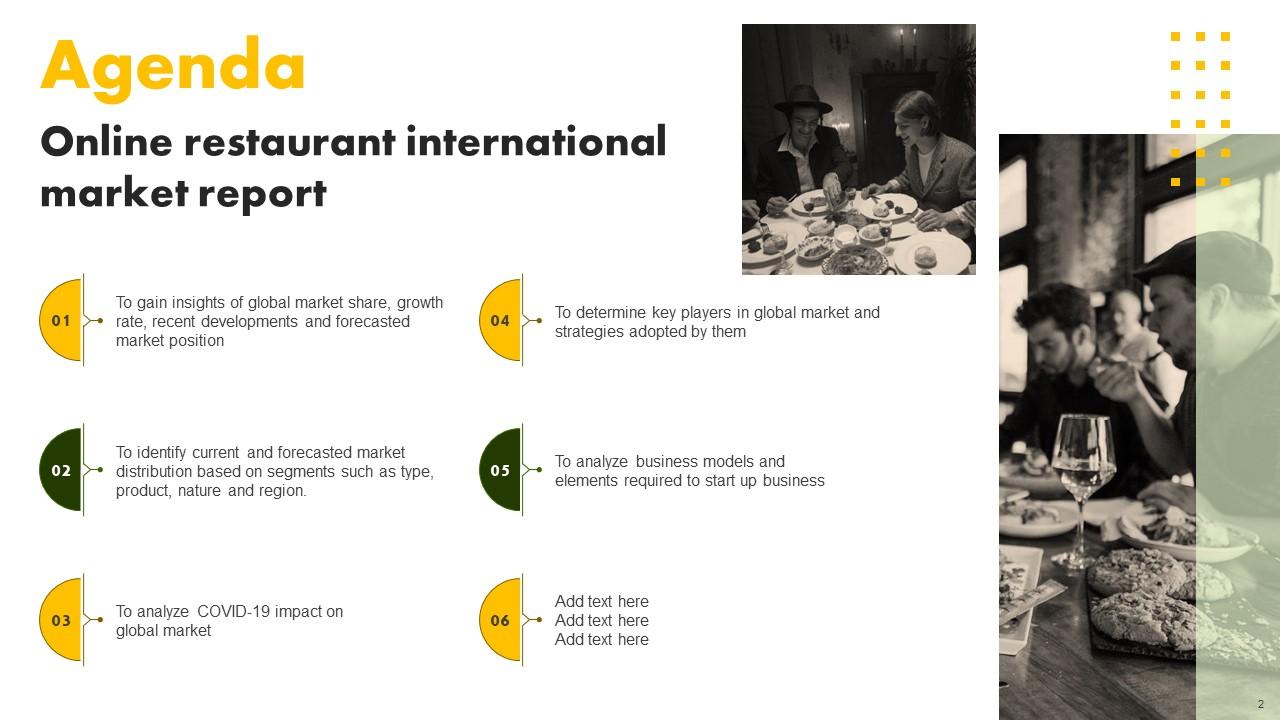
Slide 2: This slide states Agenda of the presentation.
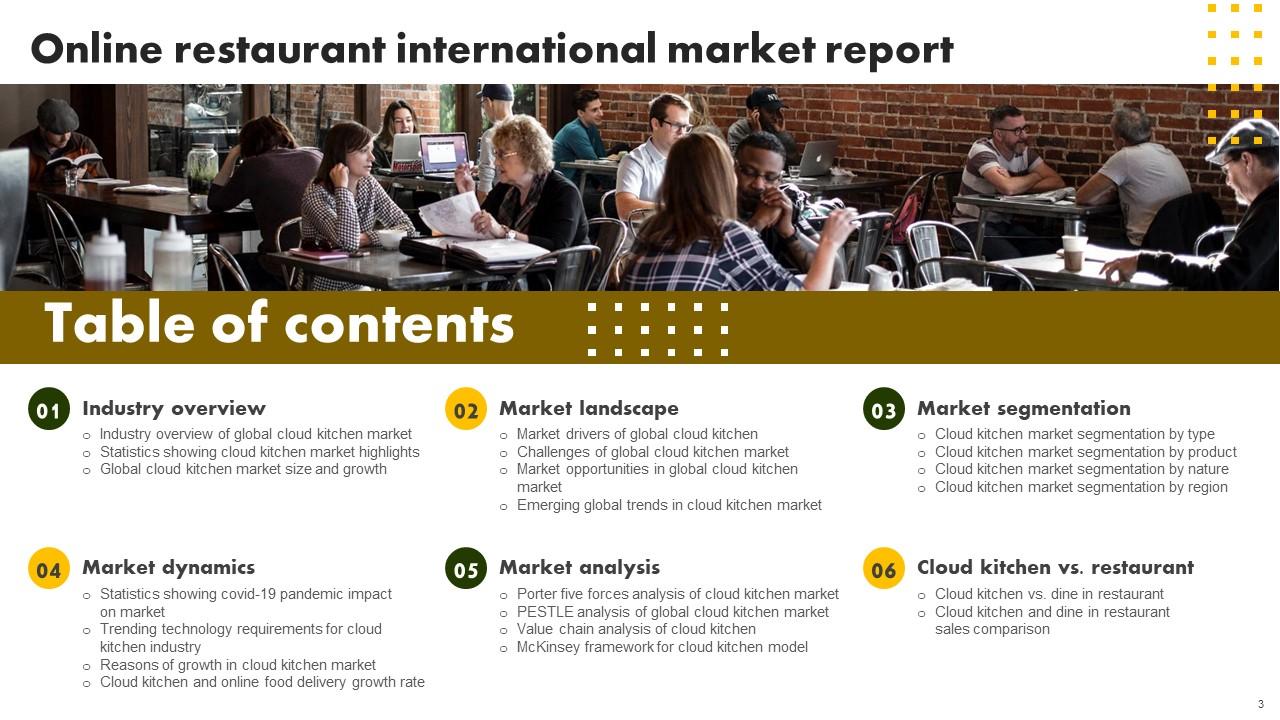
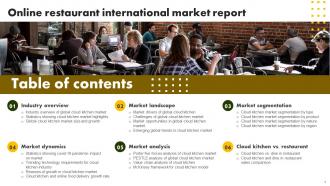
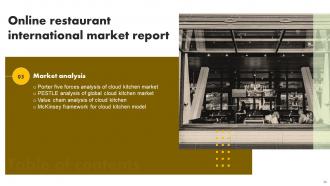
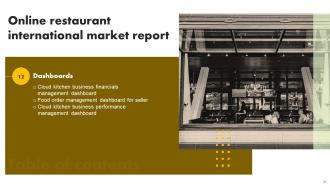
Slide 3: This slide shows Table of Content for the presentation.
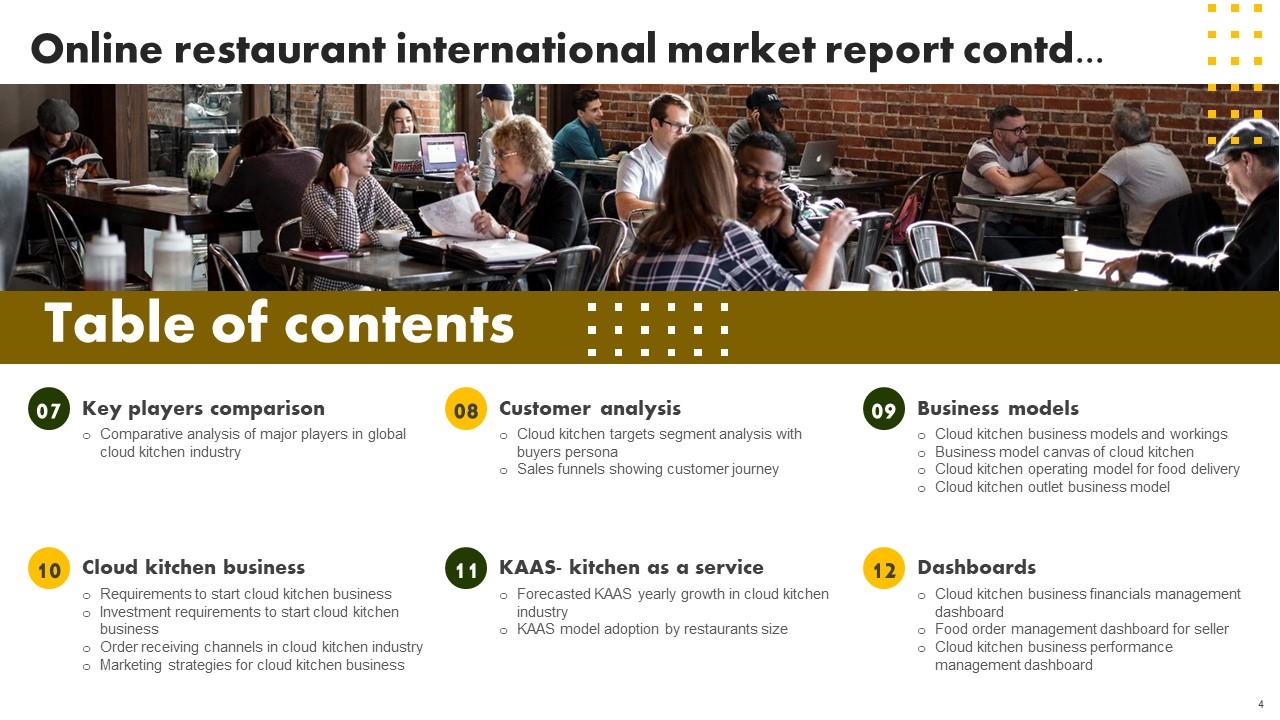
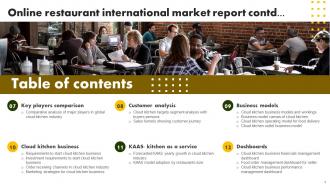
Slide 4: This is another slide continuing Table of Content for the presentation.
Slide 5: This slide highlights the Title for the Topics to be discussed next.
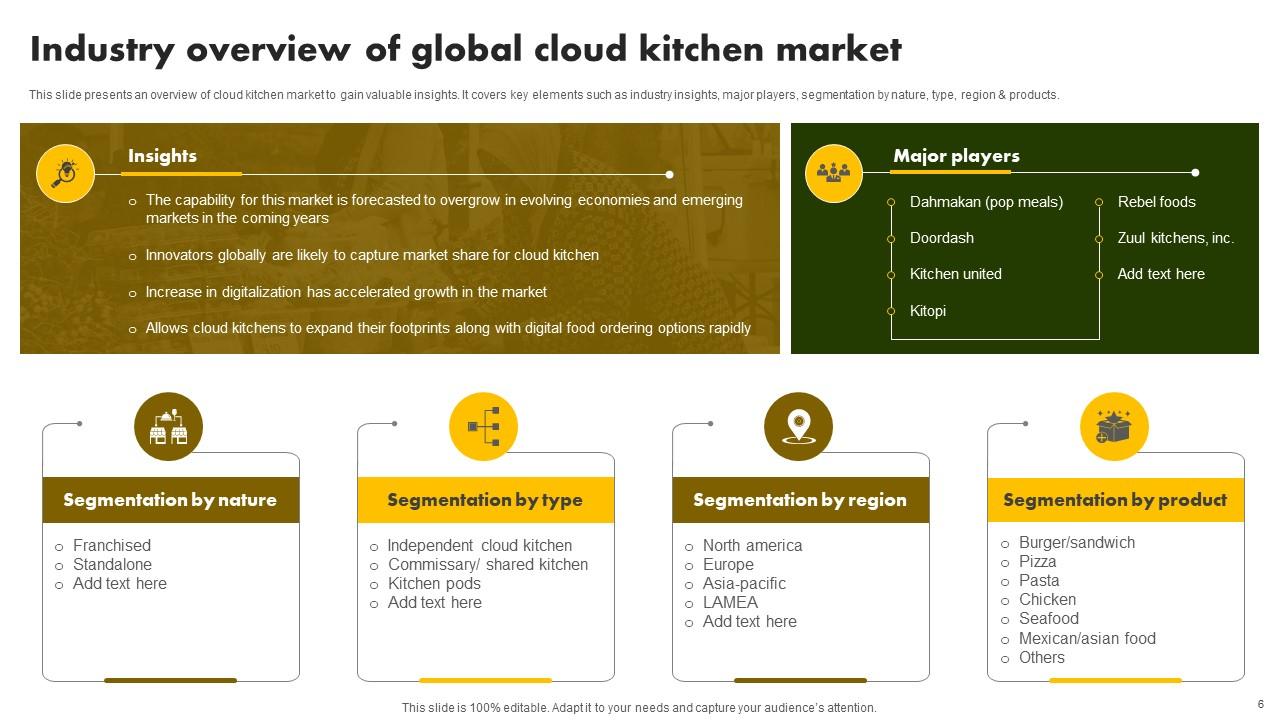
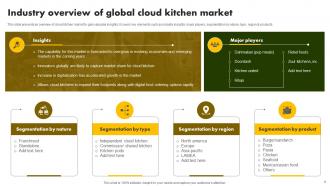
Slide 6: This slide presents an overview of cloud kitchen market to gain valuable insights.
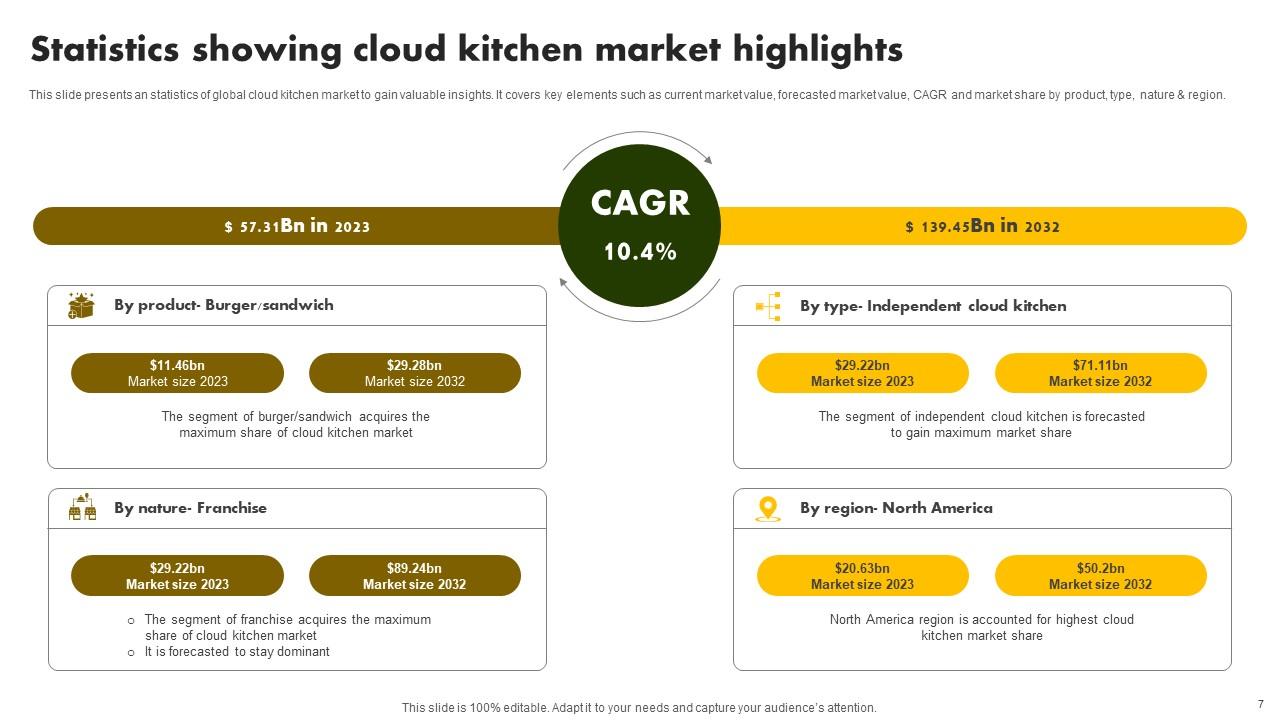
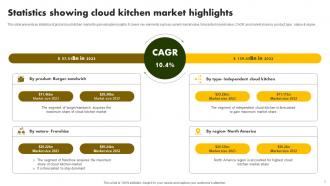
Slide 7: This slide reveals the statistics of global cloud kitchen market to gain valuable insights.
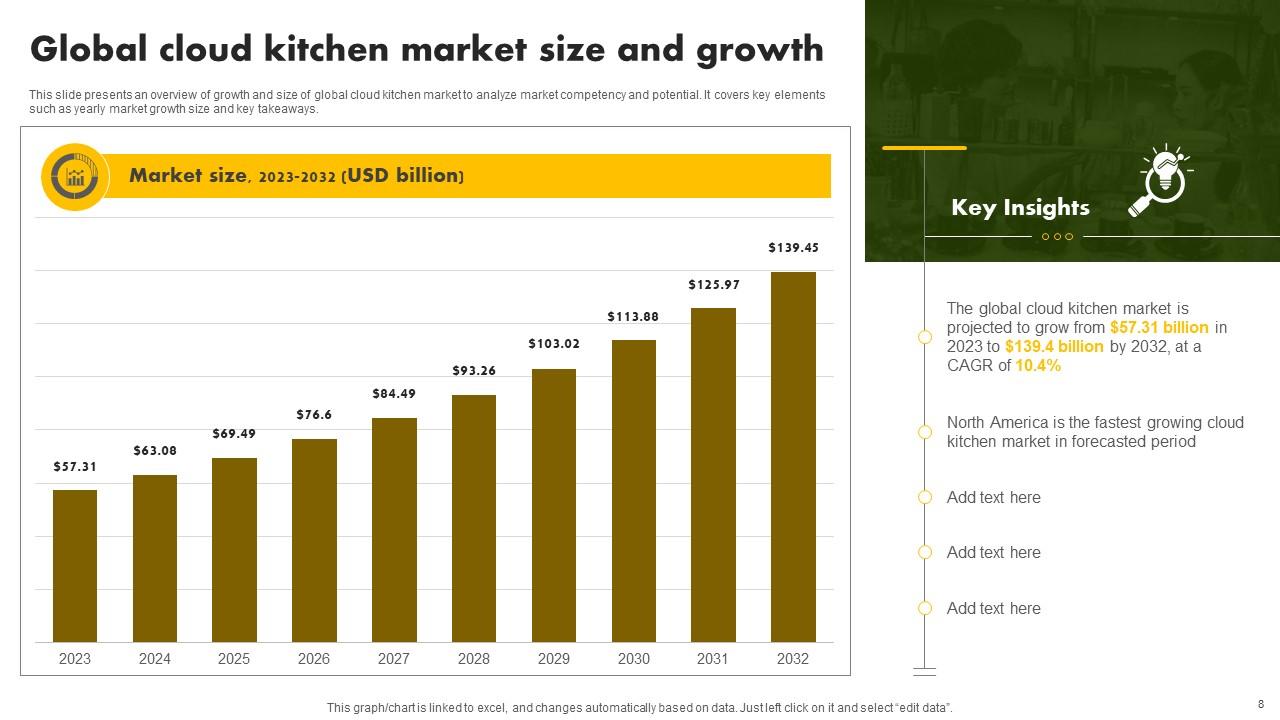
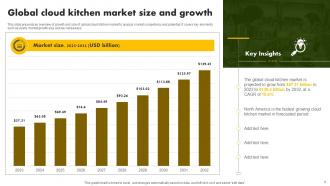
Slide 8: This slide focuses on Global cloud kitchen market size and growth.
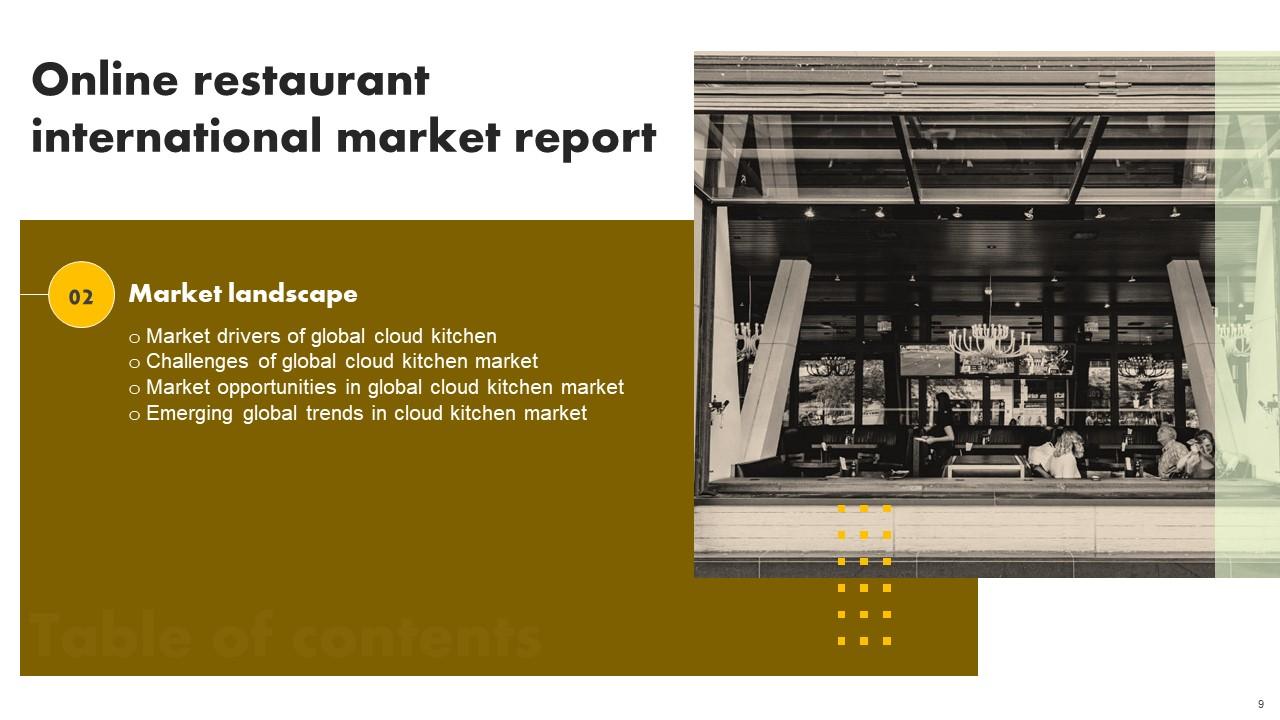
Slide 9: This slide mentions the Heading for the Components to be covered further.
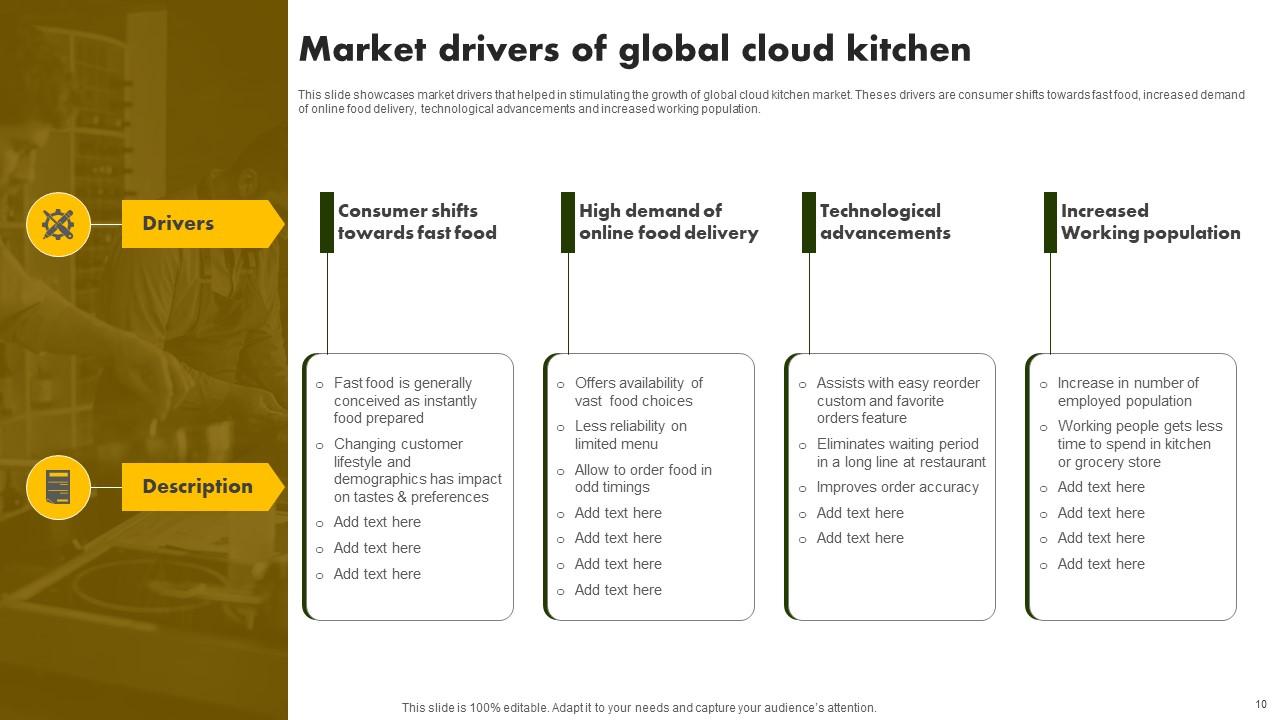
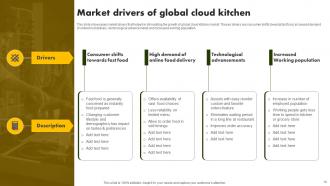
Slide 10: This slide shows the market drivers that helped in stimulating the growth of global cloud kitchen market.
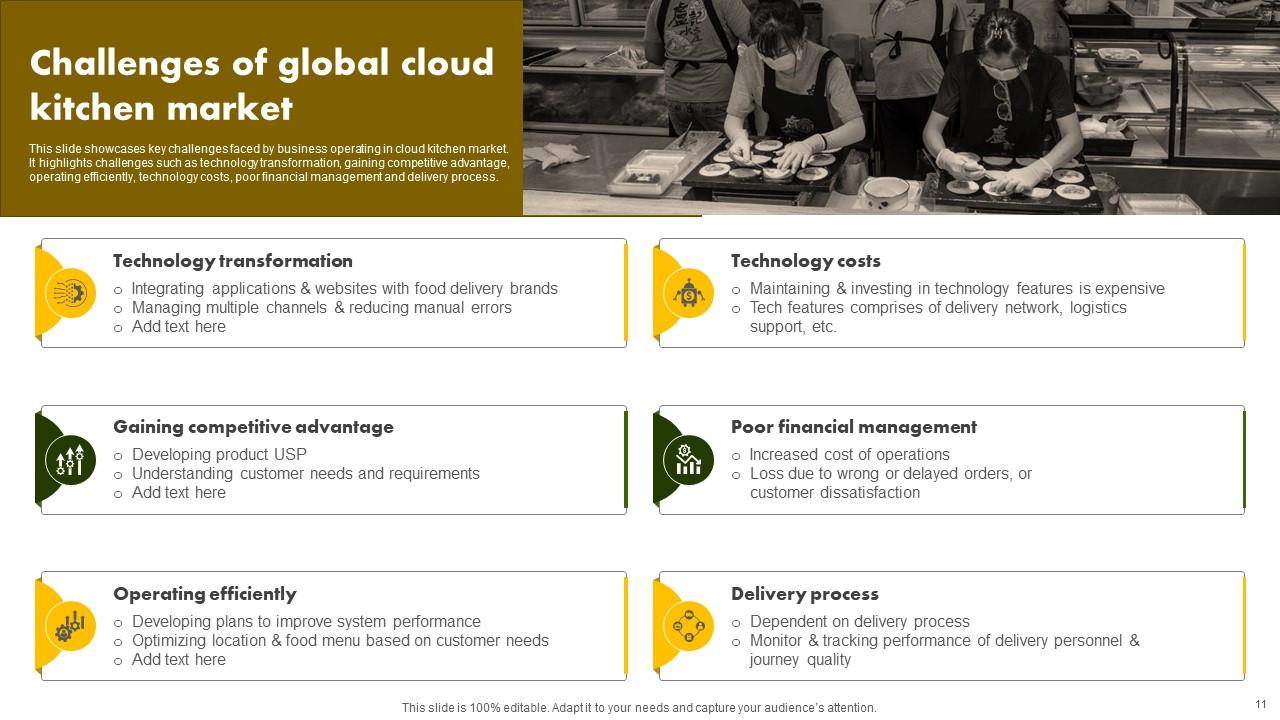
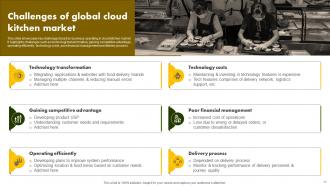
Slide 11: This slide incorporates the Challenges of global cloud kitchen market.
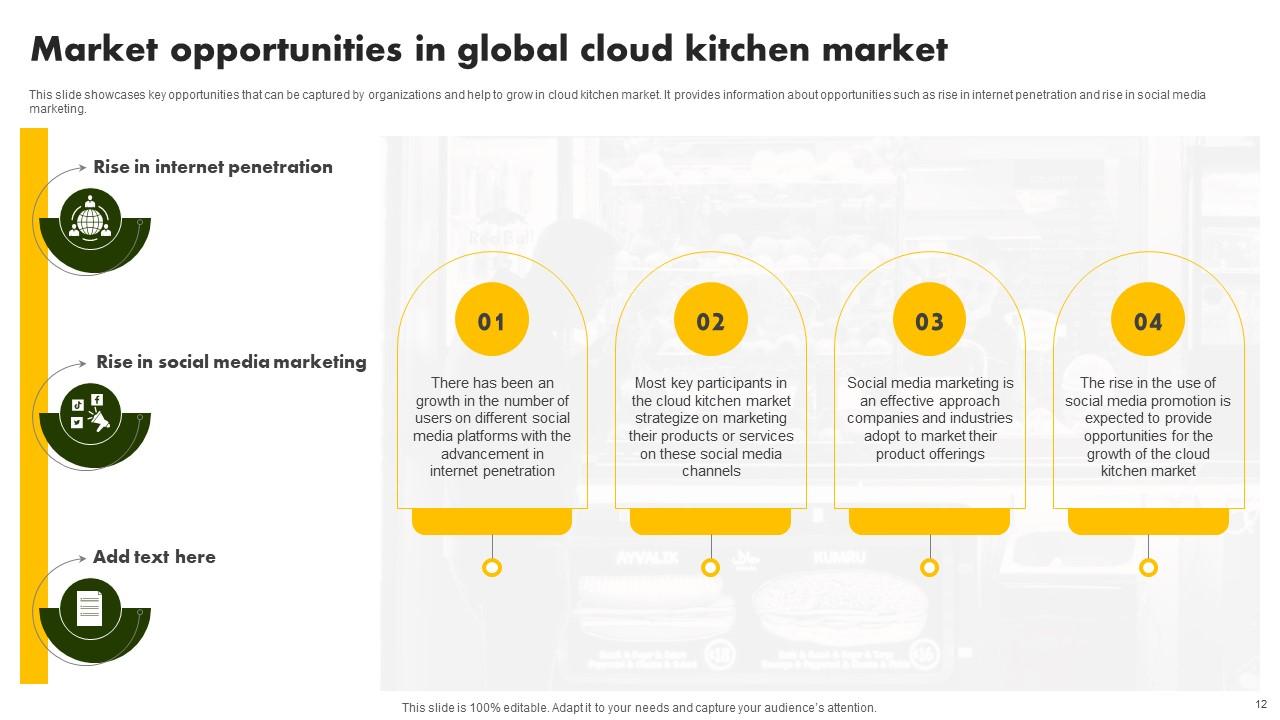
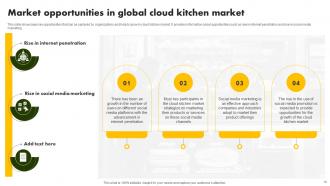
Slide 12: This slide emphasizes on the Market opportunities in global cloud kitchen market.
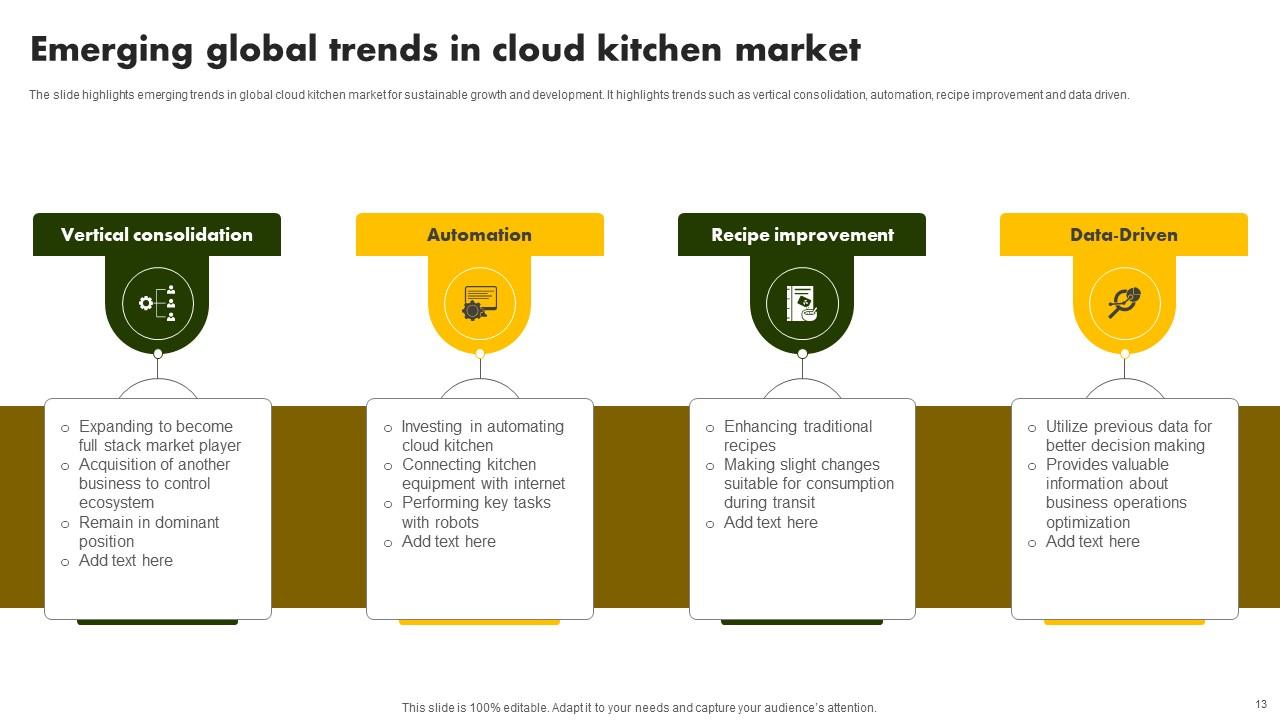
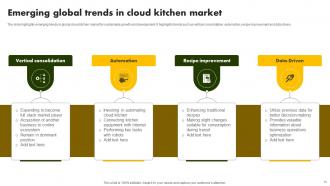
Slide 13: The slide highlights the emerging trends in global cloud kitchen market for sustainable growth and development.
Slide 14: This slide mentions the Title for the Ideas to be discussed further.
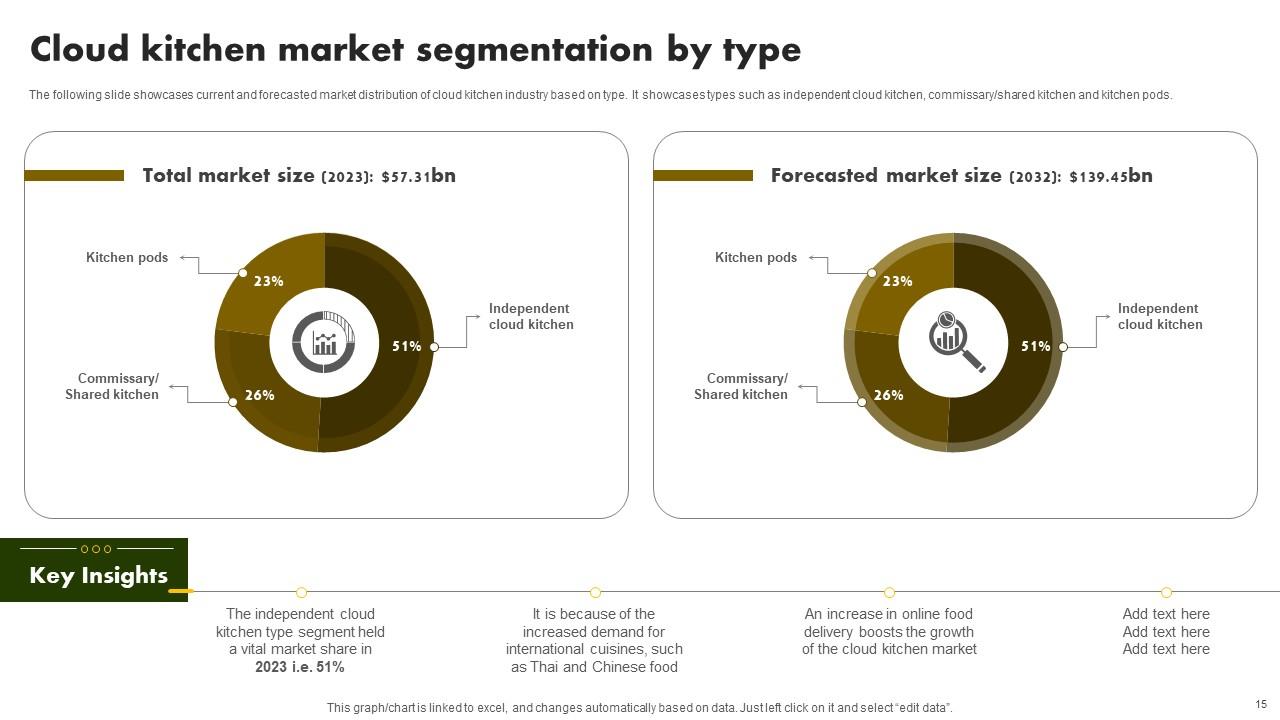
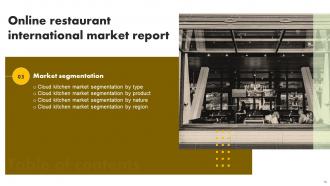
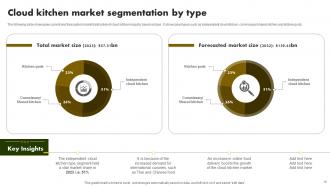
Slide 15: The following slide showcases current and forecasted market distribution of cloud kitchen industry based on type.
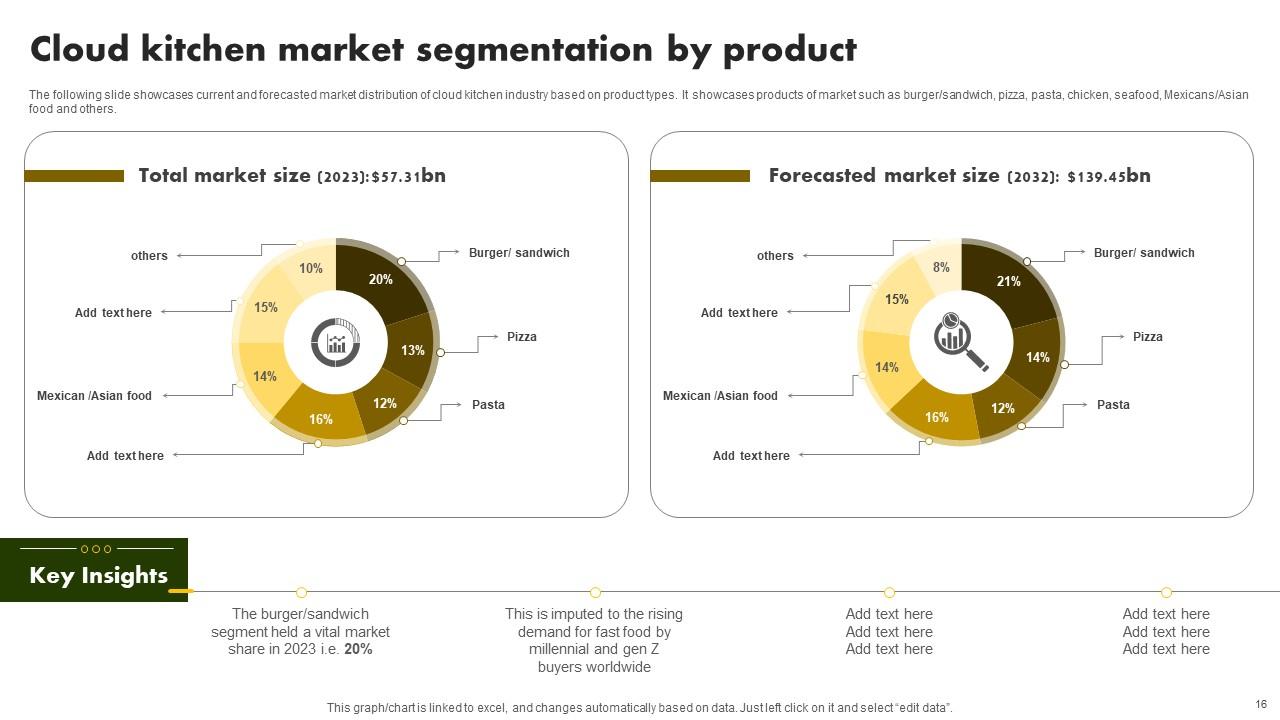
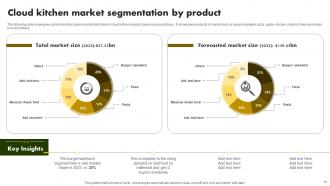
Slide 16: This slide presents the Cloud kitchen market segmentation by product.
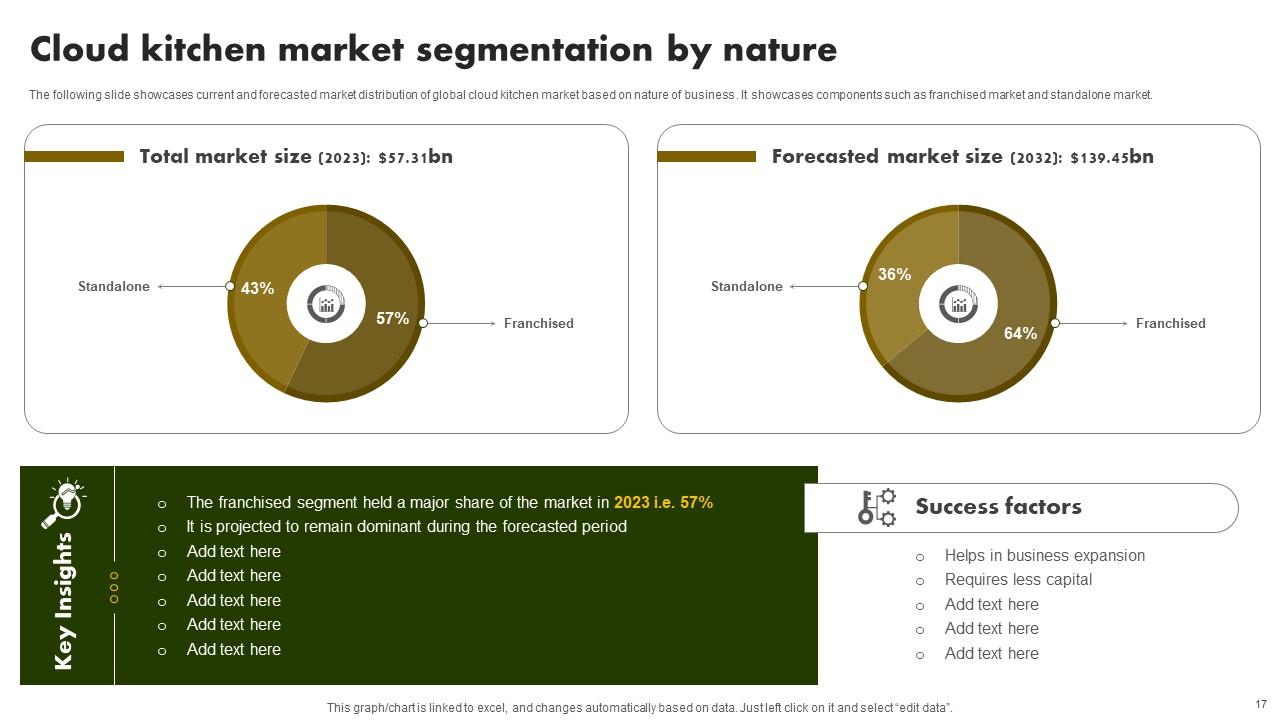
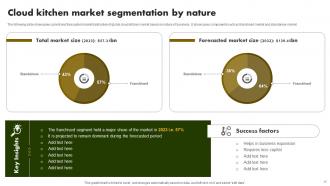
Slide 17: This slide focuses on the Cloud kitchen market segmentation by nature.
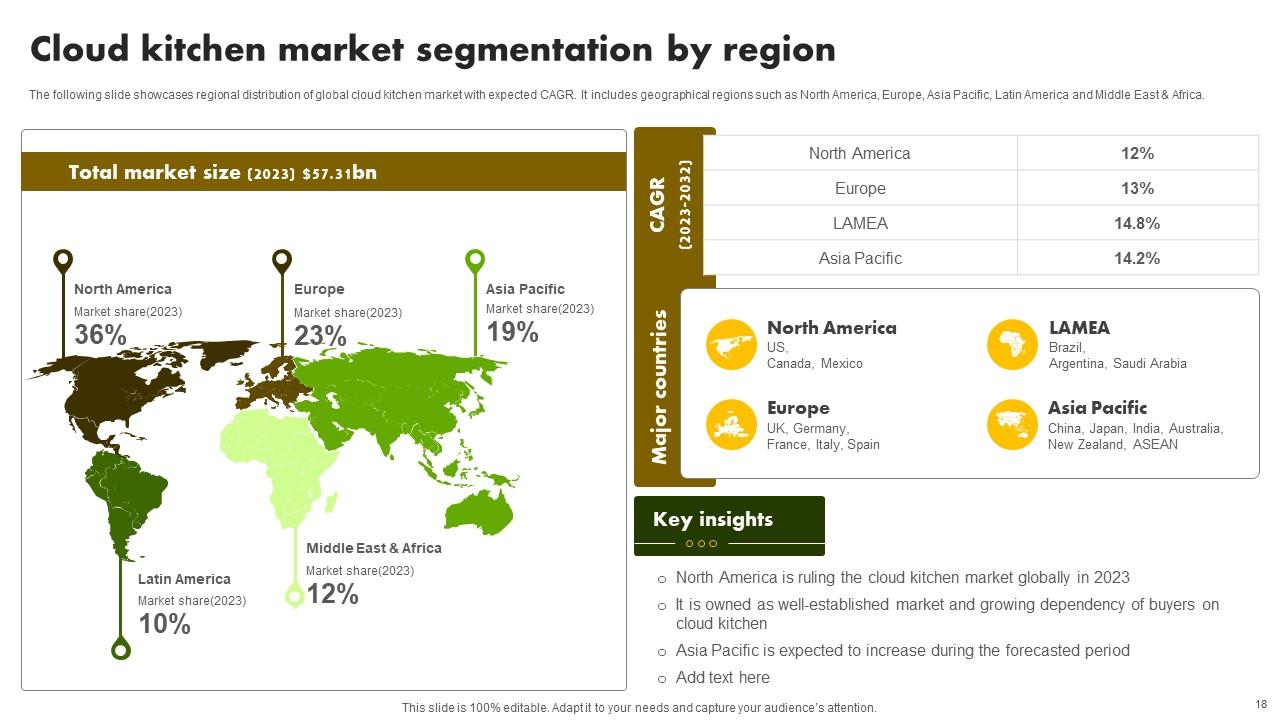
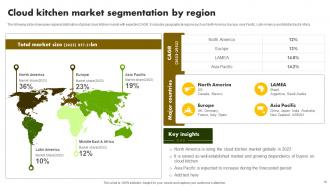
Slide 18: This slide reveals the Cloud kitchen market segmentation by region.
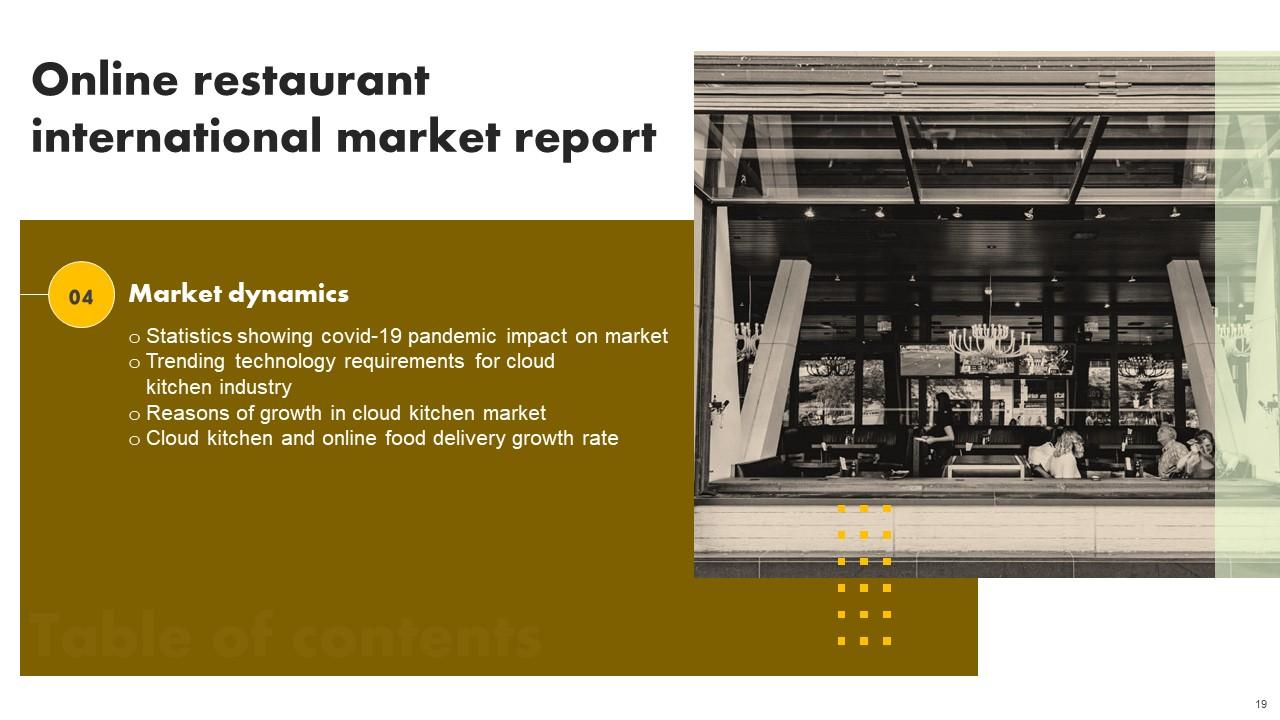
Slide 19: This slide incorporates the Heading for the Ideas to be covered in the forth-coming template.
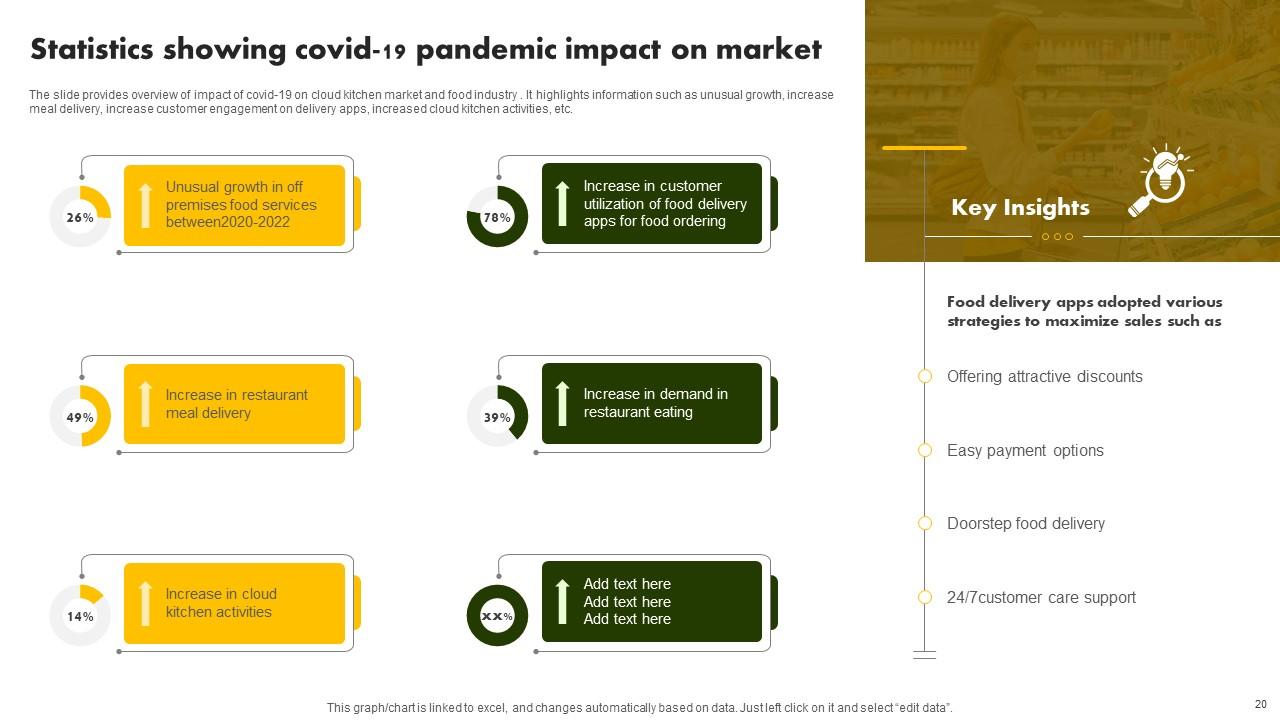
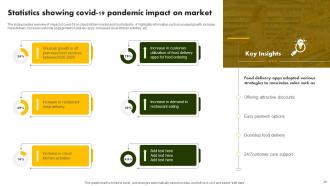
Slide 20: The slide provides overview of impact of covid-19 on cloud kitchen market and food industry.
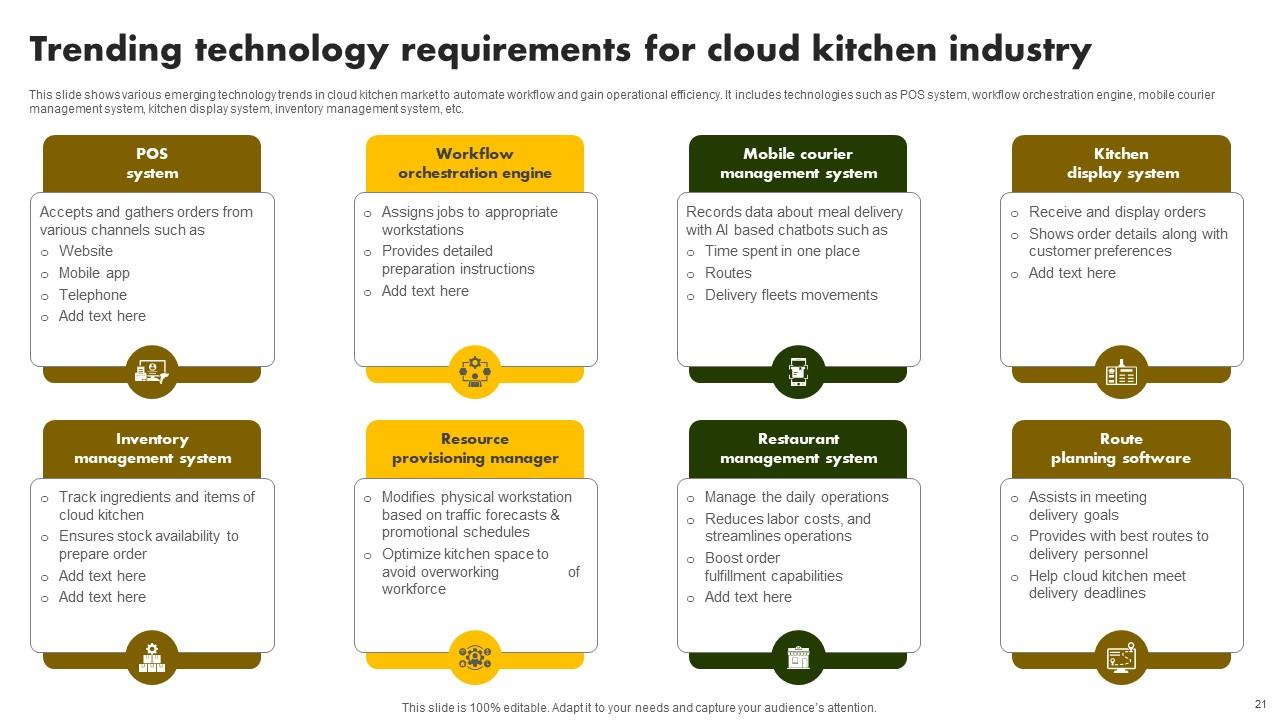
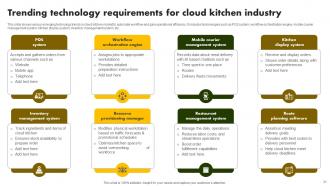
Slide 21: This slide shows various emerging technology trends in cloud kitchen market to automate workflow and gain operational efficiency.
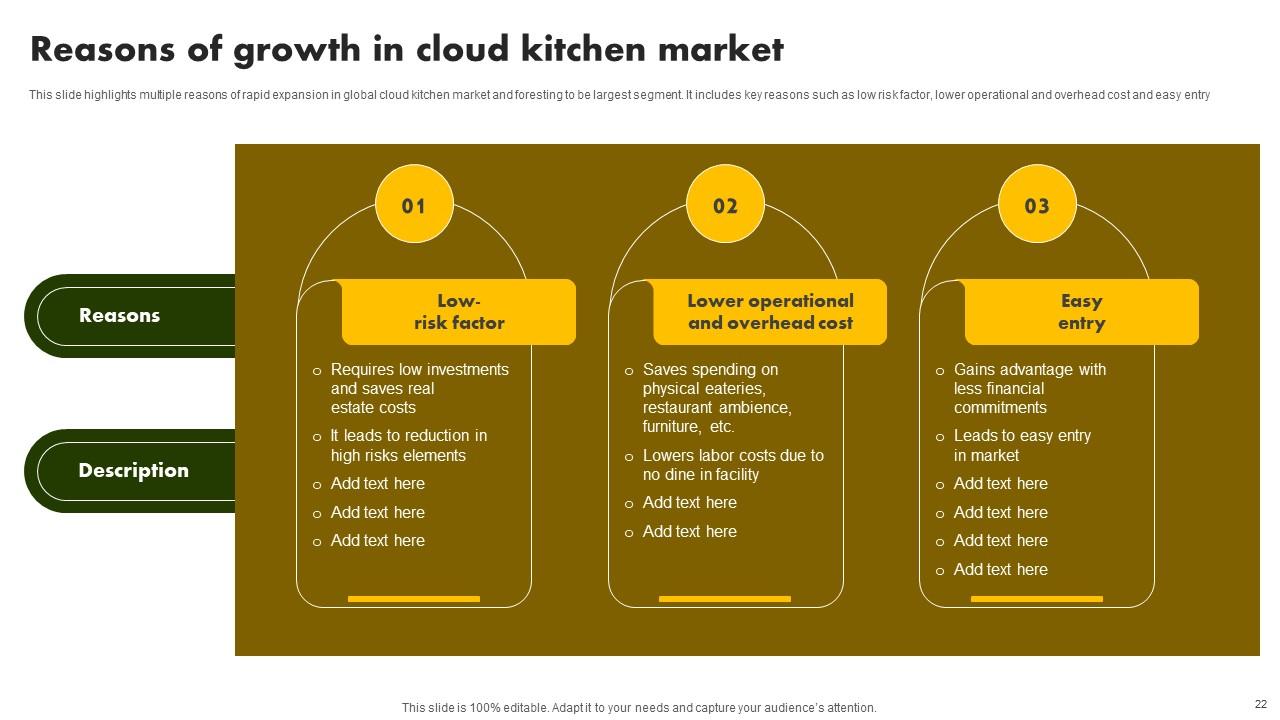
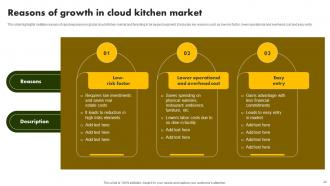
Slide 22: This slide exhibits the Reasons of growth in cloud kitchen market.
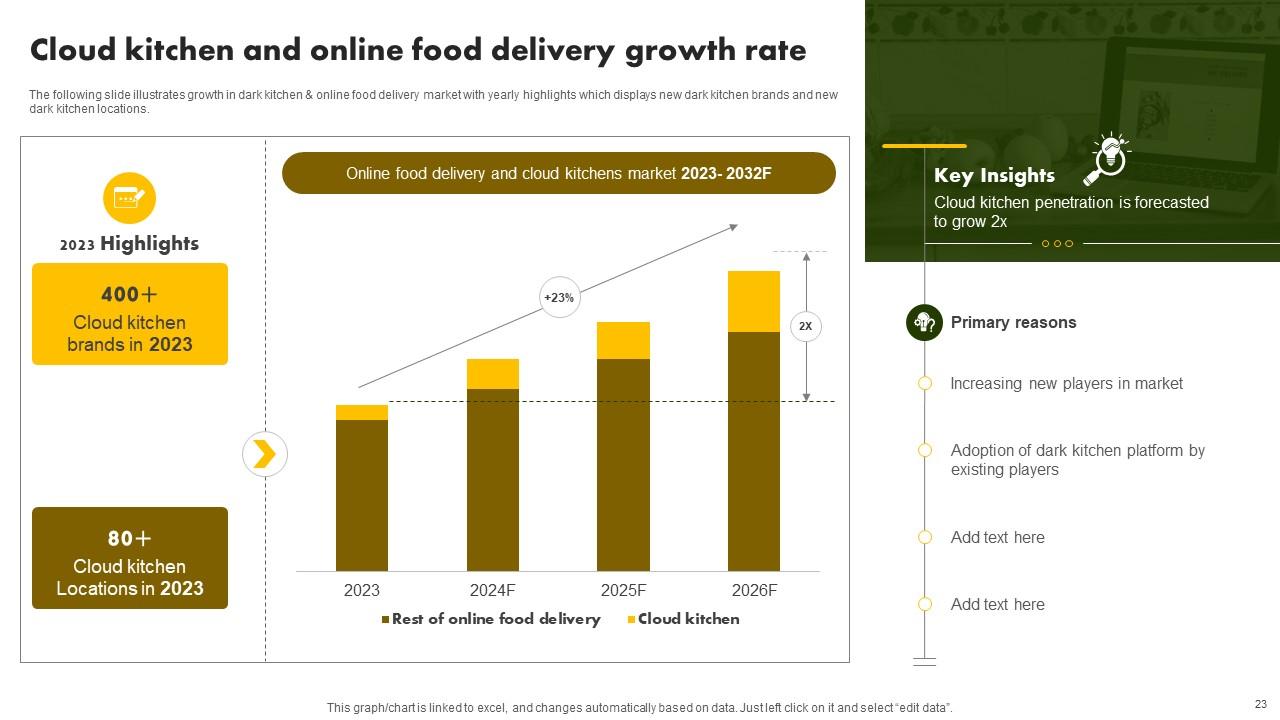
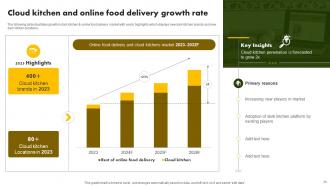
Slide 23: The following slide illustrates growth in dark kitchen & online food delivery market with yearly highlights which displays new dark kitchen brands and new dark kitchen locations.
Slide 24: This slide mentions the Title for the Components to be discussed further.
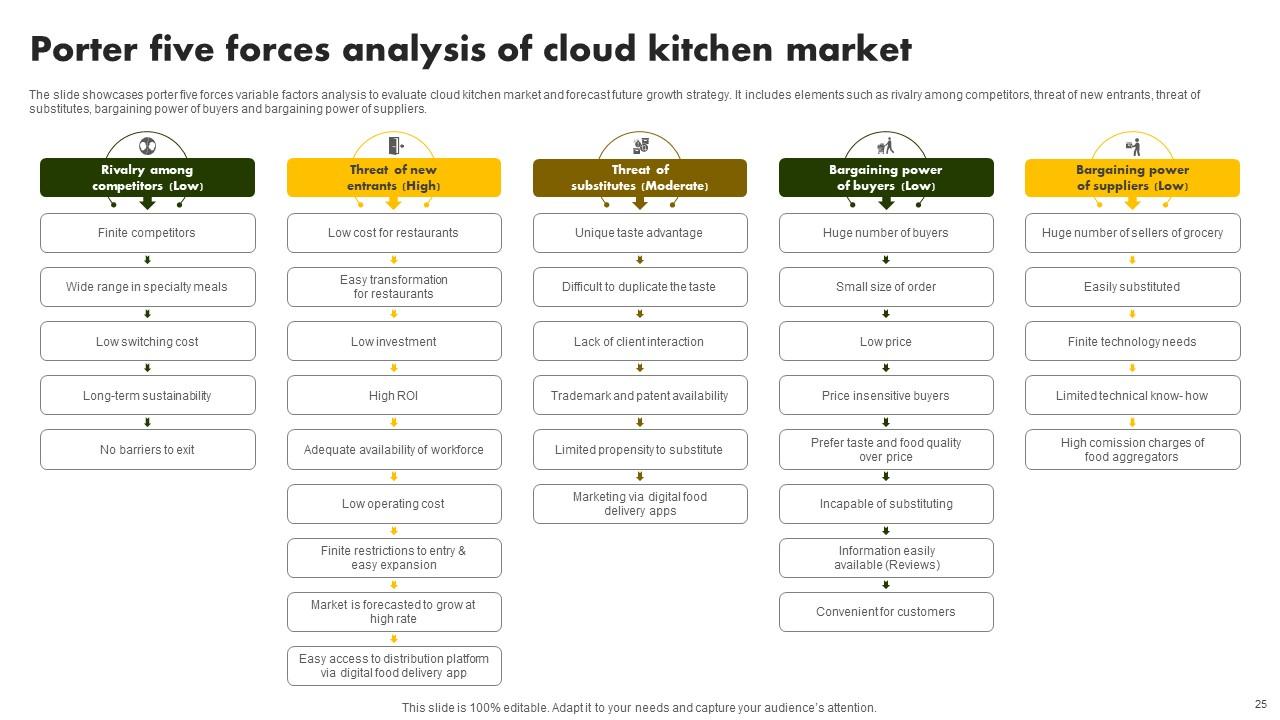
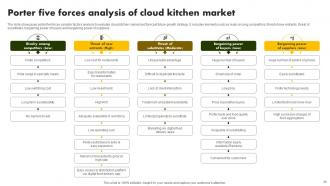
Slide 25: The slide showcases porter five forces variable factors analysis to evaluate cloud kitchen market and forecast future growth strategy.
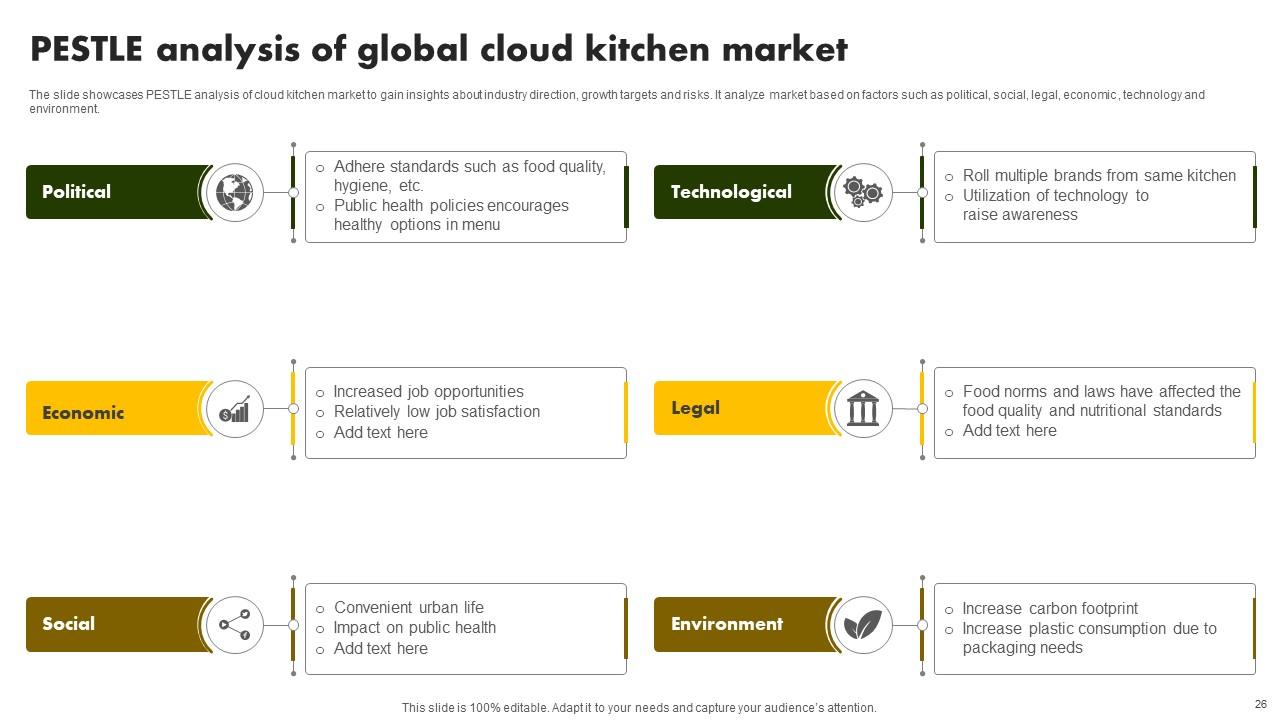
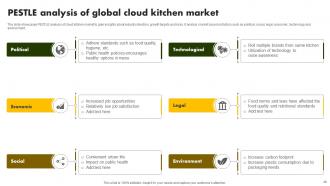
Slide 26: This slide gives a glimpse of the PESTLE analysis of global cloud kitchen market.
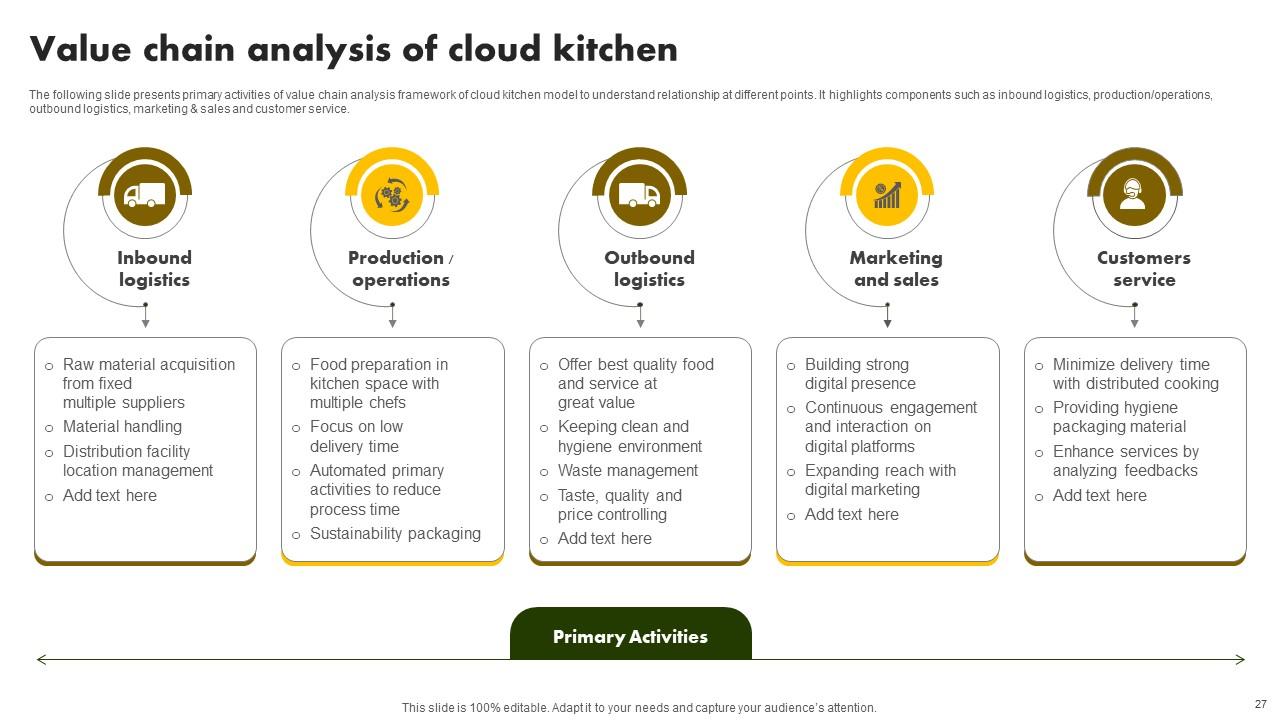
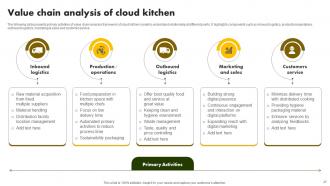
Slide 27: The following slide presents primary activities of value chain analysis framework of cloud kitchen model to understand relationship at different points.
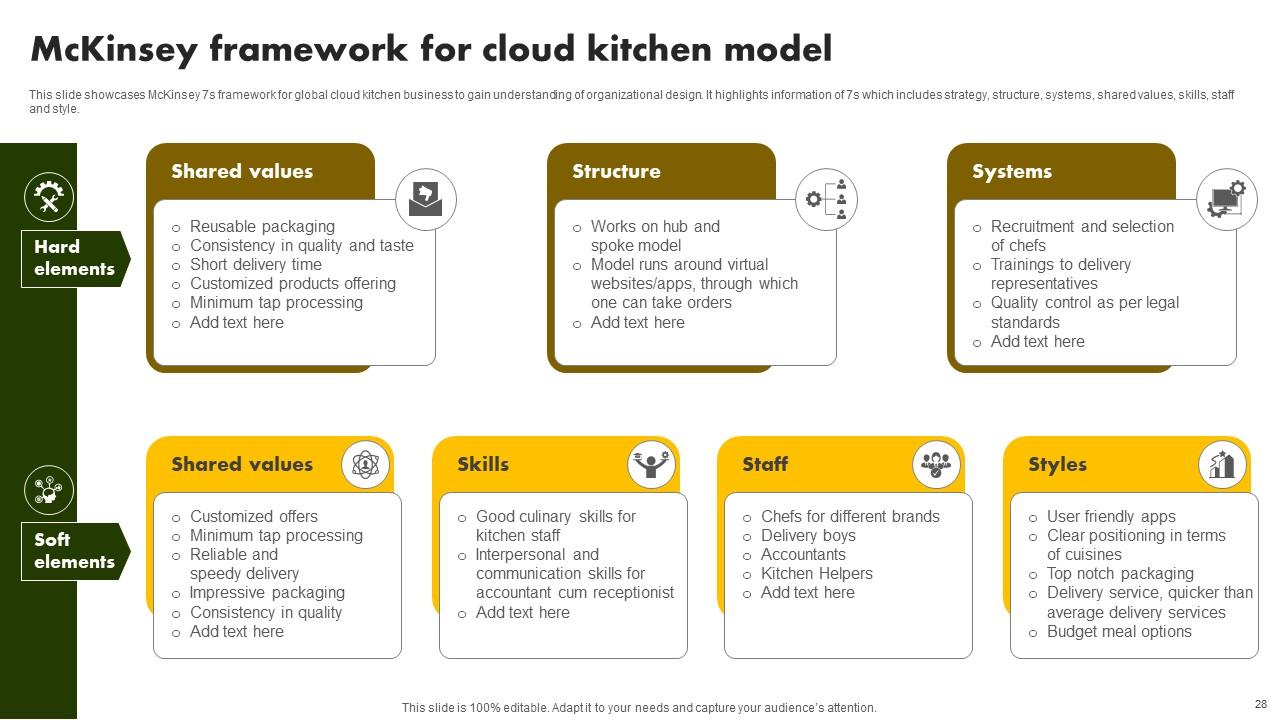
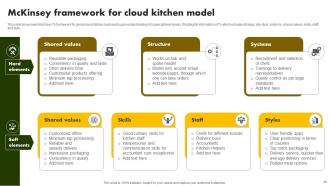
Slide 28: This slide focuses on the McKinsey framework for cloud kitchen model.
Slide 29: This slide indicates the Heading for the Components to be covered in the next template.
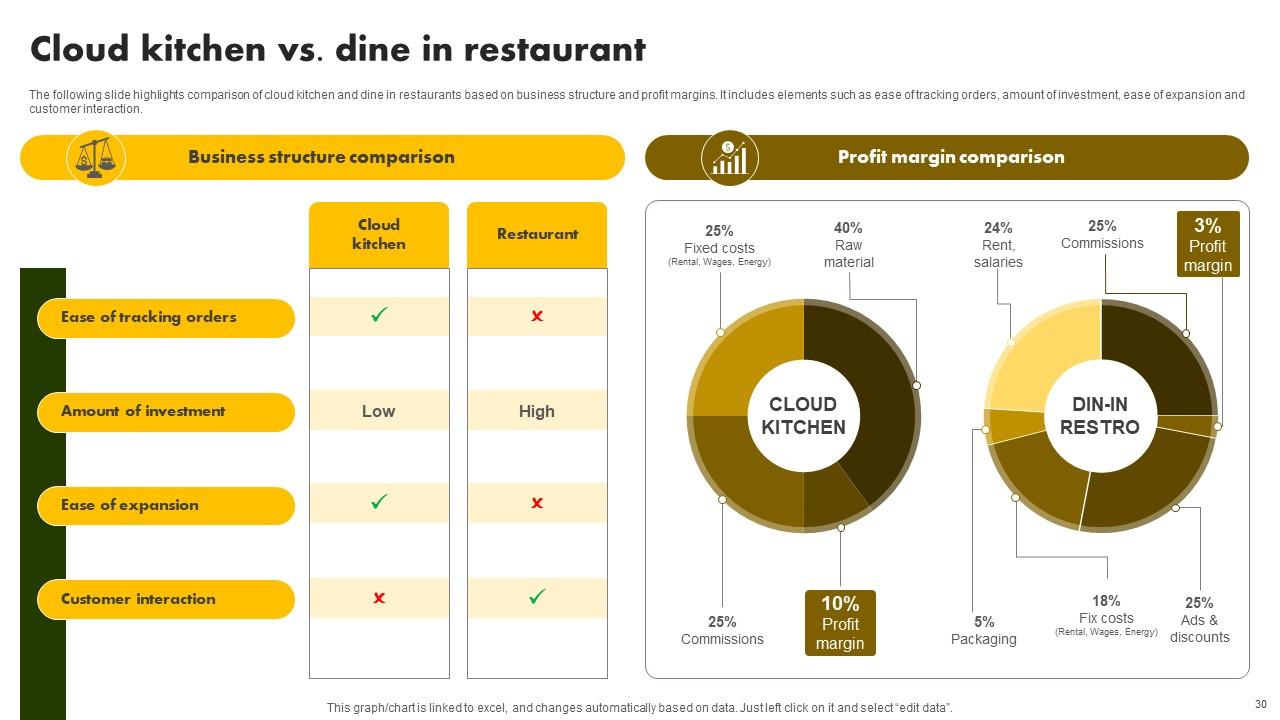
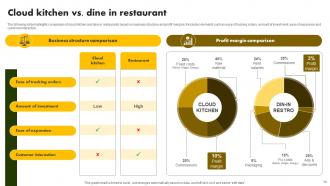
Slide 30: The following slide highlights comparison of cloud kitchen and dine in restaurants based on business structure and profit margins.
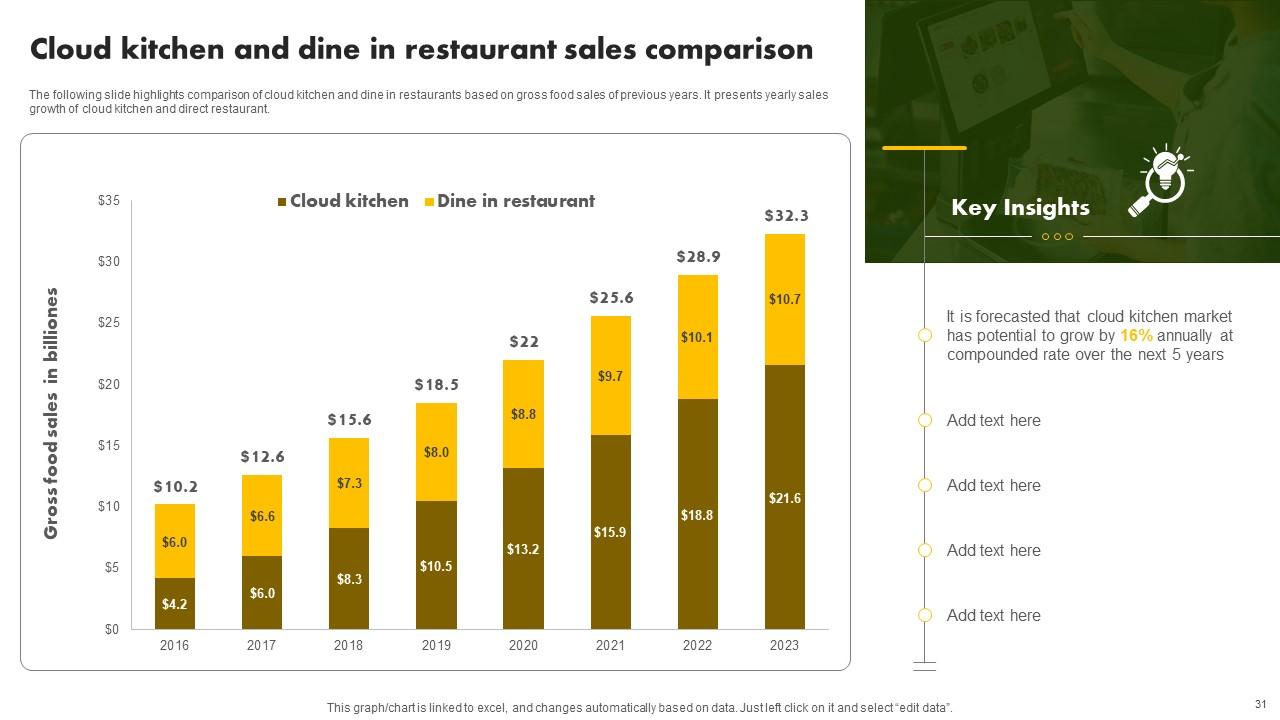
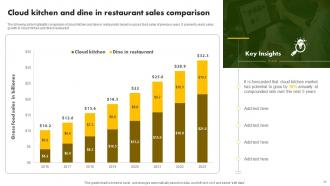
Slide 31: The following slide represents the comparison of cloud kitchen and dine in restaurants based on gross food sales of previous years.
Slide 32: This slide elucidates the Title for the Topics to be discussed further.
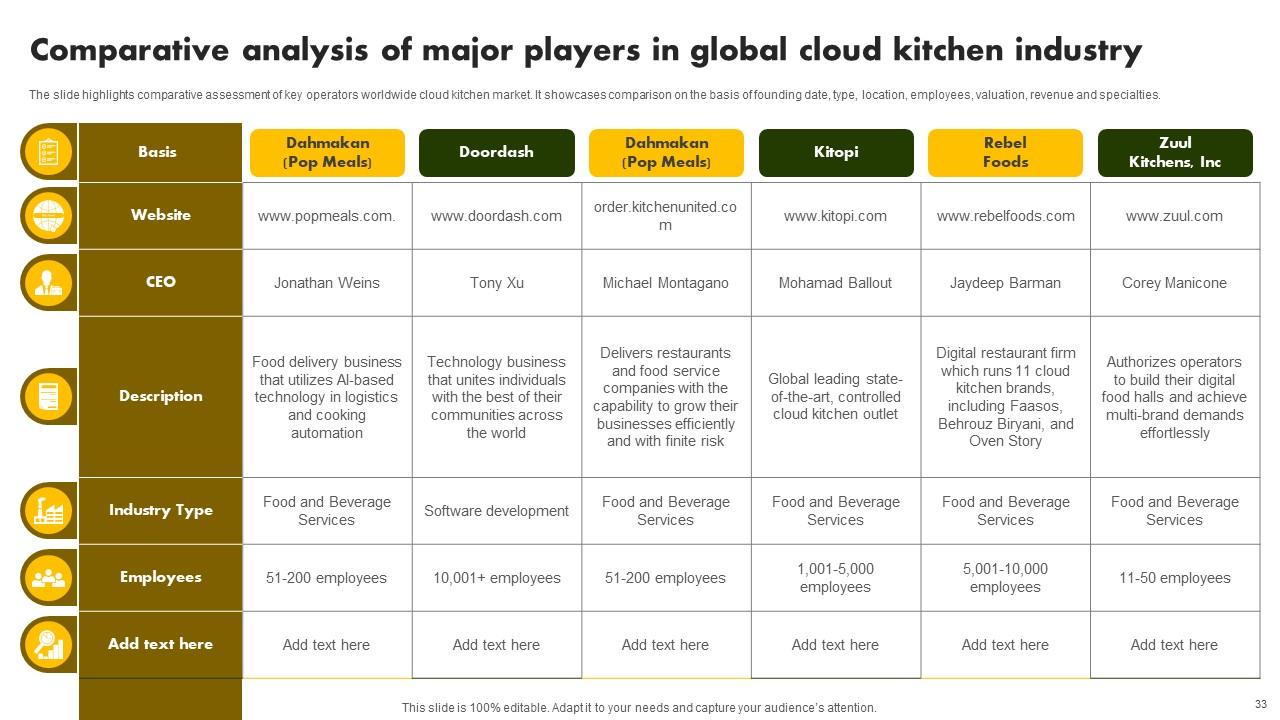
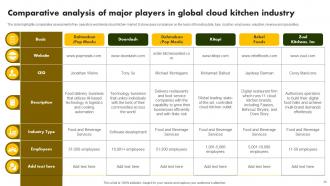
Slide 33: This slide displays the Comparative analysis of major players in global cloud kitchen industry.
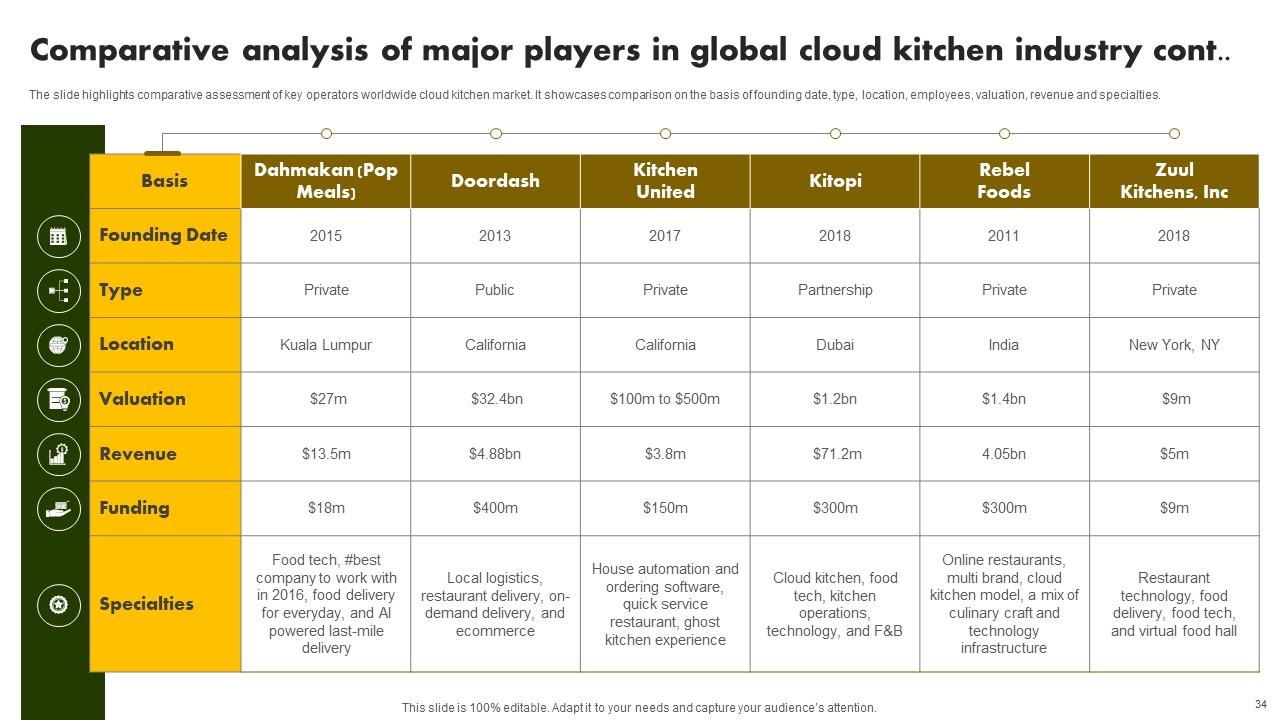
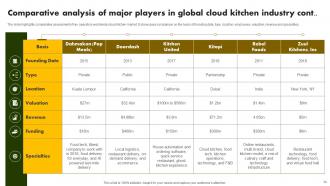
Slide 34: This slide continues the Comparative analysis of major players.
Slide 35: This slide portrays the Heading for the Contents to be covered in the forth-coming template.
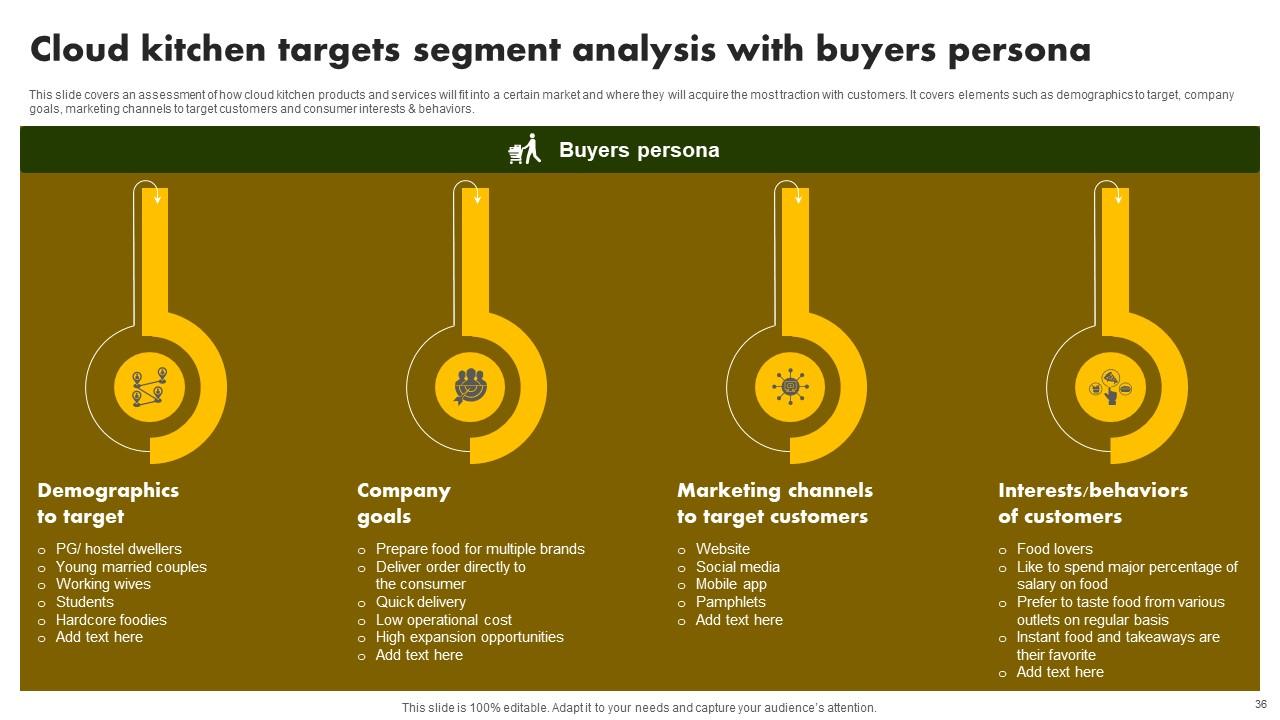
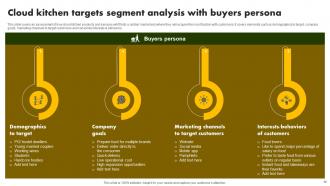
Slide 36: This slide covers Cloud kitchen targets segment analysis with buyers persona.
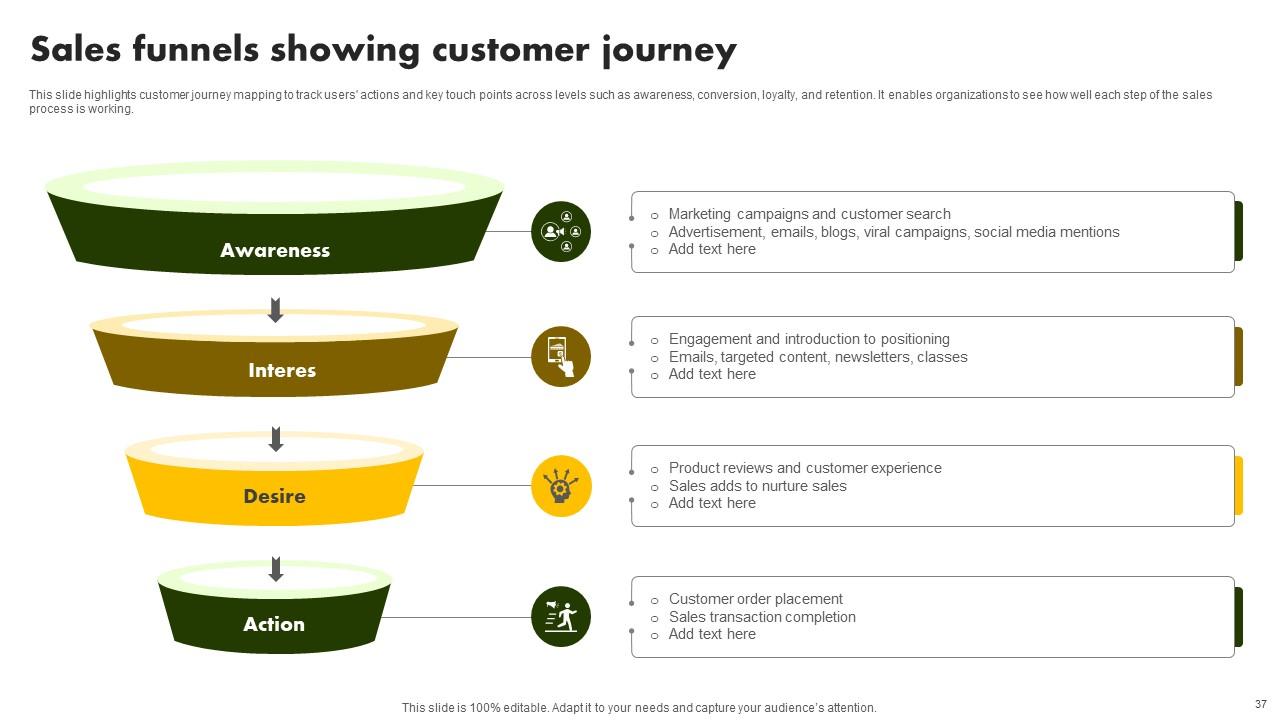
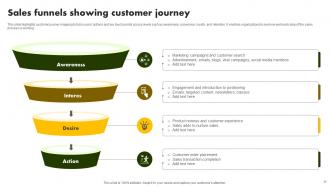
Slide 37: This slide highlights customer journey mapping to track users' actions and key touch points across levels such as awareness, conversion, etc.
Slide 38: This slide incorporates the Title for the Ideas to be discussed next.
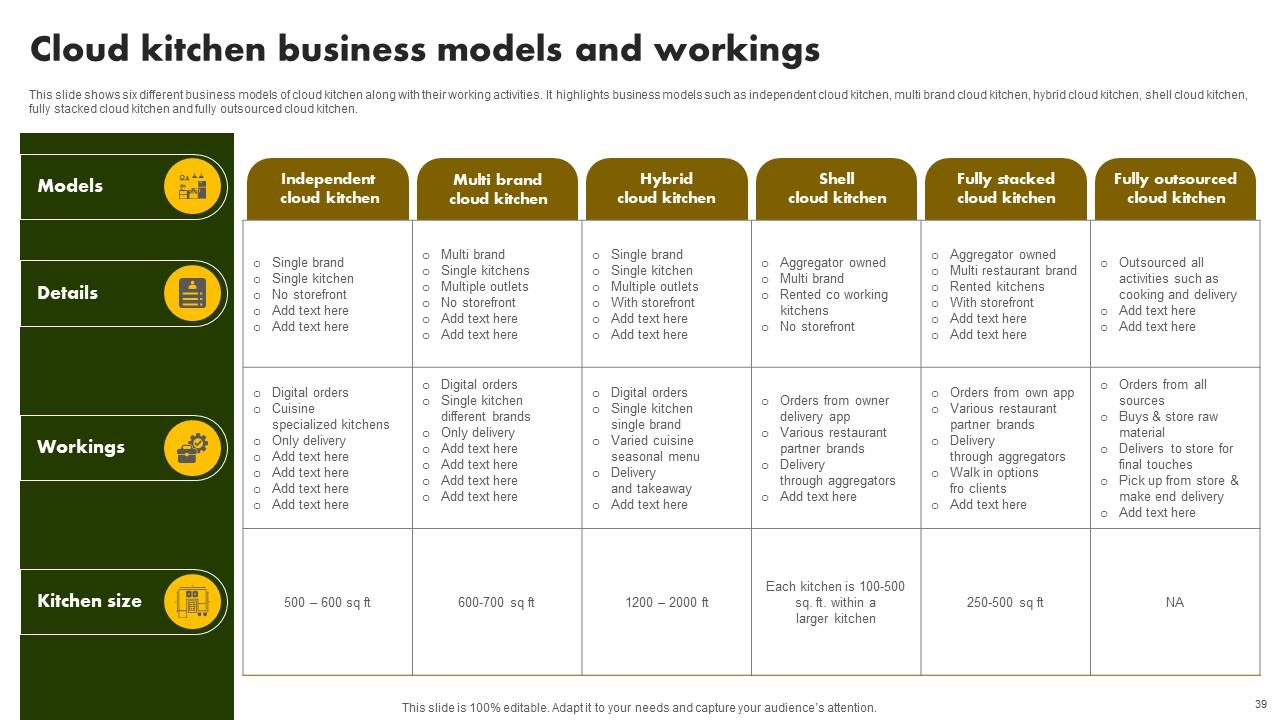
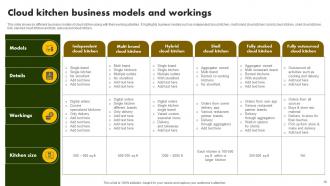
Slide 39: This slide emphasizes on the Cloud kitchen business models and workings.
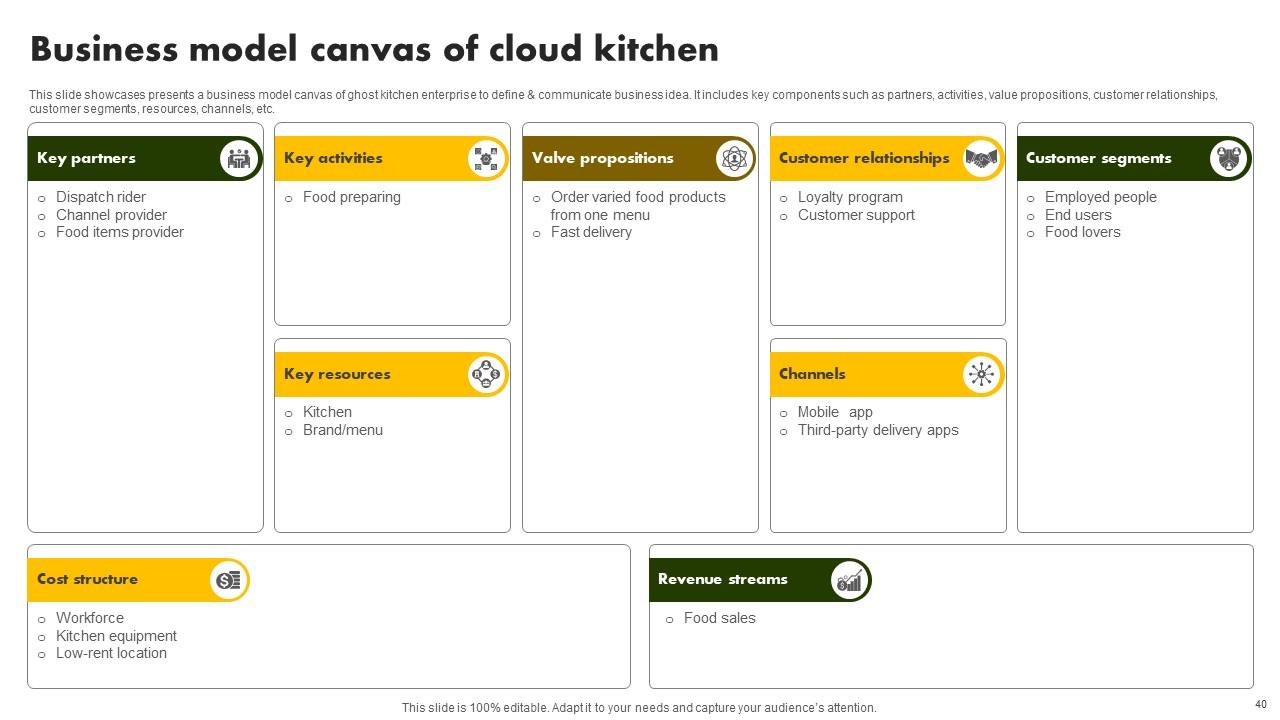
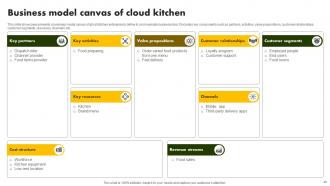
Slide 40: This slide presents a business model canvas of ghost kitchen enterprise to define & communicate business idea.
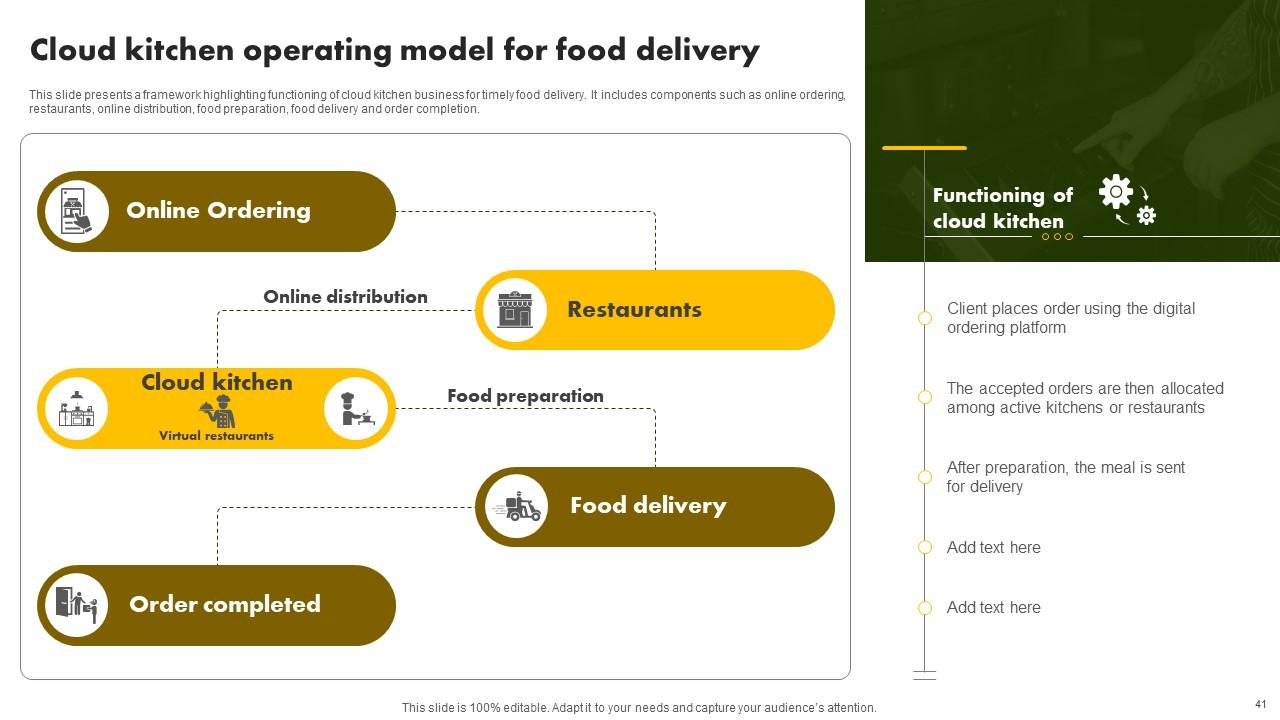
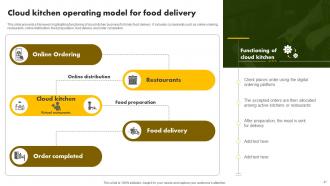
Slide 41: This slide focuses on the Cloud kitchen operating model for food delivery.
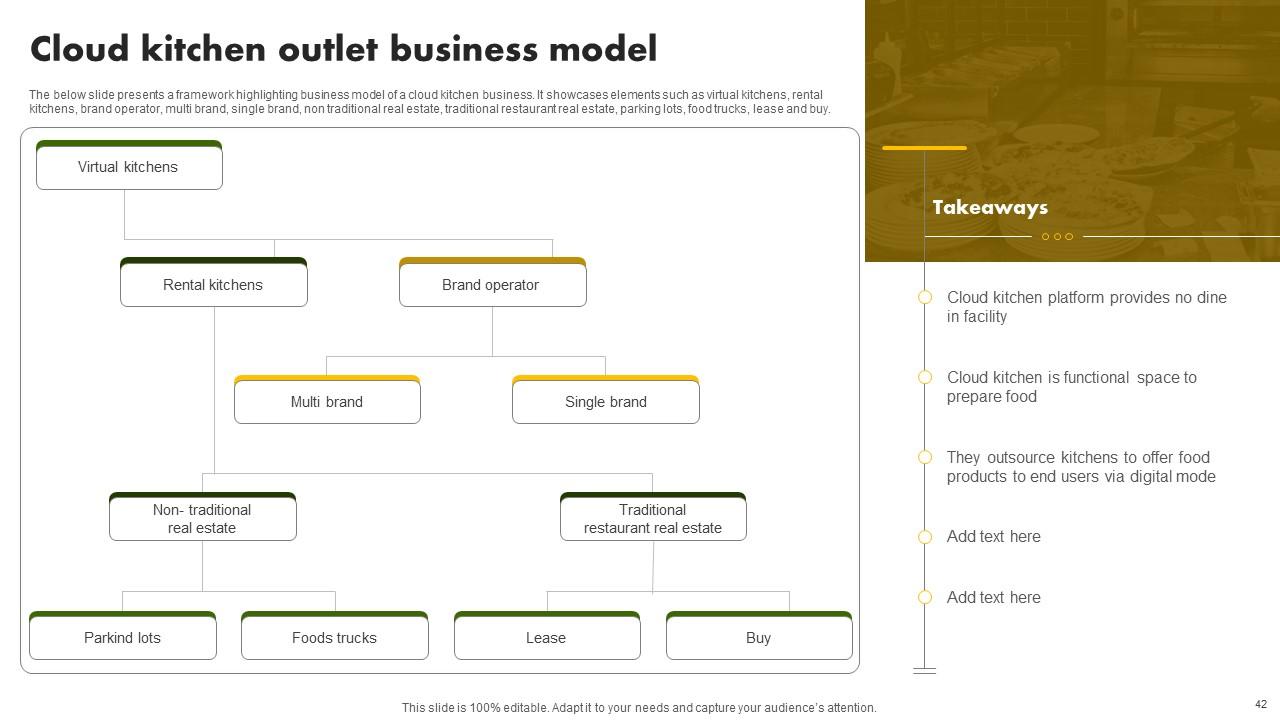
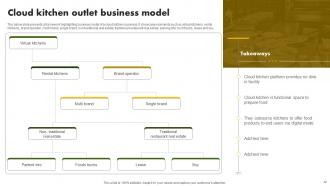
Slide 42: This slide deals with the Cloud kitchen outlet business model.
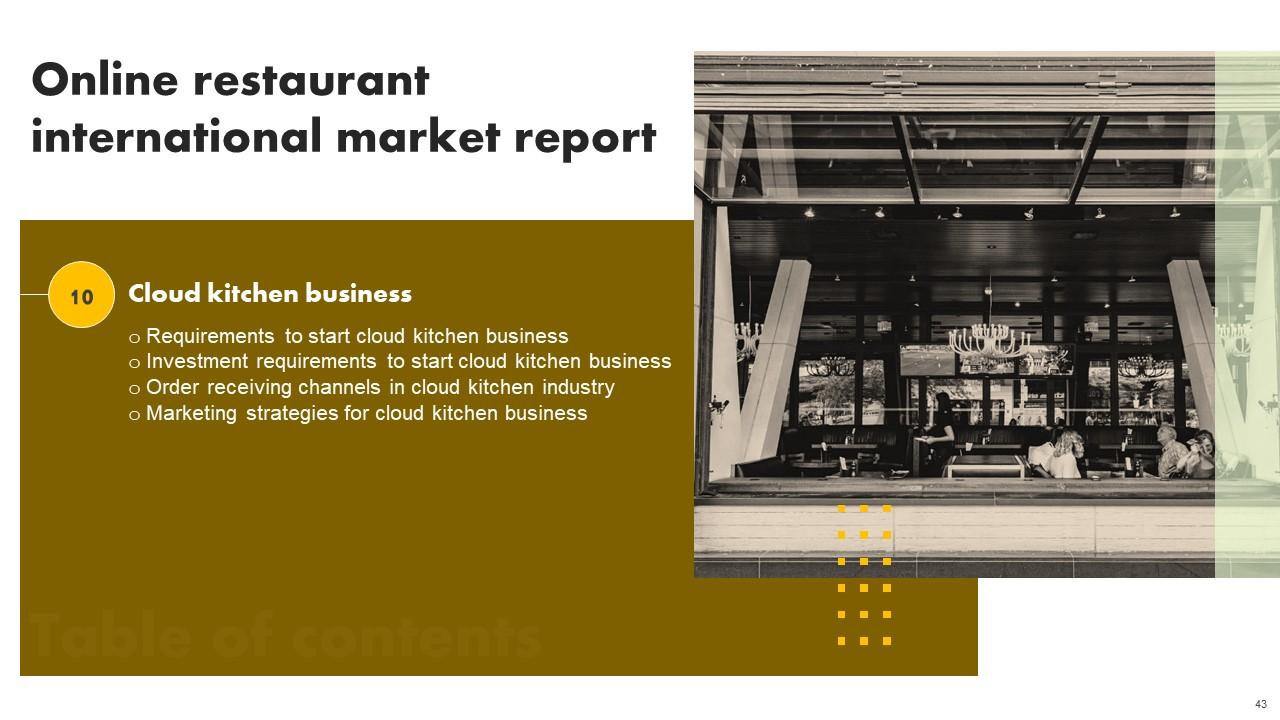
Slide 43: This slide exhibits the Heading for the Ideas to be covered further.
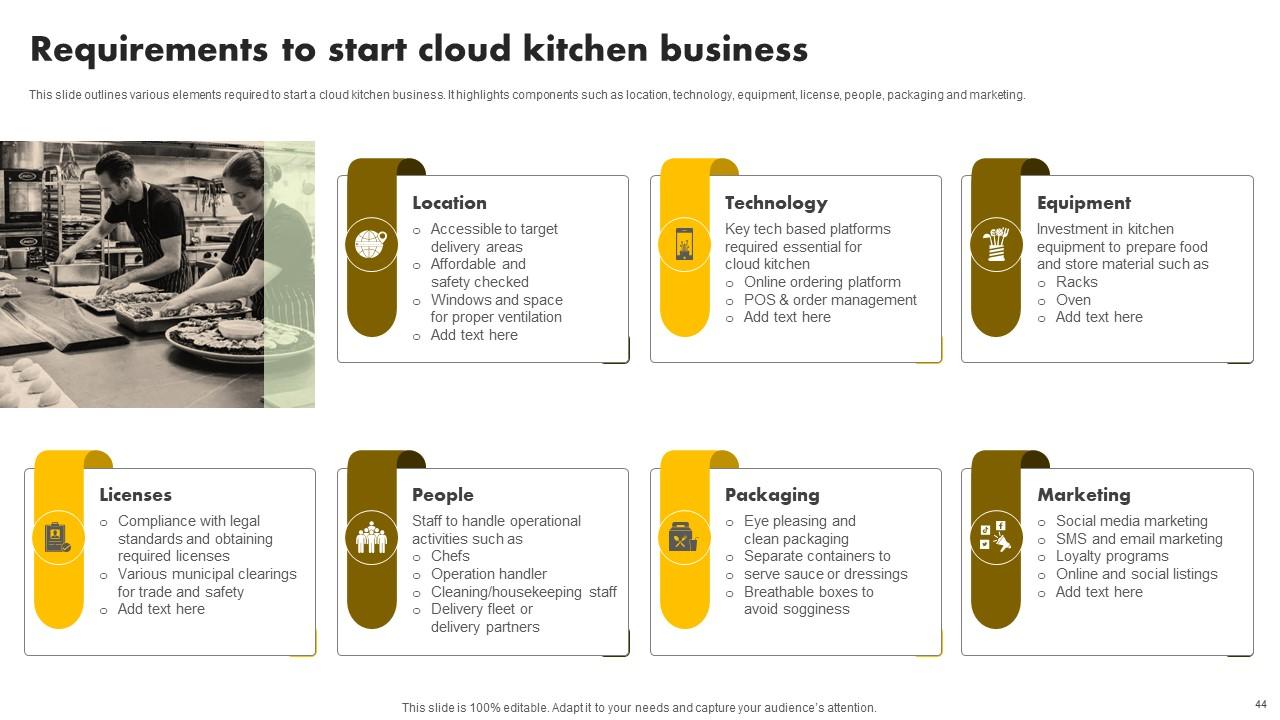
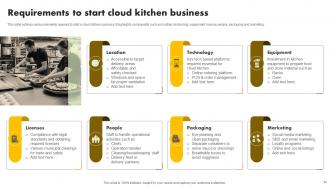
Slide 44: This slide outlines various elements required to start a cloud kitchen business.
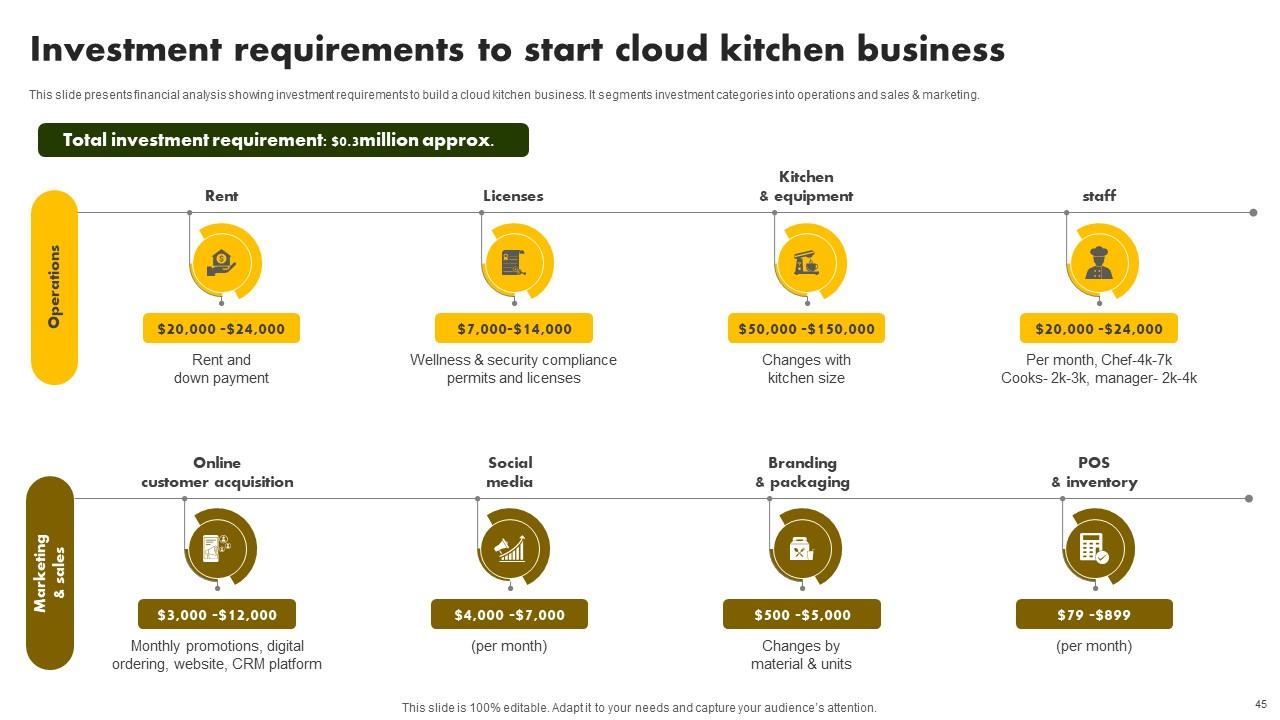
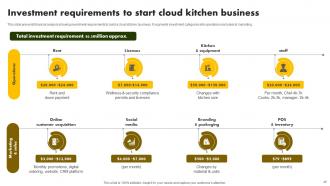
Slide 45: This slide presents financial analysis showing investment requirements to build a cloud kitchen business.
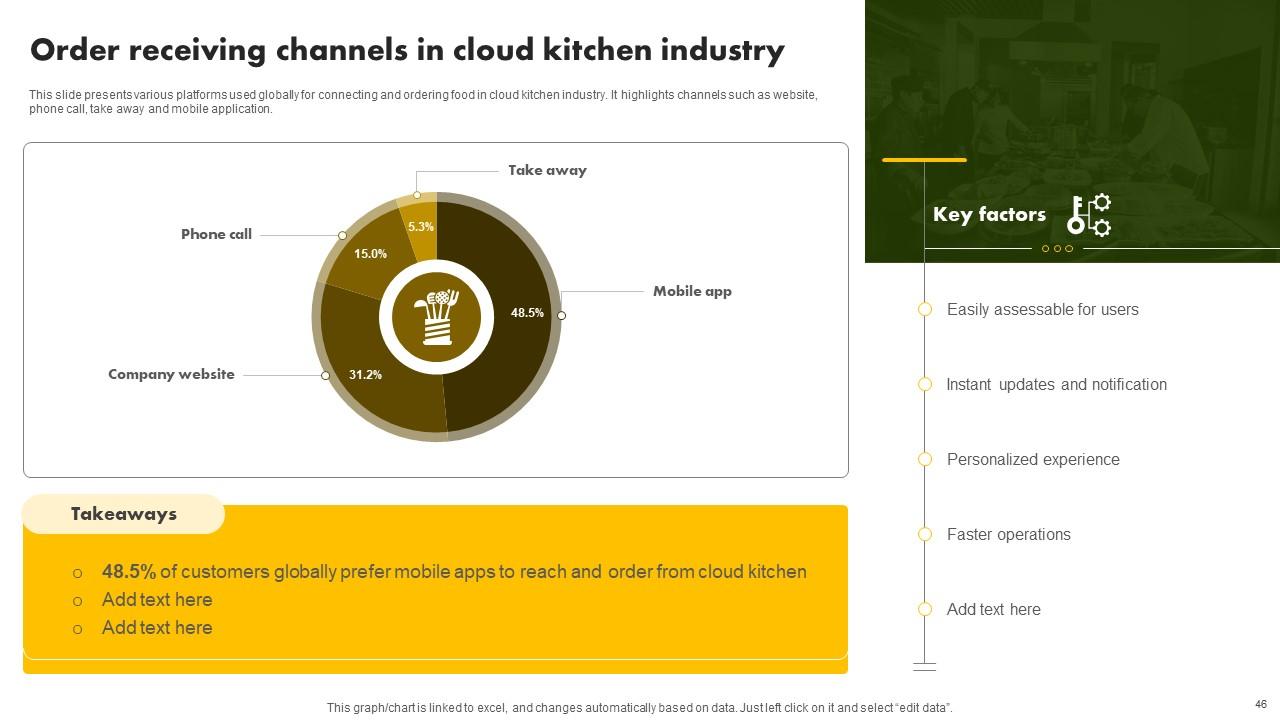
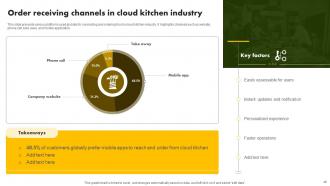
Slide 46: This slide reveals various platforms used globally for connecting and ordering food in cloud kitchen industry.
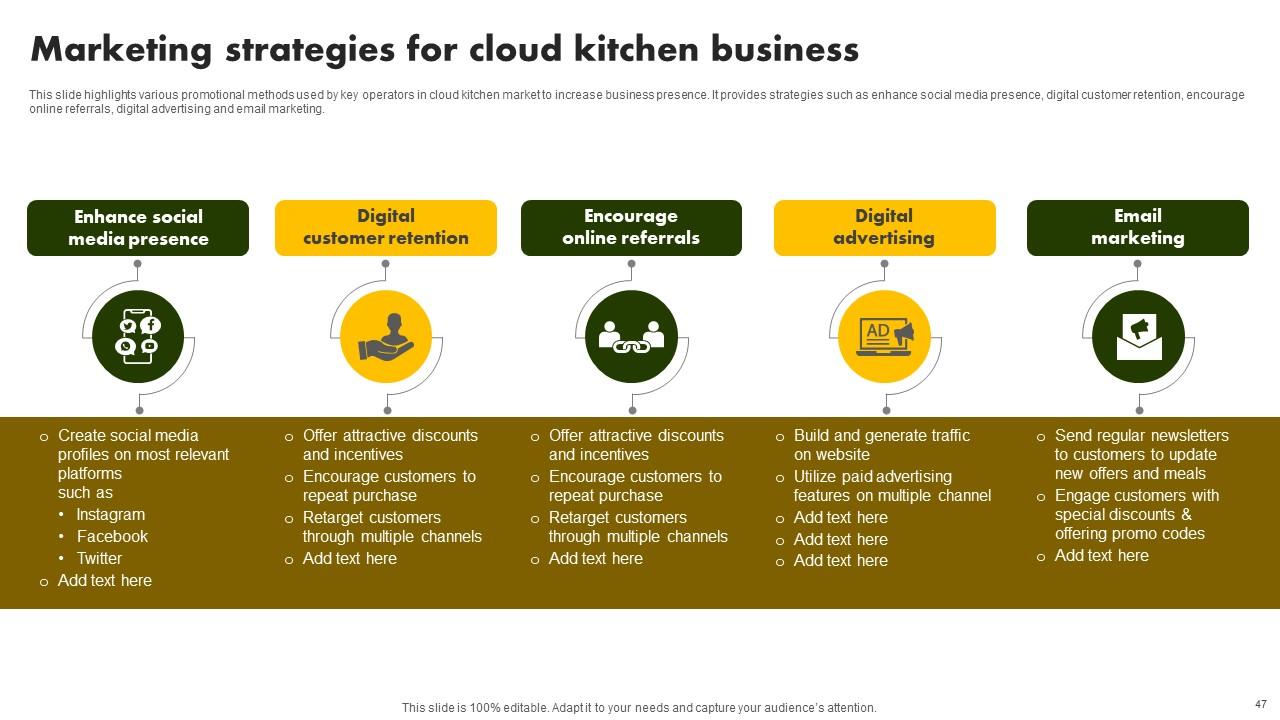
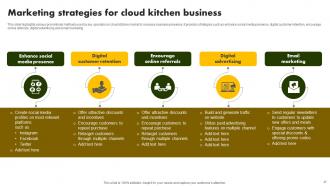
Slide 47: This slide highlights various promotional methods used by key operators in cloud kitchen market to increase business presence.
Slide 48: This slide displays the Title for the Topics to be covered next.
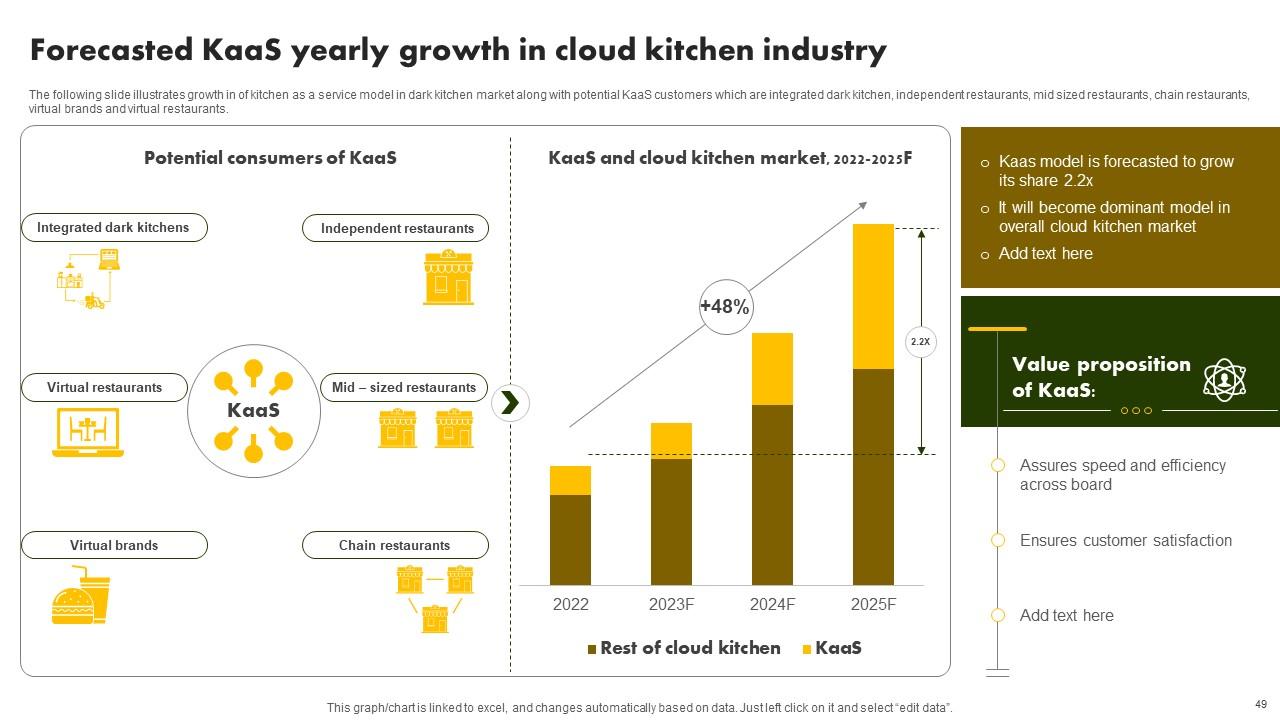
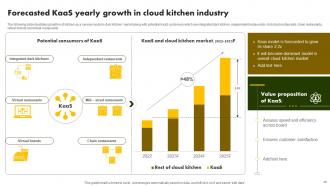
Slide 49: The following slide illustrates growth in of kitchen as a service model in dark kitchen.
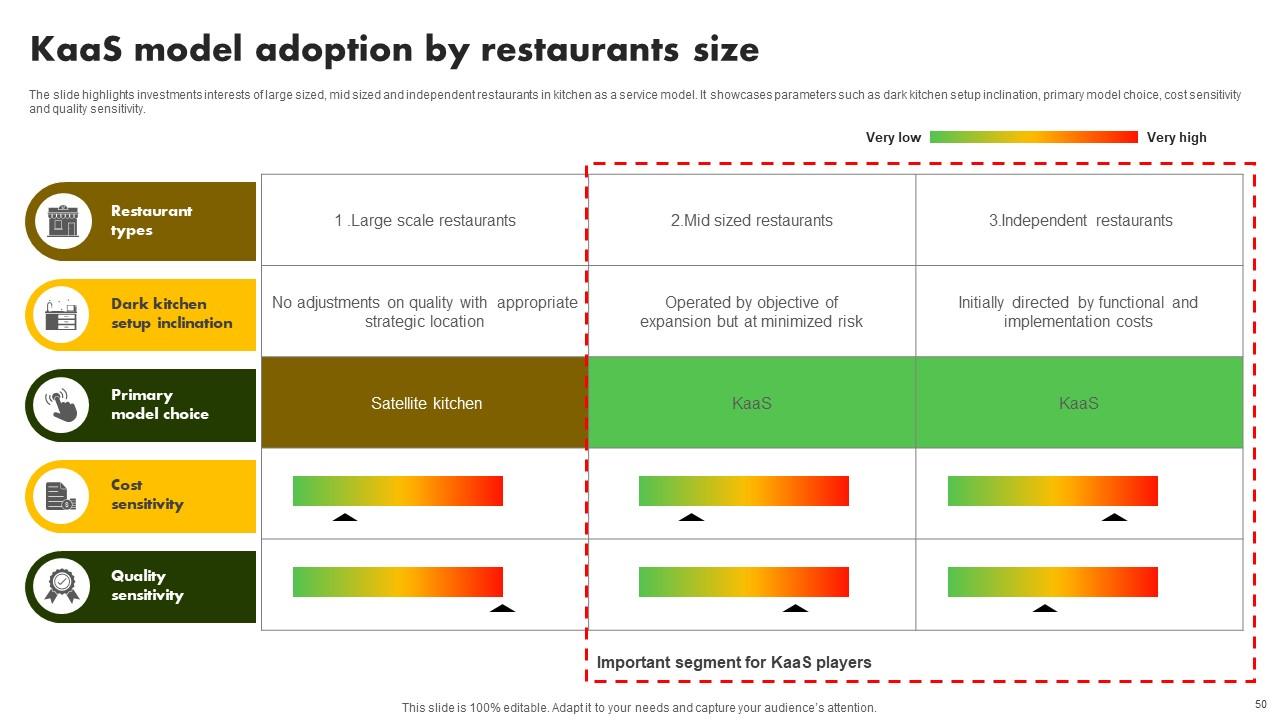
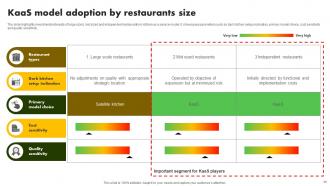
Slide 50: This slide portrays the KaaS model adoption by restaurants size.
Slide 51: This slide indicates the Heading for the Components to be discussed in the upcoming template.
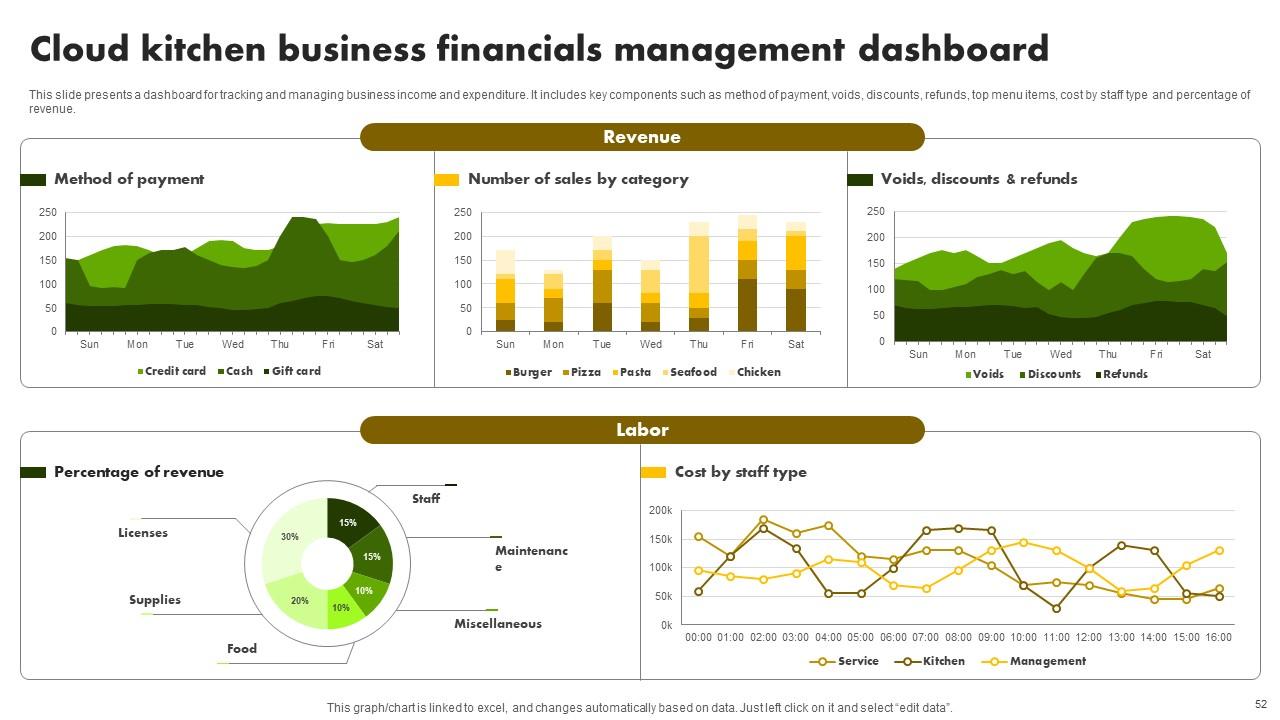
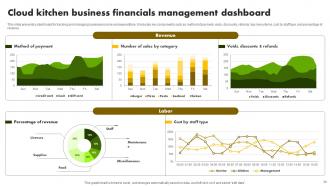
Slide 52: This slide presents a dashboard for tracking and managing business income and expenditure.
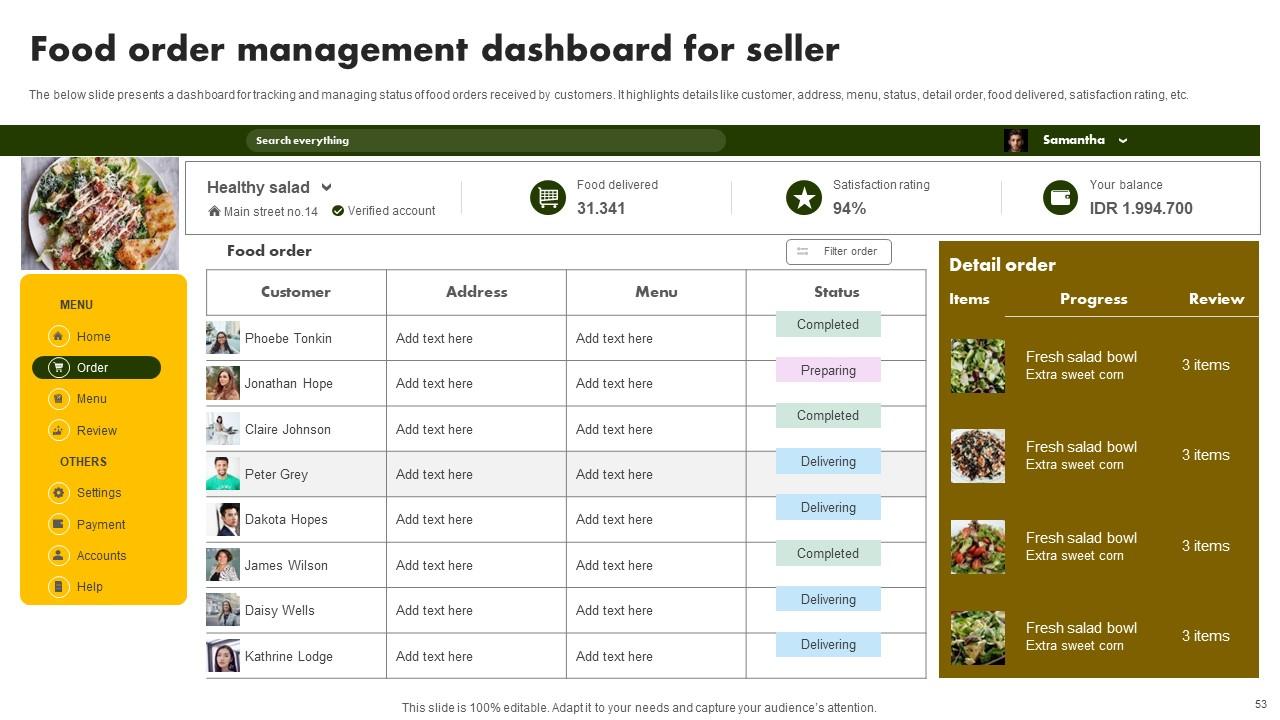
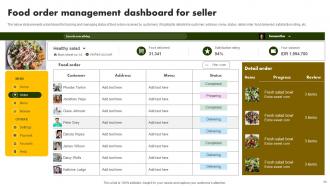
Slide 53: The below slide reveals a dashboard for tracking and managing status of food orders received by customers.
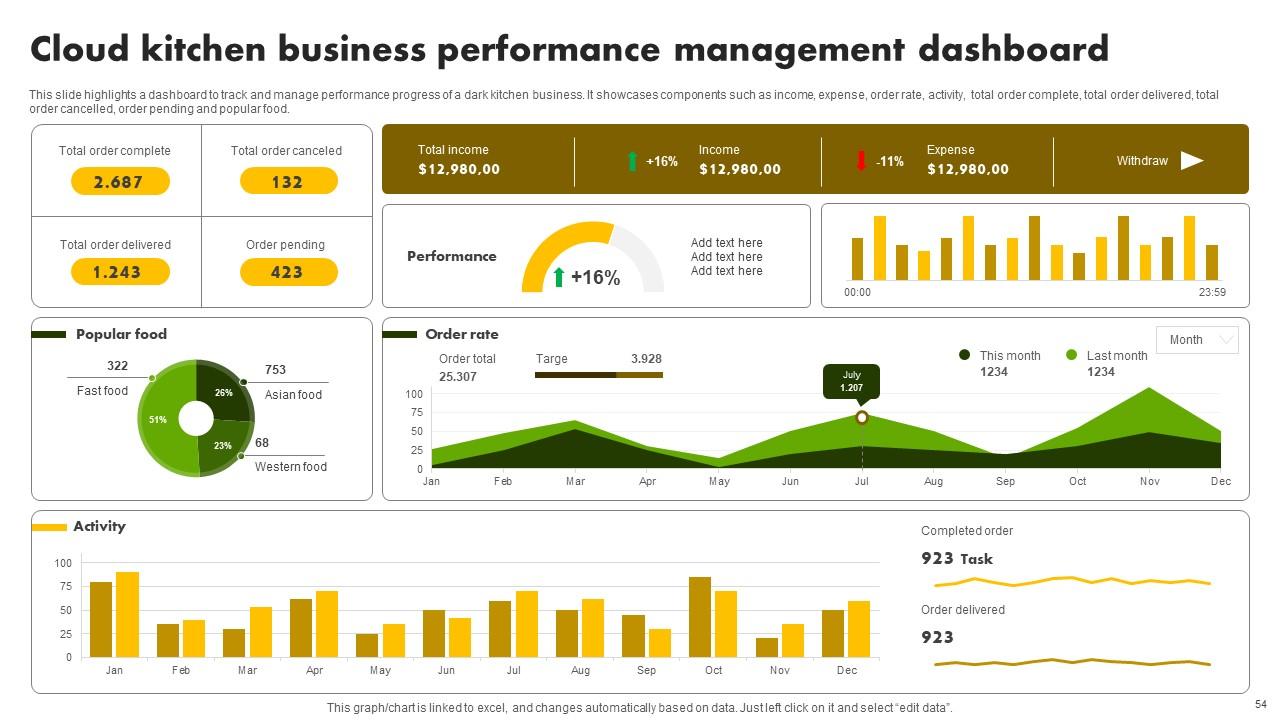
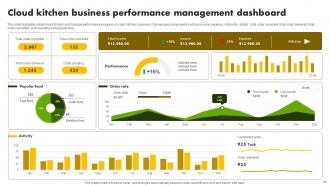
Slide 54: This slide talks about the Cloud kitchen business performance management dashboard.
Slide 55: This slide contains all the icons used in this presentation.
Slide 56: This slide is titled as Additional Slides for moving forward.
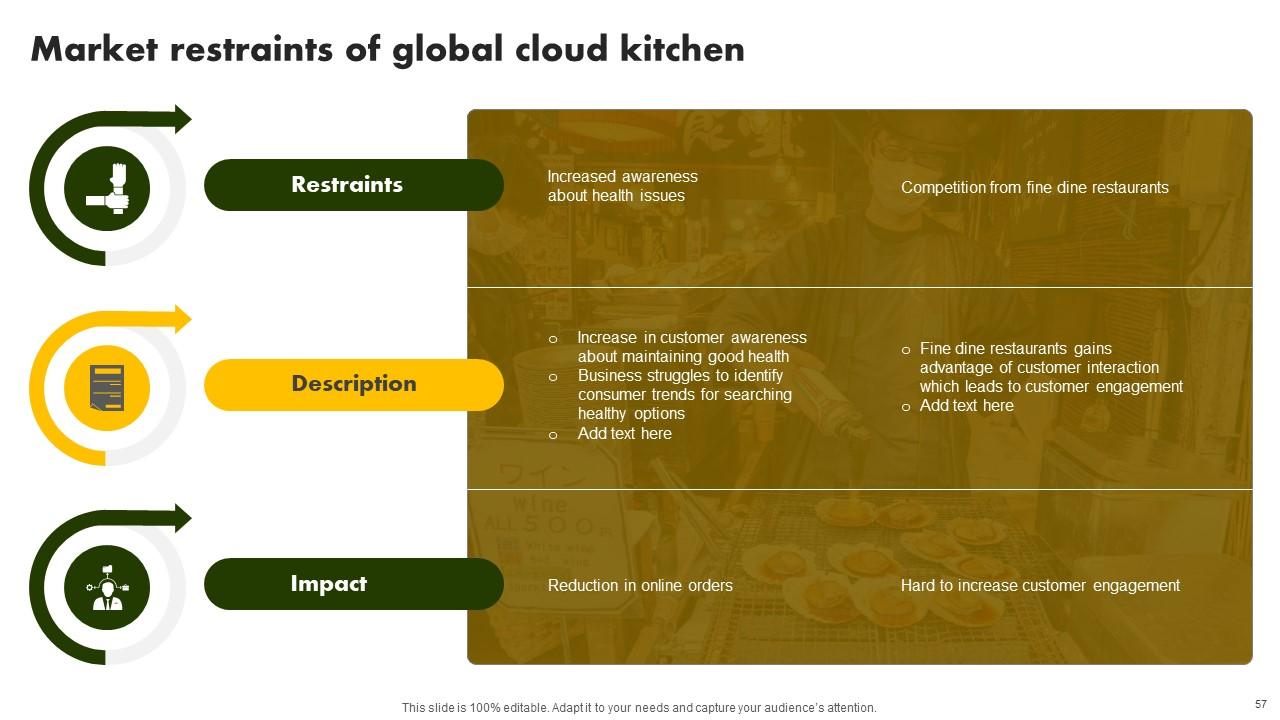
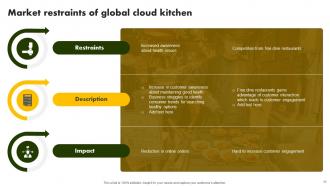
Slide 57: This slide presents Market restraints of global cloud kitchen.
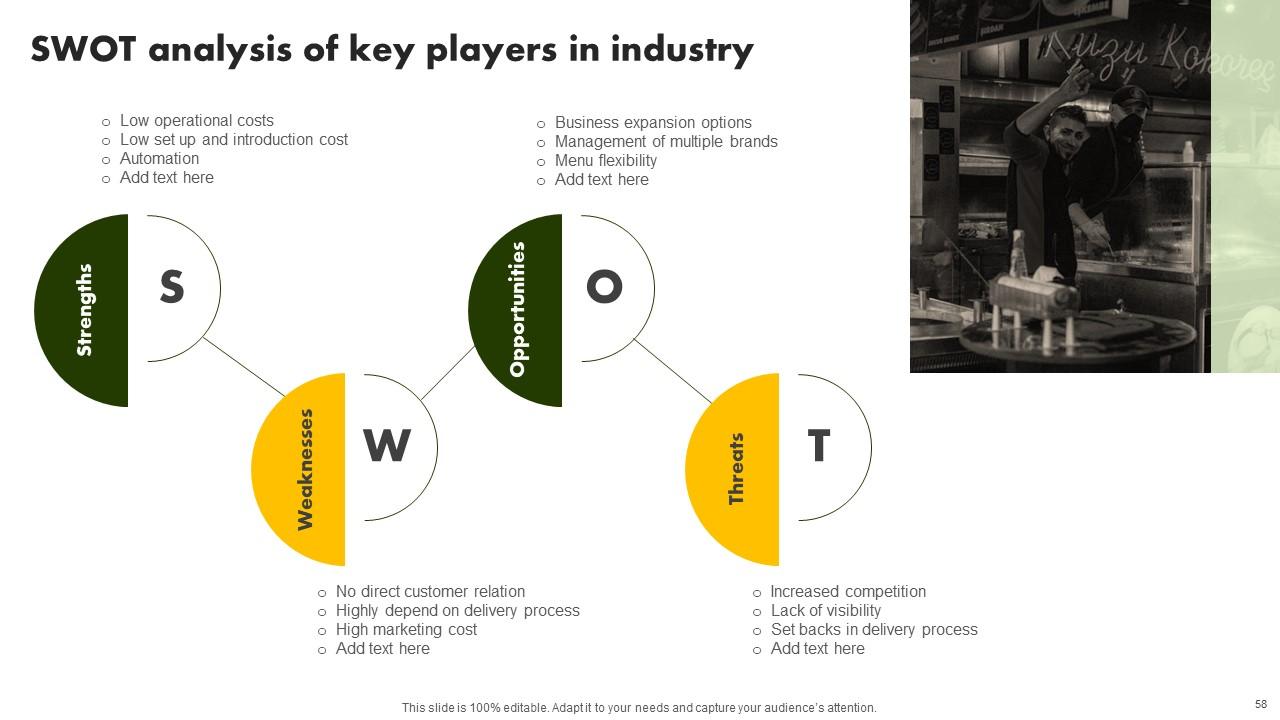
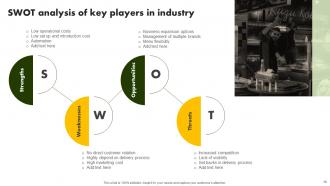
Slide 58: This slide displays SWOT analysis of key players in industry.
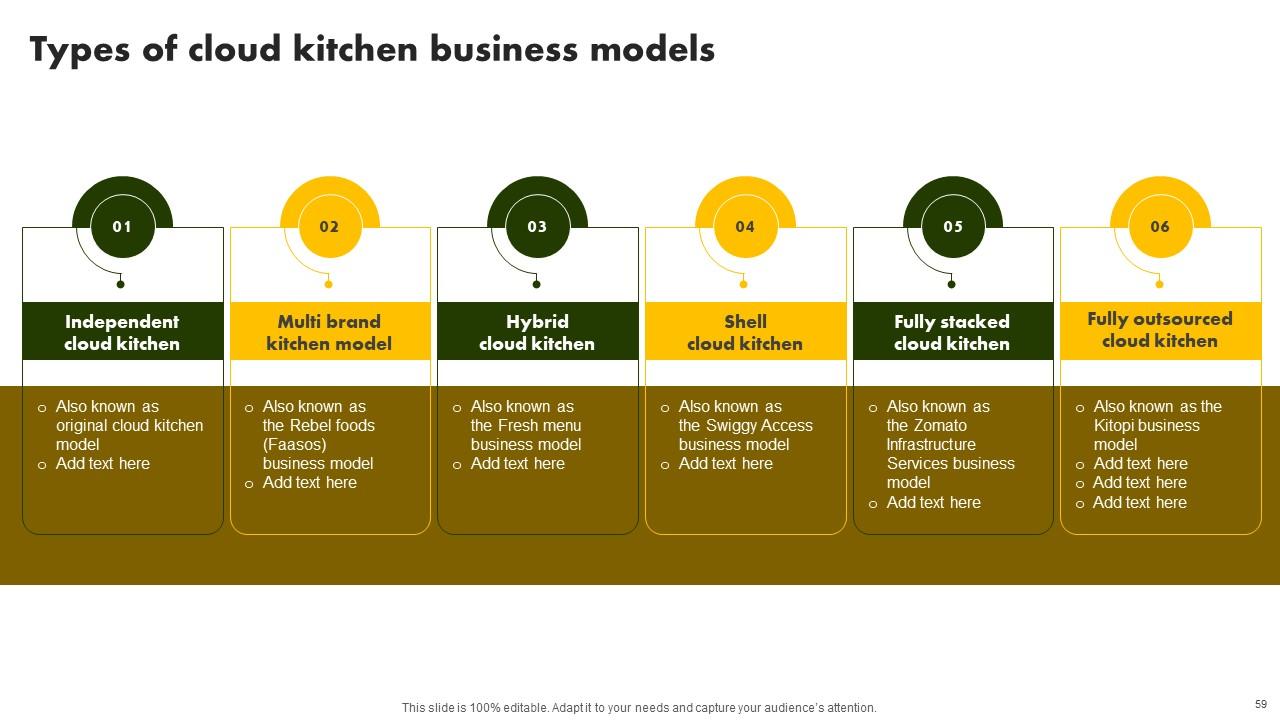
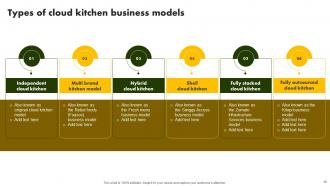
Slide 59: This slide represents Types of cloud kitchen business models.
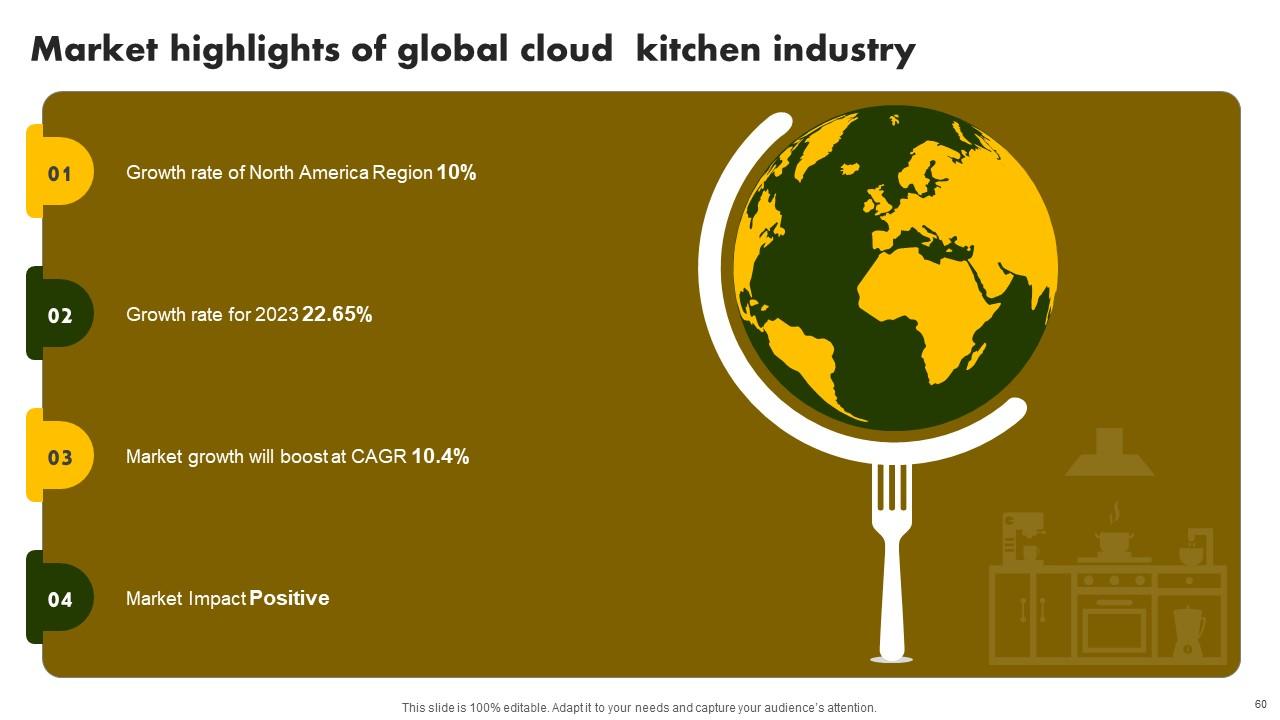
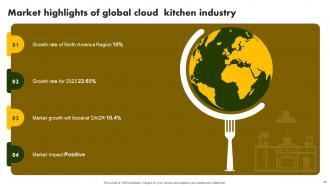
Slide 60: This slide showcases Market highlights of global cloud kitchen industry.
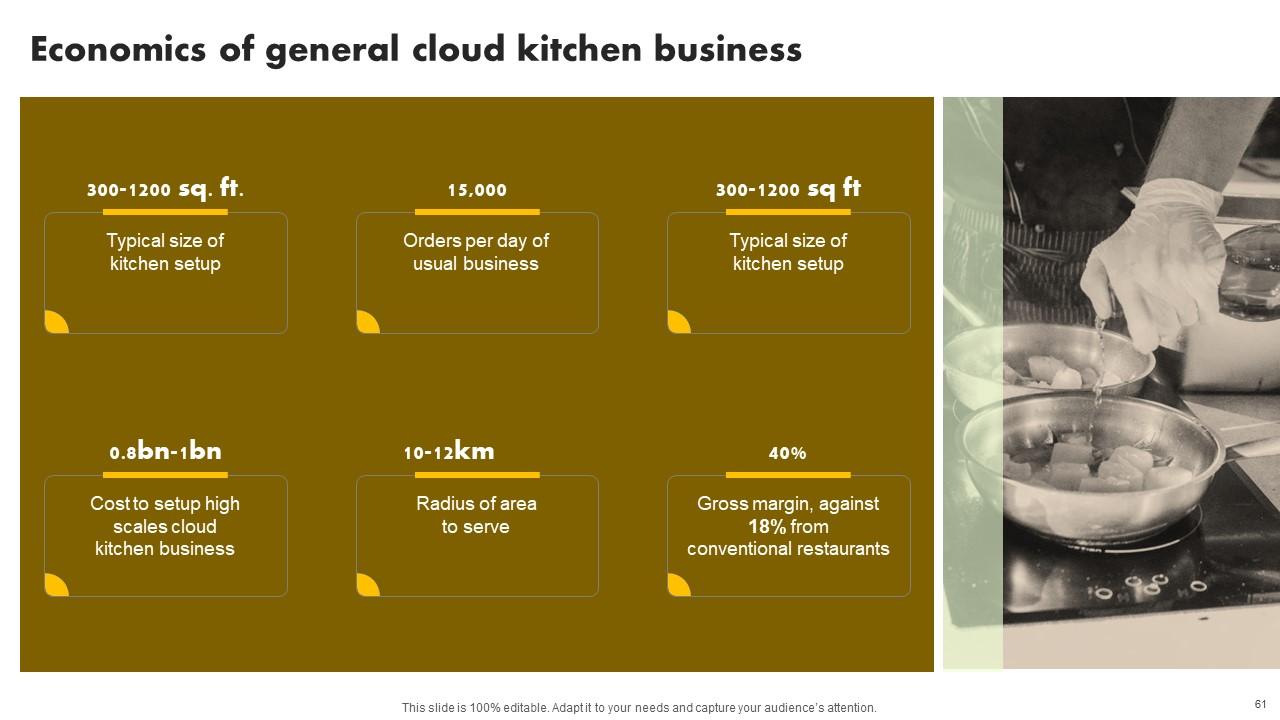
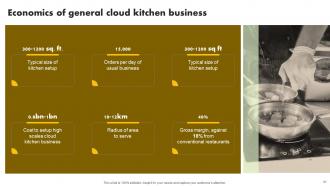
Slide 61: This slide shows Economics of general cloud kitchen business.
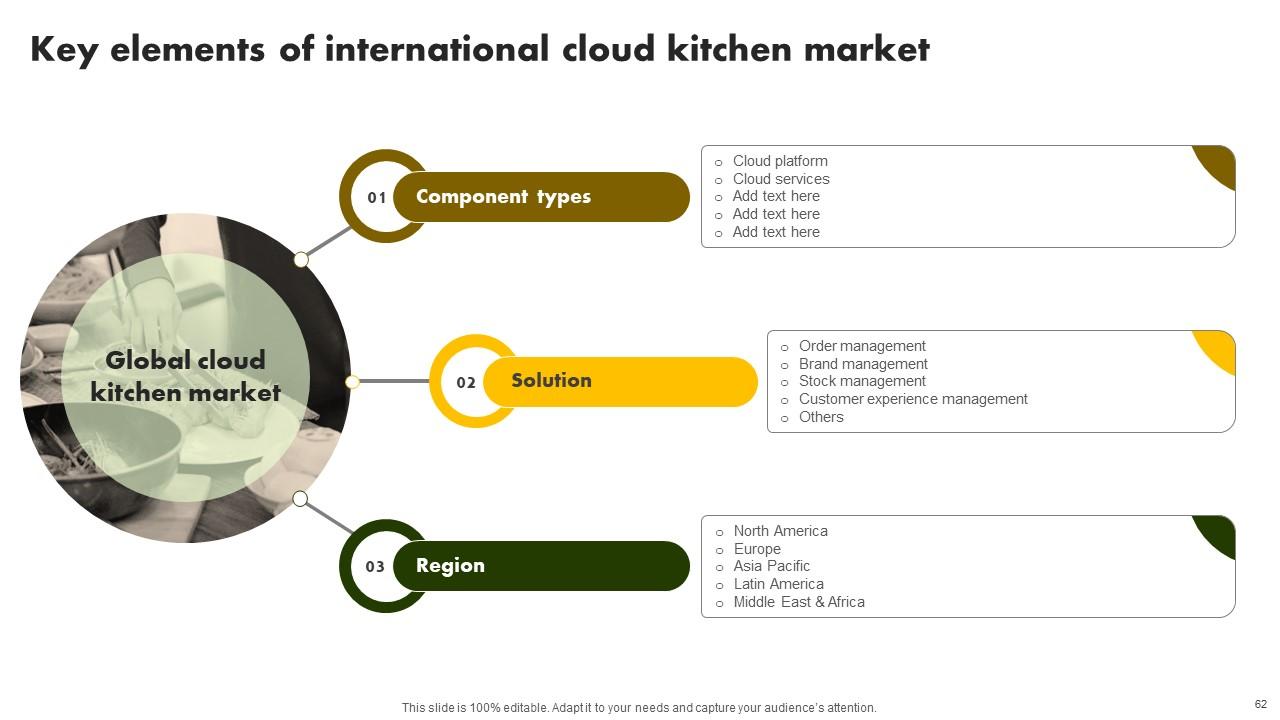
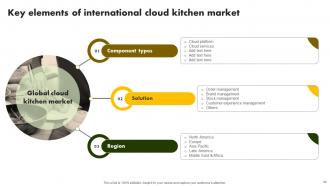
Slide 62: This slide presents Key elements of international cloud kitchen market.
Slide 63: This is About Us slide to show company specifications etc.
Slide 64: This is Our Mission slide with related imagery and text.
Slide 65: This is Our Team slide with names and designation.
Slide 66: This slide contains Puzzle with related icons and text.
Slide 67: This is an Idea Generation slide to state a new idea or highlight information, specifications etc.
Slide 68: This slide shows Post It Notes. Post your important notes here.
Slide 69: This is a Thank You slide with address, contact numbers and email address.
Online Restaurant International Market Report Powerpoint Presentation Slides with all 74 slides:
Use our Online Restaurant International Market Report Powerpoint Presentation Slides to effectively help you save your valuable time. They are readymade to fit into any presentation structure.
-
Exclusive and extensive collection of templates. Really helped me create a professional presentation in just no time.
-
I am really satisfied with their XYZ products. Used their slides for my business presentations and now I am taking their help for my son's high-school assignments. Super satisfied!!
