


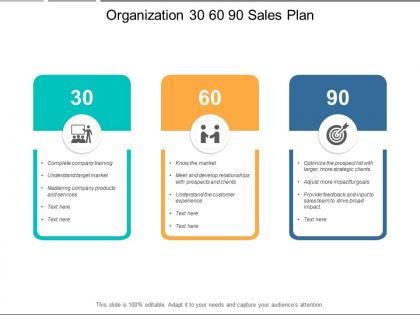
Organization 30 60 90 sales plan





Try Before you Buy Download Free Sample Product
 Impress Your
 Audience
 100%
100% Editable
 Save Hours
 of Time


Increase the amount of fun folks have with our Organization 30 60 90 Sales Plan. It will add to the joy.
People who downloaded this PowerPoint presentation also viewed the following :
Organization 30 60 90 sales plan with all 5 slides:
Go on a joyride with our Organization 30 60 90 Sales Plan. It ensures a fun filled event.


FAQs for Organization 30 60
Okay so you'll want five main things: revenue targets that are actually specific, who your ideal customers are (like really nail this down), your entire sales process mapped out, how you're dividing up leads or territories, and ways to measure if it's working. Most teams totally skip that process mapping step - huge mistake honestly. Pricing strategy and how you stack up against competitors matter too. Here's the thing though: "increase sales" as a goal is useless. Start with your numbers first, then figure out what activities you need to actually hit them. Way easier to work backwards from there.
Look at your company's big picture first - where do they want to be in 3 years? Then work backwards from there. If they're pushing into new markets, that's where your sales focus should be. Random targets won't cut it. Your sales plan is basically the roadmap for hitting those company goals. I always tell people to map out which territories and activities will actually move the needle. Oh, and don't forget to explain to your team how their individual numbers tie into the bigger wins - it makes a huge difference in motivation.
Honestly, you really need that market research to stop throwing darts in the dark. It tells you who's actually buying your stuff, what problems they're dealing with, and how much they're willing to spend. Plus you get to see where your competitors are screwing up - which is always fun. Your sales team can't hit targets if they don't know who they're selling to or what messaging actually works. I'd start by figuring out your target market's biggest pain points first. That data becomes the backbone of everything else. Without it, you're just hoping random tactics will somehow work out.
Dude, SMART goals are where it's at - specific, measurable, achievable, relevant, time-bound. Don't just say "increase sales." Try "boost Q1 revenue 15% vs last quarter" or "land 25 new enterprise clients by March 31st." I totally bombed this once with super vague goals that went absolutely nowhere. Pick stuff you can actually track - revenue, conversion rates, deal volume. Customer acquisition costs work too. Honestly, less is more here. Grab 3-5 solid targets your team can get excited about and check progress weekly or monthly.
Honestly, mix your historical data with what's happening right now in your pipeline - that's where the magic happens. Track stuff like demo-to-close rates and how fast deals move through. Way better than just staring at last year's numbers. I totally bombed three quarters straight before figuring this out lol. Break everything down too - by product, rep, customer type, whatever makes sense. Oh and update your assumptions every month based on actual pipeline activity, not ancient history. Makes such a difference once you get the hang of it.
Honestly, you gotta nail down exactly who you're selling to first. Don't just say "small businesses" - that's useless. Get specific like "50-200 employee SaaS companies struggling with customer retention." Way too many plans cast this huge net and end up catching nothing. Break your audience into real segments with actual details - demographics, pain points, buying habits, company size. Then create different messaging for each group because they all need different approaches. I'd build out buyer personas and map specific tactics to reach them. It's kinda tedious but makes everything else so much clearer.
Mix praise with clear targets - that combo really works. Public shoutouts are huge (people love being recognized in front of others), but pair it with specific goals so they actually know what they're shooting for. Leaderboards create good competition, and honestly? Don't wait for the massive wins to celebrate. Small victories matter too. The biggest thing though is giving reps real ownership of their accounts. When they feel trusted to run their own show, they'll work way harder than any bonus structure could push them to.
Don't just slap competitive analysis at the end of your sales plan - weave it through everything. Pick your top 3-5 competitors and dig into their pricing, messaging, what makes them different. Use that intel for positioning and battlecards. Here's something that actually works: teach your reps to know competitors' weak spots better than their own strengths. Sounds kinda brutal but whatever, it gets results. You'll anticipate objections better and spot which deals you can actually win. Oh, and update this stuff quarterly - competitors change direction fast these days.
Check your conversion rates first - that'll show you exactly where people are bailing. Win/loss ratios and deal sizes reveal patterns you might be missing. Pipeline velocity matters more than most people think, honestly. When deals keep stalling, it's usually your qualification process or follow-up timing that's off. I'd dig into your top performers' data too - see what they're doing that everyone else isn't. Territory breakdowns help spot which segments are tanking. Oh, and don't try fixing everything at once. Pick one weak metric and test changes for 30 days. Way easier to track what actually works that way.
Dude, training is what makes or breaks a sales team - I've seen too many good reps go stale without it. Buyers change how they think every few months, so your pitch from last quarter? Probably already outdated. Regular workshops keep people sharp and honestly just less bored with their jobs. Don't wait until your numbers tank to do something about it though. Monthly skills sessions work well, maybe quarterly strategy stuff too. The consistency matters way more than cramming it all into some intense weekend retreat. Build it right into your plan from day one.
Track your numbers weekly, not monthly - monthly's too slow to fix problems. I'm a bit obsessed with leading indicators like calls made and demos booked since they actually predict what's coming. Set up something simple showing actual vs target, pipeline health, and conversion rates. Win/loss reasons are gold for spotting patterns too. Here's the thing though - keep it stupidly simple or you won't use it. Pick maybe 3-5 metrics max and check them every Friday. That way you know what's working and what needs fixing before it's too late.
Honestly, tech can completely change your sales game. CRM systems track all your customer stuff and predict who's actually gonna buy - way better than just winging it. The analytics tools will show you what's really working (some patterns are wild, btw). Automate the tedious follow-ups and lead scoring so you can focus on actually selling. AI handles personalized outreach at scale too. My advice? Pick one tool that fixes your biggest headache first. Don't try to do everything at once - that's how you end up overwhelmed and using nothing properly.
Honestly, just figure out where your customers actually hang out and buy stuff. Research their habits first - do they browse online, need to touch products in stores, or want someone to walk them through it? Your product matters too. Basic items work fine direct-to-consumer or through retailers, but complex stuff that needs explaining? You'll want more personal contact. Oh, and watch your margins - some channels will totally kill your profits. I'd test a couple different approaches on a small scale, see what actually works, then go all-in on those.
Honestly, just track three things that actually matter: revenue growth vs your targets, conversion rates through each funnel stage, and your customer acquisition cost. Sales cycle length too - nobody's got time for deals that drag on forever. Those metrics tell you if you're hitting your numbers, whether your process is efficient, and if you're burning cash on the wrong prospects. Skip the vanity stuff like total leads unless they're actually converting (learned that the hard way). Start by seeing where you're at now, then set realistic targets for next quarter.
Honestly, just bake those check-ins right into your timeline from day one. Weekly pipeline reviews are clutch, then do monthly deep dives and quarterly pivots based on real data. Your sales team will spot trends way before you do since they're actually talking to people all day - so create some easy way for them to give feedback. Focus on stuff like call-to-meeting ratios instead of just revenue. Those leading indicators tell you what's coming. Oh, and don't go crazy at first. Pick maybe 2-3 metrics max, get that system humming, then add more later.
No Reviews