Our target focus goals k6 ppt powerpoint presentation styles graphics

Our target focus goals k6 ppt powerpoint presentation styles graphics
Slide 1 of 5
Favourites Favourites

Try Before you Buy Download Free Sample Product

Audience Impress Your
Audience
Editable 100%
Editable
Time Save Hours
of Time
The Biggest Sale is ending soon in
0
0
:
0
0
:
0
0
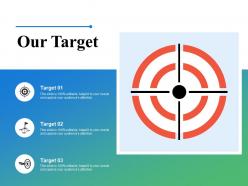
Presenting this set of slides with name Our Target Focus Goals K6 Ppt Powerpoint Presentation Styles Graphics. This is a three stage process. The stages in this process are Target, Arrows, Business, Management, Marketing. This is a completely editable PowerPoint presentation and is available for immediate download. Download now and impress your audience.

People who downloaded this PowerPoint presentation also viewed the following :

FAQs for Our target focus goals k6 ppt powerpoint

A compelling K6 presentation includes clear learning objectives, age-appropriate visual aids, interactive elements, storytelling techniques, and structured content flow that matches young attention spans. These components work together by engaging multiple senses, simplifying complex concepts through visual metaphors, and incorporating hands-on activities, with many elementary educators finding that interactive presentations significantly improve student retention and participation.

Visuals in K6 presentations enhance audience engagement by simplifying complex concepts, creating memorable learning experiences, and maintaining attention through colorful graphics, charts, and interactive elements. These visual tools enable educators to transform abstract ideas into concrete understanding, with many schools finding that students retain information better, participate more actively, and demonstrate improved comprehension when presentations incorporate engaging visual storytelling techniques.

Effective techniques for simplifying complex information for K6 students include visual storytelling with colorful graphics, chunking information into bite-sized segments, using analogies from familiar experiences, interactive elements like polls or movement, and repetition through different formats. These approaches enhance comprehension by connecting abstract concepts to concrete examples, maintaining shorter attention spans through engaging variety, and ensuring retention through multiple learning pathways, ultimately delivering improved academic outcomes and stronger foundational understanding.

Storytelling transforms K6 presentations by making abstract concepts relatable through characters, narratives, and sequential plot development that mirrors how young minds naturally process information. Elementary educators use story arcs to structure lessons, create emotional connections with subject matter, and enhance retention, with many teachers finding that narrative-based presentations significantly improve student engagement and comprehension across subjects.

Interactive content featuring visual storytelling, colorful graphics, simple animations, age-appropriate games, and hands-on activities works best for K6 presentations. These elements enhance engagement by combining educational value with entertainment, helping young learners retain information through multiple sensory channels, while educators increasingly find that multimedia approaches deliver better comprehension and sustained attention in elementary classroom environments.

Presenters can cater to different learning styles by incorporating visual elements like colorful charts and infographics, auditory components through storytelling and discussions, and kinesthetic activities such as hands-on experiments and movement-based learning. These diverse approaches enhance student engagement, improve comprehension across all learner types, and create more inclusive classroom environments, with many educators finding that strategic combinations ultimately deliver better academic outcomes and sustained attention spans.

Interactive elements in K6 presentations enhance student engagement, improve knowledge retention, facilitate real-time assessment, promote collaborative learning, and accommodate diverse learning styles. These features enable educators to create dynamic classroom experiences through polls, quizzes, and hands-on activities, while students develop critical thinking skills and maintain focus, ultimately delivering more effective educational outcomes and stronger academic performance.

Color psychology significantly impacts K6 presentations by enhancing comprehension, retention, and engagement through strategic visual associations. Warm colors like red and orange capture attention for key concepts, while cool blues and greens promote focus during learning activities, with many elementary educators finding that thoughtful color choices reduce cognitive overload, improve information processing, and ultimately create more effective learning environments that support diverse learning styles.

Effective slide design maintains K6 student interest by incorporating vibrant colors, age-appropriate fonts, interactive elements, visual storytelling, and minimal text content. These design principles enhance comprehension, reduce cognitive overload, and create engaging learning experiences, with many elementary educators finding that well-designed presentations significantly improve student participation, retention rates, and overall classroom engagement outcomes.

Presenters can effectively connect with K6 audiences through age-appropriate humor like silly voices, funny faces, relatable characters, and playful wordplay that matches their developmental stage. Elementary students respond enthusiastically to interactive humor, visual gags, and simple jokes that enhance learning engagement, with many educators finding that well-timed humor significantly improves attention spans and classroom participation.

Pacing controls audience engagement and comprehension by varying speech tempo, incorporating strategic pauses, and allowing time for complex concepts to resonate. Through deliberate rhythm changes, K6 presenters maintain attention, emphasize key points, and create moments for reflection, with many educators finding that balanced pacing ultimately enhances learning retention and audience connection.

Feedback from K6 students improves future presentations by revealing comprehension gaps, engagement preferences, attention span patterns, and learning style effectiveness through surveys, discussions, and behavioral observations. This student input enables educators to refine visual complexity, adjust pacing, incorporate interactive elements, and tailor content delivery methods, ultimately creating more engaging and educationally effective presentation experiences.

Educators can access presentation template libraries, interactive design platforms, educational resource websites, collaborative tools, and multimedia integration software to create compelling K6 presentations. These resources streamline content development by offering age-appropriate layouts, gamification elements, and visual storytelling features, with many teachers finding that combining multiple tools enhances student engagement while reducing preparation time significantly.

Presenters can measure impact through formative assessments like exit tickets and quick polls, summative evaluations including pre-and post-presentation quizzes, student engagement metrics, and feedback surveys from both students and teachers. These measurement approaches enable educators to track comprehension levels, retention rates, and behavioral changes, while identifying areas for presentation improvement, ultimately delivering more effective learning experiences and enhanced educational outcomes across K6 classrooms.

Common pitfalls when designing K6 presentations include overcrowding slides with excessive text, using inconsistent visual themes, neglecting age-appropriate language, and failing to incorporate interactive elements that maintain young learners' attention. These design mistakes can significantly reduce comprehension and engagement, with many educators finding that streamlined visuals, clear hierarchies, and hands-on activities ultimately deliver better learning outcomes and classroom participation.

Ratings and Reviews

0% of 100
Write a review
Most Relevant Reviews

No Reviews