Our team introduction c176 ppt powerpoint presentation gallery skills

Our team introduction c176 ppt powerpoint presentation gallery skills
Slide 1 of 5
Favourites Favourites

Try Before you Buy Download Free Sample Product

Audience Impress Your
Audience
Editable 100%
Editable
Time Save Hours
of Time
The Biggest Sale is ending soon in
0
0
:
0
0
:
0
0
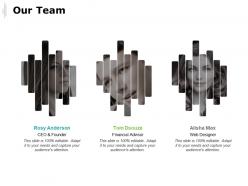
Presenting this set of slides with name Our Team Introduction C176 Ppt Powerpoint Presentation Gallery Skills. This is a three stage process. The stages in this process are Our Team, Communication, Management, Planning, Business. This is a completely editable PowerPoint presentation and is available for immediate download. Download now and impress your audience.

People who downloaded this PowerPoint presentation also viewed the following :

FAQs for Our team introduction c176 ppt powerpoint

Effective team introduction presentations include clear role definitions, relevant experience highlights, collaborative dynamics demonstration, individual strengths showcasing, and team achievement summaries. These elements work together by establishing credibility, building trust with stakeholders, and demonstrating collective capability, with many organizations finding that strategic team presentations ultimately enhance project buy-in and client confidence.

Visuals enhance team introductions by making information more memorable, creating emotional connections, and simplifying complex organizational structures through charts, photos, and infographics. Professional headshots, role diagrams, and achievement highlights help audiences quickly grasp team dynamics and expertise, with many organizations finding that visual presentations increase engagement and retention significantly.

Storytelling transforms routine team introductions into memorable narratives by weaving personal backgrounds, professional journeys, and unique strengths into compelling accounts that foster deeper connections. This approach enables teams to showcase individual expertise, shared values, and collaborative potential more effectively than standard biographical summaries, with many organizations finding that narrative-driven introductions enhance trust, engagement, and team cohesion significantly.

**INPUT**: What are some best practices for introducing remote team members during a presentation? **OUTPUT**: Best practices include sharing professional backgrounds with relevant expertise, displaying clear visuals of each member, establishing their specific roles and contributions, and highlighting collaborative achievements that demonstrate team cohesion. These approaches enhance audience connection by creating personal rapport, building credibility through expertise visibility, and showcasing distributed team effectiveness, with many organizations finding that structured remote introductions ultimately deliver stronger stakeholder confidence and improved presentation engagement. [Word count: 60 words]

Team introductions foster collaboration and camaraderie by establishing personal connections, clarifying roles and expertise, and creating psychological safety within groups. Through structured introduction processes, teams develop mutual understanding, identify complementary skills, and build trust foundations, with many organizations finding that intentional introductions ultimately enhance communication flows and project outcomes.

Team introductions can ensure representation through rotating presentation roles, structured spotlight segments, skill-based pairing exercises, inclusive icebreakers, and collaborative storytelling formats. These approaches enable organizations to showcase diverse perspectives, backgrounds, and expertise across departments, with many teams finding that strategic representation techniques enhance group cohesion, improve cross-functional understanding, and ultimately deliver stronger collaborative outcomes.

Cultural differences should be addressed by encouraging team members to share their professional backgrounds, communication preferences, working styles, and cultural perspectives in structured introduction sessions. Organizations can facilitate cross-cultural understanding through inclusive icebreakers, cultural awareness discussions, and establishing communication norms that respect diverse approaches, ultimately creating more collaborative environments where teams leverage cultural diversity for enhanced problem-solving and innovation.

Common pitfalls include overwhelming audiences with excessive detail, failing to highlight individual strengths, neglecting team dynamics, using generic descriptions, and poor timing or sequencing. These mistakes undermine credibility and engagement, with many organizations finding that strategic introductions focusing on relevant expertise, clear roles, and collaborative achievements deliver stronger first impressions and enhanced stakeholder confidence.

Humor can enhance team introductions by breaking tension, creating memorable connections, and establishing approachable personalities through light self-deprecating jokes, shared experiences, or playful observations about common workplace situations. When used strategically, appropriate humor helps team members appear more relatable and confident, while fostering psychological safety and encouraging open communication, ultimately building stronger collaborative relationships from the first interaction.

Essential information includes each member's name, role, key responsibilities, relevant expertise, and notable achievements or qualifications. This strategic combination enables stakeholders to understand team capabilities, facilitates targeted communication, and builds credibility, with many organizations finding that comprehensive introductions streamline collaboration and enhance project confidence from the outset.

Technology enhances team introductions through virtual reality experiences, interactive digital portfolios, gamified introduction platforms, AI-powered personality matching tools, and collaborative online workspaces. These solutions streamline relationship-building by creating engaging shared experiences, facilitating deeper personal connections, and enabling remote teams to establish rapport more effectively, ultimately delivering stronger team cohesion and accelerated collaboration across organizations.

Effective strategies include creating structured member profiles, highlighting individual strengths and achievements, using visual aids like organizational charts, preparing clear role descriptions, and practicing confident delivery techniques. Through strategic introductions, team leaders enhance team credibility, foster stronger stakeholder relationships, and demonstrate organizational capability, with many leaders finding that well-executed presentations significantly improve team perception and project approval rates.

Team introductions should be tailored based on audience expertise, with technical teams receiving detailed skill breakdowns and project histories, while executive audiences need concise role summaries and strategic contributions. Organizations increasingly customize introduction depth, terminology, and focus areas, with healthcare teams emphasizing certifications, financial services highlighting compliance experience, and startups showcasing versatility, ultimately ensuring maximum engagement and credibility.

Follow-up actions include scheduling one-on-one conversations, creating shared project opportunities, organizing informal team activities, documenting key information about each member, and establishing regular check-ins. These approaches streamline relationship building by encouraging deeper connections, fostering collaboration, and maintaining momentum, with many organizations finding that structured follow-through ultimately delivers stronger team cohesion and enhanced workplace communication.

Icebreakers serve as strategic conversation starters that reduce initial tension, encourage participation, and create shared experiences during team introductions. These activities help team members move beyond basic introductions by fostering genuine connections, revealing personality traits, and establishing psychological safety, with many organizations finding that well-designed icebreakers accelerate relationship-building and improve overall team dynamics.

Ratings and Reviews

0% of 100
Review Form
Write a review
Most Relevant Reviews

No Reviews