


Pay Per Click Advertising Campaign For Brand Awareness Powerpoint Presentation Slides MKT CD V
Get ready to supercharge your marketing efforts with our Pay per click advertising campaign for brand awareness PowerPoint presentation. This invaluable template is designed to help you reach your potential customers and boost brand awareness. By leveraging the power of online advertising campaigns, you can connect with a vast audience and drive remarkable results. Our Display Advertisement deck is your ultimate tool for promoting new products and services. It kickstarts by showcasing the key benefits and essential processes required to create a successful performance marketing campaign. Additionally, our Native Advertising PPT delves into search engine advertising techniques that can skyrocket your organic content ranking on Google and Yahoo. Moreover, our Performance Based Advertising module explores the influential world of social media celebrities and content creators, guiding you through impactful influencer based marketing campaigns. Finally, the template highlights the importance of comprehensive dashboards for measuring and analyzing the effectiveness of your performance based marketing campaigns. Unlock the potential of performance marketing today. Gain access to our game changing template and take your marketing efforts to new heights.






























You must be logged in to download this presentation.


Do you want to remove this product from your favourites?
 Impress your
 audience
 100%
100% Editable
 Save Hours
 of Time
PowerPoint presentation slides
Enthrall your audience with this Pay Per Click Advertising Campaign For Brand Awareness Powerpoint Presentation Slides MKT CD V. Increase your presentation threshold by deploying this well-crafted template. It acts as a great communication tool due to its well-researched content. It also contains stylized icons, graphics, visuals etc, which make it an immediate attention-grabber. Comprising seventy four slides, this complete deck is all you need to get noticed. All the slides and their content can be altered to suit your unique business setting. Not only that, other components and graphics can also be modified to add personal touches to this prefabricated set.

People who downloaded this PowerPoint presentation also viewed the following :
Content of this Powerpoint Presentation
Slide 1: This slide introduces Pay Per Click Advertising Campaign for Brand Awareness. State your company name and begin.
Slide 2: This is an Agenda slide. State your agendas here.
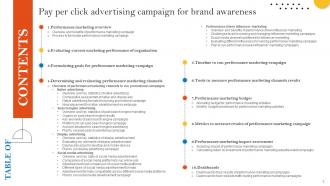
Slide 3: This slide shows Table of Content for the presentation.
Slide 4: This slide shows title for topics that are to be covered next in the template.
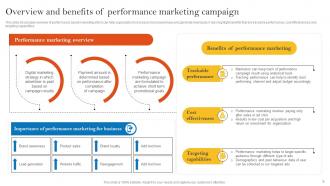
Slide 5: This slide showcases overview of performance based marketing.
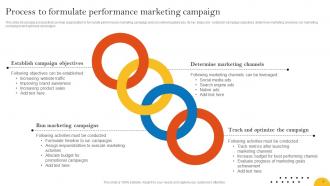
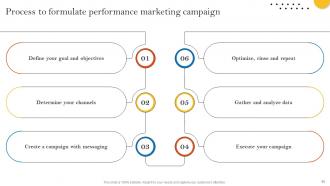
Slide 6: This slide presents process that can help organization to formulate performance marketing campaign.
Slide 7: This slide shows title for topics that are to be covered next in the template.
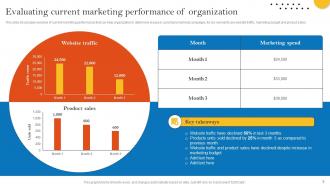
Slide 8: This slide displys overview of current marketing performance that can help organization to determine issues in current promotional campaigns.
Slide 9: This slide shows title for topics that are to be covered next in the template.
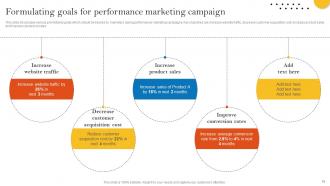
Slide 10: This slide showcases various promotional goals which should be tracked by marketers during performance marketing campaigns.
Slide 11: This slide shows title for topics that are to be covered next in the template.
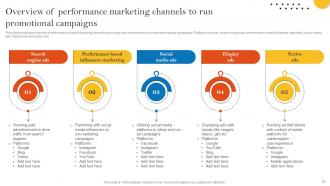
Slide 12: This slide describes overview of performance based marketing channels which can help marketers to run online promotional campaigns.
Slide 13: This slide shows title for topics that are to be covered next in the template.
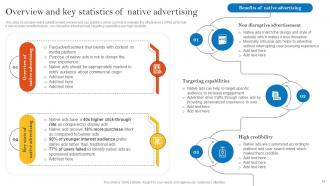
Slide 14: This slide showcases native advertisement overview and key statistics which can help to evaluate the effectiveness of this ad format.
Slide 15: This slide displys comparison of native and display ad platforms that can be used in performance marketing campaigns.
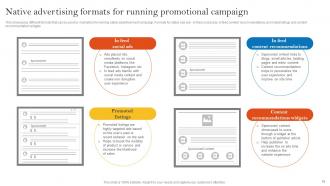
Slide 16: This slide showcases different formats that can be used by marketers for running native advertisement campaign.
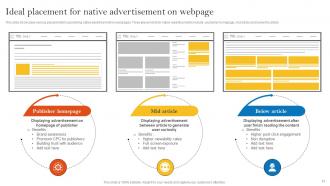
Slide 17: This slide presents various placements for publishing native advertisement on webpages.
Slide 18: This slide shows title for topics that are to be covered next in the template.
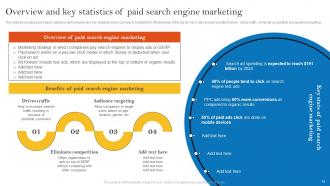
Slide 19: This slide displys paid search advertisement overview and key statistics.
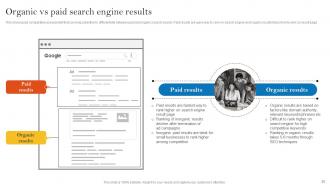
Slide 20: This slide presents comparative assessment that can help advertise to differentiate between paid and organic search search.
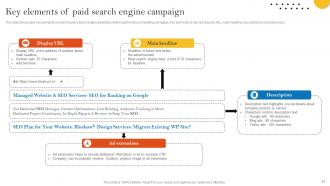
Slide 21: This slide showcases key elements involved in paid search engine advertisement for performance marketing camapign.
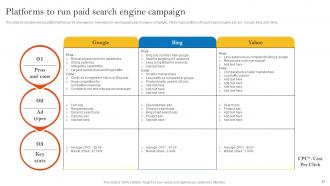
Slide 22: This slide displys various platforms that can be leveraged by marketers for running paid search engine campaigns.
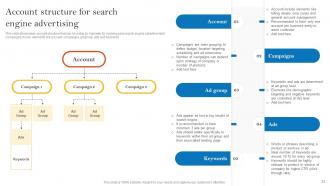
Slide 23: This slide presents account structure that can be setup by marketer for running paid search engine advertisement campaigns.
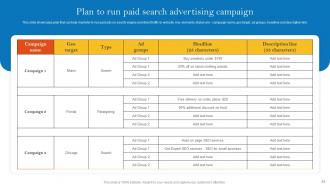
Slide 24: This slide showcases plan that can help marketer to run paid ads on search engine and direct traffic to website.
Slide 25: This slide shows title for topics that are to be covered next in the template.
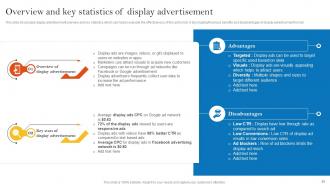
Slide 26: This slide showcases display advertisement overview and key statistics.
Slide 27: This slide presents key elements that are included by marketers to formulate display ad and run marketing campaign.
Slide 28: This slide displays various types ad sizes that can be used to run display advertisement on desktop and mobile platforms.
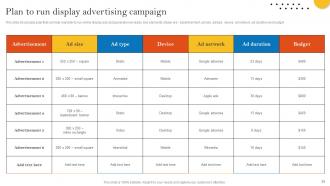
Slide 29: This slide showcases plan that can help marketer to run online display ads and generate new leads.
Slide 30: This slide shows title for topics that are to be covered next in the template.
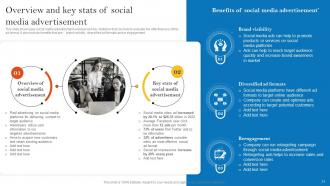
Slide 31: This slide displys social media advertisement overview and key statistics that can help to evaluate the effectiveness of this ad format.
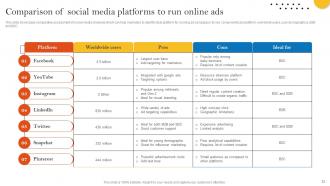
Slide 32: This slide showcases comparative assessment of social media channels which can help marketers to identify ideal platform for running ad campaigns.
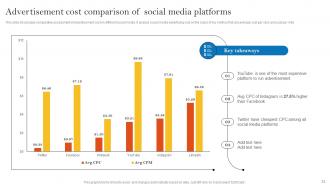
Slide 33: This slide describes comparative assessment of advertisement cost on different social media.
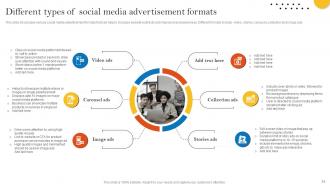
Slide 34: This slide showcases various social media advertisement formats.
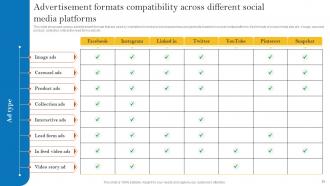
Slide 35: This slide presents various advertisement formats that are used by marketers to increase brand awareness.
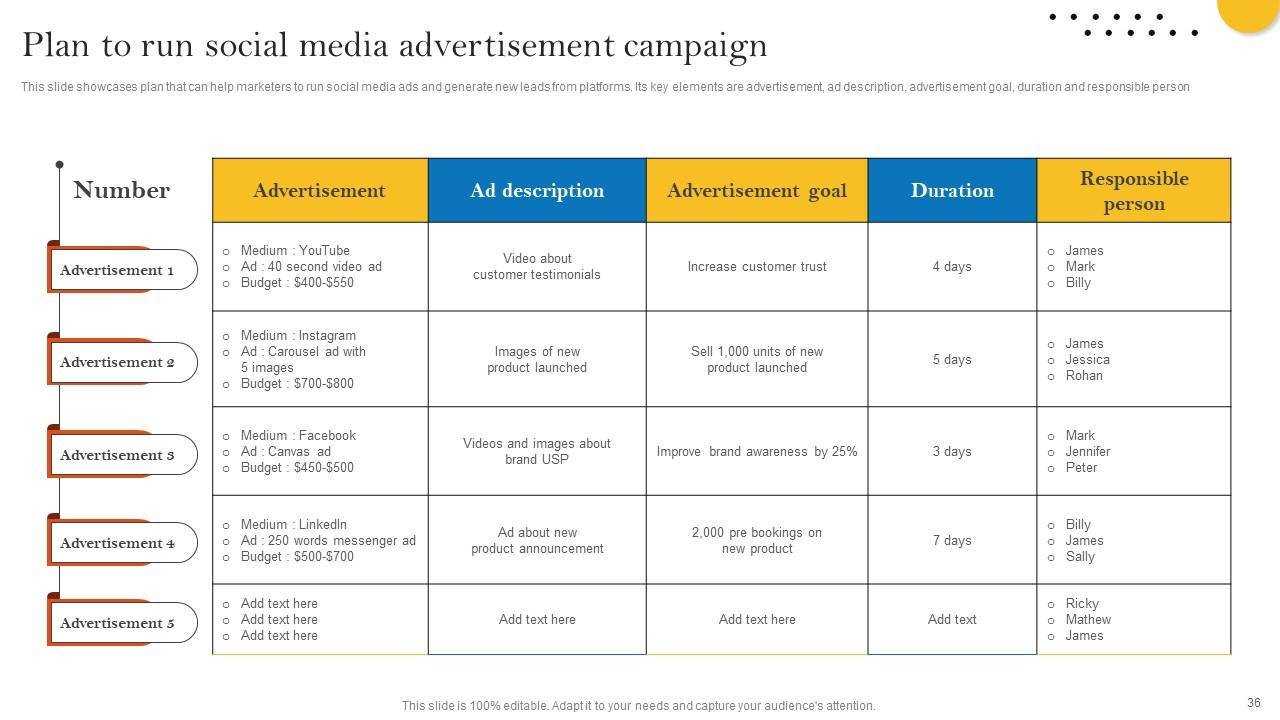
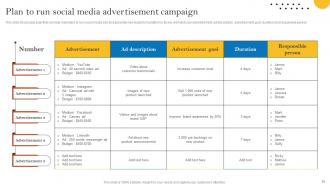
Slide 36: This slide showcases plan that can help marketers to run social media ads and generate new leads from platforms.
Slide 37: This slide shows title for topics that are to be covered next in the template.
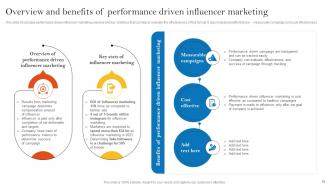
Slide 38: This slide presents performance driven influencer marketing overview and key statistics.
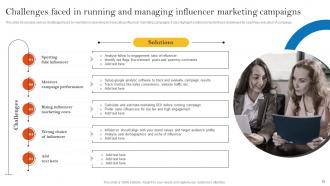
Slide 39: This slide showcases various challenges faced by marketers in planning and executing influencer marketing campaigns.
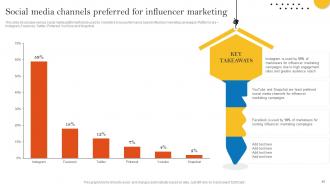
Slide 40: This slide displys various social media platforms that are used by marketers to run performance based influencer marketing campaigns.
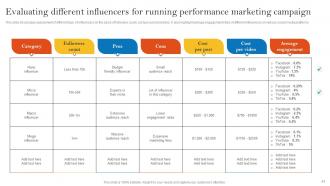
Slide 41: This slide showcases assessment of different type of influencers on the basis of followers count, cost per post and video.
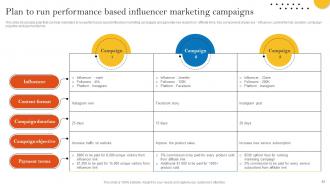
Slide 42: This slide displys plan that can help marketers to run performance based influencer marketing campaigns.
Slide 43: This slide shows title for topics that are to be covered next in the template.
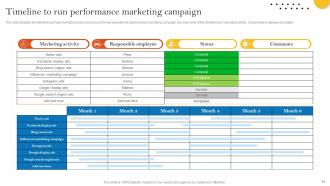
Slide 44: This slide displays timeline that can help marketers to plan and ensure timely execution of performance marketing campaign.
Slide 45: This slide shows title for topics that are to be covered next in the template.
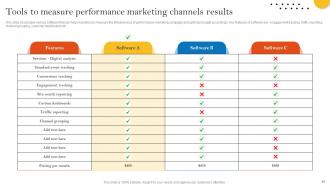
Slide 46: This slide presents various software that can help marketers to measure the effectiveness of performance marketing campaign.
Slide 47: This slide shows title for topics that are to be covered next in the template.
Slide 48: This slide showcases budget allocation for performance marketing activities to run online promotional campaigns.
Slide 49: This slide depicts monthly budget breakdown for running performance marketing campaigns on different media channels.
Slide 50: This slide shows title for topics that are to be covered next in the template.
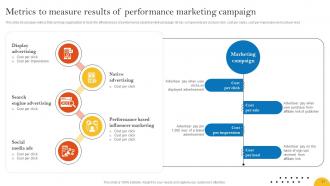
Slide 51: This slide showcases metrics that can help organization to track the effectiveness of performance advertisement campaign.
Slide 52: This slide shows title for topics that are to be covered next in the template.
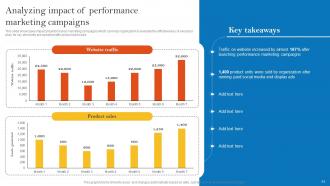
Slide 53: This slide showcases impact of performance marketing campaigns which can help organization to evaluate the effectiveness of executed plan.
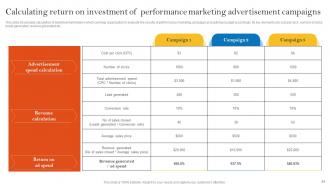
Slide 54: This slide presents calculation of advertisement returns which can help organization to evaluate the results of performance marketing campaign.
Slide 55: This slide shows title for topics that are to be covered next in the template.
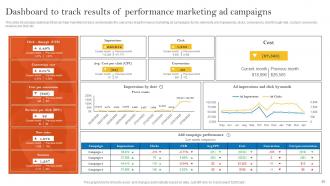
Slide 56: This slide showcases dashboard that can help marketers to track and evaluate the outcomes of performance marketing ad campaigns.
Slide 57: This slide showcases dashboard that can help marketers to track the website traffic during execution of performance marketing activities.
Slide 58: This slide shows all the icons included in the presentation.
Slide 59: This slide is titled as Additional Slides for moving forward.
Slide 60: This slide presents Process to formulate performance marketing campaign with additional textboxes and related imagery.
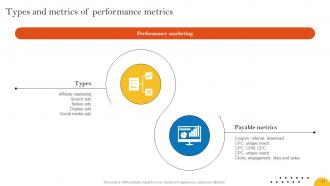
Slide 61: This slide presents Types and metrics of performance metrics with additional textboxes and related imagery.
Slide 62: This slide displays Tools to measure effectiveness of performance marketing campaign with additional textboxes.
Slide 63: This slide illustrates Channels used for perfomance marketing.
Slide 64: This is Our Vision, Mission & Goal slide.
Slide 65: This slide presents Roadmap with additional textboxes.
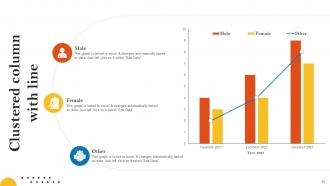
Slide 66: This slide provides Clustered Column chart with two products comparison.
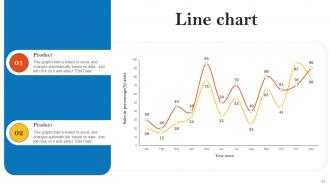
Slide 67: This slide describes Line chart with two products comparison.
Slide 68: This is Our Team slide with names and designation.
Slide 69: This slide provides 30 60 90 Days Plan with text boxes.
Slide 70: This is an Idea Generation slide to state a new idea or highlight information, specifications etc.
Slide 71: This slide shows Post It Notes for reminders and deadlines. Post your important notes here.
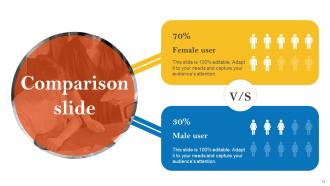
Slide 72: This is a Comparison slide with additional textboxes and related imagery.
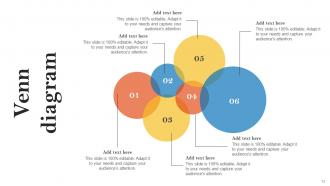
Slide 73: This slide depicts Venn diagram with text boxes.
Slide 74: This is a Thank You slide with address, contact numbers and email address.
Pay Per Click Advertising Campaign For Brand Awareness Powerpoint Presentation Slides MKT CD V with all 79 slides:
Use our Pay Per Click Advertising Campaign For Brand Awareness Powerpoint Presentation Slides MKT CD V to effectively help you save your valuable time. They are readymade to fit into any presentation structure.
-
World-class PowerPoint designs that are fully customizable!
-
The quality of the templates is as fine as it could get. It was a purchase well made!
