PMI ACP IT Powerpoint Presentation Slides

Rating:
100%
PMI ACP IT Powerpoint Presentation Slides
Slide 1 of 45
Favourites Favourites

Try Before you Buy Download Free Sample Product

Audience Impress Your
Audience
Editable 100%
Editable
Time Save Hours
of Time
The Biggest Sale is ending soon in
0
0
:
0
0
:
0
0
Rating:
100%
Deliver an informational PPT on various topics by using this PMI ACP IT Powerpoint Presentation Slides. This deck focuses and implements best industry practices, thus providing a birds eye view of the topic. Encompassed with fourty slides, designed using high quality visuals and graphics, this deck is a complete package to use and download. All the slides offered in this deck are subjective to innumerable alterations, thus making you a pro at delivering and educating. You can modify the color of the graphics, background, or anything else as per your needs and requirements. It suits every business vertical because of its adaptable layout.

People who downloaded this PowerPoint presentation also viewed the following :

Content of this Powerpoint Presentation

Slide 1: This slide displays title i.e. 'PMI-ACP (IT)' and your Company Name.
Slide 2: This slide presents agenda.
Slide 3: This slide exhibits table of contents.
Slide 4: This slide also shows table of contents.
Slide 5: This slide depicts title for four topics that are to be covered next in the template.
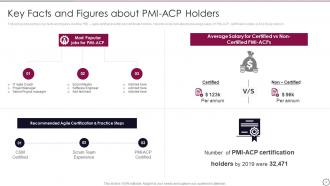
Slide 6: This slide portrays key facts and figures of active PMI – agile certified practitioner certificate holders.
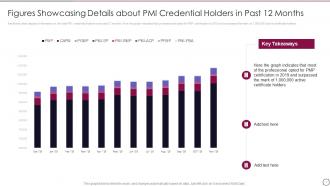
Slide 7: This slide displays information on the total PMI credential holders over past 12 months.
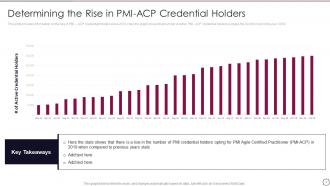
Slide 8: This slide provides information on the rise in PMI – ACP credential holders since 2014.
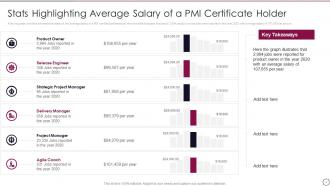
Slide 9: This slide provides informational stats on the average salary of a PMI certified professional.
Slide 10: This slide depicts title for three topics that are to be covered next in the template.
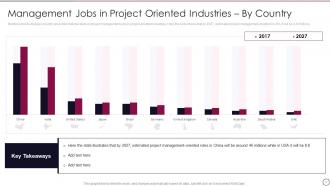
Slide 11: This slide displays country-wise informational stats on project management jobs in project-oriented industries.
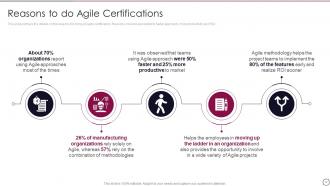
Slide 12: This slide portrays the details on the reasons for doing an agile certification.
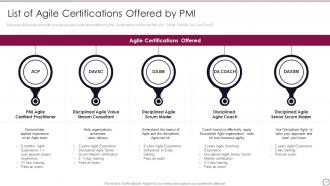
Slide 13: This slide shows information on various agile certifications offered by PMI.
Slide 14: This slide depicts title for three topics that are to be covered next in the template.
Slide 15: This slide illustrates information about the application process of PMI-ACP certificate in five steps.
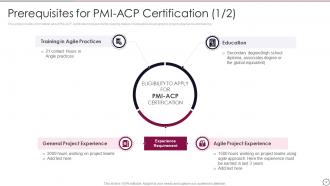
Slide 16: This slide provides information about PMI-ACP certification requirements covering details of educational background, project experience and training.
Slide 17: This slide provides information about PMI-ACP certification requirements covering details of educational background, project experience and training.
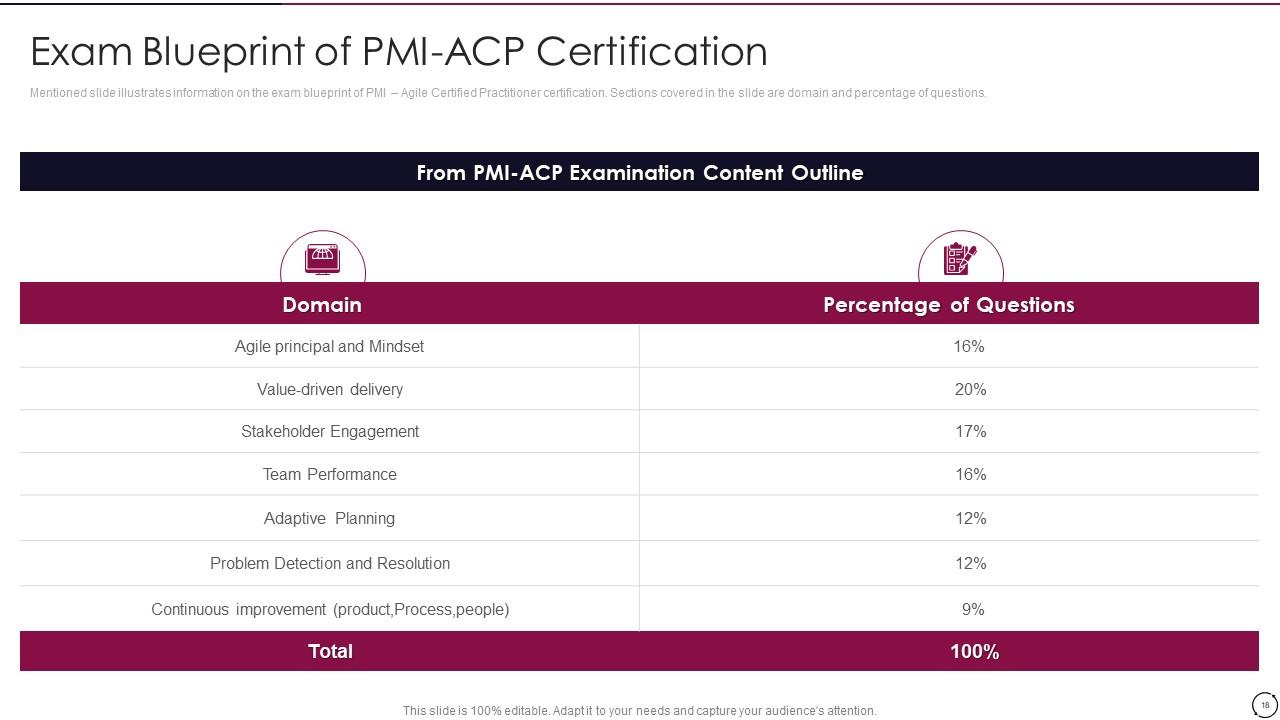
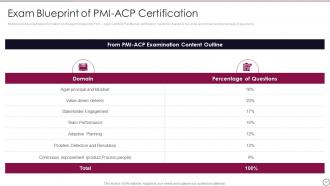
Slide 18: This slide illustrates information on the exam blueprint of PMI – Agile Certified Practitioner certification.
Slide 19: This slide depicts title for three topics that are to be covered next in the template.
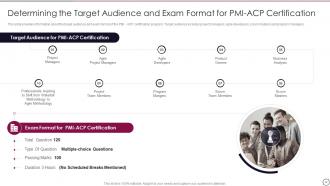
Slide 20: This slide provides information about the target audience and exam format of the PMI - ACP certification program.
Slide 21: This slide portrays details on the fee structure for PMI-ACP certification.
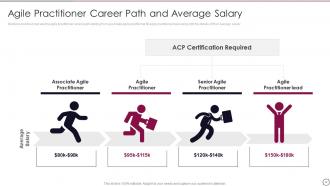
Slide 22: This slide showcase the agile practitioner career path starting from associate agile practitioner till agile practitioner lead.
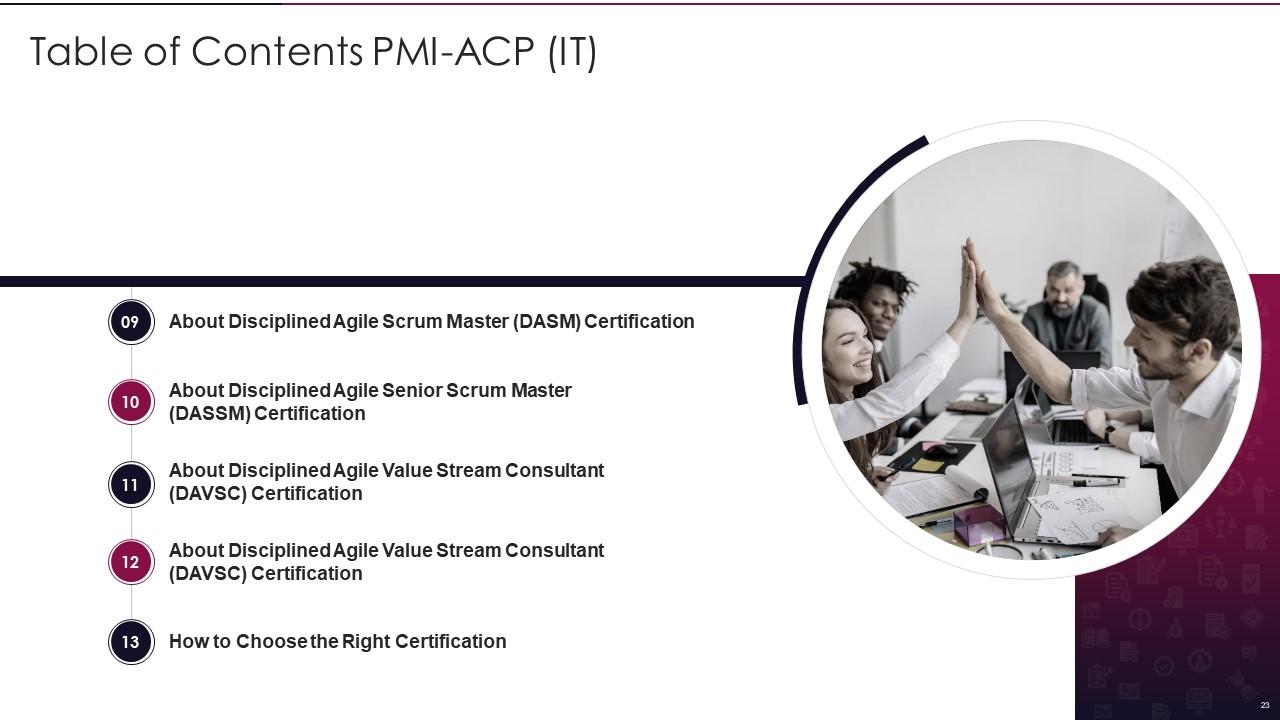
Slide 23: This slide depicts title for five topics that are to be covered next in the template.
Slide 24: This slide displays information about the benefits of being a Disciplined Agile Scrum Master (DASM) certified professional.
Slide 25: This slide provides information about the benefits of being a Disciplined Agile Senior Scrum Master (DASSM) certified professional.
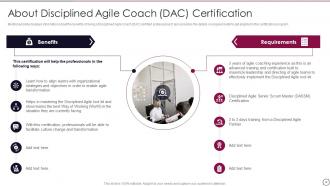
Slide 26: This slide displays information about the benefits of being a Disciplined Agile Coach (DAC) certified professional.
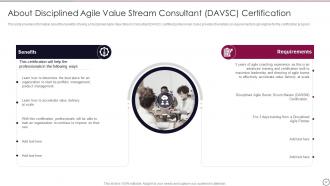
Slide 27: This slide provides information about the benefits of being a Disciplined Agile Value Stream Consultant (DAVSC) certified professional.
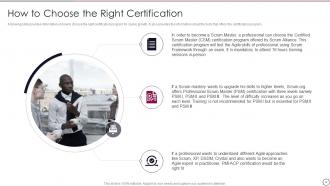
Slide 28: This slide provides information on how to choose the right certification program for career growth.
Slide 29: This is the icons slide.
Slide 30: This slide displays Agile Adoption – Scrum Statistics Highlights.
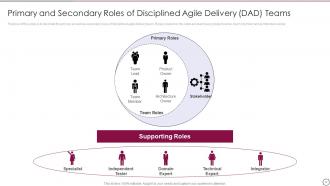
Slide 31: This slide illustrate the primary as well as secondary roles of disciplined agile delivery team.
Slide 32: This slide presents title for additional slides.
Slide 33: This slide presents your company's vision, mission and goals.
Slide 34: This slide depicts 30-60-90 days plan for projects.
Slide 35: This slide depicts posts for past experiences of clients.
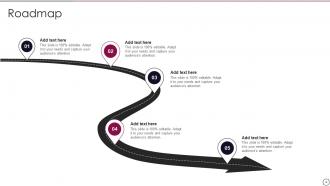
Slide 36: This slide shows roadmap.
Slide 37: This slide exhibits goals of the company.
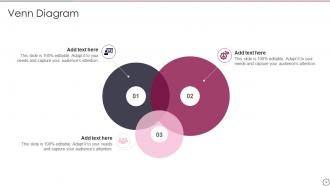
Slide 38: This slide displays Venn.
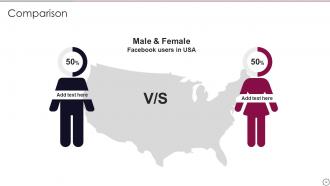
Slide 39: This slide highlights comparison of products based on selects.
Slide 40: This is thank you slide & contains contact details of company like office address, phone no., etc.

FAQs for PMI ACP IT

So PMI-ACP covers twelve Agile principles you'll want to nail down. Working software gets delivered frequently, teams welcome changing requirements, and sustainable development pace is key. Face-to-face communication works best - though honestly, who does that anymore with everyone remote? Customer collaboration beats contract stuff, responding to change trumps rigid planning. Teams need to be self-organizing and empowered. People and interactions > processes and tools, you know? I'd tackle the four core values first, then see how those twelve principles actually support continuous delivery. Makes way more sense that way.

PMI-ACP covers way more ground than CSM or SAFe - you'll learn Scrum, Kanban, Lean, XP, the whole deal. CSM just teaches basic Scrum stuff, and SAFe is for scaling in big companies. The catch with PMI-ACP? You need 2,000 hours of real Agile work before you can even sit for the exam. CSM doesn't require any experience at all. Studying for PMI-ACP was brutal honestly - so much material to cover. But if you want broad credibility across different frameworks instead of being pigeonholed into one approach, it's worth it.

Dude, stakeholder engagement is huge for PMI-ACP stuff. Agile is all about getting constant feedback from people who actually matter - not just checking in at the start and finish like old-school project management. Your stakeholders are basically telling you if you're on the right track or building something totally useless (which happens more than you'd think). Get them into sprint reviews and demos regularly. Quick changes become way easier when they're involved early. Otherwise you'll end up with a perfect product that nobody wants. Their feedback literally drives where your project goes next.

Dude, the PMI-ACP is all scenario-based questions - like actual situations you'd deal with as a project manager. Think sprint planning disasters, stakeholders who won't stop arguing, team velocity randomly tanking. It's not about memorizing definitions (thank god). More like "what would you do when your product owner changes priorities halfway through a sprint?" Real pain-in-the-ass stuff we've all been through. Questions cover Scrum, Kanban, Lean - basically everything. Honestly? Skip cramming the Agile manifesto word-for-word. Practice situational scenarios instead. That's what actually helps you pass this thing.

Honestly, most people mess up by just cramming frameworks instead of actually getting the principles. The Mike Griffiths book is solid but warning - it's thick as hell. Do tons of practice tests, like 3-4 full ones minimum so you get used to their weird question style. Scrum vs Kanban vs Lean distinctions are huge on this thing, so nail those differences down. Don't just memorize theory stuff - think about how it'd work on actual projects you've done. Give yourself 2-3 months and book your exam date now or you'll keep putting it off. The PMI simulator is worth the money too.

So the Scrum Master isn't a project manager at all - that trips people up constantly. They're more like a coach who clears roadblocks and helps the team get better at Scrum stuff. Think facilitator, not boss. They run all those ceremonies, shield the team from random interruptions, and work with the Product Owner to keep everything moving. Honestly, the "servant leader" thing sounds cheesy but it's accurate. For your PMI-ACP prep, just remember they're responsible for making the Scrum process work well, not managing people or deciding what gets built. Focus on coaching and removing impediments.

Honestly, the hardest part is getting people to ditch that waterfall mindset - they're so used to planning everything upfront. Management will probably panic when they don't see those hefty requirement docs they love. Your teams are gonna struggle with the whole "figure it out as we go" thing too. Cross-functional work? Good luck breaking down those silos people have lived in forever. Oh, and don't expect this transformation to happen quickly - I learned from my PMI-ACP that cultural shifts take forever. Start with a small pilot project. Focus on making people feel safe to mess up first. That's honestly half the battle right there.

So PMI-ACP is basically obsessed with getting better all the time - like, retrospectives are huge on the exam. Teams constantly look at what worked, what didn't, then actually change stuff. Short sprints help but that's not the whole point. Getting better each cycle is what matters. Honestly, I found this part pretty interesting when I was studying. Agile never stops evolving, you know? Whether it's Scrum, Kanban, or Lean, they all have built-in ways for teams to keep tweaking their process. It's more journey than destination, if that makes sense.

Basically, Scrum is all about those fixed sprints with set roles and ceremonies. Kanban's different - it's more about continuous flow and seeing your work visually. Lean just wants to cut waste and get better value out of everything. They actually work pretty well together though! For the PMI-ACP you need to know when to use what. Like Scrum's great for dev teams that need structure, Kanban works for support stuff where you can't predict demand. Lean principles help any process really. Study real scenarios where you'd pick one approach over another - the exam is obsessed with those situational questions.

Yeah, PMI-ACP is pretty clear about this - you can't just slap the same Agile approach on every project and call it a day. Your team size matters. So does project complexity, what stakeholders actually want, company culture... all that stuff. I mean, you wouldn't cook pasta the same way you'd grill a steak, right? Maybe you need shorter sprints, or skip certain ceremonies that don't make sense. Sometimes mixing Scrum with Kanban works better than sticking to one thing. The trick is actually understanding why each practice exists, then you can figure out how to tweak it for whatever chaos you're dealing with.

For PMI-ACP, focus on velocity, burndown charts, and cycle time - but don't stop there. Defect rates matter too, plus team and customer satisfaction scores. Velocity gets hyped up way too much though. Burndown charts actually tell you if you're hitting sprint goals, and cycle time shows where things get stuck. Team morale? That stuff predicts success better than raw numbers sometimes. Oh, and track these consistently across sprints. You'll start seeing patterns and figure out what needs fixing. The "soft" metrics like stakeholder happiness are honestly just as important as the technical ones.

So basically agile governance is like having a chill manager instead of a micromanager. Teams can actually move fast without drowning in paperwork and endless approvals. You'll get quicker decisions and way better visibility into what's going wrong before it becomes a disaster. Here's the thing - someone still needs to watch the big picture while your team cranks out work. Otherwise you end up with scope creep everywhere and stakeholders getting pissy because they feel ignored. My advice? Set up clear decision-making rules first, then build in regular check-ins that don't waste everyone's time during sprints.

Oh man, PMI-ACP is way different than traditional approaches - risk management becomes this ongoing conversation instead of some massive upfront document nobody reads. Daily standups and retros become your best friends for catching problems early. Honestly, the adaptive planning thing is a game changer - you're tweaking stuff as you go rather than pretending you can see the future (spoiler: you can't). Risk-adjusted backlogs are super helpful, plus spike solutions when tech gets weird. Just weave risk talks into your regular meetings and you'll start spotting issues way before they turn into fires.

For PMI-ACP, definitely get comfortable with user stories and story mapping - they're lifesavers for figuring out what people actually want and mapping your roadmap. Planning poker is way more accurate than guessing hours (learned that the hard way). Story points and relative estimation are your friends here. Release planning keeps everything structured without being crazy rigid. Oh, and velocity tracking - super helpful for knowing what your team can realistically pull off. I'd start with user story workshops honestly, they're gold for getting stakeholders aligned. The whole approach is about staying flexible instead of over-engineering everything upfront.

Yeah, PMI-ACP is huge on servant leadership and getting teams to actually work together instead of against each other. Daily standups, retrospectives, cross-functional stuff - it breaks down those communication walls that drive everyone crazy. Plus you get conflict resolution and active listening skills, which honestly help everywhere, not just work. My favorite part though? It shows you how to make people feel safe enough to actually speak up with ideas or problems. Oh, and try adding one new collaboration thing each sprint - you'll see changes pretty fast.

Ratings and Reviews

100% of 100
Review Form
Write a review
Most Relevant Reviews
  1. 100%

    by Dan Marshall

    Wonderful templates design to use in business meetings.
  2. 100%

    by Taylor Hall

    Great designs, really helpful.

2 Item(s)

per page: