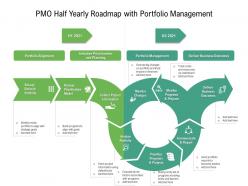
Roteiro Semestral do PMO com Gerenciamento de Portfólio

Rating:
90%
Pmo half yearly roadmap with portfolio management
Slide 1 of 2
Favourites Favourites

Try Before you Buy Download Free Sample Product

Audience Impress Your
Audience
Editable 100%
Editable
Time Save Hours
of Time
The Biggest Sale is ending soon in
0
0
:
0
0
:
0
0
Rating:
90%

Recursos desses slides de apresentação do PowerPoint:

Apresentando o roteiro semestral do PMO com o slide do PowerPoint de gerenciamento de portfólio. Este slide PPT está disponível nas proporções de 4,3 e 16,9. Você pode baixar este tema PPT em vários formatos, como PDF, PNG e JPG. Este modelo do PowerPoint é totalmente editável e você pode modificar o tamanho da fonte, o tipo de fonte e as formas conforme suas necessidades. Nosso layout PPT é compatível com o Google Slides.

People who downloaded this PowerPoint presentation also viewed the following :

FAQs for Pmo half yearly roadmap

Okay so you need five main things: governance structure, standardized processes/tools, success metrics, communication plan, and getting stakeholders on board. Most people mess up by trying to tackle everything at once - don't do that. Start with assessing where you're at now, then pick what to fix first based on your biggest headaches. I'd map it out over 12-18 months with quarterly check-ins. Oh, and seriously get executive buy-in early or you'll be banging your head against the wall. The maturity stages thing is crucial too but honestly that's where teams usually trip up.

Honestly, most PMOs screw this up by operating in their own little bubble. First thing - sit down with your executives regularly and figure out what they're actually trying to achieve. New market expansion? Revenue growth? Whatever it is, that's what drives your project priorities. I swear, half the PMOs I've seen just manage stuff without connecting it to real business goals. Build your roadmap around their pain points instead of random projects. The whole point is proving your work creates outcomes they give a damn about. Otherwise you're just... there.

Track the obvious stuff first - delivery rates, budget performance, timelines. Resource utilization too. But honestly? Don't sleep on stakeholder satisfaction surveys because those tell you if people actually think you're worth having around. Portfolio alignment with strategy matters, plus how well teams adopt your processes. Oh, and risk mitigation effectiveness - that one's huge. Pick maybe 5-7 metrics that actually mean something to your company instead of going overboard. I'd set up a basic dashboard and check it monthly. The soft stuff is just as telling as the hard numbers, trust me.

Honestly, map your stakeholders to specific milestones from day one. Don't just wing it and hope they'll care later - trust me on this one. Get exec sponsors reviewing governance stuff before you roll anything out. Department heads should be validating processes during pilots too. Regular checkpoints are huge - people need to feel like they actually have a say in where things are going. Oh, and celebrate the wins publicly! Nothing gets people on board like seeing real progress. The whole thing should feel natural though, not like you're checking boxes. Build it right into your timeline as core work, not some afterthought activity.

Look, tech is what makes your PMO roadmap actually work instead of just sitting in some presentation collecting dust. Pick project management tools for tracking, get dashboards so you can see what's happening in real-time, and automate the tedious stuff - seriously, your team will love you for it. Here's the thing though: choose tools that match where you're at now, not whatever demo looked flashy last week. I'd start with one decent platform that covers the basics, then expand later. Don't go crazy trying to roll out everything simultaneously or you'll just stress everyone out.

Honestly? Monthly if you can manage it, quarterly at the bare minimum. Things move way too fast now to wait longer than that - you'll end up chasing outdated info. I learned this the hard way when leadership priorities shifted and I was still working off old assumptions for like two months. Regular check-ins help you spot problems before they blow up your timeline. Resource changes, new strategic stuff, shifting priorities - it all happens constantly. Just block out 30 minutes each month on your calendar now. Way better than scrambling when your boss asks for updates.

Honestly, the biggest pain will be teams thinking you're just adding red tape - I've seen this kill PMOs before they even get started. Getting actual budget and dedicated people is always a nightmare too. Leadership probably won't give you clear success metrics, which makes everything harder. Then you're stuck trying to force the same processes on totally different teams and project types. Oh, and whatever tech integration you're planning? It'll be messier than you think. Start small though - grab some quick wins first to prove you're not dead weight, then expand once people actually see the value.

Treat your PMO roadmap like any big org change - because that's what it is. Get stakeholder buy-in first by explaining the "why" behind each phase and what's in it for different teams. Find change champions in each department who'll sell your vision when you're not around. Don't ignore resistance hoping it'll disappear - tackle it directly. Quick wins early on will build momentum and show value. Oh, and communicate progress constantly and celebrate wins. People get discouraged fast if they can't see that things are actually improving. The whole effort falls apart without that proof of concept stuff working.

Honestly, it's like having a map instead of just wandering around lost. Your PMO roadmap shows all projects lined up with business goals and timelines, so you can actually prioritize stuff that matters. Spotting resource conflicts becomes super obvious when everything's laid out visually. Dependencies between projects? Way easier to catch. When stakeholders start arguing about priorities, just point to the roadmap - they can see exactly what gets delayed if something else jumps ahead. I'd start by plotting your current projects based on business value versus effort needed. Game changer, seriously.

First things first - figure out where your org actually stands with project management right now. Don't just copy what worked somewhere else. Your roadmap has to match your company's goals and vibe. Some places need tons of structure, others work better when you're not breathing down everyone's neck (seriously, I've watched overly strict PMOs crush entire teams). Go for some early wins to prove this stuff actually works, then slowly roll out the heavier processes. Oh, and definitely survey people first - you need to know what's actually broken before you start "fixing" things. Nobody wants more red tape just because.

Honestly, having a PMO roadmap is such a lifesaver for resource planning. You can actually see months ahead when projects will need specific people instead of that usual last-minute panic. Like, no more "oh crap, three teams need developers but we only have one" situations. It shows you where there's overlap, skill gaps, all that stuff before it blows up. Plus it makes justifying new hires way easier when you can show stakeholders the actual data. I'd start by just mapping what you've got now against your current projects – bet you'll find conflicts you didn't even realize were there.

Honestly, your roadmap's toast without solid communication. I've watched too many crash because nobody understood what was happening or why they should care. You've got to get everyone on board - executives, project teams, the whole bunch. Map out who matters most first, then figure out what each group actually cares about. Regular updates help, but make it two-way. Let people give feedback and ask questions. The vision and timeline stuff is obvious, but don't forget to explain the "what's in it for me" part. That's usually what makes or breaks buy-in.

Build quarterly checkpoints into your PMO roadmap right away - honestly, treating it like a living document saves so much headache later. Regular stakeholder reviews will surprise you with how much they reveal about changing priorities. Track leading indicators instead of just completion percentages so you can pivot early. Figure out what's actually non-negotiable versus the nice-to-haves first. Then create clear criteria for when you'll adjust course. Structure's important, but you've gotta stay adaptable or you'll end up way off track when business needs shift.

When you're building that PMO roadmap, think about five maturity levels: initial (basically winging it), repeatable (some processes in place), defined (standardized methods), managed (data-driven decisions), and optimizing (always improving). Most companies totally overestimate where they are though - like asking someone to rate their own driving, right? Be brutally honest about your current PM practices, governance, and tools. Map your roadmap to climb these levels gradually instead of trying to go from hot mess to perfect overnight. I'd start with a maturity assessment survey across teams. Gets you that reality check you probably need.

Absolutely dig into your old project data - it's honestly better than guessing what went wrong. Pull together maybe 5-10 project retrospectives and hunt for patterns. What kept breaking? Which processes did teams actually use vs. the ones gathering dust? I always find the lessons learned docs show you the real problems - resource issues, communication disasters, timeline fails. That stuff repeats if you don't catch it. Use those patterns to figure out what PMO capabilities you need to build first. No point fixing everything when you can tackle the biggest pain points right away.

Ratings and Reviews

90% of 100
Review Form
Write a review
Most Relevant Reviews
  1. 80%

    by Davis Gutierrez

    Topic best represented with attractive design.
  2. 100%

    by Claude Price

    Innovative and attractive designs.

2 Item(s)

per page: