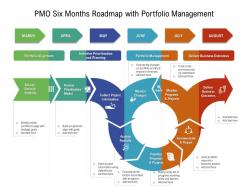
Sechsmonatiger PMO-Fahrplan mit Portfoliomanagement
Try Before you Buy Download Free Sample Product
Audience
Editable
of Time
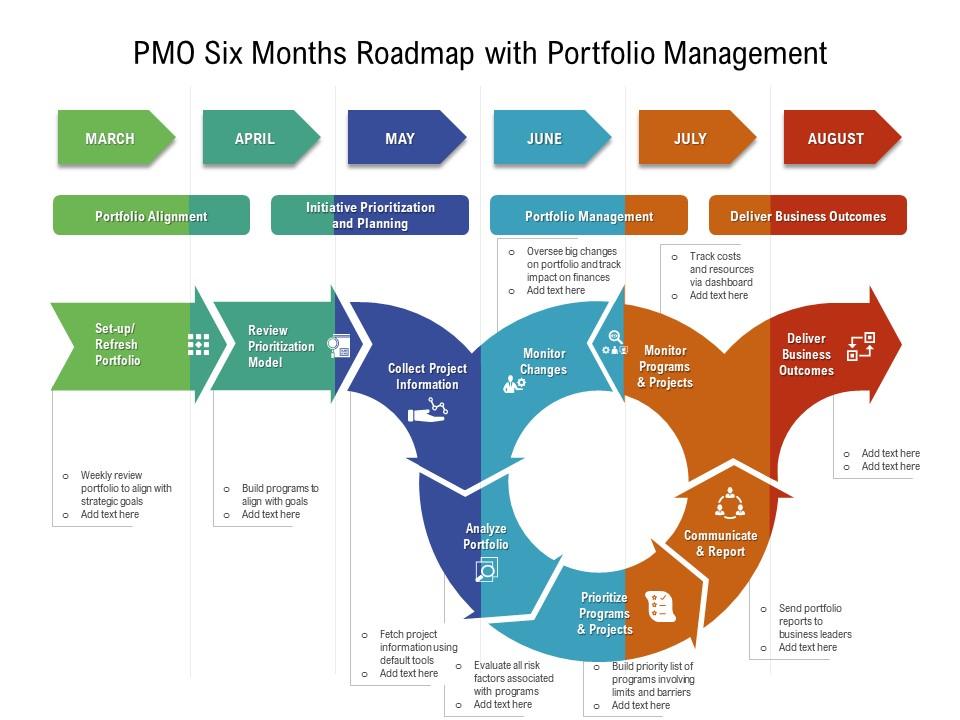
Nutzen Sie unseren vorgefertigten sechsmonatigen PMO-Fahrplan mit Portfoliomanagement, um Ihren Aktionsplan so effektiv wie möglich zu präsentieren. Reduzieren Sie den Papierkram und zeigen Sie, wie verschiedene Aktivitäten miteinander verknüpft sind, indem Sie dieses aufmerksamkeitsstarke PowerPoint-Thema integrieren. Dieses vollständig bearbeitbare Roadmap-PPT-Layout ist geeignet, um alle Ihre Anforderungen zu erfüllen und einen strukturierten Überblick über den gesamten Prozessablauf mithilfe von Farbcodierung zu erhalten. Stellen Sie Ihren Teamkollegen Richtlinien zum Fortschrittsprozess zur Verfügung, indem Sie unser PPT-Design verwenden. Teammitglieder können einfach in Teams eingeteilt werden, indem sie auf die innerhalb des Zeitrahmens zu erreichenden Arbeitsmeilensteine zugreifen. Sie können die PowerPoint-Folie ganz einfach an Echtzeitsituationen anpassen. Laden Sie unsere beeindruckende sechsmonatige PMO-Roadmap mit Portfoliomanagement herunter, und schon können Sie Ihr Fachwissen in der strategischen Planung unter Beweis stellen.
Merkmale dieser PowerPoint-Präsentationsfolien:
Präsentation des sechsmonatigen PMO-Fahrplans mit Portfoliomanagement-PowerPoint-Vorlage. Diese PPT-Präsentation ist mit Google Slides kompatibel und daher leicht zugänglich. Sie können dieses PowerPoint-Layout in verschiedenen Formaten wie PDF, PNG und JPG herunterladen und speichern. Dieses PPT-Design ist in den Seitenverhältnissen 4,3 und 16,9 verfügbar. Diese PowerPoint-Vorlage ist anpassbar, sodass Sie die Schriftgröße, den Schriftarttyp, die Farbe und die Formen gemäß Ihren Anforderungen ändern können.
People who downloaded this PowerPoint presentation also viewed the following :
Sechsmonatiger PMO-Fahrplan mit Portfoliomanagement mit allen 2 Folien:
Nutzen Sie unsere PMO-Sechsmonats-Roadmap mit Portfoliomanagement, um Ihre wertvolle Zeit effektiv zu sparen. Sie sind gebrauchsfertig und passen in jede Präsentationsstruktur.
FAQs for Pmo six months roadmap
So you'll definitely need PMO charter approval and governance framework first - everything builds off that foundation. Get your stakeholder onboarding sorted, then set up project intake processes. The standards and reporting stuff comes next, plus rolling out portfolio tools. Honestly, this part always drags longer than anyone expects. After that, tackle capability assessments and resource optimization - the performance metrics can come later. Don't forget continuous improvement cycles and strategic alignment reviews at the end. My advice? Start with governance and don't bite off too much at once. You'll burn out your team otherwise.
Your PMO roadmap has to tie directly to what the company actually wants to achieve. Map every initiative to real business outcomes - revenue, cost cuts, happier customers, whatever moves the needle. Getting leadership on board early is crucial (seriously, don't skip this step). I'd suggest quarterly reviews since business priorities change constantly - sometimes faster than you'd expect. The key question for every project: "How does this actually help the business?" If you can't answer that clearly, maybe it shouldn't be on your roadmap.
Track both leading and lagging stuff to get the real picture. Project delivery is obvious - on-time rates, budget adherence, scope creep frequency. Those numbers only tell you so much though. Stakeholder satisfaction scores matter way more than people think. Resource utilization rates too. Process adoption is huge - like, are teams actually following your PMO standards or just pretending? Monthly tracking works best. Look for trends instead of freaking out over single data points. Start small with 3-4 metrics, then build from there as you figure out what actually moves the needle.
Honestly, stakeholder requirements are everything for your PMO roadmap. Without them you're just guessing. I'd start by actually talking to people - executives want visibility, project managers need better processes, that kind of thing. It's weird how different groups want totally opposite things sometimes. Map out their pain points first, then you can figure out what to tackle when. The key is delivering something useful early so people don't think you're just another bureaucracy layer. Interview the main players and write down what's actually broken - that'll point you in the right direction way better than any framework.
Honestly? People hate change, even when the current system is a total mess. Stakeholders will give you vague requirements then act surprised when results don't match their (unspoken) expectations. Resource constraints are brutal - everyone wants process improvements but nobody wants to free up time or budget. You'll get competing priorities from different departments too. Don't try proving ROI immediately - your processes need time to actually work first. Communication breakdowns become super obvious once you start adding structure. My advice? Pick one small pilot project, nail it, then use that win to sell the bigger vision. Way easier than trying to boil the ocean.
Honestly? Check that thing monthly if you can swing it. Quarterly at the bare minimum. I made the mistake once of letting a roadmap sit for like 6 months - total disaster. Everything had changed by then and it was basically useless paper. New projects always pop up out of nowhere, leadership changes their minds, stakeholders want different stuff. The trick is scheduling those review meetings with your team and actually sticking to them. Don't wait until things go sideways to take another look. Set those calendar reminders now and treat them like they actually matter.
Dude, change management can make or break your whole PMO thing. People hate switching up how they work - reporting differently, new tools, all that stuff. Skip the change strategy and you'll get pushback everywhere. Honestly, I've watched so many PMOs crash because they built awesome processes but nobody wanted to use them. Communication is huge from the start. Training too. Oh and getting key people excited about it early helps a ton. You're basically convincing everyone to abandon their comfort zone, so you better have a plan for that part.
Dude, you absolutely need the right tools for your PMO roadmap or you'll go insane. I'd grab something like Monday or Asana for tracking milestones. Portfolio dashboards are clutch for seeing everything at once. Resource management software keeps your people and budget sorted - trust me on this one. Also get collaboration tools so everyone stays on the same page timeline-wise. Oh, and make sure whatever you pick actually integrates well together. Nothing worse than systems that don't talk to each other. Start by figuring out what each roadmap phase needs, then match tools to those specific things.
Get leadership on board first - without their buy-in you're basically dead in the water. Make your roadmap visual because honestly, nobody's reading dense documents anymore. Quick wins early on will save your sanity and build credibility fast. Regular checkpoints are crucial since priorities shift constantly (and I mean constantly). Don't get caught up in process for process's sake - always connect back to actual business results. Oh, and monthly sponsor reviews aren't optional. They'll keep things moving and help you pivot when stuff inevitably changes direction.
Honestly, I'd build a simple scoring system first. Map each project against your top strategic goals - cuts out the fluff projects real quick. Then look at ROI, timeline, and whether you actually have the people to pull it off. Don't forget urgency though, because sometimes you just have no choice (like regulatory stuff). Resource availability is huge too - I've seen too many ambitious projects crash because nobody thought about bandwidth. The real trick? Be upfront about your scoring criteria from day one. When people start complaining about rankings later, you can just point back to the framework.
Honestly, declining project success rates are your biggest red flag. Stakeholder complaints getting worse? Time to pivot. Resource issues are another dead giveaway - teams either drowning or twiddling their thumbs means your roadmap's broken. Market shifts happen constantly (ugh, feels like monthly now), so that's an obvious trigger. Don't ignore team morale tanking either. Here's the thing though - when you spot these warning signs, don't wait around for the next formal review. Jump on it within two weeks max and reassess everything.
PMO roadmaps are basically your go-to for keeping everyone on the same page about what's happening when. Show stakeholders where their stuff fits in the big picture - saves you from those awkward "why isn't my project moving?" meetings. Honestly, the visual aspect is clutch because explaining project dependencies to executives without charts is painful. Keep it updated though, or people stop checking it. Oh, and make sure it's actually accessible to everyone who needs it. Nothing worse than having this great communication tool that half your team can't even see.
Okay so three things you absolutely can't skip: good people, decent tech, and leadership that actually gives a damn. Get yourself a solid PMO lead first - someone who knows their stuff, not just another warm body. Project management software comes next, but don't overthink it. Just pick something that plays nice with whatever systems you're already stuck with. The executive support thing is huge though. I'm talking real backing with budget and teeth, not just some VP nodding politely in meetings. Without that you're honestly screwed from day one. Oh, and don't get distracted by all the shiny extras until you nail these basics down.
Honestly, workshops are your best bet here. Get everyone in a room sharing their pain points and what they think the PMO should actually focus on. Send surveys out first though - people are way more honest when they're not being stared at in meetings. Don't just talk to the loud senior folks either. Hit up different levels, get the real scoop. Here's the key part: when you build that roadmap, show them exactly how their input shaped it. Like, call it out specifically. That's what gets people bought in - seeing their fingerprints on the final thing.
So your PMO roadmap is basically where you figure out who gets what resources and when. You'll be making tough calls about which projects get first dibs on people and budget - honestly, it's kinda like being the bad guy sometimes. But here's the thing: it helps you catch resource conflicts before they become disasters. Map out what capacity you actually have versus what the roadmap needs. Spot any gaps? Flag those to leadership right away. Otherwise you'll be scrambling later when three projects all want the same developer at once.
-
Enough space for editing and adding your own content.
-
Professional and unique presentations.