


Powerpoint-Präsentationsfolien für das Business Playbook nach der Pandemie
Das Business Playbook nach der Pandemie legt Prozesse dar, um das Bewusstsein für neue Gesundheits- und Wohlbefindensprotokolle zu schärfen, um den normalen Geschäftsbetrieb zu ermöglichen und sicher wieder an die Arbeit zu gehen. Sehen Sie sich unsere professionell gestaltete Vorlage für ein Business Playbook nach der Pandemie an, die einen Leitfaden für die Vorbereitung und Reaktion auf eine Covid-19-Pandemie für Unternehmen enthält. Diese Präsentation soll einen Überblick über die potenziellen Gefahren am Arbeitsplatz aufgrund von Covid-19 geben. Dieser ppt beinhaltet eine umfassende Gefährdungsbeurteilung für alle Arbeitsplätze bzw. als Ersatz für gesetzliche Pflichten zum Arbeitsschutz. Unternehmen können dieses ppt als Leitfaden für Arbeitgeber zusätzlich zu den Leitlinien von Gesundheitsbehörden wie der Weltgesundheitsorganisation WHO verwenden. Die Gliederung dieses Leitfadens umfasst die Verantwortlichkeiten des Arbeitgebers, die Hierarchie der Kontrollen, Gesundheitsuntersuchungen und das Isolationsprotokoll. Darüber hinaus umfasst es das Protokoll zur Selbstisolierung und Rückkehr zum Arbeitsplatz, das Protokoll zur physischen Distanzierung, Maßnahmen zur Dekontamination von Krankheitserregern, Mitarbeiterschulungen und einen Kommunikationsplan. Buchen Sie jetzt eine kostenlose Demo mit unserem Forschungsteam.














-

- Google Slides is a new FREE Presentation software from Google.
- All our content is 100% compatible with Google Slides.
- Just download our designs, and upload them to Google Slides and they will work automatically.
- Amaze your audience with SlideTeam and Google Slides.
-

Want Changes to This PPT Slide? Check out our Presentation Design Services
-

- WideScreen Aspect ratio is becoming a very popular format. When you download this product, the downloaded ZIP will contain this product in both standard and widescreen format.
-

- Some older products that we have may only be in standard format, but they can easily be converted to widescreen.
- To do this, please open the SlideTeam product in Powerpoint, and go to
- Design ( On the top bar) -> Page Setup -> and select "On-screen Show (16:9)” in the drop down for "Slides Sized for".
- The slide or theme will change to widescreen, and all graphics will adjust automatically. You can similarly convert our content to any other desired screen aspect ratio.
Compatible With Google Slides

Get This In WideScreen
You must be logged in to download this presentation.


Do you want to remove this product from your favourites?
Merkmale dieser PowerPoint-Präsentationsfolien :
Stellen Sie dieses vollständige Deck Ihren Teammitgliedern und anderen Mitarbeitern zur Verfügung. Umgeben von stilisierten Folien, die verschiedene Konzepte präsentieren, ist dieses Post Pandemic Business Playbook Powerpoint-Präsentationsfolien das beste Werkzeug, das Sie verwenden können. Personalisieren Sie seinen Inhalt und seine Grafiken, um ihn einzigartig und zum Nachdenken anzuregen. Alle einundvierzig Folien können bearbeitet und geändert werden, Sie können sie also gerne an Ihre Geschäftsumgebung anpassen. Die Schriftart, Farbe und andere Komponenten sind ebenfalls in einem bearbeitbaren Format erhältlich, was dieses PPT-Design zur besten Wahl für Ihre nächste Präsentation macht. Also, jetzt herunterladen.

People who downloaded this PowerPoint presentation also viewed the following :
Inhalt dieser Powerpoint-Präsentation
Folie 1 : Diese Folie zeigt den Titel an, z. B. „Post Pandemic Business Playbook“ und Ihren Firmennamen.
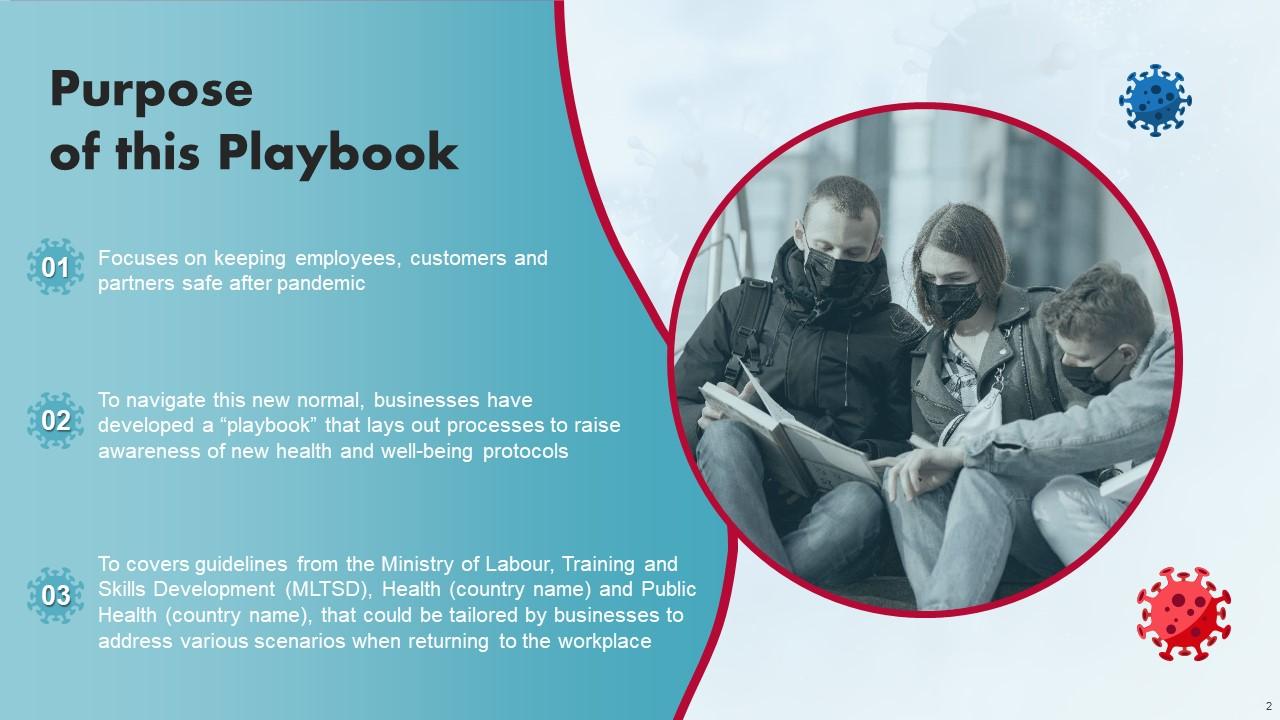
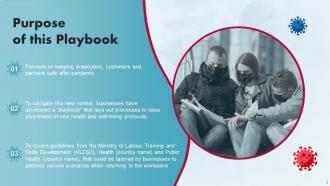
Folie 2 : Diese Folie zeigt den Zweck des Playbooks.
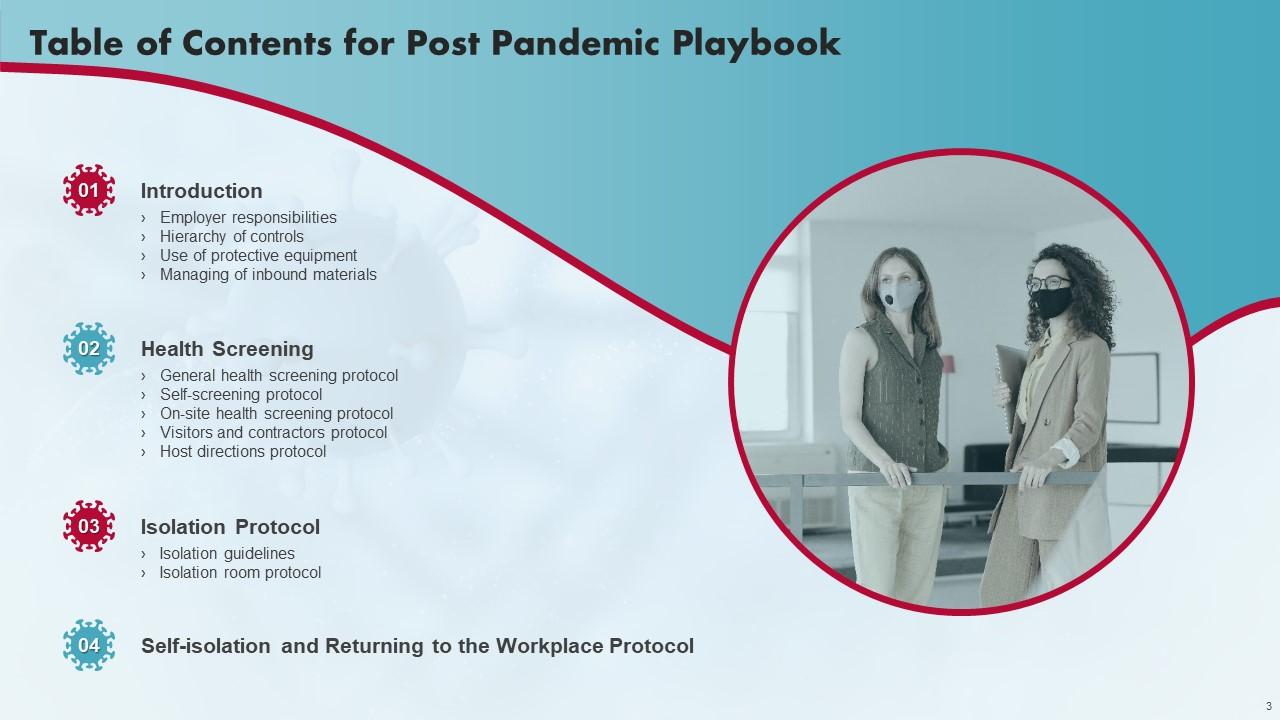
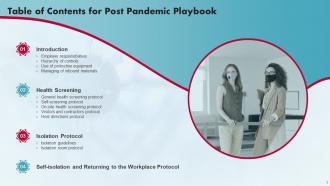
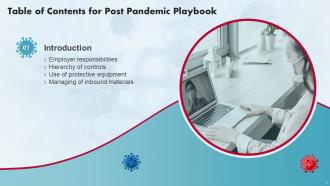
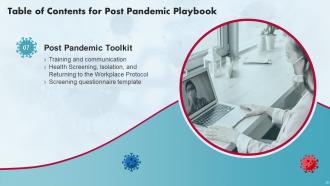
Folie 3 : Diese Folie zeigt das Inhaltsverzeichnis.
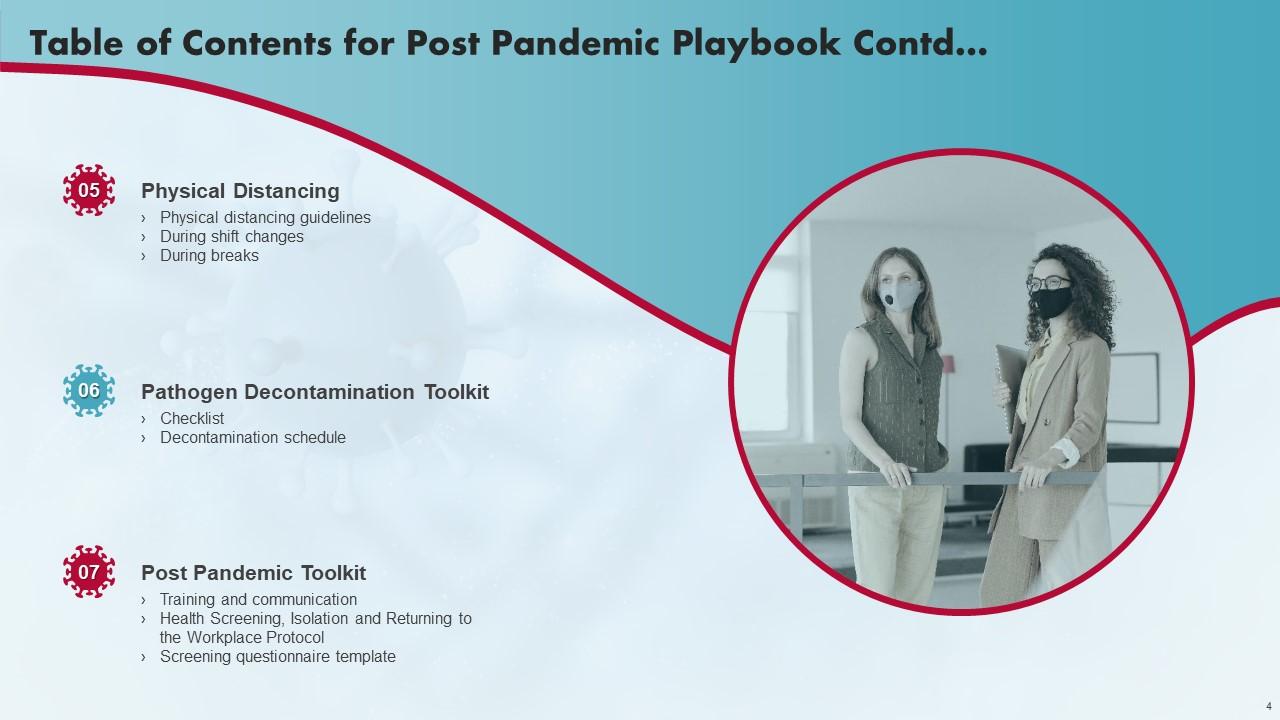
Folie 4 : Diese Folie zeigt auch das Inhaltsverzeichnis.
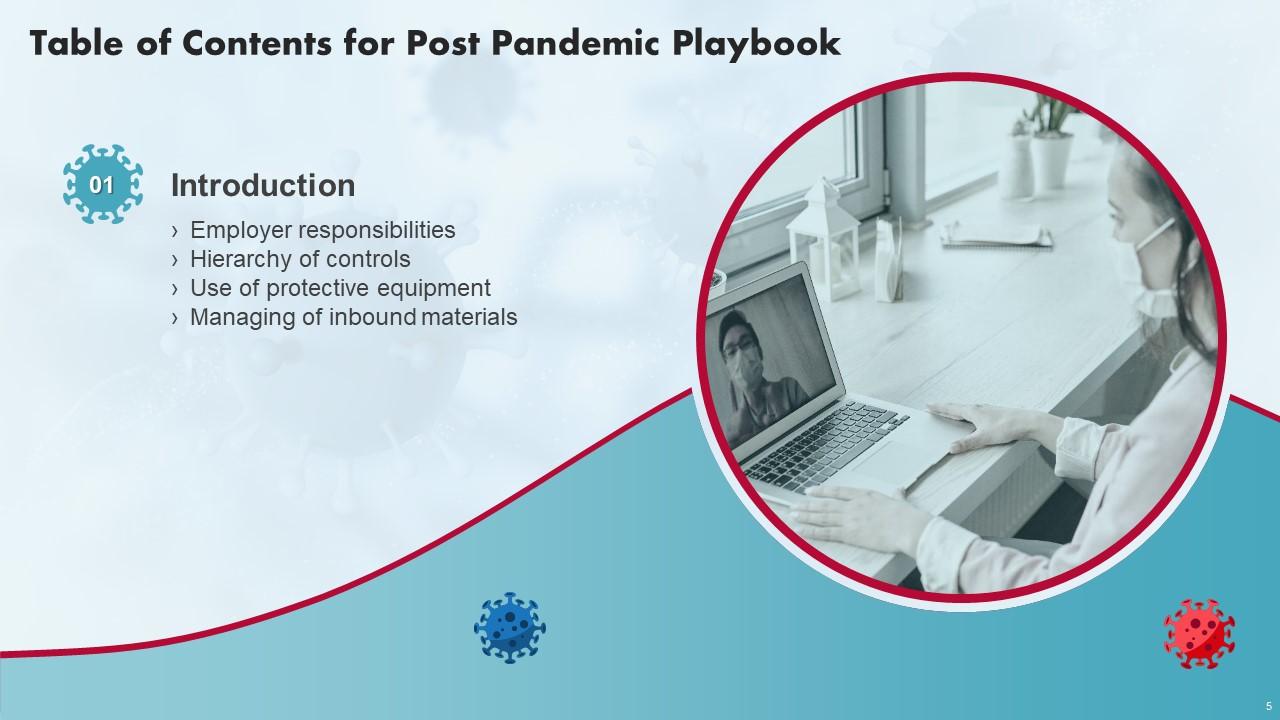
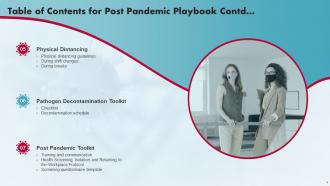
Folie 5 : Diese Folie zeigt Titel für vier Themen, die als nächstes in der Vorlage behandelt werden sollen.
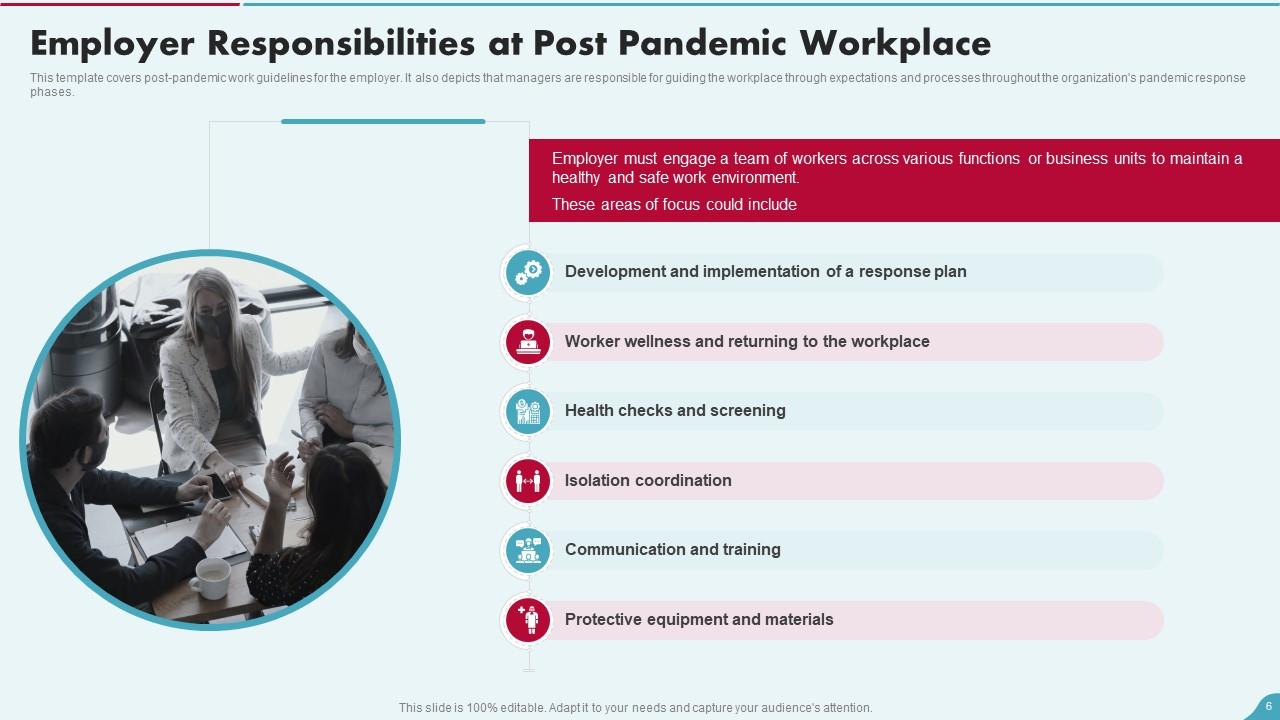
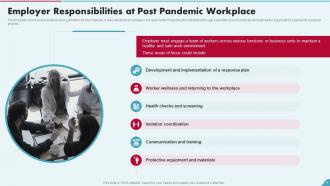
Folie 6 : Diese Folie behandelt die Arbeitsrichtlinien für den Arbeitgeber nach der Pandemie.
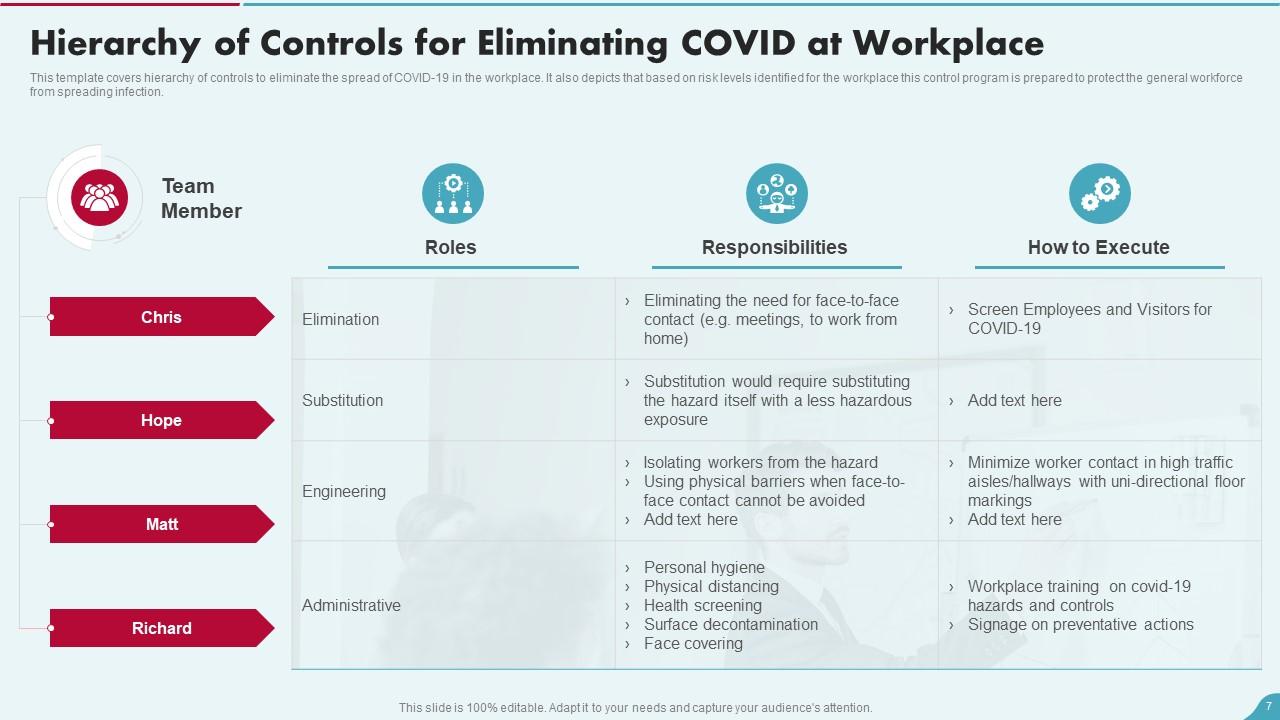
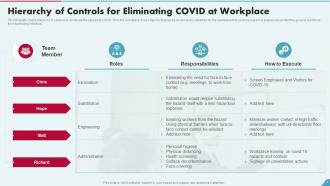
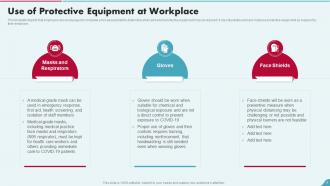
Folie 7 : Diese Folie behandelt die Hierarchie der Kontrollen, um die Ausbreitung von COVID-19 am Arbeitsplatz zu verhindern.
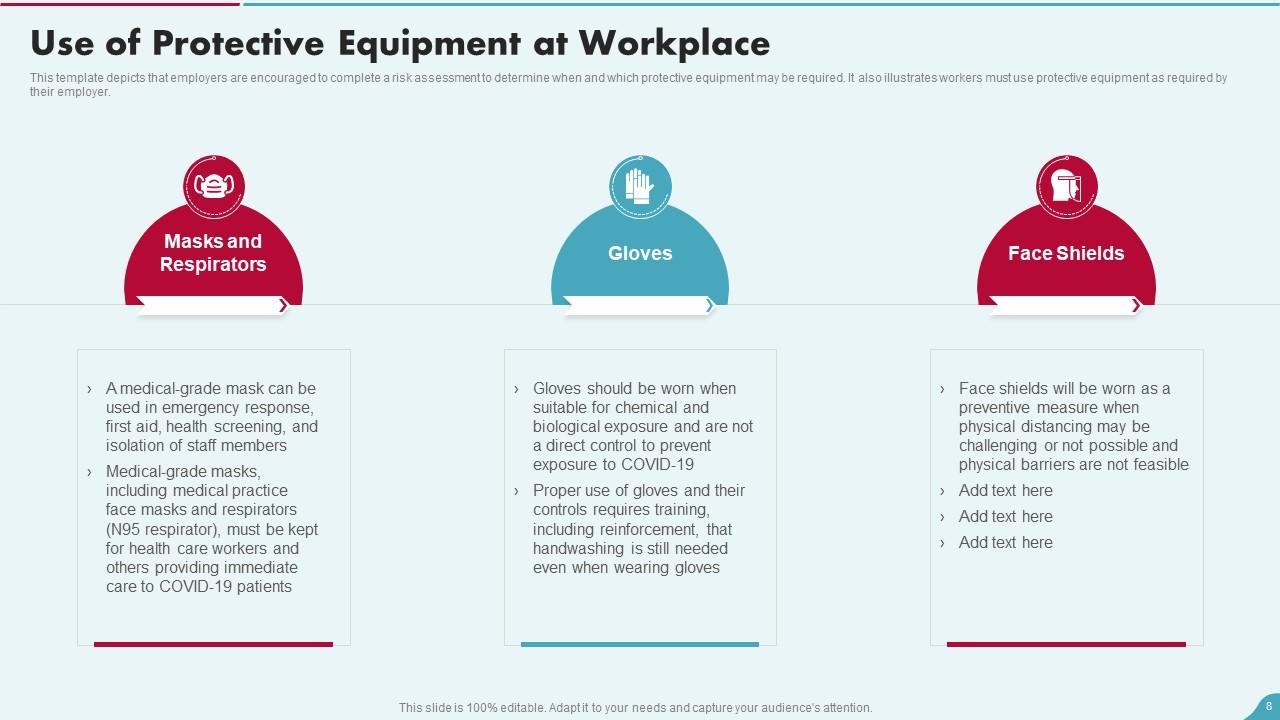
Folie 8 : Diese Folie zeigt, dass Arbeitgeber ermutigt werden, eine Risikobewertung durchzuführen, um festzustellen, wann und welche Schutzausrüstung erforderlich sein kann.
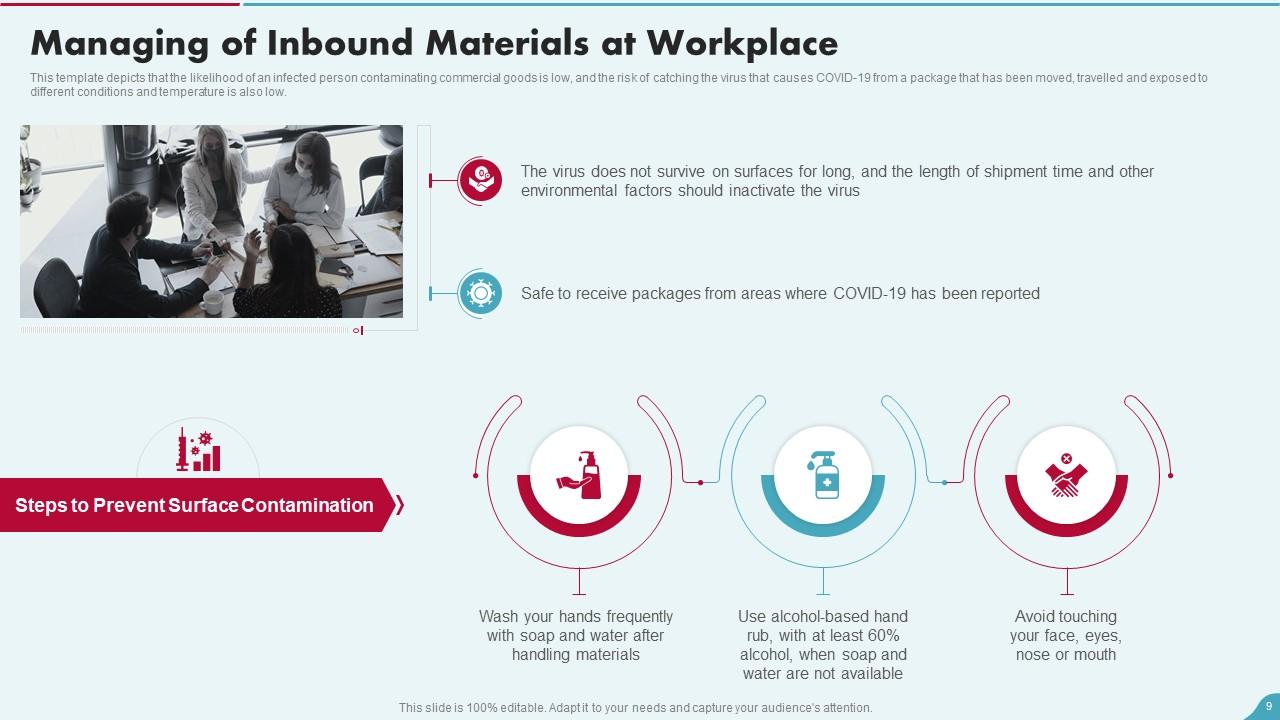
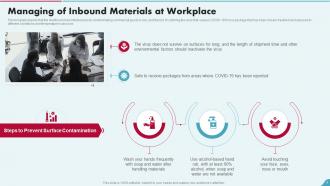
Folie 9 : Diese Folie zeigt, dass die Wahrscheinlichkeit gering ist, dass eine infizierte Person Handelswaren kontaminiert.
Folie 10 : Diese Folie zeigt Titel für fünf Themen, die als nächstes in der Vorlage behandelt werden sollen.
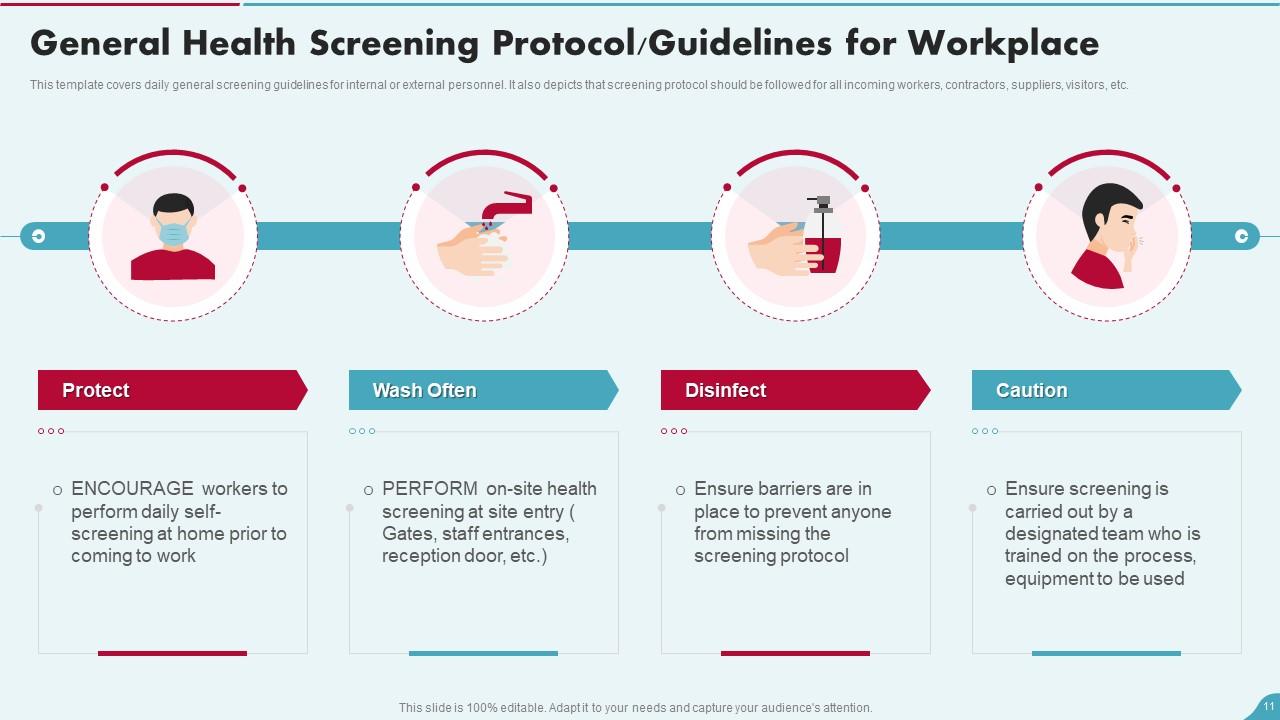
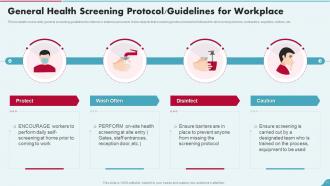
Folie 11 : Diese Folie behandelt die täglichen allgemeinen Screening-Richtlinien für internes oder externes Personal.
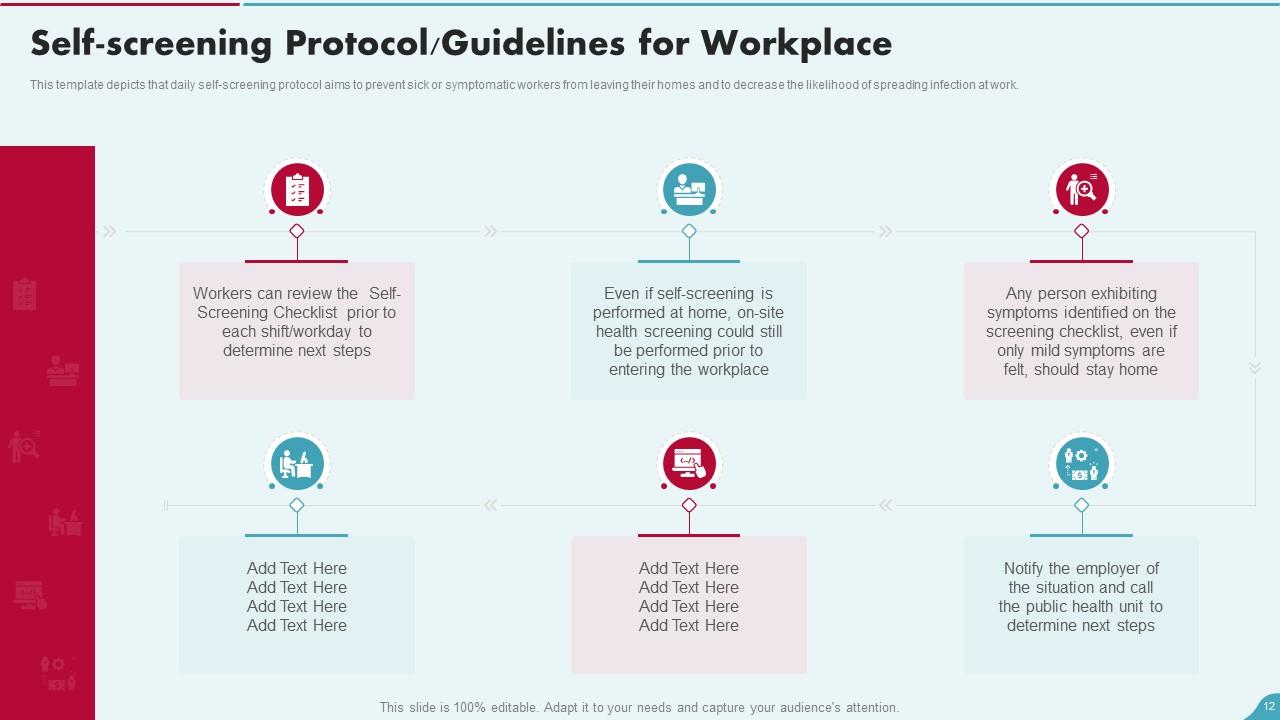
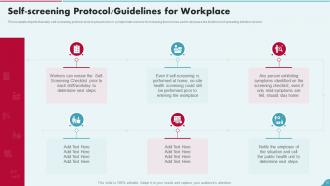
Folie 12 : Diese Folie zeigt, dass das tägliche Selbstkontrollprotokoll darauf abzielt, kranke oder symptomatische Arbeitnehmer daran zu hindern, ihr Zuhause zu verlassen.
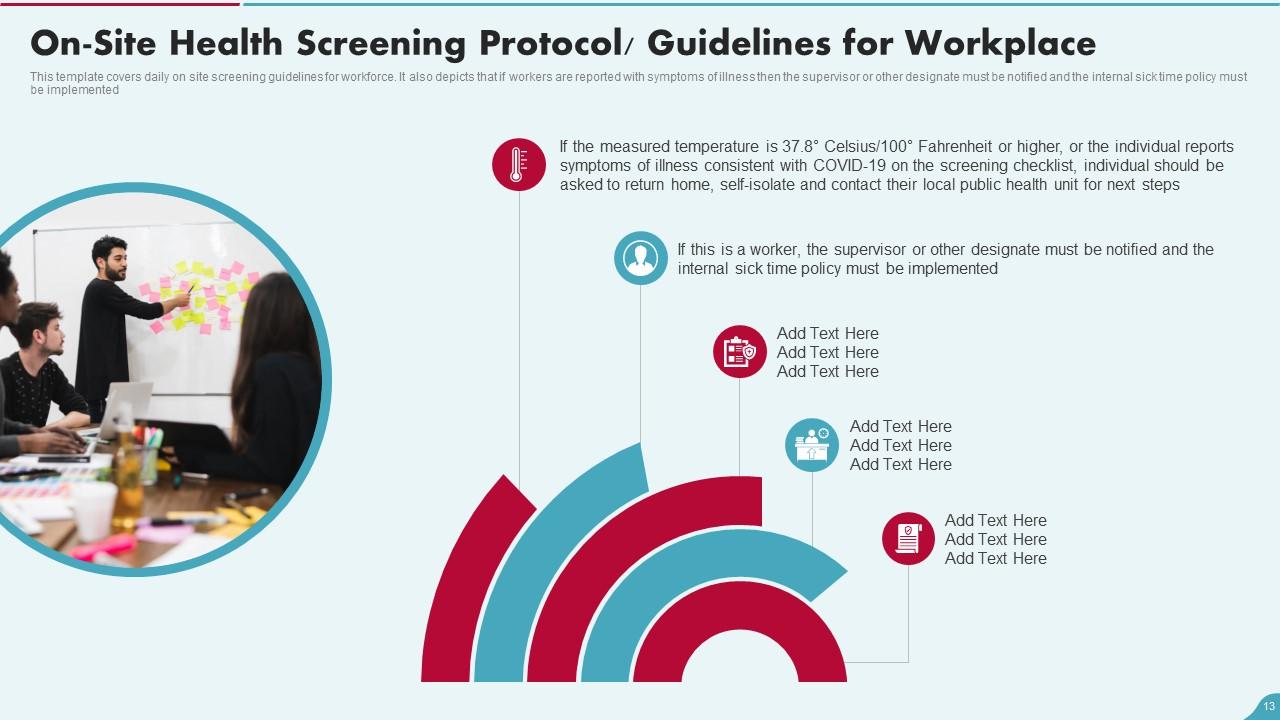
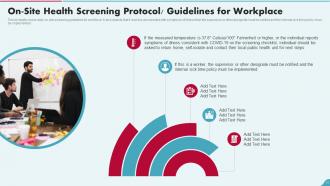
Folie 13 : Diese Folie behandelt die täglichen Screening-Richtlinien für Mitarbeiter vor Ort.
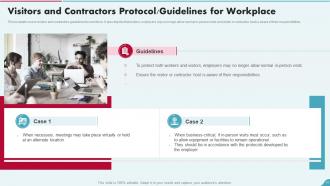
Folie 14 : Diese Folie enthält Richtlinien für Besucher und Auftragnehmer für Mitarbeiter.
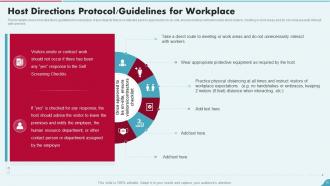
Folie 15 : Diese Folie behandelt Richtlinien für Gastgeberanweisungen für den Arbeitsplatz.
Folie 16 : Diese Folie zeigt Titel für zwei Themen, die als nächstes in der Vorlage behandelt werden sollen.
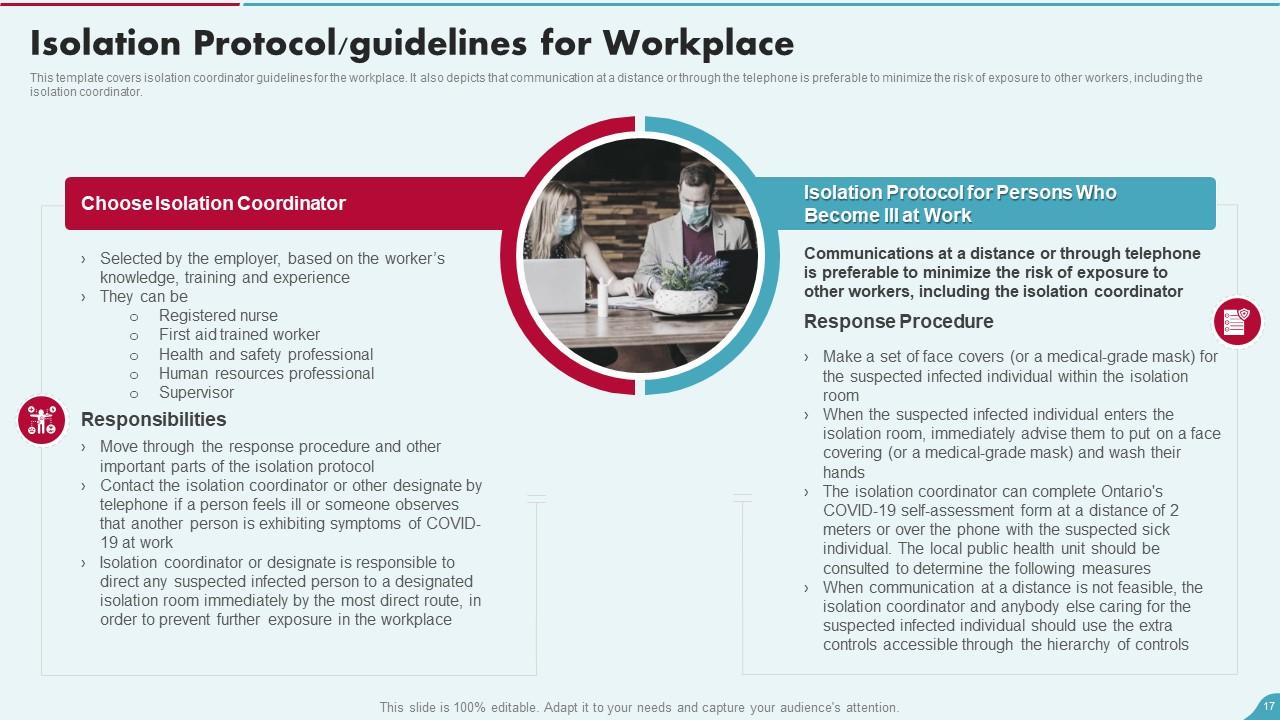
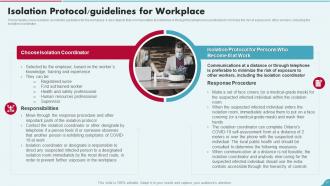
Folie 17 : Diese Folie enthält Richtlinien für Isolationskoordinatoren für den Arbeitsplatz.
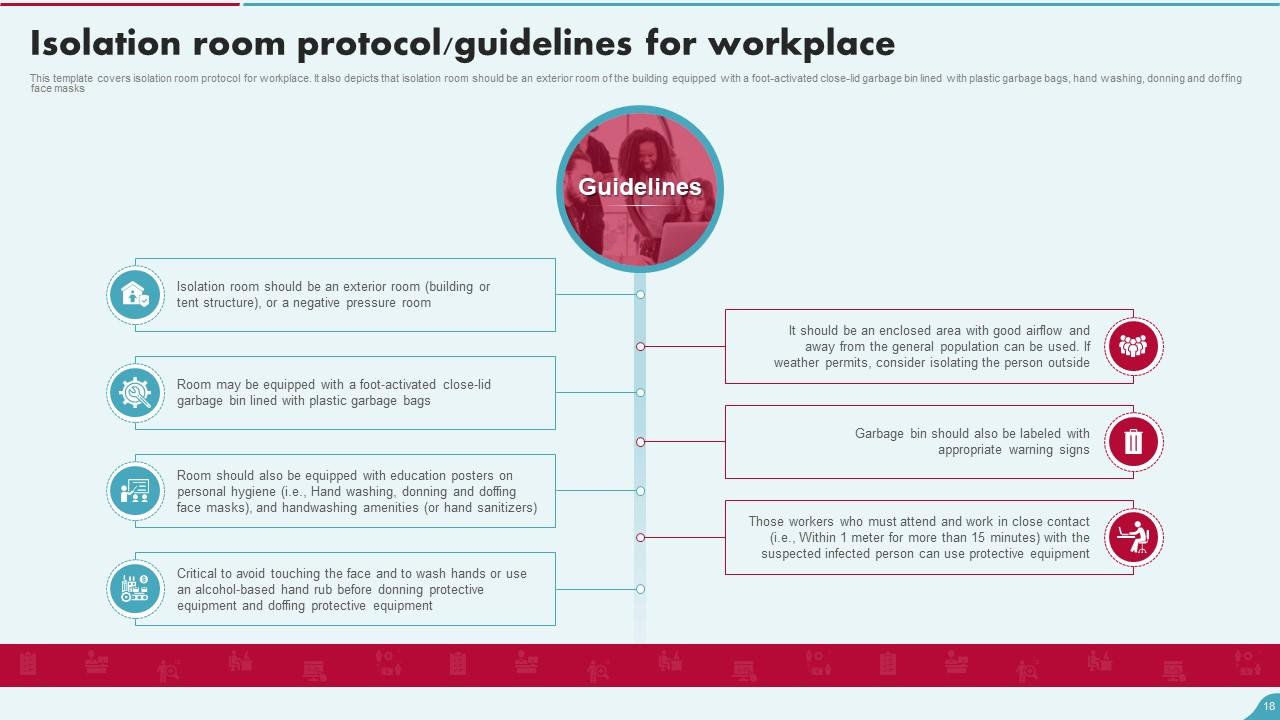
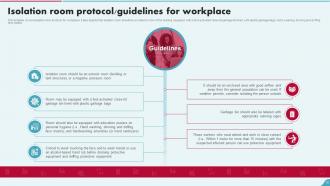
Folie 18 : Diese Folie behandelt das Isolationsraumprotokoll für den Arbeitsplatz.
Folie 19 : Diese Folie zeigt den Titel für ein Thema, das als nächstes in der Vorlage behandelt werden soll.
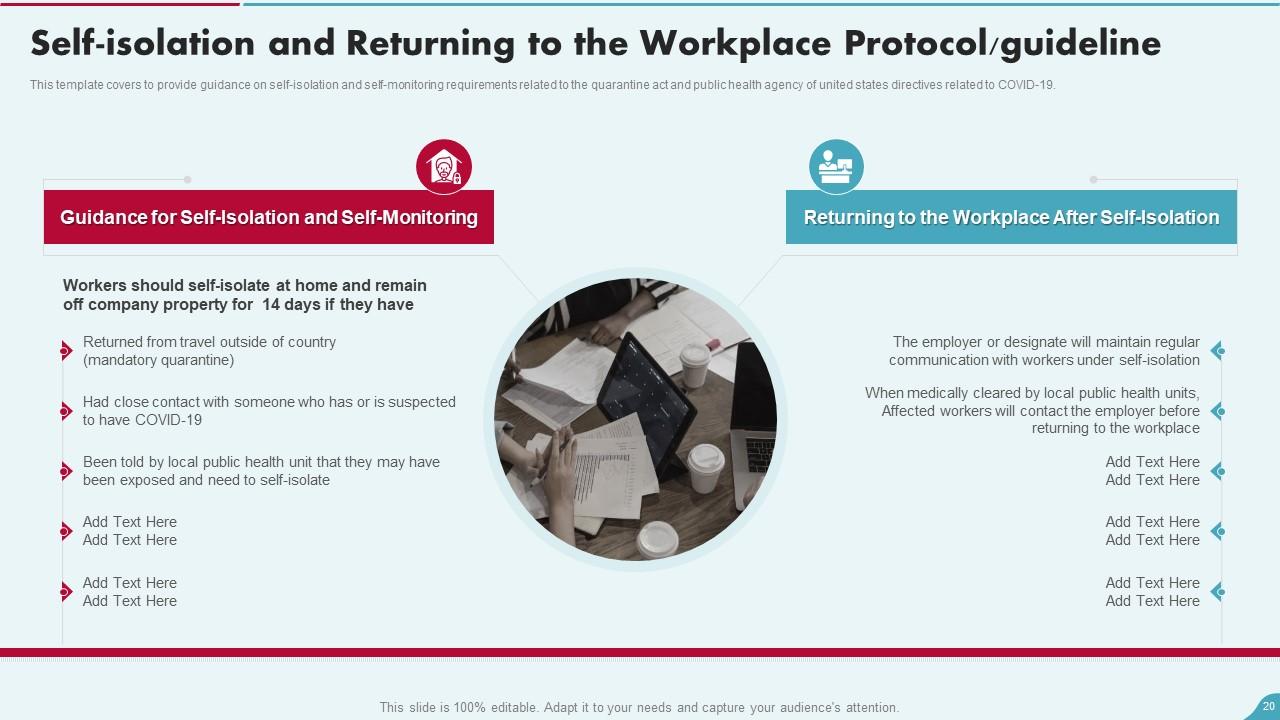
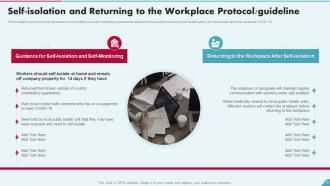
Folie 20 : Diese Folie enthält Anleitungen zu den Anforderungen an die Selbstisolierung und Selbstüberwachung im Zusammenhang mit dem Quarantänegesetz und der öffentlichen Gesundheitsbehörde.
Folie 21 : Diese Folie zeigt Titel für drei Themen, die als nächstes in der Vorlage behandelt werden sollen.
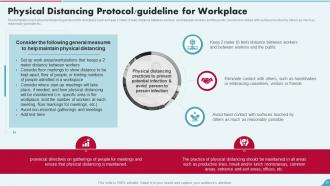
Folie 22 : Diese Folie behandelt Protokolle zur physischen Distanzierung am Arbeitsplatz, z. B. 2 Meter (6 Fuß) Abstand zwischen Arbeitnehmern und zwischen Arbeitnehmern und der Öffentlichkeit halten.
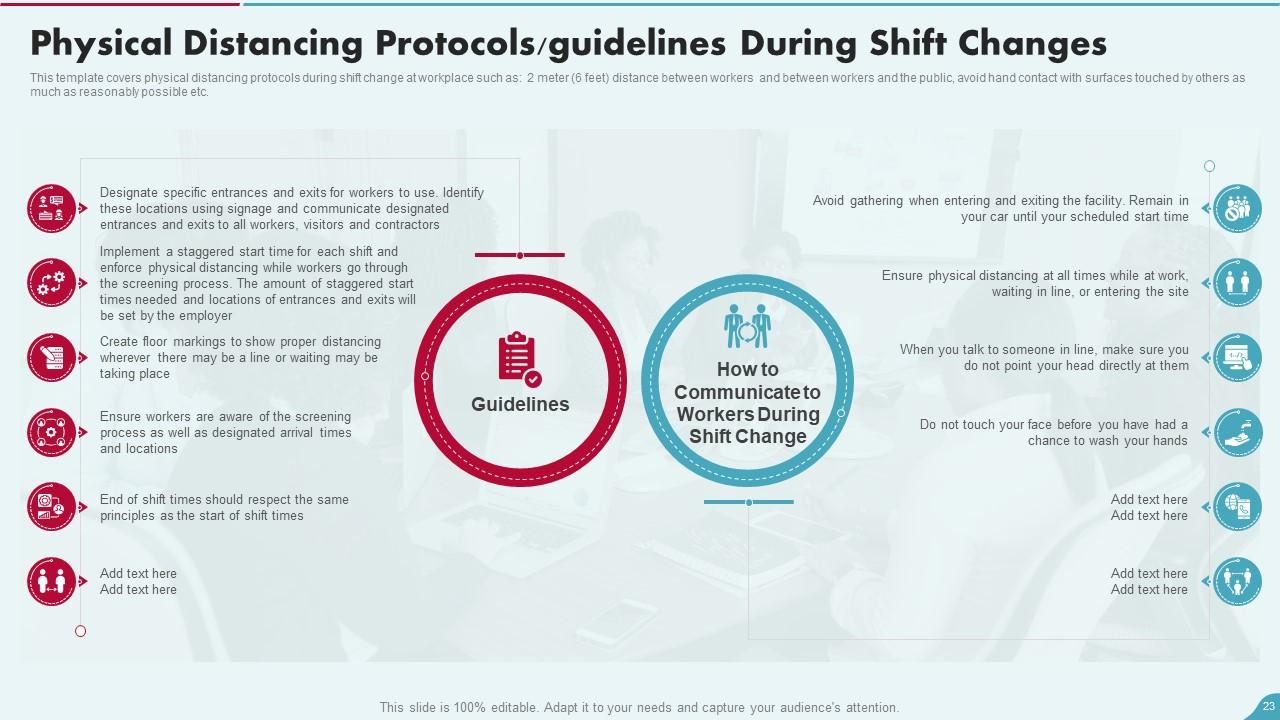
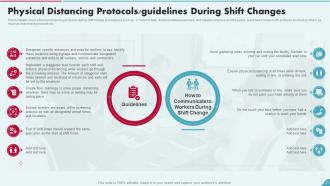
Folie 23 : Diese Folie behandelt Protokolle zur physischen Distanzierung während des Schichtwechsels am Arbeitsplatz, wie z. B.: 2 Meter (6 Fuß) Abstand zwischen den Arbeitern.
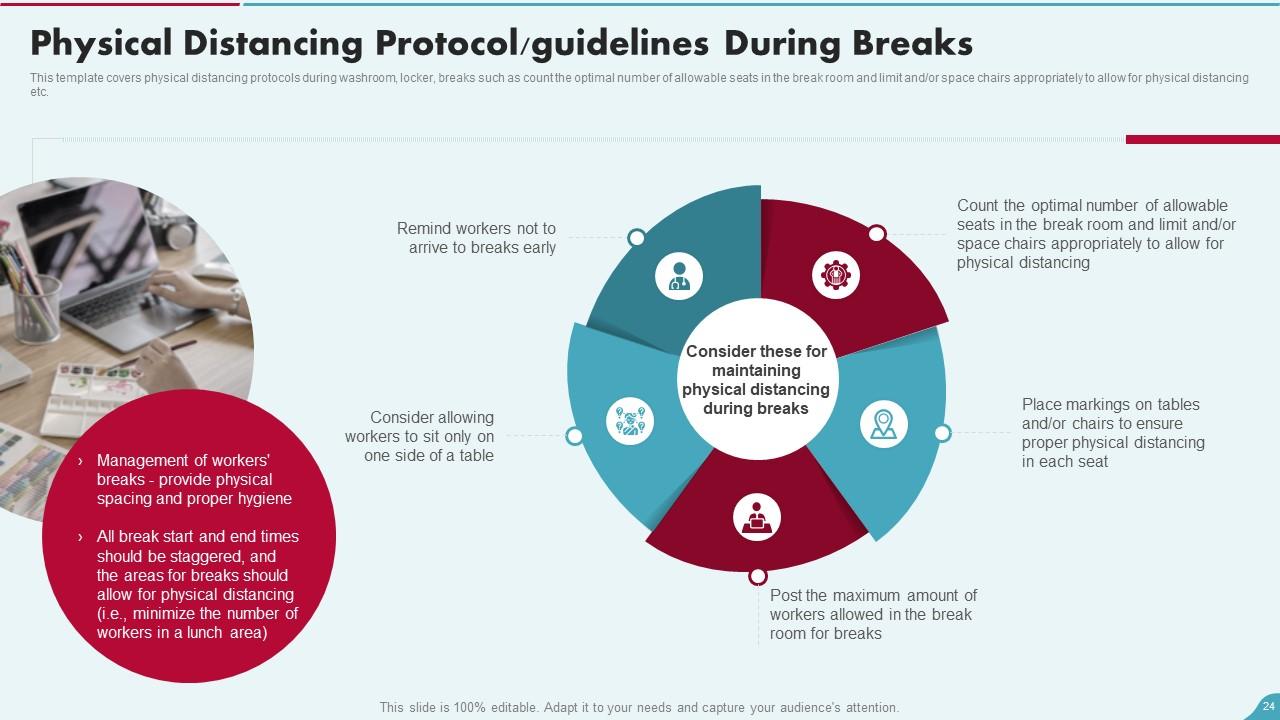
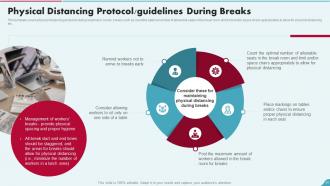
Folie 24 : Diese Folie behandelt physische Distanzierungsprotokolle während Waschräumen, Schließfächern und Pausen, wie z. B. das Zählen der optimalen Anzahl zulässiger Sitzplätze im Pausenraum.
Folie 25 : Diese Folie zeigt Titel für zwei Themen, die als nächstes in der Vorlage behandelt werden sollen.]
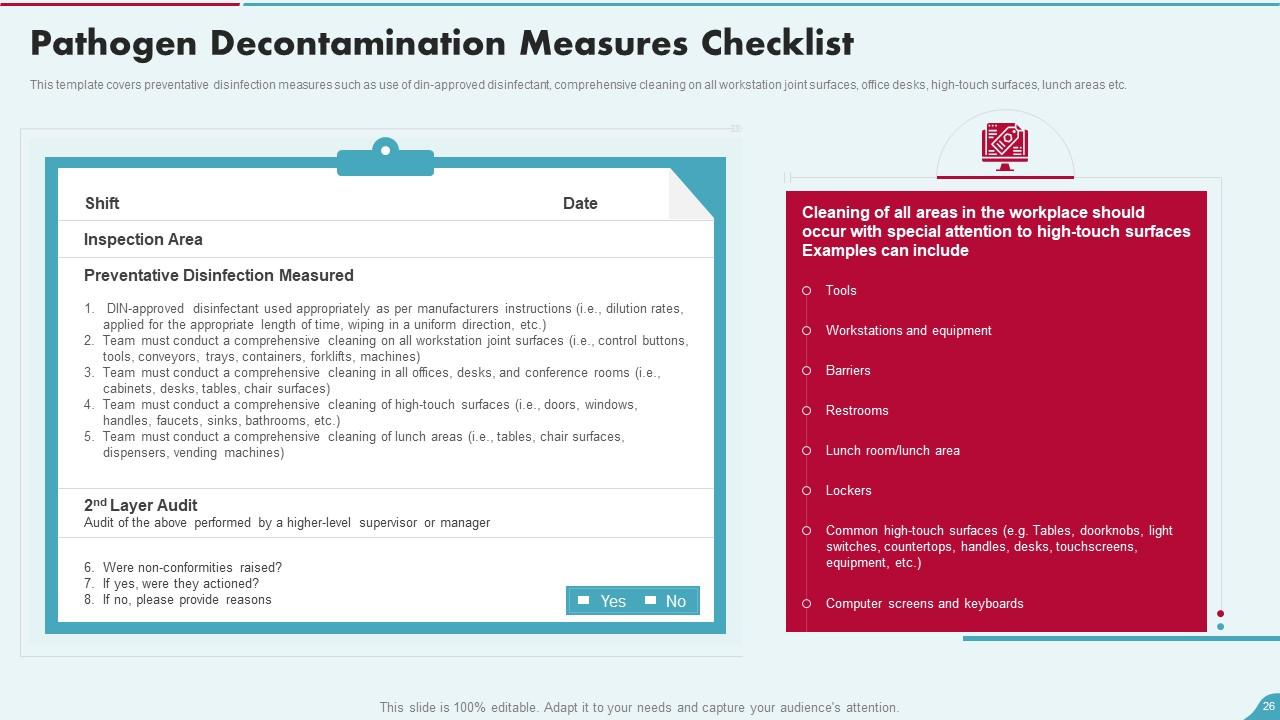
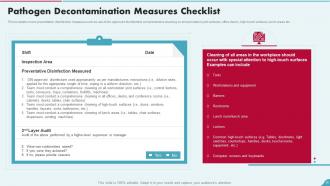
Folie 26 : Diese Folie behandelt vorbeugende Desinfektionsmaßnahmen wie Verwendung von din-zugelassenen Desinfektionsmitteln, umfassende Reinigung aller Gelenkflächen am Arbeitsplatz etc.
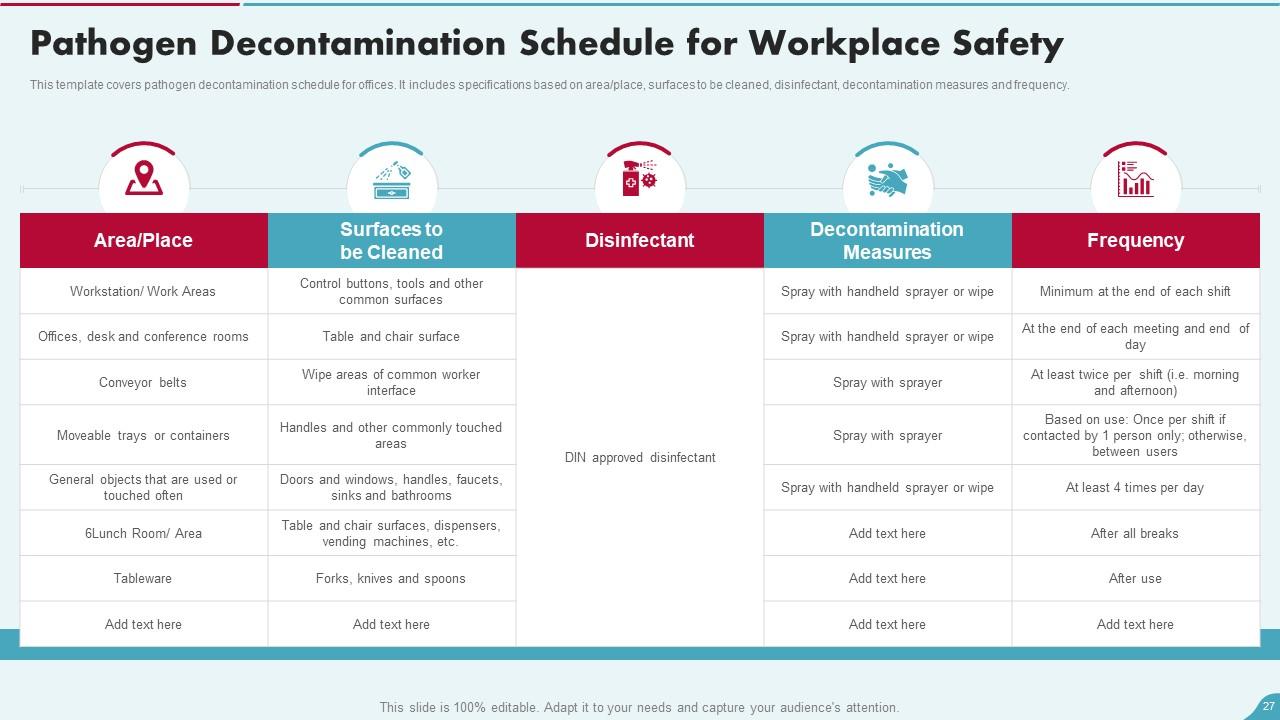
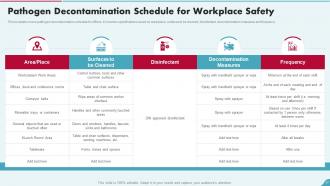
Folie 27 : Diese Folie behandelt den Zeitplan für die Dekontamination von Büros mit Krankheitserregern.
Folie 28 : Diese Folie zeigt Titel für drei Themen, die als nächstes in der Vorlage behandelt werden sollen.
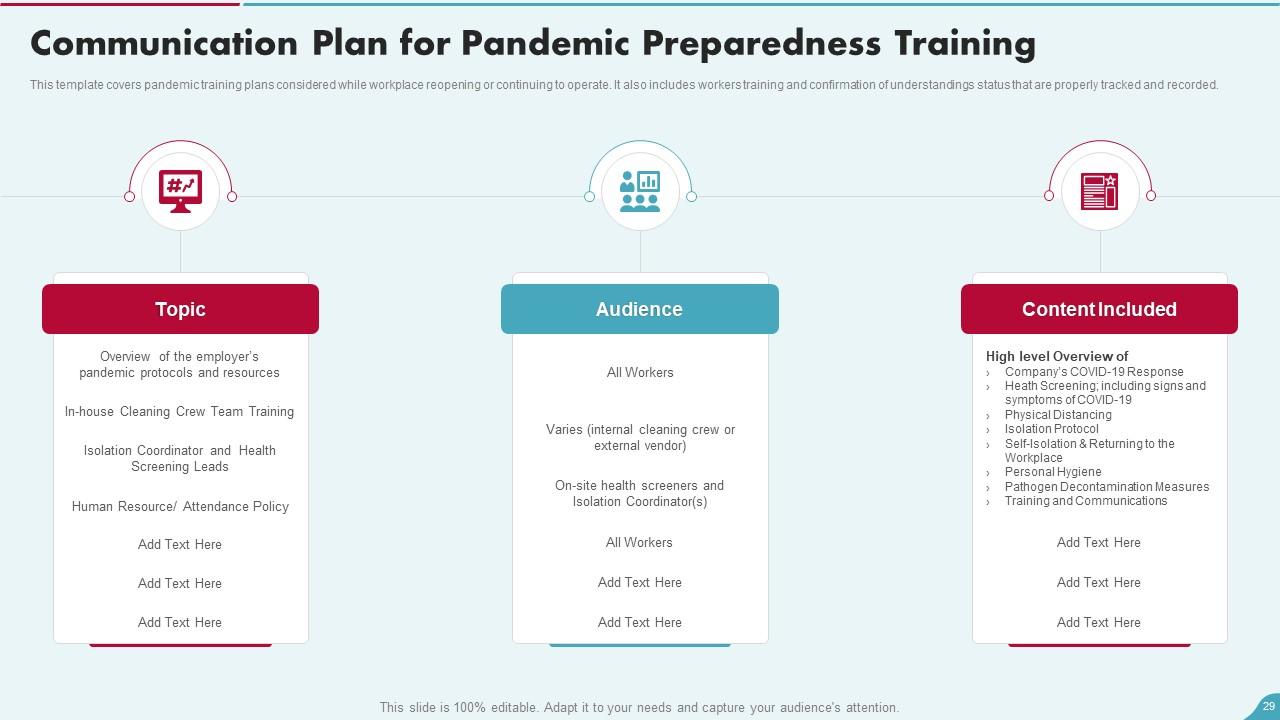
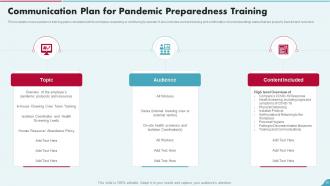
Folie 29 : Diese Folie behandelt Pandemie-Schulungspläne, die während der Wiedereröffnung oder Fortsetzung des Betriebs des Arbeitsplatzes berücksichtigt werden.
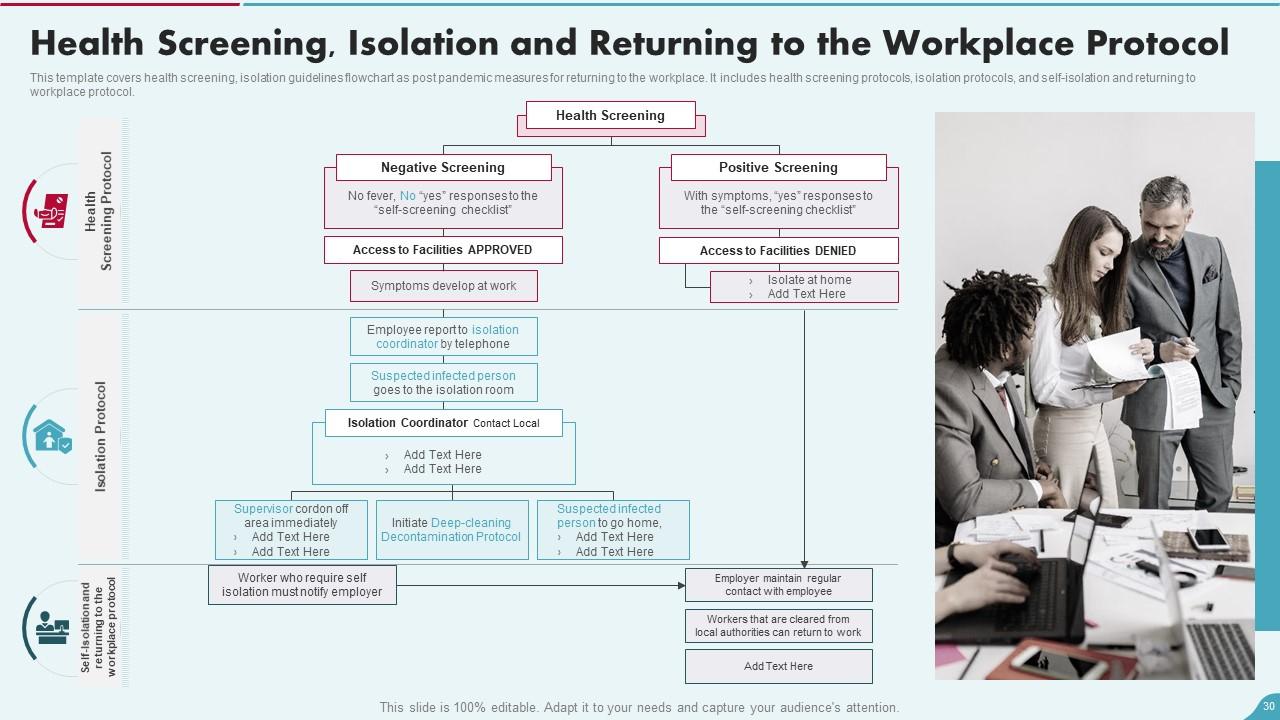
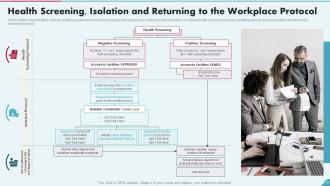
Folie 30 : Diese Folie behandelt die Gesundheitsvorsorge, das Flussdiagramm der Isolationsrichtlinien als Maßnahmen nach der Pandemie für die Rückkehr an den Arbeitsplatz.
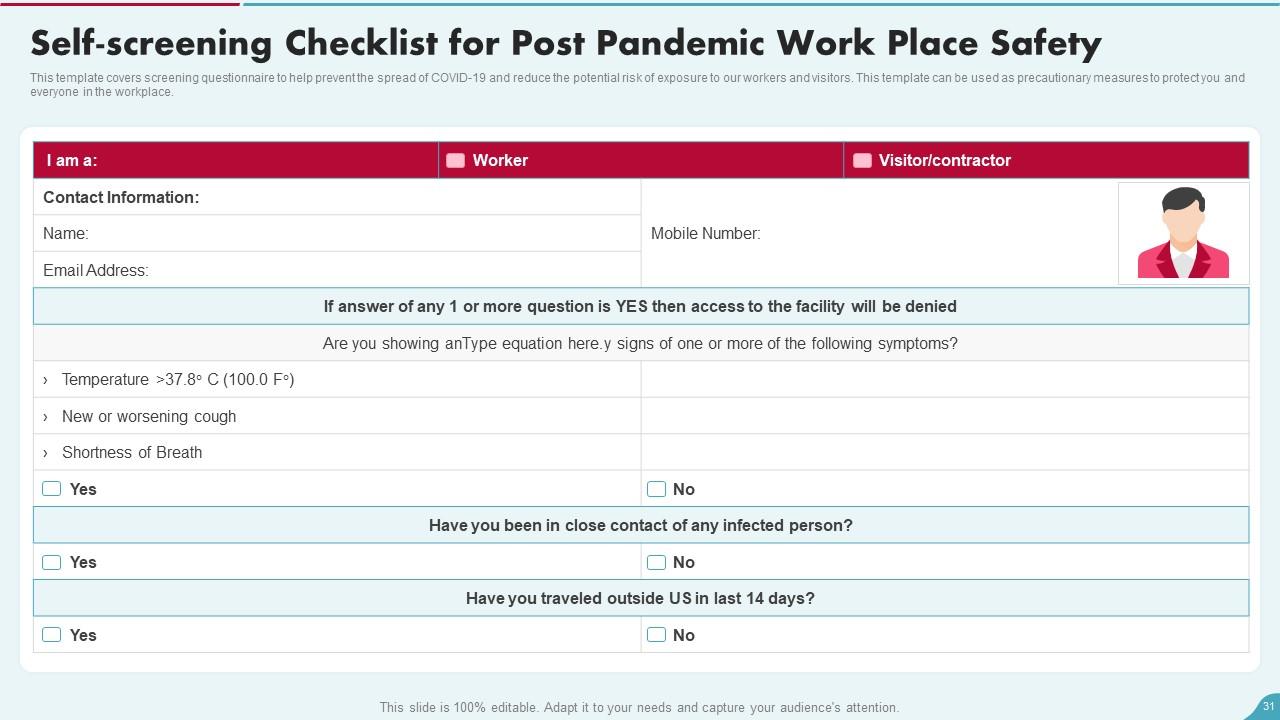
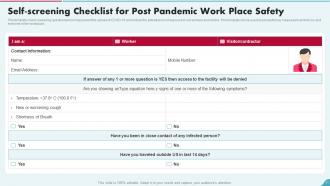
Folie 31 : Diese Folie behandelt einen Screening-Fragebogen, um die Ausbreitung von COVID-19 zu verhindern und das potenzielle Risiko einer Exposition gegenüber unseren Mitarbeitern und Besuchern zu verringern.
Folie 32 : Dies ist die Symbolfolie.
Folie 33 : Diese Folie enthält Titel für zusätzliche Folien.
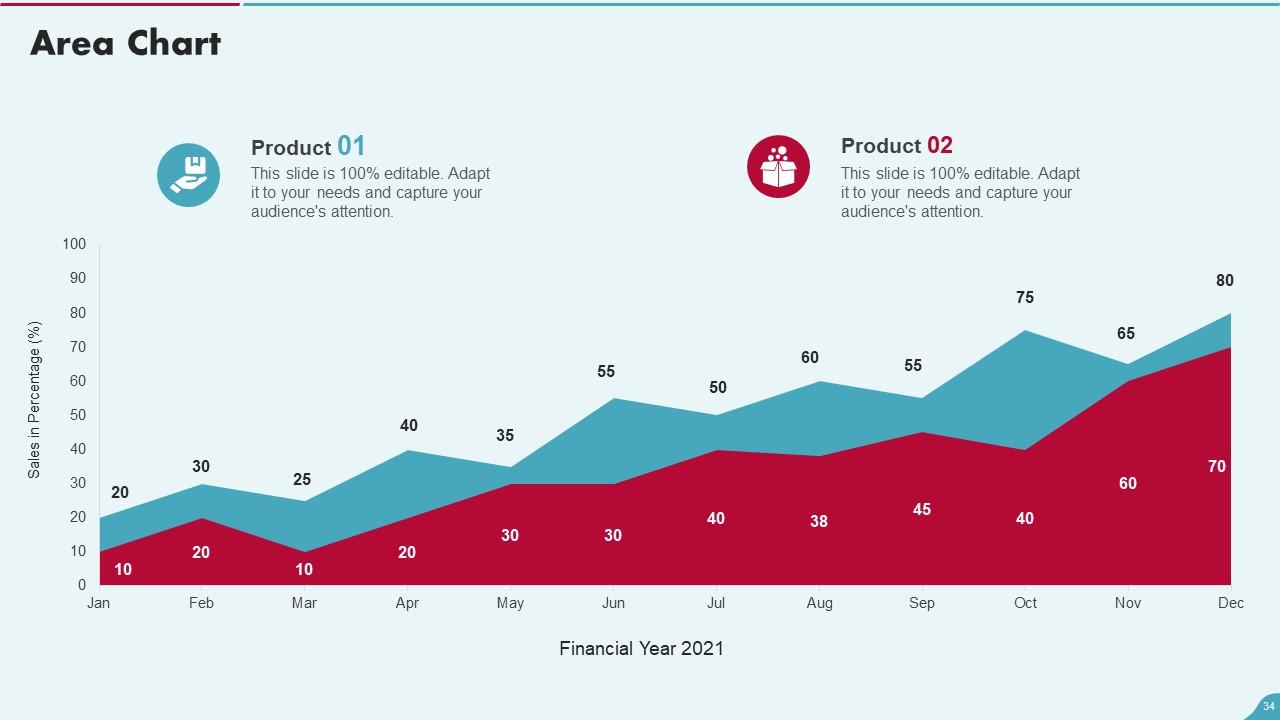
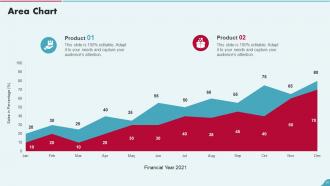
Folie 34 : Diese Folie zeigt monatliche Verkaufsgebietsdiagramme für verschiedene Produkte. Die Diagramme sind mit Excel verknüpft.
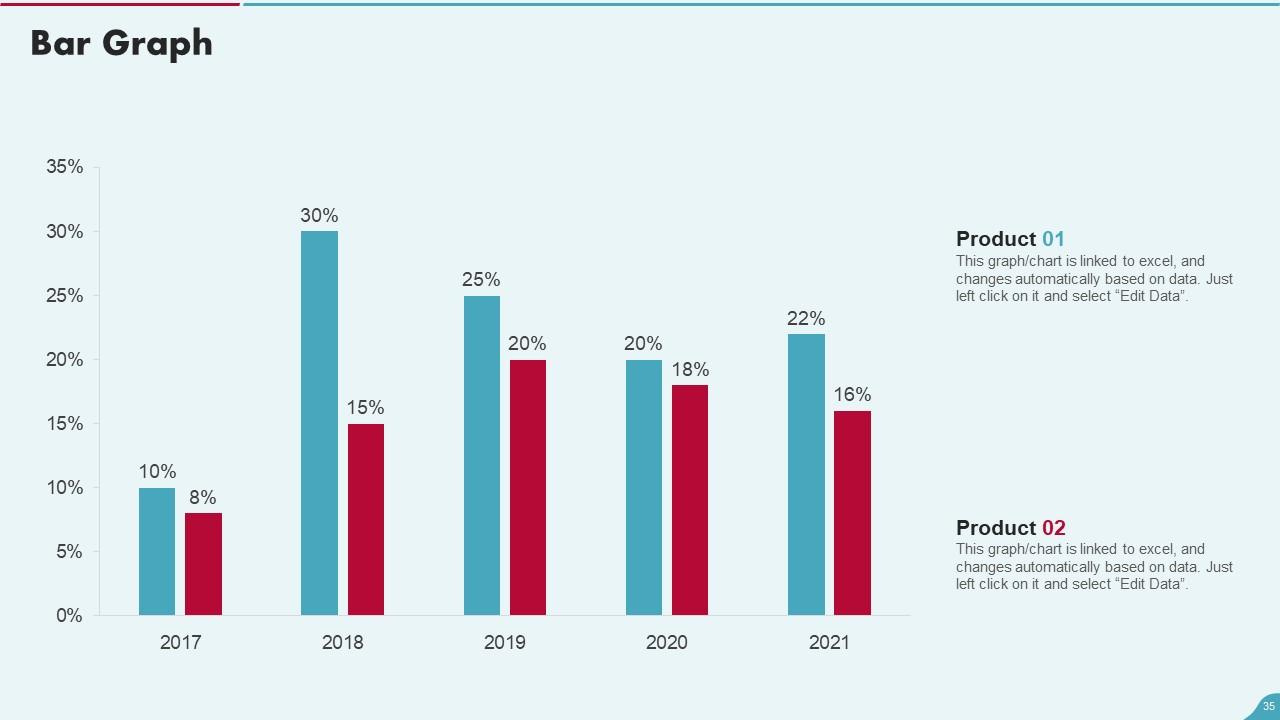
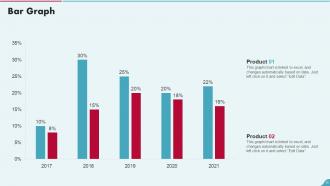
Folie 35 : Diese Folie zeigt jährliche Balkendiagramme für verschiedene Produkte. Die Diagramme sind mit Excel verknüpft.
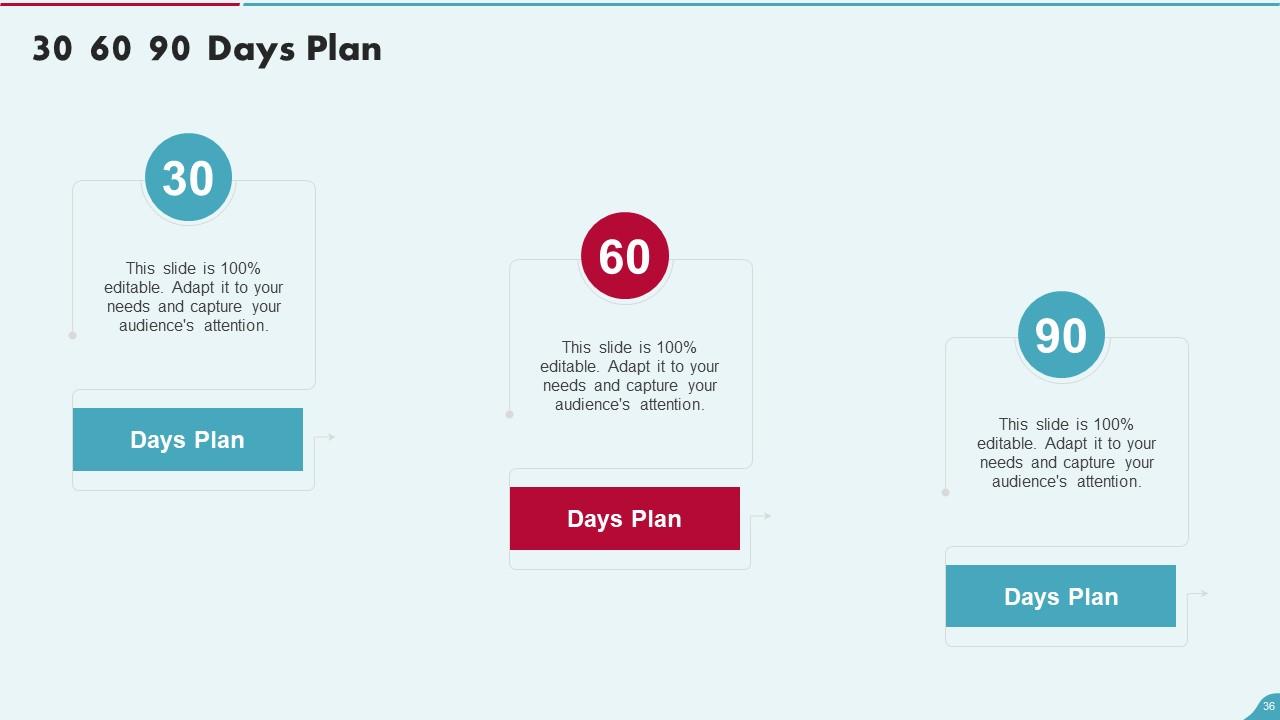
Folie 36 : Diese Folie zeigt einen 30-60-90-Tage-Plan für Projekte.
Folie 37 : Diese Folie zeigt ein kreisförmiges Diagramm.
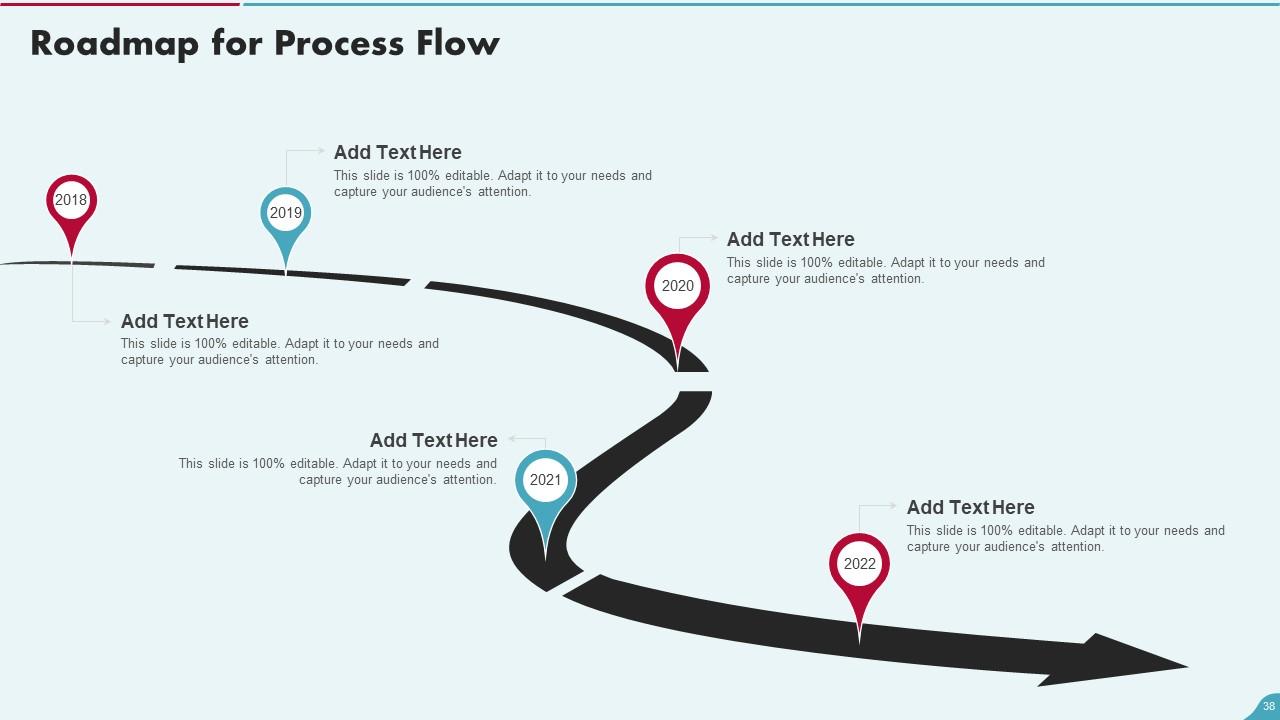
Folie 38 : Diese Folie zeigt die Roadmap.
Folie 39 : Diese Folie zeigt ein Rätsel.
Folie 40 : Diese Folie zeigt Venn.
Folie 41 : Dies ist eine Dankesfolie und enthält Kontaktdaten des Unternehmens wie Büroadresse, Telefonnummer usw.
Post Pandemic Business Playbook Powerpoint-Präsentationsfolien mit allen 46 Folien:
Verwenden Sie unsere Powerpoint-Präsentationsfolien für das Business Playbook nach der Pandemie, um Ihnen effektiv dabei zu helfen, wertvolle Zeit zu sparen. Sie sind gebrauchsfertig und passen in jede Präsentationsstruktur.
-
Graphics are very appealing to eyes.
-
I am glad to have come across Slideteam. I was searching for some unique presentations and templates for my business. There are a lot of alternatives available here.
