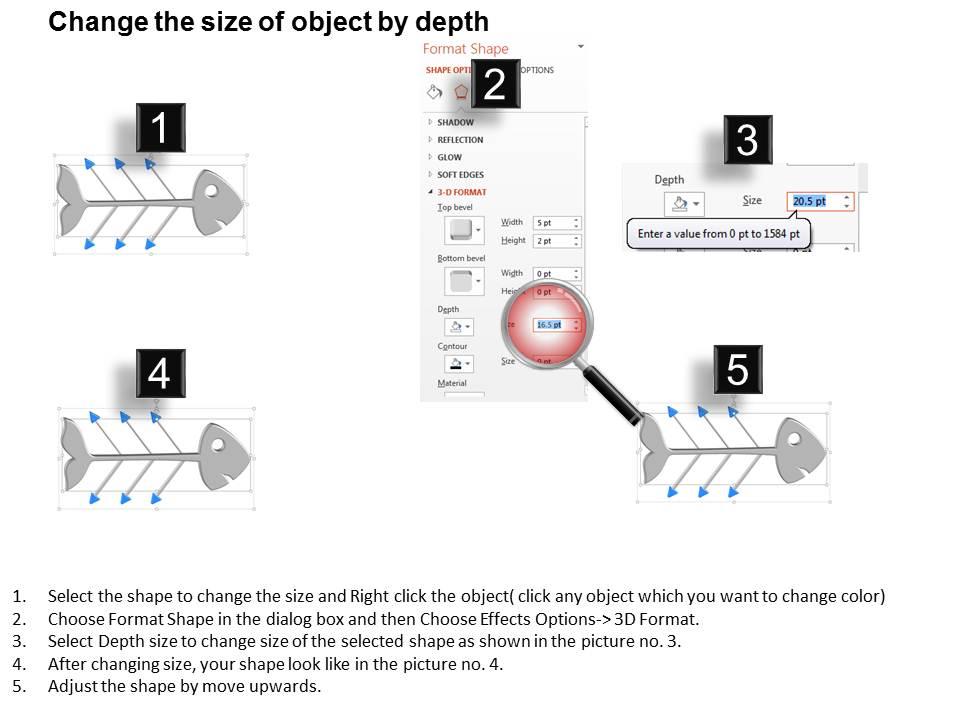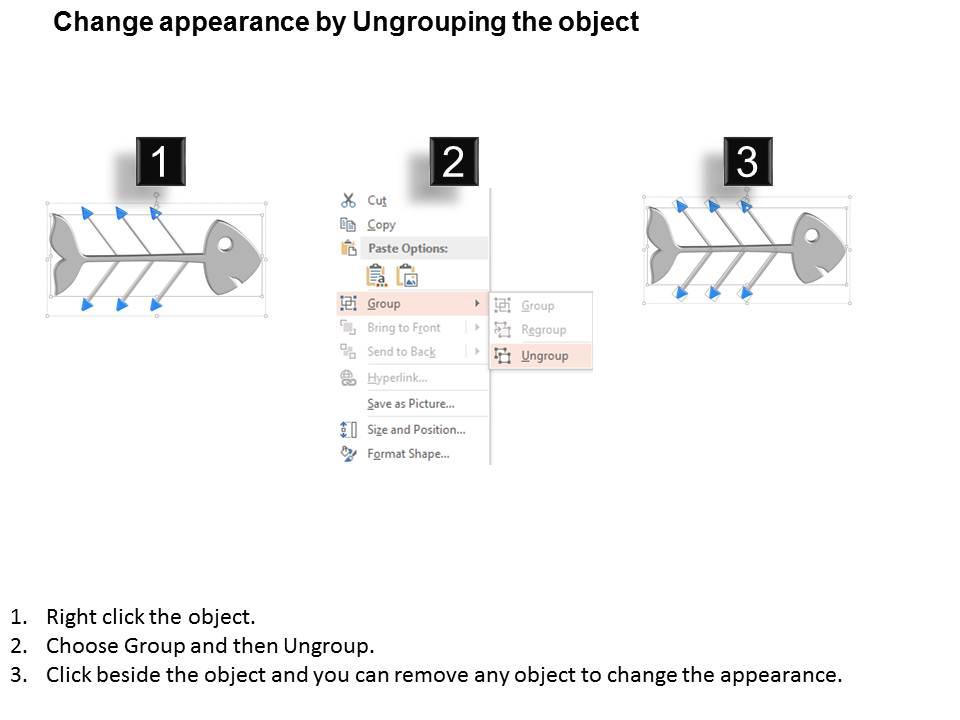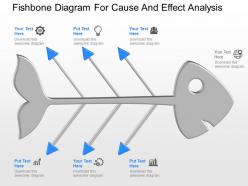
Pptx fishbone diagram for cause and effect analysis powerpoint template
Try Before you Buy Download Free Sample Product
Audience
Editable
of Time
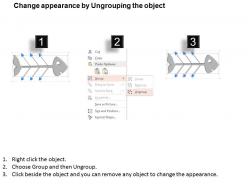
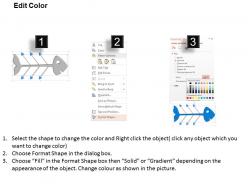
Do you want an effective tool that allows quick root cause analysis? Then use our PPTx fishbone diagram for cause an effect analysis PowerPoint template. You can use this PPT layout design to describe the purpose of this fishbone diagram in your chain reaction analysis such as it helps in categorizing the possible causes of your problems in an organized manner, helps in finding the root causes, helps in dividing the connection between the significant topic and all other related possible factors with them and many more like this. Further this Presentation template can be used to describe that how the fish structure can be used to depict the relationship of cause and effects such as bones will help in indicating the causes for example the larger bones will represent the major impact and the smaller one with a small impact etc. Therefore, simply start initializing with these exotic designs and explore more with this PPT template design.Acquire global flexibility with our pptx Fishbone Diagram For Cause And Effect Analysis Powerpoint Template. Cut across geographical borders.
People who downloaded this PowerPoint presentation also viewed the following :
Pptx fishbone diagram for cause and effect analysis powerpoint template with all 4 slides:
Coordinate your plans with our pptx Fishbone Diagram For Cause And Effect Analysis Powerpoint Template. Get all the elements on the same wavelength.
FAQs for Pptx fishbone diagram for cause and effect
The primary purpose of a fishbone diagram in problem-solving is to systematically identify and categorize all potential root causes of a specific problem or effect. This visual tool enables teams to organize brainstorming sessions, prevent overlooking critical factors, and facilitate comprehensive analysis across categories like people, processes, materials, and equipment, ultimately streamlining problem resolution.
Main categories in fishbone diagrams are typically determined through systematic analysis of potential root cause areas relevant to your specific problem, commonly including methods, machines, materials, manpower, measurements, and environment. Teams analyze their operational context, industry requirements, and problem scope to customize these categories, with manufacturing focusing on equipment and processes while service industries emphasize people and procedures, ultimately ensuring comprehensive problem-solving coverage.
The key components of a fishbone diagram include the problem statement (fish head), major cause categories (main bones), subcauses (smaller bones), and the central spine connecting all elements. These components work together by systematically organizing potential root causes into categories like people, processes, materials, and environment, enabling teams across manufacturing, healthcare, and service industries to conduct thorough problem analysis and ultimately identify actionable solutions.
Fishbone diagrams are highly versatile tools used across healthcare, finance, retail, education, and service industries for systematic problem-solving. Healthcare organizations use them for patient safety incidents, banks for loan processing delays, and educational institutions for student performance issues, while service companies apply them to customer satisfaction challenges, ultimately delivering improved operational efficiency and strategic problem resolution.
Involving team members in fishbone diagram creation requires structured brainstorming sessions where diverse perspectives identify potential causes across different categories like people, processes, materials, and environment. Facilitate collaborative workshops encouraging all participants to contribute ideas, with teams from manufacturing, healthcare, and service industries finding that cross-functional input reveals overlooked root causes, ultimately delivering more comprehensive problem-solving and stronger buy-in.
Common pitfalls include rushing the brainstorming process, focusing on symptoms rather than root causes, allowing dominant voices to overshadow team input, and failing to validate identified causes with data. Teams often create overly complex diagrams or stop at surface-level analysis, with many organizations finding that structured facilitation and systematic cause verification ultimately deliver more accurate problem-solving outcomes.
A fishbone diagram enhances root cause analysis by systematically categorizing potential causes into structured branches like people, processes, equipment, materials, and environment, preventing oversight of critical factors. This visual methodology enables teams to brainstorm comprehensively, identify interdependencies between causes, and prioritize investigation efforts, ultimately delivering more thorough problem-solving and faster resolution times.
Software tools for creating fishbone diagrams include Lucidchart, Microsoft Visio, Creately, SmartDraw, and Canva, along with specialized quality management platforms like Minitab. These tools streamline root cause analysis by offering pre-built templates, collaborative features, and integration capabilities, with many organizations finding that digital fishbone creation accelerates problem-solving processes and enhances team participation across departments.
Prioritizing fishbone diagram issues involves evaluating each cause by impact severity, frequency of occurrence, implementation feasibility, and available resources for resolution. Organizations typically use scoring matrices, data analysis, and cross-functional team input to rank causes, with many finding that addressing high-impact, easily implementable solutions first delivers quick wins while building momentum for more complex systemic improvements.
**INPUT**: Can a fishbone diagram be effectively combined with other quality improvement tools? **OUTPUT**: Fishbone diagrams integrate seamlessly with tools like Pareto charts, 5 Whys analysis, statistical process control, and root cause analysis matrices to create comprehensive quality improvement frameworks. This strategic combination enables organizations to identify potential causes through fishbone analysis, prioritize issues using Pareto principles, and validate solutions with data-driven methods, ultimately delivering more thorough problem-solving and sustainable operational improvements. [Word count: 60 words]
Fishbone diagrams offer systematic root cause identification, visual problem mapping, collaborative team engagement, comprehensive factor analysis, and structured brainstorming approaches. Unlike linear analysis methods, this technique enables cross-functional teams to explore multiple cause categories simultaneously, preventing oversight of critical factors while fostering inclusive problem-solving discussions that ultimately deliver faster issue resolution.
Complex problems in fishbone diagrams are represented by breaking the main issue into major cause categories like methods, materials, machines, and manpower, with detailed sub-causes branching from each. This visual structure enables teams to systematically map contributing factors, identify root causes through hierarchical analysis, and prioritize solutions, with many organizations finding that this approach streamlines problem-solving processes.
Data collection provides the factual foundation for fishbone diagram analysis by gathering relevant metrics, observations, and evidence related to the problem being investigated. Through systematic data gathering, teams can validate potential causes, prioritize investigation areas, and measure the effectiveness of implemented solutions, ultimately transforming theoretical cause-and-effect relationships into actionable insights that drive measurable improvements.
Adapting fishbone diagrams for agile involves creating lightweight, collaborative versions during retrospectives, sprint planning, and daily standups, focusing on iterative problem-solving rather than exhaustive analysis. Agile teams streamline the process by using digital tools, timeboxing brainstorming sessions, and integrating findings directly into sprint backlogs, ultimately enabling faster root cause identification and continuous improvement cycles.
Yes, fishbone diagrams can effectively support strategic planning by identifying root causes of performance gaps, market challenges, operational inefficiencies, and competitive disadvantages that hinder strategic objectives. Through systematic cause-and-effect analysis, organizations streamline strategic problem-solving, enhance resource allocation accuracy, and develop targeted action plans, with many companies finding that this visual approach ultimately delivers clearer strategic focus and measurable competitive advantage.
-
Very unique and reliable designs.
-
Great quality product.