Slides de apresentação em PowerPoint de estratégia de preços

Rating:
100%
Slide 1 of 33
Favourites Favourites

Try Before you Buy Download Free Sample Product

Audience Impress Your
Audience
Editable 100%
Editable
Time Save Hours
of Time
The Biggest Sale is ending soon in
0
0
:
0
0
:
0
0
Rating:
100%

Recursos desses slides de apresentação em PowerPoint:

Apresentando slides de apresentação em PowerPoint de estratégia de preços. Este PPT consiste em 59 slides de PowerPoint preparados profissionalmente, sendo todos 100 por cento mutáveis no PowerPoint. Modifique as fontes, a cor e o plano de fundo do slide de acordo com suas necessidades. Quadros e slides de gráficos adicionais estão disponíveis para representar os destaques das estatísticas. Você pode baixar a apresentação do PowerPoint tanto na proporção de aspecto widescreen (16: 9) quanto na tela padrão (4: 3). A apresentação é totalmente adaptável com o Google Slides e outros softwares online. Os modelos PPT podem ser salvos no formato JPG ou PDF. Você pode personalizar os slides PPT incorporando o nome da empresa ou logotipo. Suporte de produto premium é fornecido.

Conteúdo desta apresentação em PowerPoint

Slide 1 : Este slide apresenta a Estratégia de Preços com imagens apt. Indique o nome da sua empresa e comece.
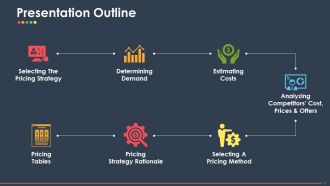
Slide 2 : Este slide apresenta um esboço de apresentação com os seguintes subtítulos - Determinação da demanda, Estimativa de custos, Seleção de um método de precificação, Seleção da estratégia de precificação, Análise de custos dos concorrentes, preços e ofertas, tabelas de precificação, justificativa da estratégia de precificação.
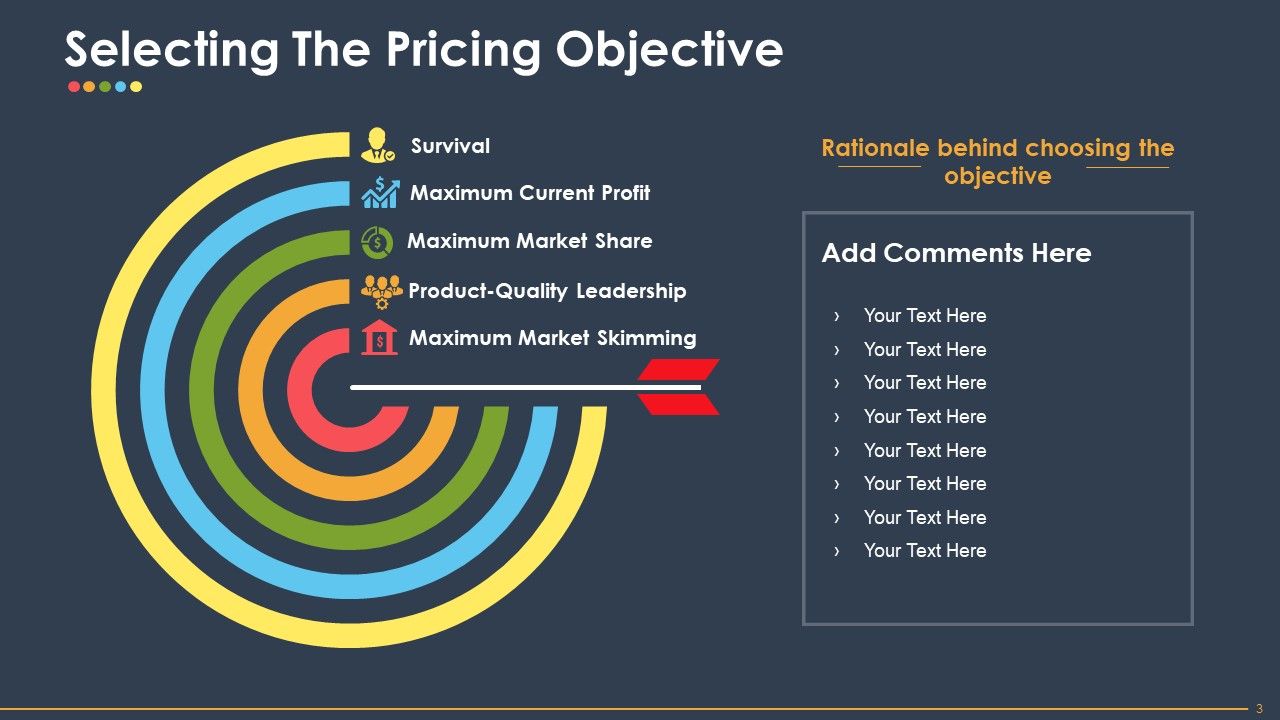
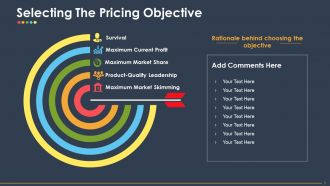
Slide 3 : Este slide mostra a Seleção do Objetivo de Preços com os seguintes subtítulos - Lucro Máximo Atual, Participação Máxima de Mercado, Liderança em Qualidade de Produto, Escumação Máxima de Mercado, Sobrevivência.
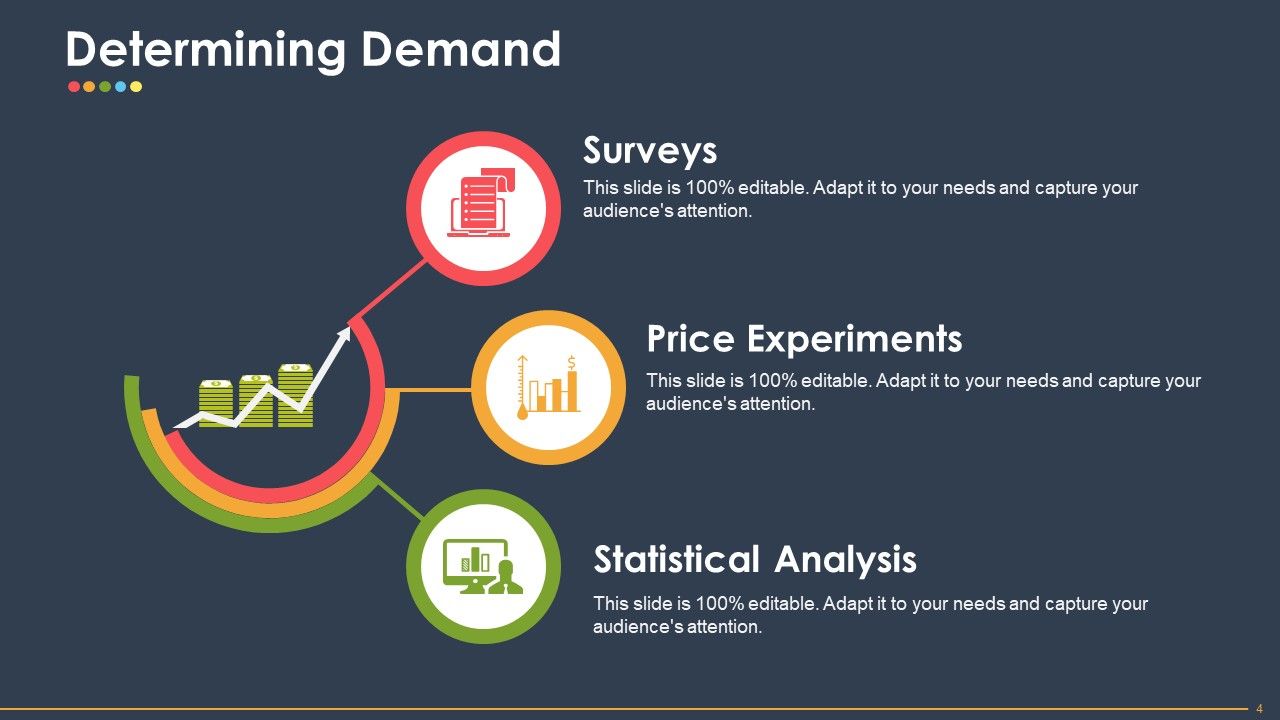
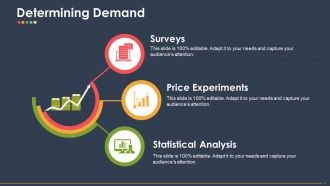
Slide 4 : Este slide mostra Determinando a Demanda com os seguintes pontos - Pesquisas, Experimentos de Preço, Análise Estatística.
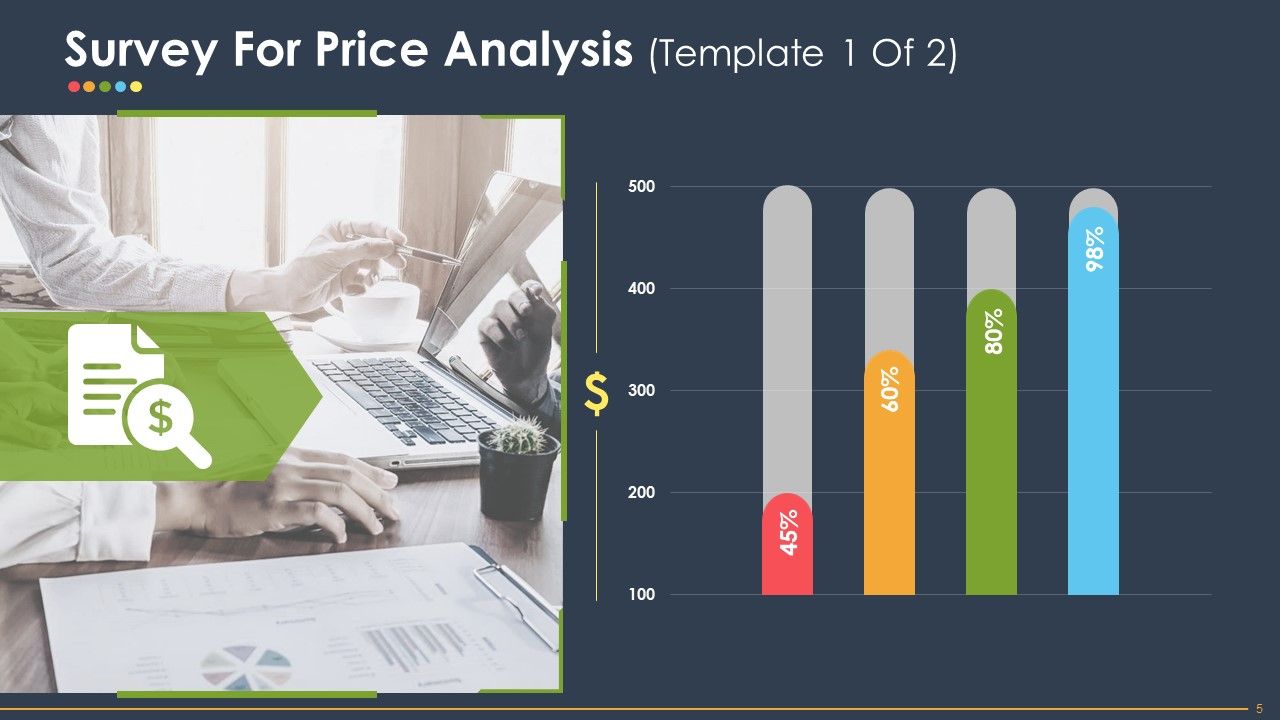
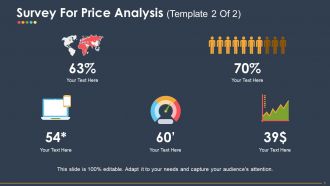
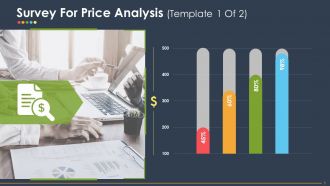
Slide 5 : Este slide apresenta a Pesquisa para Análise de Preços em forma de gráfico.
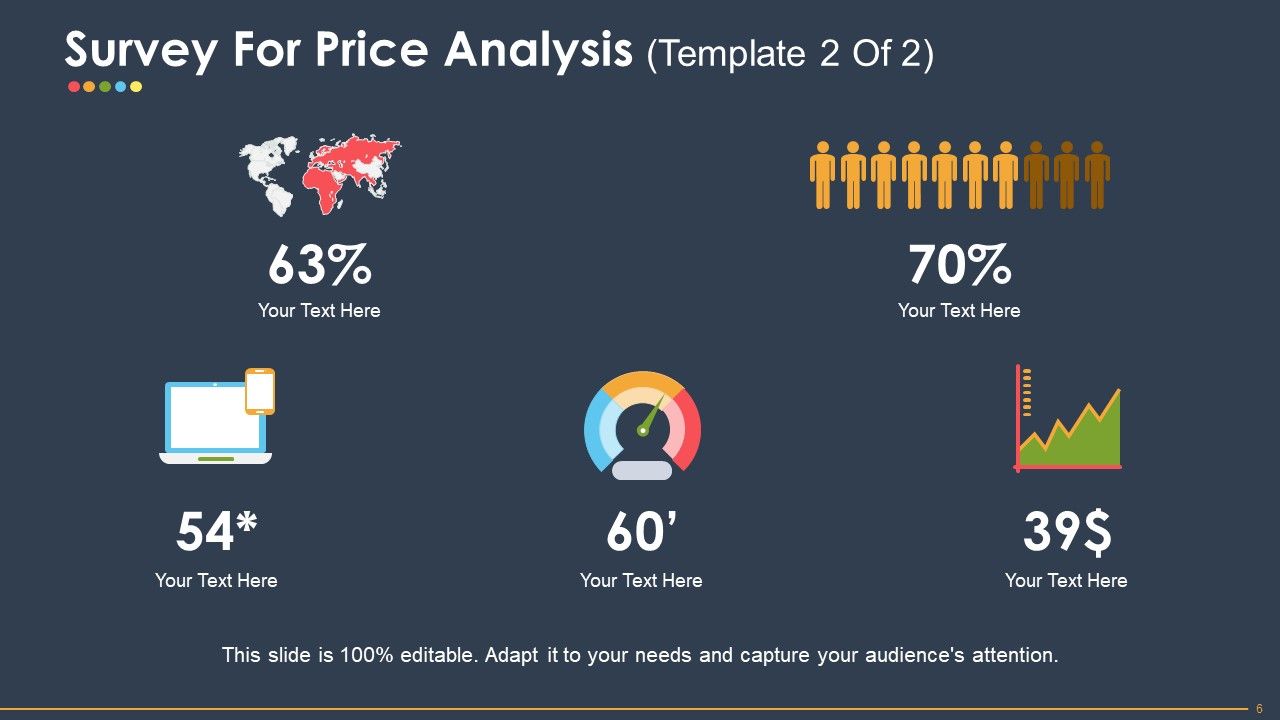
Slide 6 : Este slide apresenta a Pesquisa para Análise de Preço por diferentes tipos de visualização de dados.
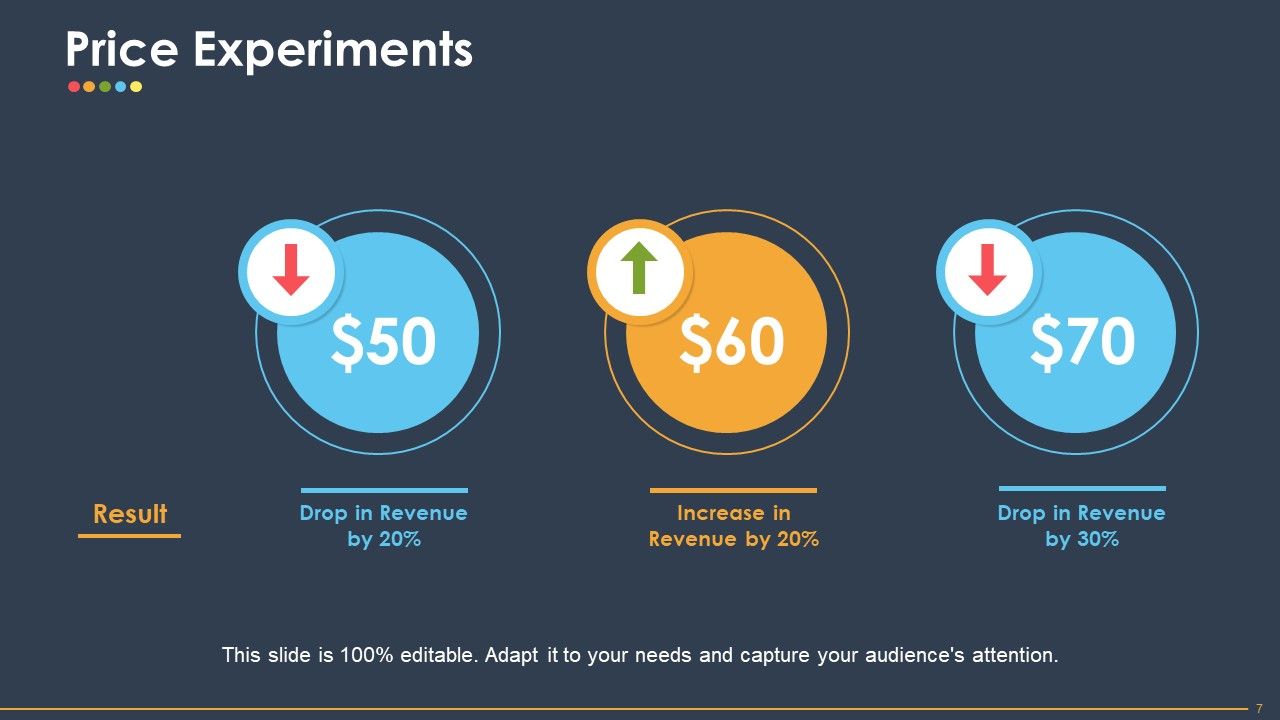
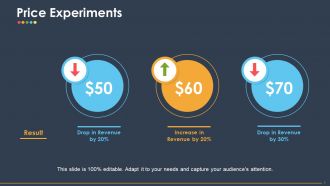
Slide 7 : Este slide mostra o Resultado das Experiências de Preço com Queda na Receita e Aumento na Receita como fatores de cálculo.
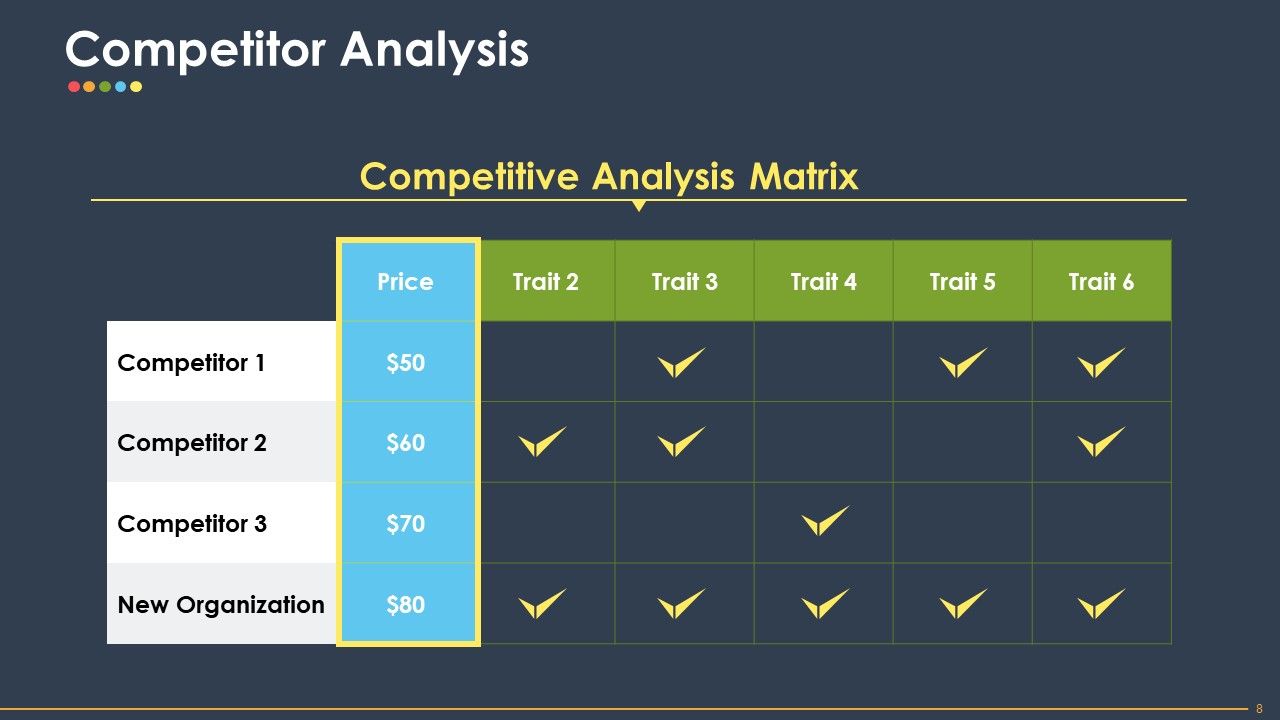
Slide 8 : Este slide mostra uma Matriz de Análise Competitiva.
Slide 9 : Este slide é intitulado Selecionando um método de precificação para prosseguir.
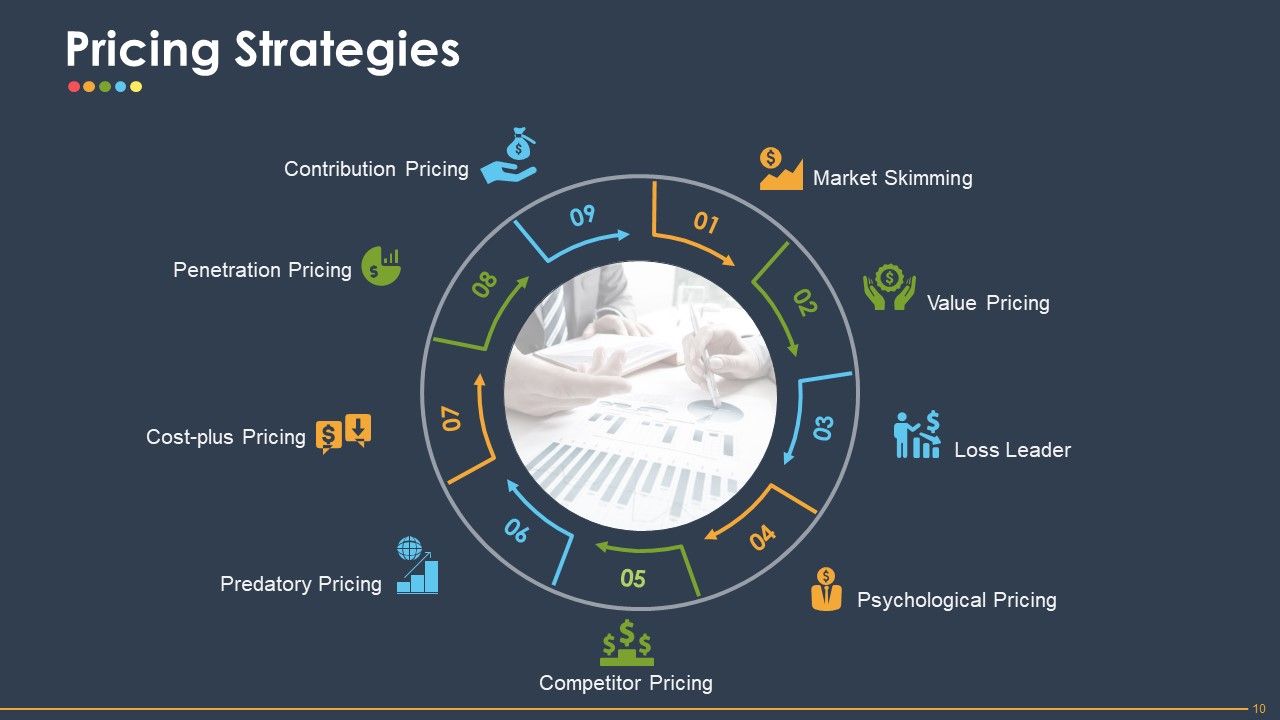
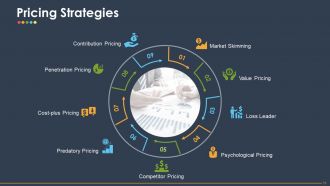
Slide 10 : Este slide apresenta diferentes estratégias de precificação, como - Skimming de mercado, Precificação de valor, Líder de perda, Precificação psicológica, Precificação do concorrente, Precificação predatória, Precificação de custo mais, Preço de penetração, Preço de contribuição.
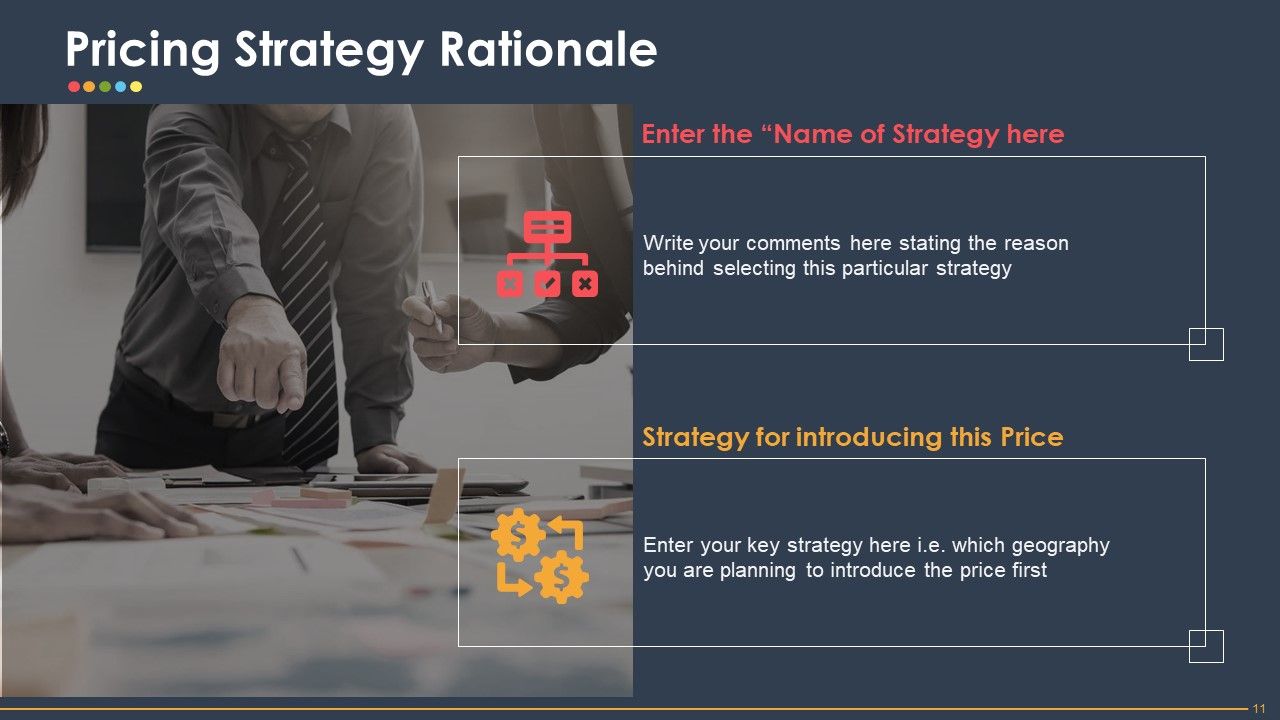
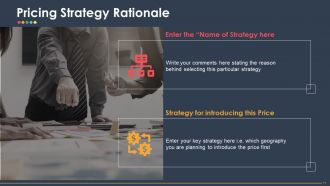
Slide 11 : Este slide apresenta a justificativa da estratégia de preços.
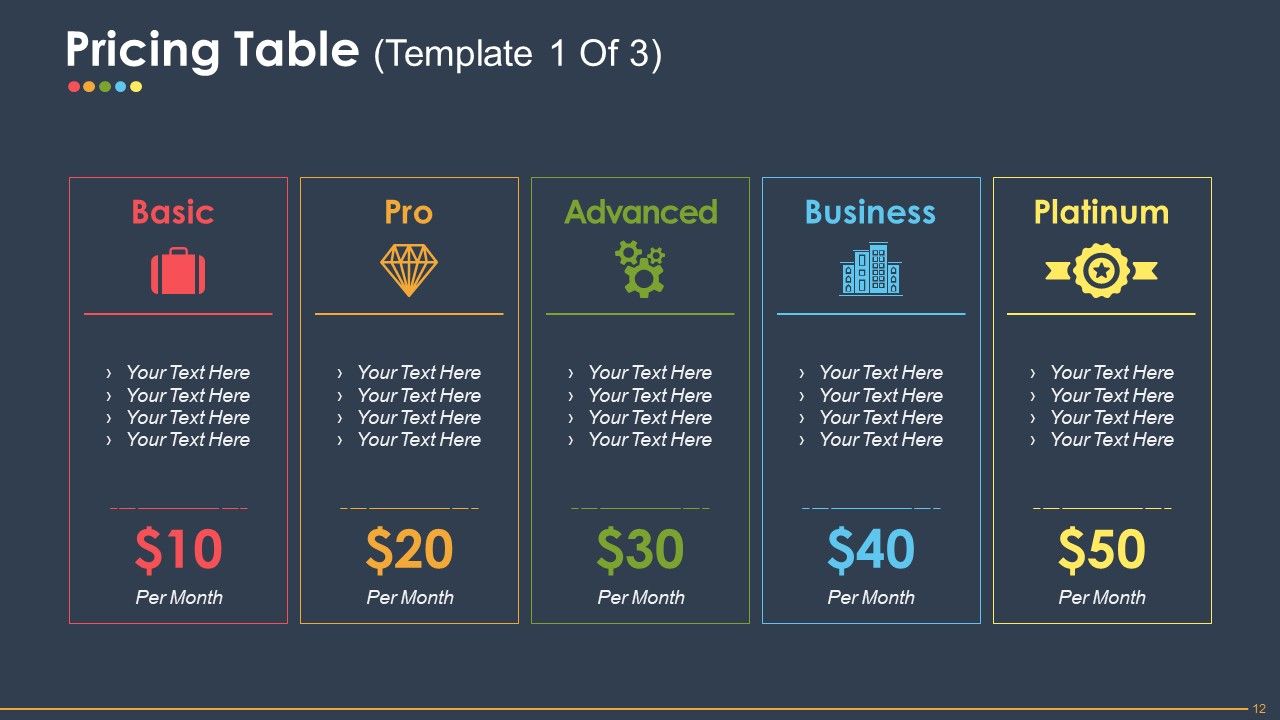
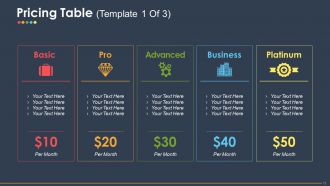
Slide 12 : Este slide mostra uma Tabela de preços categorizada em: Avançado, Básico, Pro, Comercial, Platinum.
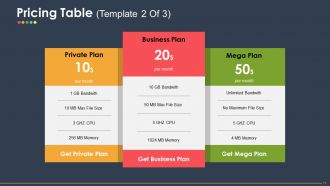
Slide 13 : Este slide também mostra uma Tabela de Preços dividida em Mega Plano, Plano Privado, Plano de Negócios.
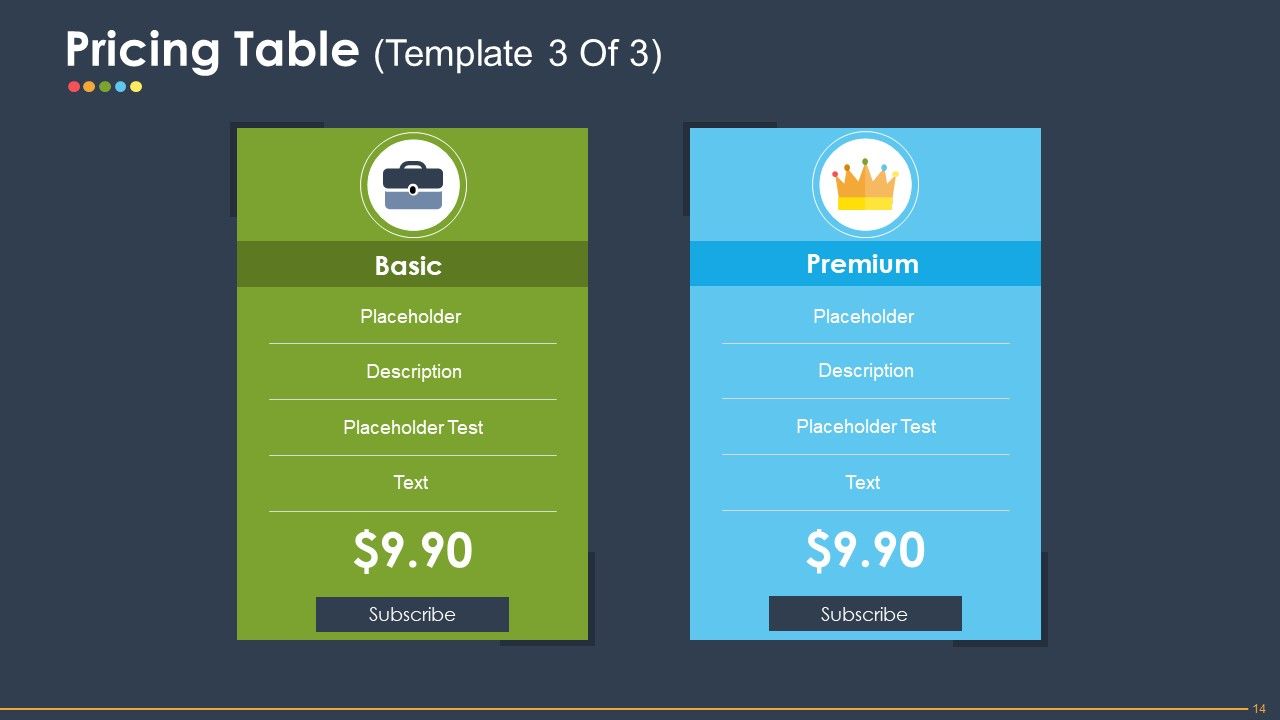
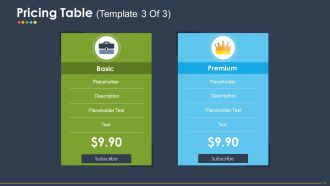
Slide 14 : Este slide também mostra uma Tabela de Preços segregada como Premium e Básica
Slide 15 : Este slide mostra ícones de estratégias de preços.
Slide 16 : Este é um slide de pausa para o café.
Slide 17 : Este slide é intitulado Tabelas e gráficos para prosseguir.
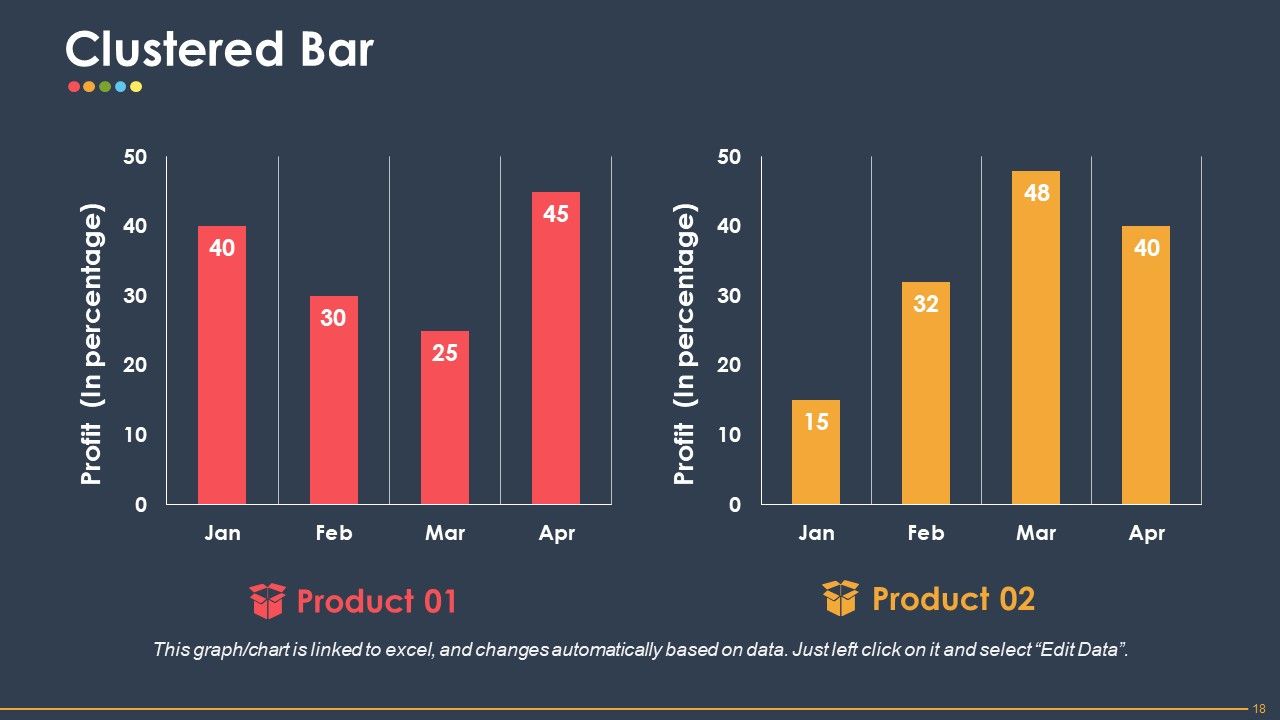
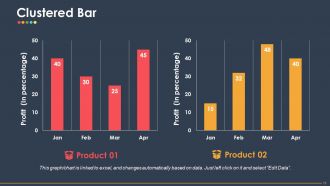
Slide 18 : Este slide mostra uma barra agrupada para comparação de lucro de dois produtos, entidades, etc.
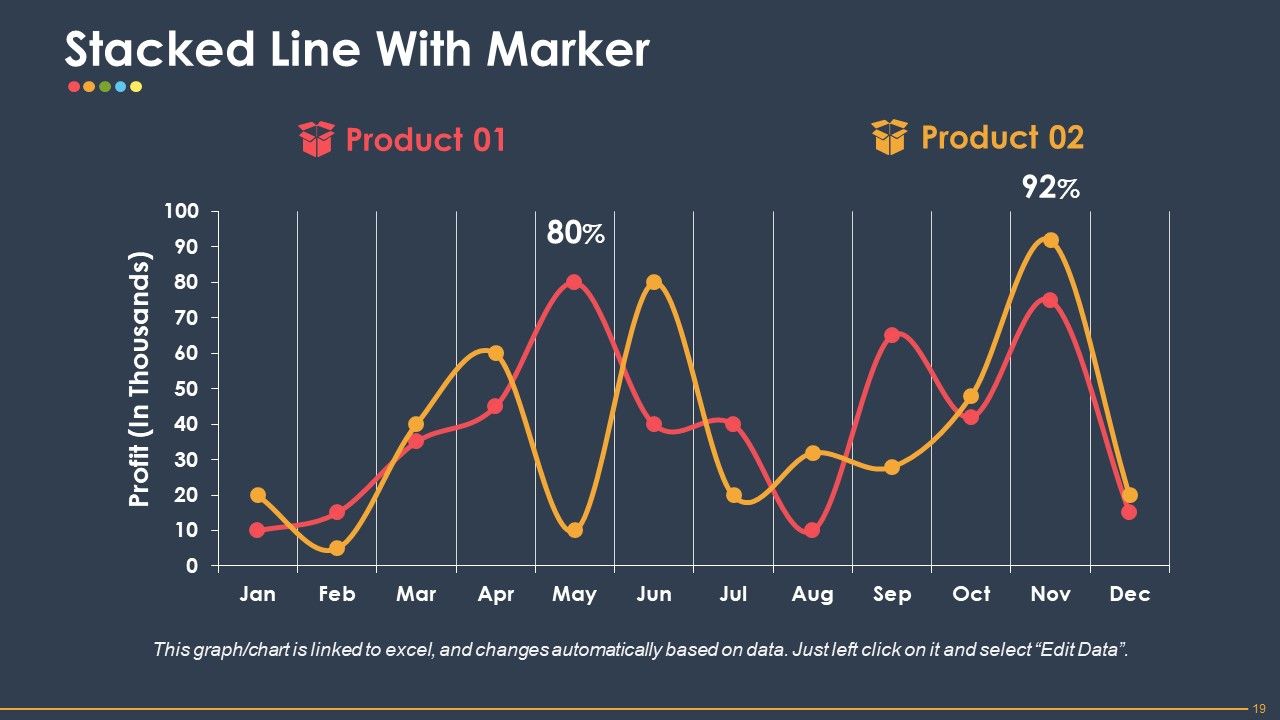
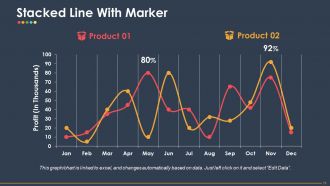
Slide 19 : Este slide apresenta uma linha empilhada com marcador para comparação de lucro de dois produtos, entidades, etc.
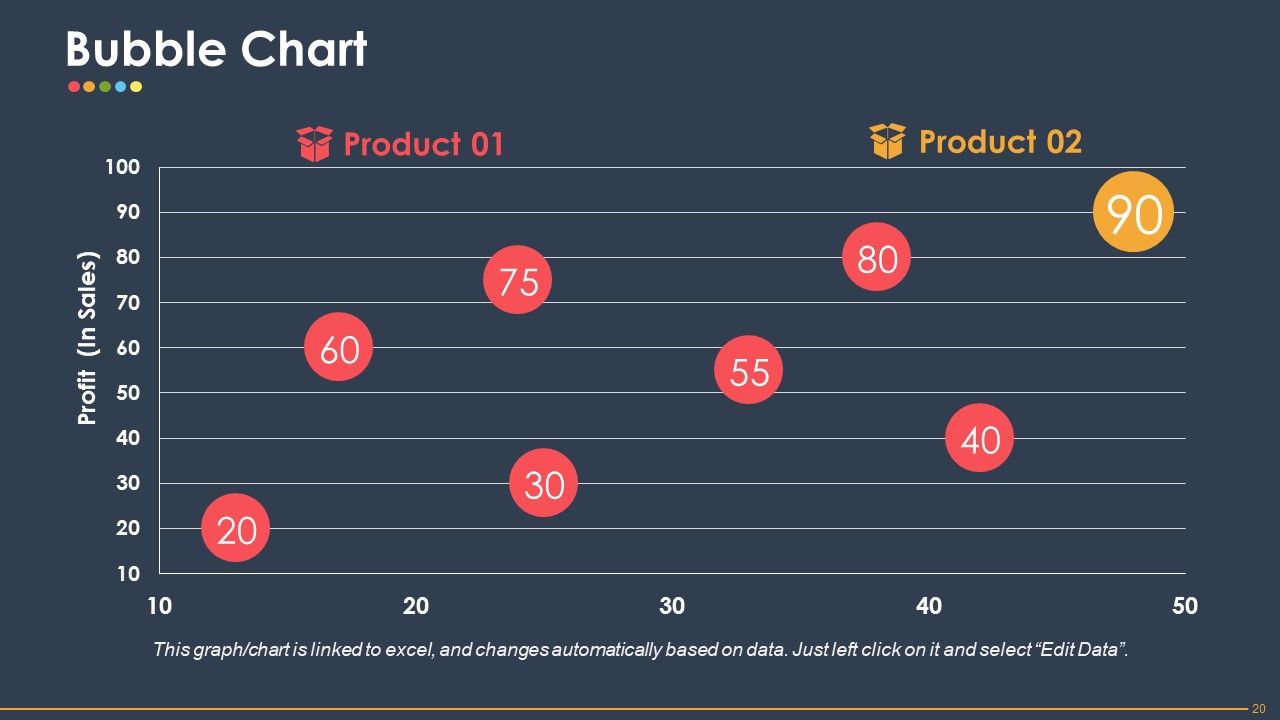
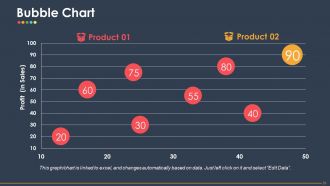
Slide 20 : Este slide mostra um gráfico de bolhas para mostrar a comparação dos lucros de dois produtos, entidades, etc.
Slide 21 : Este slide é intitulado Slides adicionais para prosseguir.
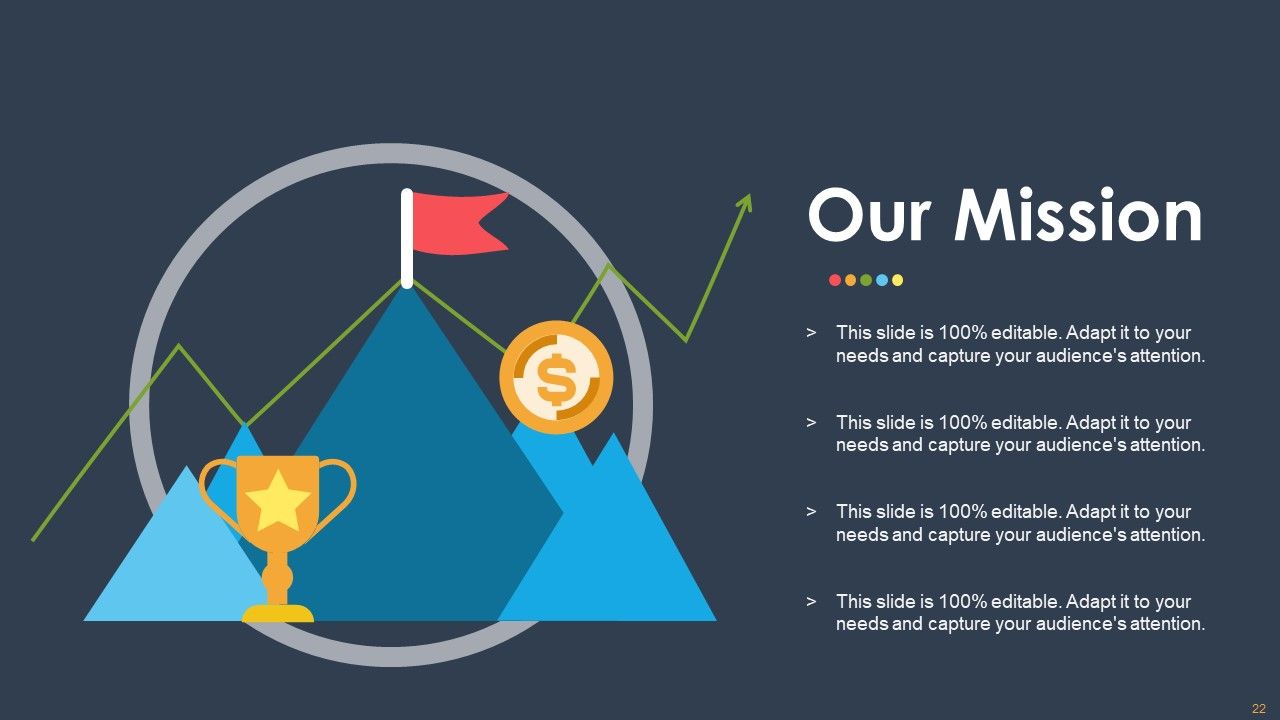
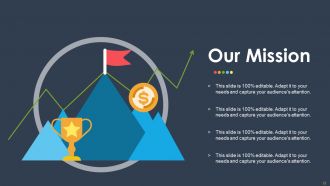
Slide 22 : Este slide apresenta Nossa Missão com imagens e caixas de texto. Declare sua missão aqui.
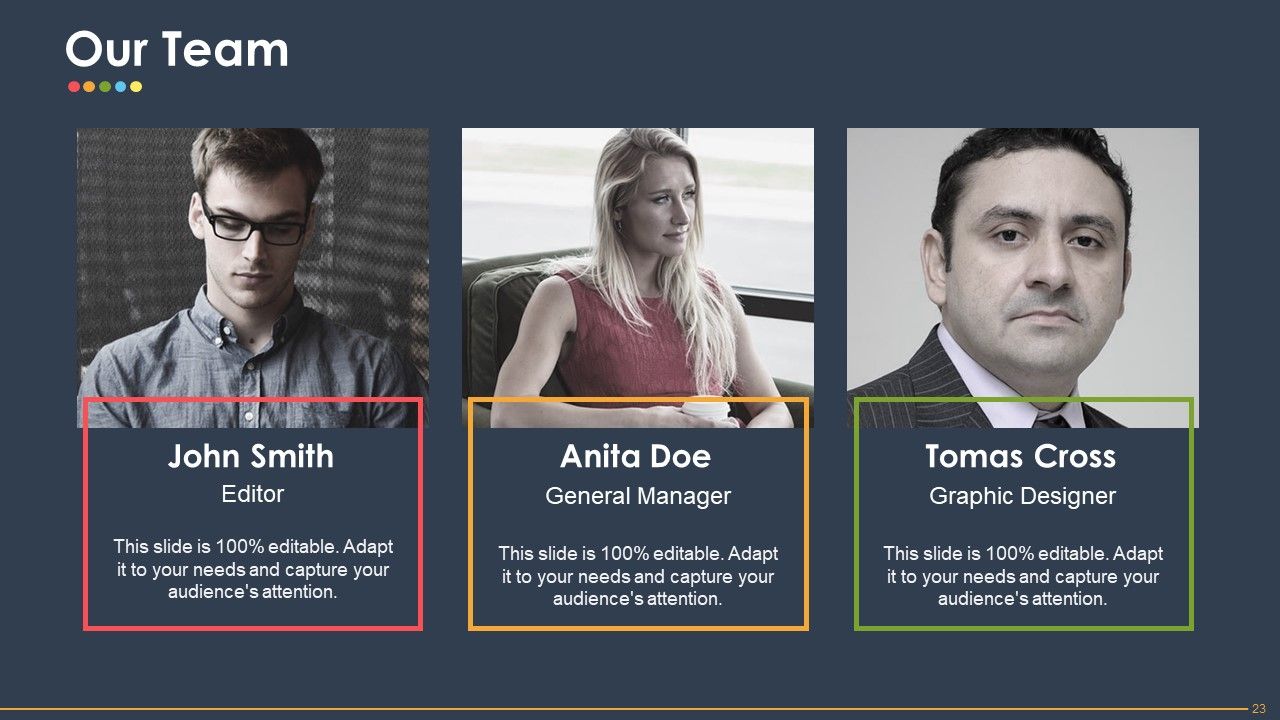
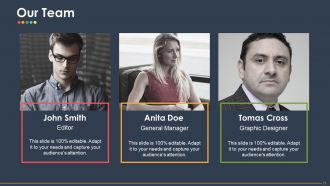
Slide 23 : Este slide apresenta Nossa Equipe com nome, designação e caixa de imagem.
Slide 24 : Este é um slide sobre nós. Indique as especificações da empresa / equipe etc. aqui.
Slide 25 : Este slide apresenta a pontuação financeira a ser exibida.
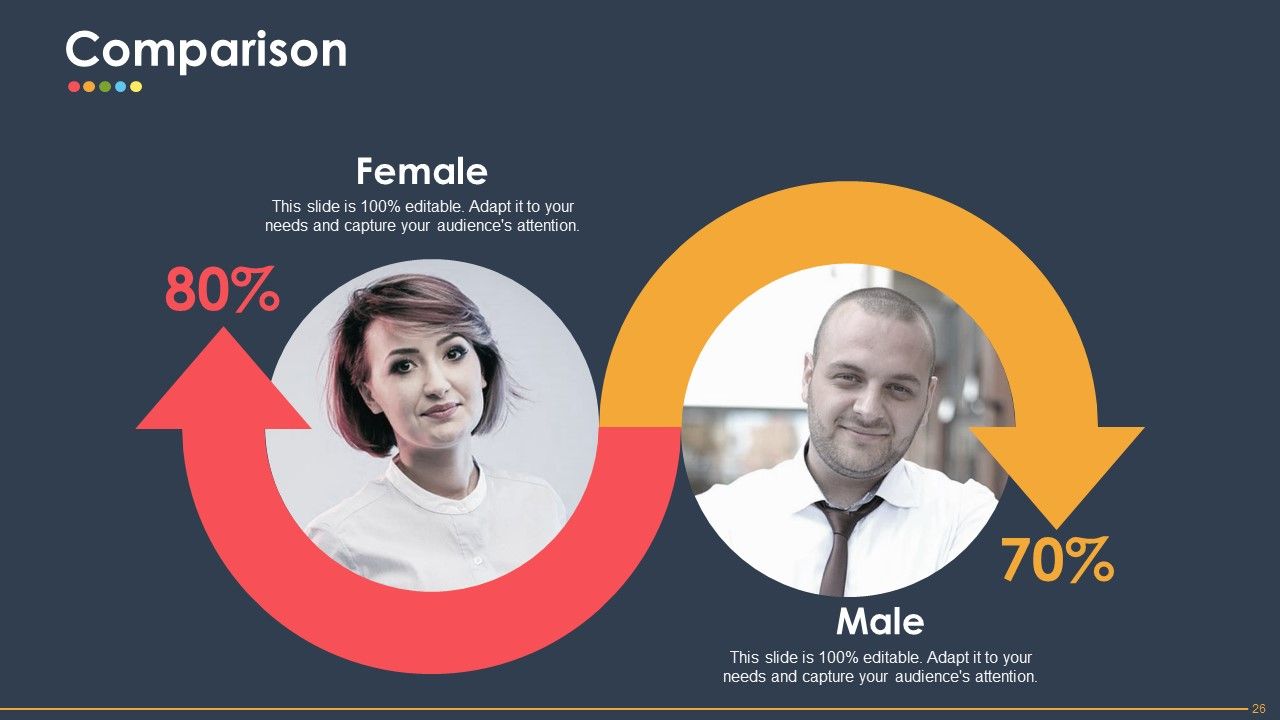
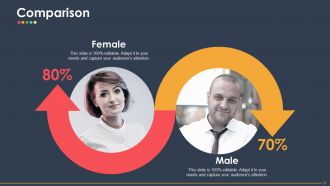
Slide 26 : Este slide mostra a comparação entre homens e mulheres.
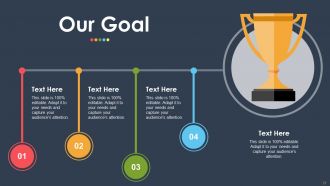
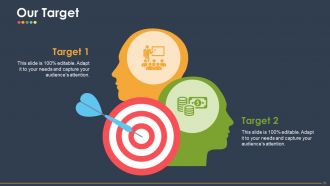
Slide 27 : Este é o slide Nossa Meta. Declare seus objetivos aqui.
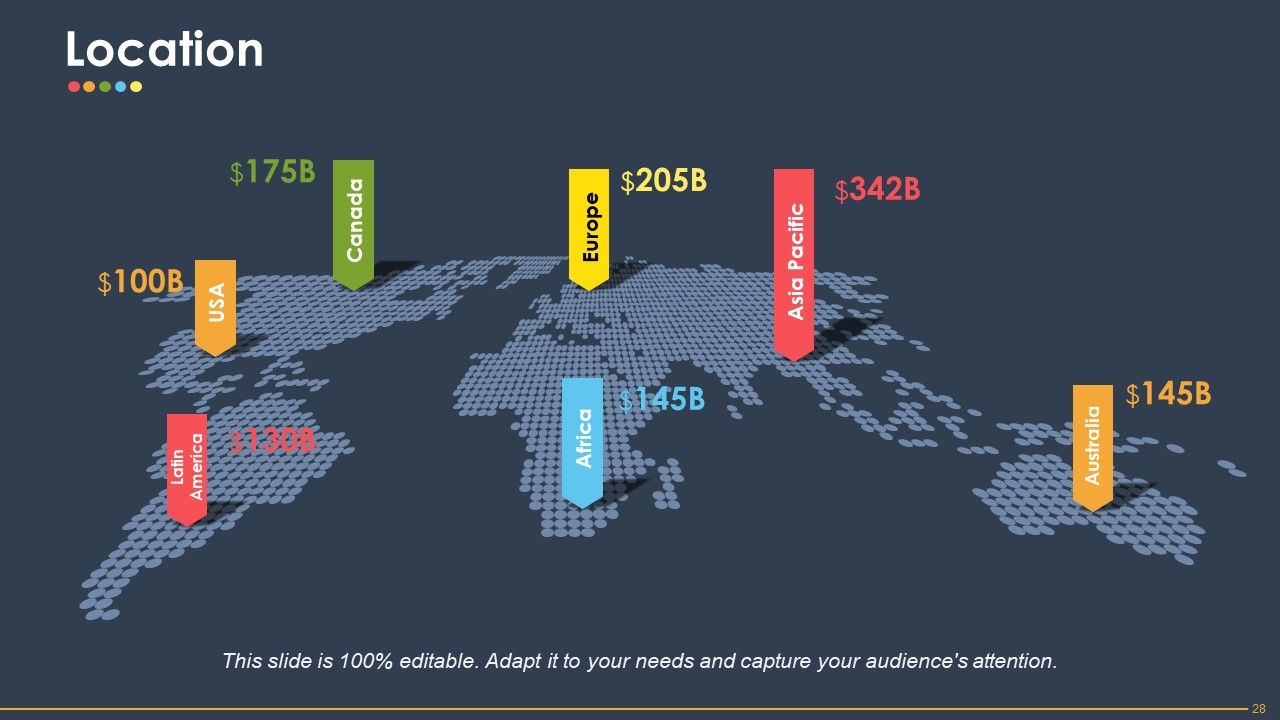
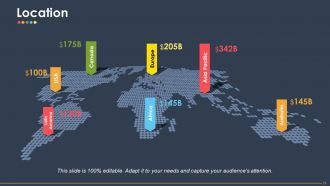
Slide 28 : Este é um slide de Localização da imagem do mapa mundial. Marque locais específicos para o crescimento da empresa, mercado de produtos, etc. aqui.
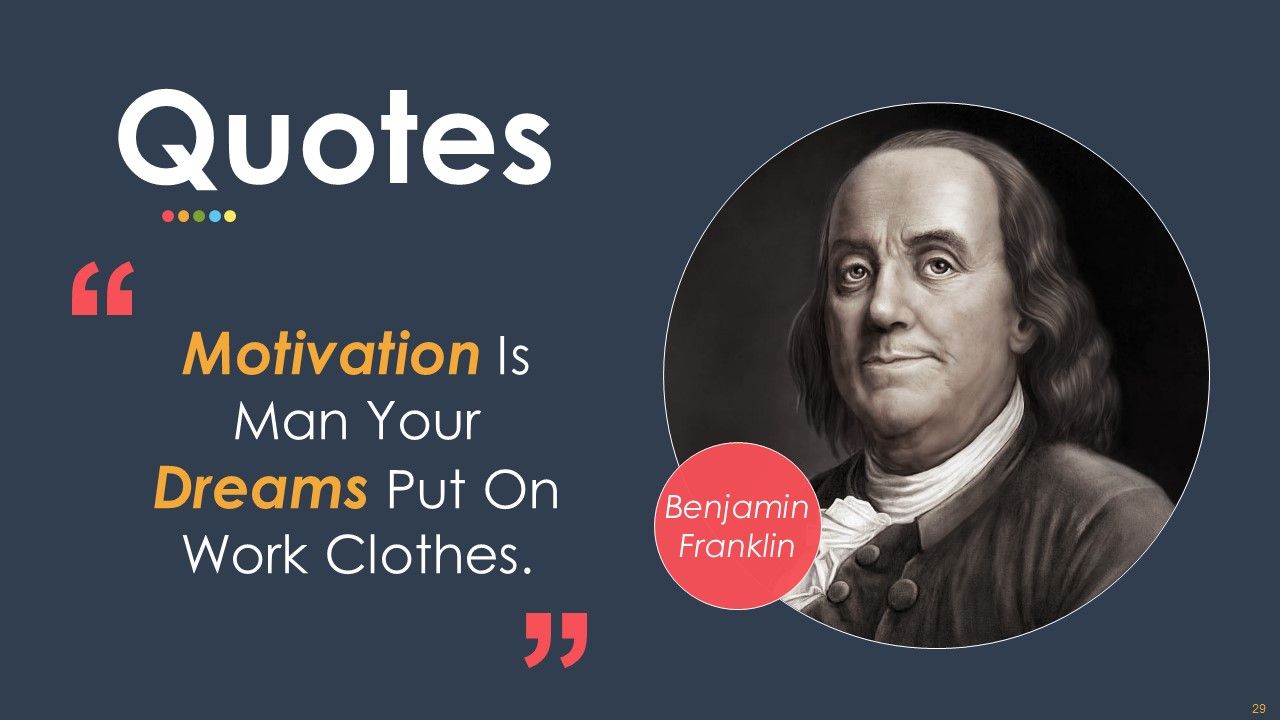
Slide 29 : Este é um slide de citações para mostrar algo que você deseja transmitir.
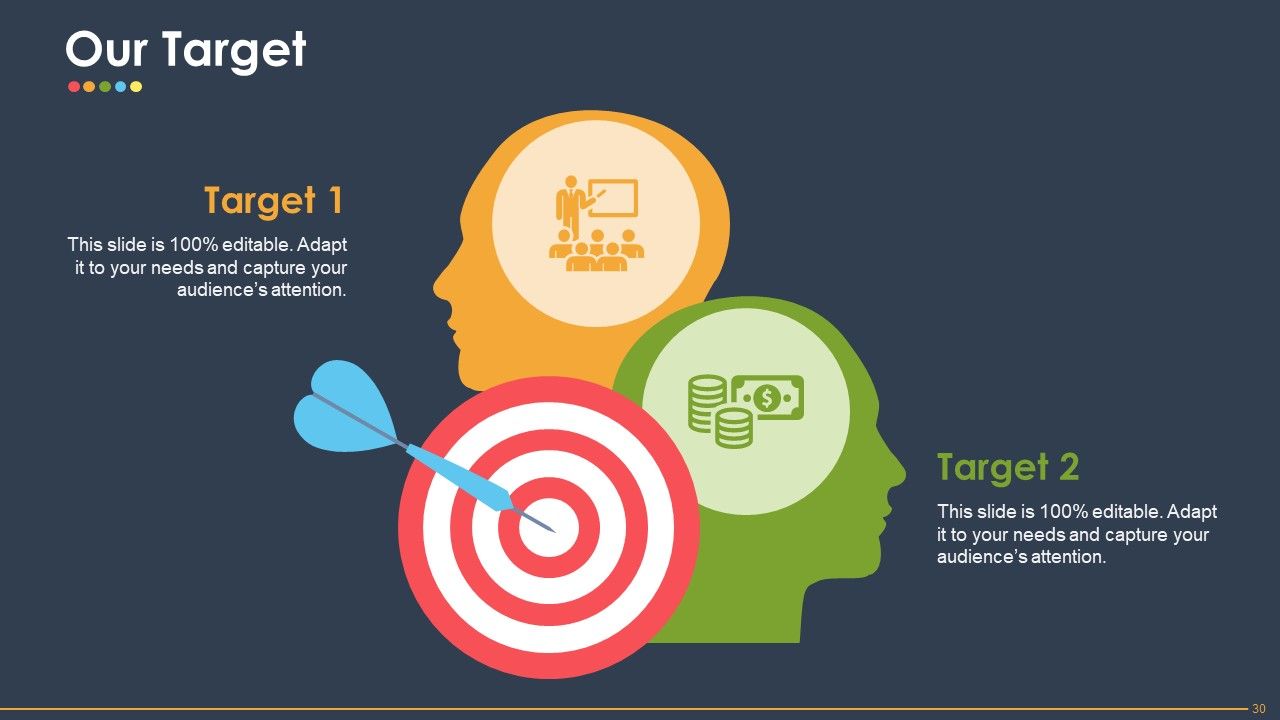
Slide 30 : Este é o slide Nossa meta. Declare seus alvos aqui.
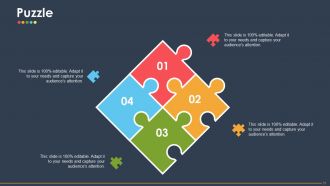
Slide 31 : Este é um slide de quebra-cabeça. Informações de estado etc. aqui.
Slide 32 : Este slide mostra uma lâmpada ou ideia para mostrar um aspecto inovador, etc. aqui.
Slide 33 : Este é um slide de agradecimento com endereço #, rua, cidade, estado, números de contato, endereço de e-mail.

FAQs for Pricing Strategy

First thing - check out what your competitors are charging and who they're targeting. That's your starting point. Look at Creative Market or Envato to see what similar stuff goes for. The template market is honestly pretty crowded these days, so you need something that stands out. Think about how complex your designs are and what time they'll save people. Are you doing fancy animations or super niche industry stuff? Also decide if you're doing one-time purchases or subscriptions - that changes everything. Don't forget your production costs and what profit margin you actually want. Then position yourself as premium, middle-ground, or budget option based on what you're offering.

Oh man, psychological pricing is such a weird mind hack but it actually works! Your brain sees $9.99 and thinks "nine something" instead of ten bucks - I know it sounds dumb but the data backs it up. Try showing your expensive plan first so the regular one looks reasonable by comparison. Bundles are perfect for apps since you're not shipping anything physical anyway. Honestly, just A/B test your current price against something ending in .99 and see what happens. The conversion rate differences might surprise you. Start simple and tweak from there!

Dude, you've gotta do market research before setting those template prices. Survey your actual customers about what they'll pay and what features they care about. I made this mistake early on - priced way too low because I was just guessing! Check competitor pricing too, but honestly don't just copy them. What works is A/B testing different price points or running focus groups to see real reactions. The whole thing comes down to using actual data about what people value, not whatever feels "right" in your head. Trust me on this one.

Yeah, definitely check what other template creators are charging - gives you a good baseline to work with. But don't get too hung up on matching their exact prices (I made that mistake when I started, wasted so much time!). If your stuff has better design or unique features, price higher. New to the scene? Maybe go slightly under to get some momentum. Just don't lowball yourself because you're nervous - I see people do this all the time and it's painful to watch. Market research is smart, but your pricing should reflect your actual value, not just what everyone else is doing.

Honestly, go with tiered pricing for templates. You can bundle different value levels - basic ones vs the fancy animated stuff with custom fonts. Skip freemium though, it'll just hurt your sales. People know if they need templates or not, so giving away free versions is kinda pointless. I'd do 2-3 tiers: basic around $15-25, premium $35-50, maybe throw in an "everything bundle" for like $75-100. Fixed pricing could work if your stuff's consistently good, but tiers let you catch different types of customers. Oh and definitely test with small batches first - you don't want to price yourself out of the market right away.

Honestly, free samples work great for boosting sales. People need to see your quality before they'll pay - it's just human nature. Think about it like Costco's sample stations (works every time, right?). Once customers see how polished your templates are, they'll trust the paid versions are worth buying. The trick is being smart about what you give away. Don't hand over everything, but make sure it's your best stuff. Maybe 2-3 slides from a 20-slide deck? That builds confidence without killing future sales. Trust me, samples create demand way more than they hurt it.

Dude, subscription models are a game changer for template businesses. You'll see retention jump to like 70-80% compared to maybe 30% with one-time sales. Makes sense though - people are getting new templates every month plus updates, so why would they leave? Once they're paying $10-15 monthly, it's way easier than dropping $50+ each time they need something new. But here's the thing - you actually have to deliver fresh stuff regularly. Can't just collect payments and ghost them. I'd honestly build up your content pipeline first before making the switch. Otherwise you'll just piss people off.

Dude, pricing across different countries is way trickier than most people realize. You've got to think about what locals can actually afford first. Then there's weird cultural stuff - like in China, prices ending in 8 are considered lucky, but Western shoppers respond better to 9s. Some places expect you to haggle, others find it offensive. Religious holidays can either boost your sales or tank them depending on your timing. Oh, and don't even get me started on how different cultures view "premium" pricing. Test small in each region before you commit to anything big. Trust me, what works in one market can completely flop in another.

Honestly, just hammer home how much time you're saving people. Nobody wants to mess around with slide layouts for hours when they could be doing literally anything else. Target specific groups like consulting firms or tech startups - they actually care about looking professional and will pay for it. The key is showing off all the design work that went into it, plus bundle in some extras like icons or fonts to make it feel worth the price. And definitely use customer testimonials that mention ROI or time savings. Those work way better than just saying your templates look pretty.

Bundling totally works because people see way more value in 10 templates for $49 vs $8 each individually. It feels like this amazing deal they can't pass up. Most folks love having options too – even if they only end up using like 3 of them, they still feel smart about the purchase. Kind of like those cereal variety packs, you know? Show your individual prices first, then hit them with the bundle discount. Oh, and themed bundles work great too – "startup pitch pack" or whatever fits your audience. Makes the value super obvious. Trust me, it's psychology gold.

Honestly, the biggest thing is just don't be a jerk about pricing. I've seen people charge like $50 for a basic worksheet template which is insane. You wanna make money but not screw over broke college kids, you know? Maybe do student discounts or have some free versions alongside your paid stuff. Tiered pricing works well too - something for everyone's budget. Ask your followers what they think is fair pricing, they'll tell you straight up. You put in work so you deserve to get paid, but education shouldn't be crazy expensive either.

Check your conversion rates and what people are actually saying in feedback - that's where the goldmine is. Cart abandonment at checkout usually screams "too expensive." Customers will straight up tell you "I'd buy this at $15 instead of $25" which honestly makes your job easier. Notice any patterns? Like if your fancy templates sit there while basic ones sell out. Keep an eye on what competitors are doing too, especially when they drop prices. Just don't go crazy with huge changes - test small bumps up or down first. Those big swings can totally mess with your momentum.

Honestly, seasonal promotions are a double-edged sword. Customers get hooked on waiting for your sales instead of paying full price - which totally makes sense from their perspective, right? Before you know it, they see your discounted price as the "real" one. Your margins take a hit year-round because everyone expects those deals. Competitors will probably copy your seasonal cuts too, and then you're all stuck in this annoying price war. My advice? Be picky about what you actually put on sale. Keep your main products at steady prices and set boundaries early. That way promotions boost sales without eating into your regular income.

Don't underprice those templates! You'll barely break even and customers will expect dirt-cheap prices forever. Low prices scream "low quality" to most people anyway. Your competitors might think you're desperate and start slashing their prices too - honestly, that whole race to the bottom thing never ends well. Sure, you might get some sales upfront, but those bargain hunters will ditch you the second someone goes cheaper. Do some research on what decent templates actually cost. Then price yours confidently based on what they're worth.

Honestly, most people selling templates think way too small about what they're worth. Instead of just matching competitor prices, figure out what results your stuff actually delivers. Like if your pitch deck template helps someone close a million-dollar deal, why charge $50? Ask for $200. Survey your customers - are they saving 20 hours of design work? Landing bigger clients? That's the real value right there. I know it sounds obvious but you'd be surprised how many sellers miss this completely. Once you know the impact, build your pricing around that and make sure your marketing actually explains why it's worth more than the generic stuff out there.

Ratings and Reviews

100% of 100
Review Form
Write a review
Most Relevant Reviews
  1. 100%

    by Desmond Garza

    Excellent design and quick turnaround.
  2. 100%

    by Diego Gardner

    Editable templates with innovative design and color combination.

2 Item(s)

per page: