Process Improvement Powerpoint Images
Try Before you Buy Download Free Sample Product
Audience
Editable
of Time
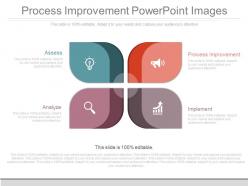
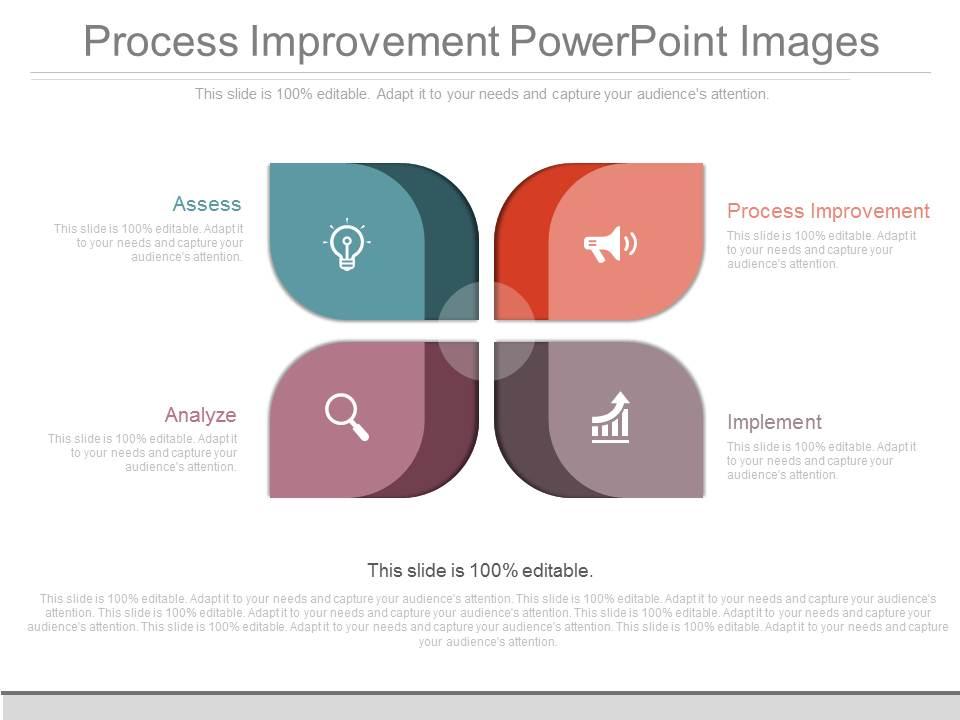
SlideTeam präsentiert Ihnen seine Process Improvement Powerpoint Images. Diese Geschäftsvorlage ist ein vierstufiger Prozess. Die Phasen sind Prozessverbesserung, Implementierung, Analyse, Bewertung. Diese blumenförmige PPT-Diashow kann verwendet werden, um einen strategischen Gründungsplan zu erstellen, in dem verschiedene Prozesse eines Unternehmens erklärt werden können. Diese PowerPoint-Präsentation hilft Ihnen, die Verbesserung eines bereits bestehenden Plans, die Umsetzung des verbesserten Plans, die Analyse der Änderungen und schließlich die Bewertung oder Bewertung der Ergebnisse der vorgenommenen Änderungen darzustellen. Jedes Blütenblatt der Blütenformen PPT steht für einen anderen Prozess, der eine wesentliche Rolle in der Gesamtidee spielt. Durch die Verwendung dieser Diagrammvorlage können Sie die Effizienz Ihres Unternehmens verbessern, da Ihren Zuschauern leicht verständlich gemacht werden kann, was der grundlegende Vorschlag im Kopf des Präsentators ist. Diese PowerPoint-Präsentation kann verwendet werden, um Maßnahmen zur Verbesserung von Vertrieb, Management, Produktion, Lieferung, Produktion, Kommunikationsfähigkeit, Effizienz der Mitarbeiter usw. in einem Unternehmen aufzuzeigen. Dies ist eine sehr praktische Diashow, da sie für jedes Thema verwendet werden kann und nicht auf einen bestimmten Arbeitsbereich beschränkt ist. Laden Sie also dieses Deck mit sieben Folien herunter, die von unseren erfahrenen Geschäftsleuten fachmännisch gestaltet wurden. Messen Sie die Zukunft mit unseren Powerpoint-Bildern zur Prozessverbesserung. Entscheiden Sie, welchen Weg Sie einschlagen möchten.
Funktionen dieser PowerPoint-Präsentationsfolien:
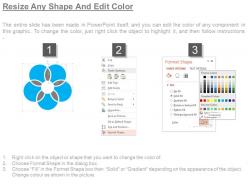
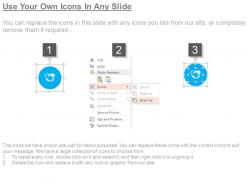
Alles kann in die Folien eingefügt oder daraus entfernt werden, da sie vollständig anpassbar sind. Sie können den Schriftstil, die Schriftfarbe oder die Schriftgröße des in der PPT-Diashow verwendeten Textes ändern. Befolgen Sie die Anweisungen auf den Beispielfolien, um die Größe, Ausrichtung und Farbe der darin verwendeten illustrativen Merkmale leicht zu ändern. Sie können dieses Deck einfach im JPG- oder PDF-Format speichern. Die Diashow kann im Standardformat 4:3 oder im Breitbildformat 16:9 angezeigt werden. Die PowerPoint-Vorlage ist mit Google kompatibel, was die Verwendung sehr einfach macht.
People who downloaded this PowerPoint presentation also viewed the following :
Powerpoint-Bilder zur Prozessverbesserung mit allen 7 Folien:
Präsentationen sollten nicht wirklich langweilig sein, es sei denn, Sie bestehen darauf, Ihre Folien mit wenig technischem Know-how selbst zu erstellen. Überlassen Sie es den Profis, überzeugende Präsentationen mit Powerpoint-Bildern zur Prozessverbesserung zu erstellen, die beeindrucken sollen.
FAQs for Process
First thing - map out what you're actually dealing with, even if you think you already know. Trust me on this one. Grab some data to see where things are really getting stuck (it's never where you expect). Get your team together to figure out why stuff's broken and what might fix it. Don't go crazy trying to change everything at once though. Pick something small, test it out, see what happens. The people who actually do the work need to be part of this from the start - otherwise you'll just create more problems. Honestly, most process improvements fail because someone tried to be too ambitious right out the gate.
Before doing anything, grab your current numbers - cycle time, error rates, costs, whatever matters. Then keep tracking the exact same stuff after you make changes. Don't just focus on the data though - get feedback from your team and customers too. Pick maybe 3-5 KPIs that actually connect to what you're trying to fix. Honestly, I'd rather track fewer things well than drown in spreadsheets. Set up regular check-ins to see how it's going. The tricky part is catching both the quick wins and the stuff that takes months to show up.
Think of data analysis like being a detective for your processes. Track stuff like how long things take, error rates, resource usage - you'll spot patterns you'd never catch otherwise. I've seen "quick" approval steps turn out to be massive bottlenecks, which is wild. The numbers tell you where to focus instead of just throwing darts at problems. Pick 3-4 key metrics and watch them for a few weeks. You'd be shocked what emerges from the data - it's way better than guessing what's broken.
Dude, your employees are literally sitting on the best improvement ideas because they're neck-deep in the actual work every day. They know where stuff gets stuck, what workarounds people use, all that messy reality you don't see from your desk. And here's the thing - if they help come up with the solution, they'll actually want to use it instead of rolling their eyes at another "brilliant" top-down change. Get feedback through quick surveys, those old-school suggestion boxes (they still work!), or just ask during your regular check-ins. Main thing is making it safe to complain without getting blamed for problems.
Oh man, the worst thing you can do is design some "perfect" process without talking to the people actually doing the work every day. I've seen this so many times - leadership creates something in a conference room that sounds great on paper but totally ignores reality. Also, don't try changing everything at once. Pick one process, test it small first. And honestly? Skip the whole "just do this new thing" approach. People need to understand why it's better, or they'll just go back to the old way when nobody's watching.
So here's the thing - every industry does process improvement totally differently based on what keeps them up at night. Manufacturing? They're all about Lean and Six Sigma to slash waste. Healthcare obsesses over patient safety and cutting medical errors. Tech teams are speed demons with agile methods - honestly, they act like any slowdown might kill them. Finance has to deal with crazy regulations, so everything's compliance-heavy. Retail lives and breathes customer journey stuff. You really can't just copy-paste approaches between industries. Figure out what your industry actually stresses about, then pick frameworks that fit instead of forcing some generic solution.
Look, I'd start with Kaizen - way less scary than it sounds and you'll see quick wins. PDCA cycles are my go-to though, super simple framework. Lean Six Sigma's solid if you're into data-driven stuff, and value stream mapping helps you actually see what's broken in your workflow. For software, Lucidchart's decent or just use Miro for basic flowcharts. Honestly, the biggest mistake is methodology-hopping. Pick one and stick with it for a while - I learned this the hard way. Kaizen events are perfect for getting your team on board since people love seeing fast results.
Honestly, you've got to build this stuff right into how people work every day - like, make it their new normal. Document everything clearly and train people properly, otherwise it'll just fall apart when nobody's watching (seen that happen way too many times). Set up check-ins to catch people sliding back into old habits. The trick is measuring the right stuff consistently so you spot problems early. Oh, and this is key - make the new way easier than the old way. If it's a pain, people won't stick with it no matter what you do.
Look, you absolutely need these people on your side because they're the ones dealing with your changes every single day. I've watched amazing improvements crash and burn just because nobody got stakeholder buy-in first. Map out who's actually affected by the process changes - then loop them in from day one. Their input helps you spot the real pain points and find solutions that actually work. When people feel heard during the design process, they'll fight for your project instead of against it. Plus they know weird edge cases you'd never think of. Get them involved early and keep checking back with them throughout.
Definitely start by mapping out what you're doing now - sounds boring but trust me, you'll spot obvious problems. Zapier's great for connecting different apps so stuff moves automatically instead of you copying data around all day. Analytics tools are honestly game-changers because they show you weird bottlenecks you never noticed. Cloud collaboration helps too, especially if your team's always asking "where's that file?" Don't just grab whatever tech looks cool though. Pick the stuff that actually fixes your biggest headaches first, then expand from there.
Start by picking 3-5 metrics that actually matter for what you're trying to fix - cycle time, error rates, customer satisfaction, cost per transaction. More than that and you'll just confuse yourself with too much data. Here's the thing though: measure before AND after your changes or you'll never know if anything actually worked. I've watched so many teams skip this step and then wonder why nothing improved. Track some leading indicators too like employee engagement - those usually predict your bigger results. Set up a basic dashboard, check it weekly at first, then dial back to monthly.
So here's the thing - when people feel safe to mess up and try new stuff, they actually start hunting for ways to improve things instead of just doing their job on autopilot. I've watched this happen at my old company and wow, what a difference. Your team stops just complaining about problems and starts fixing them. They'll question why things work the way they do, which is exactly what you need. Honestly, half the battle is just getting people to care. Start small - celebrate when someone tries something new, even if it flops. That's how you get the ball rolling.
Forget those boring PowerPoint marathons - nobody learns that way. You gotta explain WHY you're changing things first, otherwise people just resist. Break it down into bite-sized sessions instead of cramming everything into one exhausting day. Let them mess around with the new process and screw up without judgment. Honestly, the best thing I ever did was make little cheat sheets they could keep at their desk. Find a couple people on your team who "get it" and turn them into your unofficial coaches. They'll help way more than any formal training once the workshops are over.
Look at what's hitting your customers or revenue first - that's where the money is. Then tackle whatever makes your team want to scream daily (we all know those processes exist). Plot everything on a basic impact vs effort grid. Quick wins are high impact, low effort stuff. Big projects need more time but pay off huge. Your frontline people are goldmines for this - they see the broken stuff every day and usually have solid ideas. Honestly, I'd cap it at 2-3 improvements max when you start. Otherwise you'll burn everyone out trying to fix everything at once.
Honestly, the biggest pain points are usually people hating change and costs getting way out of hand. Your team's gonna push back hard - I've seen it happen so many times. Implementation gets messy fast, especially if you're messing with stuff that already works decent enough. Productivity will probably tank temporarily while everyone figures out the new system. Sometimes your "big improvement" ends up being totally pointless too. Scope creep's brutal, training sucks, and leadership bails when it gets difficult. Start with small pilot runs first. Get people on board early and track real numbers so you can actually prove it worked.
-
Unique research projects to present in meeting.
-
Colors used are bright and distinctive.