


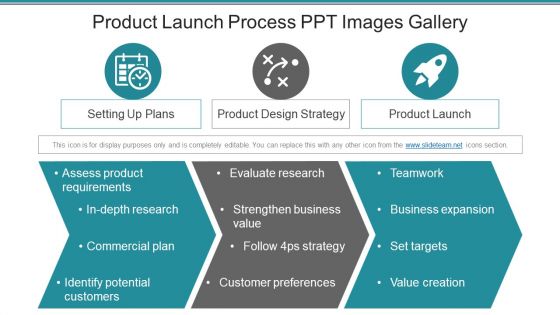
Product launch process ppt images gallery





Try Before you Buy Download Free Sample Product
 Impress Your
 Audience
 100%
100% Editable
 Save Hours
 of Time


Click away on our Product Launch Process Ppt Images Gallery site. Be prepared for a fascinating experience.
People who downloaded this PowerPoint presentation also viewed the following :
Product launch process ppt images gallery with all 5 slides:
Our Product Launch Process Ppt Images Gallery never play hard to get. They are always eager to come to your aid.

FAQs for Product launch process
So you've got market research and validation first - though honestly most people skip this and kick themselves later. Then product development, testing, and planning your go-to-market strategy. Build some buzz with pre-launch campaigns before the actual launch day. Getting your sales, marketing, and product teams on the same page is huge. Oh, and definitely work backwards from your target date when mapping the timeline. Don't forget post-launch analysis either - that's where you'll see what actually worked. Having clear success metrics upfront saves you from guessing later.
Look, market research is basically your cheat sheet for not screwing up your launch. It shows you who actually wants your stuff and how to talk to them without sounding like every other company out there. You'll figure out what problems they're dealing with, where they hang out online, all that good stuff. I swear, half the failed launches I see happen because people just wing it and assume they know their customers. Research also helps you price things right and see what competitors are doing. Oh, and it catches problems early before they blow up your whole timeline. Trust me, skip the guesswork.
Honestly, customer feedback is like your safety net before launching something nobody wants. Get people testing your stuff early - beta users, focus groups, surveys, whatever works. They'll catch usability problems you missed and tell you if you're actually solving a real problem. Sometimes users do weird stuff with your product that's actually brilliant! Being open to changes is crucial, even when it hurts your ego. Oh, and don't wait until the last minute - start collecting feedback at least 2-3 months out so you can actually fix things.
Start way earlier than you think - like 6-8 weeks out, seriously. Behind-the-scenes stuff works really well, plus countdown posts and little feature sneak peeks. Hit up your existing customers first since they actually care about your brand already. Social media's obvious, but influencers and early users can create buzz before you even announce anything official (honestly underrated strategy). Build curiosity without promising the moon. Oh, and definitely set up a landing page for early access signups - that list becomes gold on launch day. The whole point is getting people curious enough to actually pay attention when you go live.
Lead with your value prop right away - don't make them hunt for it. Structure everything around the problem you're fixing, not features (seriously, feature lists are where presentations go to die). Back up your points with real customer quotes and actual data. Keep slides visual, minimal text. Practice your timing so you're not frantically speed-running the demo at the end. Oh, and prep for the hard questions about price, competitors, timeline - they always ask. Honestly, the worst thing is when someone gets caught off guard by obvious pushback. Wrap up with specific next steps so it doesn't just... end awkwardly.
Start teasing stuff 2-3 weeks out to get people hyped. Hit Instagram, LinkedIn, Twitter - maybe TikTok if your crowd's there. Partner with influencers who actually reach your audience (pricey but usually pays off). Countdown posts work great, plus behind-the-scenes content keeps things interesting. Oh, and make a unique hashtag so you can track everything. User-generated content is gold too. Here's the thing though - you gotta engage back when people comment. The algorithm eats that up, and honestly it just shows you're not some robot posting into the void.
Right after you launch, track three main things: how many people are actually using it (downloads, sign-ups), how engaged they are (daily users, time spent in the app), and any early revenue stuff. Customer feedback is absolutely critical too - watch those support tickets and app store reviews like a hawk. The first week is gonna feel crazy with data everywhere, but don't chase meaningless numbers. Pick maybe 4-5 metrics that actually matter for your goals and check those daily. Oh, and set up some automated dashboards so you're not pulling reports manually every single morning - learned that one the hard way!
Honestly, timing's tricky but here's what I'd focus on: First, figure out when your customers actually have money and attention to spend. Budget cycles are huge for this stuff. Also check if competitors are about to drop something big - launching right after them is usually a disaster. Your team's capacity matters too though. Like, if your engineers are already burned out or marketing can't handle a proper launch campaign, you're screwed before you start. I'd literally map these three things on a calendar and see where they don't completely conflict. Oh, and start with the dates you absolutely can't do - that narrows it down fast.
Dude, the classic mistakes are rushing it without testing anything first and having zero clue what your messaging should be. Also launching when everyone's swamped or distracted - I did that once and it was brutal. Your support team needs to be ready too, trust me on that. Oh and validate people actually want this thing before you build it, because creating something nobody cares about hurts. Things will break, so have a plan. Honestly? Just make a checklist and stick to it even when you're dying to ship. I know it's boring but it works.
You need someone calling the shots across all teams or it'll be a nightmare. Schedule regular check-ins where marketing, engineering, sales, and support actually hash out what they need from each other. Shared project boards help too - everyone sees the bottlenecks instantly. I've watched so many launches implode because teams stay in their bubbles until the final week, then suddenly marketing's like "wait, where are the product specs?" Start coordinating 6-8 weeks out minimum. Each team should have clear owners for their stuff. Trust me, the earlier you get everyone talking, the less you'll want to pull your hair out later.
Okay so for your launch story, start with the problem people actually feel - like really make them go "ugh yes that's so annoying." Then your product swoops in to fix it. Real customer examples work way better than just listing features, trust me on this one. Build it like an actual story with some tension, you know? Videos or demos help people visualize it too. The key thing is connecting to emotions - what do people really want to achieve? I'd honestly just write down the main problem in one sentence first and go from there. It sounds cheesy but the whole "problem-solution-hero" thing genuinely works.
So competitive analysis is basically stalking your competitors (legally, lol). Map out their pricing, features, and who they're targeting. I always end up going down rabbit holes on their websites for hours. Look for gaps they're missing - maybe they all went cheap so you can go premium, or there's some audience they're totally ignoring. Don't just copy what they're doing though. The whole point is finding your own angle that makes you different from everyone else.
Before you launch, build up some buzz with email lists and social media teasers. Hit up industry publications too - PR outreach actually works. LinkedIn's solid for B2B stuff. Once you're live, that's when things get fun. Content marketing, paid ads, influencer collabs, customer testimonials - all fair game now. Email still crushes it despite what people say about it being dead (which is kinda funny). Here's the thing though: go where your customers actually are, not where you assume they hang out. Pick 2-3 channels max and nail those instead of doing everything poorly.
Start with weekly updates for the first month, then dial it back to bi-weekly or monthly once things settle in. Honestly, I've watched so many launches just vanish after week two - such a waste of momentum. Share the good stuff in your follow-ups: user feedback, metrics that actually matter, customer wins. Don't just dump internal updates on people. Oh, and pick whatever schedule works but actually stick to it. Consistency beats perfection here. Your team needs to know when they'll hear from you, otherwise everyone just... forgets about it.
Honestly, customer education is a game-changer for retention. People stick around when they actually get how to use your stuff properly. Short-term pain but totally worth it - educated users turn into your biggest fans and refer others like crazy. Your support team won't be drowning in basic questions either, which is huge. I learned this the hard way with my first product launch (waited too long to create tutorials). Don't make education an afterthought. Build it right into your launch strategy from the start.
-
Good research work and creative work done on every template.
-
Illustrative design with editable content. Exceptional value for money. Highly pleased with the product.