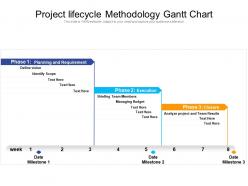
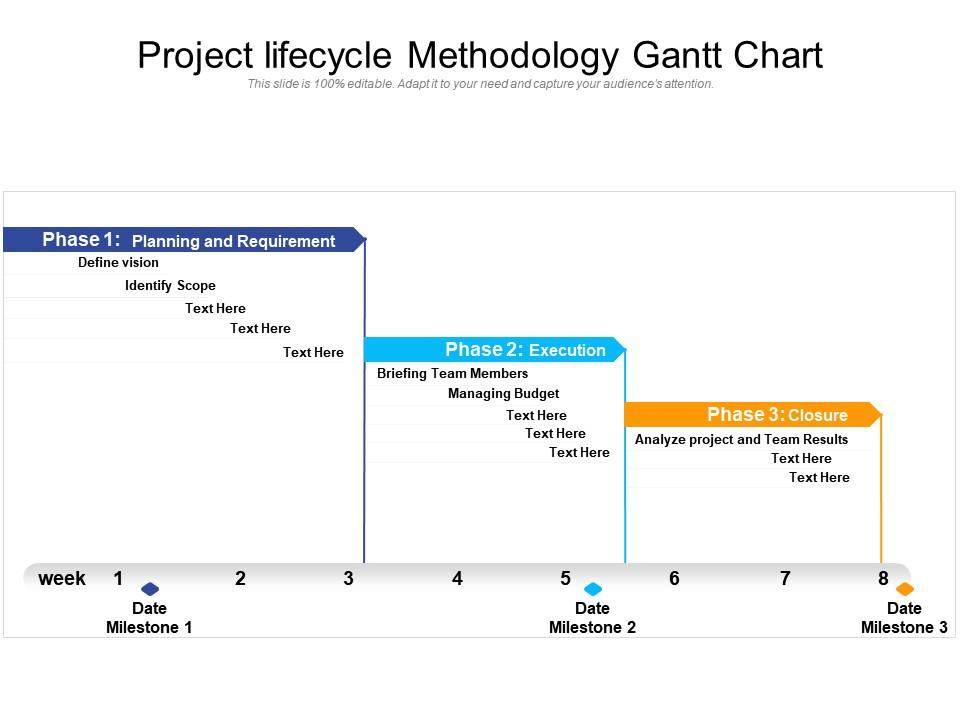
Diagrama de Gantt de la metodología del ciclo de vida del proyecto
Try Before you Buy Download Free Sample Product
Audience
Editable
of Time
Anima a tu equipo a realizar mayores esfuerzos. Aspire a lo más alto con nuestro Diagrama de Gantt de la Metodología del ciclo de vida del proyecto.
Características de estas diapositivas de presentación de PowerPoint:
Presentación de este conjunto de diapositivas con el nombre Diagrama de Gantt de la Metodología del ciclo de vida del proyecto. Los temas tratados en estas diapositivas son planificación y requisitos, ejecución y cierre. Esta es una presentación de PowerPoint completamente editable y está disponible para su descarga inmediata. Descárguelo ahora e impresione a su audiencia.
People who downloaded this PowerPoint presentation also viewed the following :
Diagrama de Gantt de la metodología del ciclo de vida del proyecto con las 2 diapositivas:
Tu audiencia clamará por un bis. Nuestro diagrama de Gantt de la metodología del ciclo de vida del proyecto creará demanda.
FAQs for Project lifecycle
Key project lifecycle phases in Gantt charts include initiation, planning, execution, monitoring and controlling, and closure, each displaying specific tasks, durations, and dependencies. These visual representations enable project managers to track progress, identify bottlenecks, and coordinate resources across industries like construction, software development, and manufacturing, ultimately delivering improved timeline management and stakeholder communication.
Gantt charts facilitate better project planning by providing visual timeline representation, task dependency mapping, resource allocation tracking, and milestone identification in one comprehensive view. Through clear scheduling visualization, project managers streamline workflow coordination, identify potential bottlenecks early, and optimize resource distribution, with many organizations finding that this structured approach ultimately delivers improved project completion rates and enhanced team accountability.
Gantt charts offer enhanced project visibility, streamlined resource allocation, improved deadline tracking, better team coordination, and clearer milestone identification. These visual tools enable project managers to anticipate bottlenecks, optimize workflows, and maintain stakeholder alignment, with many organizations finding that Gantt charts reduce project delays by 25-30% while significantly improving overall delivery predictability.
Gantt charts help identify project dependencies by visually displaying task relationships, overlapping timelines, prerequisite activities, resource conflicts, and critical path sequences. Through connected task bars and dependency lines, project managers can quickly spot bottlenecks, schedule conflicts, and resource allocation issues, while enabling proactive adjustments that streamline workflows and minimize project delays.
**INPUT**: What software tools are best for creating Gantt charts for project management? **OUTPUT**: Leading Gantt chart software includes Microsoft Project, Smartsheet, Asana, Monday.com, and Teamwork, each offering distinctive project tracking capabilities. These platforms streamline project management by enabling real-time collaboration, automated scheduling, and resource allocation, with many organizations finding that integrated dashboard features ultimately deliver enhanced visibility and faster project completion across teams.
Customizing a Gantt chart involves adjusting timelines, task dependencies, resource allocations, milestone markers, and visual formatting to match your project's unique requirements and complexity. Through specialized software or templates, project managers can modify duration scales, add custom fields, incorporate team assignments, and establish critical path indicators, ultimately delivering clearer project visibility and enhanced stakeholder communication across diverse industries.
Gantt charts improve team collaboration by providing visual project timelines, clarifying task dependencies, establishing accountability through assigned responsibilities, and enabling real-time progress tracking. These visual tools streamline communication by eliminating scheduling confusion, facilitating resource coordination, and creating shared understanding of project milestones, with many organizations finding that centralized project visibility ultimately enhances team alignment and delivery efficiency.
Common mistakes include unrealistic time estimates, failing to identify task dependencies, overcomplicating the chart with excessive detail, neglecting regular updates, and poor resource allocation planning. These errors can derail project timelines and team coordination, with many project managers finding that maintaining simplicity, establishing clear dependencies, and conducting weekly chart reviews ultimately delivers better project visibility, improved stakeholder communication, and more successful project outcomes.
Gantt charts enable effective progress tracking through visual timeline displays, milestone markers, task dependencies, and completion percentages that provide real-time project visibility. These tools streamline project management by highlighting critical path activities, identifying potential delays, and facilitating resource reallocation, with many organizations finding that enhanced transparency ultimately delivers improved deadline adherence and stakeholder communication.
Gantt charts provide timeline-based visual project scheduling with task dependencies, durations, and critical path analysis, while Kanban boards focus on workflow visualization and continuous task movement through stages. These approaches serve different project needs, with Gantt charts excelling in complex, deadline-driven projects requiring detailed scheduling, and Kanban boards streamlining agile workflows, ultimately delivering complementary project management capabilities.
Gantt charts integrate with Agile methodologies by adapting to shorter sprint cycles, displaying user stories and epics as tasks, and enabling real-time updates during daily standups. Many software teams use hybrid approaches that combine Gantt timelines with Scrum boards, allowing project managers to track sprint progress while maintaining overall project visibility, ultimately delivering enhanced stakeholder communication and streamlined sprint planning.
Resource allocation determines task scheduling, duration, and dependencies within Gantt charts by identifying available personnel, equipment, and budget constraints for each project phase. This strategic combination enables project managers to visualize workload distribution, prevent resource conflicts, and optimize timeline efficiency, with many organizations finding that proper allocation streamlines project delivery and enhances overall operational performance.
Gantt charts aid risk management by visualizing task dependencies, critical path vulnerabilities, and timeline bottlenecks that could derail projects. Through resource allocation tracking and milestone monitoring, project managers can identify potential delays, budget overruns, and scheduling conflicts early, enabling proactive mitigation strategies that ultimately deliver smoother project execution and reduced operational risks.
Best practices for updating Gantt charts include establishing regular review schedules, maintaining real-time task status updates, adjusting dependencies as scope changes, tracking resource allocation shifts, and documenting milestone completions with stakeholder input. These practices streamline project oversight by enhancing visibility, minimizing scheduling conflicts, and enabling proactive risk management, with many project teams finding that consistent maintenance ultimately delivers improved deadline adherence and stakeholder confidence.
Gantt charts scale for larger projects through hierarchical task structures, integrated resource management, real-time collaboration features, and stakeholder-specific view customization. These capabilities enable project managers to coordinate multiple teams simultaneously, track cross-functional dependencies, and maintain transparency across departments, with many organizations finding that scalable Gantt solutions ultimately deliver enhanced coordination and accelerated project timelines.
No Reviews