Projected Cash Flow Statement To Determine Spa Salon Business Plan BP SS

Rating:
90%
Projected Cash Flow Statement To Determine Spa Salon Business Plan BP SS Projected Cash Flow Statement To Determine Spa Salon Business Plan BP SS
Slide 1 of 11
Favourites Favourites

Try Before you Buy Download Free Sample Product

Audience Impress Your
Audience
Editable 100%
Editable
Time Save Hours
of Time
The Biggest Sale is ending soon in
0
0
:
0
0
:
0
0
AI-Ready
Upload this template to AI and ask it to make any changes to content or color
100% editable Powerpoint Template for AI-assisted presentations. Finish your work in less time. ​
Works with
Microsoft PowerPoint
Microsoft 365
Claude for PowerPoint
ChatGPT
Google Slides
Microsoft Copilot
Rating:
90%
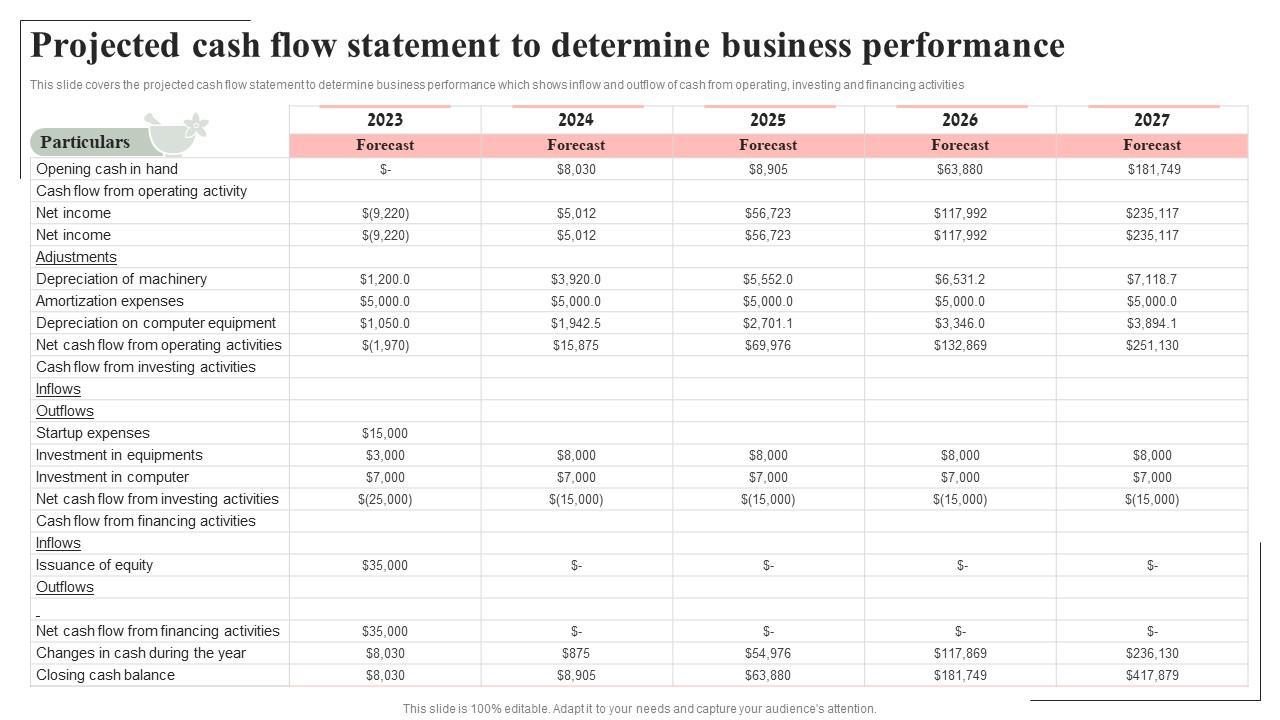
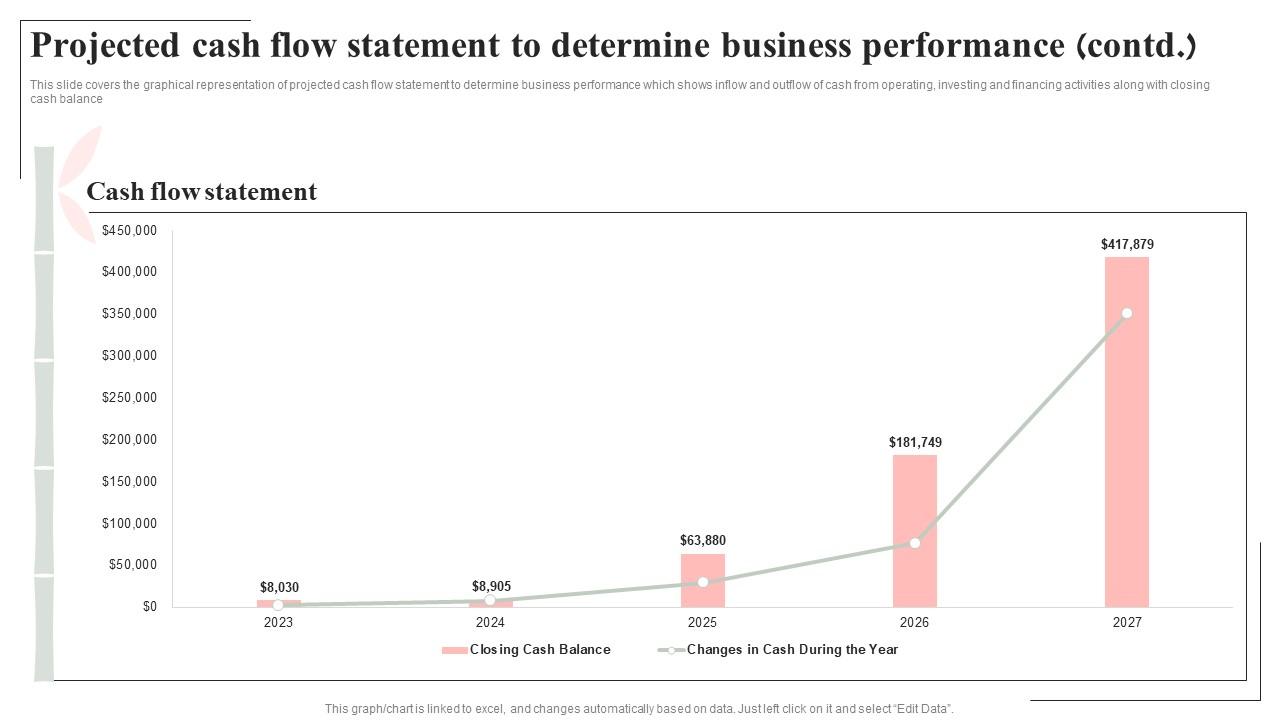
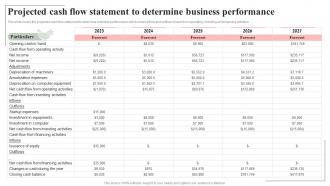
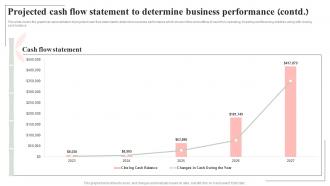
This slide covers the projected cash flow statement to determine business performance which shows inflow and outflow of cash from operating, investing and financing activities.Present the topic in a bit more detail with this Projected Cash Flow Statement To Determine Spa Salon Business Plan BP SS. Use it as a tool for discussion and navigation on Amortization Expenses, Investing Activities, Operating Activity. This template is free to edit as deemed fit for your organization. Therefore download it now.

FAQs for Projected Cash Flow Statement To Determine Spa Salon Business

So basically, a projected cash flow statement predicts when money's coming in and going out - usually month by month for the next year. Think of it as your financial heads up. You definitely want one because profitable businesses still fail when they run out of cash at bad times (happens more than you'd think). It'll show you trouble spots before they hit, help you plan big expenses, and figure out if you need a loan or whatever. Just start by writing down your expected income and expenses, then spread them across months. Honestly saved my butt a few times!

So basically, historical cash flow shows what actually happened - like real money that came in and went out based on your books. Projected cash flow is you trying to predict the future, which honestly can be pretty tricky. Historical stuff is facts. Can't argue with what already happened. But projections? Those are educated guesses about future sales, expenses, when people will actually pay you (always takes longer than you think). They're really helpful for spotting potential cash problems before they hit. You can see if you'll need a loan or line of credit months ahead of time instead of scrambling last minute.

So you'll need three main sections: operating activities (sales, supplier payments, payroll), investing stuff (buying equipment, selling assets), and financing (loans, equity, debt payments). Operating is honestly a pain because predicting when customers actually pay is basically guessing. Don't forget your starting cash balance - then calculate ending balances for each period. I'd do monthly for year one, then quarterly after that. Way easier to spot cash problems before you're scrambling. Also helps you sleep better at night knowing what's coming.

Look, cash flow forecasting isn't rocket science but most people overthink it. Split everything into three categories: daily operations, big purchases/investments, and financing stuff like loans. Your historical data is gold - seriously, past patterns tell you way more than wild guessing. Factor in the obvious changes coming up: new clients, seasonal dips, that equipment you need to buy. Here's the thing though - be conservative with money coming in and honest about when people actually pay (spoiler: always later than promised). I update mine monthly because stuff changes constantly. Oh, and build a few different scenarios so you're not screwed when things go sideways.

Dude, seasonality will totally mess up your cash flow if you ignore it. Most people just divide their yearly numbers by 12 - huge mistake. Look at your last 2-3 years of monthly data instead. You'll spot the patterns pretty quick. Like retail goes crazy in December, construction dies in winter, that kind of stuff. I actually see this screwing people over all the time because they don't think about it upfront. Once you find those trends, build them into your monthly forecasts. Way more accurate than pretending every month is the same.

Yeah, operational changes mess with cash flow big time. Expanding inventory or hiring people? You're bleeding cash before any money comes back in. Scaling down does the reverse - saves money now but might hurt future earnings. Honestly, cash flow forecasting can feel like guessing sometimes, especially when you're making big moves. Update your projections right when you make changes, not months later. Oh, and build different scenarios into your model - like best case, worst case, realistic case. That way you can see how each decision hits your cash position before you commit to anything.

Look at your past collection patterns first - like how 30% of customers pay right away, 50% the next month, whatever your normal is. Apply those percentages to your sales projections. Aging analysis helps too since different customer types pay differently. Some industries are just painfully slow, honestly. The percentage-of-sales method works if you want something simpler - just use a fixed percentage of total sales. I'd mix historical data with what's happening now economically. Maybe check in with a few key customers about their payment timing. Track how close your estimates actually are so you can get better at this over time.

Okay so here's what I do - figure out when those weird expenses actually happen and put them in the right months. Like your insurance bill hits in March? Put it in March, not spread across twelve months. Same with quarterly taxes or when you'll need new equipment. I learned this the hard way when I got blindsided by a massive software renewal. Keep a list somewhere and check it every few months. Way better than pretending everything's the same every month - that's just fantasy budgeting. You'll actually see when cash gets tight instead of being surprised.

Yeah, economic conditions totally mess with cash flow predictions. Strong economy means customers pay faster and you're selling more stuff - cash flows better. Recession hits? Good luck collecting on time, sales drop, and banks get stingy with loans. I swear this is what gives CFOs gray hair. You gotta run different scenarios when you're forecasting - like what happens if things go great, what if they tank, and the realistic middle ground. Otherwise you're basically flying blind when the economy shifts. Trust me, having backup plans saves you from panic mode later.

Cash flow projections are seriously underrated - they'll show you potential money problems like 3-4 months out. I always run three versions: best case, worst case, and what'll probably actually happen. Super helpful for timing big purchases or figuring out if you can finally hire someone. Update yours monthly (I know, kinda boring but worth it). They're not perfect obviously, but way better than flying blind. Plus you can plan debt timing and investment decisions instead of just winging it. My old boss called them "financial weather forecasts" which... okay that's cheesy but accurate.

Honestly, the two big ones I always see are being way too optimistic about when you'll actually get paid (spoiler: it's never when they promise), and completely blanking on seasonal stuff. Document your assumptions somewhere - trust me on this one. Quarterly taxes will sneak up and bite you if you're not careful. I learned that the hard way! Start conservative with everything. Seriously. It's so much easier to deal with extra cash than scrambling when you're short. Oh, and run some worst-case scenarios too - helps you sleep better at night.

Monthly updates are your sweet spot, but quarterly is the absolute minimum if you want these things to actually help. Cash flow shifts so fast - seasonal stuff, new deals, random expenses that pop up. Weekly updates make sense when things get crazy or you're tight on cash. Honestly, three months without checking is way too long to go blind. Start monthly and see how off your projections get compared to what actually happens. If they're pretty close, maybe you can relax the schedule. If not, tighten it up.

Honestly, Excel's probably your best bet to start - most people already know it and it's pretty flexible. QuickBooks and Xero both have cash flow tools built right in, which is nice since they pull from your actual accounting data. If you want something fancier, Float and Pulse are made specifically for this stuff and handle different scenarios really well. I've also seen people do solid work just using Google Sheets, though that might be overkill depending on what you need. LivePlan's another option too. Just start with whatever you've got access to and see how it goes.

Honestly, cash flow projections are a game changer for timing investments. Map out your next 6-12 months first - when's money actually hitting your account vs going out? That way you won't buy equipment in March only to realize you're totally screwed come June. I learned this the hard way, trust me. They're also great for catching seasonal dips before they bite you. Like, if you always get slow in summer, maybe don't expand right before that hits. The "oh shit we're broke" panic is so avoidable if you just look ahead a bit.

Look, sensitivity analysis is a lifesaver because it shows how tweaks to your assumptions mess with your cash flow projections. Test different scenarios - what if sales tank by 15% or customers drag their feet on payments? Basically you're stress-testing everything so you don't get blindsided later. Three things to focus on: sales volume, when money actually hits your account, and timing of big expenses. I learned this the hard way when a client delayed payment and nearly killed my cash position. It helps you spot which variables really move the needle and prep backup plans.

Ratings and Reviews

90% of 100
Review Form
Write a review
Most Relevant Reviews
  1. 100%

    by Charley Bailey

    A fantastic collection of templates. I'll likely use this as my go-to resource for future templates and support.
  2. 80%

    by Darell Vargas

    The presentations are very helpful. I am always able to get appropriate templates for the different topics related to my profession.

2 Item(s)

per page: