


Property And Casualty Insurance Company Profile Complete Deck
Property and Casualty Insurance Company Profile is a professional introduction to the organization, allowing diverse groups of people to get an idea about the companys products and services along with strengths and business operations. It also summarizes all the relevant information about insurance companies for existing and potential clients. The profile covers an executive summary with company details, brand value, market share, and key statistics. Moreover, it presents specialty and organization information in the form of a company overview, along with mission and vision, core values, products offered, life insurance services, health insurance services, Insurance networks, underwriting process, and property and casualty insurance. Furthermore, it showcases the business model, company history, international presence, management team, organization chart, workforce diversity, ownership structure, company clients, and client reviews. Additionally, the profile captures the financial details of the company by highlighting revenue, sources of revenue, business expense, combined split ratio, underwriting profit, operating profit, and net profit. Finally, it compares insurance firms with global competitors based on market share, revenue, and policy growth rate. It further shows SWOT analysis, expansion strategies, future plan, CSR activities and spend, and case study. Download our 100 percent editable and customizable deck to know more in detail.
Property and Casualty Insurance Company Profile is a professional introduction to the organization, allowing diverse groups..




















-

- Google Slides is a new FREE Presentation software from Google.
- All our content is 100% compatible with Google Slides.
- Just download our designs, and upload them to Google Slides and they will work automatically.
- Amaze your audience with SlideTeam and Google Slides.
-

Want Changes to This PPT Slide? Check out our Presentation Design Services
-

- WideScreen Aspect ratio is becoming a very popular format. When you download this product, the downloaded ZIP will contain this product in both standard and widescreen format.
-

- Some older products that we have may only be in standard format, but they can easily be converted to widescreen.
- To do this, please open the SlideTeam product in Powerpoint, and go to
- Design ( On the top bar) -> Page Setup -> and select "On-screen Show (16:9)” in the drop down for "Slides Sized for".
- The slide or theme will change to widescreen, and all graphics will adjust automatically. You can similarly convert our content to any other desired screen aspect ratio.
Compatible With Google Slides

Get This In WideScreen
You must be logged in to download this presentation.


Do you want to remove this product from your favourites?
PowerPoint presentation slides
This complete deck covers various topics and highlights important concepts. It has PPT slides which cater to your business needs. This complete deck presentation emphasizes Property And Casualty Insurance Company Profile Complete Deck and has templates with professional background images and relevant content. This deck consists of total of fourty four slides. Our designers have created customizable templates, keeping your convenience in mind. You can edit the color, text and font size with ease. Not just this, you can also add or delete the content if needed. Get access to this fully editable complete presentation by clicking the download button below.

People who downloaded this PowerPoint presentation also viewed the following :
Content of this Powerpoint Presentation
Slide 1: This slide displays the title Property and Casualty Insurance Company Profile.
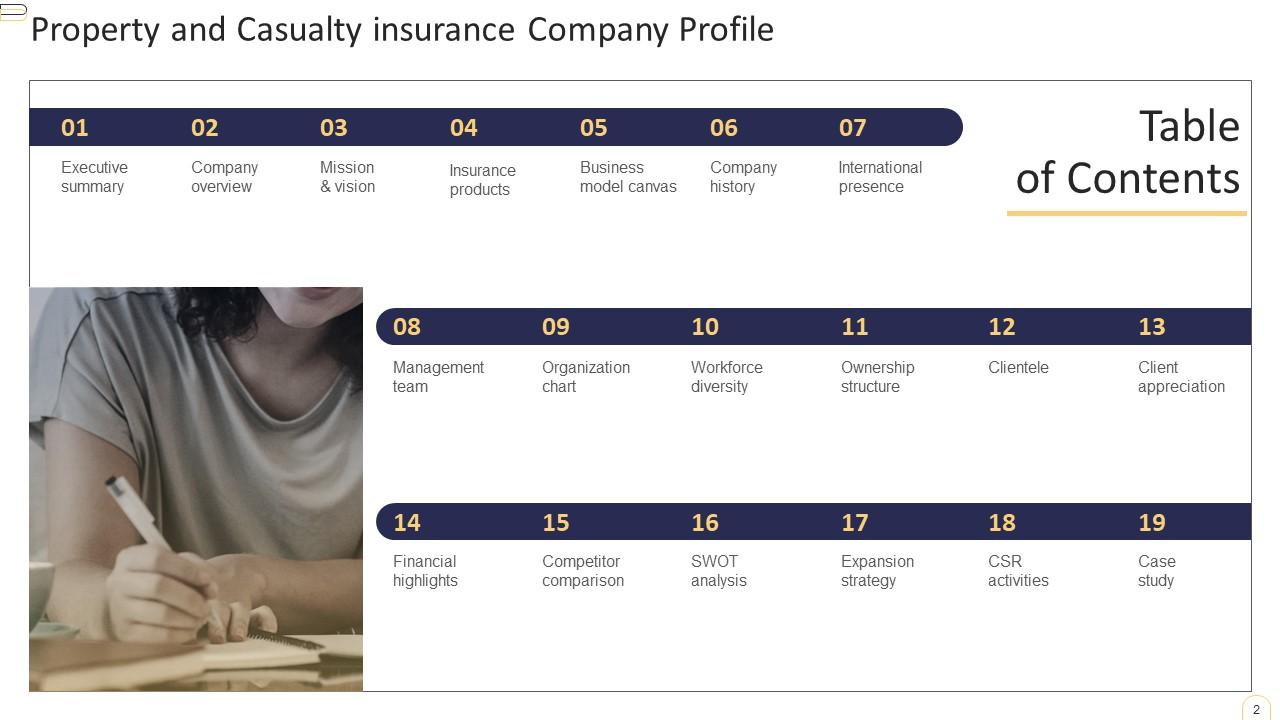
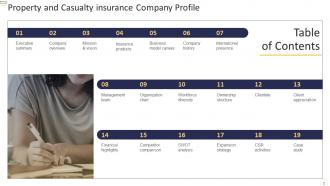
Slide 2: This slide exhibit table of content.
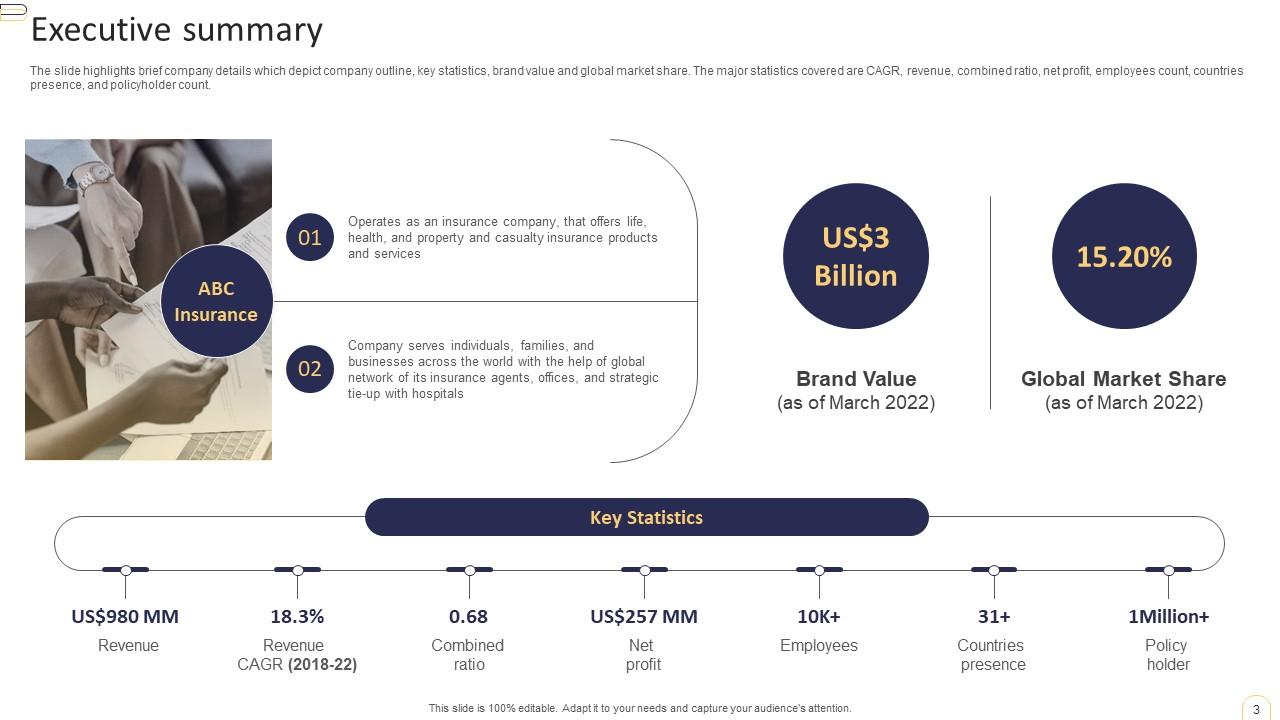
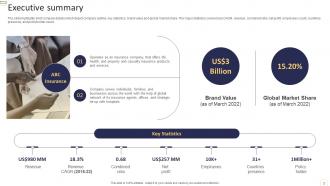
Slide 3: The slide highlights brief company details which depict company outline, key statistics, brand value and global market share.
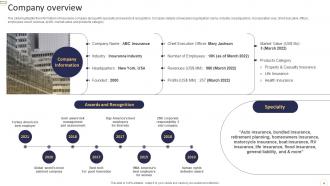
Slide 4: The slide highlights the information of insurance company along with specialty and awards & recognition.
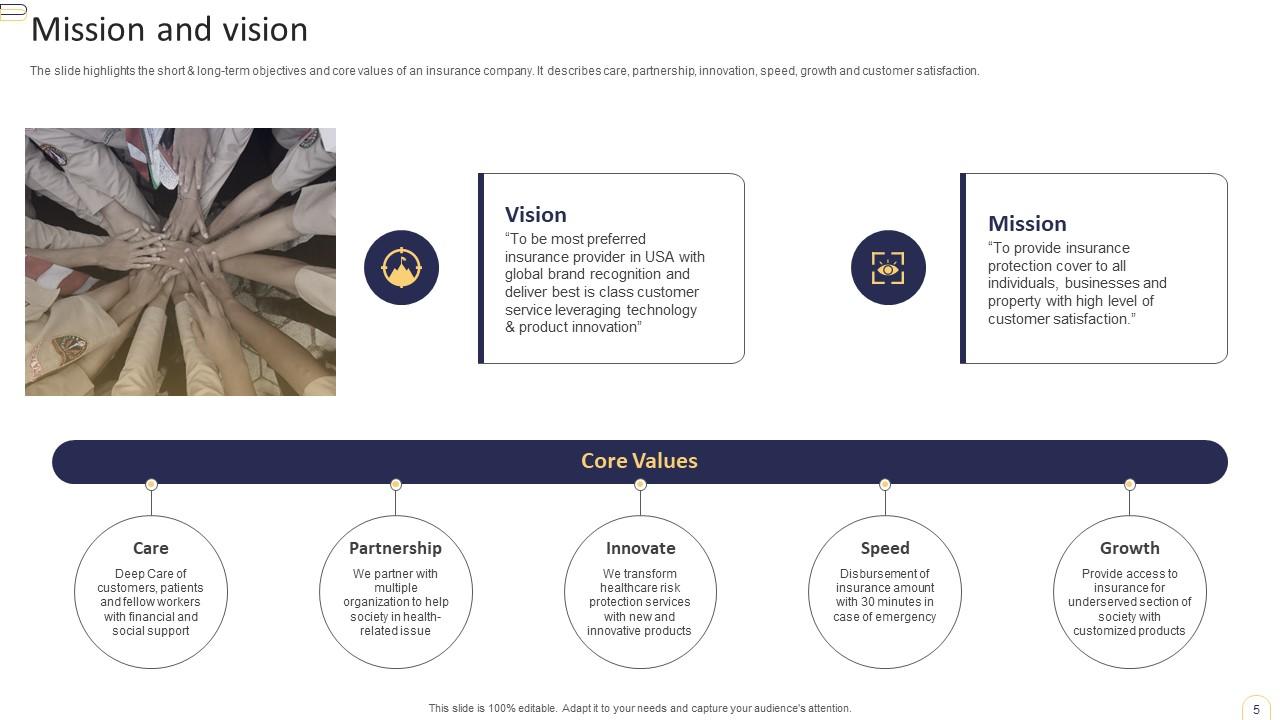
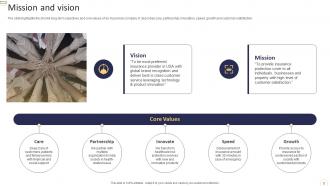
Slide 5: The slide highlights the short & long-term objectives and core values of an insurance company.
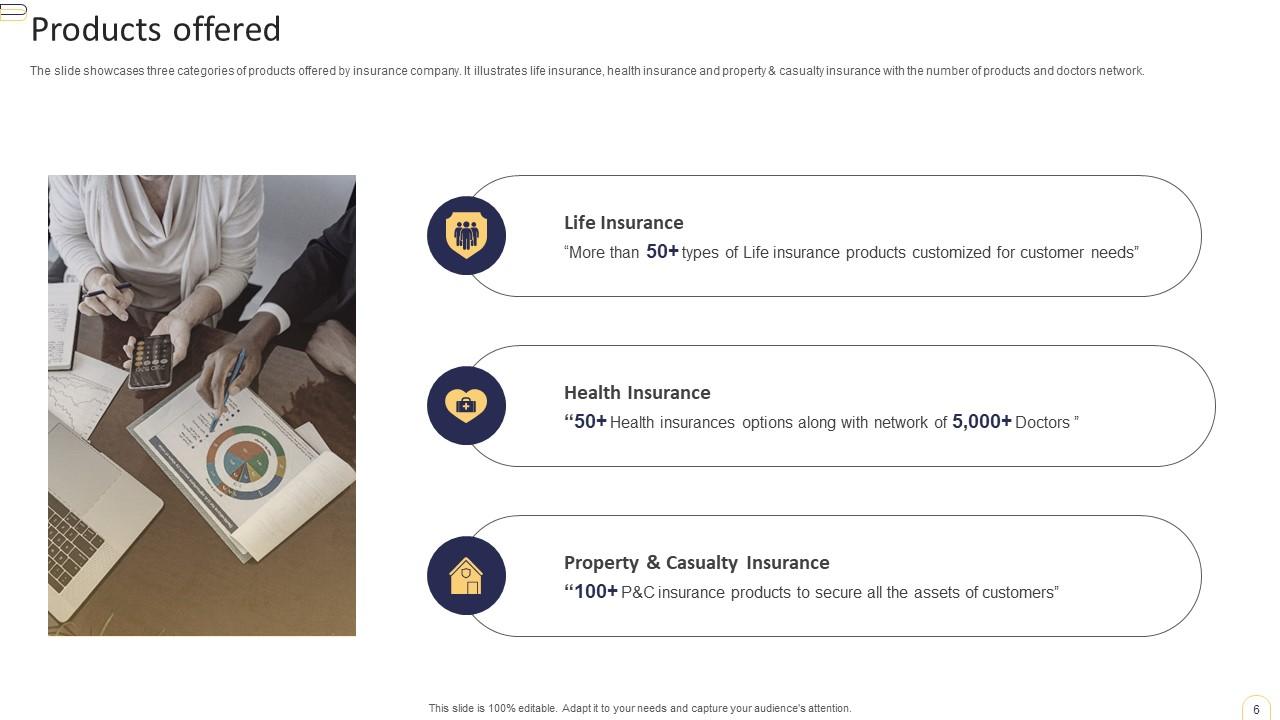
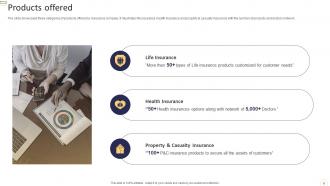
Slide 6: The slide showcases three categories of products offered by insurance company.
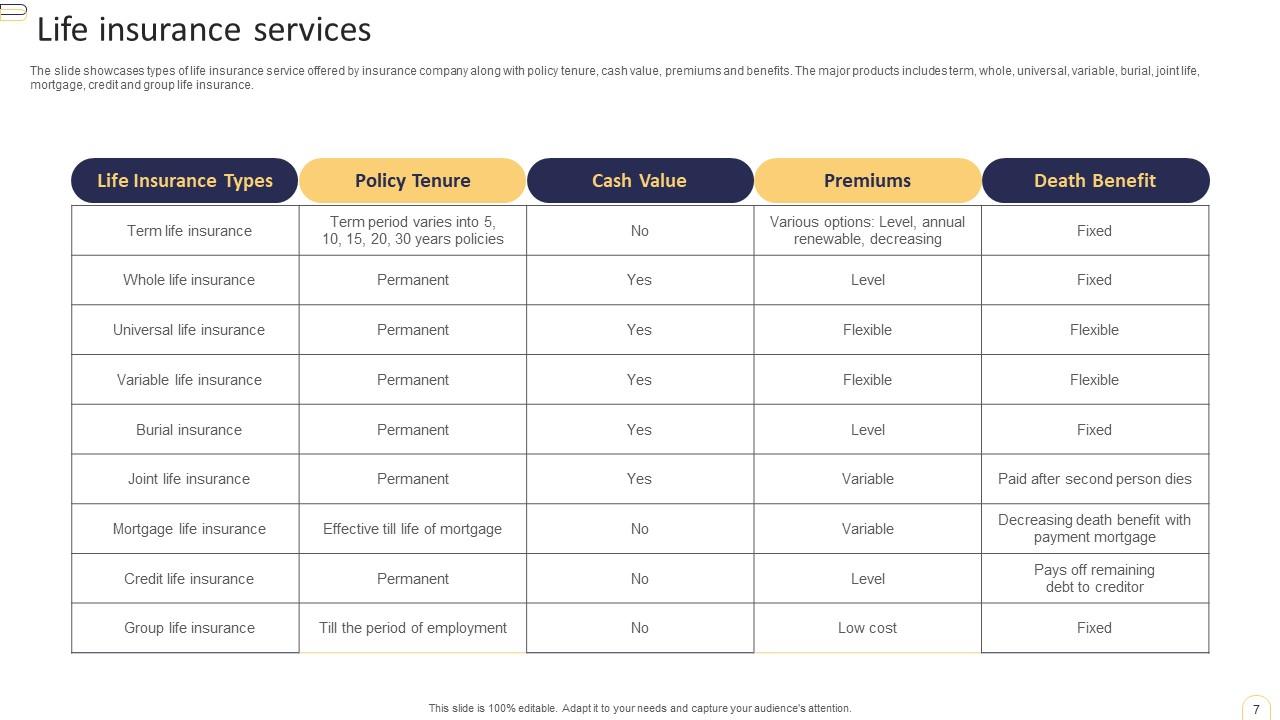
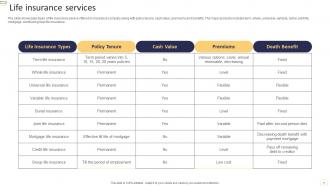
Slide 7: The slide showcases types of life insurance service offered by insurance company.
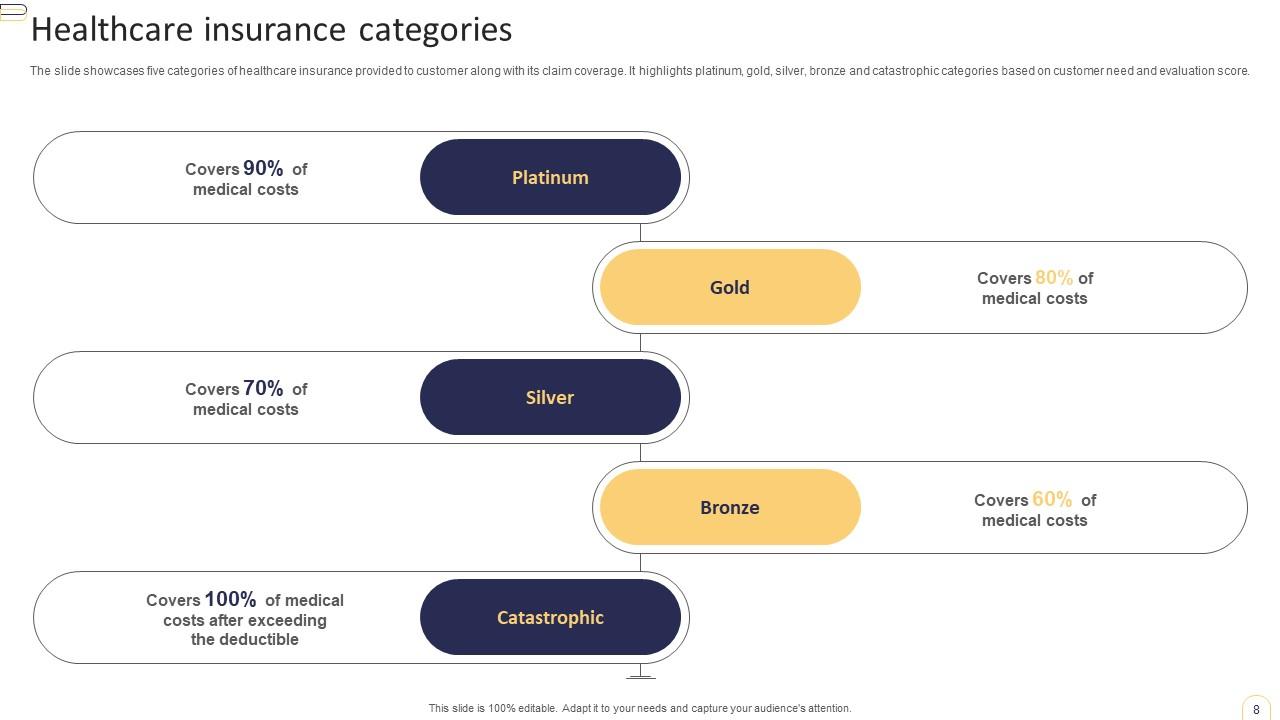
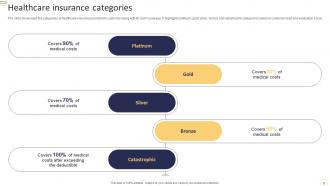
Slide 8: The slide showcases five categories of healthcare insurance provided to customer along with its claim coverage.
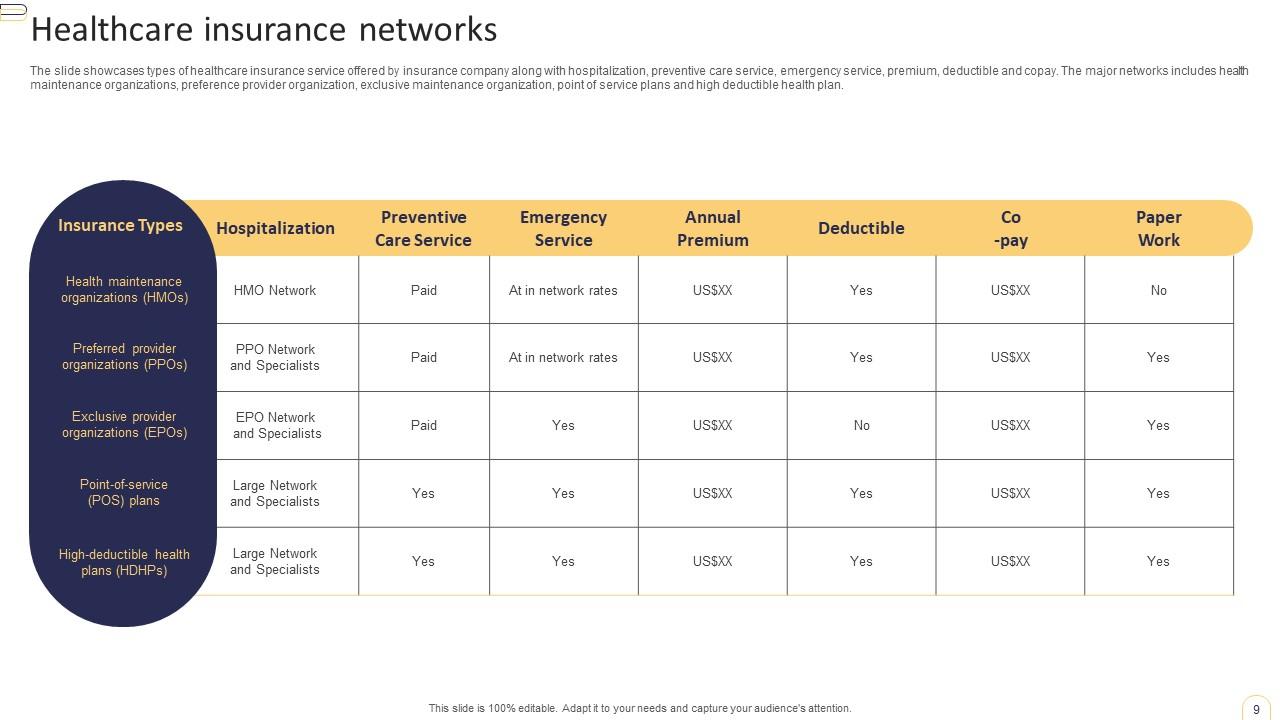
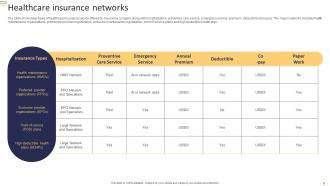
Slide 9: The slide showcases types of healthcare insurance service offered by insurance company.
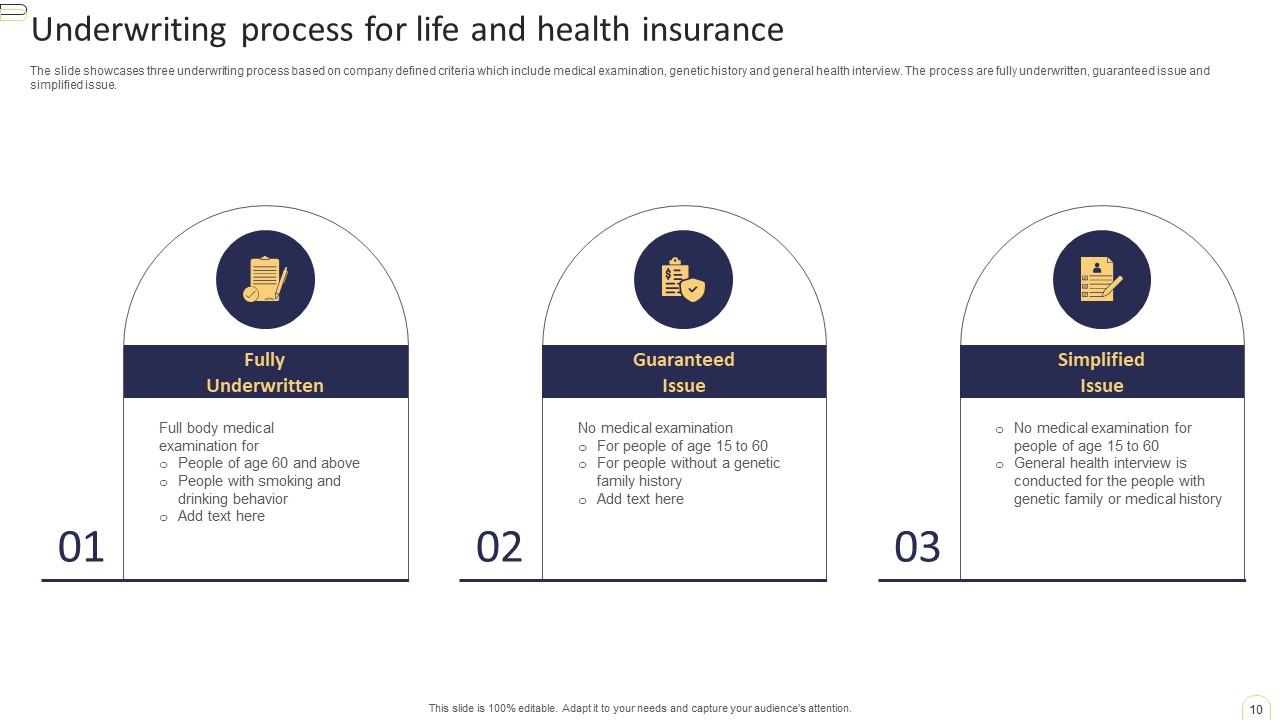
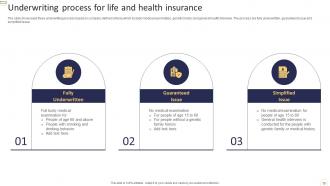
Slide 10: The slide showcases three underwriting process based on company defined criteria.
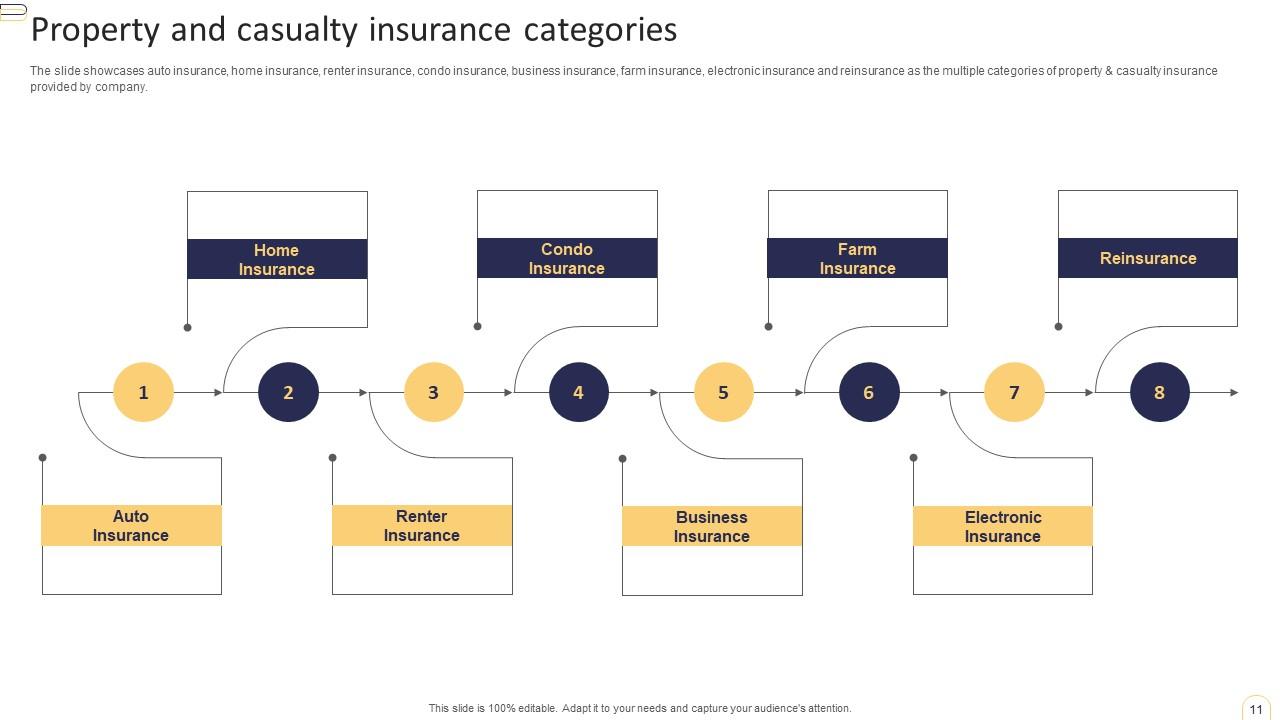
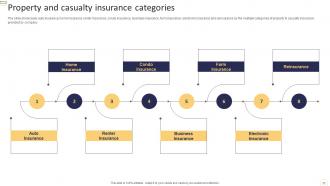
Slide 11: This slide showcase Property and casualty insurance categories.
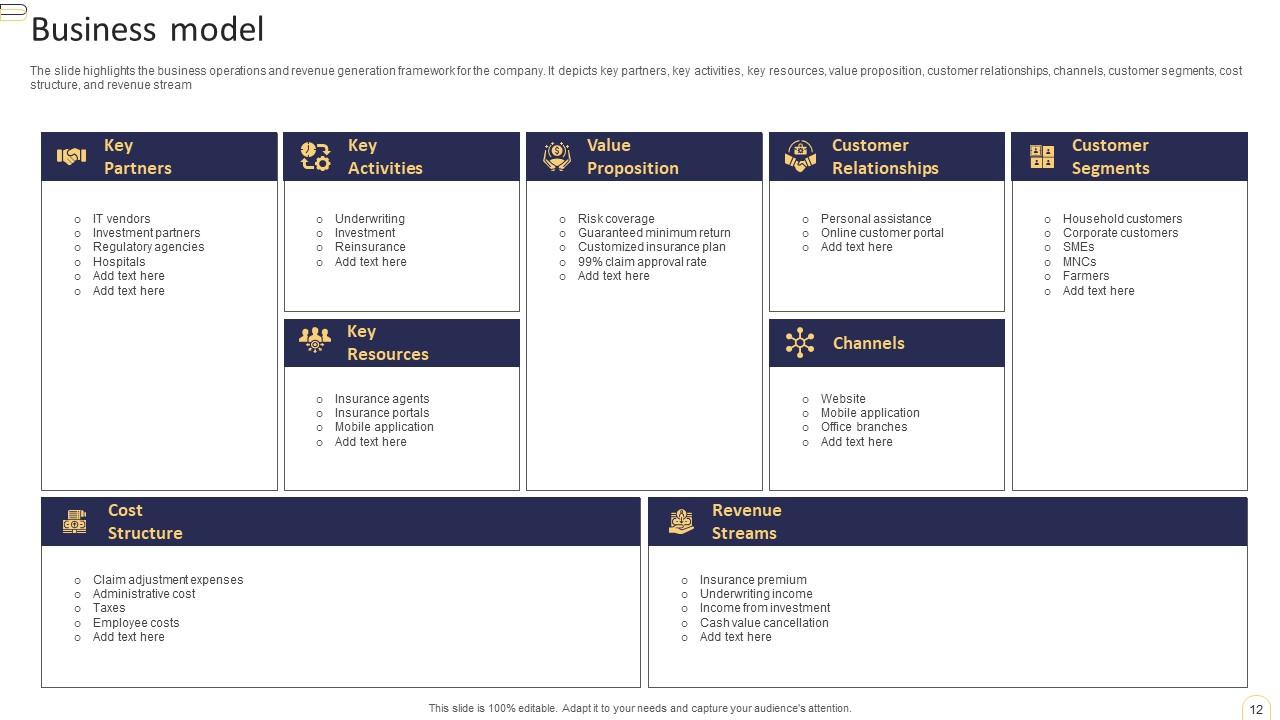
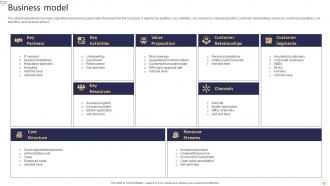
Slide 12: The slide highlights the business operations and revenue generation framework for the company.
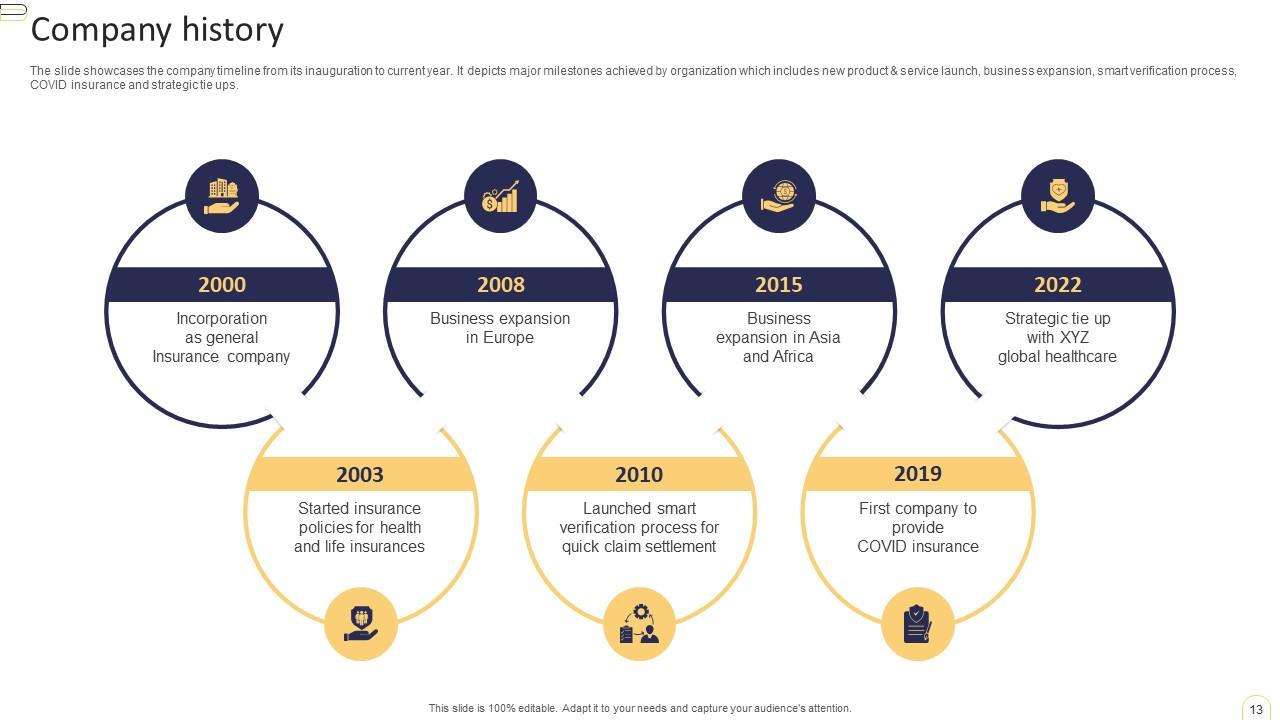
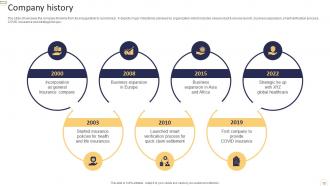
Slide 13: The slide showcases the company timeline from its inauguration to current year.
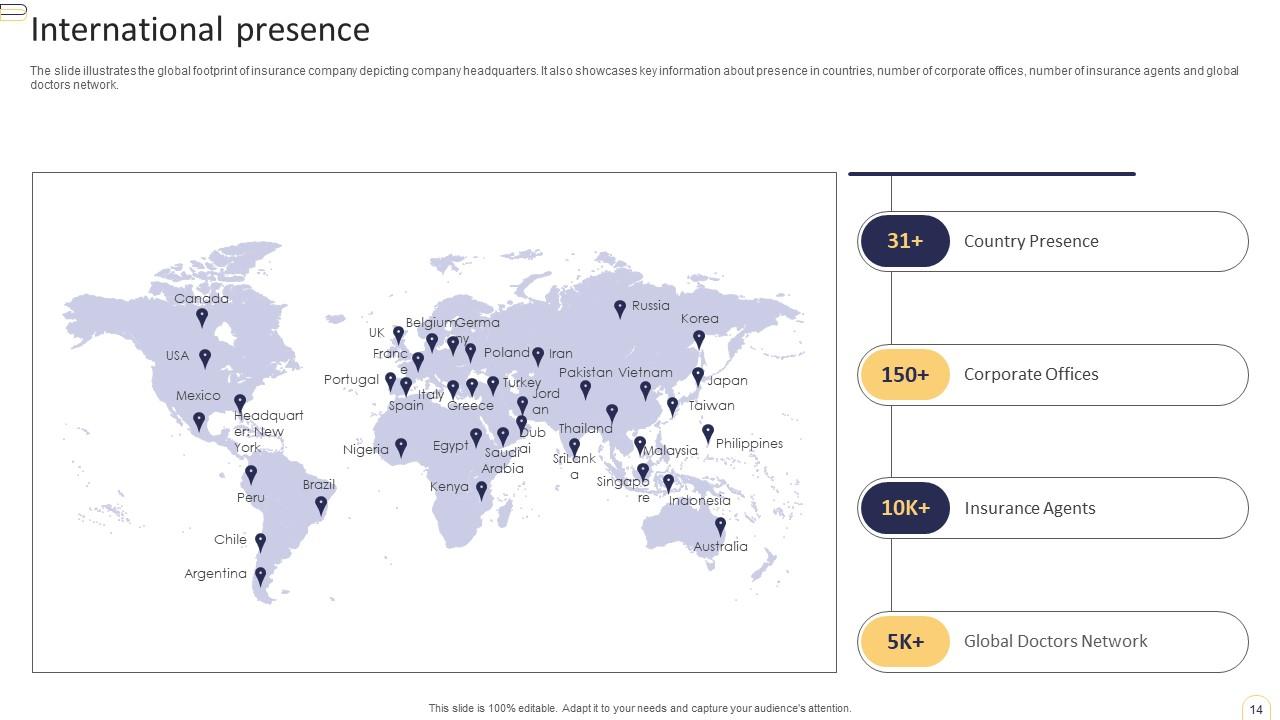
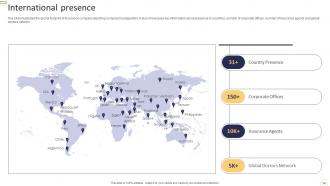
Slide 14: The slide illustrates the global footprint of insurance company depicting company headquarters.
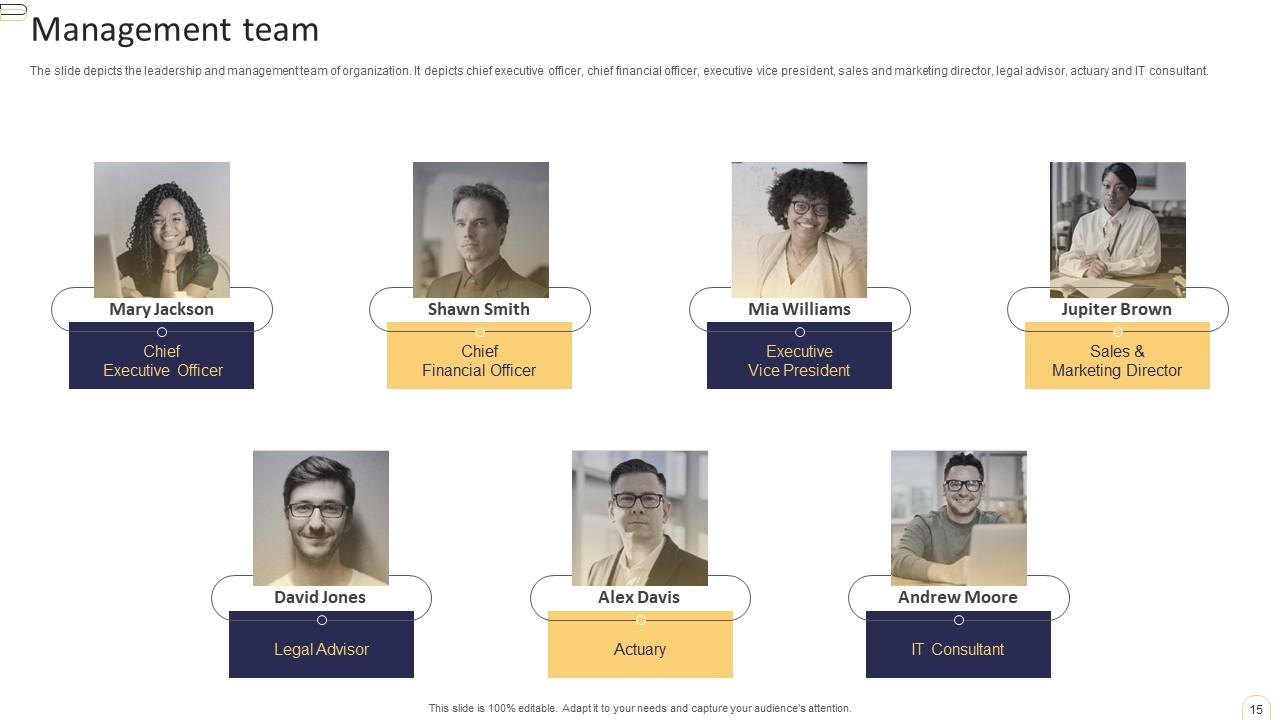
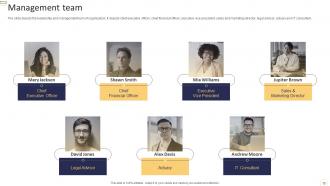
Slide 15: The slide depicts the leadership and management team of organization.
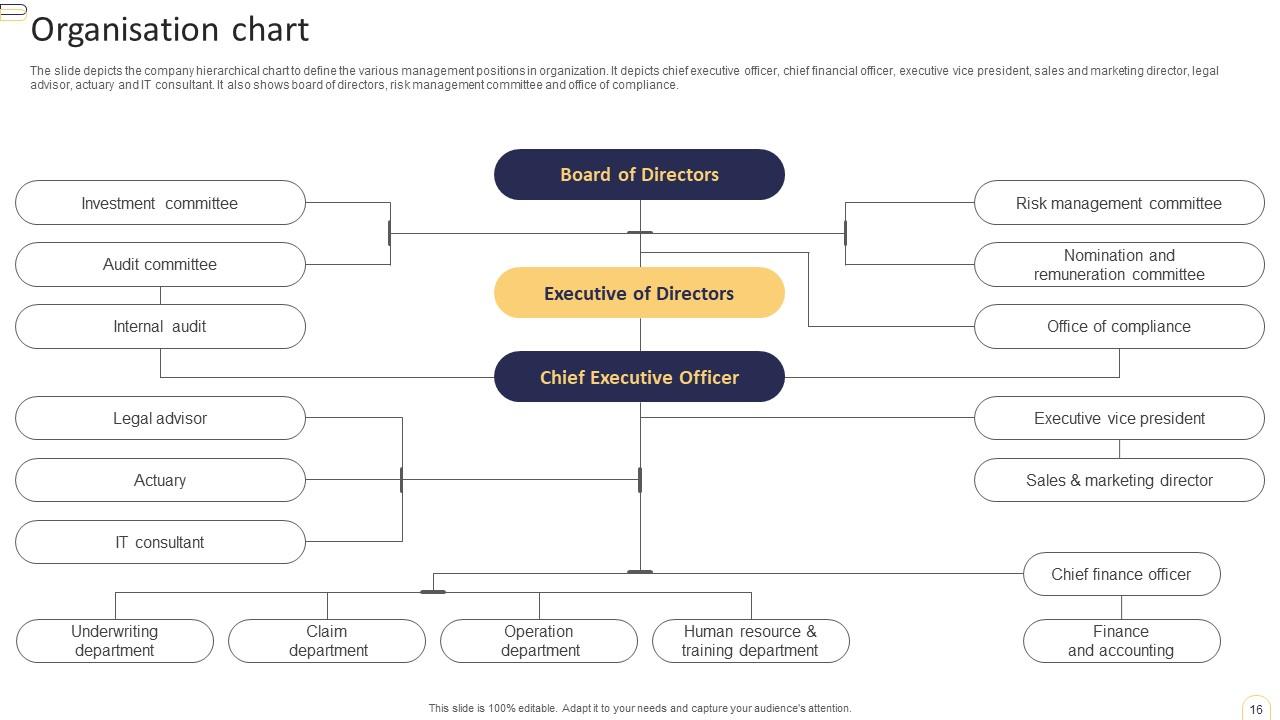
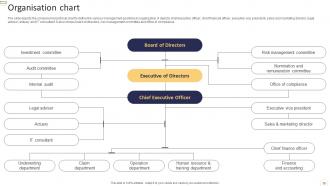
Slide 16: The slide depicts the company hierarchical chart to define the various management positions in organization.
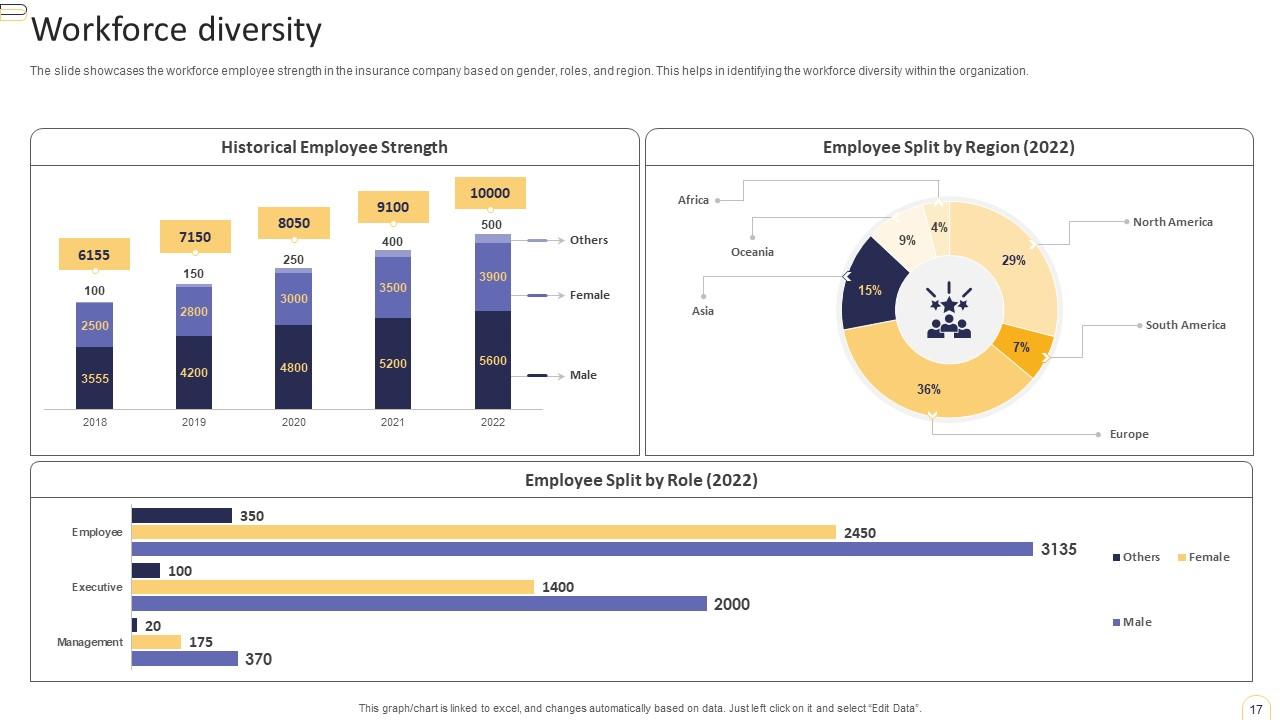
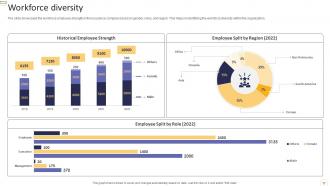
Slide 17: The slide showcases the workforce employee strength in the insurance company based on gender, roles, and region.
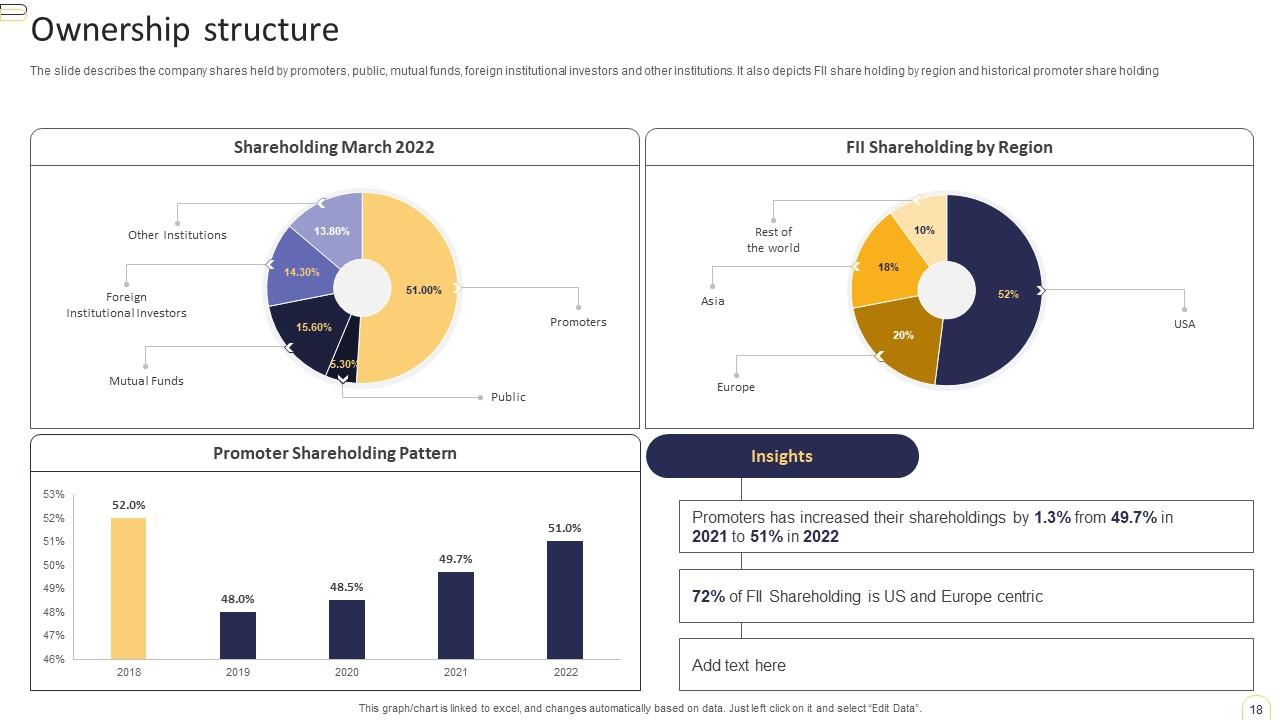
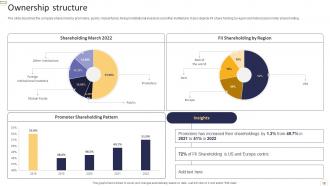
Slide 18: The slide describes the company shares held by promoters, public, mutual funds, foreign institutional investors and other institutions.
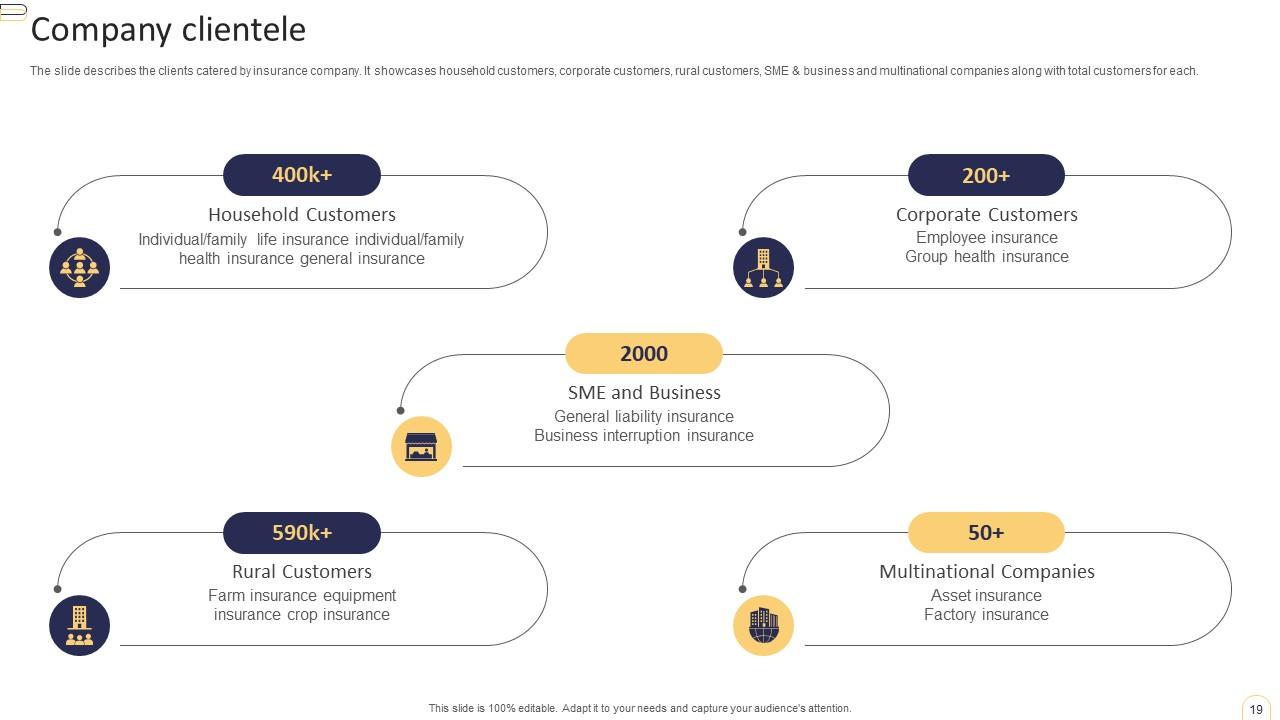
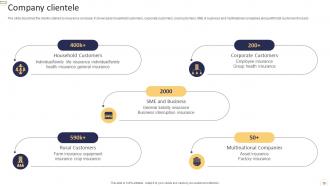
Slide 19: The slide describes the clients catered by insurance company.
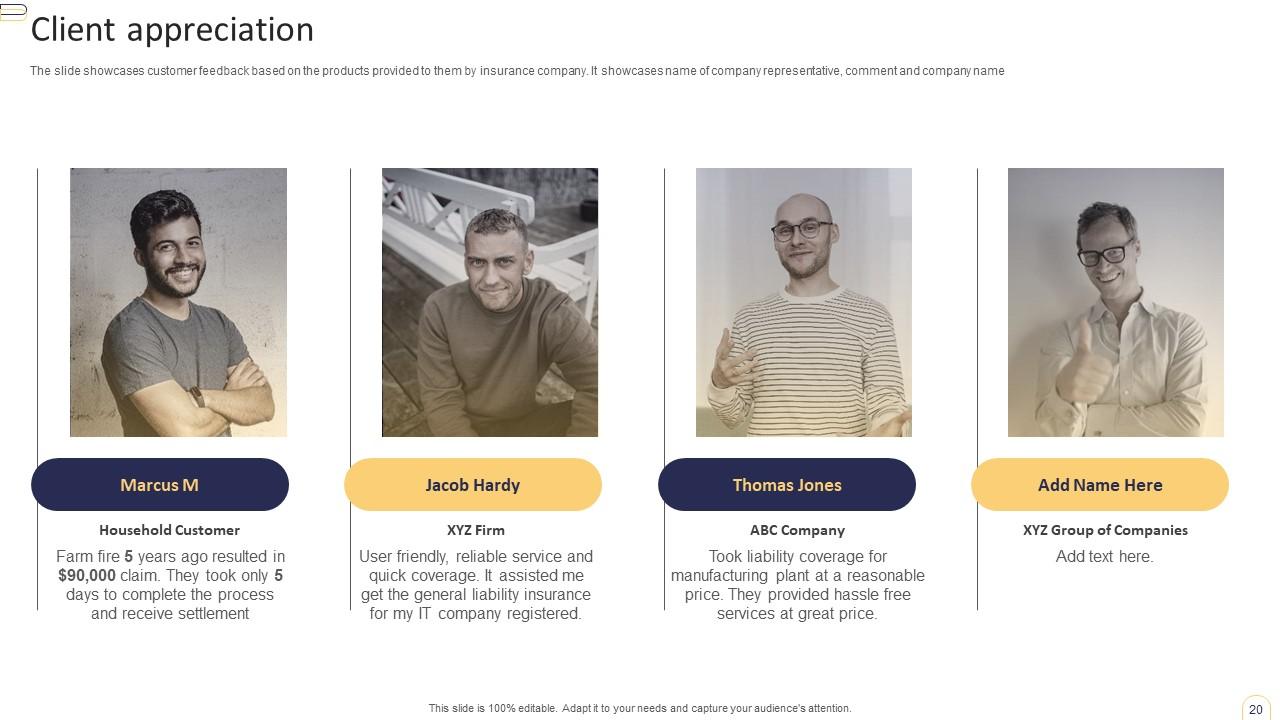
Slide 20: The slide showcases customer feedback based on the products provided to them by insurance company.
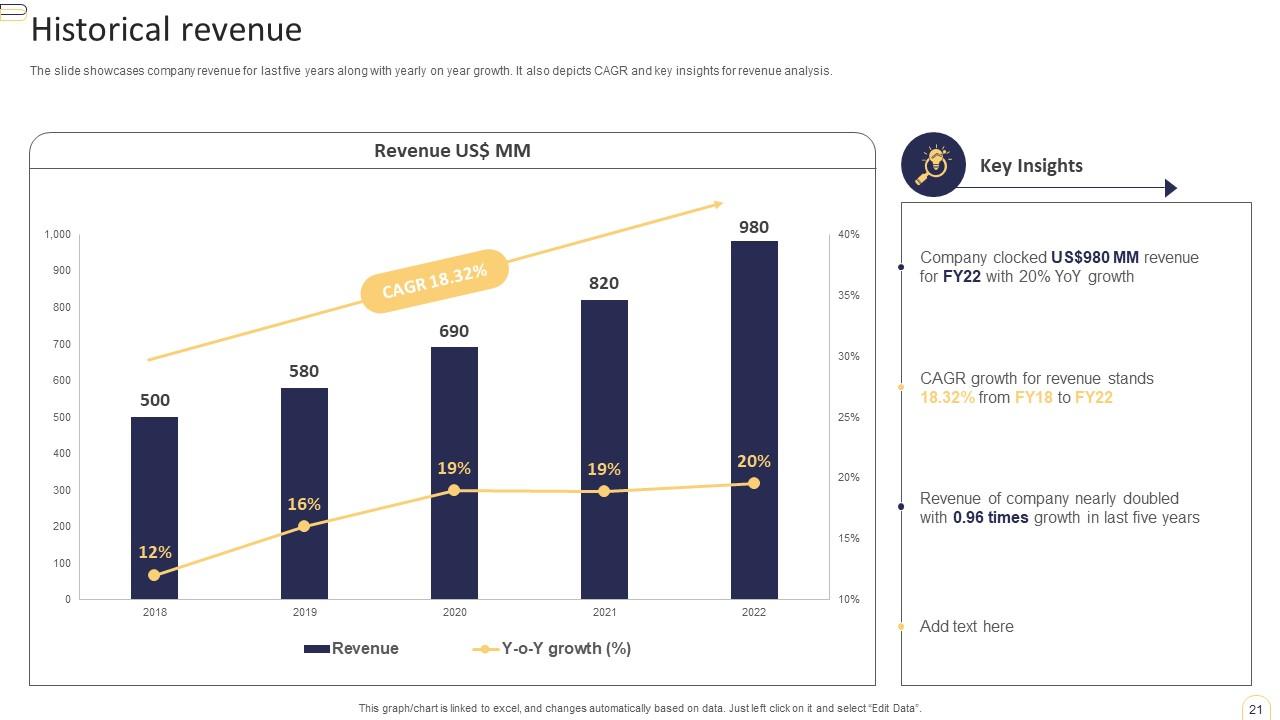
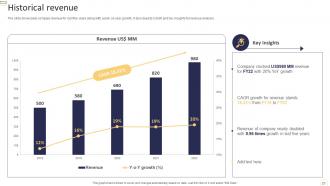
Slide 21: The slide showcases company revenue for last five years along with yearly on year growth.
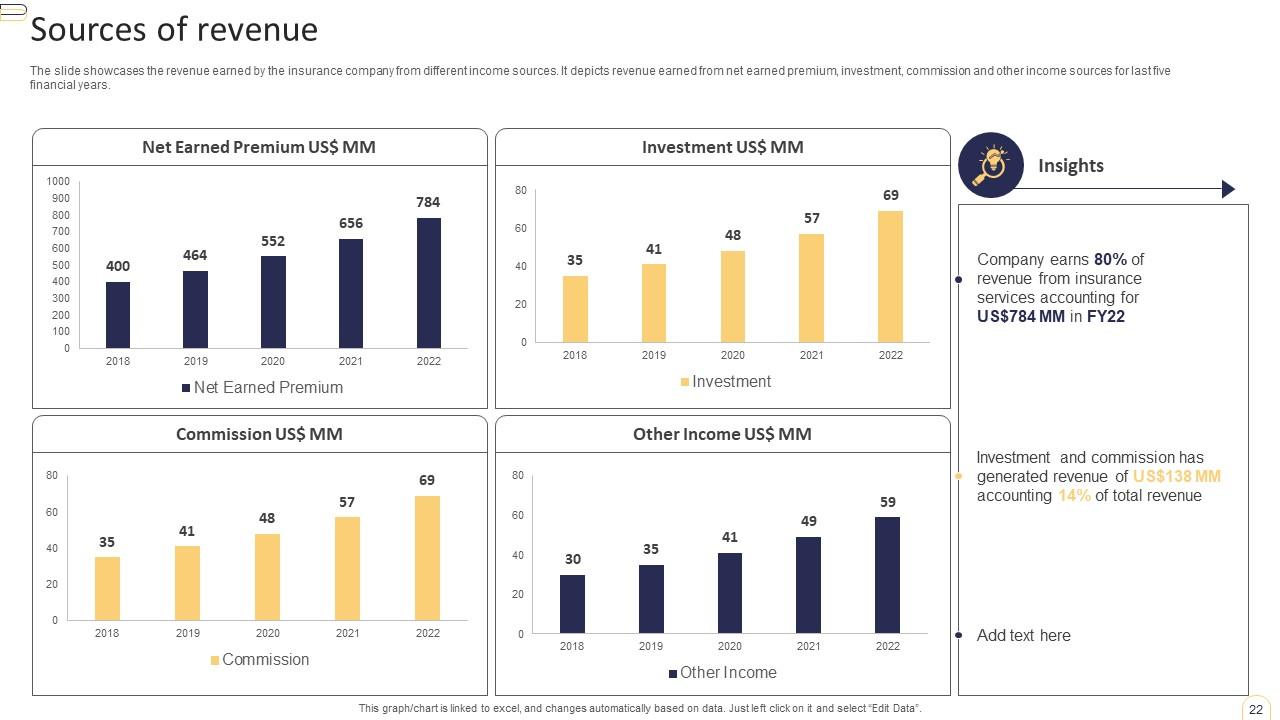
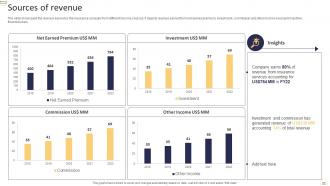
Slide 22: The slide showcases the revenue earned by the insurance company from different income sources.
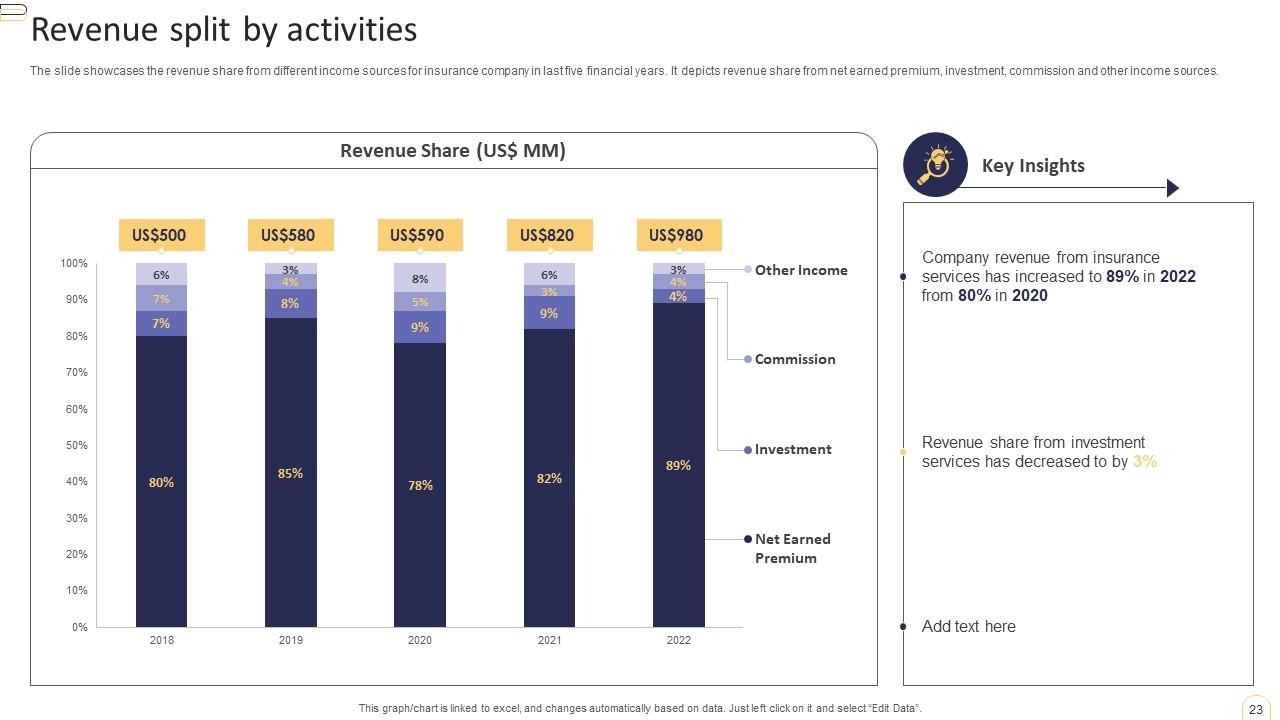
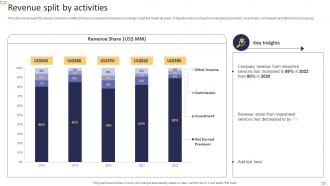
Slide 23: The slide showcases the revenue share from different income sources for insurance company in last five financial years.
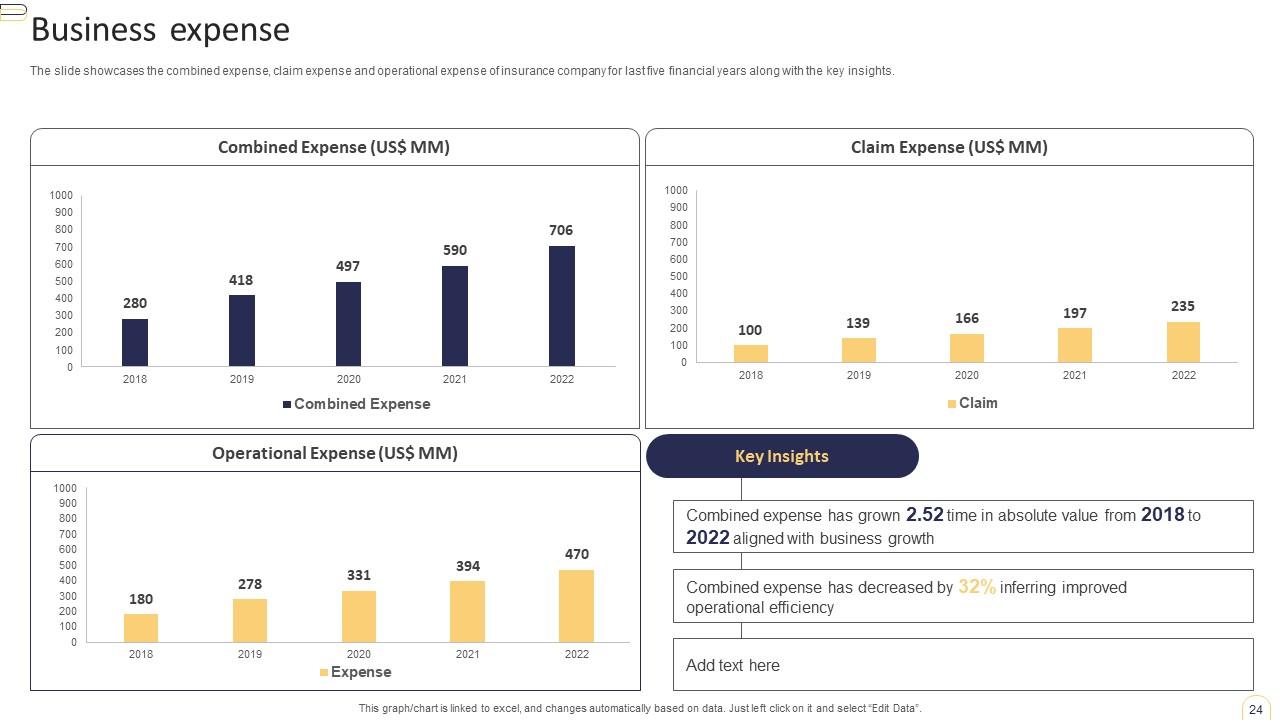
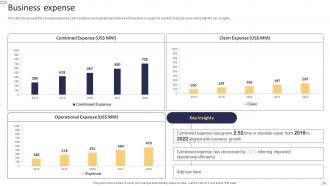
Slide 24: The slide showcases the combined expense, claim expense and operational expense of insurance company for last five financial years along with the key insights.
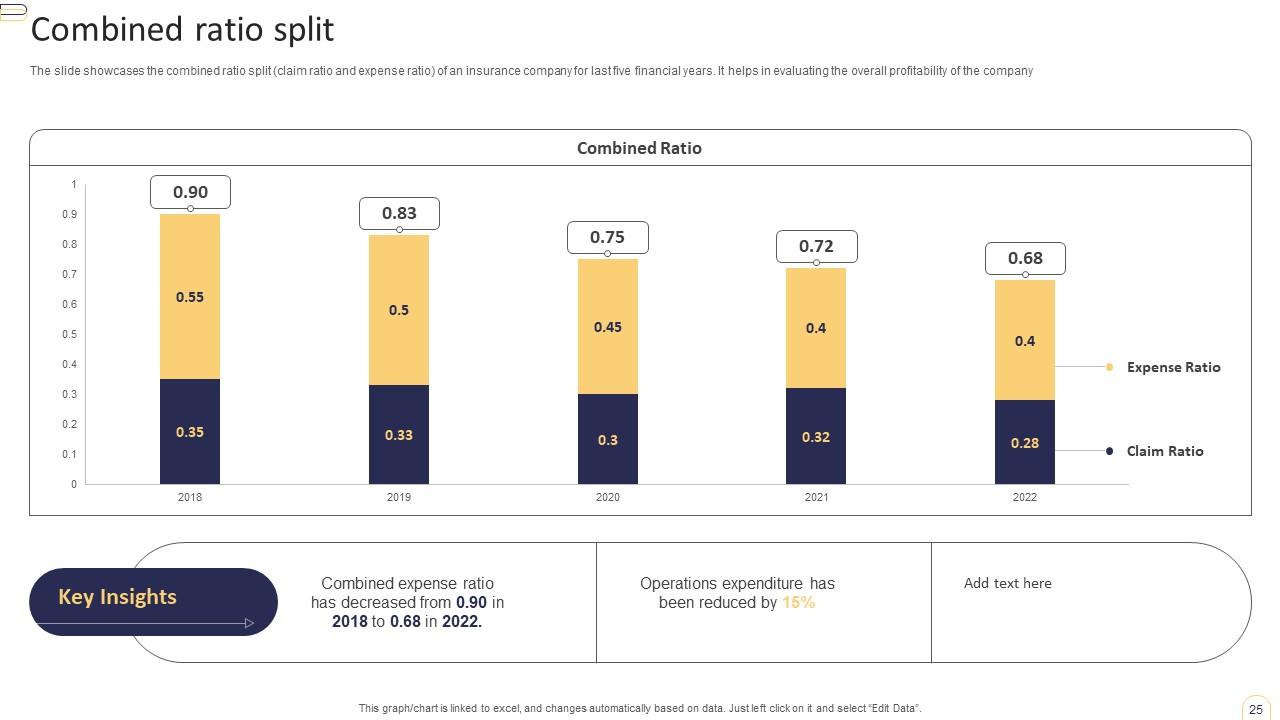
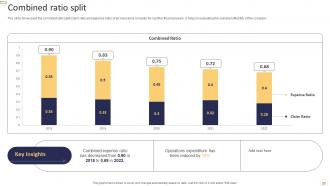
Slide 25: The slide showcases the combined ratio split (claim ratio and expense ratio) of an insurance company for last five financial years.
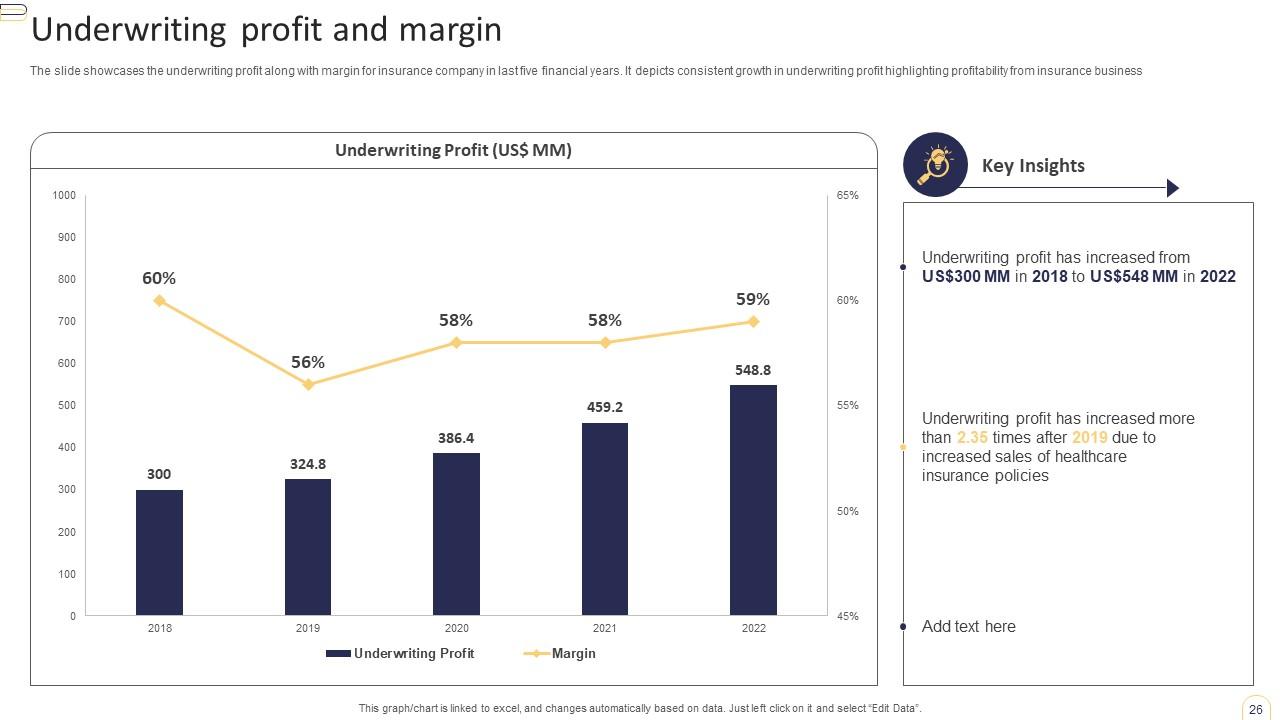
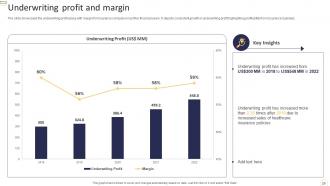
Slide 26: The slide showcases the underwriting profit along with margin for insurance company in last five financial years.
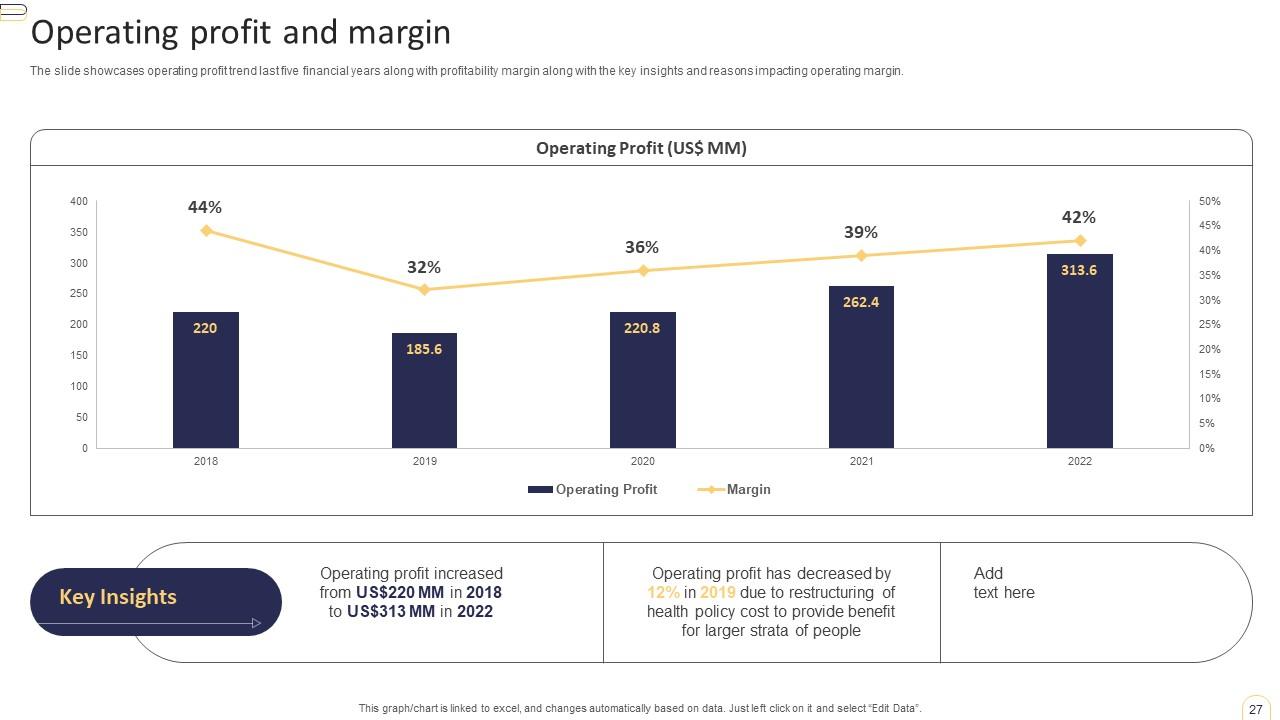
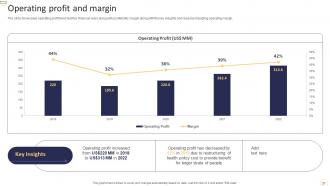
Slide 27: The slide showcases operating profit trend last five financial years along with profitability margin.
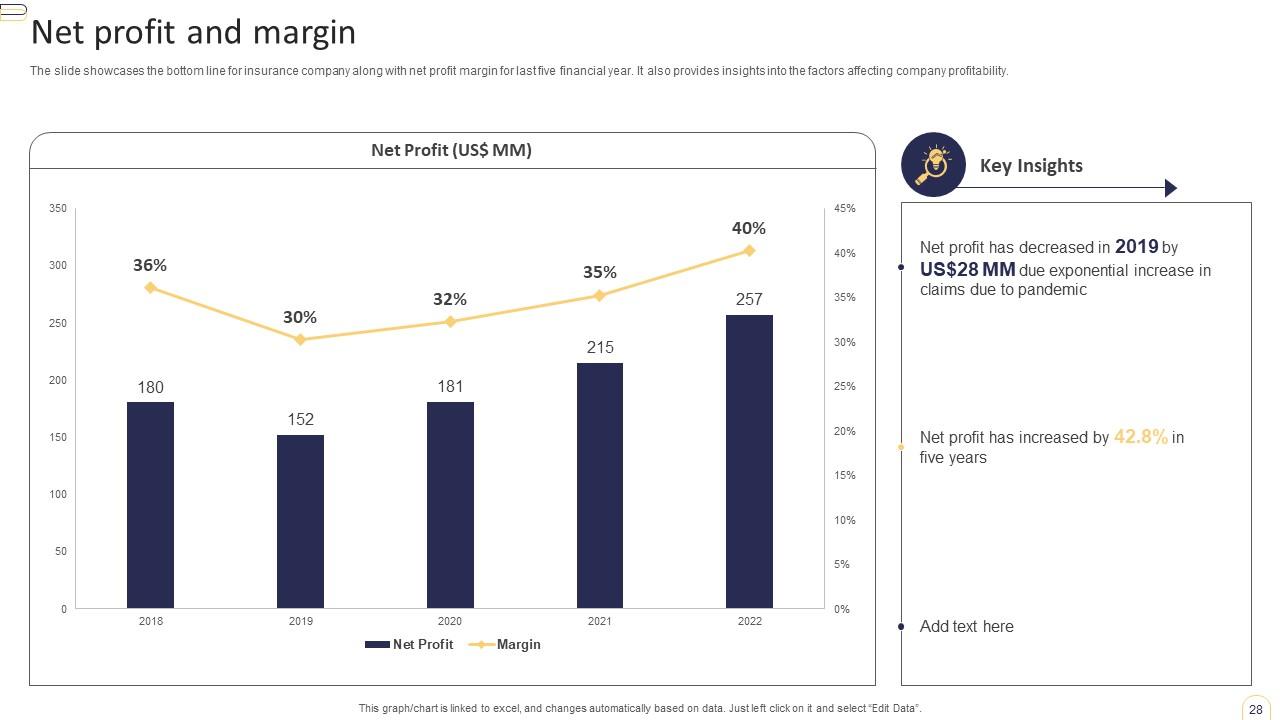
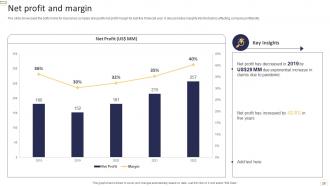
Slide 28: The slide showcases the bottom line for insurance company along with net profit margin for last five financial year.
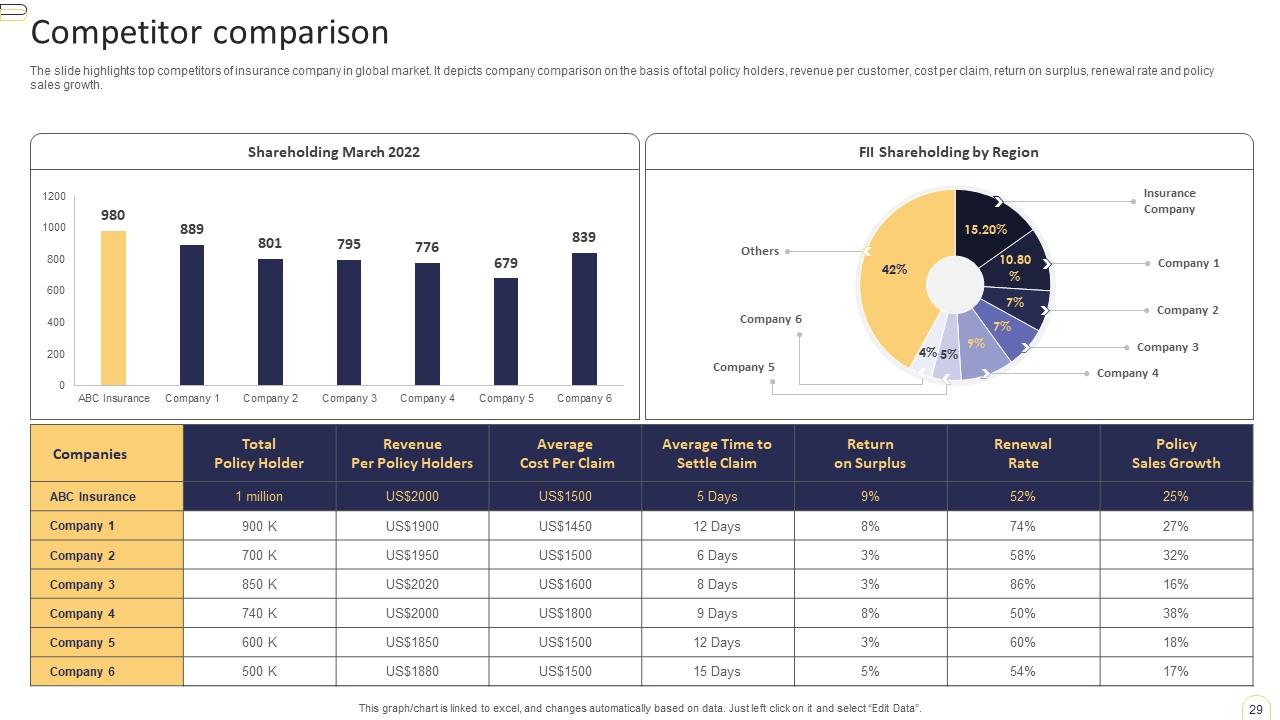
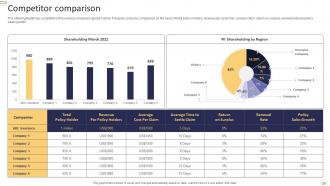
Slide 29: The slide highlights top competitors of insurance company in global market.
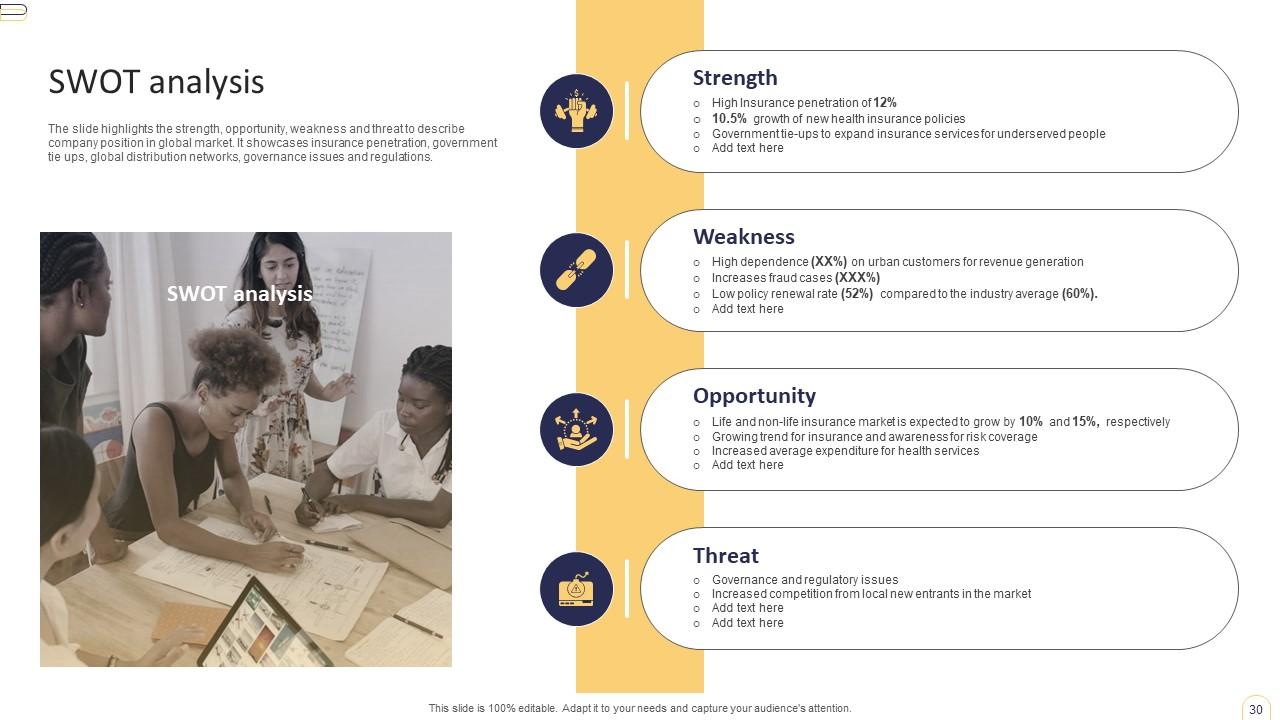
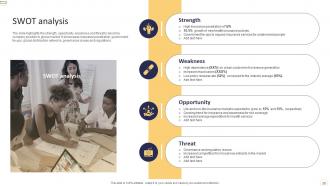
Slide 30: The slide highlights the strength, opportunity, weakness and threat to describe company position in global market.
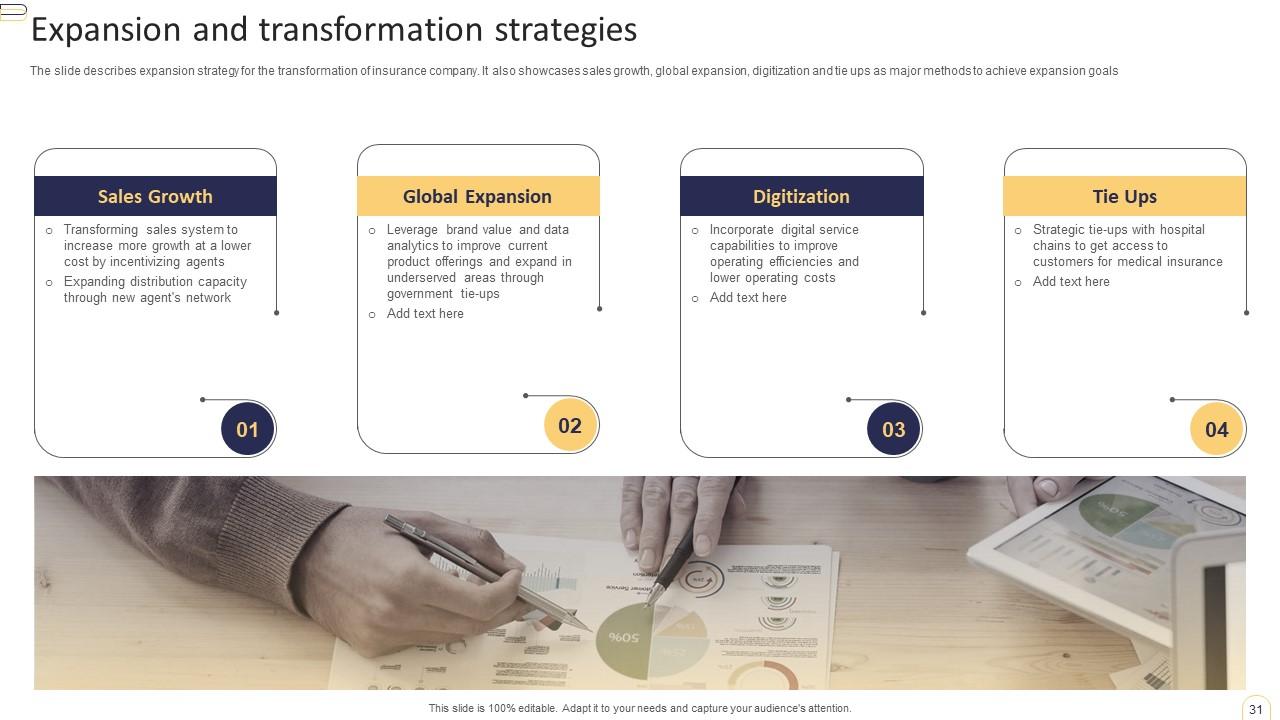
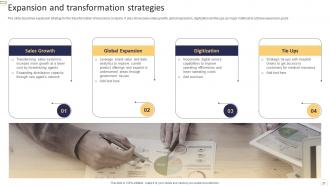
Slide 31: The slide describes expansion strategy for the transformation of insurance company.
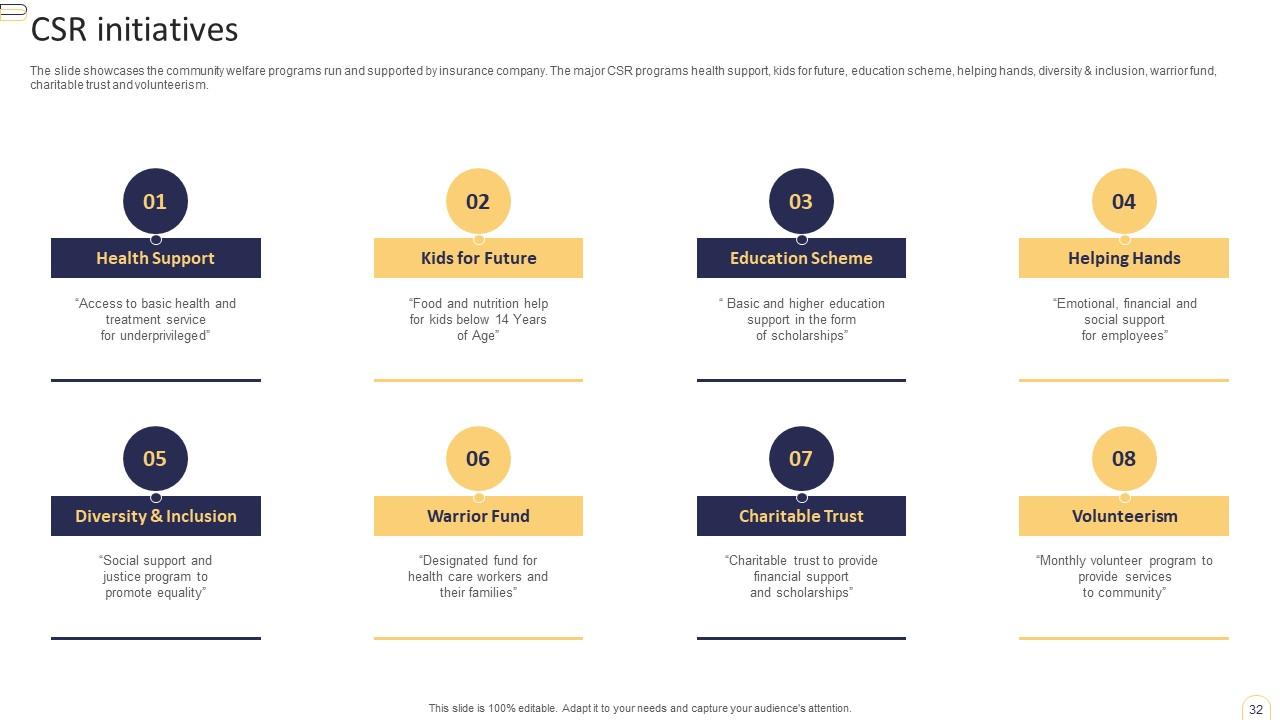
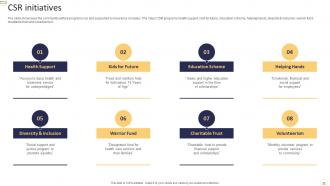
Slide 32: The slide showcases the community welfare programs run and supported by insurance company.
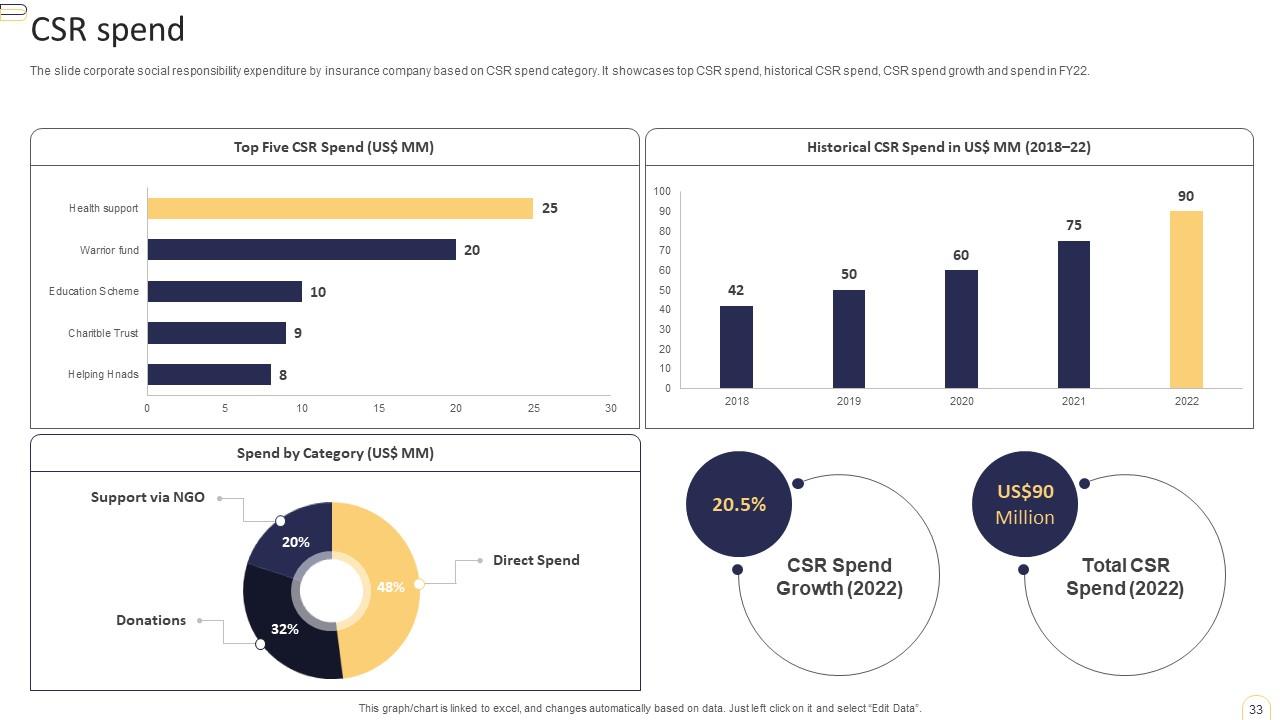
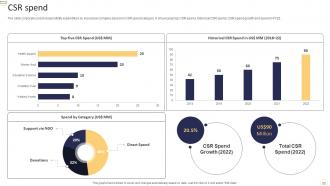
Slide 33: The slide corporate social responsibility expenditure by insurance company based on CSR spend category.
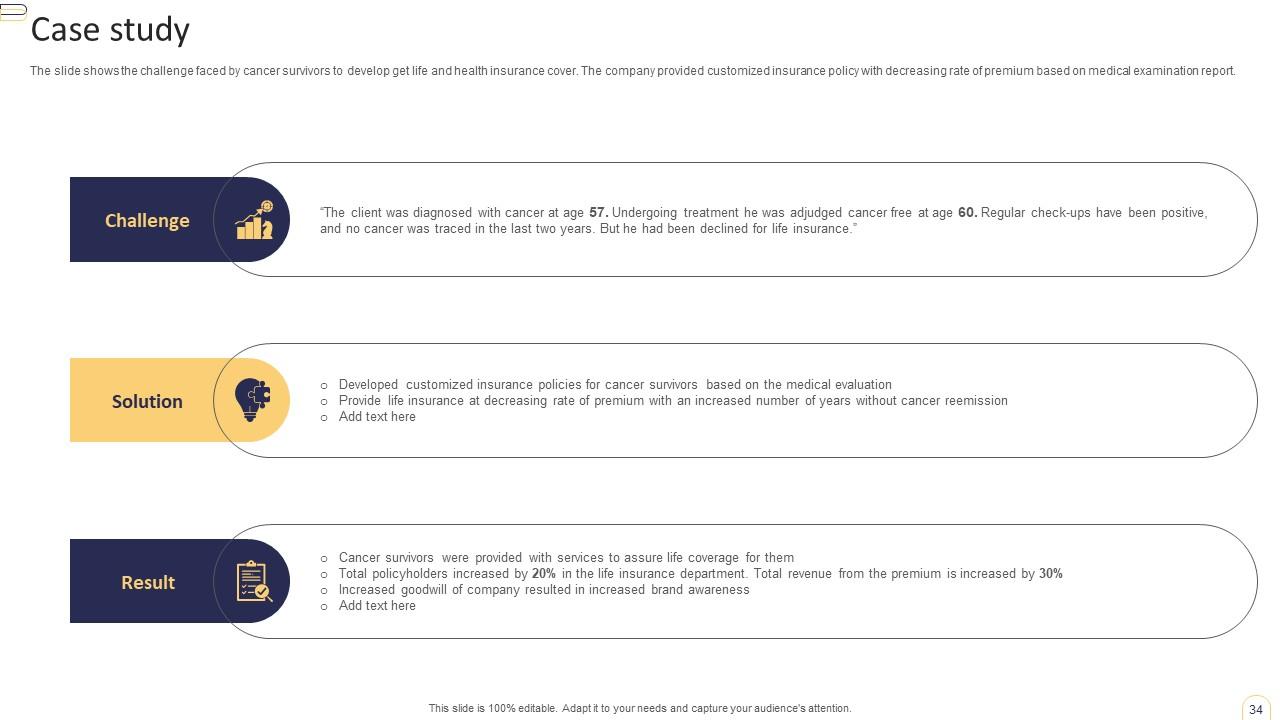
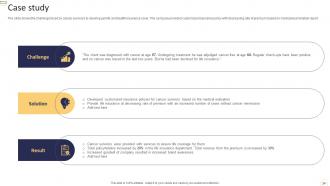
Slide 34: The slide shows the challenge faced by cancer survivors to develop get life and health insurance cover.
Slide 35: This is the icons slide.
Slide 36: This slide presents title for additional slides.
Slide 37: This slide shows about your company, target audience and its client's values.
Slide 38: This slide depicts posts for past experiences of clients.
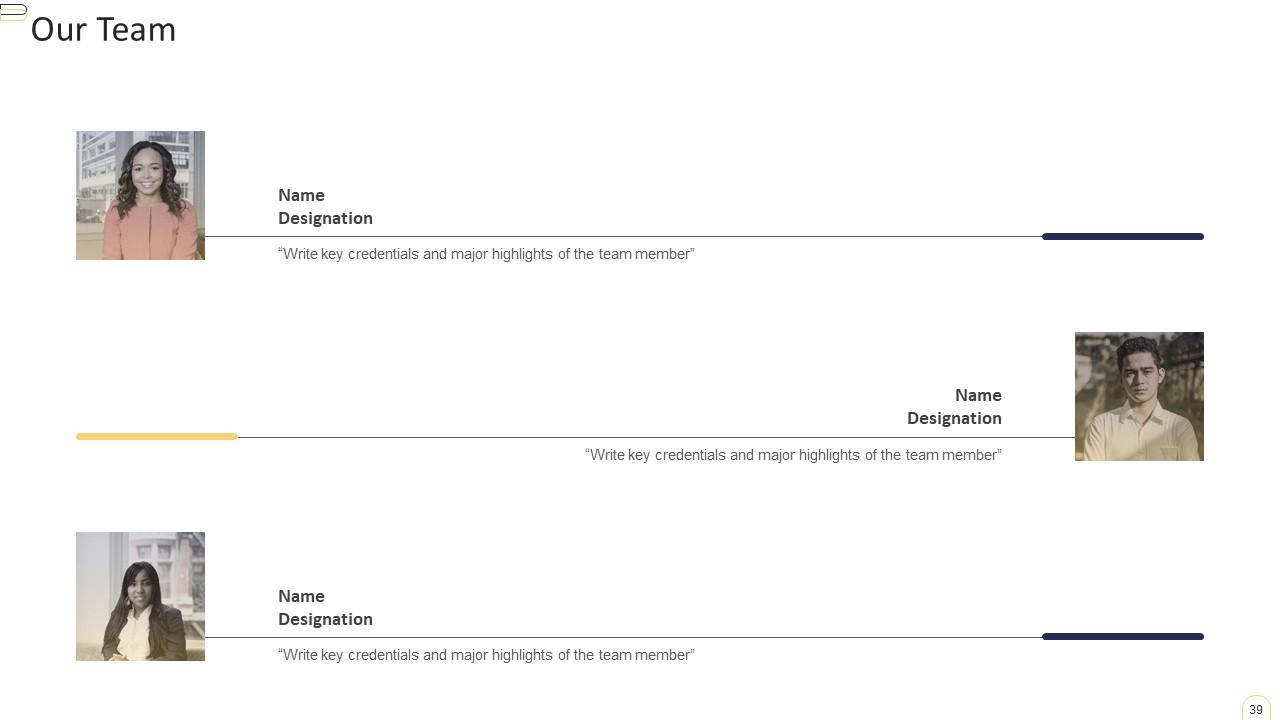
Slide 39: This slide shows details of team members like name, designation, etc.
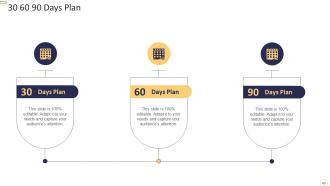
Slide 40: This slide depicts 30-60-90 days plan for projects.
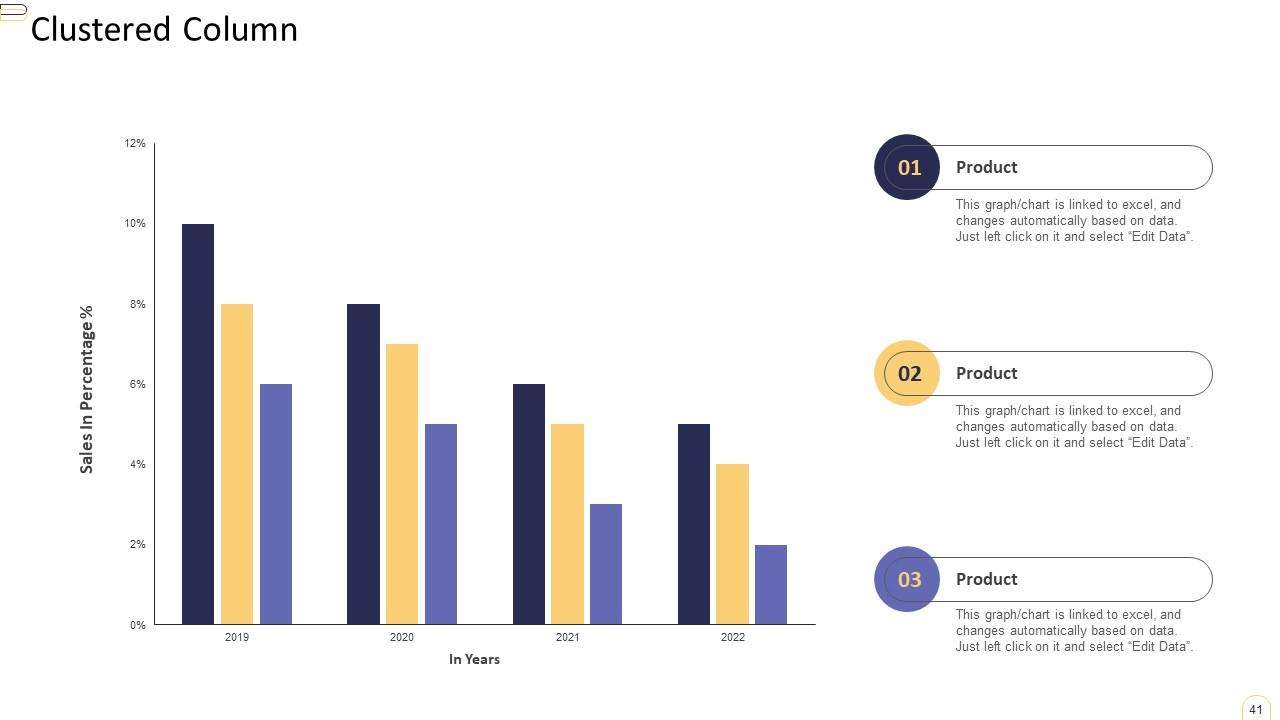
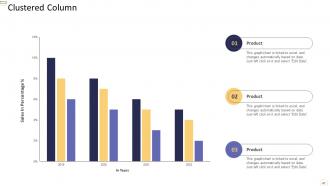
Slide 41: This slide exhibits yearly profits stacked coloumn charts for different products.
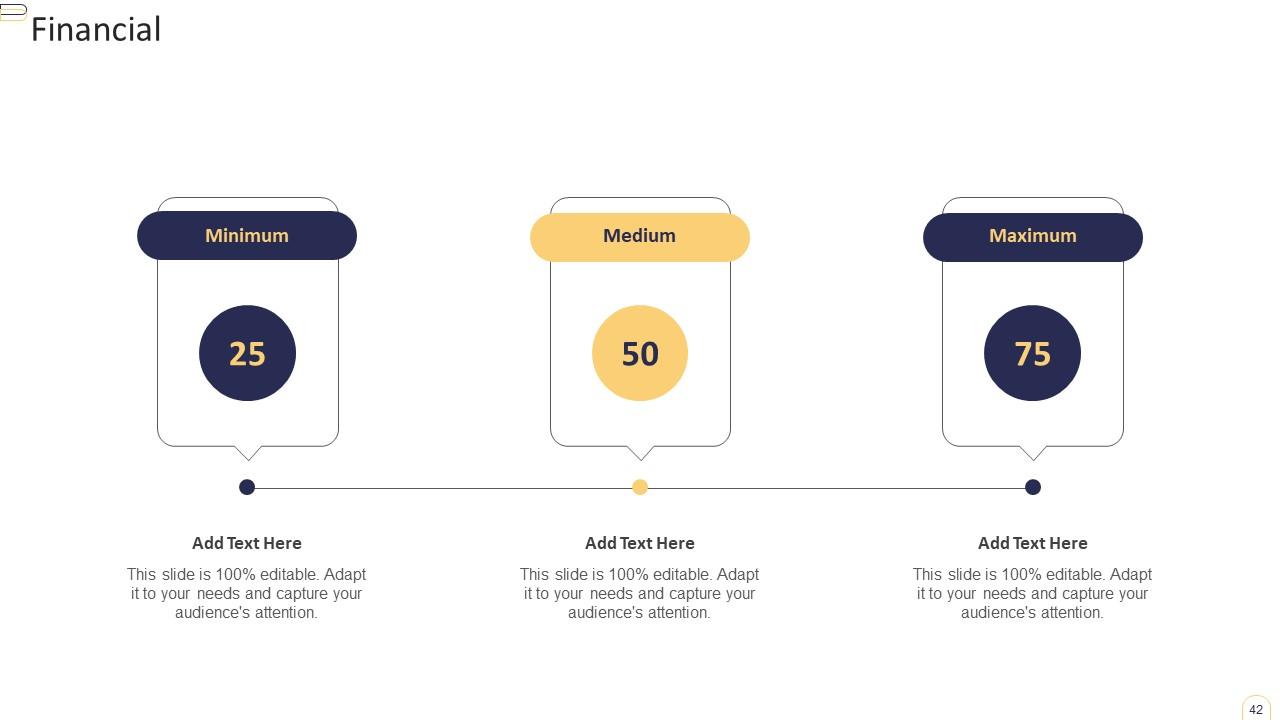
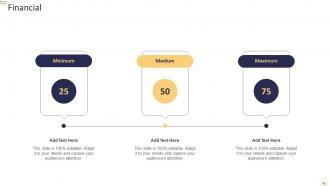
Slide 42: This slide showcases financials of company.
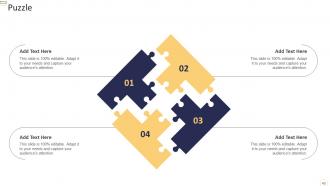
Slide 43: This slide shows puzzle for displaying elements of company.
Slide 44: This is thank you slide & contains contact details of company like office address, phone no., etc.
Property And Casualty Insurance Company Profile Complete Deck with all 49 slides:
Use our Property And Casualty Insurance Company Profile Complete Deck to effectively help you save your valuable time. They are readymade to fit into any presentation structure.
-
Excellent products for quick understanding.
-
“One of the best experiences with SlideTeam for my presentation.Everything on time, communication is efficient and price is reasonable. All good in one place.”
