Prototype development timeline ppt slides

Rating:
100%
Prototype development timeline ppt slides
Slide 1 of 4

or

Favourites Favourites

Try Before you Buy Download Free Sample Product

Audience Impress Your
Audience
Editable 100%
Editable
Time Save Hours
of Time
The Biggest Sale is ending soon in
0
0
:
0
0
:
0
0
Rating:
100%
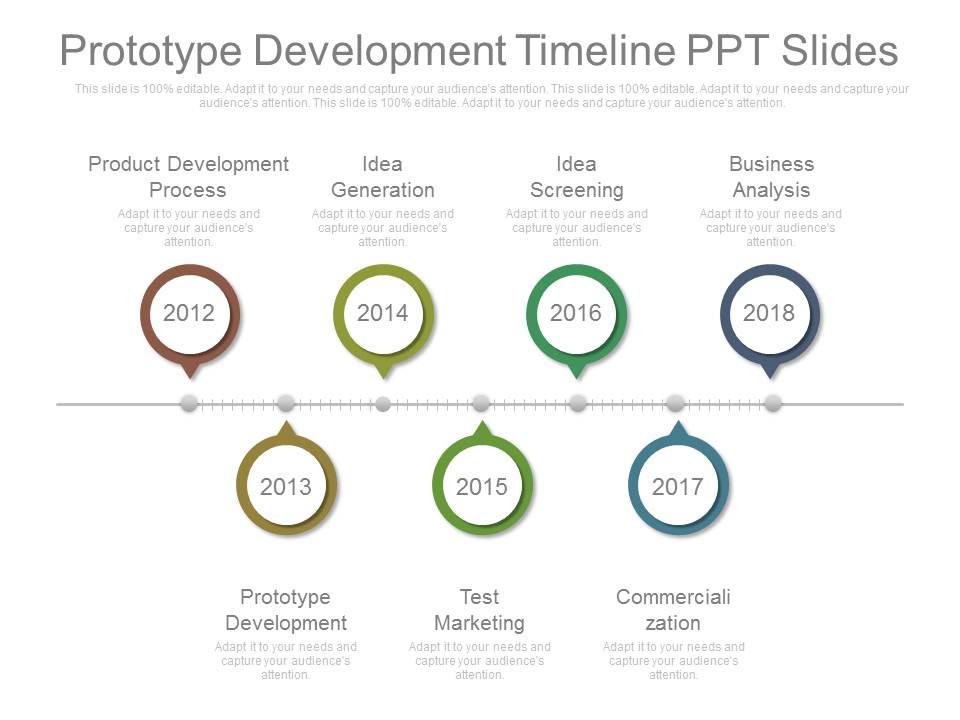
Professionally made PPT slides for expert clients. Editable PowerPoint graphs and representations. Benefit of addition of logo and trademarks for more personalization. Satisfactory and simple to grasp Infographic organize. Versatile to wide screen see without the issue of pixilation. The introduction layout can be downloaded and spared in any coveted configuration. Productive and gainful knowledge for industry experts, educators, understudies, strategists and administration organizers. The stages in this process are product development process, idea generation, idea screening and much more.

Content of this Powerpoint Presentation

Description:

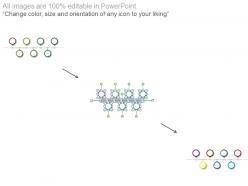
The image is a PowerPoint slide titled "Prototype Development Timeline PPT Slides." It shows a horizontal timeline with milestones marking significant stages in a product's development cycle from 2012 to 2018:

1. 2012: Product Development Process

2. 2013: Prototype Development

3. 2014: Idea Generation

4. 2015: Test Marketing

5. 2016: Idea Screening

6. 2017: Commercialization

7. 2018: Business Analysis

Each milestone is represented by a colored circle with the year inside and is accompanied by text boxes titled "Text Here," indicating that further details can be added for each development stage. The timeline suggests a sequential process in product development, from conceptualization through to market analysis.

Use Cases:

Here are seven industries where this slide could be effectively utilized:

1. Consumer Electronics:

Use: Tracking the development of a new device

Presenter: Product Manager

Audience: R&D team, investors

2. Pharmaceuticals:

Use: Outlining drug discovery and market introduction stages

Presenter: R&D Director

Audience: Research scientists, regulatory bodies

3. Automotive Manufacturing:

Use: Planning vehicle design, testing, and launch

Presenter: Chief Engineer

Audience: Design team, marketing department

4. Software Development:

Use: Visualizing software product evolution from idea to release

Presenter: Lead Developer

Audience: Development team, stakeholders

5. Food and Beverage:

Use: Demonstrating a new product's journey from recipe development to store shelves

Presenter: Brand Manager

Audience: Marketing team, distributors

6. Renewable Energy:

Use: Mapping the development of a new renewable energy technology

Presenter: Innovation Manager

Audience: Engineers, environmental analysts

7. Apparel and Fashion:

Use: Charting the design and release timeline for a fashion line

Presenter: Creative Director

Audience: Designers, retail partners

FAQs for Prototype development

Key stages in a typical prototype development timeline include concept validation, initial design and wireframing, MVP development, user testing and feedback collection, and iterative refinement phases. These stages enable organizations to streamline product development by identifying potential issues early, reducing development costs, and accelerating time-to-market, with many tech companies and startups finding that structured prototyping ultimately delivers stronger market fit and competitive advantage.

Project objectives significantly influence prototype development timelines by determining scope, complexity, required features, and validation criteria needed before moving forward. Projects with broader market validation goals typically require longer development cycles, multiple iterations, and extensive user testing phases, while focused proof-of-concept objectives can streamline timelines through targeted functionality, ultimately enabling organizations to allocate resources more strategically.

User feedback serves as a critical timeline determinant, influencing iteration cycles, feature prioritization, validation phases, and development scope adjustments throughout the prototyping process. Early and continuous feedback enables teams to streamline development by identifying必要 pivots, eliminating unnecessary features, and accelerating market-ready solutions, with many organizations finding that structured feedback loops ultimately reduce overall development time while enhancing product-market fit.

Agile methodologies integrate into prototype development through iterative sprints, continuous stakeholder feedback, and rapid testing cycles that allow for real-time adjustments. This approach enables development teams to minimize costly revisions, accelerate time-to-market, and enhance user experience validation, with many organizations finding that agile prototyping delivers more market-ready products.

Essential prototyping tools include Figma, Sketch, Adobe XD, InVision, and Marvel for digital interfaces, alongside SolidWorks, Fusion 360, and AutoCAD for physical products. These platforms streamline collaboration, iteration, and testing by enabling real-time feedback, version control, and seamless handoffs, with many development teams finding that integrated toolchains reduce prototype-to-market timelines significantly.

Budget constraints significantly impact prototype development timelines by limiting resource allocation, restricting material choices, and reducing team capacity for parallel development activities. Organizations with tighter budgets often extend timelines to accommodate phased approaches, while those with larger budgets can accelerate development through advanced tools, specialized expertise, and simultaneous testing processes, ultimately delivering faster market entry and competitive advantage.

Common pitfalls include underestimating testing phases, skipping user feedback iterations, inadequate resource allocation, unrealistic milestone expectations, and insufficient buffer time for technical challenges. Manufacturing companies and tech startups often find that rushing initial validation stages creates costly delays later, while strategic timeline padding and early stakeholder alignment ultimately deliver smoother development cycles and reduced project risks.

Cross-functional teams optimize prototype development timelines by establishing parallel workflows, implementing continuous feedback loops, and maintaining clear communication channels across departments. Through collaborative sprint planning and shared project management tools, teams streamline decision-making processes, reduce revision cycles, and accelerate iteration speeds, ultimately delivering faster time-to-market while maintaining quality standards.

Key metrics include development velocity, milestone completion rates, resource utilization, defect discovery rates, and stakeholder feedback response times. These tracking mechanisms streamline project oversight by identifying bottlenecks early, optimizing team productivity, and maintaining quality standards, with many organizations finding that consistent metric monitoring reduces delivery delays and enhances prototype effectiveness.

The iterative process typically extends prototype development timelines by 20-40%, as each cycle requires testing, feedback collection, and refinement before progressing to the next phase. However, this strategic approach ultimately accelerates time-to-market by identifying design flaws early, reducing costly revisions later, and ensuring the final product meets user requirements, with many organizations finding that front-loaded iteration delivers faster, more successful launches.

MVP represents the earliest functional version of a product that delivers core value to users while requiring minimal development resources and time. It enables organizations to validate market demand, gather user feedback, and iterate rapidly, with many startups and enterprises finding that this approach reduces development costs, accelerates time-to-market, and minimizes risks before full-scale production.

Project management techniques enhance prototype development timelines by establishing clear milestones, streamlining resource allocation, and implementing systematic risk assessment protocols. Through structured methodologies like Agile and Scrum, development teams accelerate iteration cycles, minimize bottlenecks, and maintain stakeholder alignment, with many technology companies finding that these approaches reduce development time by 30-40% while improving final product quality.

Best practices for communicating timeline expectations include establishing clear milestones, providing regular progress updates, documenting scope changes, setting realistic buffers for iterations, and maintaining transparent feedback loops throughout development phases. These approaches streamline stakeholder alignment by managing expectations early, addressing concerns proactively, and ensuring accountability, with many organizations finding that structured communication ultimately delivers smoother project outcomes and stronger stakeholder confidence.

Market research informs prototype development timelines by identifying user priorities, competitive pressures, and market entry windows that determine development phases and resource allocation. Through comprehensive market analysis, organizations can prioritize critical features, anticipate technical challenges, and align development sprints with customer feedback cycles, ultimately delivering market-ready prototypes faster while minimizing costly iterations.

Prototype development phases typically span 2-4 weeks for ideation and planning, 3-6 weeks for initial design and wireframing, 4-8 weeks for development and testing, and 2-3 weeks for refinement and validation. These timelines vary significantly based on complexity and scope, with many organizations finding that iterative approaches and cross-functional collaboration can streamline cycles while maintaining quality standards.

Ratings and Reviews

100% of 100
Review Form
Write a review
Most Relevant Reviews
  1. 100%

    by Delmar Wagner

    Use of different colors is good. It's simple and attractive.
  2. 100%

    by William King

    Editable templates with innovative design and color combination.

2 Item(s)

per page: