Plan de gestión de calidad Diagrama de Gantt Actividad Ppt File Aids

Rating:
88%
Quality management plan gantt chart activity ppt file aids
Slide 1 of 2
Favourites Favourites

Try Before you Buy Download Free Sample Product

Audience Impress Your
Audience
Editable 100%
Editable
Time Save Hours
of Time
The Biggest Sale is ending soon in
0
0
:
0
0
:
0
0
Rating:
88%

Características de estas diapositivas de presentación de PowerPoint:

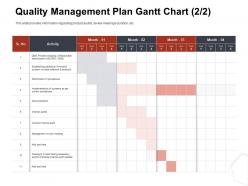
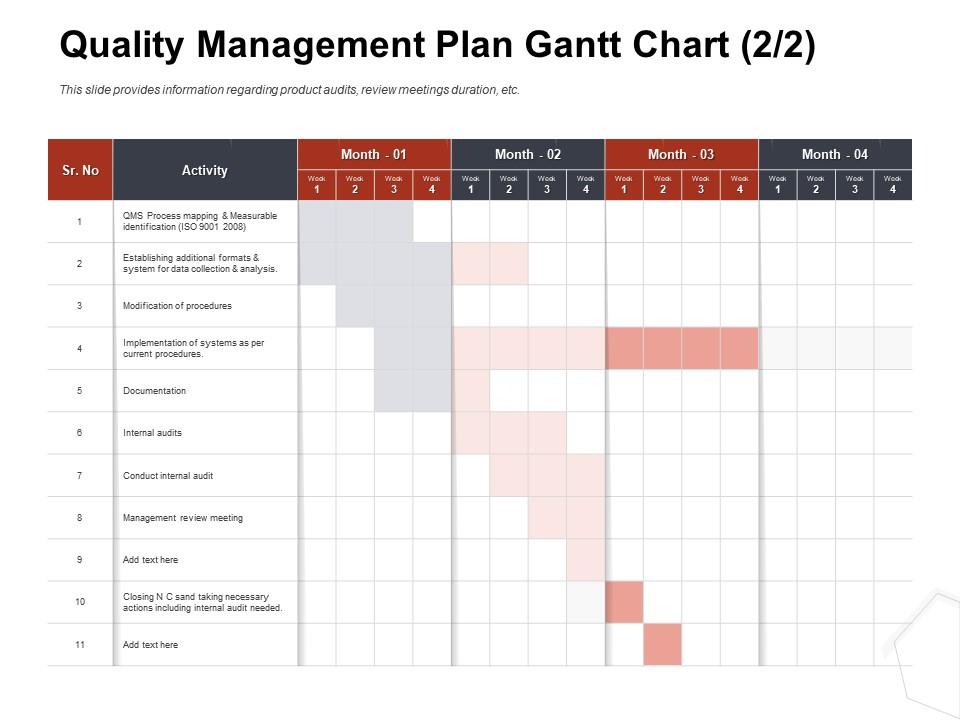
Esta diapositiva proporciona información sobre la duración de las reuniones de revisión de auditorías de productos, etc. Administre sus proyectos complejos y organícelos simultáneamente con esta plantilla de PowerPoint de diagrama de Gantt detallada. Realice un seguimiento de sus hitos, tareas, fases, actividades, subtareas, entre otros componentes que le brindarán una visión actualizada de su proyecto. Refleje su horizonte de planificación y capture su plan de lanzamiento en una sola vista con esta plantilla de presentación de PowerPoint de diagrama de Gantt. Puede trazar varias dependencias directamente en este diseño de presentación de PowerPoint de línea de tiempo para ver qué tareas aún están en trámite y cómo los retrasos en ellas están afectando los cronogramas y los plazos del proyecto. Además de esto, también puede compartir esta imagen actualizada con los miembros de su equipo y las partes interesadas, lo que la convierte en una herramienta ingeniosa para incorporar en la estructura de su negocio. No solo esto, sino que también el diseño editable de esta diapositiva lo ayuda a agregar sus datos y estadísticas a su conveniencia.
FAQs for Quality management plan gantt chart activity

Honestly, start with your biggest quality risks - that's where the real problems hide. You'll need solid objectives, clear roles, and control processes that actually work. Testing procedures are crucial, plus you need a plan for when stuff inevitably breaks (trust me, it will). Metrics help you track if things are going well or completely off the rails. Don't skip defining what "good quality" means for your project specifically - sounds obvious but people mess this up constantly. Acceptance criteria and review processes round it out. The whole point is making sure everyone's on the same page about standards and how to measure them.

So the Quality Management Plan is basically your big-picture game plan for handling quality across the whole project - standards, processes, who does what, success metrics, all that stuff. Quality assurance is more narrow, just the specific activities you do to catch problems before they become actual problems. I always think of QMP as the master document (and yeah, these things get ridiculously long sometimes). QA is one section inside it, along with quality control and all the measurement stuff. Start with your overall plan first, then figure out the day-to-day QA activities after.

You really can't skip getting stakeholder input on your QMP - I learned this the hard way once. Everyone has different ideas about what "quality" actually means, so you need to collect those expectations early. Your customers might care about one thing while end users focus on something totally different. Plus your team probably has insights you haven't thought of yet. I'd do interviews or workshops to gather all this before finalizing anything. Trust me, assuming you know what people want is a recipe for disaster. The whole thing falls apart if you're building to the wrong standards from day one.

Look, start by figuring out what could totally screw you over at each step - bad materials, equipment crapping out, people making mistakes, you know the drill. Then build specific checkpoints right into your QMP to catch that stuff early. Create a simple risk register (sounds fancy but it's basically just a list) and update it as you go. The whole point is being ahead of problems instead of scrambling after they hit. Set up monitoring procedures and have a plan for when things go sideways. Honestly, most people skip this part but it'll save your butt later when everything's on fire.

For your QMP, start with defect rates and error frequencies - they show exactly where things are breaking down. Customer satisfaction scores are huge since that's what actually matters in the real world. Track process stuff like cycle times, rework rates, and first-pass yield too. Honestly, don't go crazy measuring everything or you'll drown in data. Cost of quality metrics help tie it back to dollars, which leadership loves. I'd say pick 5-7 metrics max that directly connect to your project goals. You can always add more later once you've got the basics dialed in.

First thing - map out who talks to who about quality stuff in your QMP. Half the problems I see are literally just people not communicating! Regular quality reviews help, plus those standardized report formats (boring but necessary). Document everything though - meeting notes, metrics, action items. You want info flowing both directions, not just up to management. Oh and create feedback loops so quality data actually gets used. Start by figuring out where communication breaks down now. Fix those gaps first, then build from there. It's way easier than overhauling everything at once.

Start with benchmarking - it gives you a baseline for everything else. Quality audits and cost-benefit analysis are your bread and butter tools. Flowcharts might seem boring but trust me, they'll save you from so many headaches down the road when people get confused about processes. Control charts help with measurable metrics, and risk assessment matrices catch problems early. Statistical sampling is useful too, though honestly it depends on your industry. Don't sleep on getting input from team members who've been through this before - their experience is worth its weight in gold.

Look, it really depends on what industry you're in. Healthcare has to go crazy with patient safety stuff and FDA rules. Manufacturing? They're all about preventing defects and getting those ISO certifications. Software companies are weird though - their quality plans focus on testing and user experience, which honestly looks nothing like what other industries do. Figure out what "quality" even means for your specific field first. Then see what regulatory bodies you'll need to deal with. I'd start by looking up the most common quality frameworks in your industry and build from there.

Quarterly reviews work best, or after big milestones hit. Grab feedback from your team about what's actually working versus what sucks. I always document the quality issues and scope changes - sounds boring but trust me on this one. Most people totally skip this part then wonder why everything's on fire later. Update based on what you've learned and any new requirements. Get stakeholder sign-off before rolling out changes though. Oh, and set that calendar reminder now. You'll definitely forget otherwise.

Look, a QMP basically gives you a structure for tracking how things are going and figuring out where to improve. You'll set up regular check-ins, decide what data to collect, and know who to talk to when stuff goes wrong. Honestly, the best part isn't just catching problems - it's spotting patterns you might miss otherwise. Pick 3-4 metrics that actually matter to your team (not just vanity numbers). Then schedule regular sit-downs to review what's working and what's not. The whole thing only works if you're consistent about it though.

Honestly, people will fight you on this stuff - nobody wants new processes dumped on them. They think it's just more paperwork. You'll also run into fuzzy quality standards and teams that interpret requirements totally differently. Oh, and good luck getting proper training budgets approved lol. Communication between departments? Forget about it. Everyone's speaking different languages basically. My take is start with something small first, maybe just one team or process. Get a few key people excited about it before you roll out the whole thing. Way less painful that way.

Yeah, your QMP works fine with both. For Agile, just bake quality checkpoints right into your sprints and make acceptance criteria part of your standards. Six Sigma's actually easier - your QMP becomes the backbone for DMAIC and all those metrics they love tracking. Think of it like a translator between methodologies. Same goals, different language. The trick is not letting quality stuff bog down whatever flow your team already has going. I'd start by figuring out where your current QMP activities fit into whichever method you're using now. Don't overthink it.

Training's pretty straightforward - start with a workshop covering your project's quality standards and documentation stuff. Then break into smaller groups for role-specific training. QA people need inspection techniques, stakeholders need review processes, that kind of thing. Root cause analysis is where most teams totally bomb though - it's just not something people naturally get. Make sure everyone practices hands-on before you actually launch anything. Oh, and don't skip the corrective action procedures training either. People need to understand exactly what they're responsible for quality-wise or you'll be cleaning up messes later.

So tech totally changes the game for quality management. Automated testing catches problems way before manual checks would. Real-time dashboards give you instant visibility into what's happening. The AI stuff that predicts issues before they occur? That's genuinely impressive - though honestly, it still feels a bit sci-fi to me sometimes. Your team can collaborate better too with digital platforms for tracking standards and feedback. Don't overthink it though. Just figure out which tools actually match your quality goals, then bake them into your QMP right from the start.

Honestly, skipping a Quality Management Plan is asking for trouble. Your project will probably hit way more defects and budget issues because there's no real framework keeping things on track. Deadlines get missed, customers get pissed when deliverables suck, and your team ends up doing the same work twice. That's time nobody has. Stakeholders start questioning everything once they lose trust in your quality - which happens fast. I mean, it's kinda like cooking without checking measurements... sure, you might get lucky, but odds are it'll be a mess. Just spend a few hours upfront making even a basic plan. Trust me on this one.

Ratings and Reviews

88% of 100
Review Form
Write a review
Most Relevant Reviews
  1. 100%

    by Davis Gutierrez

    Easily Understandable slides.
  2. 80%

    by Davis Gutierrez

    Enough space for editing and adding your own content.
  3. 80%

    by Damien Murray

    Wonderful templates design to use in business meetings.
  4. 80%

    by Chase Howard

    Unique and attractive product design.
  5. 100%

    by Deon Warren

    Innovative and Colorful designs.

5 Item(s)

per page: