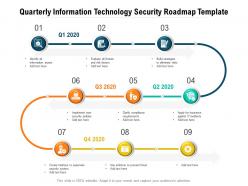
Vierteljährliche Vorlage für Informationstechnologiesicherheits-Roadmap
Try Before you Buy Download Free Sample Product
Audience
Editable
of Time
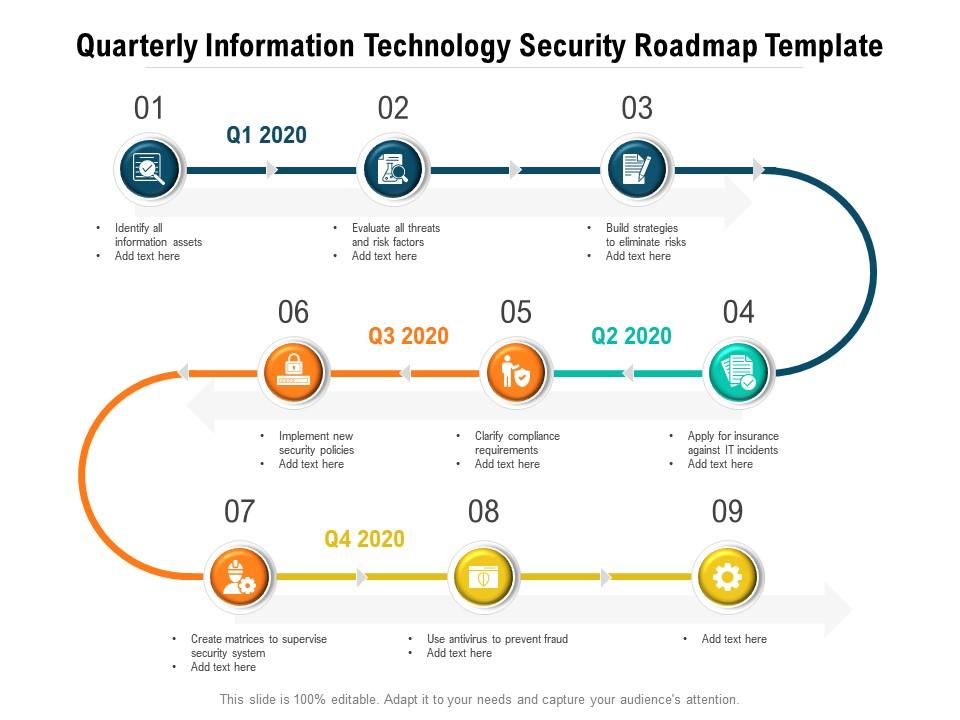
Die Erfolgsrate von Geschäftsplänen hängt stark vom Aktionsplan ab, und diese bearbeitbare vierteljährliche Vorlage für Informationstechnologiesicherheits-Roadmaps erfüllt zu Recht diesen Zweck. Fassen Sie alle projektbezogenen Informationen gut strukturiert zusammen, um maximale Effizienz zu erzielen, indem Sie unser beeindruckendes PowerPoint-Design integrieren. Geben Sie mit diesem vorgefertigten PowerPoint-Layout auf leicht verständliche Weise die wichtigsten Ergebnisse, die erforderlichen Schritte, den Zeitrahmen, die Personalzuweisung und vieles mehr an. Sie können Ihre Aufgaben auch priorisieren und die Problembereiche mit Ihren Kollegen besprechen, indem Sie dieses maßgeschneiderte PPT-Layout integrieren. Stärken Sie Ihren Arbeitsplan, indem Sie dieses professionell gestaltete PPT-Design verwenden. Unternehmer können die vierteljährliche Vorlage für Informationstechnologie-Sicherheitspläne als nützliches Kommunikationstool herunterladen, das die Zusammenarbeit bei verschiedenen Aufgaben und das Erreichen von Zielen erleichtert.
Merkmale dieser PowerPoint-Präsentationsfolien:
PowerPoint-Folie mit Vorlage für eine vierteljährliche Informationstechnologie-Sicherheits-Roadmap. Diese PPT-Folie ist in den Seitenverhältnissen 4,3 und 16,9 erhältlich. Sie können dieses PPT-Design in verschiedenen Formaten wie PDF, PNG und JPG herunterladen. Diese PowerPoint-Vorlage kann vollständig bearbeitet werden, und Sie können die Schriftgröße, den Schriftarttyp und die Formen gemäß Ihren Anforderungen ändern. Unser PPT-Layout ist mit Google Slides kompatibel.
People who downloaded this PowerPoint presentation also viewed the following :
Vierteljährliche Vorlage für Informationstechnologiesicherheits-Roadmap mit allen 2 Folien:
Bieten Sie Ihrem Publikum ein erfüllendes Erlebnis. Sie werden unsere vierteljährliche Vorlage für Informationstechnologiesicherheits-Roadmaps erhebend finden.
FAQs for Quarterly information technology
So you need five main things for your IT security roadmap. Start with figuring out where your security actually stands right now - like an honest assessment. Define where you want to be, then map out the gaps. Trust me, there's always way more gaps than you think there'll be! After that, rank your priorities by what's gonna hurt most if it goes wrong. Create a realistic timeline with budgets and milestones. Oh, and don't treat this like a one-and-done thing - threats change constantly so you'll need to update it regularly.
Here's what I'd do: Map your security stuff directly to what the business actually cares about. New markets? Focus on cloud security. Customer trust issues? Data protection becomes your priority. I've watched security teams work in their own bubble and then act shocked when budgets get slashed. Talk to business leaders regularly - figure out their timelines and what keeps them up at night. Then position your security roadmap as the thing that helps them hit their goals, not just another expense. Check-ins are key since priorities change constantly. Make yourself the enabler, not the person always saying "no."
Look, risk assessment is where you gotta start with IT security - it shows you what threats are actually out there and where you're most exposed. Without it, you're just guessing at what security tools to buy. Think of it like... you wouldn't put locks on random doors without knowing which ones need protecting, right? Map out your critical assets first, then figure out realistic threat scenarios. The whole point is ranking risks by how likely they are and how badly they'd hurt you. That way you tackle the really scary stuff first instead of wasting budget on whatever sounds cool.
Quarterly reviews are pretty much the minimum now - threat landscape changes way too fast for anything less. Most companies do major overhauls twice yearly to match budget planning, but honestly? You'll want to stay ready for quick pivots when new vulnerabilities pop up or your priorities shift. Annual updates are basically useless at this point (learned that the hard way watching companies scramble after major breaches). Block out those quarterly meetings but don't get too rigid about it. Big news drops and suddenly you're back at the drawing board anyway.
Honestly, I'd prioritize AI-powered attacks and ransomware-as-a-service first. Attackers are literally using ChatGPT to craft better phishing emails - it's wild. Supply chain compromises are huge too. Don't sleep on cloud misconfigurations and IoT vulnerabilities either. Deepfake social engineering is getting scary good, though that might be more mid-term. The whole landscape shifts every few months now, so you'll need quarterly reviews instead of annual ones. Oh, and make sure your training budget can pivot fast - whatever's hot in threat intel this month probably wasn't on anyone's radar six months ago.
You want both hard numbers and the softer stuff. Track things like fewer security incidents, quicker response times, how fast you're patching vulnerabilities. Employee awareness scores matter too - honestly, getting people to actually care about security is half the battle. Here's the weird thing: good security means nothing bad happens, which is terrible for showing off your wins! That's why I'd also measure leading indicators - controls you've rolled out, whether you're hitting timeline goals. Set up some kind of quarterly dashboard review with leadership. Keeps everyone aligned and lets you pivot when needed.
Okay so for your security roadmap, I'd start with EDR - that stuff actually catches threats before they become disasters. SIEM or SOAR platforms are solid for monitoring everything in one place and automating responses. Multi-factor auth and zero-trust architecture are non-negotiable these days, honestly. Cloud security tools too if you're doing any hybrid setup. Quick tangent - I've seen companies skip identity management and regret it big time later. Anyway, just tackle your biggest risk gaps first, then build out systematically from there. Makes the whole process way less overwhelming.
Don't treat training like some separate thing you do once a year. Build it right into each phase of your security rollout instead. Here's what works: baseline training for everyone first, then add role-specific stuff when you're actually deploying new tools. Timing is huge though - train people right before they need to use something, not like 3 months early when they'll forget everything. I always sync training with major changes like rolling out MFA or updating policies. Track who's actually completing it and schedule refreshers during your maintenance phases. Basically every security change should have training attached to it.
Honestly, I'd go with NIST first - it's free and pretty straightforward with that whole identify-protect-detect-respond-recover thing. ISO 27001 works if you want something more official and internationally recognized, but man, the paperwork is brutal. CIS Controls gives you practical stuff that's actually prioritized, which is nice. COBIT's there too if you need to connect security with broader IT governance. My buddy at work swears by mixing frameworks, but I think that gets messy fast. Start with NIST as your backbone, then grab bits from others when you actually need them.
Here's what I'd do: Start with a risk assessment to figure out what would actually hurt your business if it got hit. Honestly, skip the fancy new tools for now - I've seen too many companies waste money on shiny stuff they don't need yet. Focus on the basics first like phishing protection and endpoint security. Go after high-impact threats that are likely to happen. You'll want quick wins mixed with longer-term projects, but make sure leadership's on board with your priorities first. Don't forget compliance requirements and what you can actually afford.
Look, incident response planning is basically your "oh shit" plan for when hackers inevitably show up. You don't want to be scrambling around like headless chickens when your systems get hit. Map out your critical stuff first, then figure out who calls who and what happens next. The whole point is damage control - keeping downtime short and stopping everyone from freaking out. Most compliance rules require this anyway, so you're killing two birds with one stone. Honestly, I've seen companies without plans just... fall apart during breaches. Start with your worst-case scenarios and work backwards from there.
Honestly, don't treat vendor security like some checkbox exercise. Before bringing anyone on board, hit them with security questionnaires and assessments. Your contracts need solid requirements for data handling and incident reporting too. I've watched companies get absolutely wrecked because they just trusted vendors without checking up on them - it's brutal. Keep monitoring their system access constantly. Build a vendor risk registry and actually review it every quarter. Most places create these things then forget they exist, which is pointless. Regular audits are non-negotiable if you want to sleep at night.
Honestly, just get everyone together from the start - IT, business people, compliance, executives, all of them. Skip the tech jargon when you're talking to non-techy folks. Visual roadmaps work way better than boring documents. Regular check-ins are good but don't go meeting-crazy or people will check out mentally (learned this the hard way). Set up some kind of central spot where people can see what's happening and give feedback without another damn meeting. Ask the business units what scares them security-wise first. Makes it feel less like IT dictating from above.
Don't treat compliance like some annoying thing you'll deal with later - build it right into your security plan from the start. Figure out what regs hit your industry first (GDPR, HIPAA, whatever applies). Then map out the actual security controls each one wants. Yeah, it's boring work but you'll thank yourself later. Schedule those controls into your roadmap with real deadlines you can actually hit. Document everything as you build it out. The trick is doing regular check-ins so you catch problems before they bite you, not scrambling at audit time.
Track both leading and lagging indicators - stuff like MTTD, MTTR, patch timelines, and training completion rates. Vulnerability scans and phishing simulation results are solid too. Honestly though, half these metrics turn into vanity numbers if you're not paying attention to what actually matters. Focus on trends showing your security getting better over time, not just random snapshots. I'd set up a monthly dashboard with maybe 5-7 core metrics max. Compliance audit scores are worth tracking too, but don't get obsessed with having perfect numbers everywhere.
No Reviews