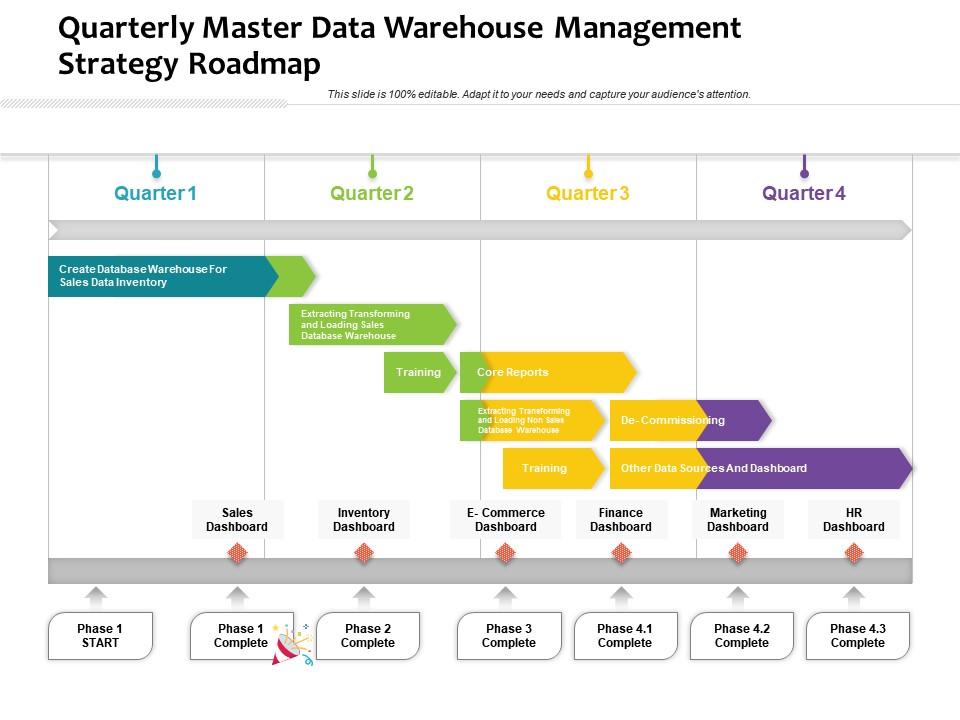
Hoja de ruta de la estrategia de gestión de almacenamiento de datos maestros trimestrales

Quarterly master data warehouse management strategy roadmap
Slide 1 of 2
Favourites Favourites

Try Before you Buy Download Free Sample Product

Audience Impress Your
Audience
Editable 100%
Editable
Time Save Hours
of Time
The Biggest Sale is ending soon in
0
0
:
0
0
:
0
0

Características de estas diapositivas de presentación de PowerPoint:

Presentación trimestral de la hoja de ruta de la hoja de ruta de la estrategia de gestión del almacén de datos maestros que es 100 por ciento editable. Puede cambiar el color, el tamaño de fuente, el tipo de fuente y las formas de este diseño PPT según sus necesidades. Esta plantilla PPT es compatible con Google Slides y está disponible en proporciones de aspecto de 4,3 y 16,9. Esta presentación de PowerPoint lista para usar se puede descargar en varios formatos como PDF, JPG y PNG.

FAQs for Quarterly master data warehouse

Honestly, start with governance - figure out who owns what data before you even think about buying software. You'll need someone actually managing data quality because most people just don't care about clean data (shocking, I know). Get a decent platform to centralize everything and make sure it can sync across your existing systems. The trickiest part? Getting people to follow new processes. I'd focus on assigning clear data stewardship roles first. Someone has to be the "data police" or it all falls apart. Change management is huge too - like, bigger than the tech side honestly.

So MDM basically gives you one clean version of all your important data - customers, products, suppliers, that stuff. Right now you probably have different versions everywhere, which is such a pain. The system catches duplicates automatically and keeps everything standardized as it moves between your apps. Way fewer errors, and people actually trust what they're seeing in reports. Honestly, just start with whatever data gives you the biggest headache right now - that's where you'll see results fast. Your teams will thank you for not having to deal with messy, conflicting information anymore.

Okay so data governance is basically what keeps your MDM from turning into complete chaos. It's like having a referee - sets the rules for who can create and change master data, quality standards, approval processes, all that stuff. Without it? Total mess. Everyone just does whatever they want with the data and honestly, I've seen companies waste months fixing that nightmare. You'll want to start small though - find your data stewards first, then nail down some basic quality metrics. That gives you something solid to work with instead of trying to boil the ocean right away.

Track both technical stuff and business impact. Data quality scores are key - completeness, accuracy, consistency across your master data. Business side: faster product launches, fewer compliance headaches, better customer satisfaction. Those "soft" wins hit different though - no more arguing over which customer record is right! Dashboard time: data lineage, duplicate reduction rates, how fast you onboard new sources. Oh and measure your baselines before you change anything or you'll have nothing to compare against later.

Honestly, data quality will make you want to scream - everyone's got their own version of what counts as "customer data" and thinks theirs is perfect. You'll be drowning in duplicates and messy formats from systems that hate each other. People absolutely hate changing how they work, so that's fun. Oh, and legacy systems? They're basically held together with duct tape and prayers. Start with just one area though - get a win under your belt first. Once people see it actually works, they'll stop fighting you on everything else. Trust me on this one.

So MDM basically gives you one spot to control all customer data, which is huge for GDPR stuff. Instead of digging through like 20 different databases when someone wants their info deleted, you can handle it all centrally. It tracks everything with audit trails too - seriously saved my butt during our last compliance review. You can also set up data quality rules and figure out what's sensitive vs what isn't. Honestly, I'd start by just mapping out where all your data lives right now. That'll show you where MDM would make the biggest difference compliance-wise.

Honestly, start with a good data integration platform and a database that won't crash under pressure. ETL tools are a must - your data's gonna be way messier than expected, happens every time. Get some data quality tools for validation too. Oh, and you'll need workflow engines for approvals and API management since everyone's gonna want access to those golden records. Actually had a project once where we skipped the API layer initially... bad move. Focus on integration and cleaning first, then worry about governance once the data's actually flowing properly.

So basically, MDM stops you from having those awkward meetings where everyone's staring at different numbers going "wait, which one's right?" You get one clean version of your data instead of sales saying one thing and finance saying another. Decisions happen faster because you're not wasting time figuring out who has the correct customer info. Your reports actually make sense too. Honestly, I'd start by listing out what data mismatches are currently driving your team crazy - that's probably where you'll get the biggest win from fixing things first.

Honestly, MDM is a game-changer for customer experience because it gives you one clean view of each customer instead of scattered info everywhere. Your team can actually personalize interactions and fix problems quickly. No more awkward moments where customers have to repeat the same story to three different people - you know how annoying that is. Satisfaction scores go up because people feel like you actually get them. The trick is getting sales, marketing, and customer service all using the same data. Otherwise you're back to square one with everyone working in their own little bubbles, which defeats the whole purpose.

Cloud MDM runs through your browser - the vendor handles all the server stuff, updates, whatever. On-premise? You're installing everything on your own servers. Honestly such a pain unless your IT team really knows their stuff. Cloud gets you up faster and costs less upfront, plus it scales automatically. But on-premise gives you way more control over security and customization. Really depends on your IT resources and if you've got compliance headaches to deal with. I'd probably lean cloud for most situations though.

Honestly, data profiling is where I'd start - figure out what mess you're actually dealing with first. Skip that and you'll regret it later, guaranteed. Get your data lineage mapped out early and set up quality rules from day one. Standardized APIs are clutch here. Think about whether you need real-time processing or if batch works fine for your use case. Oh, and governance framework - sounds boring but you need it before integrating everything together. My take? Pick one small domain, nail it, then expand. Way less headache that way.

Honestly, you've gotta pick specific people to own different chunks of your data - like someone handles all the customer stuff, another person deals with products, whatever. Make them actual data stewards with real decision-making power, not just people who write reports nobody reads. Give each steward authority over their domain so they can fix conflicts and keep quality standards up. Set up regular check-ins where they can flag bigger issues that need escalating. Oh, and definitely track some basic quality metrics so you know if things are getting better or worse. Start with your most important data first though - don't try to boil the ocean.

Honestly, MDM is a game-changer for industries drowning in data chaos. Banks can't have different customer info across their systems - imagine the mess. Healthcare is obvious since mixing up patient records could literally kill someone. Retail's another big one with all those products and channels to manage. Oh, and manufacturing plus pharma deal with crazy supply chains and compliance stuff that'll make your head spin. Basically, if you're in a regulated industry or your customer experience depends on clean data, you'll want to look into this. Trust me on that one.

So MDM is like your quality control before data hits the lakes and warehouses. It standardizes all your customer, product, vendor records so they're consistent. Without it? Your data lake turns into a swamp (yeah, everyone says that but it's true). Reports become useless when the underlying master data is all over the place. You've got to set up those MDM processes upstream - otherwise your analytics won't mean much downstream. I'd start by figuring out which master data domains matter most for your reporting. Makes the whole thing less overwhelming.

So AI automation for data quality is getting really good right now. Real-time streaming is basically replacing all the old batch stuff - which honestly makes way more sense. Graph databases are blowing up too because they handle complex relationships between data points really well. Cloud-native MDM platforms are becoming standard, and there's this push toward self-service tools so business teams don't have to bug IT constantly. Privacy compliance is huge obviously. I'd start looking at your current setup soon and figure out what needs upgrading first.

Ratings and Reviews

0% of 100
Review Form
Write a review
Most Relevant Reviews

No Reviews