


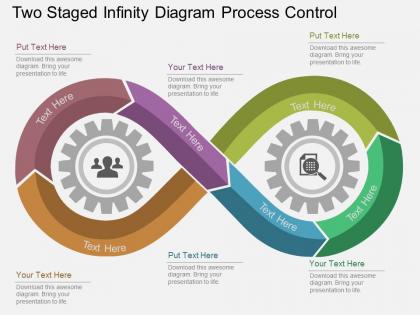
Qx two staged infinity diagram process control flat powerpoint design




Try Before you Buy Download Free Sample Product
 Impress Your
 Audience
 100%
100% Editable
 Save Hours
 of Time


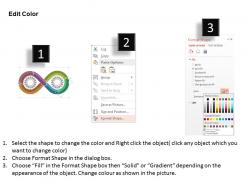
If you are keen to express your business information and motives in a professional yet attractive manner then simply make use of our qx two staged infinity slide process control flat PPT template which has been stuffed with high-quality graphics and icons to create wonderful presentations. Also, these layouts enable signalling the important points with the use of titles and subtitles. The unusual pattern of these illustrations can easily grab the attention of the audience without putting too much effort. Apart from this, the colours, icons and other information can be completely tailored by following some simple instructions that comes predefined with these images. Moreover, these backgrounds also help you to identify the attributes of objects, ideas and situations. Overall, these slides keep the audience informed about the concept of enterprise process control. So, without delaying any further simply merge these remarkable designs with your reports and create extraordinary presentations. When you want to create awareness when you want to get your audience involved all you need are the best Qx Two Staged Infinity Diagram Process Control Flat Powerpoint Design. This can only come from the PowerPoint gurus.
People who downloaded this PowerPoint presentation also viewed the following :
Qx two staged infinity diagram process control flat powerpoint design with all 4 slides:
Imprint your concepts with our Qx Two Staged Infinity Diagram Process Control Flat Powerpoint Design. They will make your views easy to comprehend.
FAQs for Qx two staged infinity diagram process control
So the Qx Two Staged Infinity thing has four parts you gotta know. First is input stage - grabs your process variables. Then there's these feedback loops that honestly look weird when drawn out, like sideways figure-8s or something. They keep watching performance vs your targets. Optimization nodes are where it gets interesting - they sit at intersection points and tweak parameters automatically using real-time data. Finally you've got output validation checking quality before stuff goes out. Just map what you're doing now to these four pieces and you'll spot where things are falling through the cracks.
So Qx basically splits the work between two control loops instead of cramming everything into one. The first loop jumps on quick corrections while the second one deals with long-term drift. Traditional PID controllers? They're trying to juggle both jobs at once, which is why you get that annoying oscillation or super slow response. Honestly, it's way smarter than I expected when I first heard about it. Your system will react faster to disturbances but won't wander off setpoint. Try it on whatever loop's been giving you the biggest headache - you'll see what I mean.
So stage one is mapping out your current process and setting those baseline controls - basically figuring out where you're starting from. Then stage two gets into the real work with continuous feedback loops and adjustments based on live data. That infinity symbol? It shows how these aren't just step 1, step 2 and done - they keep cycling back to each other. Here's the thing though - most people want to rush past that first stage because stage two sounds sexier. Don't do that. You actually need that solid foundation or your improvements won't stick. Stage one feeds stage two, then it all loops back around again.
Dude, manufacturing and chemical processing see huge benefits from this - especially with continuous processes needing tight control. Pharma and aerospace companies are obsessed with it too. Makes sense since they can't deal with any quality drift whatsoever. Oh, and oil & gas is massive for this stuff. The two-staged thing really helps when you've got complex variables that mess with each other - single-loop controls just can't keep up. Honestly, I'd test it on your most critical production line first. See what happens, then expand from there. Way less risky than going all-in right away.
So basically it's this endless feedback loop - you bounce between figuring out what's broken and actually fixing it. First you dig into root causes and gaps, then you test solutions and see what works. The infinity thing isn't just for show, it literally means you never stop improving. Honestly, I think the best part is it stops you from overthinking everything to death. You can't get stuck analyzing forever because there's always that next phase pushing you forward. Each round builds on what you learned before. Just pick one process to start with - the rest kinda snowballs from there.
Track cycle time and throughput first - those'll show you if this thing is actually working. Error reduction percentage between stages matters too. Resource utilization is huge, plus you want bottleneck identification (sounds fancy but it's just finding where stuff gets stuck). Oh, and stage transition smoothness - basically how cleanly work moves between your two stages. Quality consistency metrics are pretty standard, along with feedback loop response times. System stability indicators help too, though honestly that one can get a bit nebulous. Most teams I know start with cycle time and throughput since they're the clearest indicators.
So this Qx Two Staged Infinity Diagram thing - it's basically for mapping out how decisions bounce around your system and mess with other stuff. First stage, you plot your variables. Second stage shows how they all feed back into each other. Honestly took me forever to figure out the first time I used it, but now I swear by it. The infinity loop part catches those feedback cycles that always bite you later - like when you fix one problem and suddenly three new ones pop up. Definitely run your next big decision through it first. Saves headaches.
Data analysis is what makes the Qx Two Staged Infinity Diagram actually work - turns all that messy raw data into something you can act on. Both stages need it for spotting patterns and catching weird anomalies. Oh, and validating your control settings aren't total garbage. The infinity loop happens because stage two analysis feeds back to improve stage one. Pretty neat setup honestly. But here's the thing - without decent analysis, you're basically guessing at everything. Set up your data collection points right from the start though, or you'll just be analyzing junk later.
Honestly, skip the PowerPoint death march and get people actually drawing the diagrams themselves - way more effective. I'd break it into two chunks: teach the basic infinity loop first, then add the control elements later. Real examples from your actual workplace work so much better than those generic textbook scenarios (learned that the hard way). Have teams practice on actual problems they're dealing with. Start small though - let them mess around with minor projects before they tackle the big process overhauls. Repetition's everything here.
Honestly? Getting people to ditch their old habits is gonna be your biggest headache. Everyone's stuck on linear thinking instead of this whole infinity loop thing. Your teams will probably push back on the two-staged structure - it feels way more complicated than what they're doing now. Plus you'll deal with annoying integration issues since most software wasn't built for cyclical processes. Training is super important because Qx needs a totally different mindset about feedback loops. Oh, and continuous iteration stuff too. I'd start with one team that's already cool with change, then expand once you figure out what actually works.
Honestly, I've never heard of that "Qx Two Staged Infinity Diagram Process Control" thing you mentioned. Doesn't ring any bells at all. Maybe it's super niche or company-specific? Or possibly the name got mixed up somewhere along the way. Where'd you come across this methodology? That might help me figure out what you're actually looking for. I'd rather admit I'm clueless than make something up and send you down the wrong path. If you can give me more context about what industry this relates to, I can probably point you toward some actual case studies that'll be useful.
So the Qx Two Staged thing basically splits your control loops into two parts. First stage catches variation sources before they mess up everything downstream. Then stage two hits those specific problems with targeted fixes - way better than just putting band-aids on symptoms. The infinity loop part means you're constantly going between finding issues and fixing them, which tightens up your whole process over time. Honestly took me forever to wrap my head around it at first. But yeah, start by mapping where your variation happens now. That's where you'll actually see results.
ProcessMaster Pro is probably your best bet - it's literally made for this stuff and has drag-and-drop infinity diagram components. Most people go that route first. You could also try Lucidchart or Visio if you don't mind customizing the symbols yourself (bit more work though). MATLAB's Simulink is solid too, especially when you've got complex feedback loops to deal with. I've seen some teams get weirdly creative with basic tools, but honestly why make it harder? Start with ProcessMaster since it handles most configuration automatically. Way less headache than building from scratch.
Dude, you HAVE to get your stakeholders involved from the start with that Qx Two Staged thing. Seriously, I've watched so many projects crash because people built these perfect diagrams in isolation, then wondered why nobody wanted to use them. Your stakeholders know the messy real-world stuff that'll make or break the whole process. Both stages need their input - they're not just there to nod and approve at the end. The feedback loops won't work if people aren't actually engaged. Oh, and that infinity model thing? It's pretty useless without active participation. Start involving them day one, not after you've already decided everything.
Honestly, AI integration is gonna be massive for the Qx Two Staged Infinity Diagram. You'll probably see automated pattern recognition and predictive stuff built right into the process flows. Real-time processing through edge computing will hit those feedback loops hard too. Sustainability tracking is everywhere now - like, *everywhere* - so environmental metrics will definitely become standard. The visual side's getting crazy interactive with AR/VR making complex relationships way easier to navigate. Actually kinda cool if you think about it. Start learning this stuff now before your company decides they need to upgrade everything overnight.
-
Unique and attractive product design.
-
Great experience, I would definitely use your services further.