Race Framework Highlighting Major AI Integrations In Marketing AI Marketing Strategies AI SS V
Try Before you Buy Download Free Sample Product
Audience
Editable
of Time
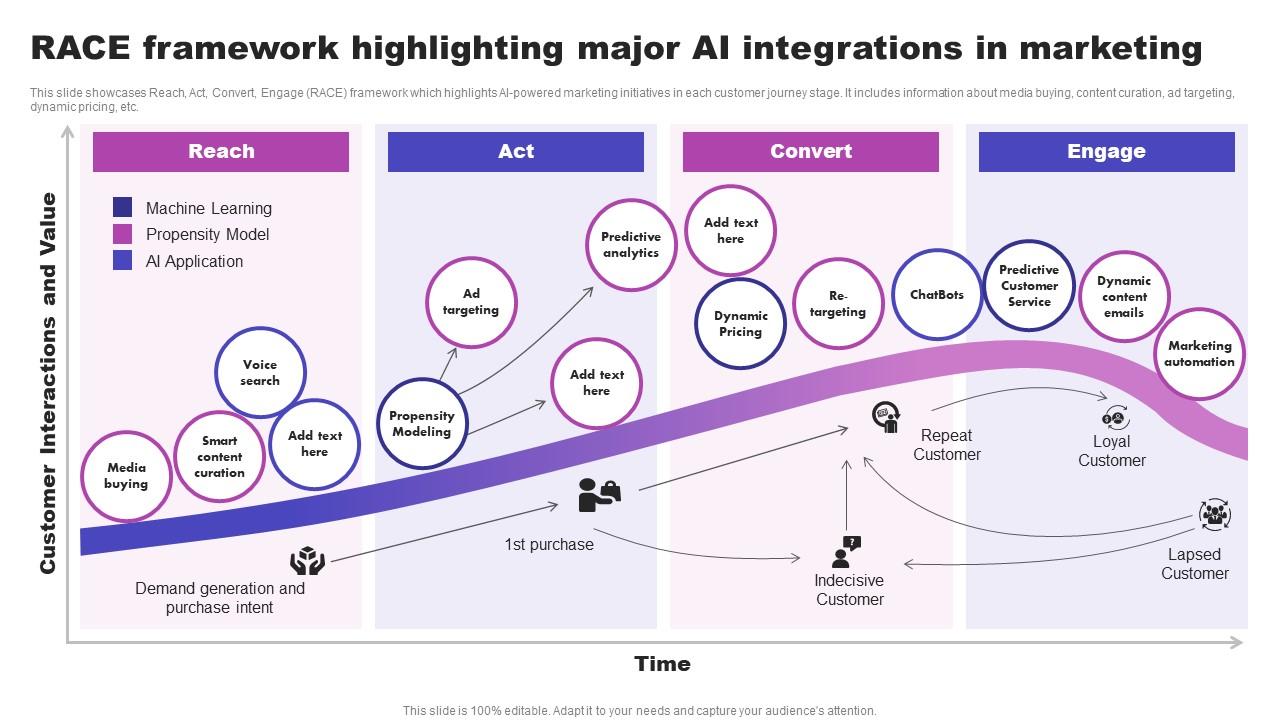
This slide showcases Reach, Act, Convert, Engage RACE framework which highlights AI powered marketing initiatives in each customer journey stage. It includes information about media buying, content curation, ad targeting, dynamic pricing, etc.
People who downloaded this PowerPoint presentation also viewed the following :
Race Framework Highlighting Major AI Integrations In Marketing AI Marketing Strategies AI SS V with all 9 slides:
Use our Race Framework Highlighting Major AI Integrations In Marketing AI Marketing Strategies AI SS V to effectively help you save your valuable time. They are readymade to fit into any presentation structure.
FAQs for Race Framework Highlighting Major AI Integrations In Marketing AI Marketing Strategies
Honestly, I'd start with email personalization - get that dialed in first, then build from there. You're gonna need good data flowing in from everywhere customers touch your brand. AI tools help you spot patterns and group people into segments that actually make sense. Then you can personalize content, timing, product recs across all your channels. The predictive stuff is pretty cool too - like forecasting what someone might do next. But seriously, don't try to do everything at once or you'll lose your mind. Pick one thing, nail it, then add more layers.
So basically you can feed all your customer data into AI tools - website clicks, purchases, social media stuff, email opens, whatever. The algorithms will catch patterns you'd totally miss, like which products people browse together or when they're about to bail on their cart. Honestly it's kind of creepy how much it picks up lol. Just make sure your data is clean first or you'll get garbage results. I'd start simple - connect your existing data sources to one good analytics platform. Don't go crazy with multiple tools right away, you'll just confuse yourself.
So machine learning is like having a crystal ball for your marketing stuff. It digs through tons of old data and finds patterns you'd totally miss. Pretty wild how it predicts which campaigns will crush it, when customers might bail, and what content different groups actually want to see. Once you dump enough data into these algorithms, they get freakishly accurate - honestly sometimes it's almost creepy. You can forecast seasonal trends, figure out where to spend your ad budget, even spot which leads will probably convert. But don't go crazy right away. Pick something simple like predicting email open rates first, then expand from there.
Dude, AI is a game-changer for personalized marketing. It digs into your customer data - browsing habits, what they've bought before, how they interact with your stuff - then predicts what they actually want to see. Pretty crazy how spot-on it gets tbh. You can automatically segment people and hit them with tailored emails, product recs, the whole nine yards. Plus it'll figure out the best times to send campaigns and test subject lines without you lifting a finger. I'd start small though - maybe dynamic email content first. You'll definitely notice better click rates right away.
Honestly, the main things you gotta worry about are transparency, privacy, and bias. Tell people upfront when AI's involved - nobody likes feeling tricked. Privacy's another biggie since these systems basically hoover up personal data to function properly. Bias is probably the trickiest part though. Your AI might start making weird decisions you didn't see coming, so you'll need to check outputs pretty regularly. Get proper consent for data use and watch out for any discrimination patterns. Trust me, it's way easier to set up good practices now than fix a mess later.
Dude, totally doable even when you're broke. I'd start with ChatGPT for writing stuff - posts, emails, whatever. Canva's got AI design features that don't suck. Mailchimp's free version does basic automation, and Buffer helps time your posts better. Honestly? Don't try everything at once or you'll go crazy. Pick whatever's driving you nuts the most - like maybe you hate writing captions - and fix that first. Once you're actually making money from it, then add more tools. I probably should've done this myself instead of jumping into five different platforms at once lol.
Focus on the basics first - conversion rates, customer acquisition cost, ROI. Those tell you if the AI is actually worth it. Then track AI-specific stuff like model accuracy and how well personalization is working. Attribution gets super messy (honestly the worst part), but you need it to know which algorithms are pulling their weight. Compare engagement from AI content vs your old campaigns. Dashboard everything so you can show before/after results. Otherwise stakeholders will question every dollar you spend on it.
Dude, AI tools like ChatGPT and Jasper are seriously game-changers for content stuff. I've been using them for blog posts, social captions, email subject lines - basically anything that takes forever to write from scratch. They're weirdly good at copying your brand voice too, which honestly surprised me at first. You still gotta edit everything (obviously), but it cuts my writing time way down. I'd say pick one type of content you're always cranking out and just try it for a week. Worst case, you hate it and go back to doing everything manually.
So Netflix is probably the best example - they're scary good at predicting what you'll watch next. Amazon's recommendation engine drives like 35% of their sales, which is wild. Spotify does the same thing with Discover Weekly (honestly obsessed with that playlist). Sephora has these AI chatbots that help match products to your skin tone, and even Domino's jumped on it for delivery routes and voice orders. My advice? Don't try to do everything at once - just pick one AI tool that fixes an actual problem your customers have. Way less overwhelming that way.
Honestly, chatbots are pretty solid now - nothing like those awful ones from before. They handle all the boring repetitive questions 24/7 so your actual team can work on bigger deals. Start with whatever questions you get asked constantly, that's the easiest win. The cool part is one bot can chat with hundreds of people at once while collecting data on what customers actually want. They're surprisingly decent at guiding people through your sales process too. I'd definitely set one up for lead qualification first - saves so much time.
Honestly, the biggest pain points are gonna be data silos and your team freaking out about job security. Most companies have systems that don't play nice together, so integration becomes this massive headache. People will resist because they think AI's coming for their jobs - which, fair enough, I'd be nervous too. Budget's always tight, plus you'll need to retrain folks or bring in people who actually get both marketing and AI. My advice? Start stupidly small. Pick one low-risk thing where you can show results fast, then build from there. Don't try to revolutionize everything overnight.
So AI basically looks at all your campaign data and figures out what's working where - like it'll notice your Facebook ads kill it on weekdays but Instagram stories are weekend gold. Pretty neat stuff. It adjusts bids and budgets way faster than you could ever do manually, plus it catches patterns you'd totally miss. You can run multiple ad variations at once too, which is honestly a game-changer. I'd start with automated bidding on whatever campaigns are already doing well, then just expand from there once you get comfortable with it.
Dude, AI's gonna get creepy good at predicting what people want before they even know it. Hyper-personalization will be huge - like, real-time customer journeys based on tiny behaviors. Everyone's ditching typing for voice search, so that's blowing up. Visual search too, obviously. Honestly, the AI-generated content flood is already annoying but it'll probably get better? The real game-changer is instant decision-making across everything. My advice - start testing this stuff now, even small experiments. Trust me, you don't want to be that person frantically catching up in five years.
So basically you can use AI to figure out which customers are gonna leave before they actually do it. Look at stuff like how often they're logging in, if they're calling support more, whether their purchases dropped off - that kind of thing. Honestly the accuracy is pretty wild once you get enough data flowing through it. From there you can set up automated emails, maybe throw them a discount, or just have someone call them directly. I'd start small though - pick your biggest red flags first and build the model around those. Way easier than trying to track everything at once.
So you'll want to start with basic AI/ML courses, then get into the specific tools - like predictive analytics or AI ad platforms. The learning curve's pretty brutal at first, not gonna lie. Data interpretation workshops are huge, plus A/B testing and ethics training. Oh, and change management stuff since people get weird about new tech. Honestly, I'd just pick one tool and get really good at it before adding more. Way less overwhelming that way.
-
Happy to incorporate such stunning templates in my presentation. Made my presentation look professional and engaging.
-
Easy to use and customize templates. Helped me give a last minute presentation.