


Recommendations Based On Machine Learning Powerpoint Presentation Slides
A recommender enhances user engagement and increases business revenue. Grab our insightfully designed Recommendations based on machine learning template. It demonstrates the different types of recommendation techniques, like content-based filtering, collaborative filtering, and hybrid recommender systems. Our Recommender engine applications deck reveals the benefits of implementing recommenders in various sectors and their role in increasing productivity and revenue. In addition, it outlines the steps to build a recommendation engine and the different types of information and feedback used by them. Furthermore, the types of recommendation engines module explain statistical measures to evaluate the accuracy of recommender systems. Moreover, our applications of filtering techniques PPT contains sections about the cold-start problem and challenges while implementing recommendation engines and their solutions. It also illustrates the architecture and working of recommendation algorithms used by Amazon, Netflix, YouTube, Spotify, and LinkedIn. Lastly, the module comprises a roadmap, a 30-60-90 days plan and checklist for implementing recommender systems, and a dashboard to monitor performance. Get access now.
A recommender enhances user engagement and increases business revenue. Grab our insightfully designed Recommendations based..


























-

- Google Slides is a new FREE Presentation software from Google.
- All our content is 100% compatible with Google Slides.
- Just download our designs, and upload them to Google Slides and they will work automatically.
- Amaze your audience with SlideTeam and Google Slides.
-

Want Changes to This PPT Slide? Check out our Presentation Design Services
-

- WideScreen Aspect ratio is becoming a very popular format. When you download this product, the downloaded ZIP will contain this product in both standard and widescreen format.
-

- Some older products that we have may only be in standard format, but they can easily be converted to widescreen.
- To do this, please open the SlideTeam product in Powerpoint, and go to
- Design ( On the top bar) -> Page Setup -> and select "On-screen Show (16:9)” in the drop down for "Slides Sized for".
- The slide or theme will change to widescreen, and all graphics will adjust automatically. You can similarly convert our content to any other desired screen aspect ratio.
Compatible With Google Slides

Get This In WideScreen
You must be logged in to download this presentation.


Do you want to remove this product from your favourites?
PowerPoint presentation slides
Deliver an informational PPT on various topics by using this Recommendations Based On Machine Learning Powerpoint Presentation Slides. This deck focuses and implements best industry practices, thus providing a birds-eye view of the topic. Encompassed with ninety slides, designed using high-quality visuals and graphics, this deck is a complete package to use and download. All the slides offered in this deck are subjective to innumerable alterations, thus making you a pro at delivering and educating. You can modify the color of the graphics, background, or anything else as per your needs and requirements. It suits every business vertical because of its adaptable layout.

People who downloaded this PowerPoint presentation also viewed the following :
Content of this Powerpoint Presentation
Slide 1: This slide introduces Recommendations based on machine learning. Commence by stating Your Company Name.
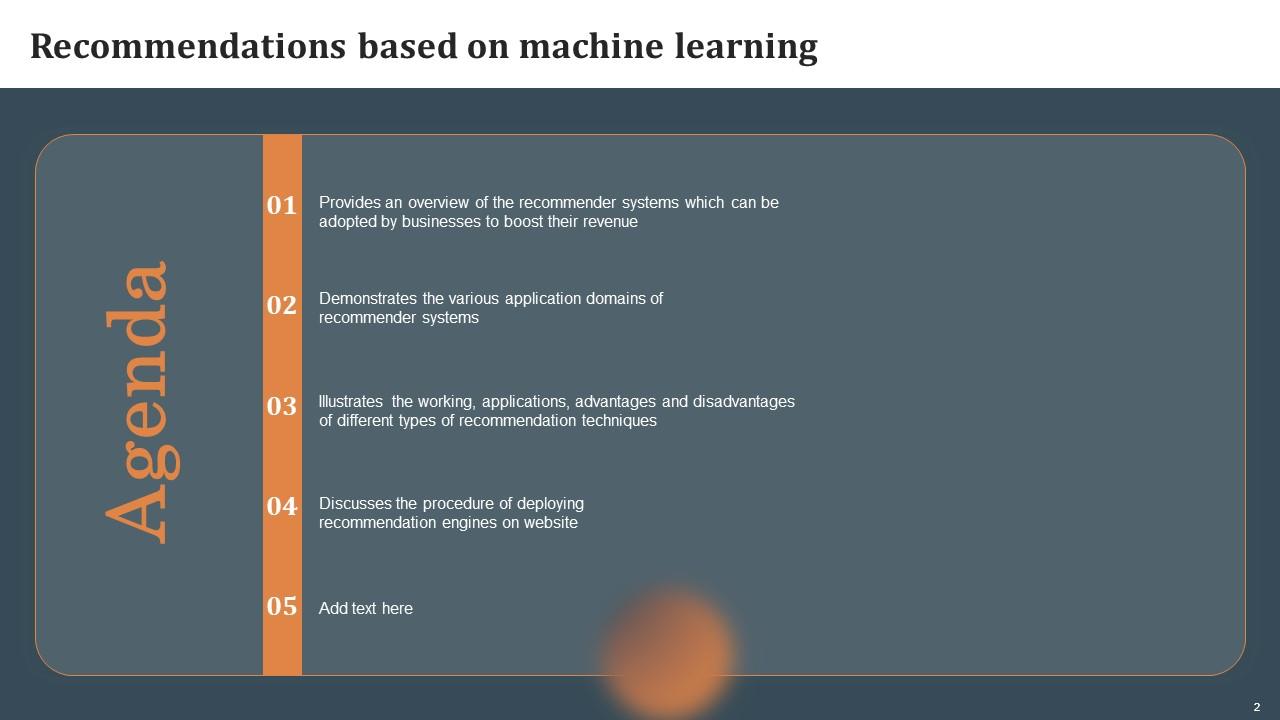
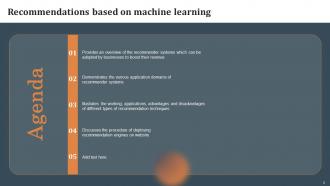
Slide 2: This slide depicts the Agenda of the presentation.
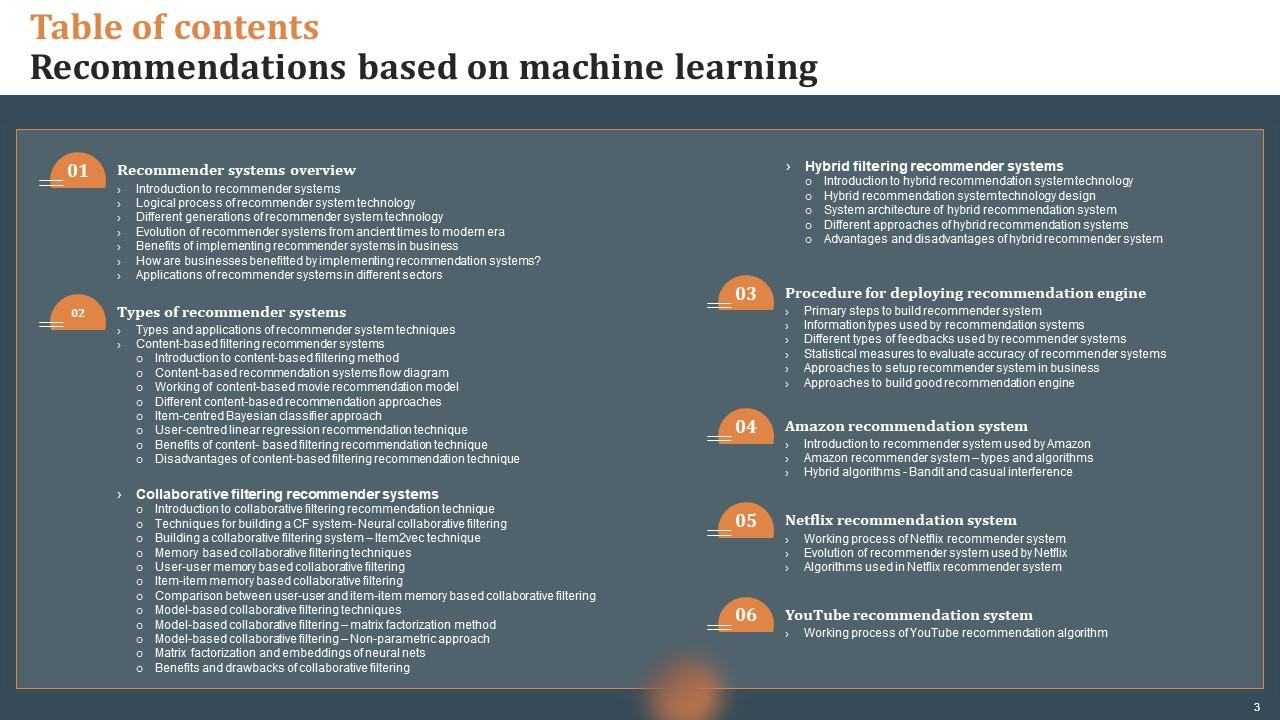
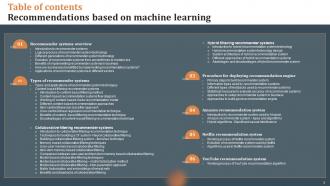
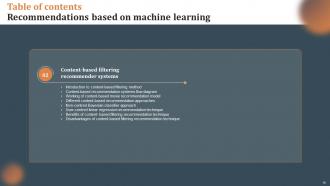
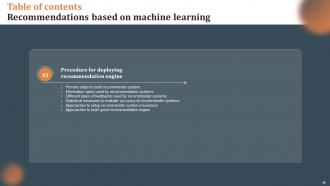
Slide 3: This slide incorporates the Table of contents.
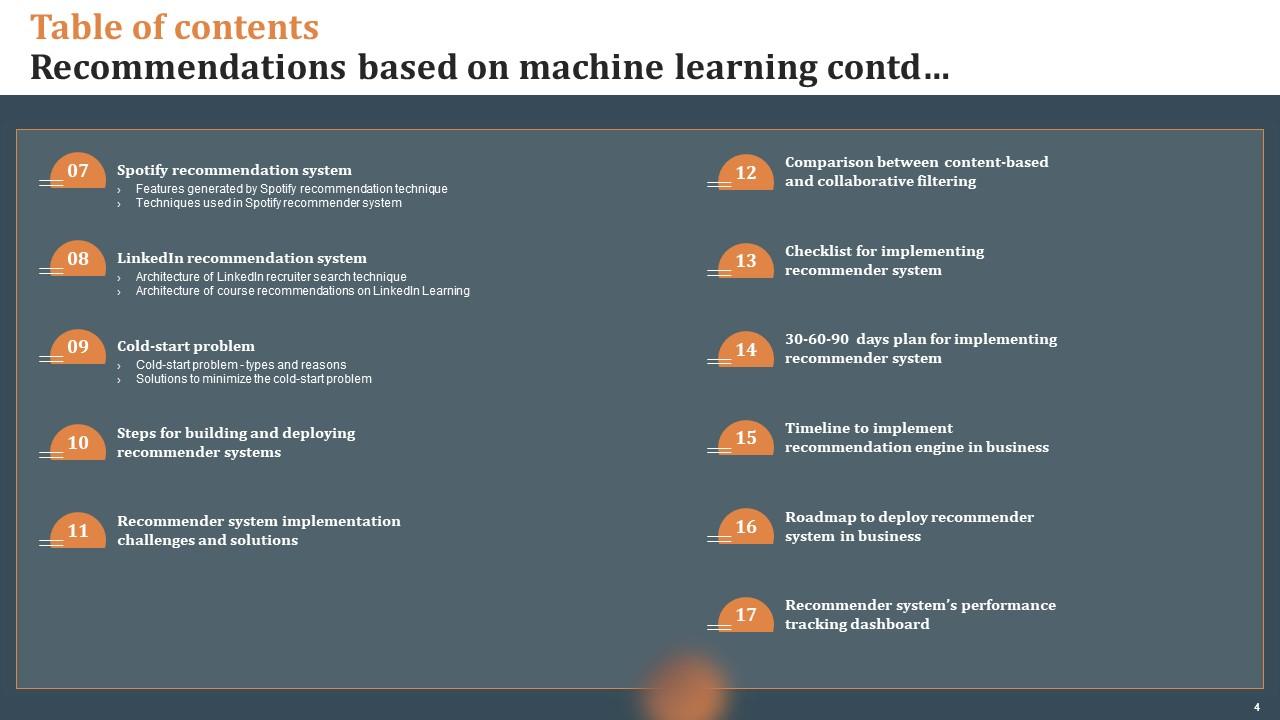
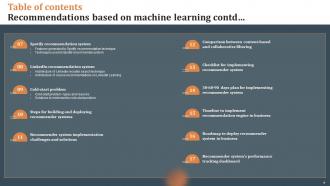
Slide 4: This is yet another slide continuing the Table of contents.
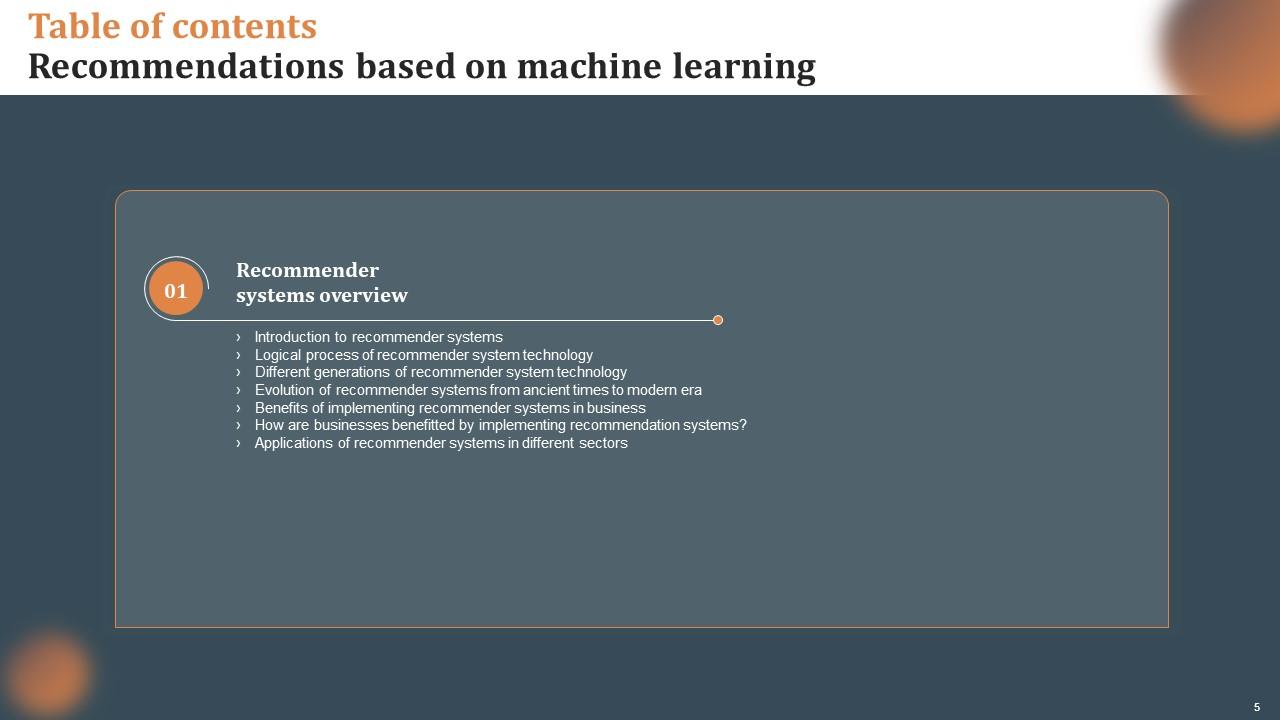
Slide 5: This slide highlights the Title for the Topics to be covered further.
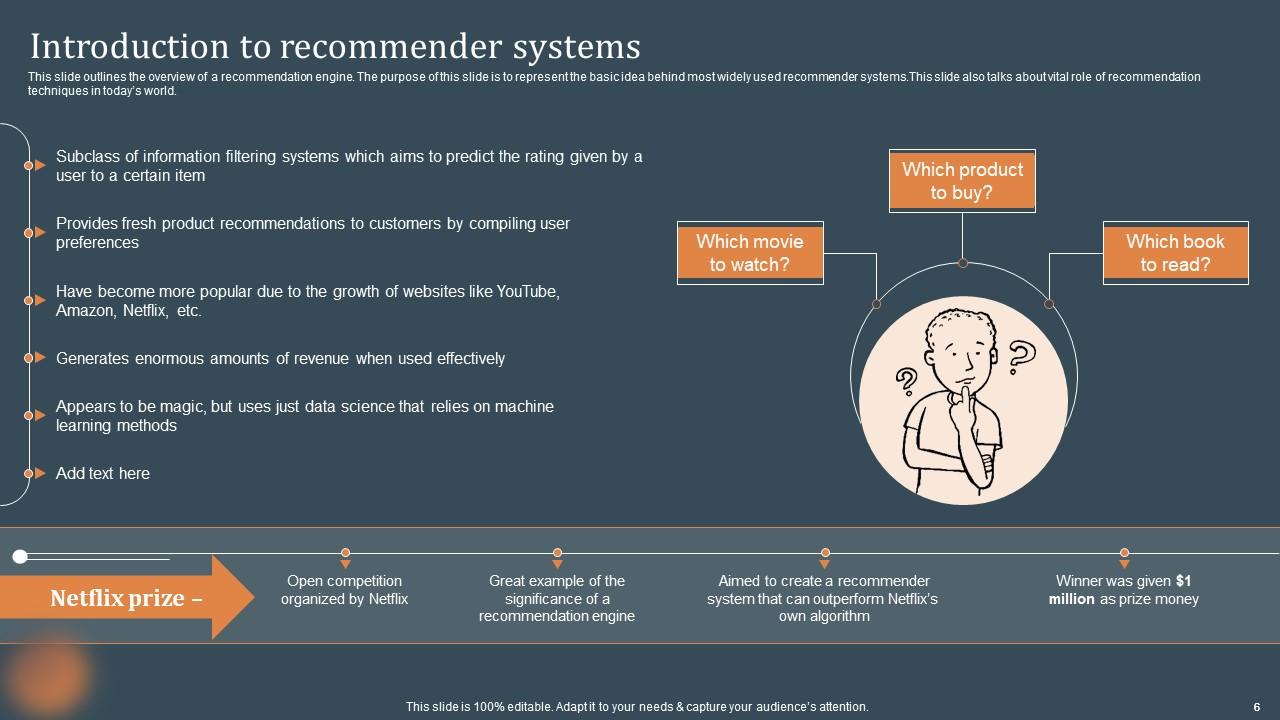
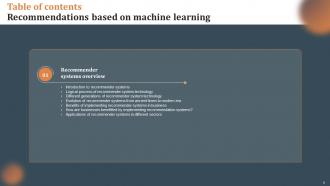
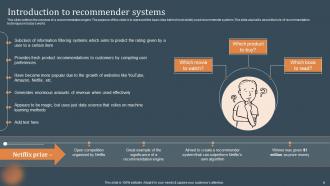
Slide 6: This slide outlines the overview of a recommendation engine.
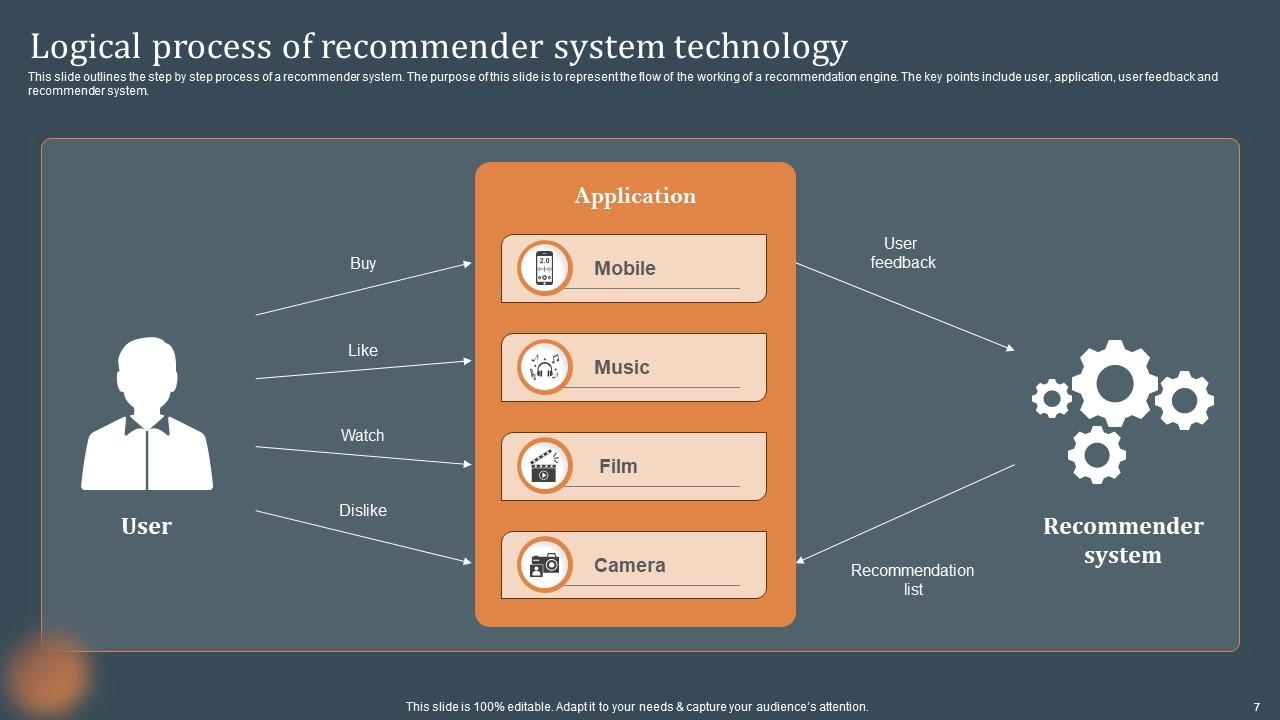
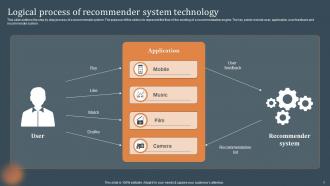
Slide 7: This slide states the Logical process of recommender system technology.
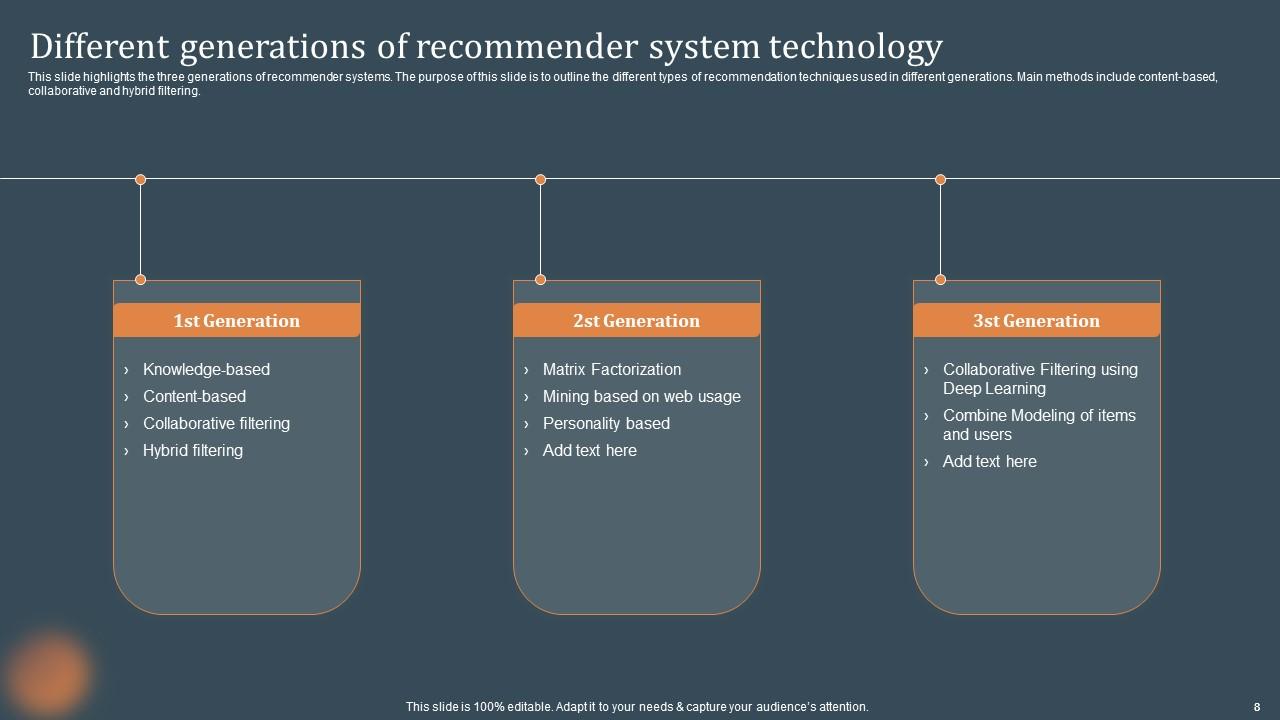
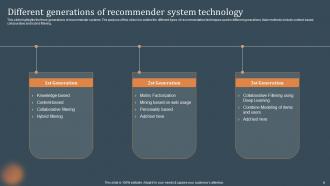
Slide 8: This slide highlights the three generations of recommender systems.
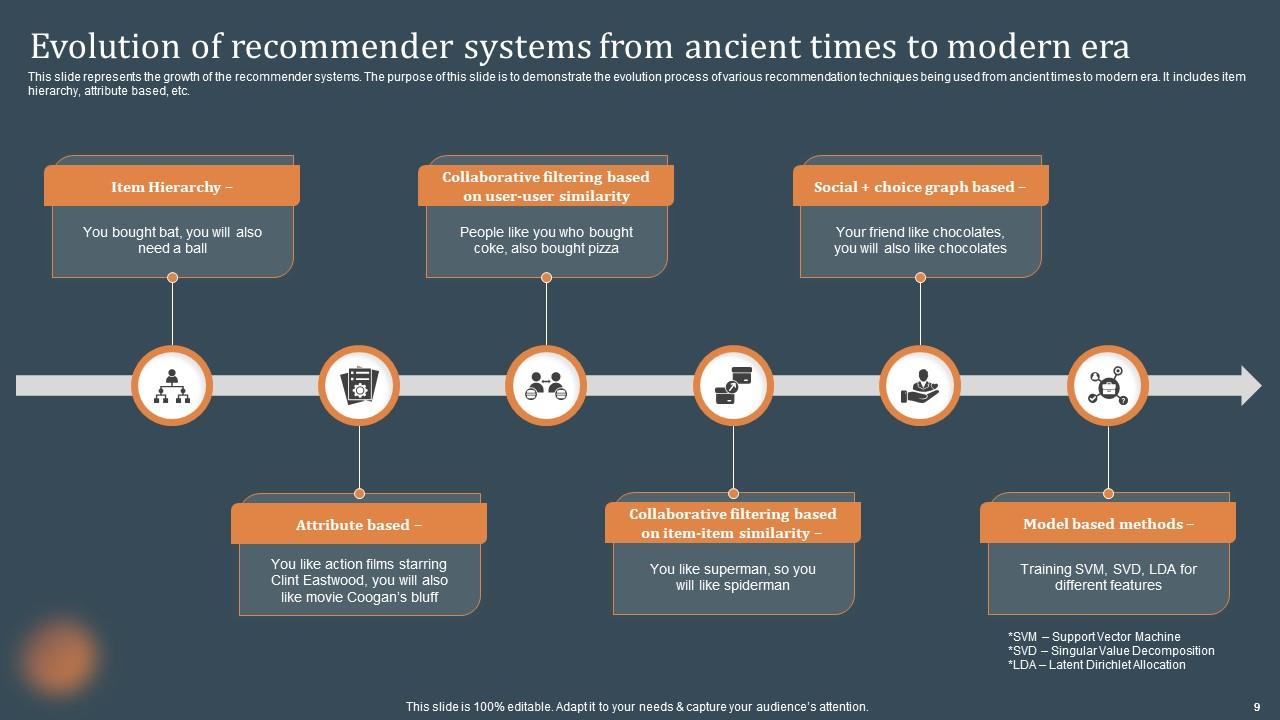
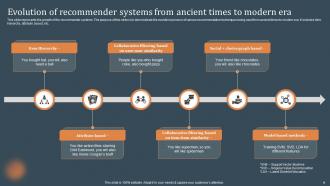
Slide 9: This slide represents the growth of the recommender systems.
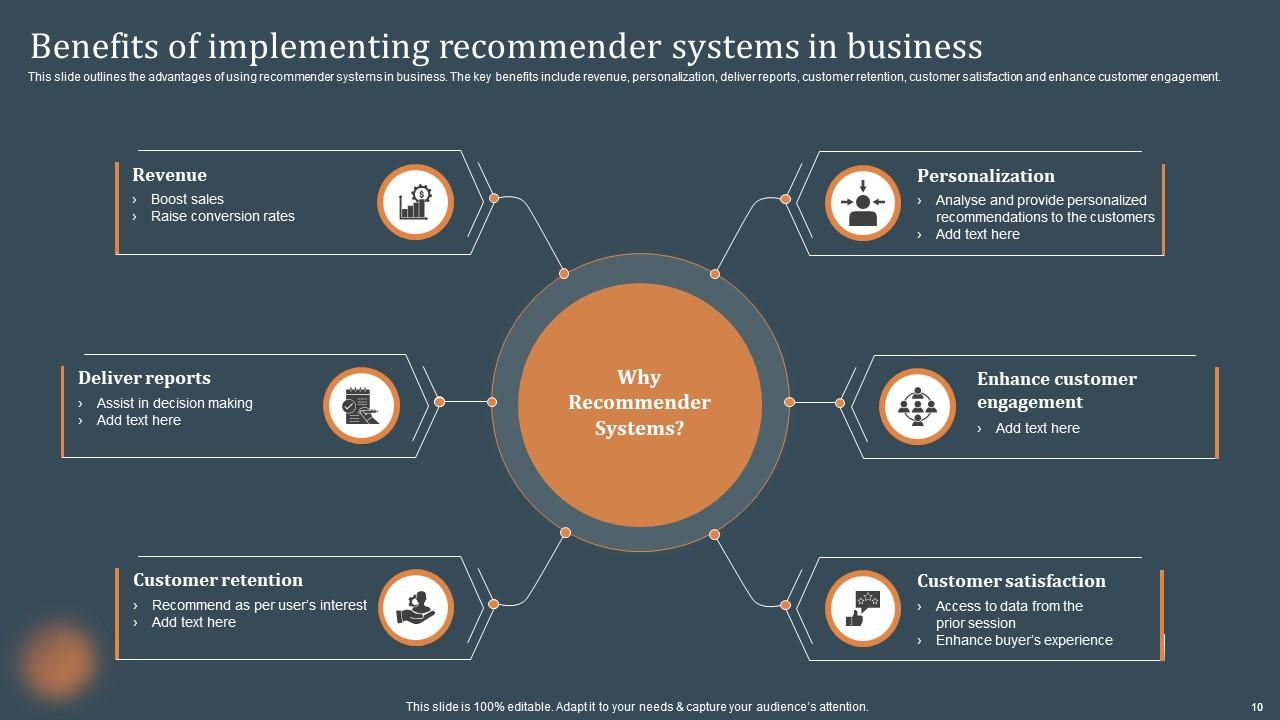
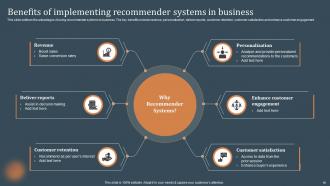
Slide 10: This slide showcases the Benefits of implementing recommender systems in business.
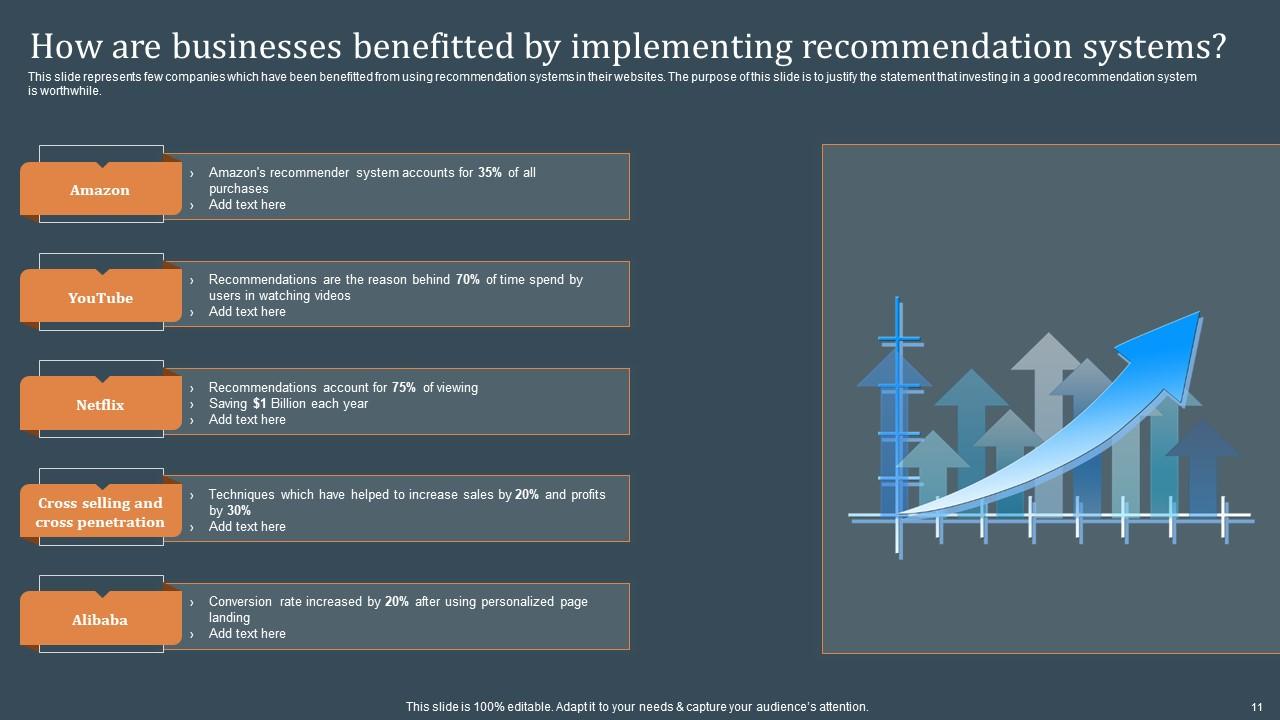
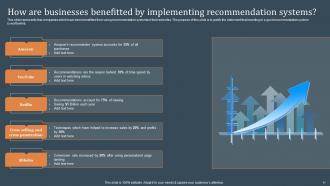
Slide 11: This slide presents few companies which have been benefitted from using recommendation systems in their websites.
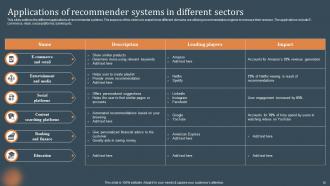
Slide 12: This slide displays the Applications of recommender systems in different sectors.
Slide 13: This slide includes the Heading for the Contents to be discussed next.
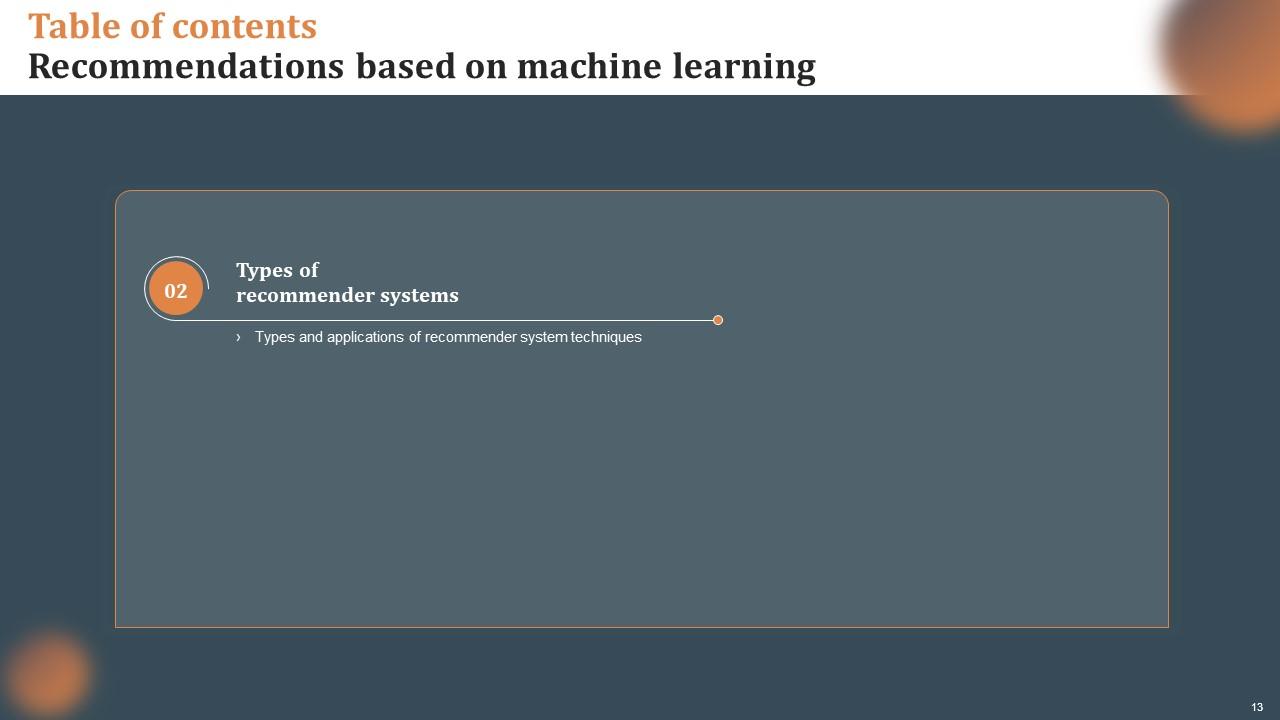
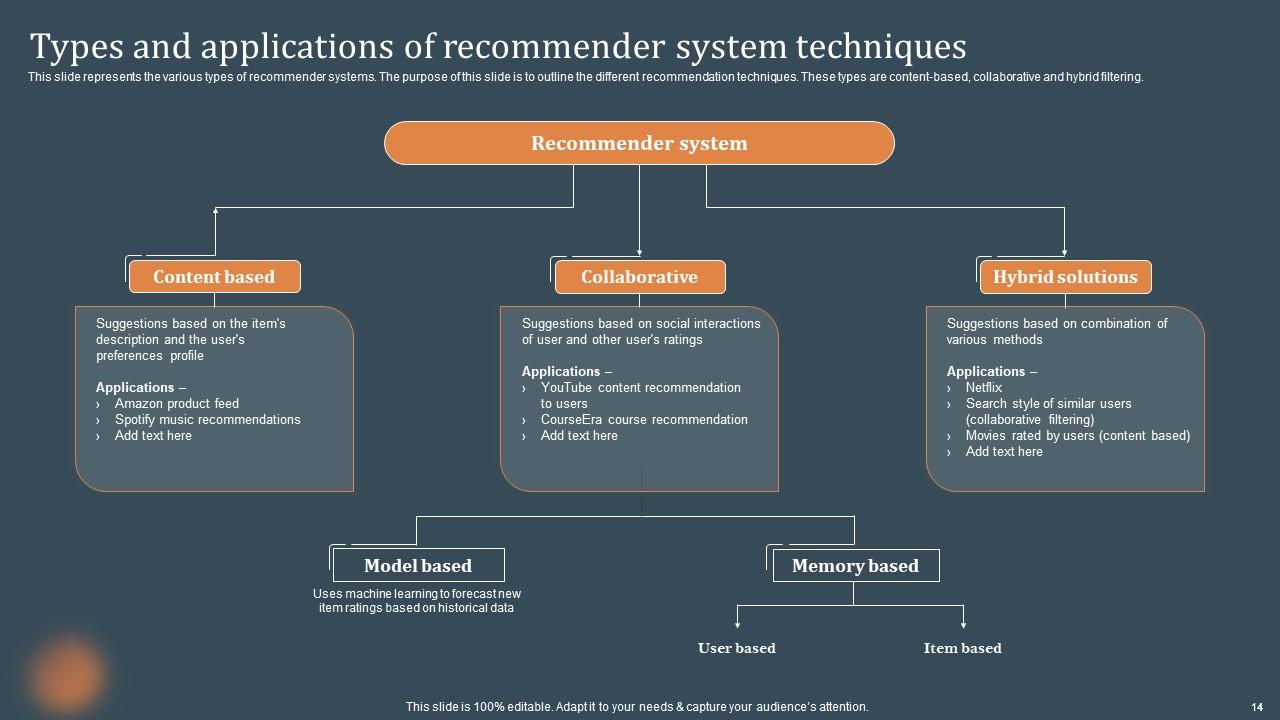
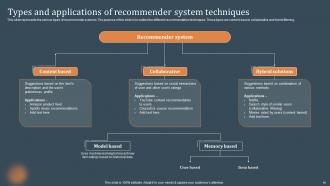
Slide 14: This slide mentions the Types and applications of recommender system techniques.
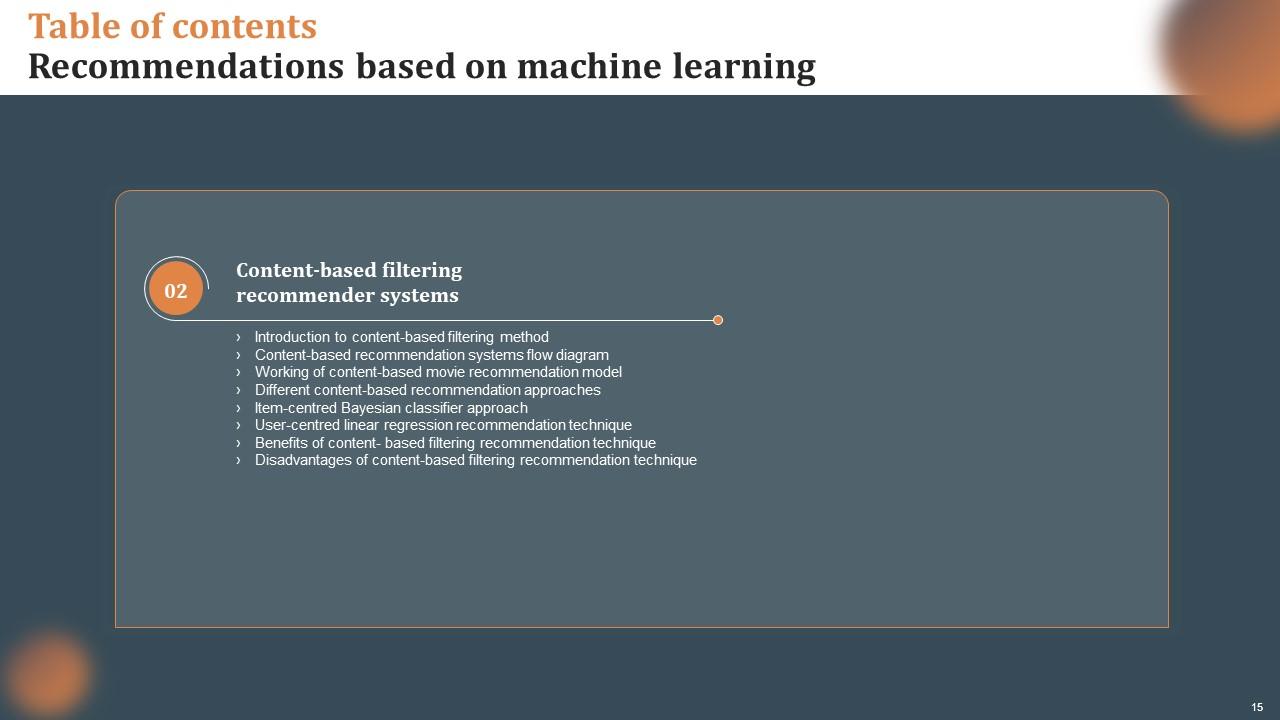
Slide 15: This slide elucidates the Title for the Ideas to be covered in the following template.
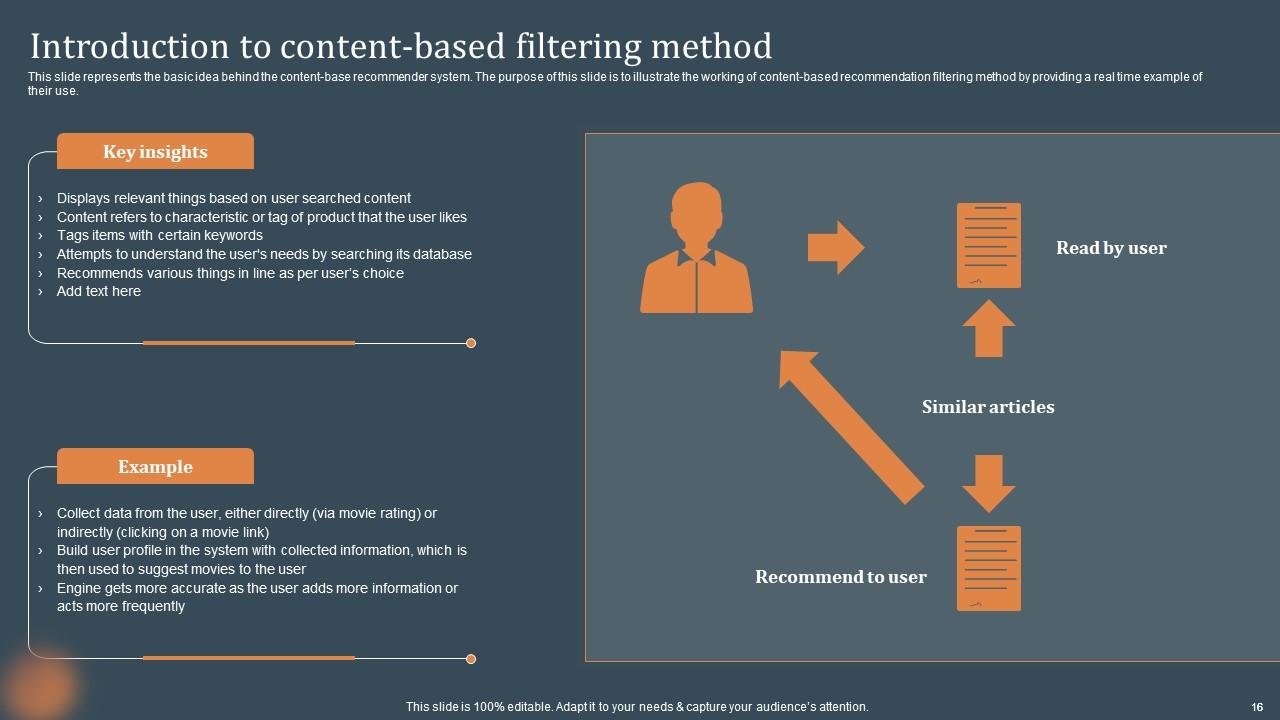
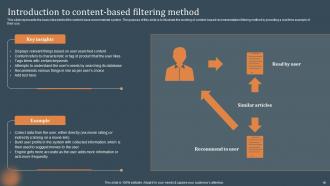
Slide 16: This slide represents the basic idea behind the content-base recommender system.
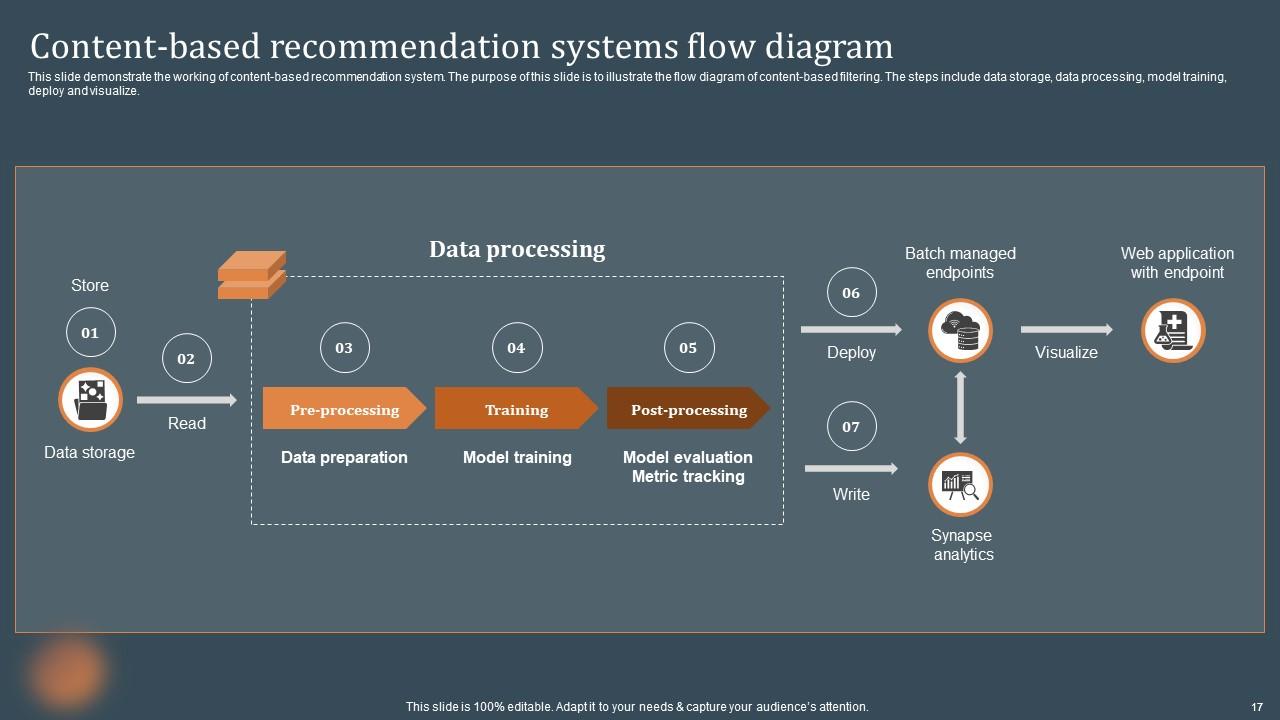
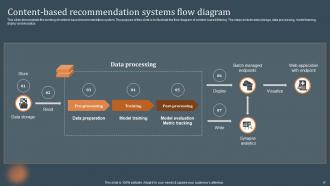
Slide 17: This slide demonstrate the working of content-based recommendation system.
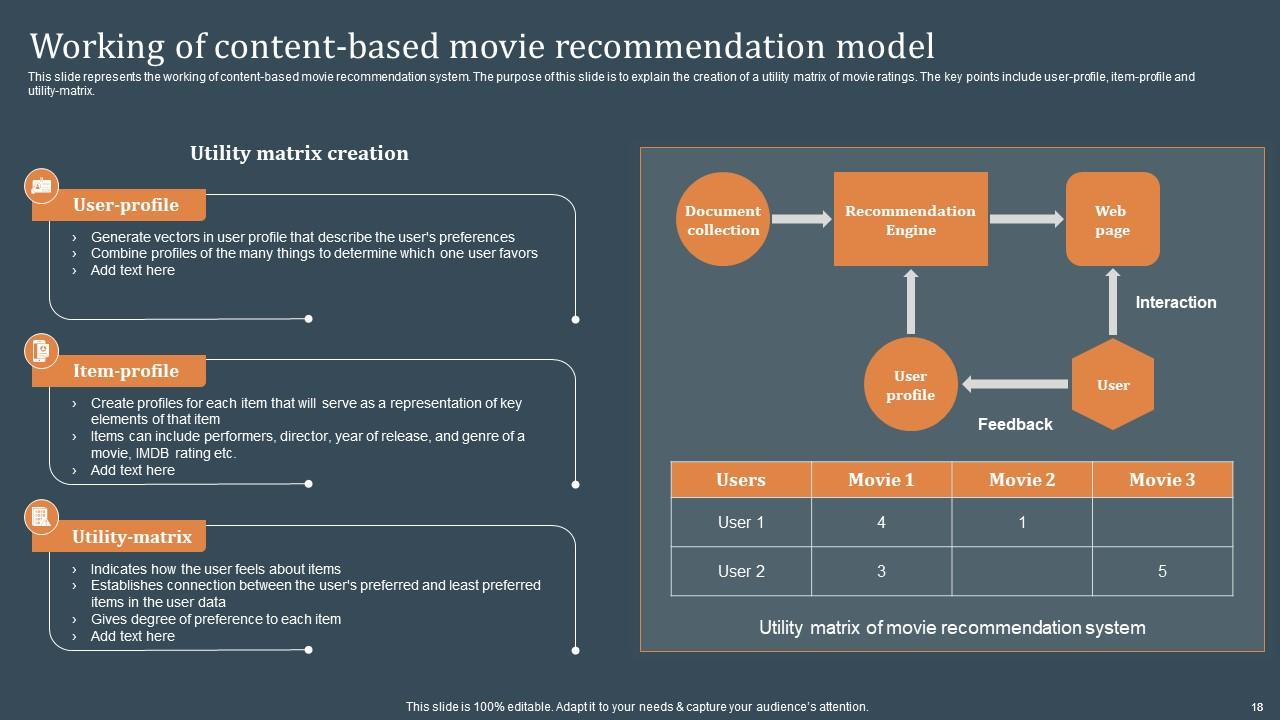
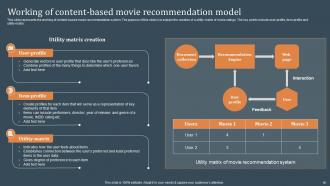
Slide 18: This slide shows the Working of content-based movie recommendation model.
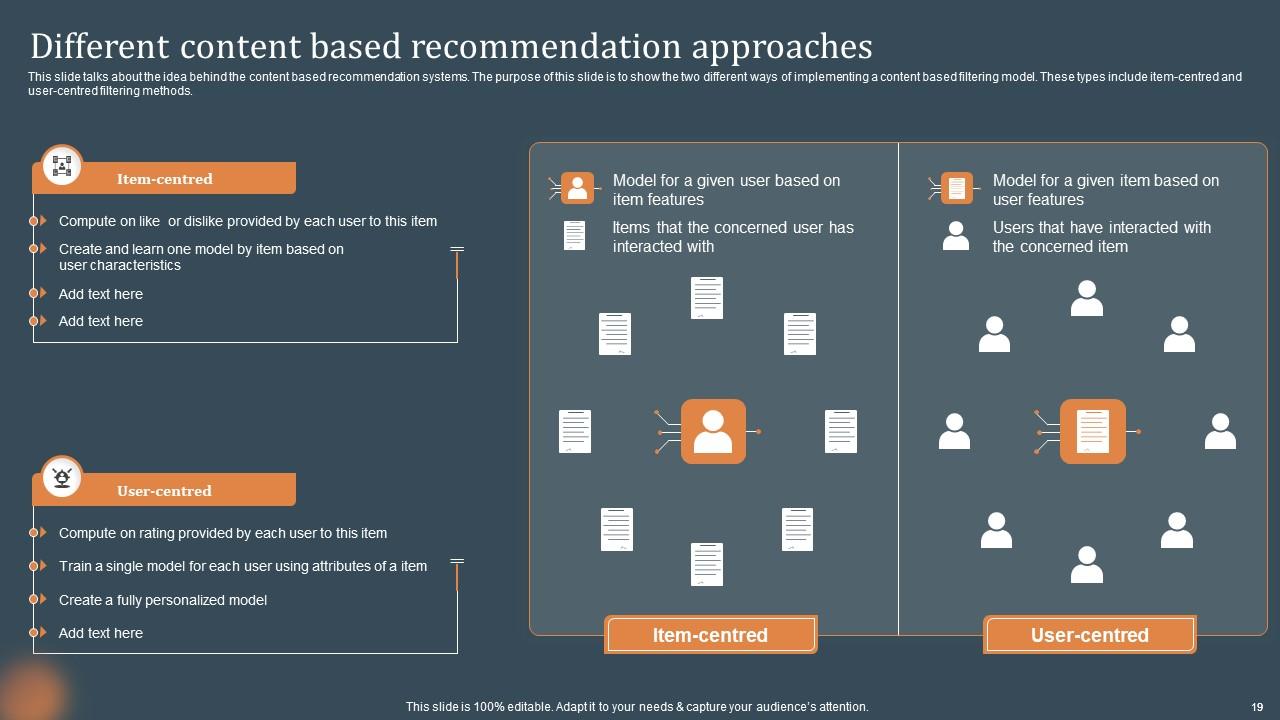
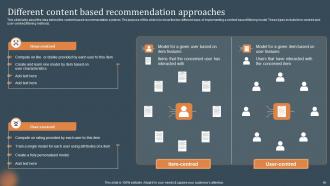
Slide 19: This slide talks about the idea behind the content based recommendation systems.
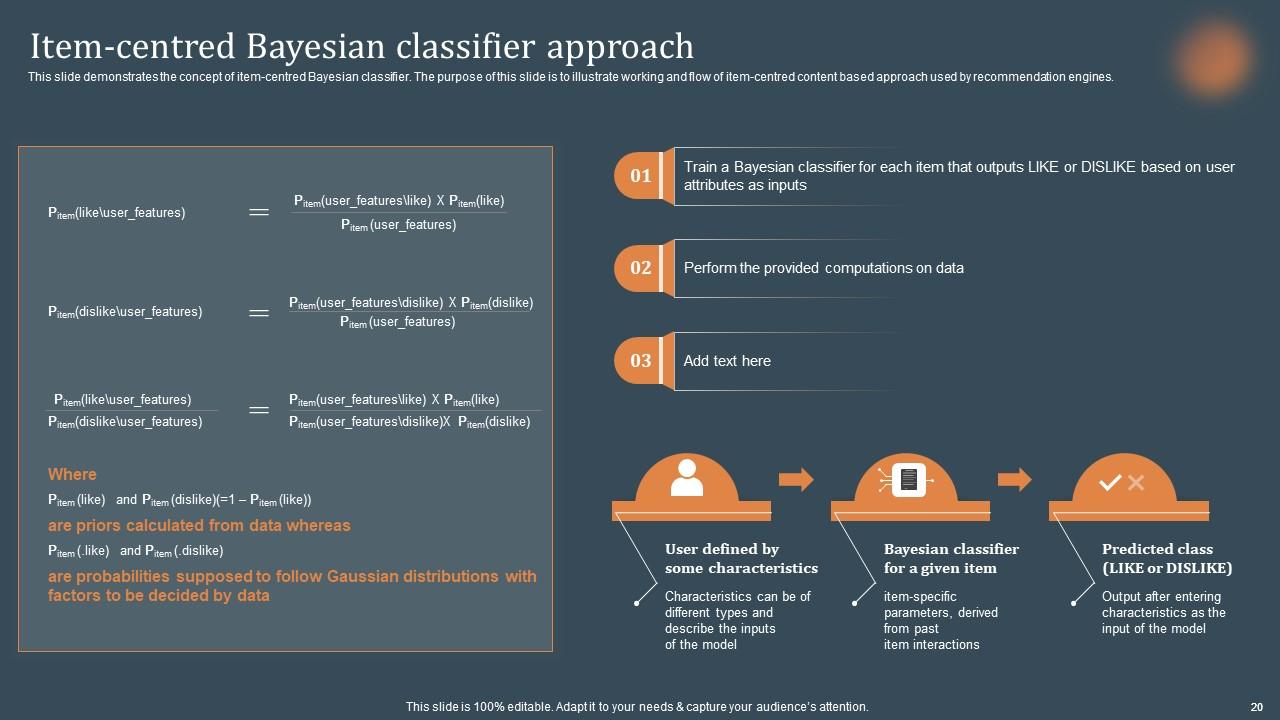
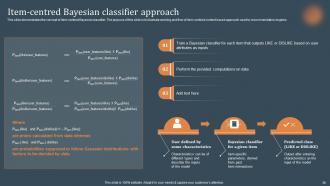
Slide 20: This slide portrays the concept of item-centred Bayesian classifier.
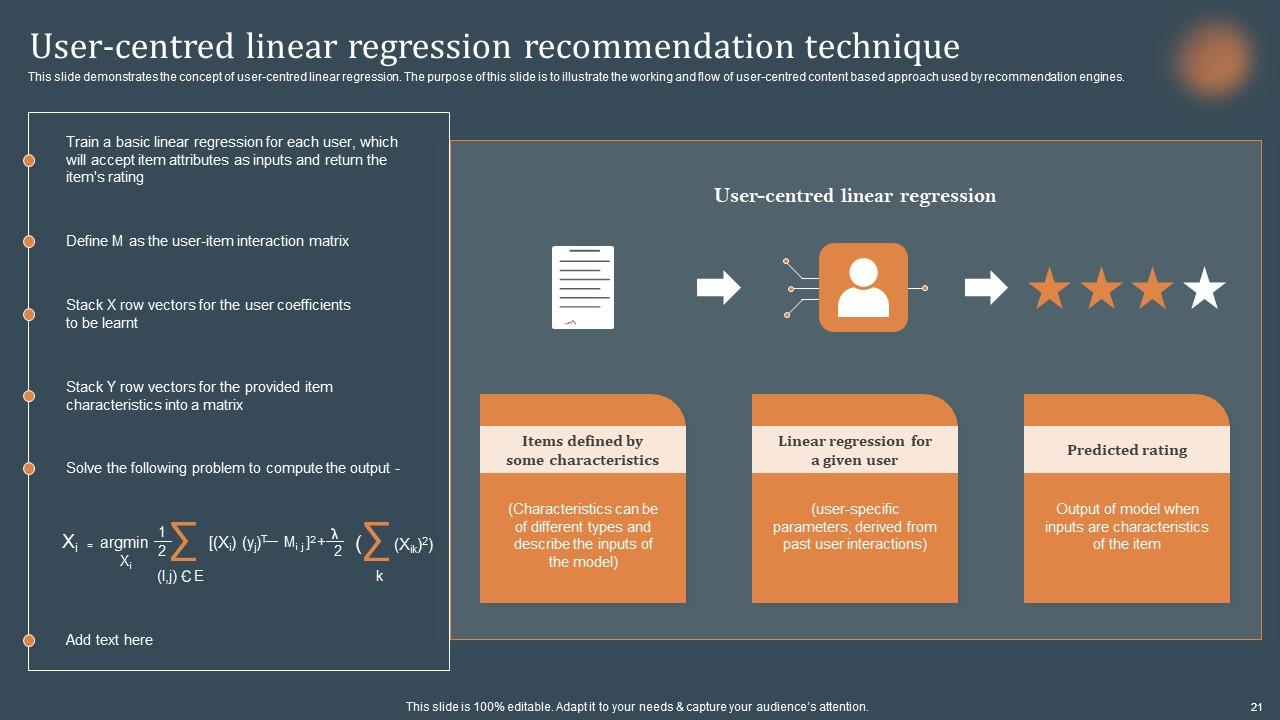
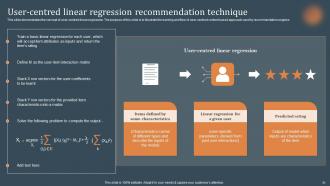
Slide 21: This slide demonstrates the concept of user-centred linear regression.
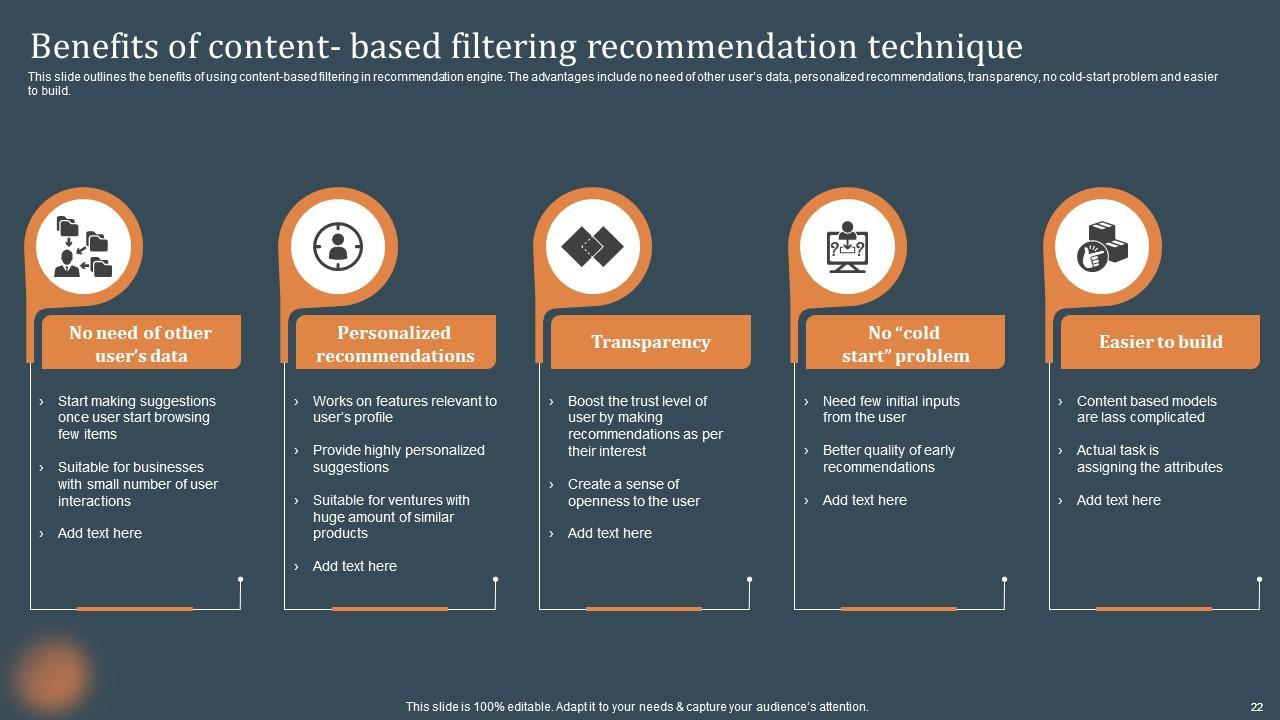
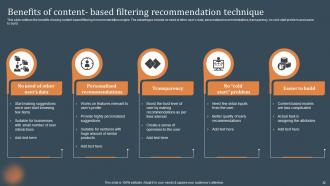
Slide 22: This slide outlines the benefits of using content-based filtering in recommendation engine.
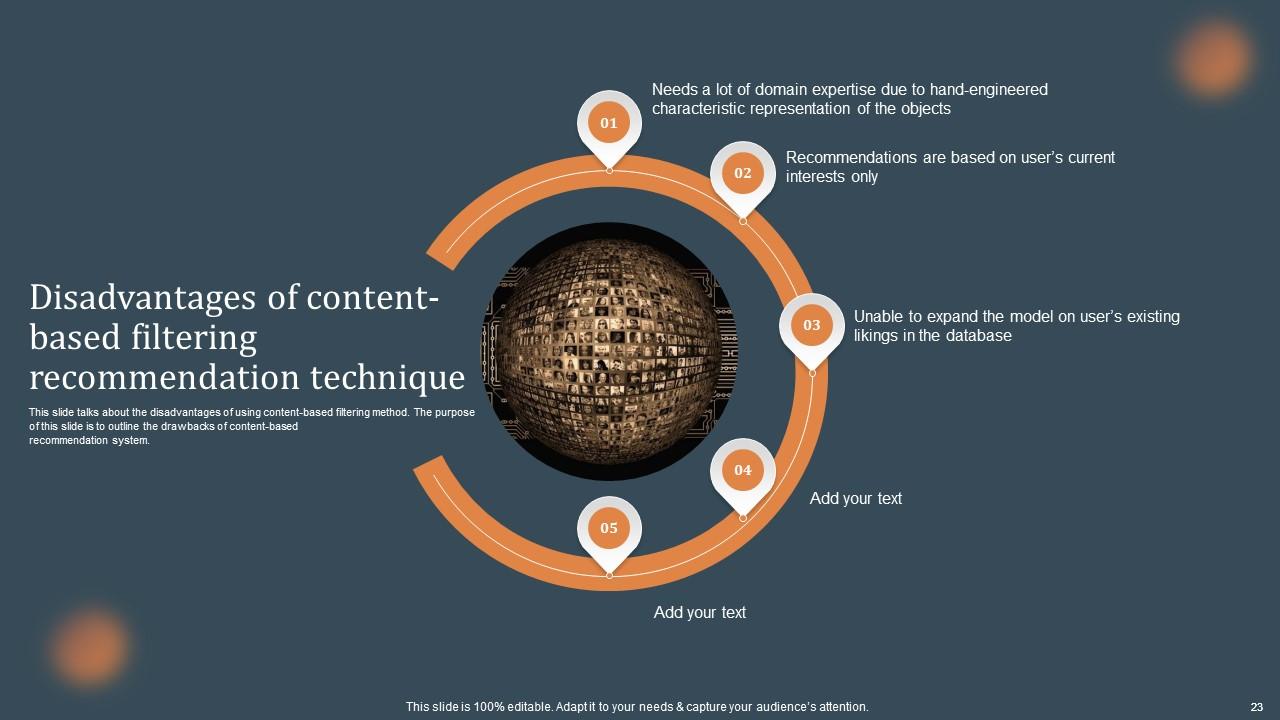
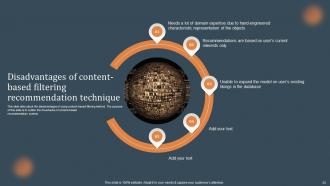
Slide 23: This slide talks about the disadvantages of using content-based filtering method.
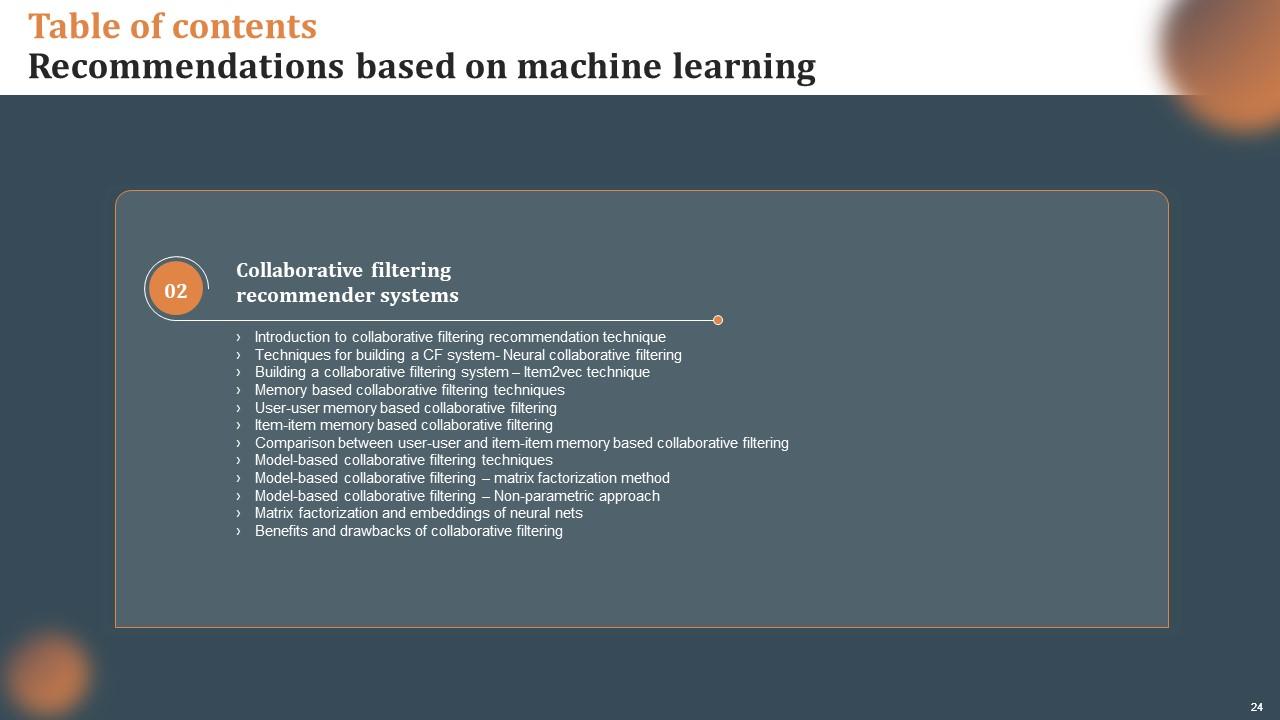
Slide 24: This slide indicates the Heading for the Ideas to be covered in the forth-coming template.
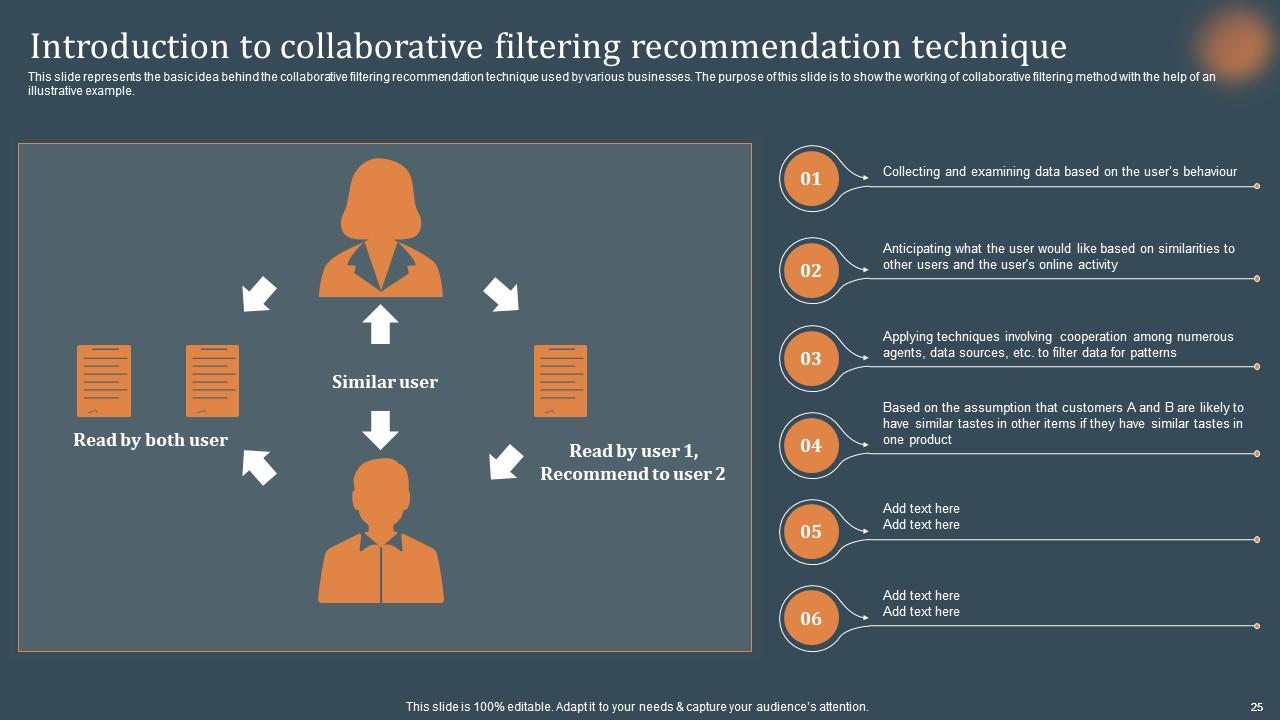
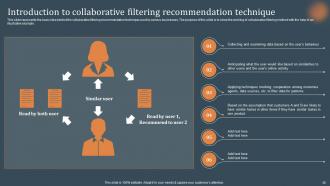
Slide 25: This slide represents the basic idea behind the collaborative filtering recommendation technique.
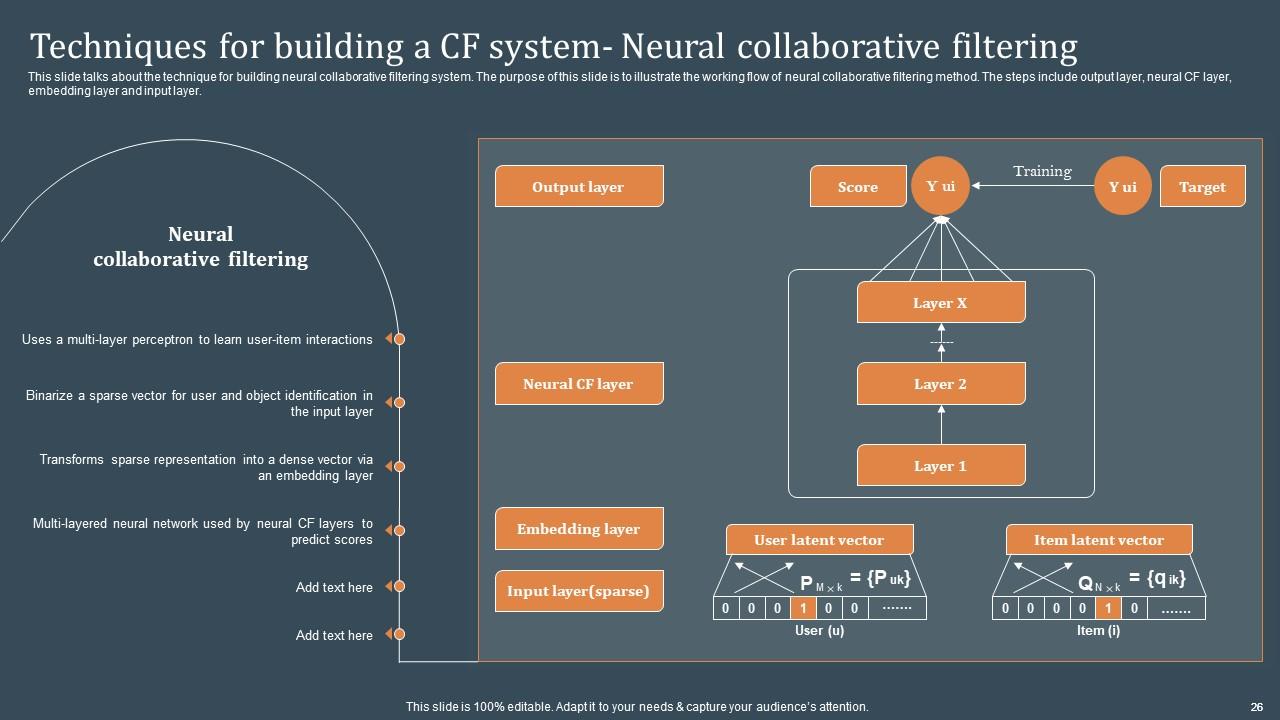
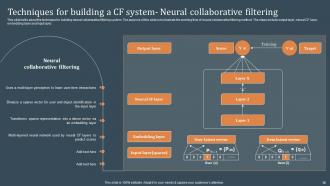
Slide 26: This slide exhibits the Techniques for building a CF system- Neural collaborative filtering.
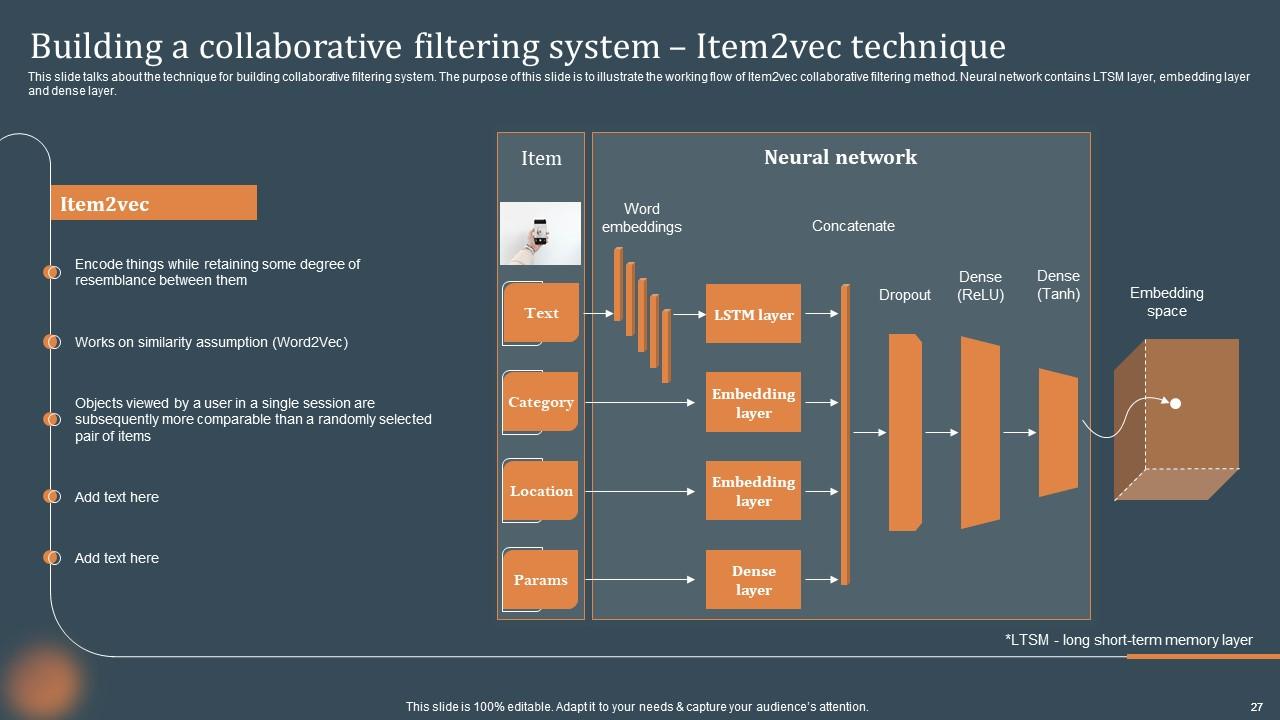
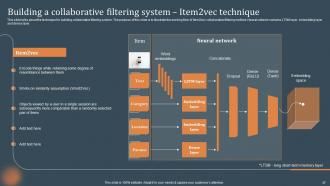
Slide 27: This slide talks about the technique for building collaborative filtering system.
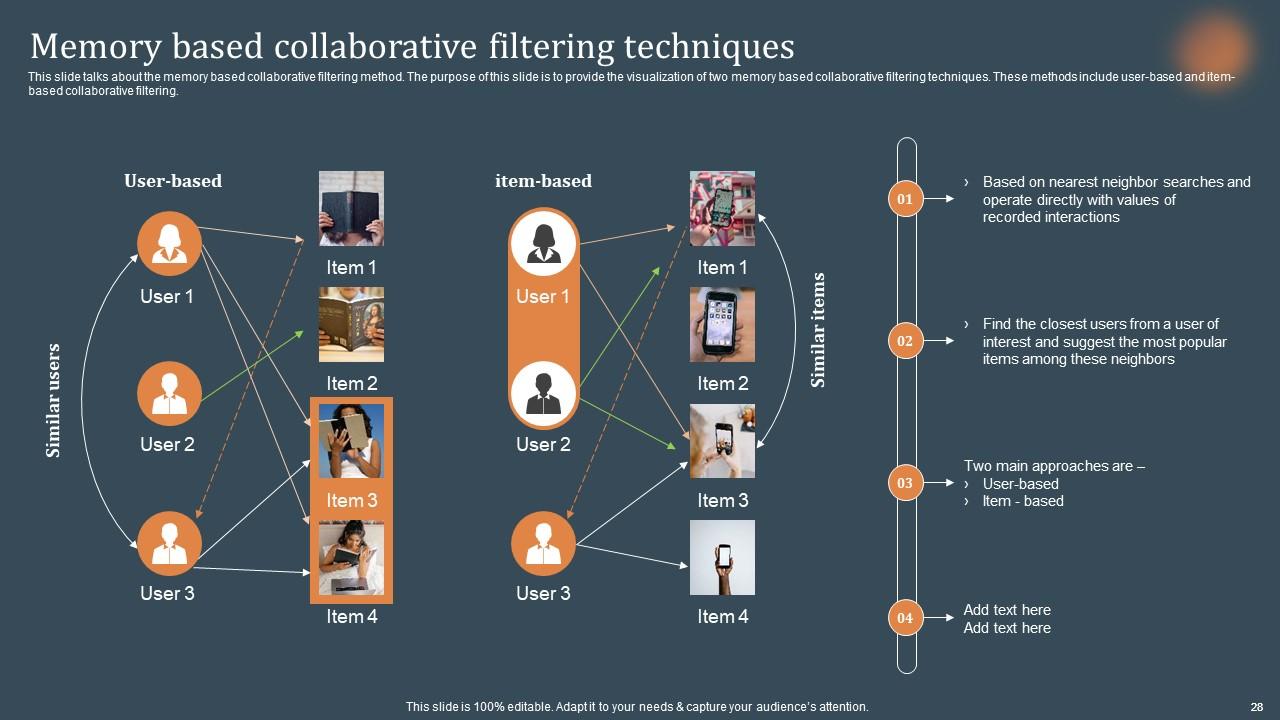
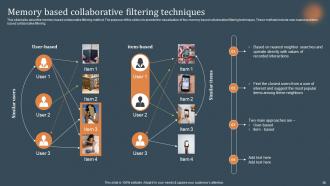
Slide 28: This slide focuses on Memory based collaborative filtering techniques.
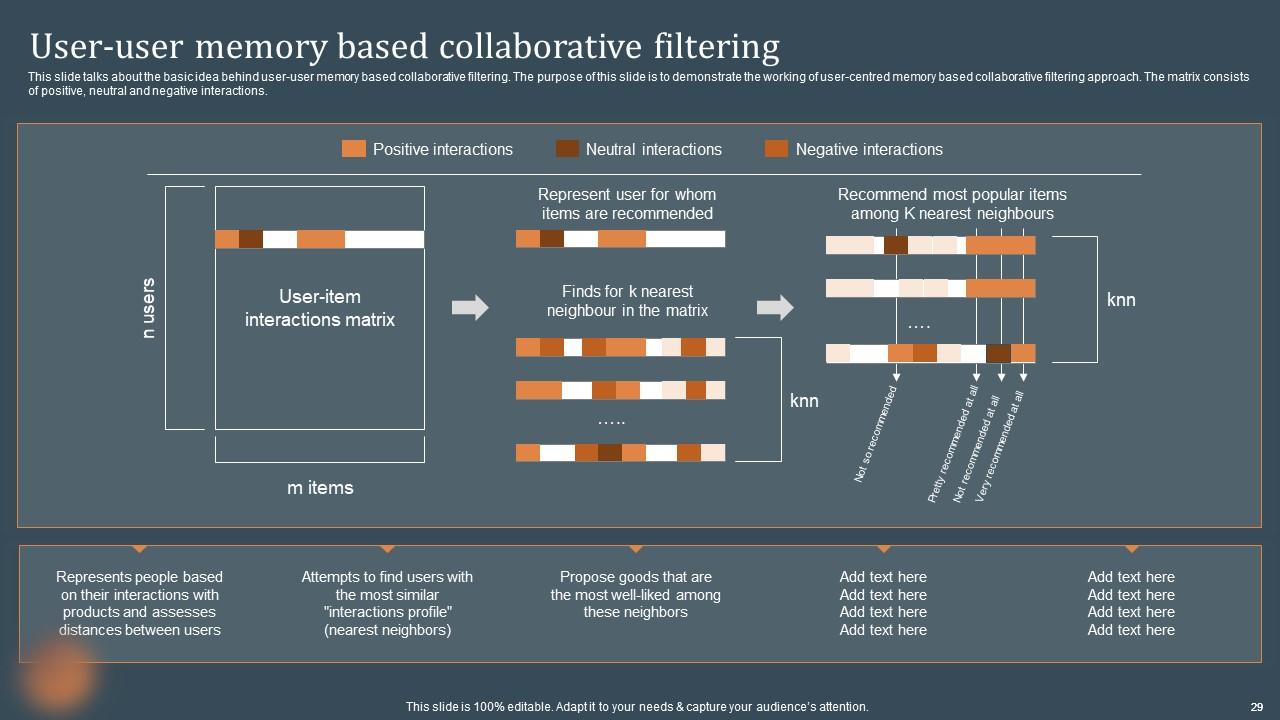
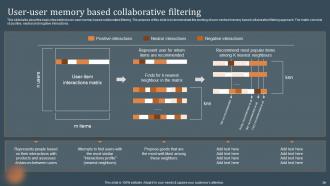
Slide 29: This slide provides information about the User-user memory based collaborative filtering.
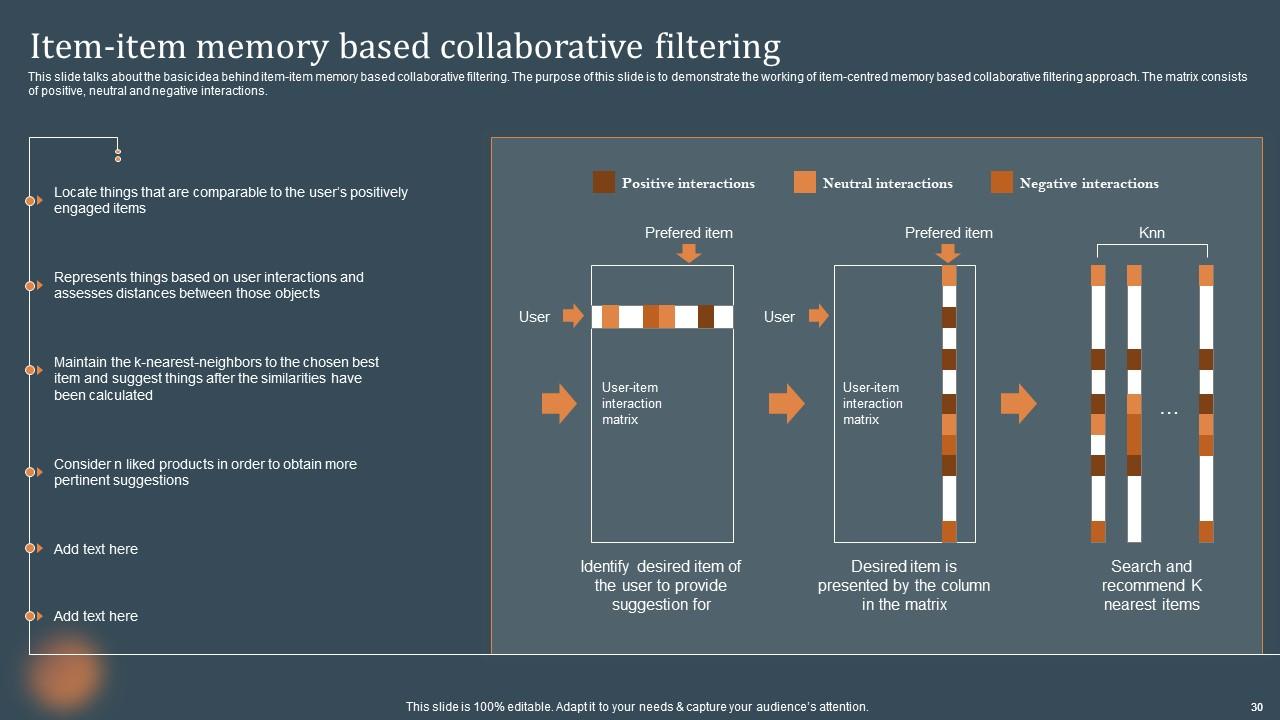
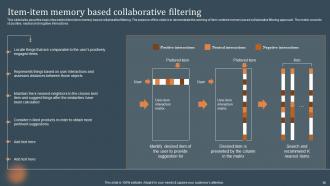
Slide 30: This slide reveals Item-item memory based collaborative filtering.
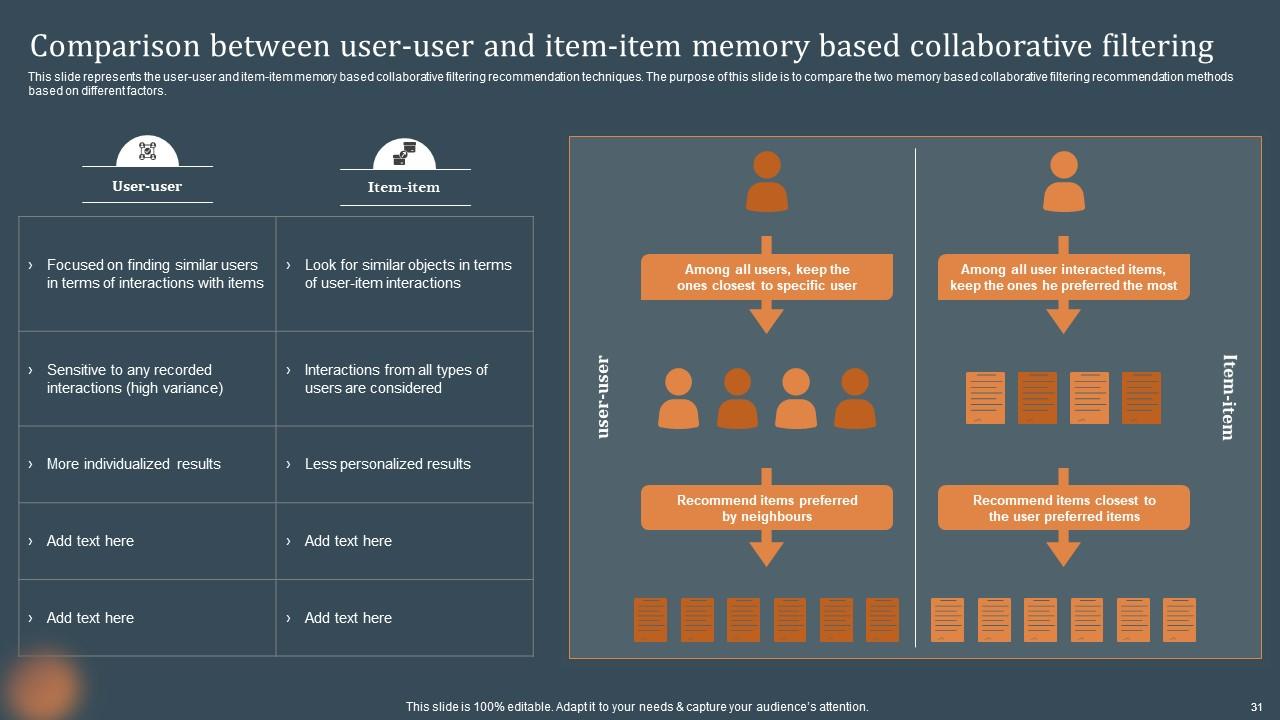
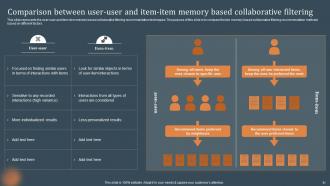
Slide 31: This slide represents the user-user and item-item memory based collaborative filtering recommendation techniques.
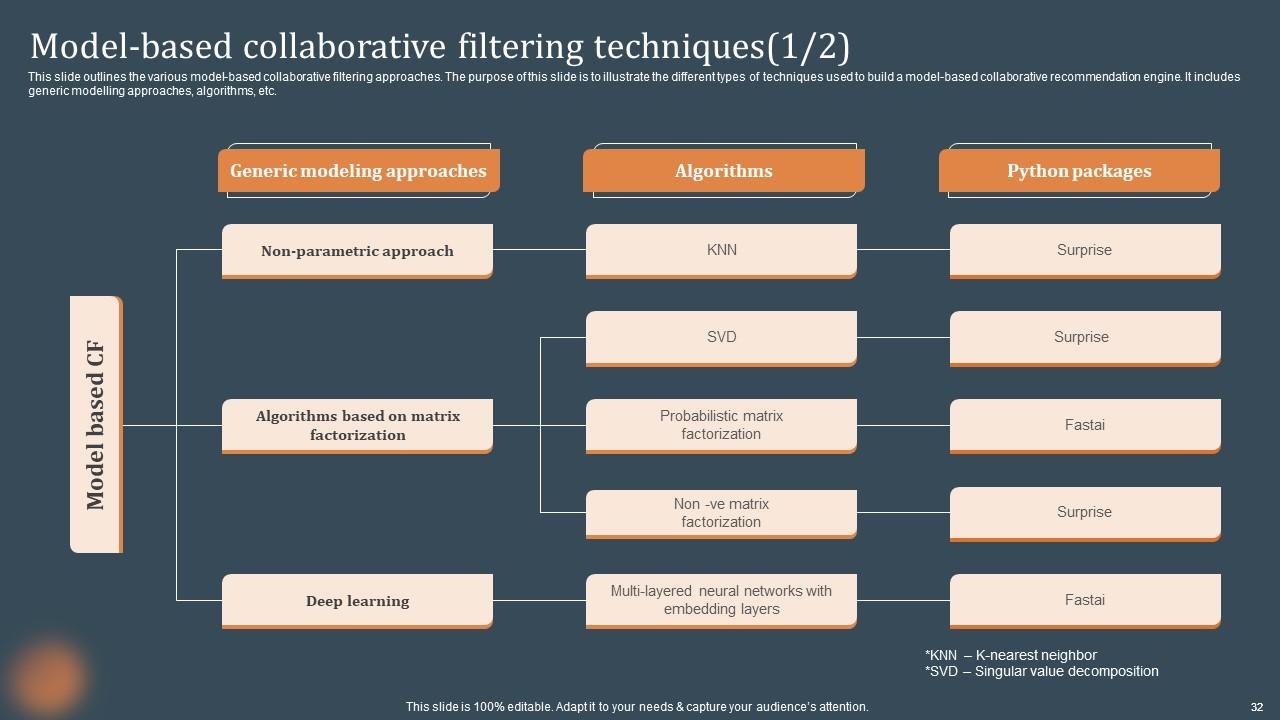
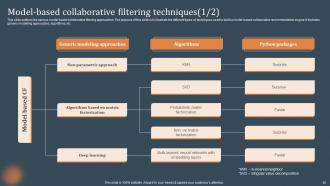
Slide 32: This slide outlines the various model-based collaborative filtering approaches.
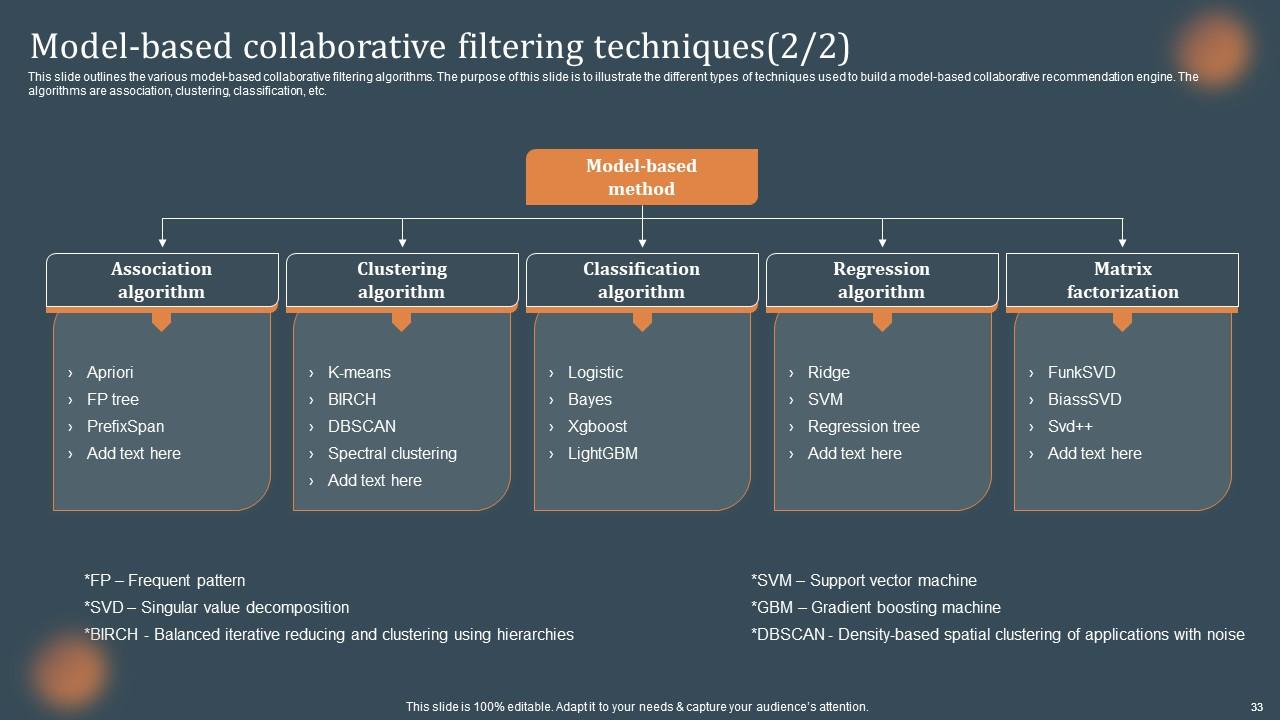
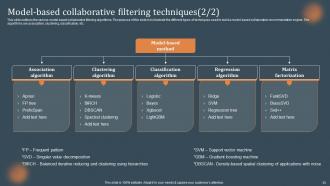
Slide 33: This slide continues the Model-based collaborative filtering techniques.
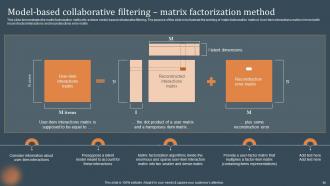
Slide 34: This slide demonstrates the matrix factorization method to achieve model-based collaborative filtering.
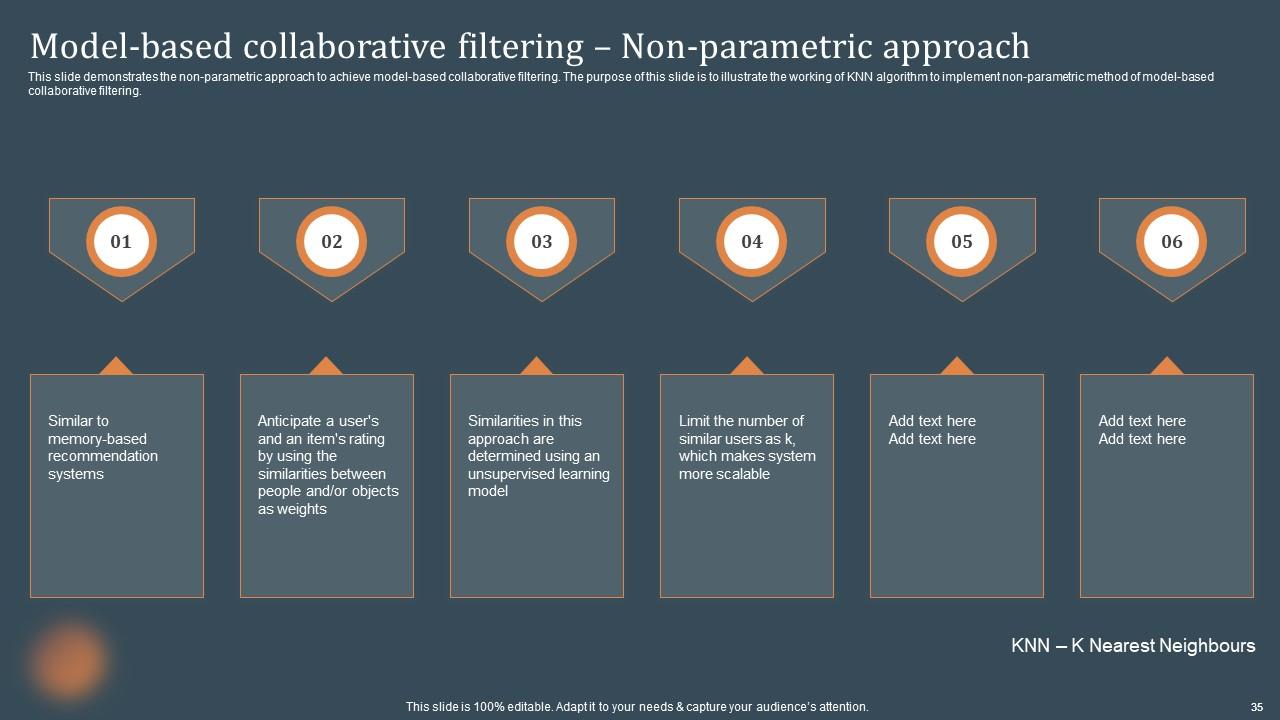
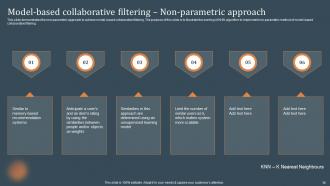
Slide 35: This slide showcases the non-parametric approach to achieve model-based collaborative filtering.
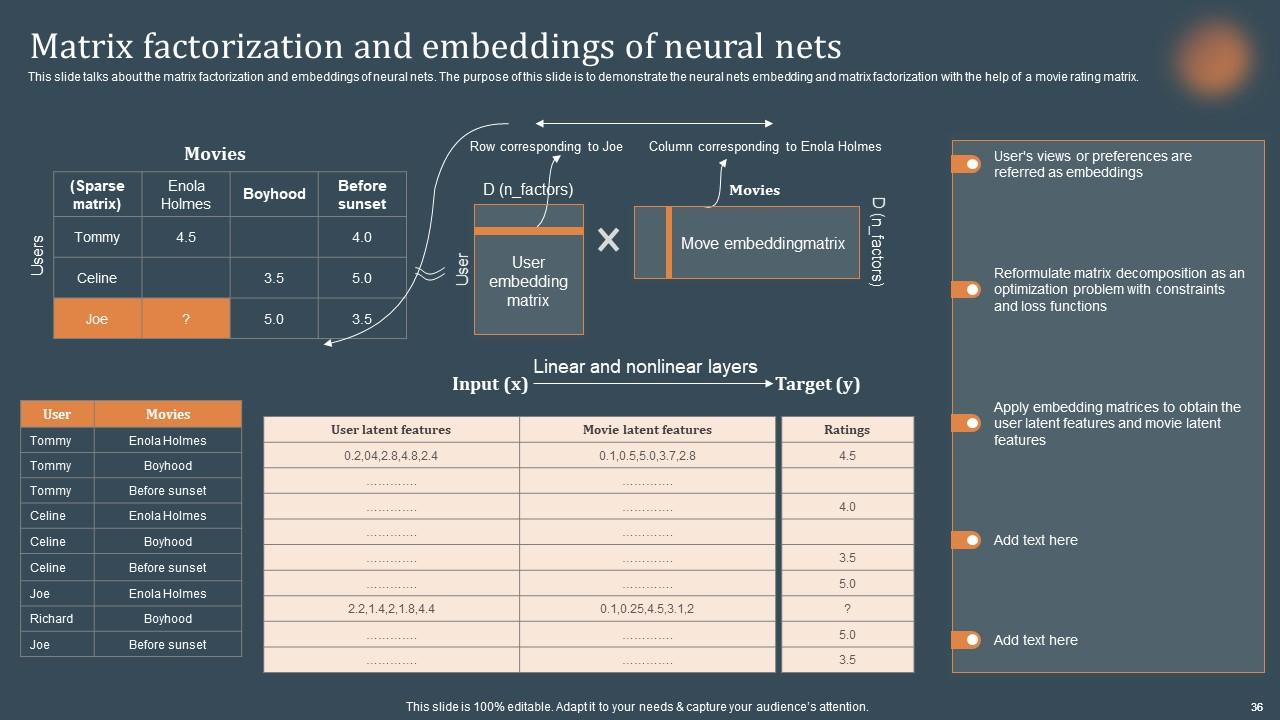
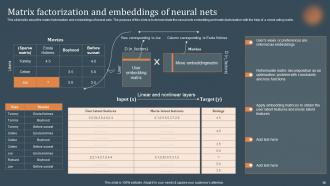
Slide 36: This slide talks about the matrix factorization and embeddings of neural nets.
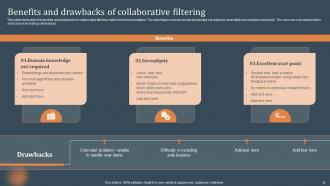
Slide 37: This slide represents the benefits and drawbacks of collaborative filtering method of recommendation.
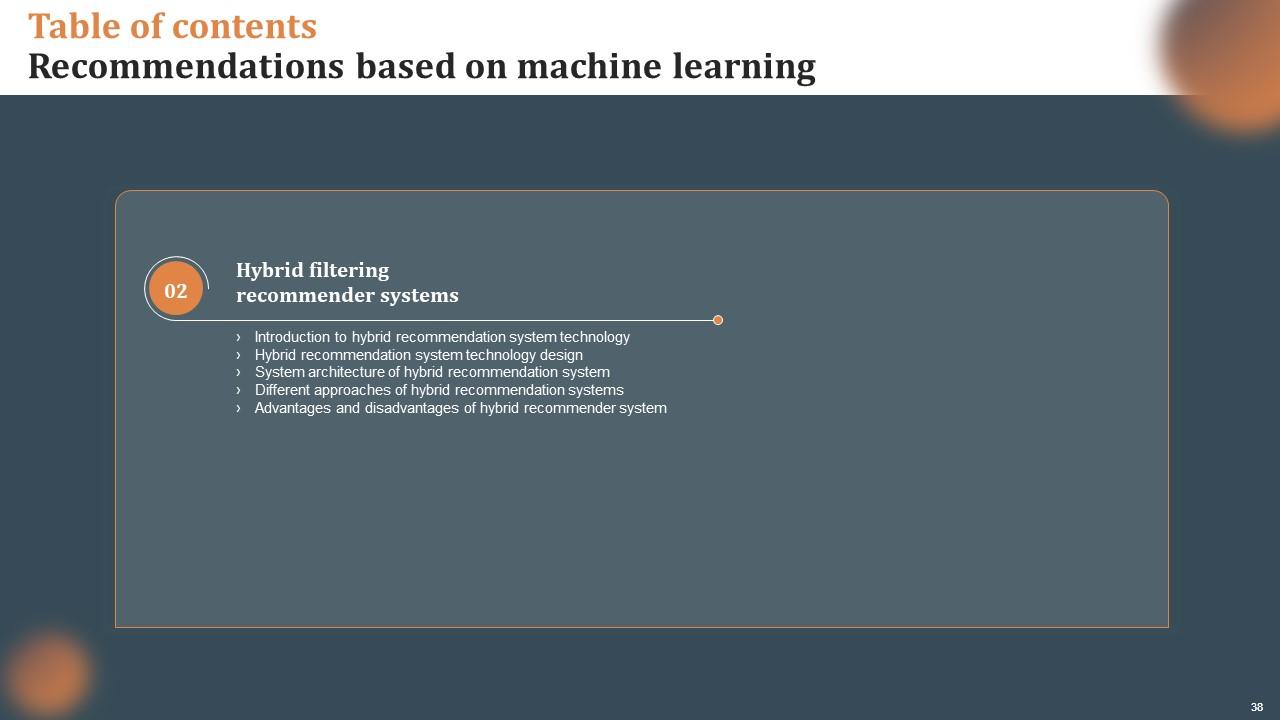
Slide 38: This slide depicts the Title for the Components to be further discussed.
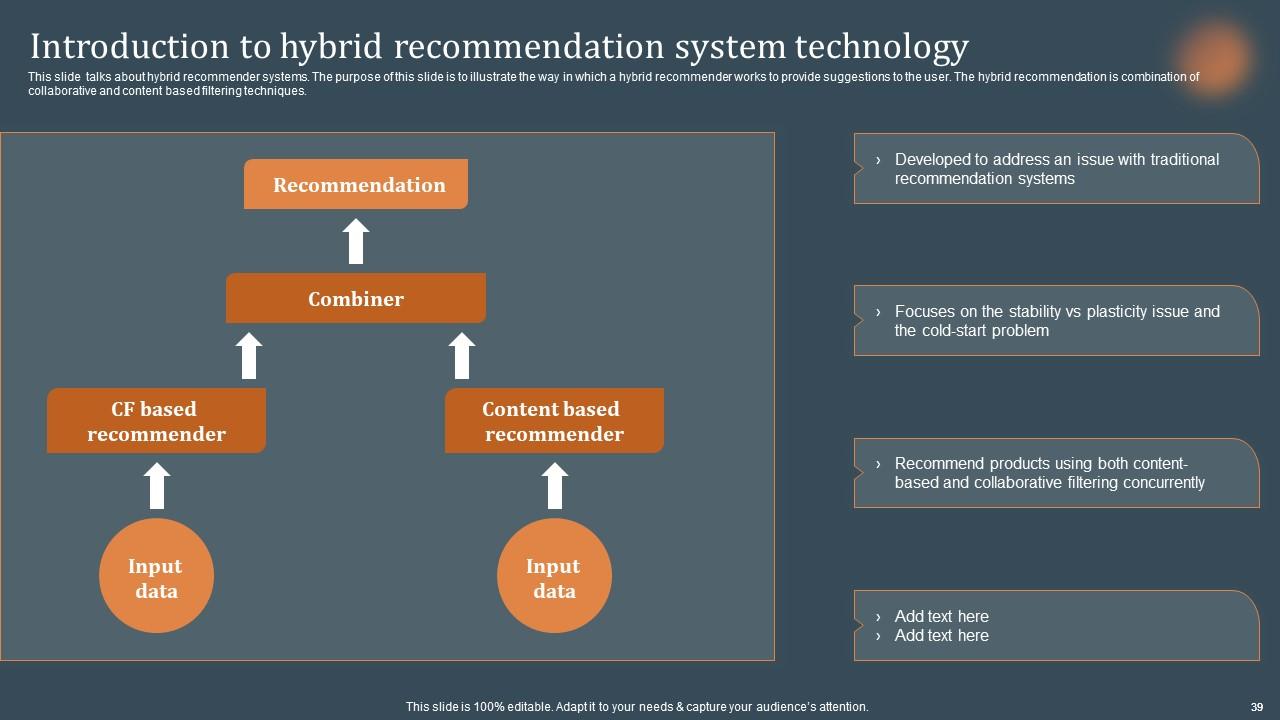
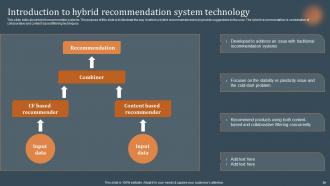
Slide 39: This slide reveals the Introduction to hybrid recommendation system technology.
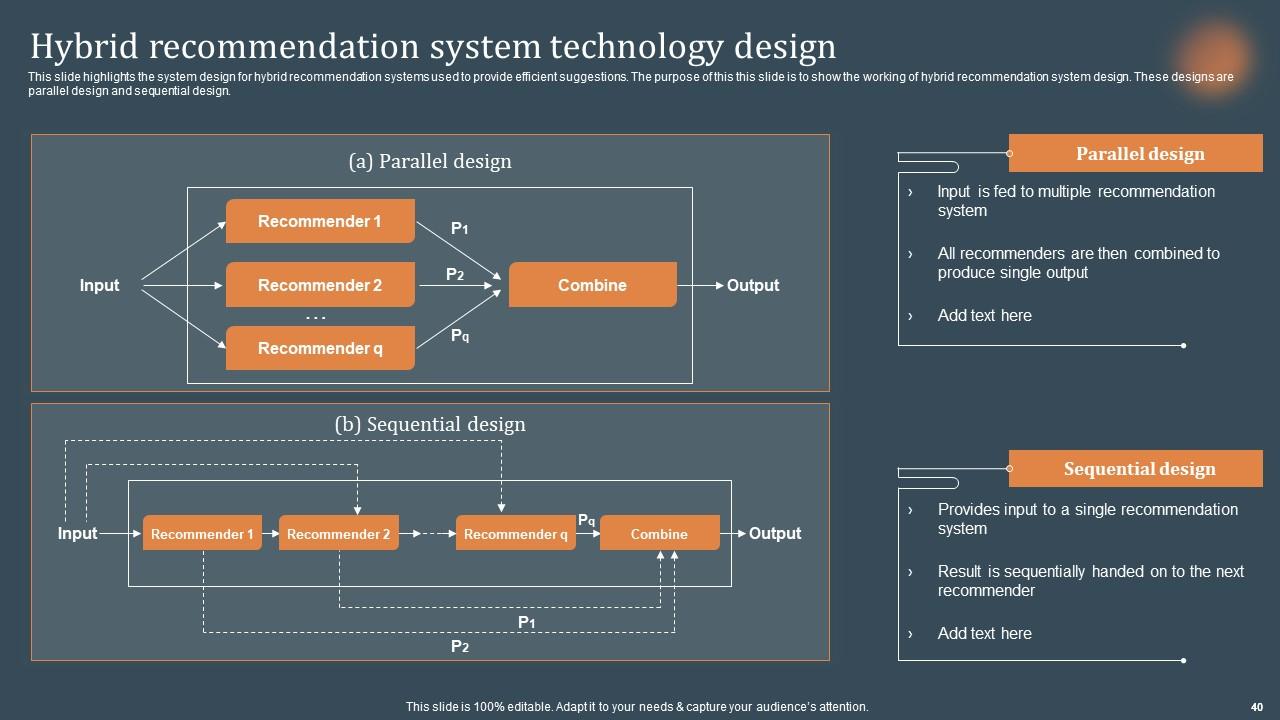
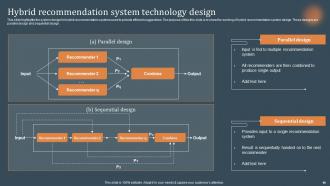
Slide 40: This slide highlights the system design for hybrid recommendation systems used to provide efficient suggestions.
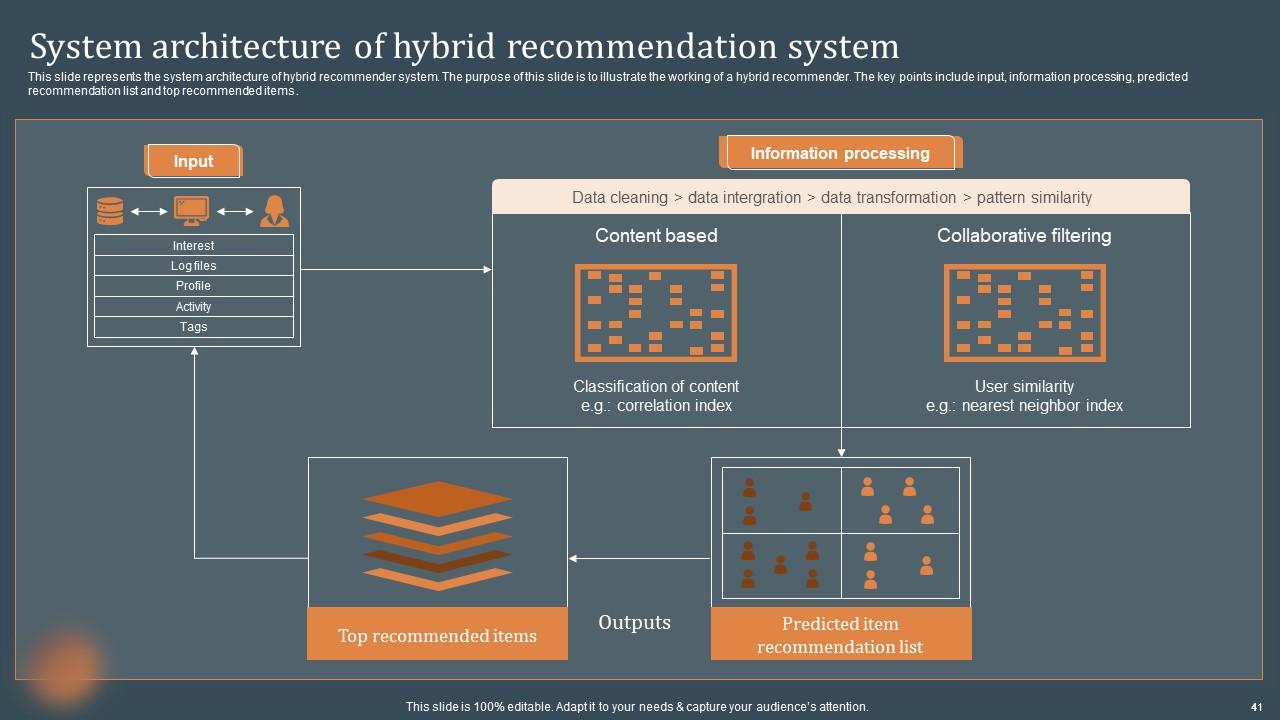
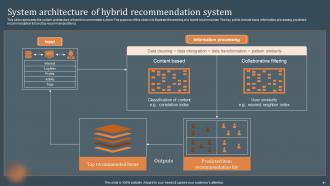
Slide 41: This slide deals with System architecture of hybrid recommendation system.
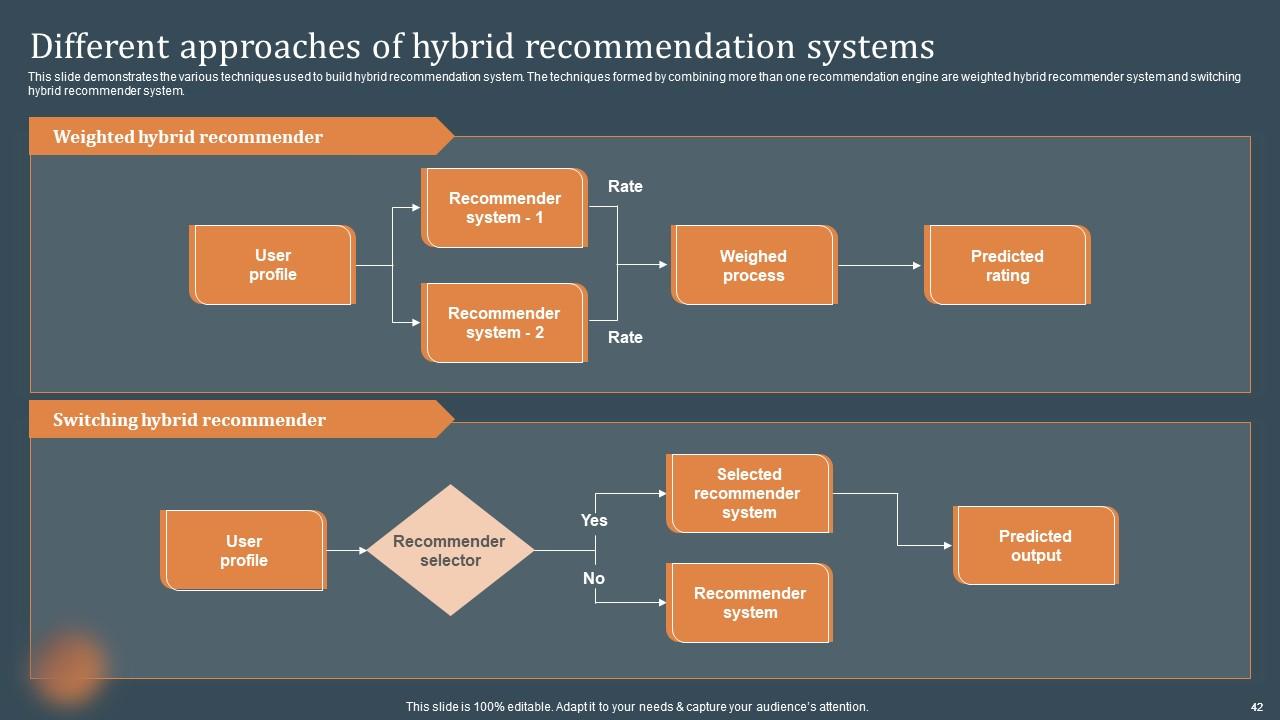
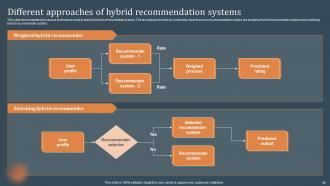
Slide 42: This slide states the Different approaches of hybrid recommendation systems.
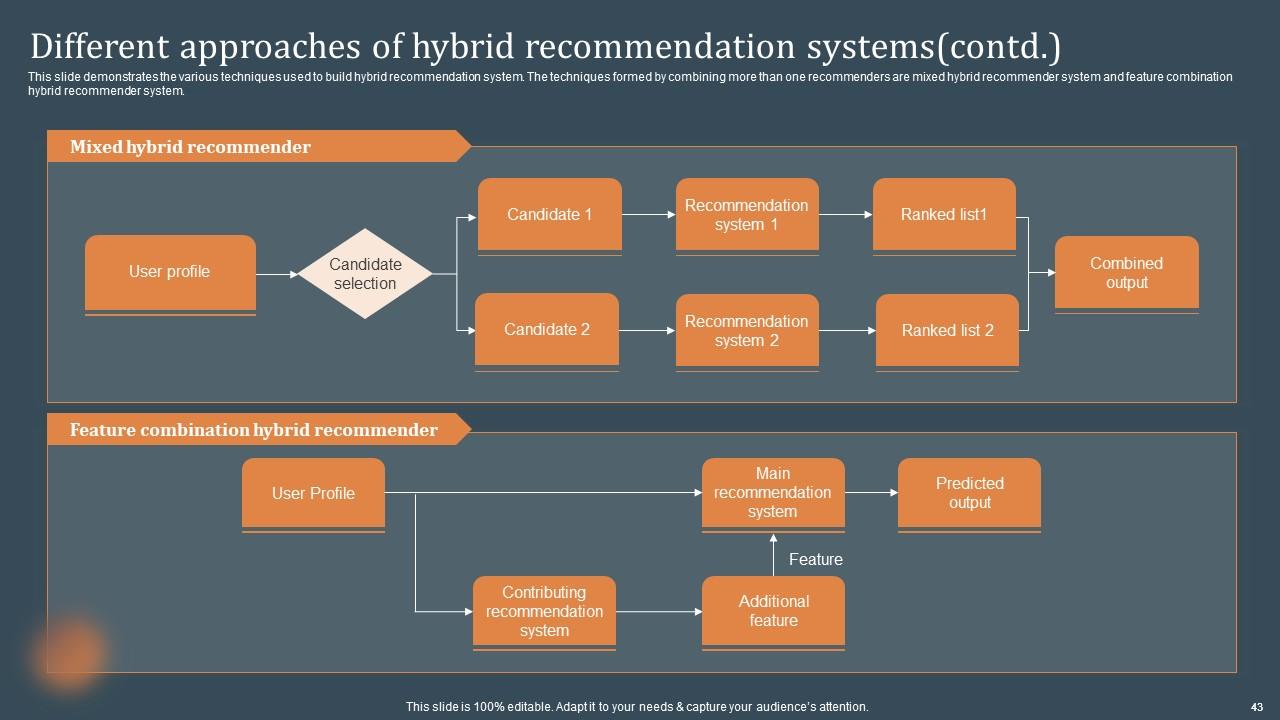
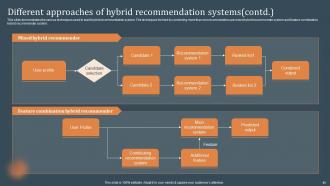
Slide 43: This is yet another slide continuing the Different approaches of hybrid recommendation systems.
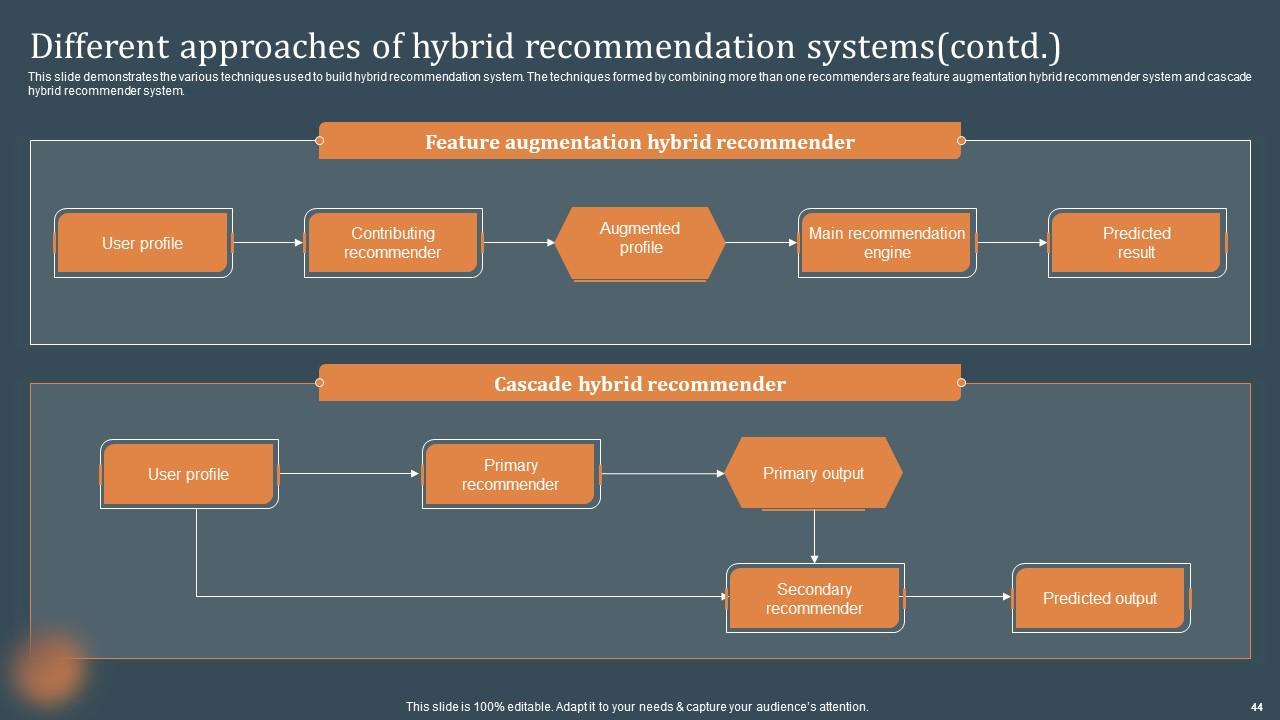
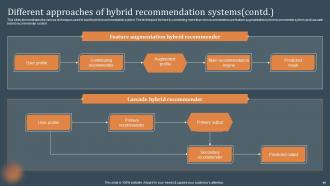
Slide 44: This slide further continues the Different approaches of hybrid recommendation systems.
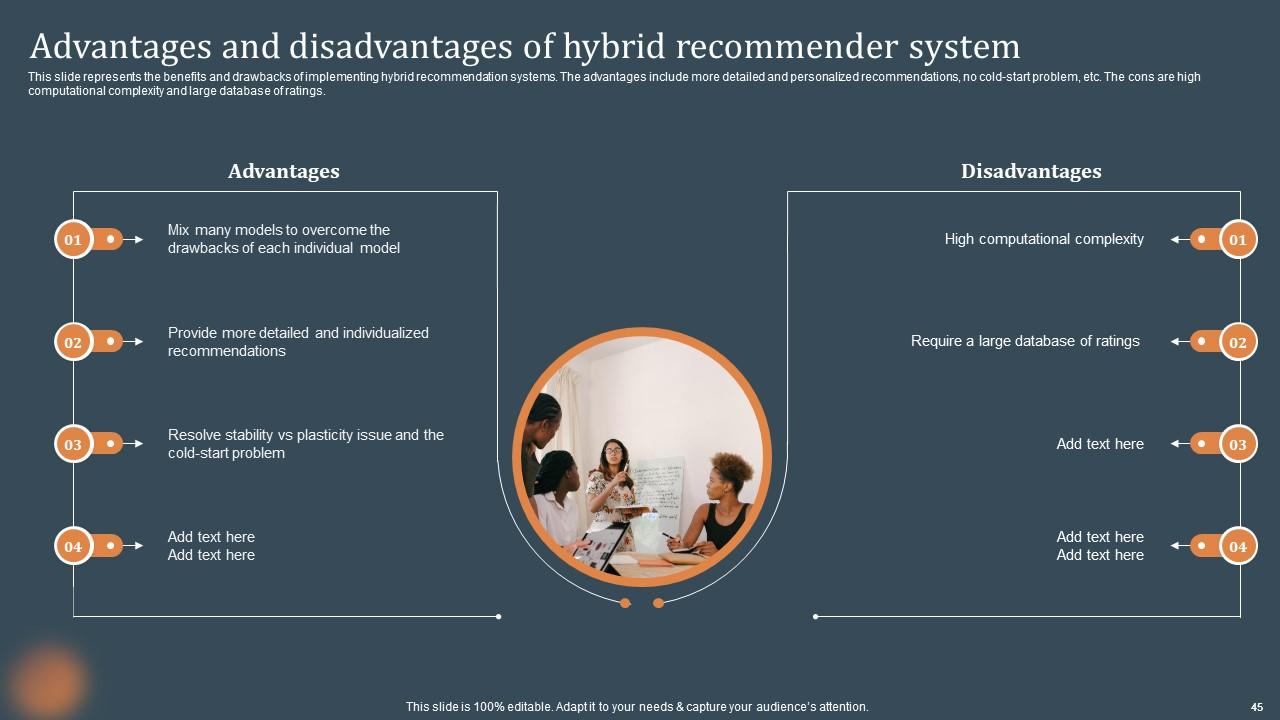
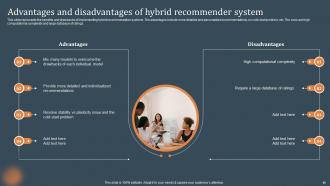
Slide 45: This slide exhibits the Advantages and disadvantages of hybrid recommender system.
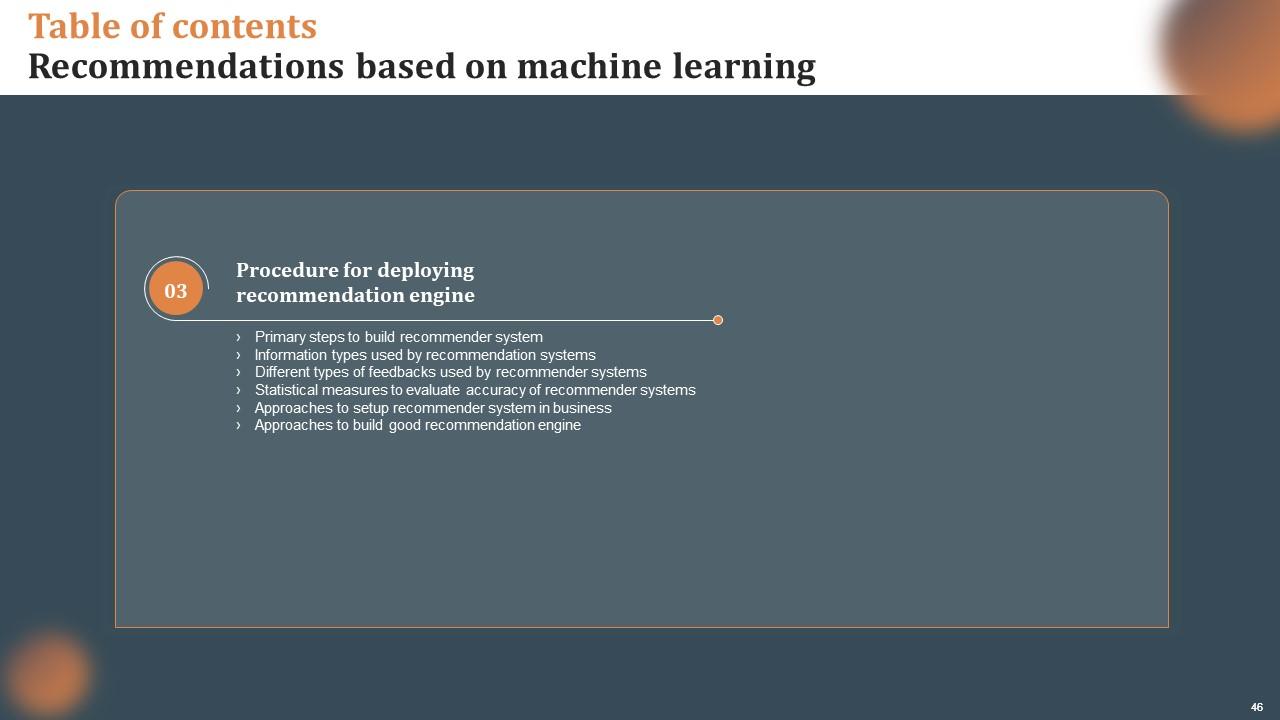
Slide 46: This slide presents the Heading for the Topics to be covered in the following template.
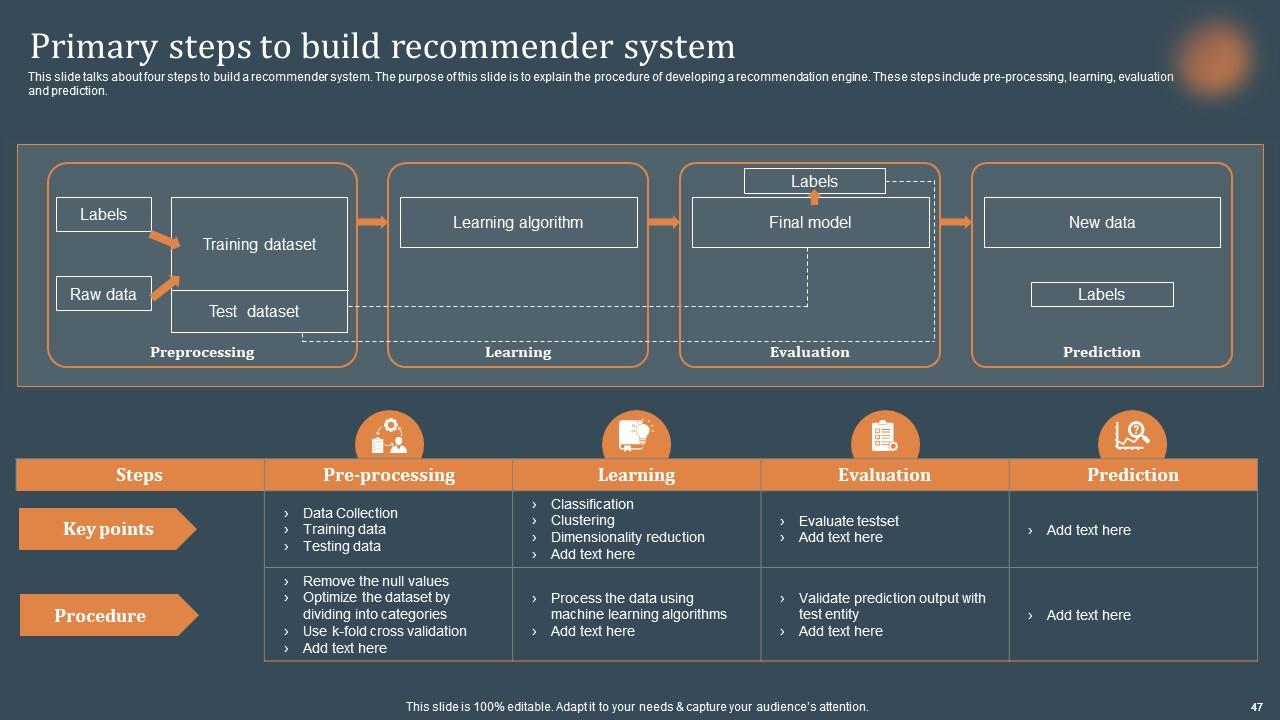
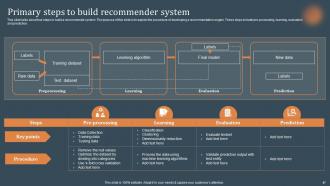
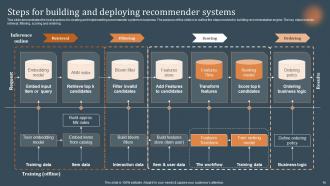
Slide 47: This slide talks about four steps to build a recommender system.
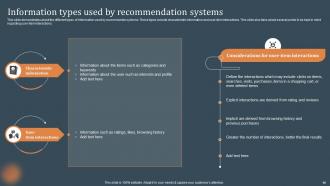
Slide 48: This slide demonstrates about the different types of information used by recommender systems.
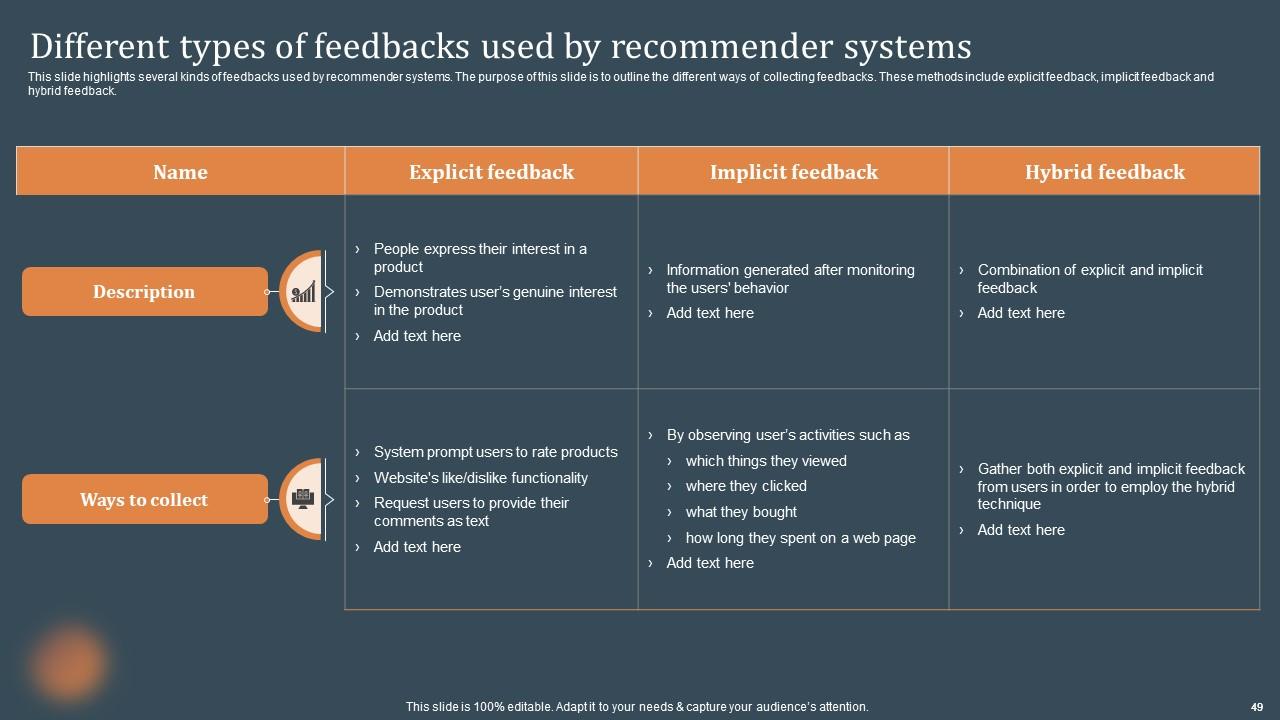
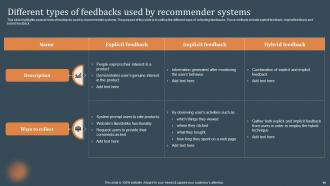
Slide 49: This slide highlights several kinds of feedbacks used by recommender systems.
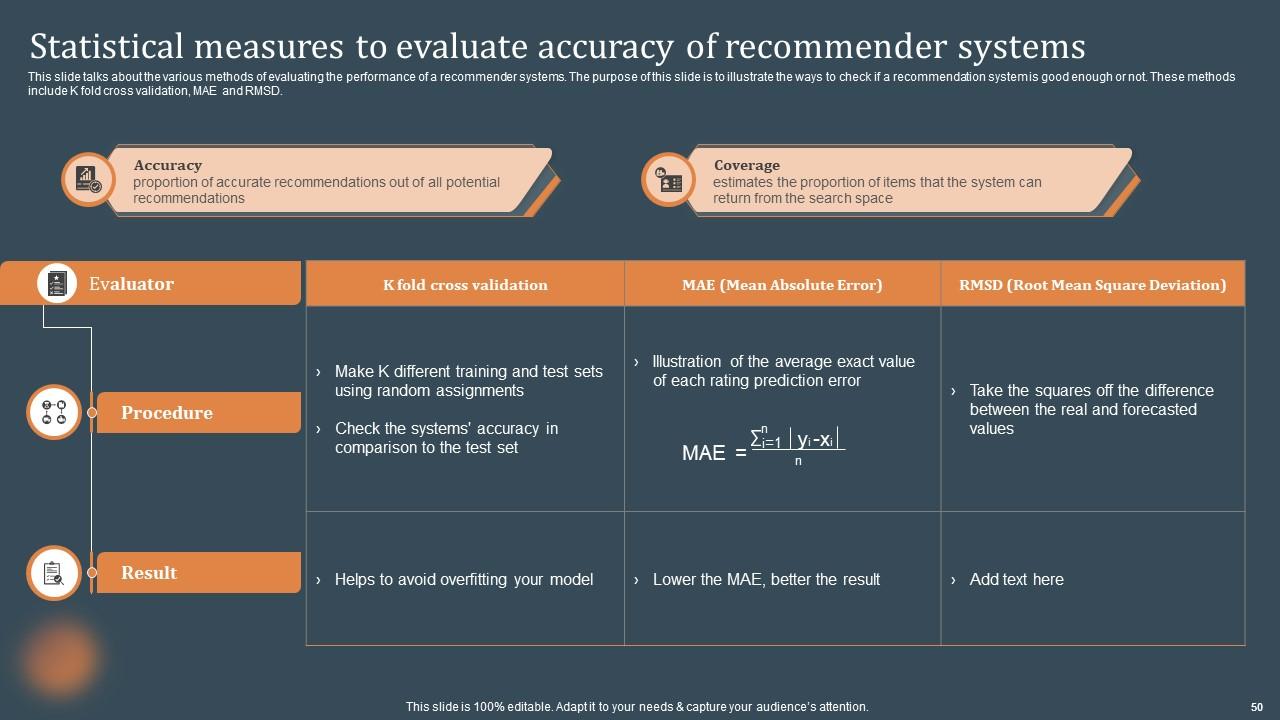
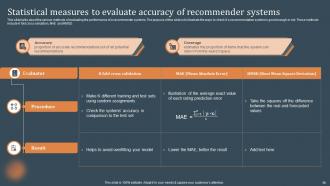
Slide 50: This slide emphasizes on the Statistical measures to evaluate accuracy of recommender systems.
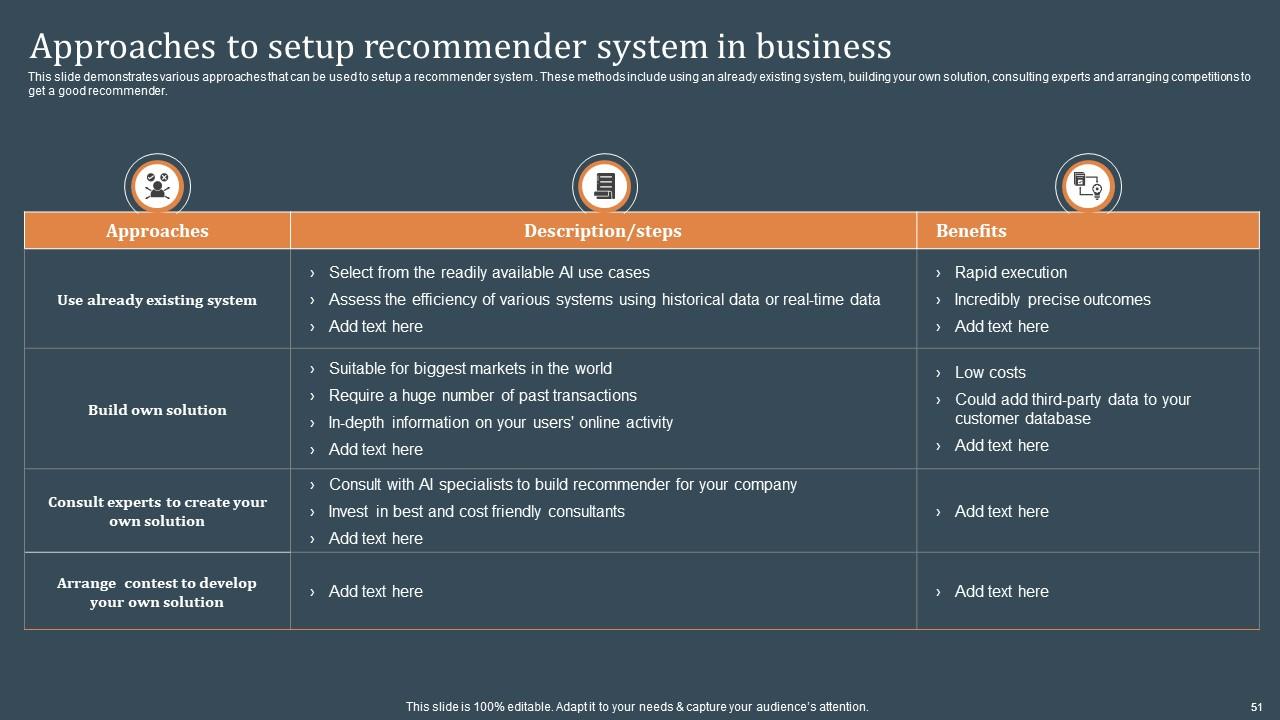
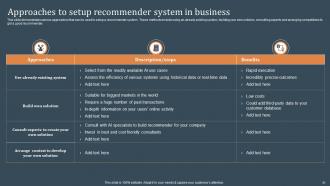
Slide 51: This slide presents the Approaches to setup recommender system in business.
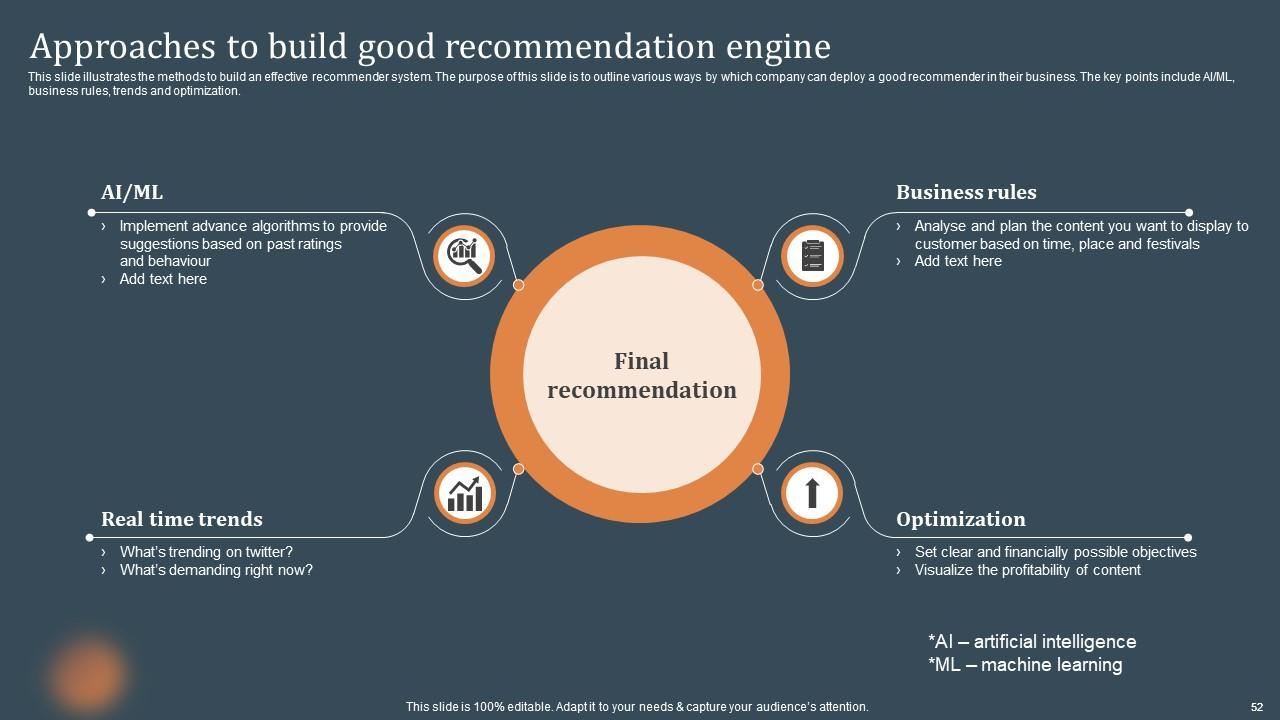
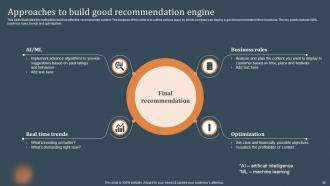
Slide 52: This slide illustrates the methods to build an effective recommender system.
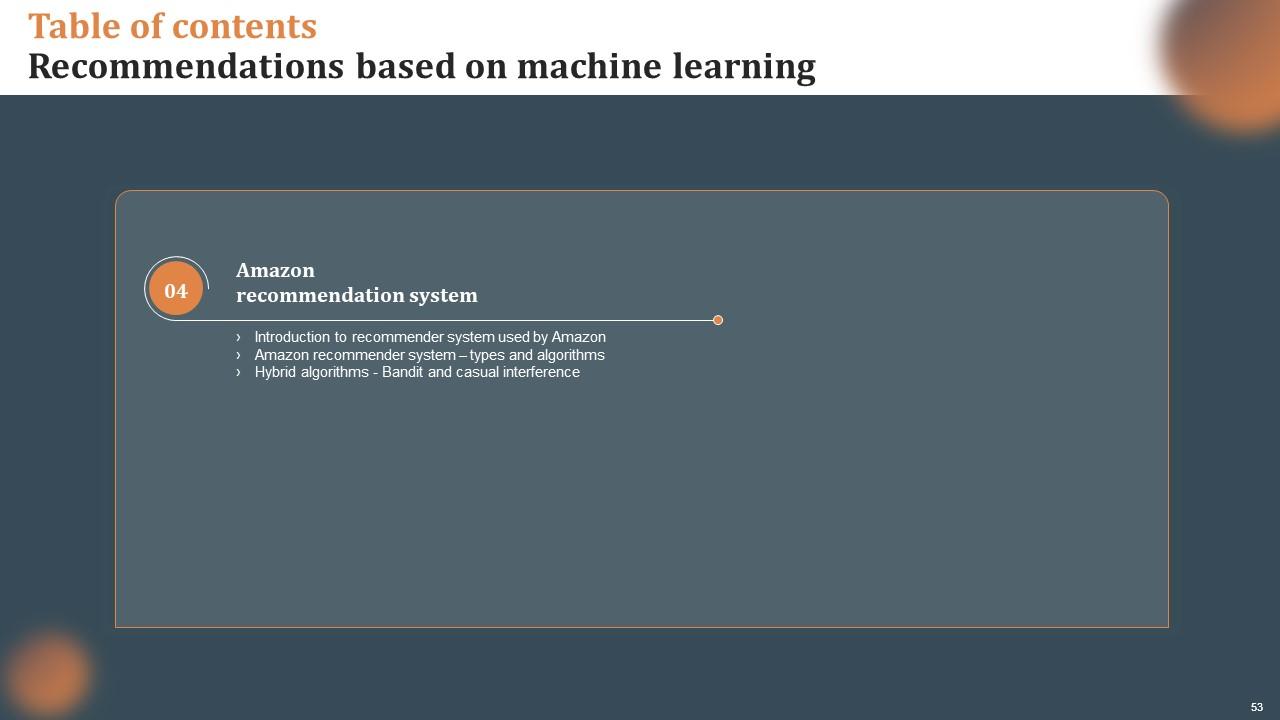
Slide 53: This slide displays the Title for the Ideas to be discussed in the next template.
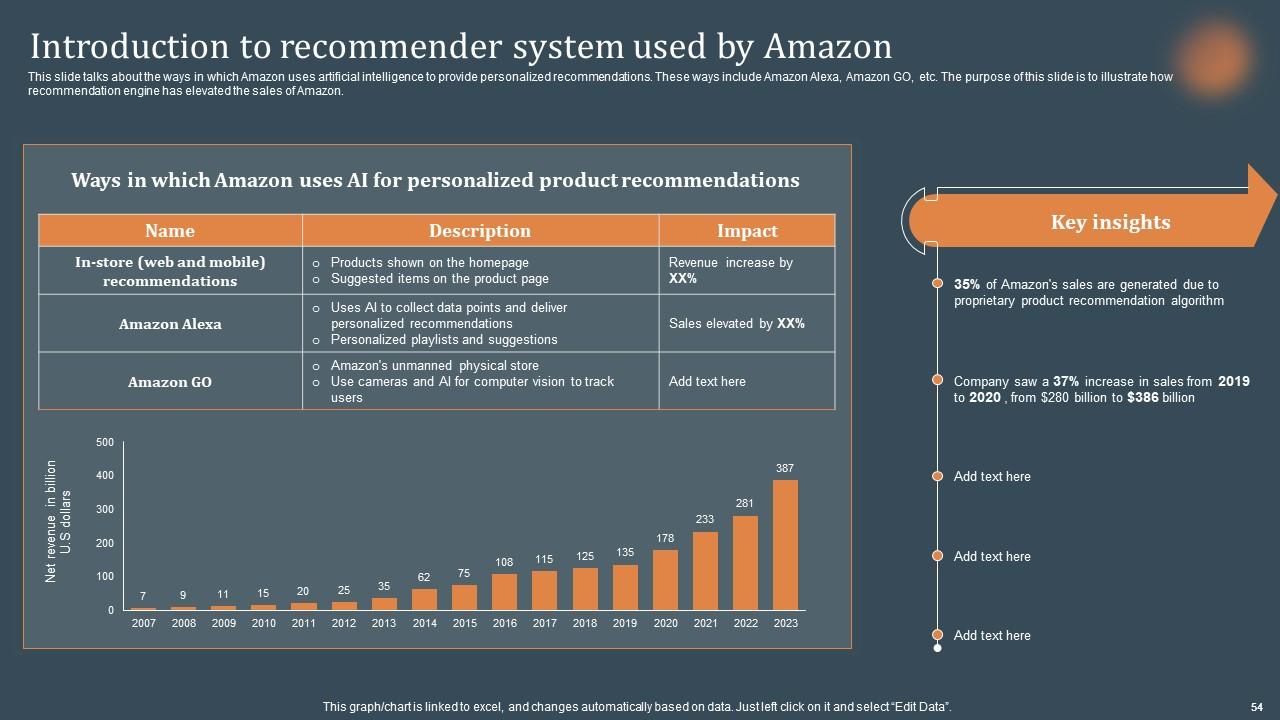
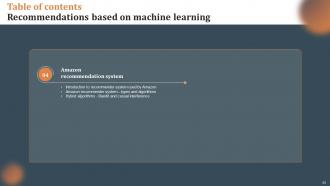
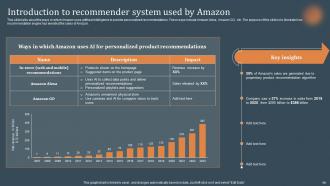
Slide 54: This slide talks about the ways in which Amazon uses artificial intelligence to provide personalized recommendations.
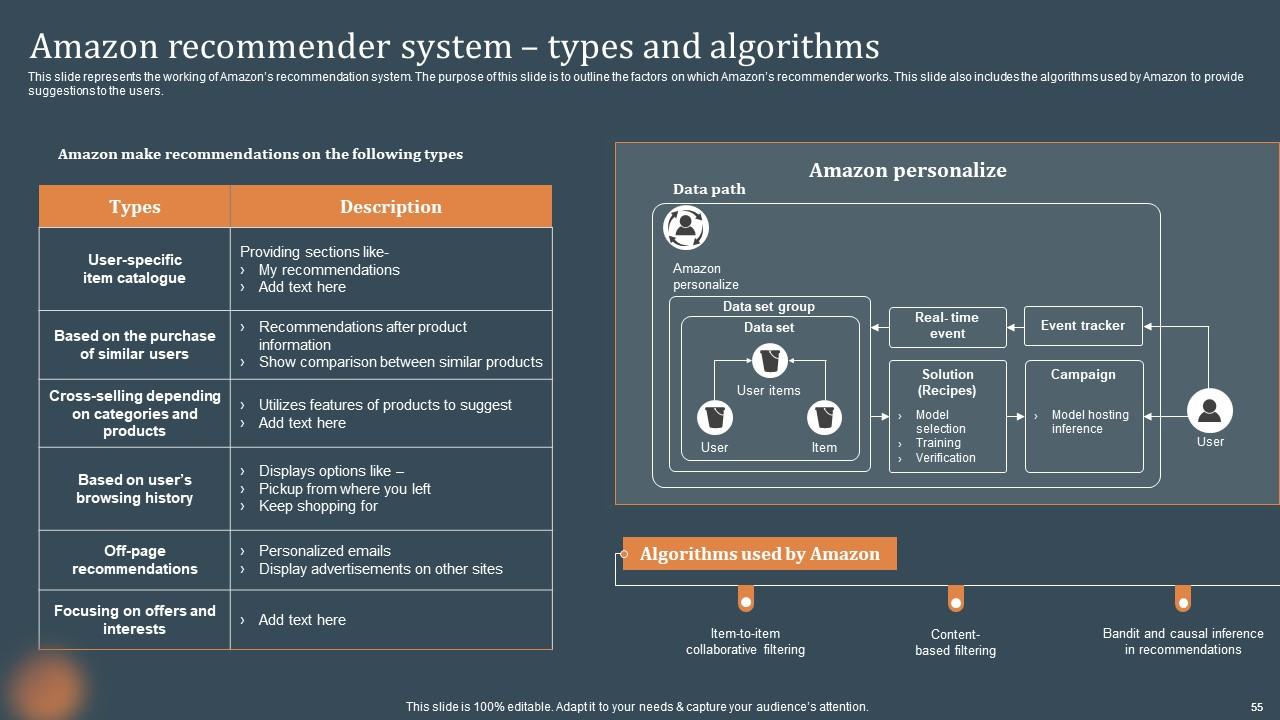
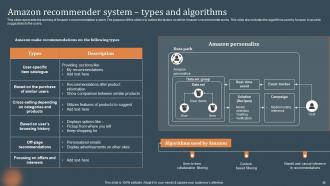
Slide 55: This slide represents the working of Amazon’s recommendation system.
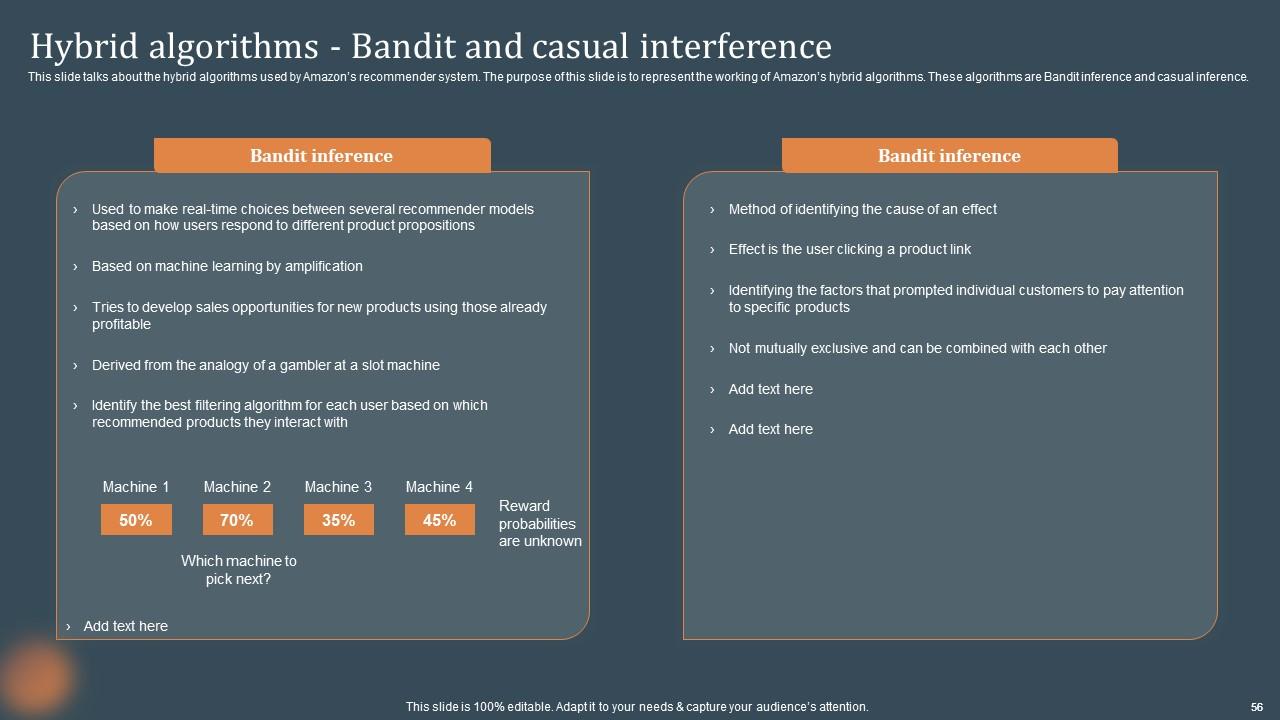
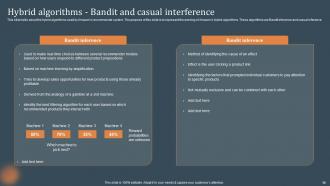
Slide 56: This slide mentions about the hybrid algorithms used by Amazon’s recommender system.
Slide 57: This slide depicts the Heading for the Ideas to be covered further.
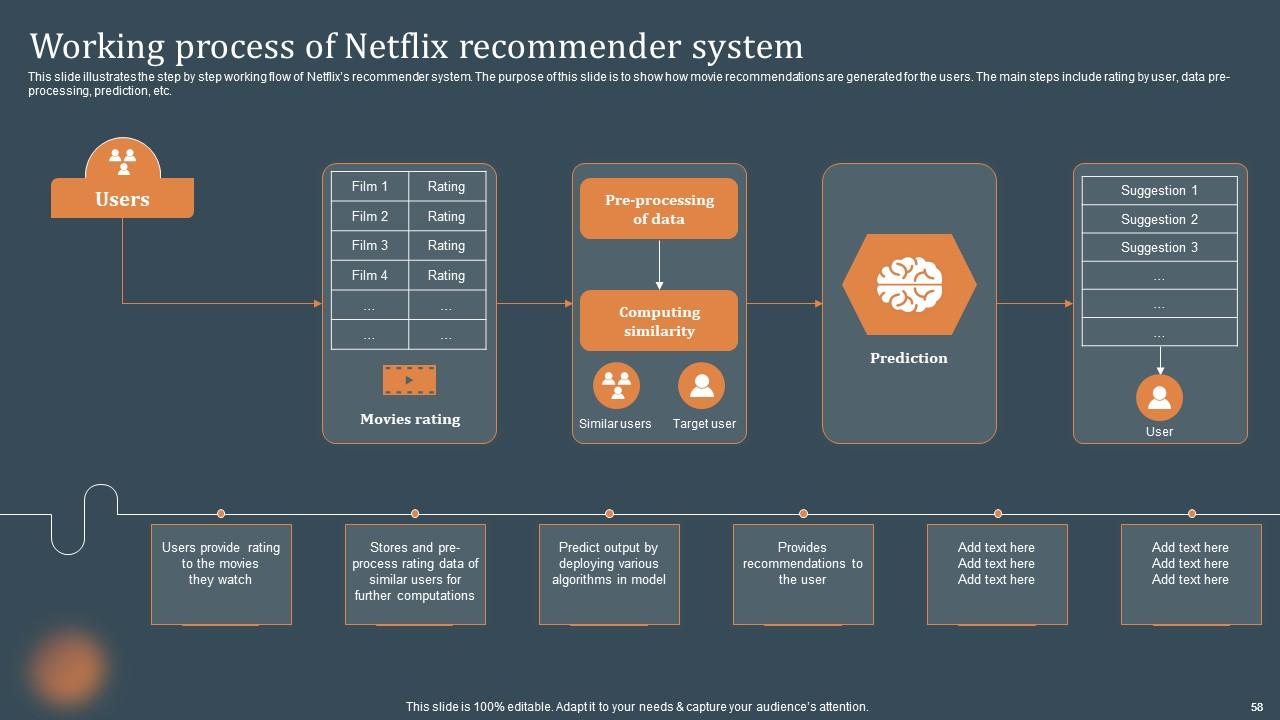
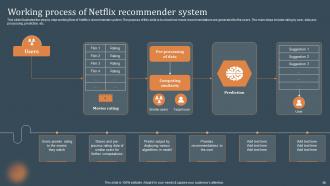
Slide 58: This slide illustrates the step by step working flow of Netflix’s recommender system.
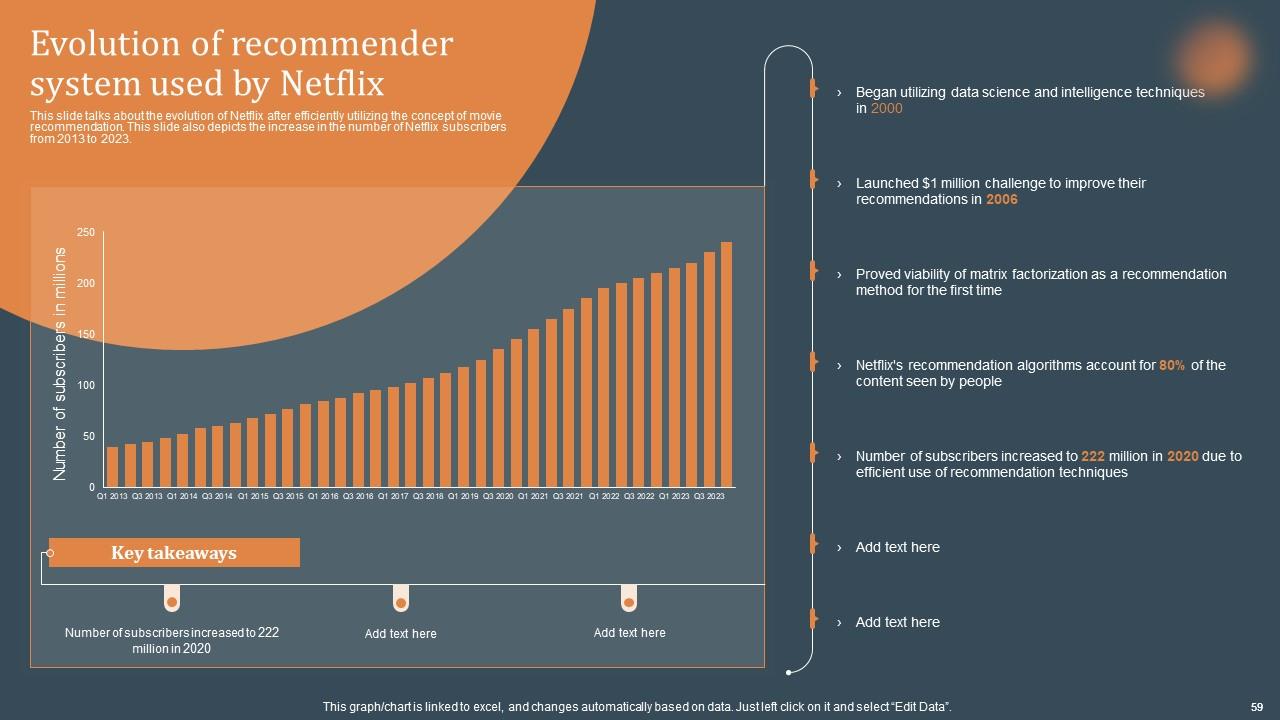
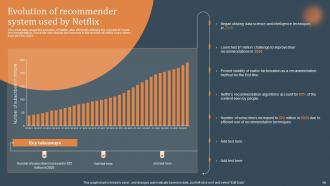
Slide 59: This slide talks about the evolution of Netflix after efficiently utilizing the concept of movie recommendation.
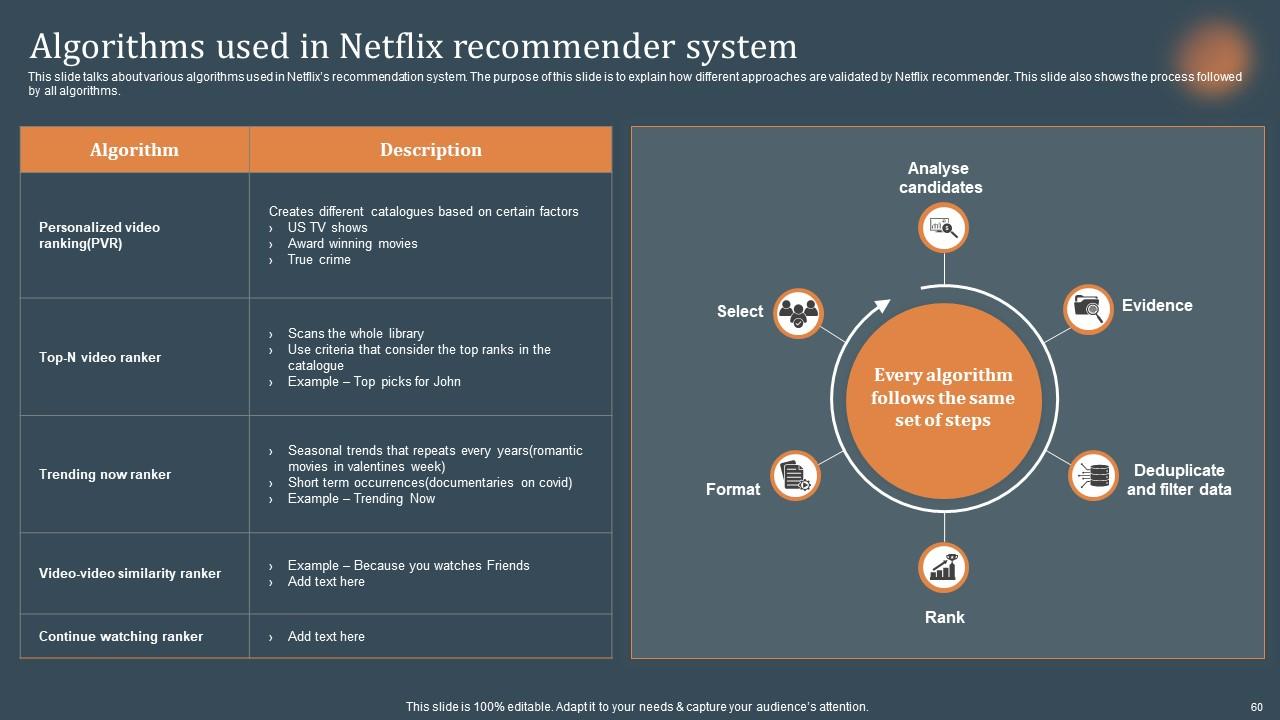
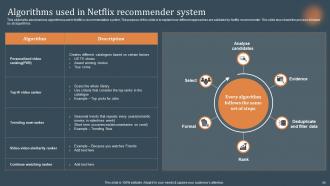
Slide 60: This slide talks about various algorithms used in Netflix’s recommendation system.
Slide 61: This slide incorporates the Title for the Topics to be discussed further.
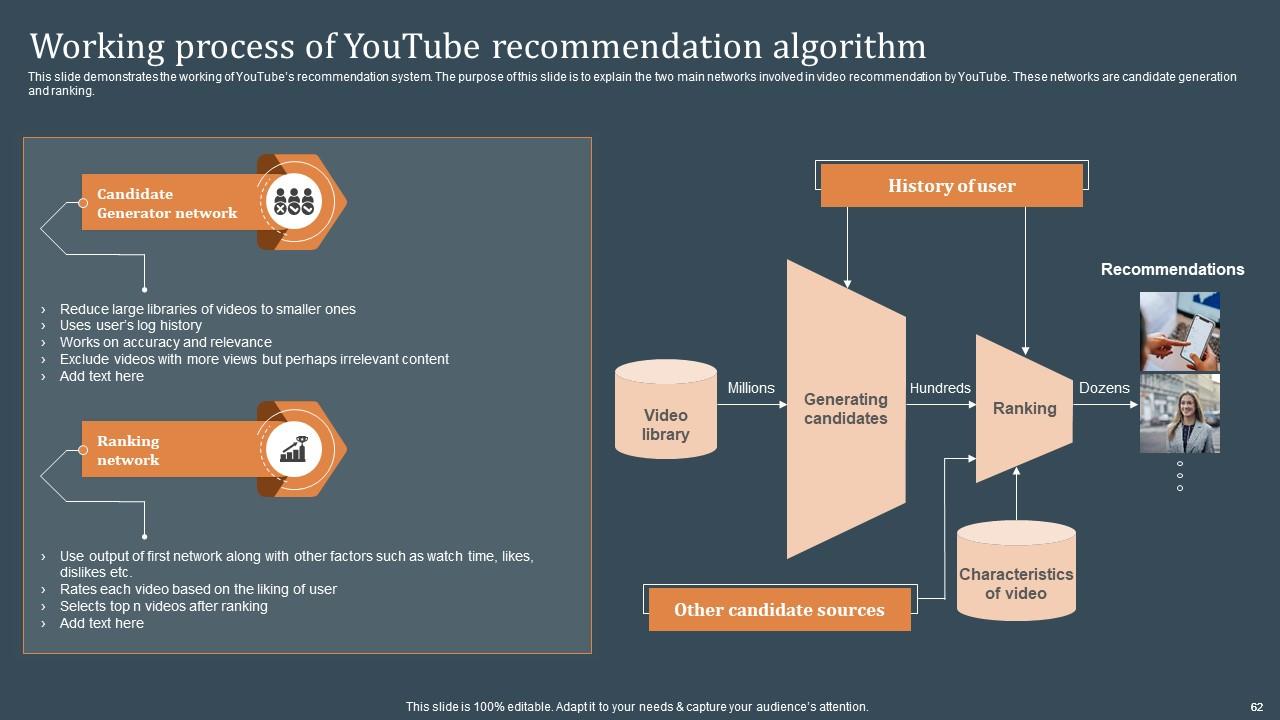
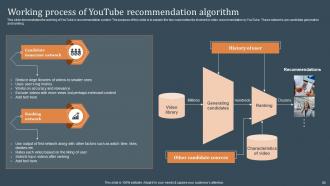
Slide 62: This slide demonstrates the working of YouTube’s recommendation system.
Slide 63: This slide elucidates the Heading for the Components to be discussed next.
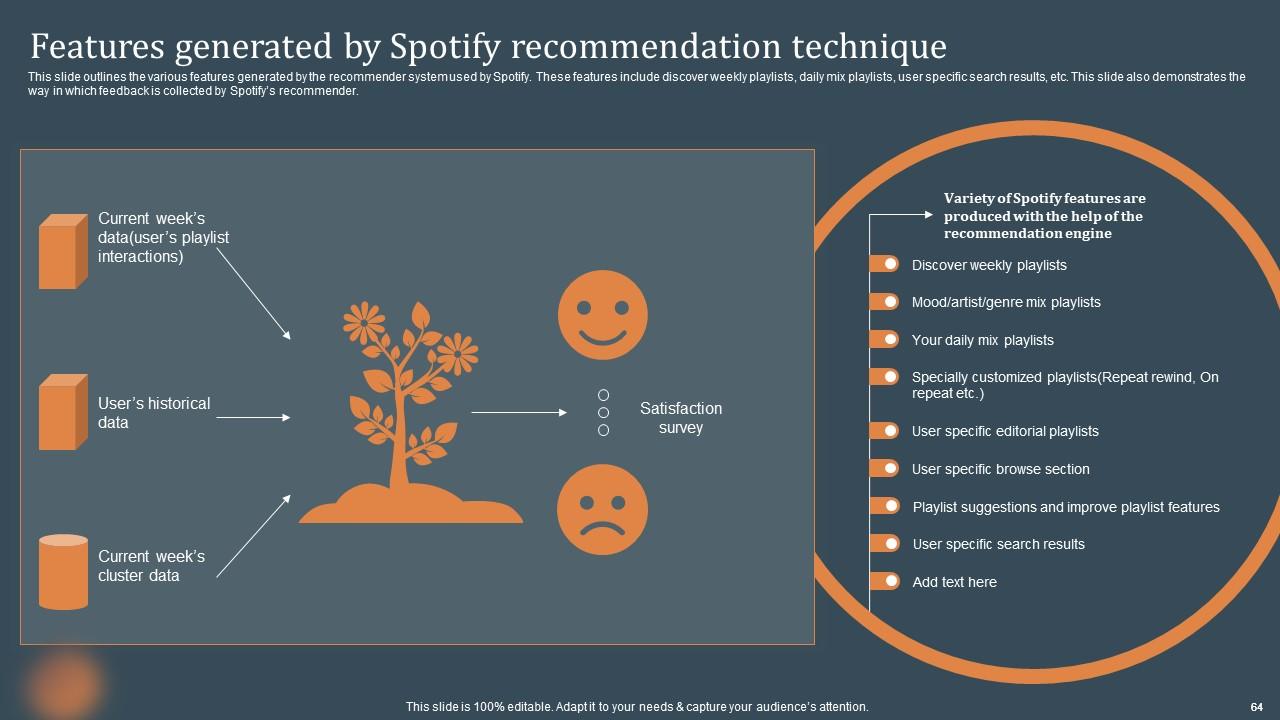
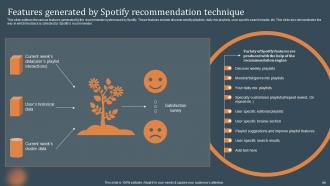
Slide 64: This slide outlines the various features generated by the recommender system used by Spotify.
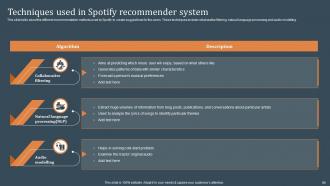
Slide 65: This slide presents the Techniques used in Spotify recommender system.
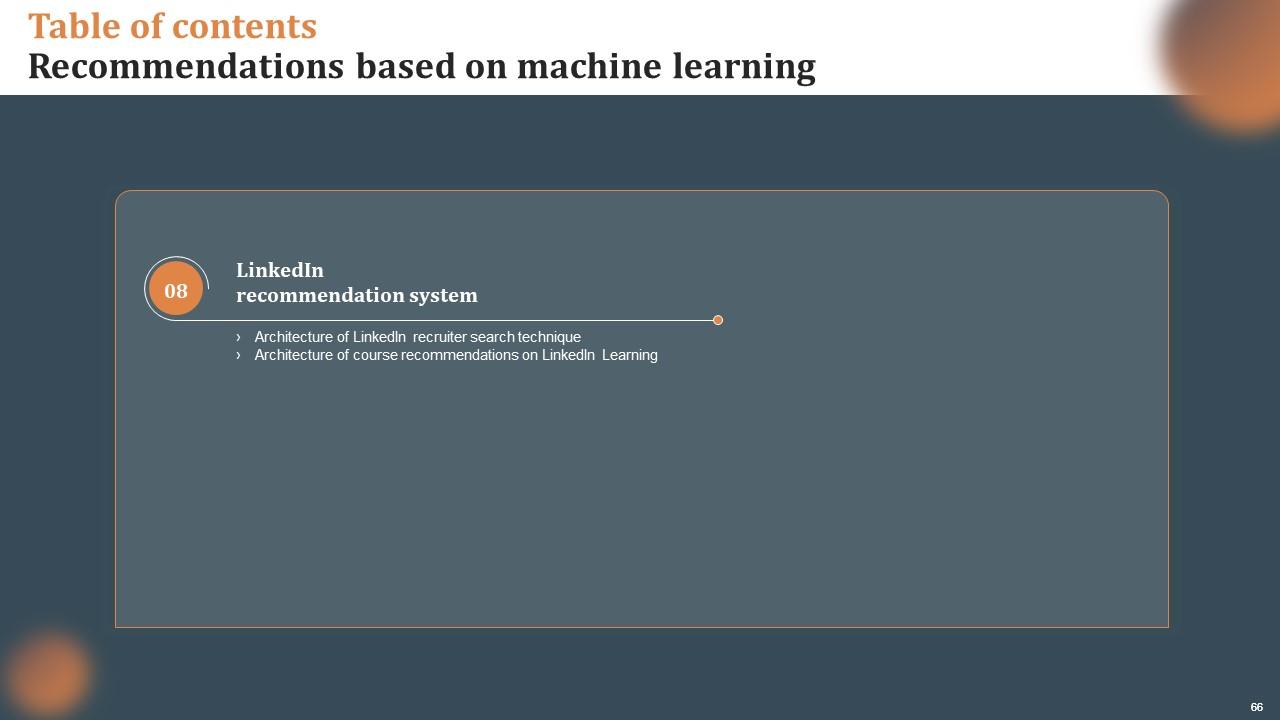
Slide 66: This slide reveals the Title for the Contents to be covered in the following template.
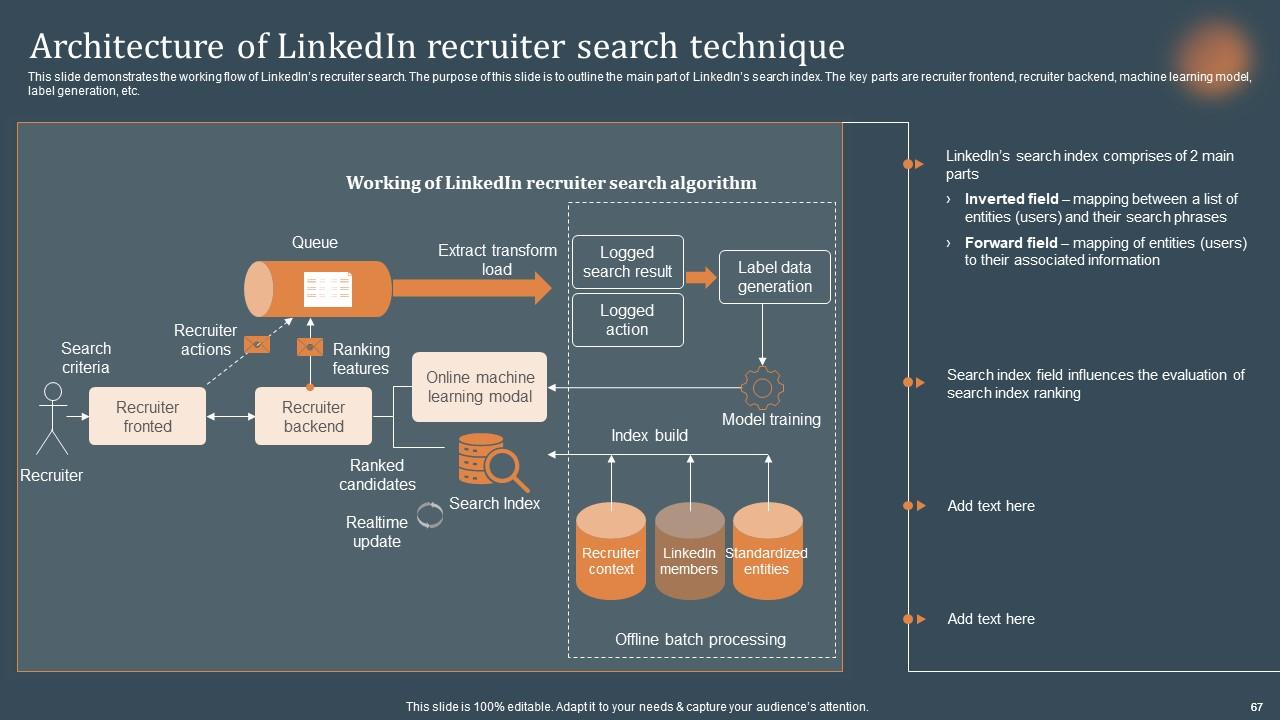
Slide 67: This slide demonstrates the working flow of LinkedIn’s recruiter search.
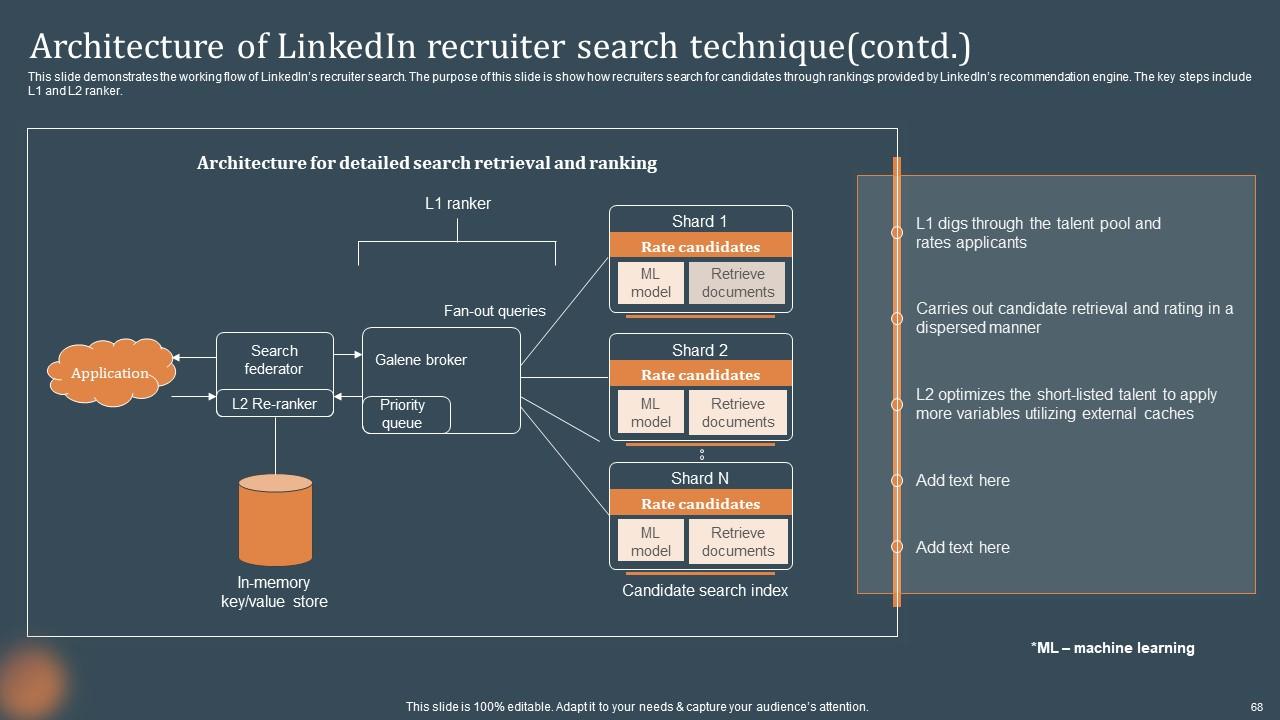
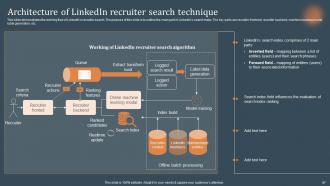
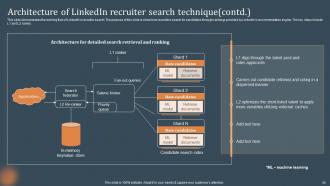
Slide 68: This slide portrays the Architecture of LinkedIn recruiter search technique.
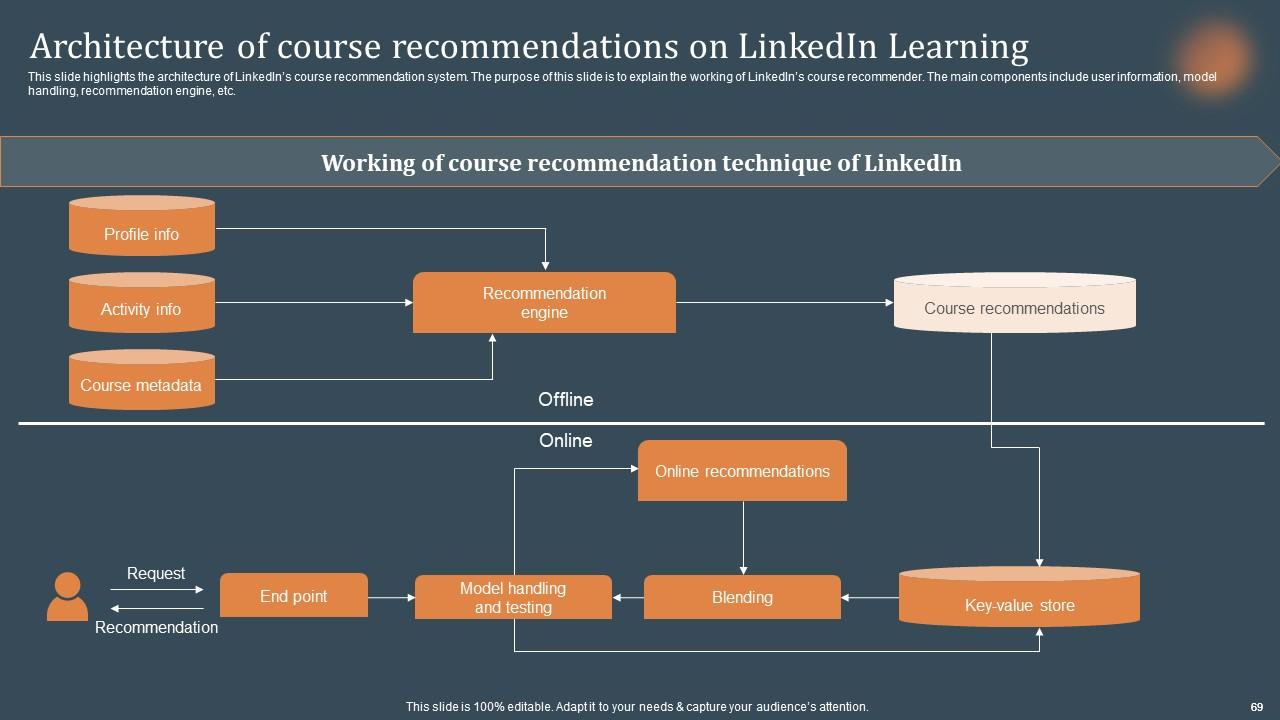
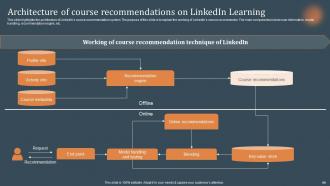
Slide 69: This slide continues the Architecture of course recommendations on LinkedIn Learning.
Slide 70: This slide highlights the Heading for the Topics to be discussed in the upcoming template.
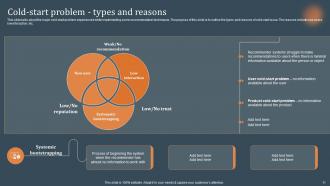
Slide 71: This slide talks about the major cold-start problem experienced while implementing some recommendation techniques.
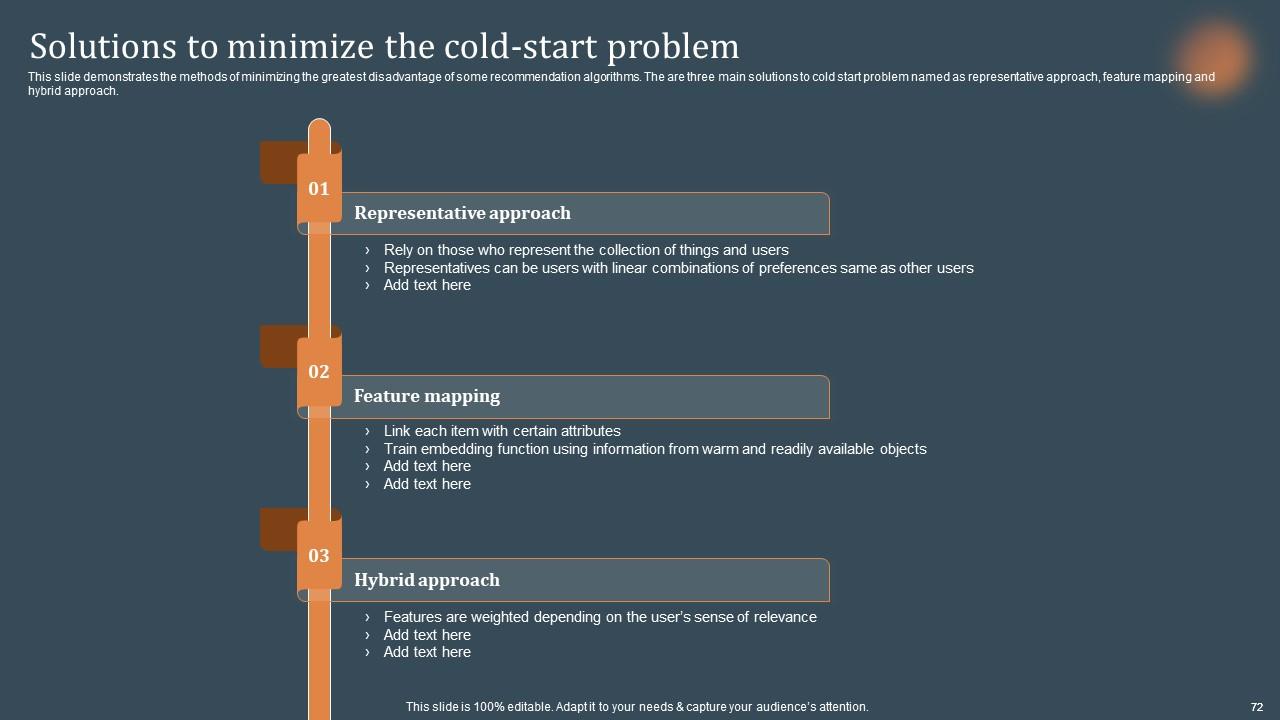
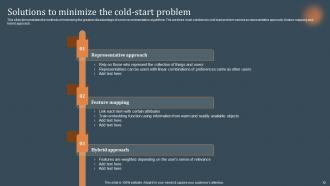
Slide 72: This slide states the Solutions to minimize the cold-start problem.
Slide 73: This slide mentions the Title for the Ideas to be covered further.
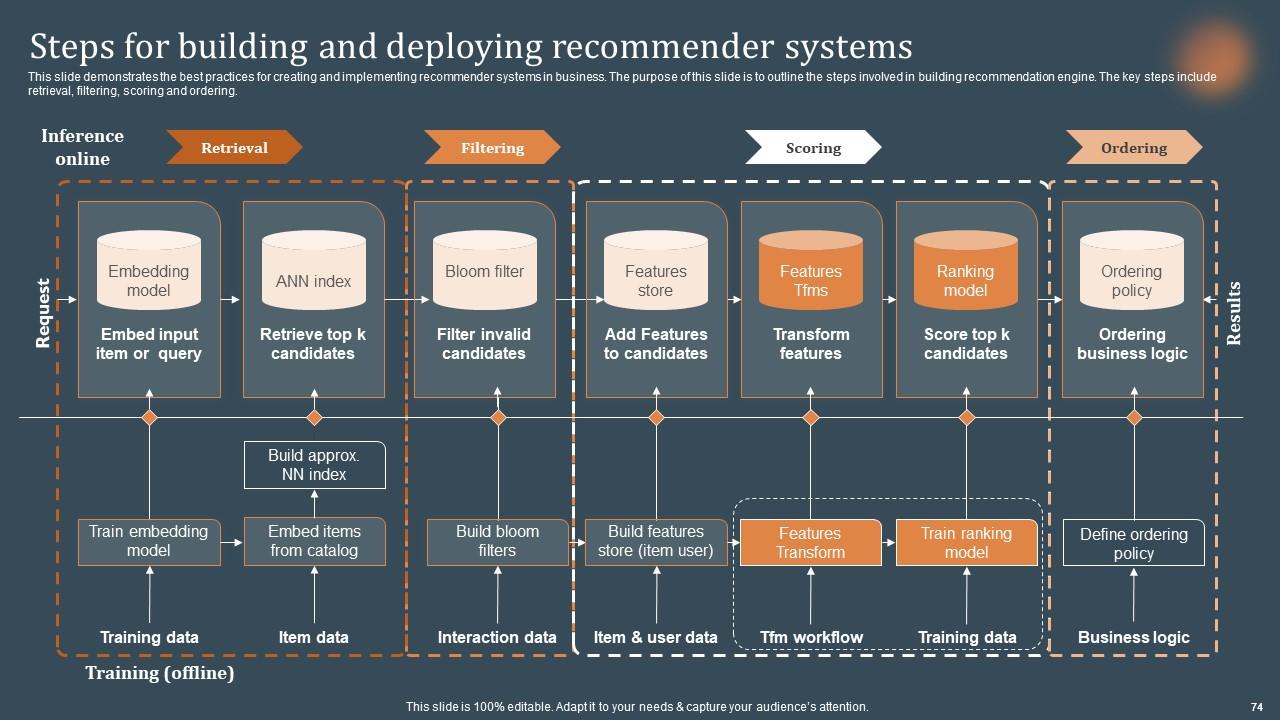
Slide 74: This slide demonstrates the best practices for creating and implementing recommender systems in business.
Slide 75: This slide presents the Heading for the Ideas to be discussed in the following template.
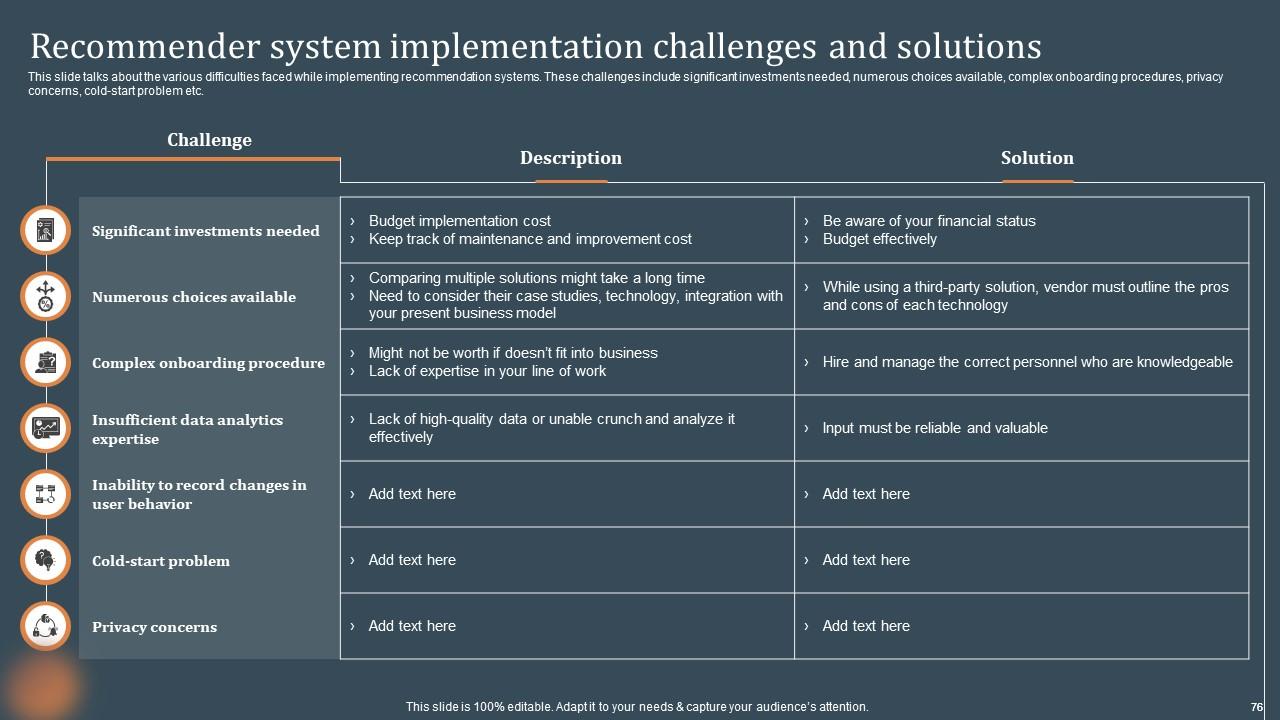
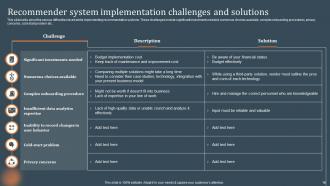
Slide 76: This slide talks about the various difficulties faced while implementing recommendation systems.
Slide 77: This slide elucidates the Title for the Topics to be discussed next.
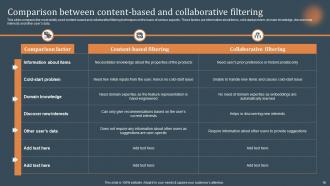
Slide 78: This slide compares the most widely used content-based and collaborative filtering techniques.
Slide 79: This slide incorporates the Heading for the Contents to be covered in the forth-coming template.
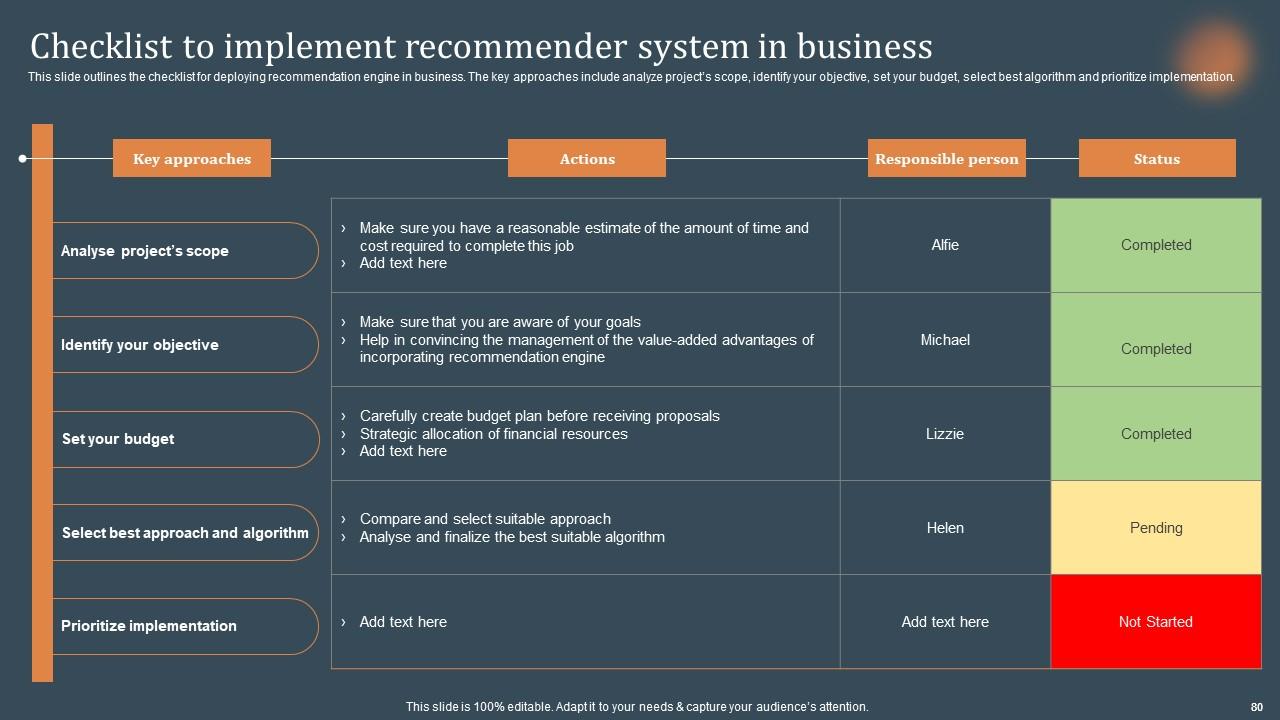
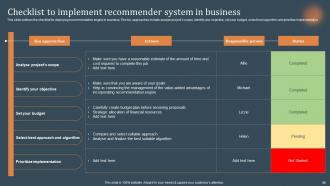
Slide 80: This slide outlines the checklist for deploying recommendation engine in business.
Slide 81: This slide represents the Title for the Components to be discussed further.
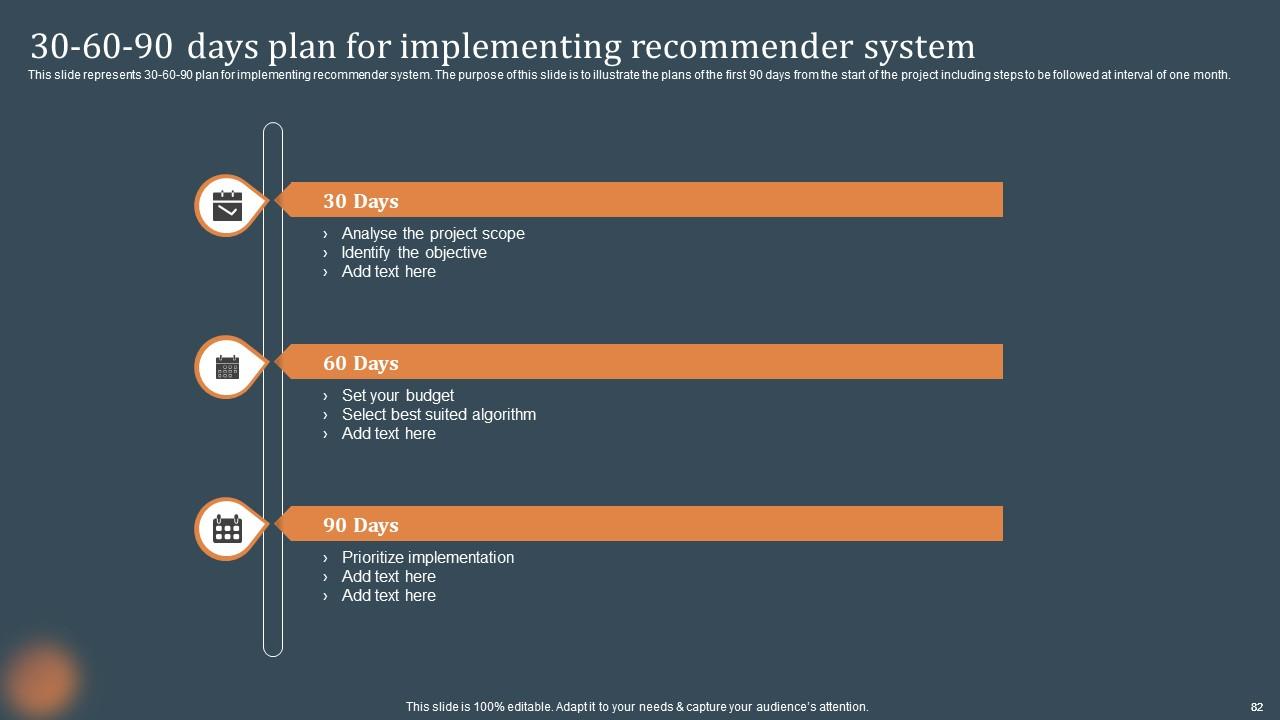
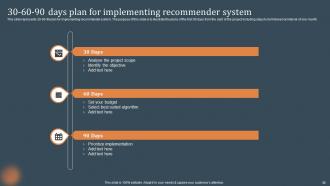
Slide 82: This slide mentions about the 30-60-90 days plan for implementing recommender system.
Slide 83: This slide depicts the Heading for the Topics to be covered next.
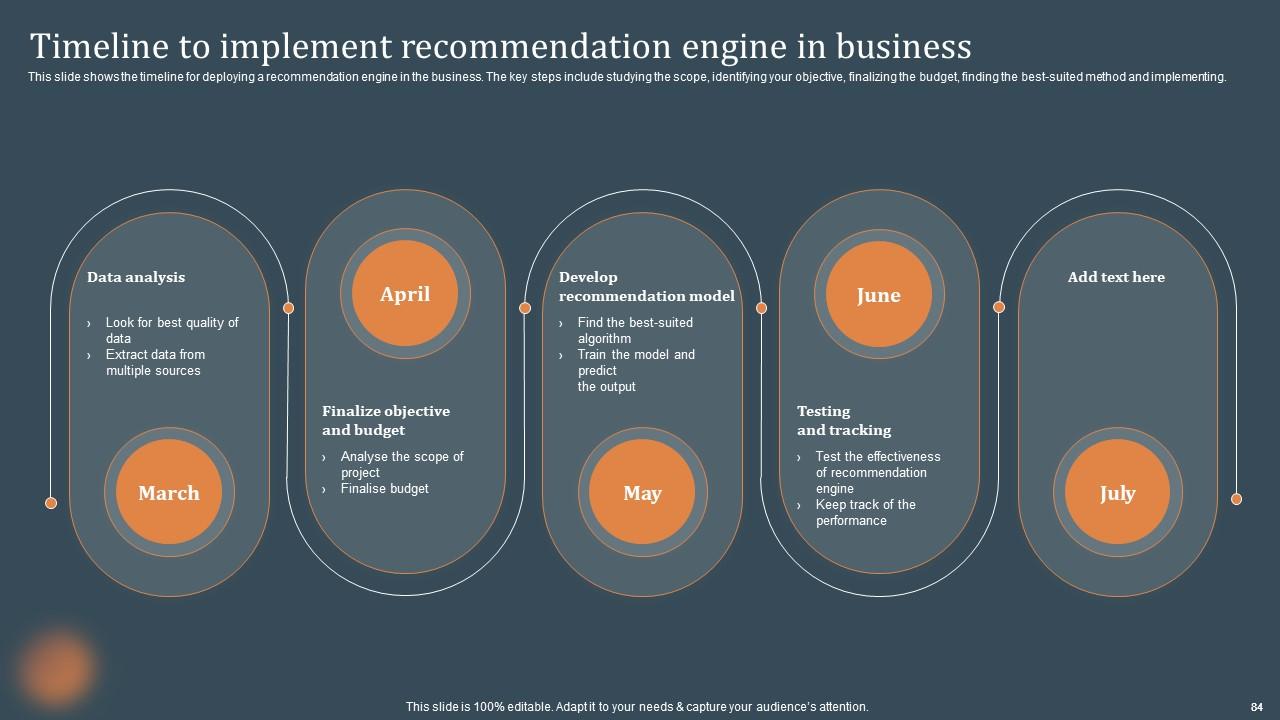
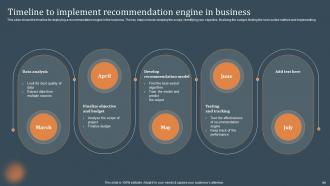
Slide 84: This slide showcases the Timeline to implement recommendation engine in business.
Slide 85: This slide indicates the Title for the Ideas to be further discussed.
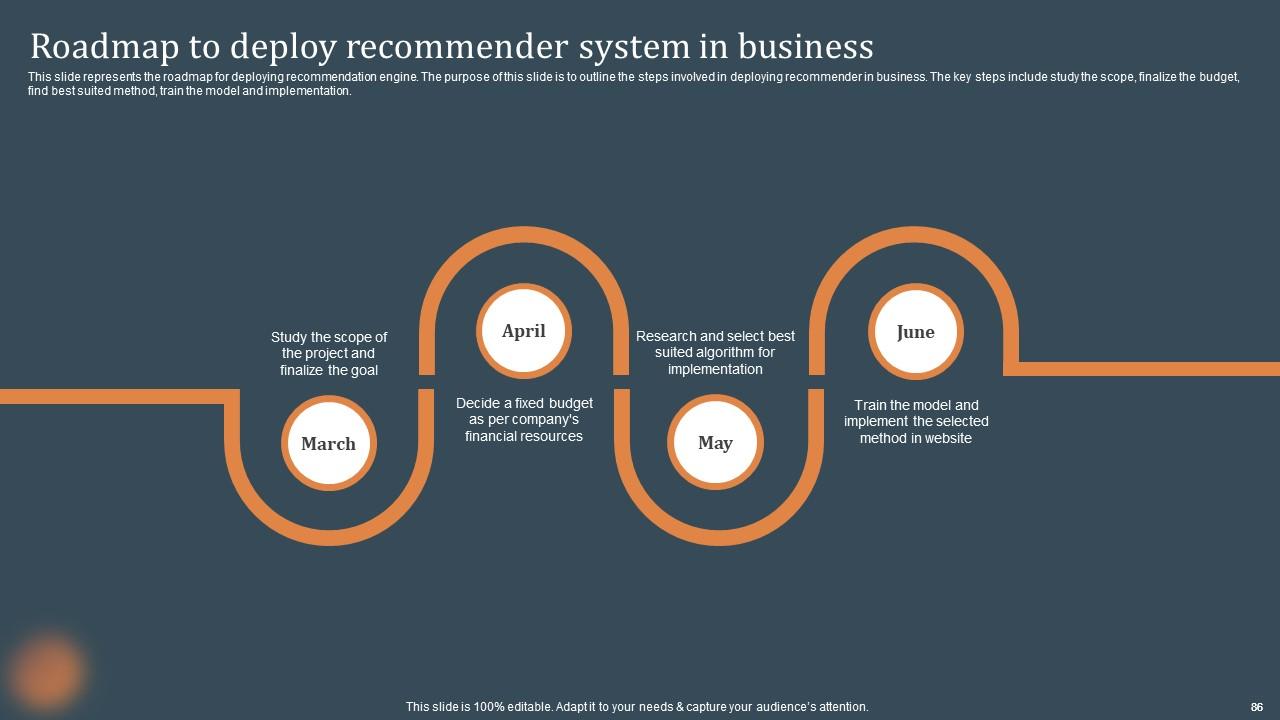
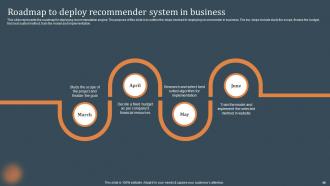
Slide 86: This slide represents the roadmap for deploying recommendation engine.
Slide 87: This slide reveals the Heading for the Components to be covered in the following template.
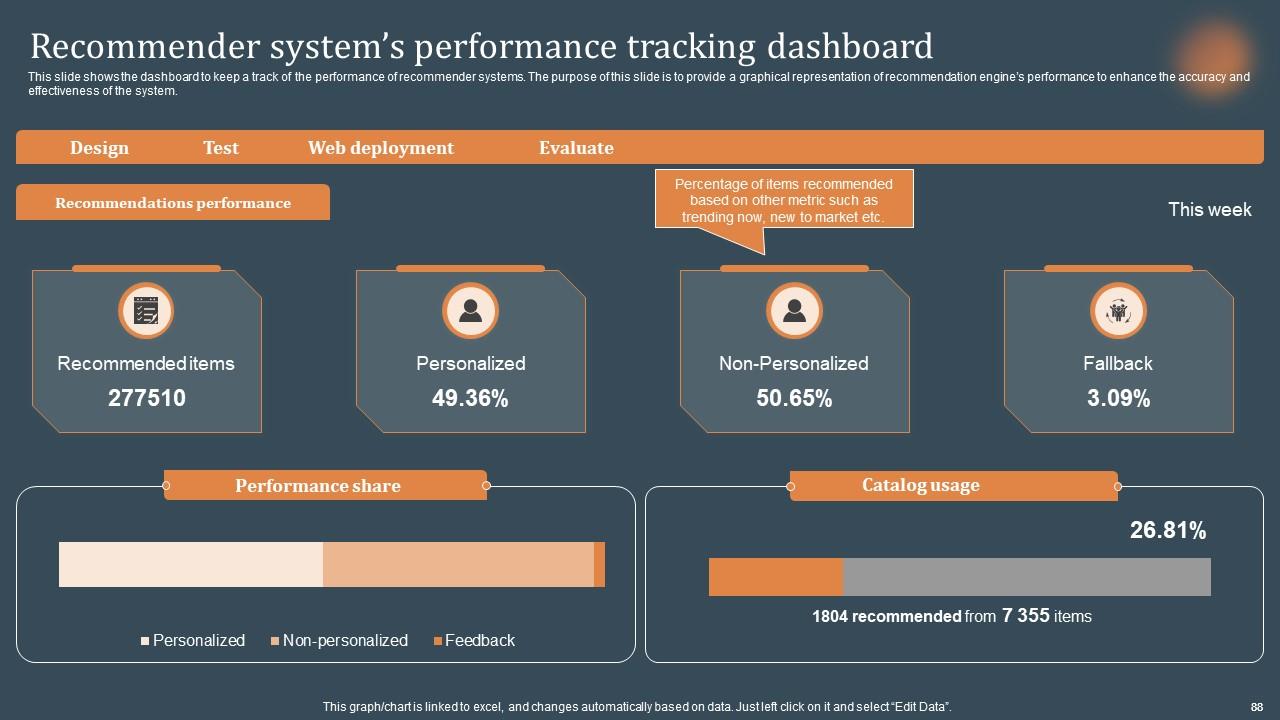
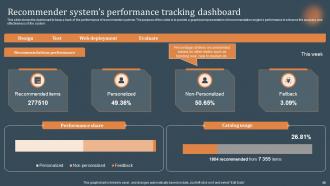
Slide 88: This slide shows the dashboard to keep a track of the performance of recommender systems.
Slide 89: This is the Icons slide containing all the Icons used in the plan.
Slide 90: This slide is used for showcasing some Additional information.
Slide 91: This slide elucidates the Custom bar.
Slide 92: This slide illustrates the Area chart.
Slide 93: This slide includes the Important notes.
Slide 94: This is the Idea generation slide for encouraging new ideas.
Slide 95: This is Our team slide for stating team-related information.
Slide 96: This is Our goal slide. State your organizational goals here.
Slide 97: This is the Thank You slide for acknowledgement.
Recommendations Based On Machine Learning Powerpoint Presentation Slides with all 99 slides:
Use our Recommendations Based On Machine Learning Powerpoint Presentation Slides to effectively help you save your valuable time. They are readymade to fit into any presentation structure.
-
The information is visually stunning and easy to understand, making it perfect for any business person. So I would highly recommend you purchase this PPT design now!
-
Very unique and reliable designs.
