


Revolutionizing International Transactions With Blockchain Cross Border Payments Complete Deck BCT CD
Grab our readily accessible and professionally crafted Revolutionizing International Transactions with Blockchain Cross Border Payments PowerPoint presentation, a vital resource for comprehending and navigating the future landscape of global financial transactions. This dynamic presentation empowers businesses and professionals by providing comprehensive insights into the transformative impact of blockchain technology on cross-border payments. Furthermore, the Fintech industry PPT templates Navigate through complex concepts efficiently as our PPT elucidates the advantages of blockchain, ranging from enhanced security to faster transaction speeds. Delve into real-world use cases that illustrate how blockchain reshapes the cross-border payment landscape, fosters transparency, and minimizes inefficiencies. With visually appealing graphics and concise explanations, our presentation ensures that even the most intricate aspects of blockchain in cross-border payments are easily digestible. Additionally, stay ahead of the curve, educate your team, and make informed decisions with our Blockchain Cross-Border Payment PPT. Elevate your understanding and embrace the potential of blockchain for seamless and secure cross-border payments. Download this 100 percent editable and customizable PowerPoint, compatible with Google Slides, to streamline your presentation process.































You must be logged in to download this presentation.


Do you want to remove this product from your favourites?
 Impress your
 audience
 100%
100% Editable
 Save Hours
 of Time
PowerPoint presentation slides
Deliver this complete deck to your team members and other collaborators. Encompassed with stylized slides presenting various concepts, this Revolutionizing International Transactions With Blockchain Cross Border Payments Complete Deck BCT CD is the best tool you can utilize. Personalize its content and graphics to make it unique and thought-provoking. All the sixty one slides are editable and modifiable, so feel free to adjust them to your business setting. The font, color, and other components also come in an editable format making this PPT design the best choice for your next presentation. So, download now.

People who downloaded this PowerPoint presentation also viewed the following :
Content of this Powerpoint Presentation
Slide 1: Revolutionizing international transactions with blockchain cross border payments
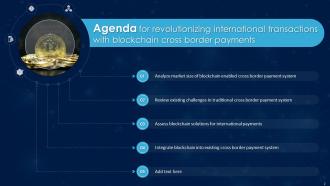
Slide 2: This is an Agenda slide. State your agendas here.
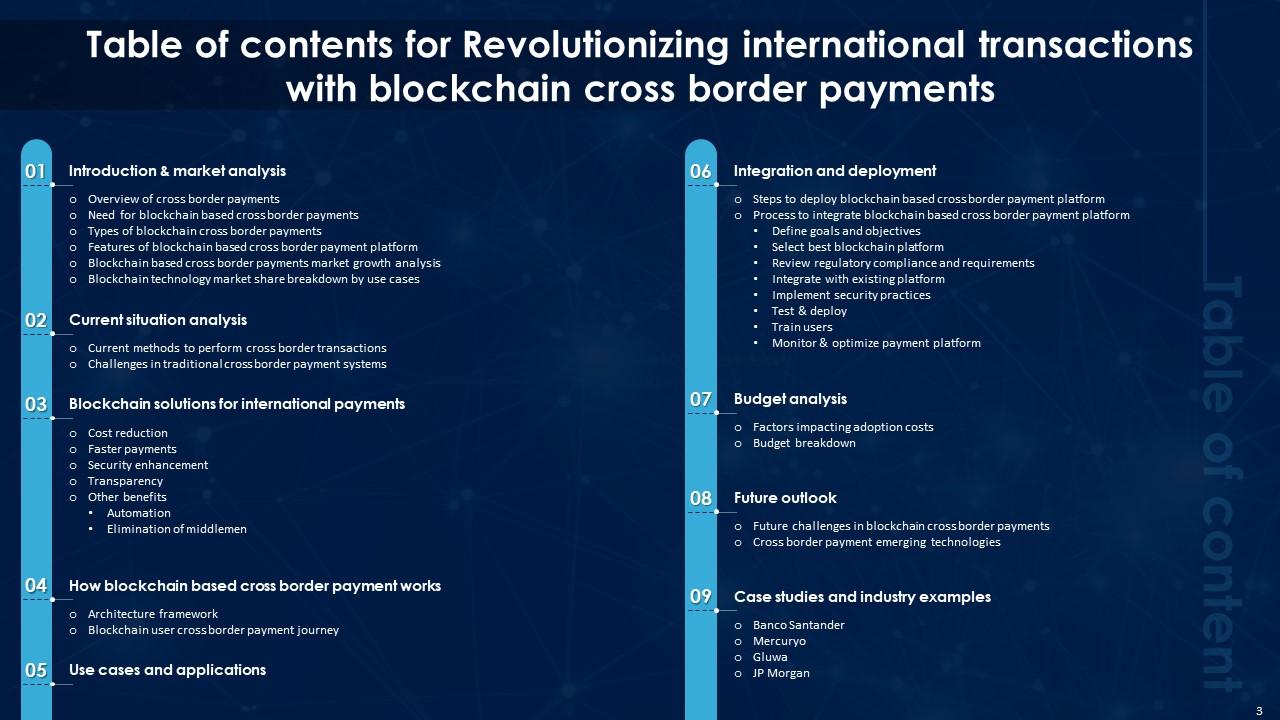
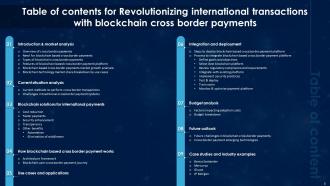
Slide 3: This slide shows Table of Content for the presentation.
Slide 4: This slide shows title for topics that are to be covered next in the template.
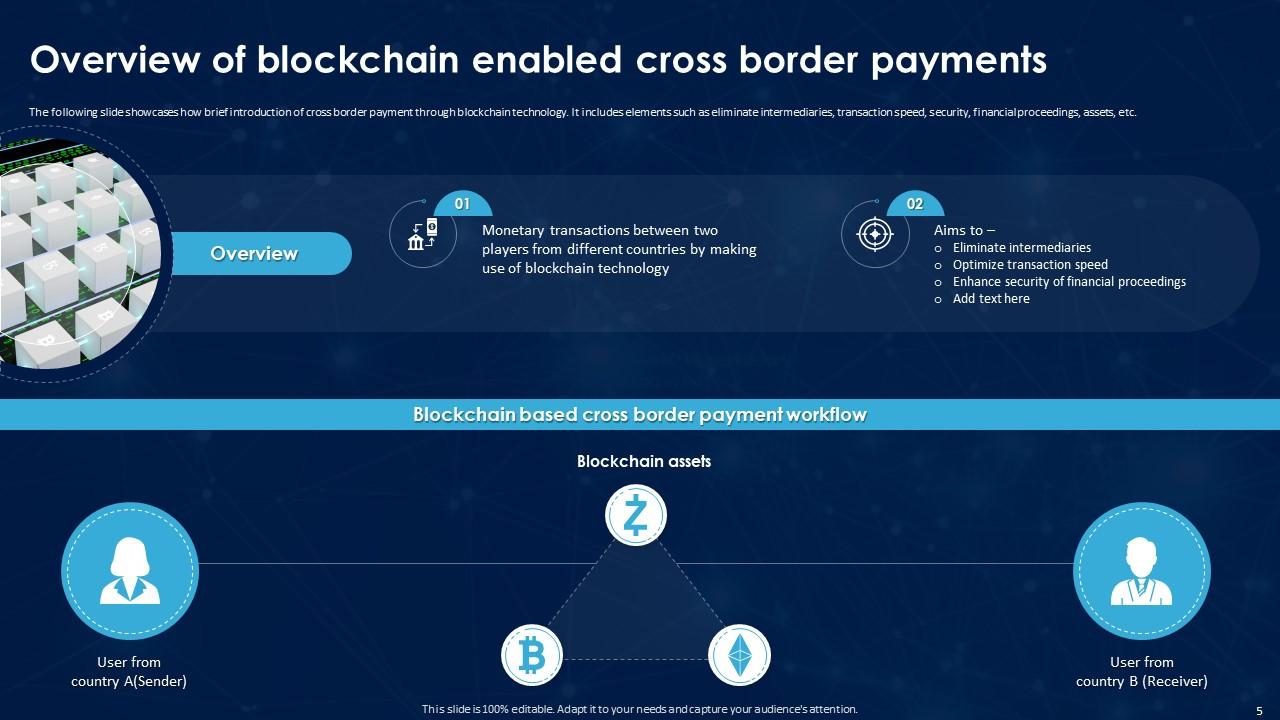
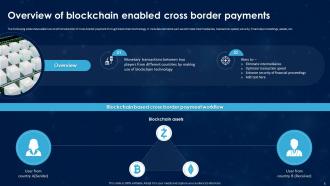
Slide 5: This slide showcases how brief introduction of cross border payment through blockchain technology. It includes elements such as eliminate intermediaries etc.
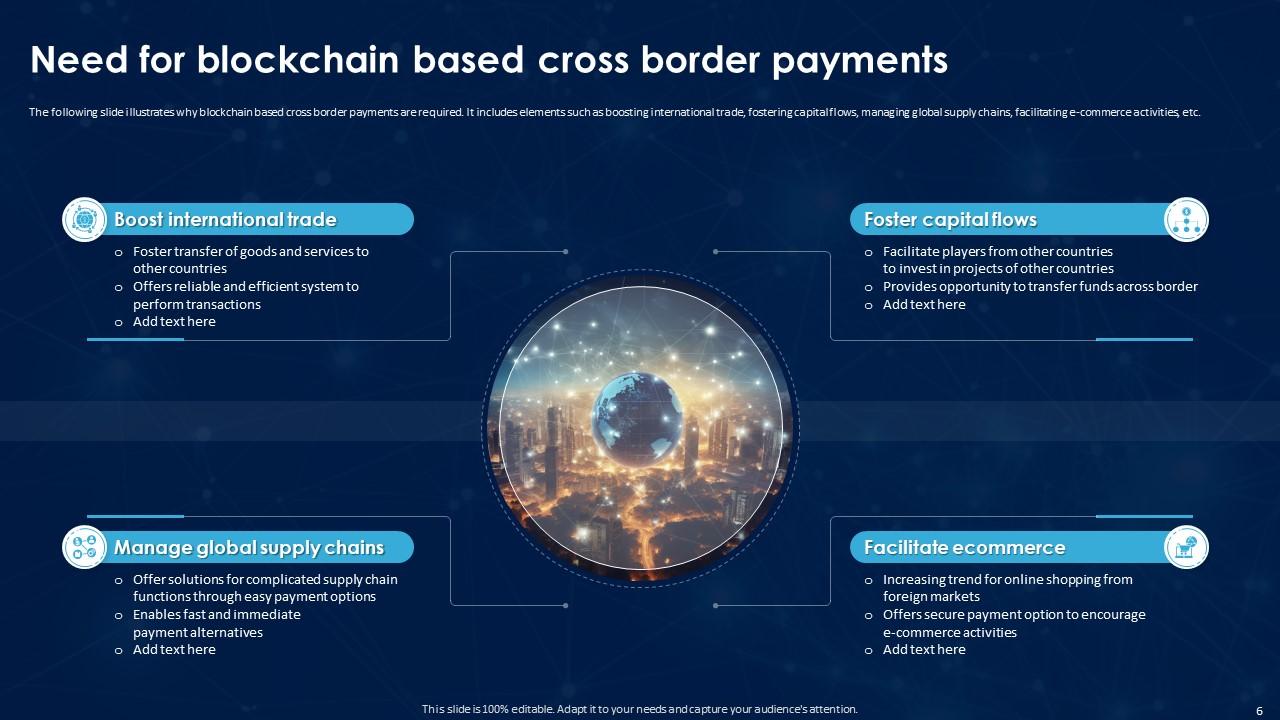
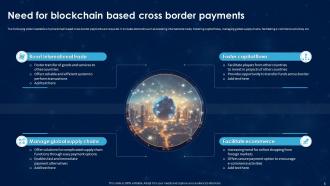
Slide 6: This slide illustrates why blockchain based cross border payments are required. It includes elements such as boosting international trade, fostering capital flows etc.
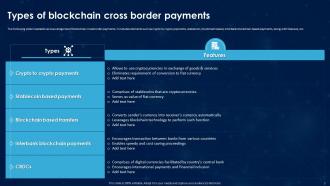
Slide 7: This slide presents illustrates various categories of blockchain cross border payments. It includes elements such as crypto to crypto payments etc.
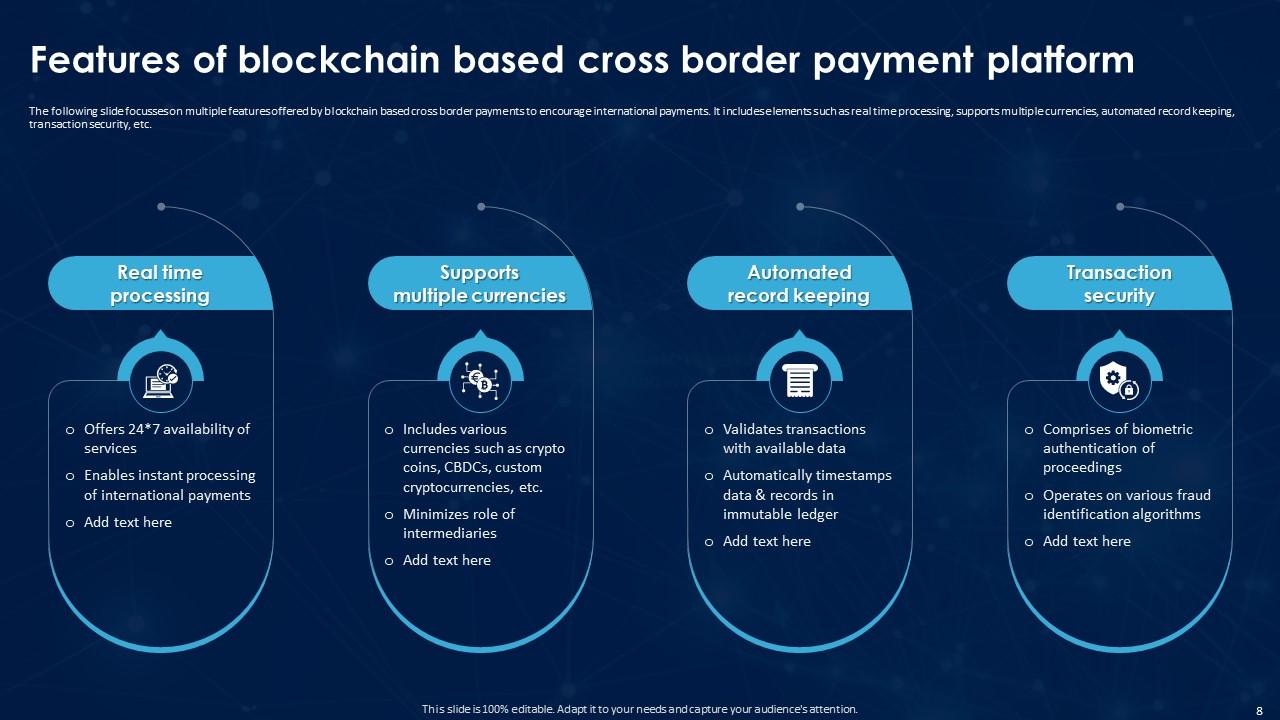
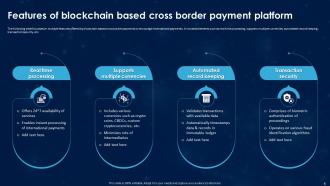
Slide 8: This slide focusses on multiple features offered by blockchain based cross border payments to encourage international payments.
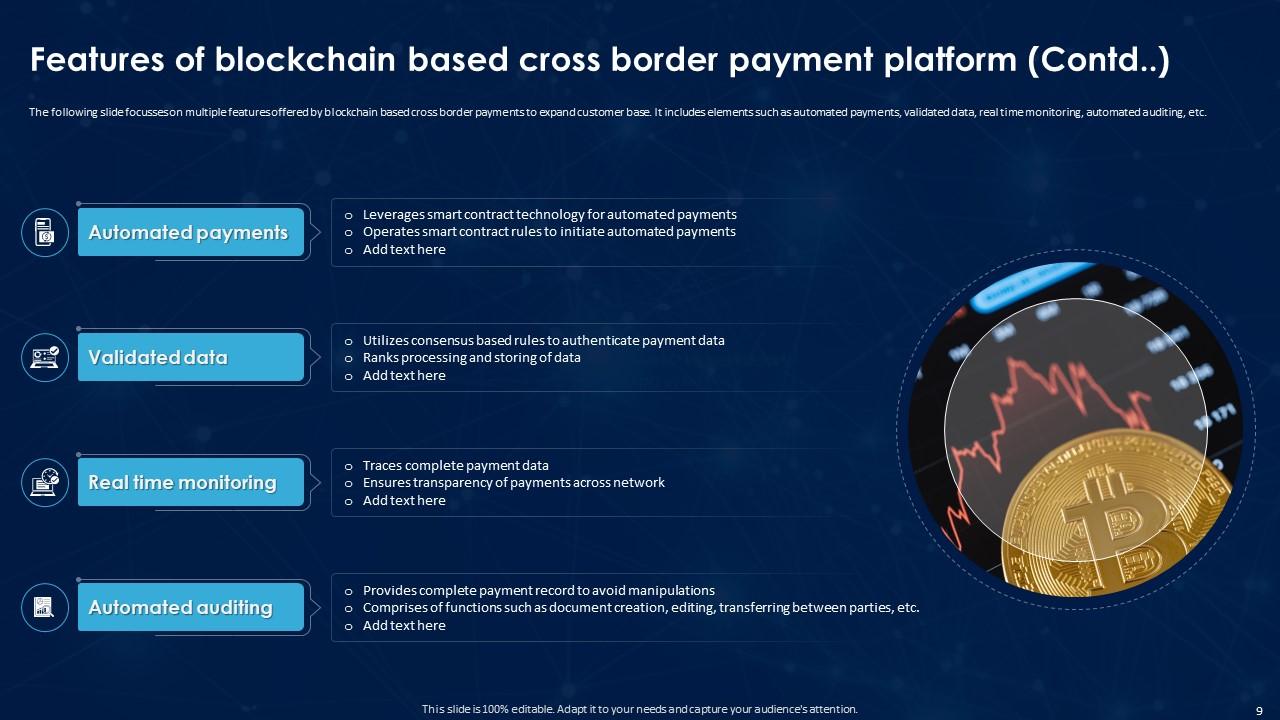
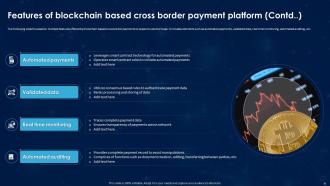
Slide 9: This slide displays on multiple features offered by blockchain based cross border payments to expand customer base. It includes elements such as automated payments etc.
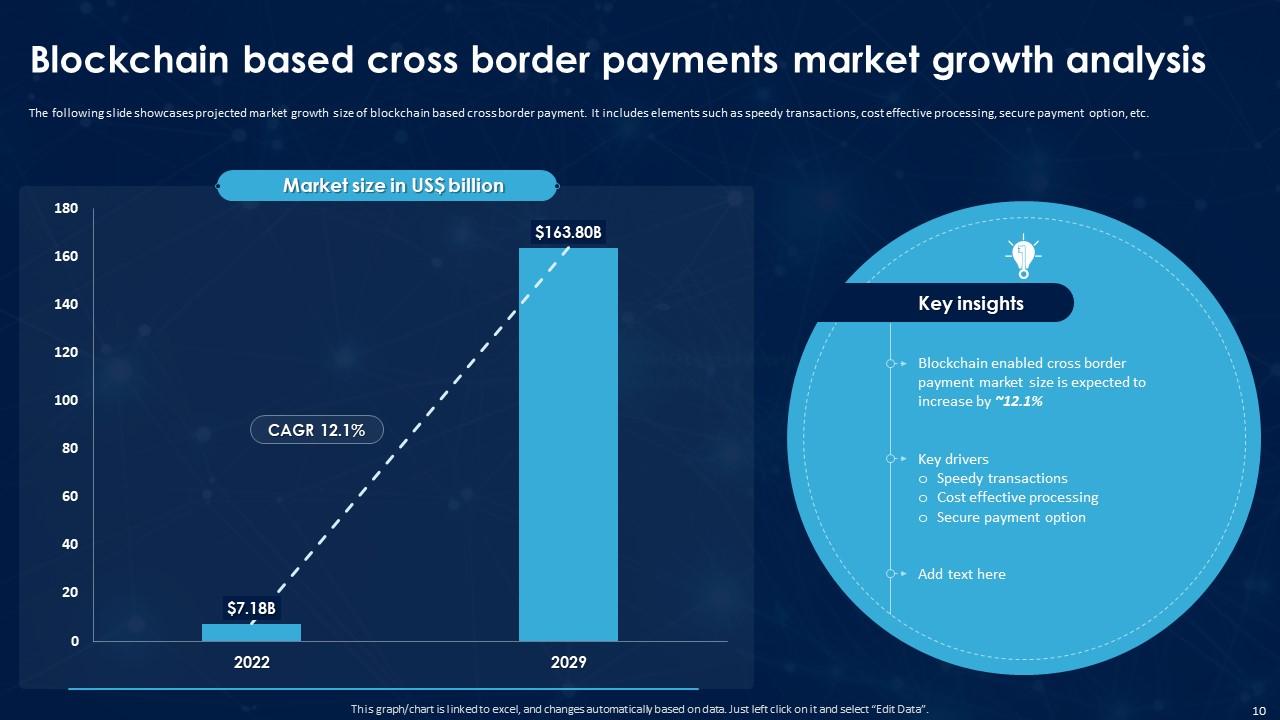
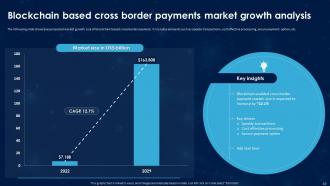
Slide 10: This slide showcases projected market growth size of blockchain based cross border payment. It includes elements such as speedy transactions etc.
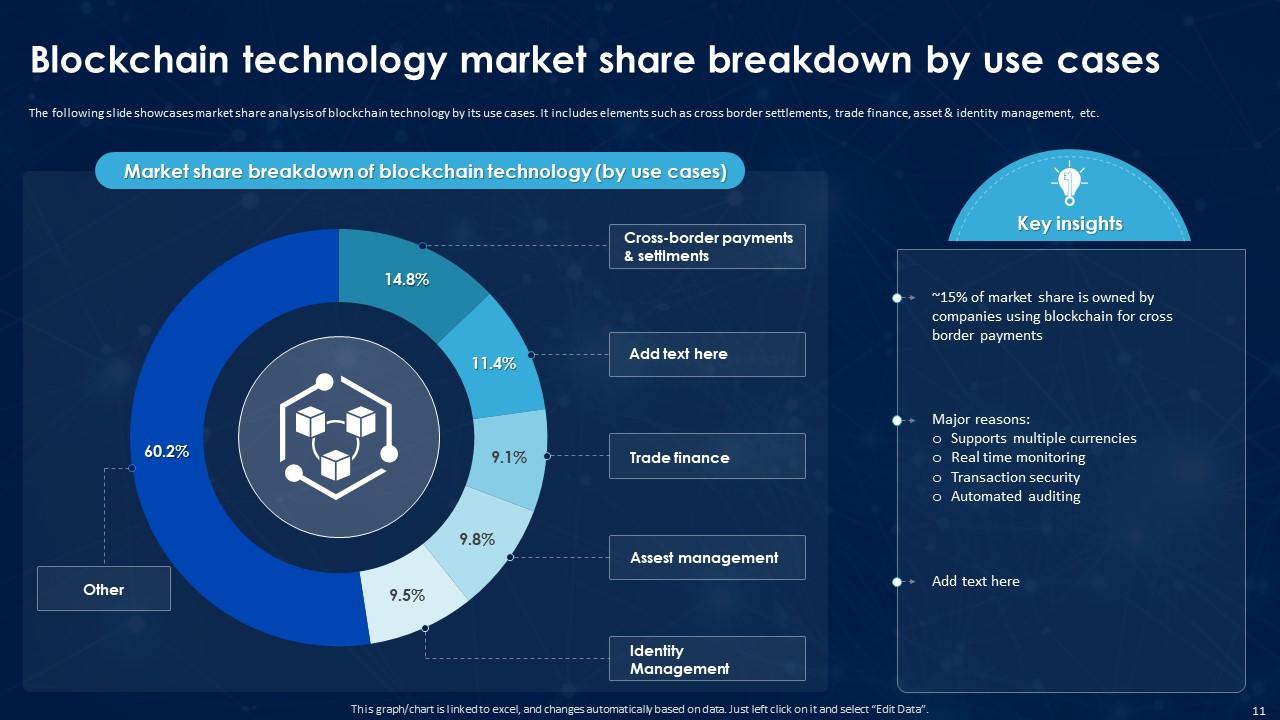
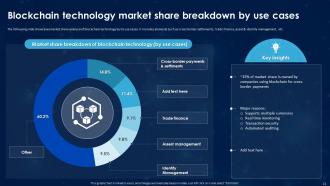
Slide 11: This slide presents market share analysis of blockchain technology by its use cases. It includes elements such as cross border settlements, trade finance etc.
Slide 12: This slide shows title for topics that are to be covered next in the template.
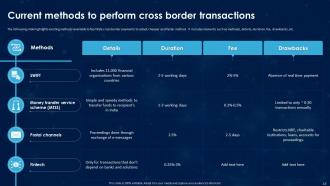
Slide 13: This slide highlights existing methods available to facilitate cross border payments to adopt cheaper and faster method.
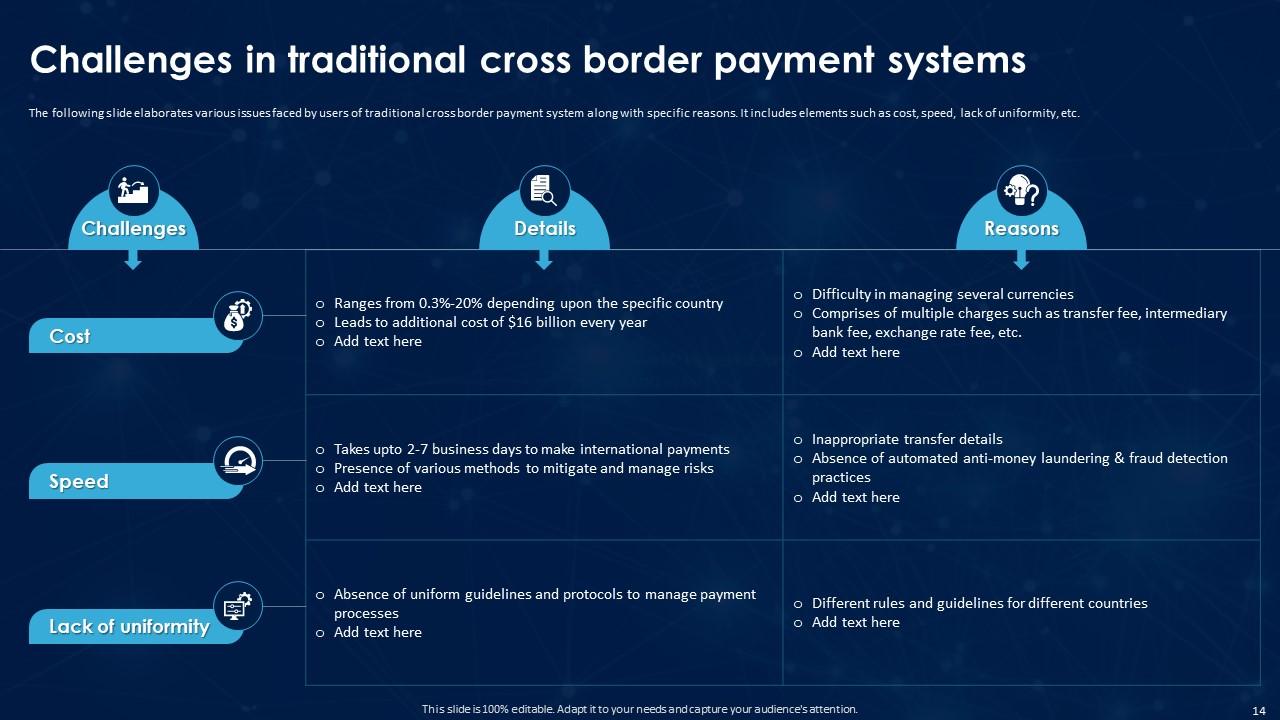
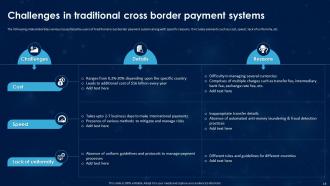
Slide 14: This slide elaborates various issues faced by users of traditional cross border payment system along with specific reasons.
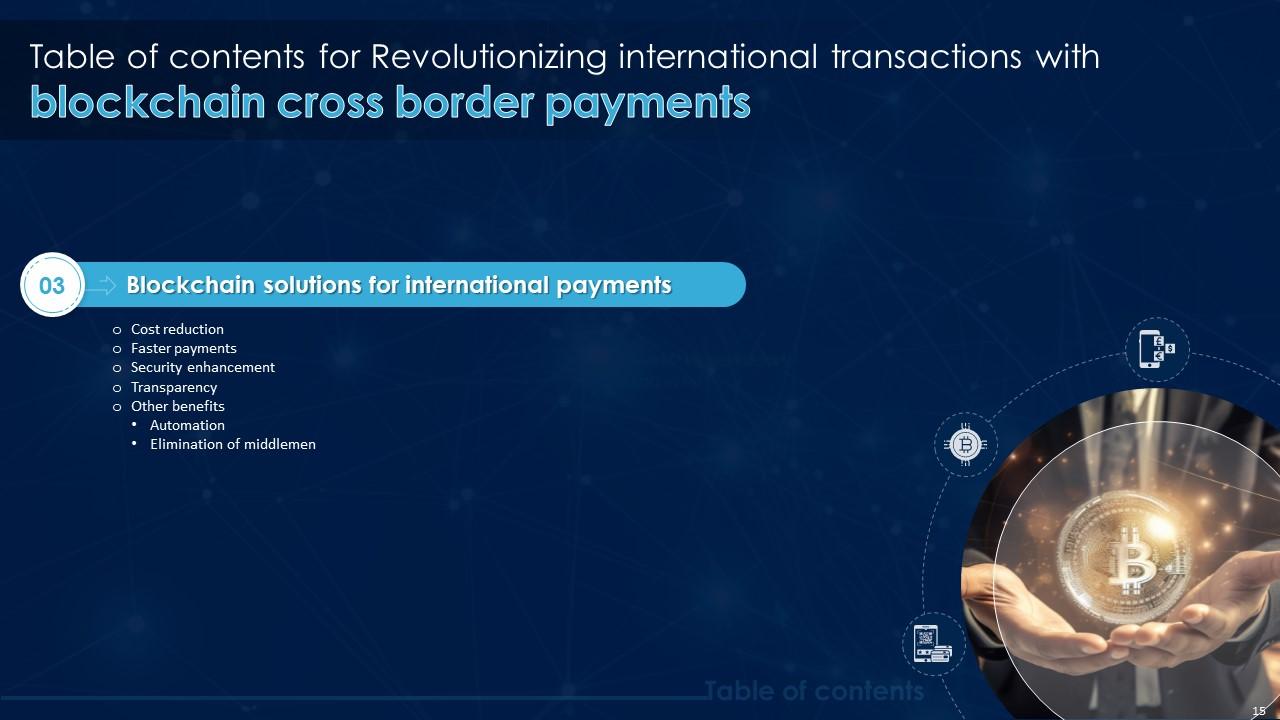
Slide 15: This slide shows title for topics that are to be covered next in the template.
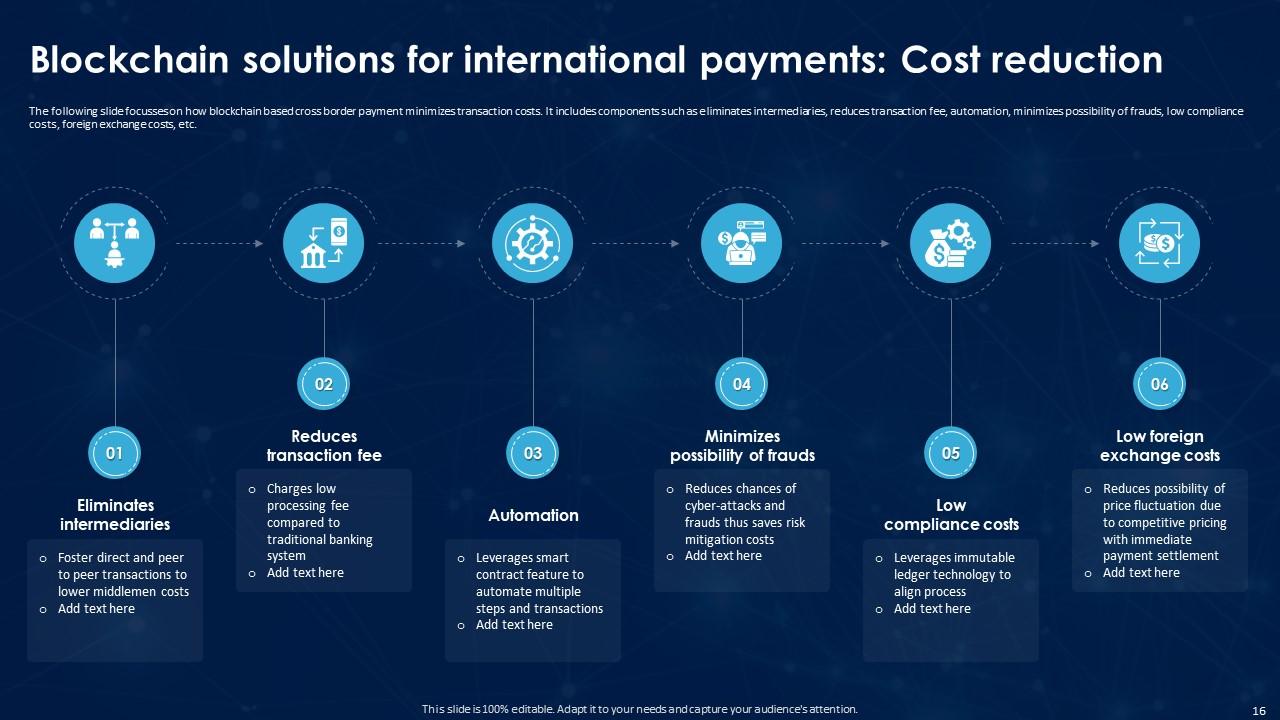
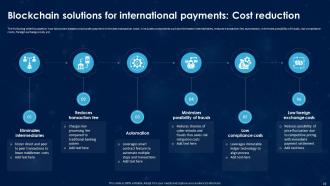
Slide 16: This slide focusses on how blockchain based cross border payment minimizes transaction costs. It includes components such as eliminates intermediaries etc.
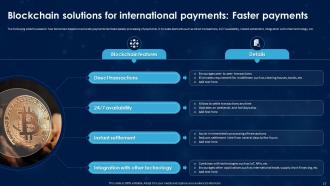
Slide 17: This slide displays how blockchain based cross border payments facilitate speedy processing of payments. It includes elements such as direct transactions, 24/7 availability etc.
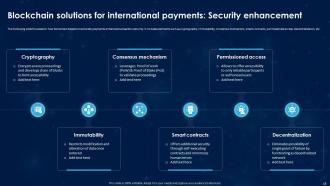
Slide 18: This slide focusses on how blockchain based cross border payments enhances transaction security. It includes elements such as cryptography, immutability etc.
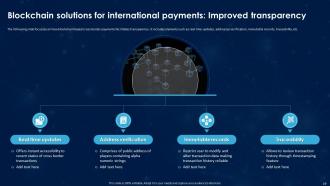
Slide 19: This slide presents how blockchain based cross border payments facilitates transparency. It includes elements such as real time updates, addresses verification etc.
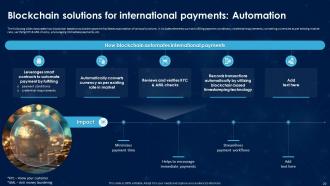
Slide 20: This slide showcases how blockchain based cross border payment facilitates automation of various functions . It includes elements such as fulfilling payment conditions etc.
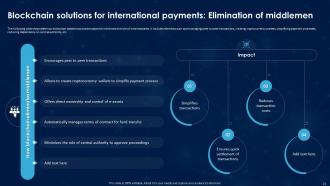
Slide 21: This slide displays how blockchain based cross border payment minimizes the role of intermediaries. It includes elements such as encouraging peer to peer transactions etc.
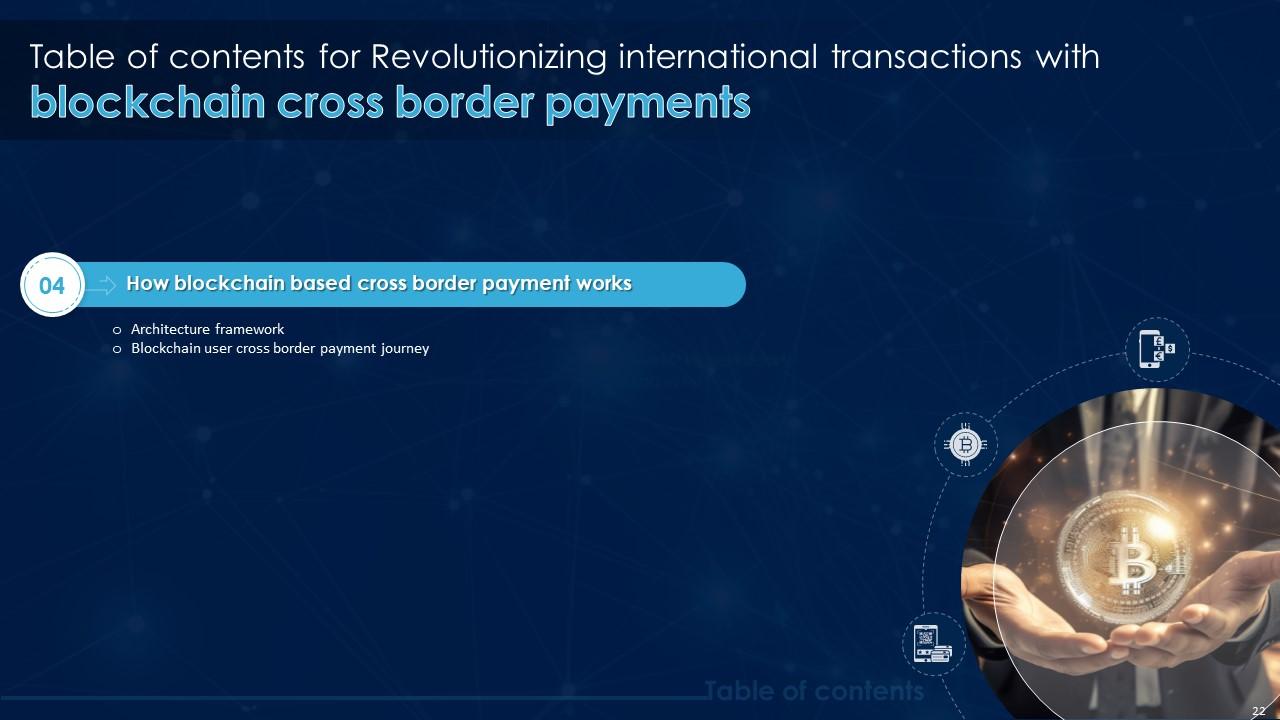
Slide 22: This slide shows title for topics that are to be covered next in the template.
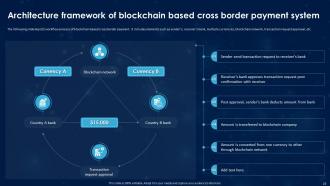
Slide 23: This slide depicts workflow process of blockchain based cross border payment. It includes elements such as sender’s, receiver’s bank etc.
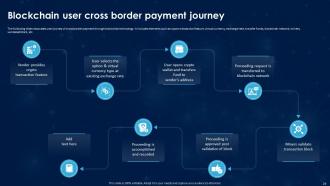
Slide 24: This slide showcases user journey of cross border payment through blockchain technology. It includes elements such as crypto transaction feature, virtual currency etc.
Slide 25: This slide shows title for topics that are to be covered next in the template.
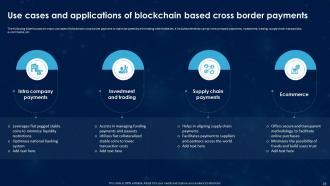
Slide 26: This slide focuses on major use cases of blockchain cross border payment to optimize speed by eliminating intermediaries. It includes elements such as intra company payments etc.
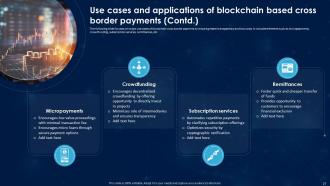
Slide 27: This slide displays major use cases of blockchain cross border payment to ensure greater transparency and low costs.
Slide 28: This slide shows title for topics that are to be covered next in the template.
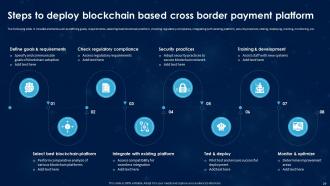
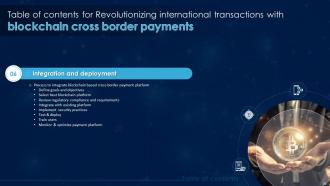
Slide 29: This slide includes elements such as defining goals, requirements, selecting best blockchain platform, checking regulatory compliance etc.
Slide 30: This slide shows title for topics that are to be covered next in the template.
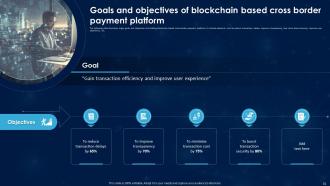
Slide 31: This slide illustrates major goals and objectives of installing blockchain based cross border payment platform. It includes elements such as reduce transaction delays etc.
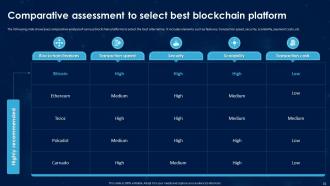
Slide 32: This slide showcases comparative analysis of various blockchain platforms to select the best alternative. It includes elements such as features, transaction speed etc.
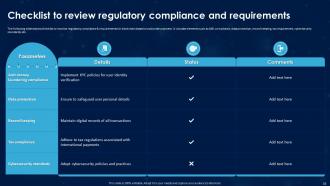
Slide 33: This slide depicts checklist to monitor regulatory compliance & requirements for blockchain based cross border payment.
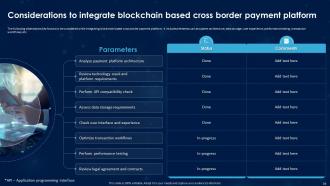
Slide 34: This slide depicts key factors to be considered while integrating blockchain based cross border payment platform.
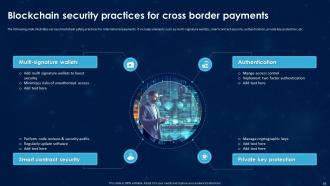
Slide 35: This slide illustrates various blockchain safety practices for international payments. It includes elements such as multi-signature wallets, smart contract security etc.
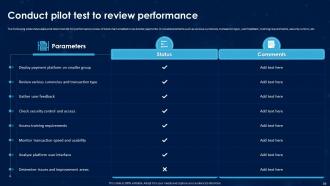
Slide 36: This slide showcases pilot test checklist for performance review of blockchain enabled cross border payments. It includes elements such as various currencies etc.
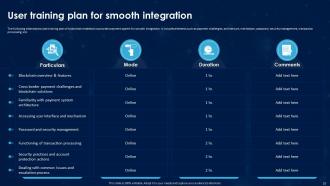
Slide 37: This slide depicts user training plan of blockchain enabled cross border payment system for smooth integration.
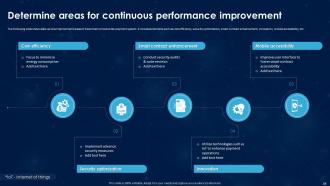
Slide 38: This slide showcases various improvement areas of blockchain cross border payment system. It includes elements such as cost efficiency, security optimization etc.
Slide 39: This slide shows title for topics that are to be covered next in the template.
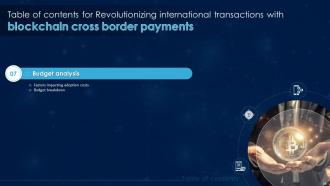
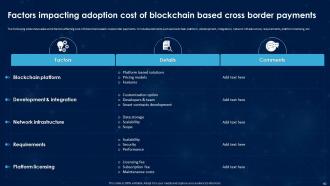
Slide 40: This slide showcases some factors affecting cost of blockchain based cross border payments. It includes elements such as blockchain platform, development etc.
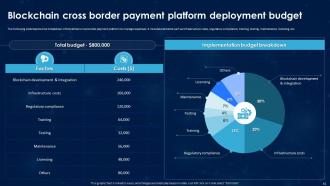
Slide 41: This slide depicts cost breakdown of blockchain cross border payment platform to manage expenses. It includes elements such as infrastructure costs, regulatory compliance etc.
Slide 42: This slide shows title for topics that are to be covered next in the template.
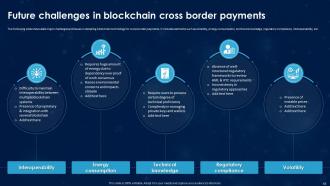
Slide 43: This slide showcases major challenges and issues in adopting blockchain technology for cross border payments. It includes elements such as volatility, energy consumption etc.
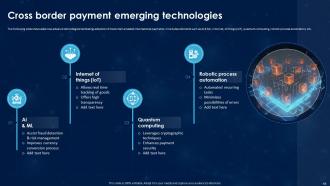
Slide 44: This slide displays new advance technologies facilitating adoption of blockchain enabled international payments.
Slide 45: This slide shows title for topics that are to be covered next in the template.
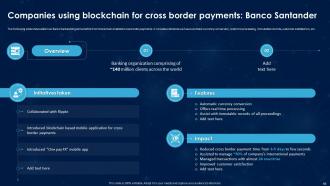
Slide 46: This slide showcases how Banco Santander gain benefits from blockchain enabled cross border payments. It includes elements such as Automatic currency conversion etc.
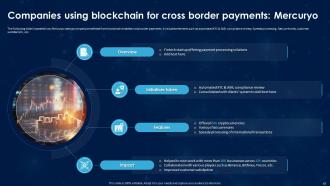
Slide 47: This slide illustrates how Mercuryo startup company benefitted from blockchain enabled cross border payments.
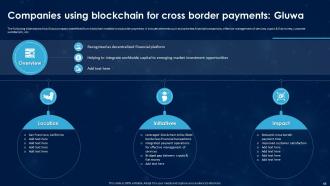
Slide 48: This slide depicts how Gluwa company benefitted from blockchain enabled cross border payments. It includes elements such as borderless financial transactions etc.
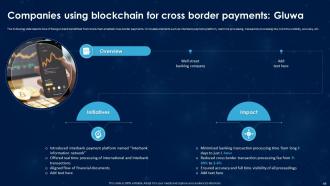
Slide 49: This slide displays how JP Morgan bank benefitted from blockchain enabled cross border payments. It includes elements such as interbank payment platform etc.
Slide 50: This slide is titled as Additional Slides for moving forward.
Slide 51: This slide shows all the icons included in the presentation.
Slide 52: This is Our Mission slide with related imagery and text.
Slide 53: This is an Idea Generation slide to state a new idea or highlight information, specifications etc.
Slide 54: This slide presents Roadmap with additional textboxes. It can be used to present different series of events.
Slide 55: This is a Timeline slide. Show data related to time intervals here.
Slide 56: This slide contains Puzzle with related icons and text.
Slide 57: This slide provides 30 60 90 Days Plan with text boxes.
Slide 58: This slide shows SWOT analysis describing- Strength, Weakness, Opportunity, and Threat.
Slide 59: This is Our Target slide. State your targets here.
Slide 60: This slide depicts Venn diagram with text boxes.
Slide 61: This is a Thank You slide with address, contact numbers and email address.
Revolutionizing International Transactions With Blockchain Cross Border Payments Complete Deck BCT CD with all 70 slides:
Use our Revolutionizing International Transactions With Blockchain Cross Border Payments Complete Deck BCT CD to effectively help you save your valuable time. They are readymade to fit into any presentation structure.
-
Understandable and informative presentation.
-
I want to thank SlideTeam for the work that they do, especially their customer service.
