


Risikobewertungsstrategien Powerpoint-Präsentationsfolien
Wenn Sie nach einer perfekten Vorlage suchen, um Ihren Geschäftsansatz zur Identifizierung und zum Management von Risiken zu präsentieren, laden Sie unsere PowerPoint-Präsentationsfolien für Risikobewertungsstrategien herunter. Mit dieser PPT-Vorlage für Risikobewertungsstrategien für Risikobewertungsstrategien können Sie Risikostrategien und Risikomanagementpläne überprüfen und Risiken basierend auf Taktiken und Entwicklungen verarbeiten, bewerten und beurteilen. Mithilfe dieser PowerPoint-Folien können Sie Ihre Pläne zum Risikomanagement erstellen. Verwenden Sie Risiko-Reaktions-Matrix und -Diagramme, um zu zeigen, wie Ihr Unternehmen Risiken und seine Reaktionsstrategien mindert. Diese Präsentationsfolie des Risikoabschätzungsplans ermöglicht es Ihnen, eine Risikobewertungsstrategie auf Organisationsebene zu implementieren und ermöglicht es ihren Mitarbeitern, die Gesamtrisiken einer Organisation zu diskutieren. Diese Präsentationsvorlage zu Risikobewertungsstrategien hilft Ihnen bei der systematischen Durchführung von Risikobewertungen und Sie können Ihre Risiken regelmäßig überprüfen. Eine effektive Risikomanagement-Vorlage wurde von unserem Expertenteam erstellt, damit Sie Risiken priorisieren, Risiken zuweisen und den Geschäftsbereich für die Entscheidungsfindung verantwortlich machen können. Schaffen Sie Markenkonsistenz mit unseren Powerpoint-Präsentationsfolien für Risikobewertungsstrategien. Geben Sie einen Bericht über dauerhafte Erfolge.















You must be logged in to download this presentation.


Do you want to remove this product from your favourites?
Merkmale dieser PowerPoint-Präsentationsfolien:
Präsentieren von Strategien zur Risikobewertung PowerPoint-Präsentationsfolien. Einfache Datenplatzierung wie Firmenlogo, Name oder Marke. Dieses PowerPoint-Design ist vollständig auf Google-Folien ausgerichtet. Die Bildqualität ändert sich nicht, auch wenn Sie diese Vorlage auf einen großen Bildschirm projizieren. Schnelle Downloadgeschwindigkeit und Formate können einfach in JPEG und PDF geändert werden. Ideal für Manager und Unternehmer. Passen Sie Schriftart, Text und Farben der PPT-Folie an Ihre Anforderungen an.

People who downloaded this PowerPoint presentation also viewed the following :
Inhalt dieser Powerpoint-Präsentation
Folie 1 : Diese Folie stellt Strategien zur Risikobewertung vor. Geben Sie Ihren Firmennamen an und beginnen Sie.
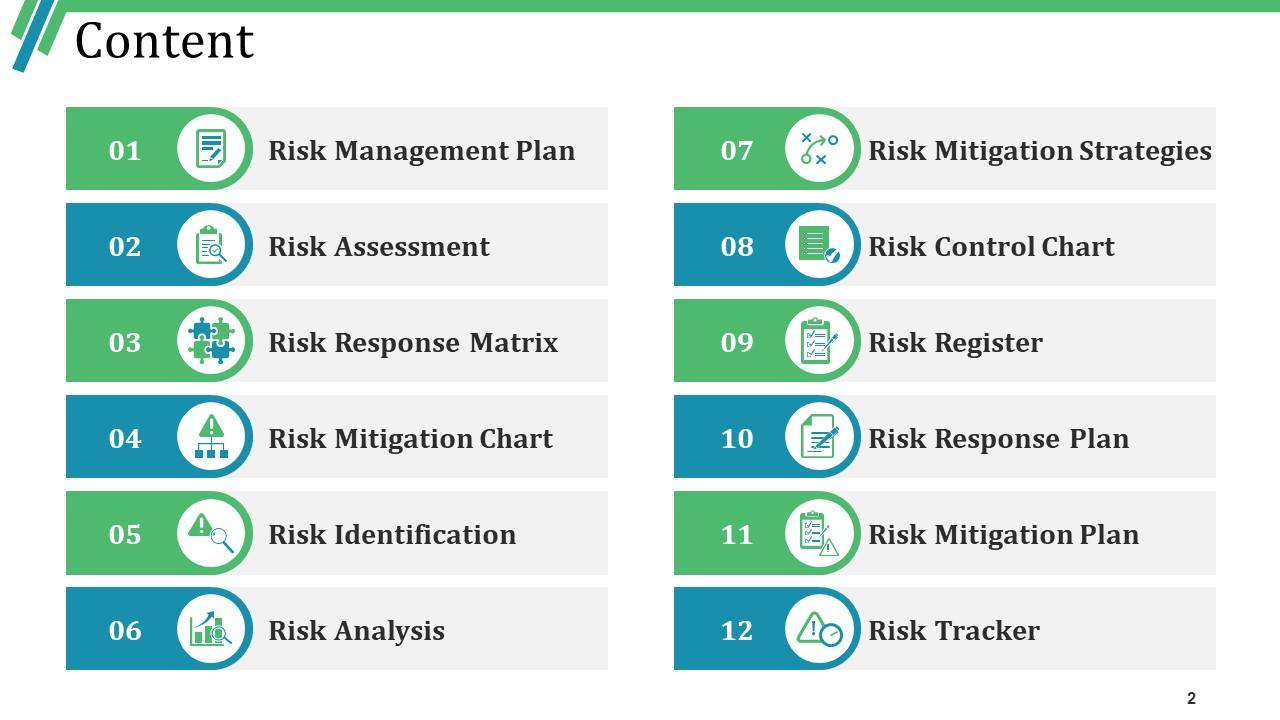
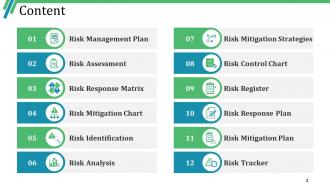
Folie 2 : Diese Folie zeigt Inhalte mit den folgenden Punkten – Risikomanagementplan, Risikobewertung, Risikoreaktionsmatrix, Risikominderungsdiagramm, Risikoidentifikation, Risikoanalyse, Risikominderungsstrategien, Risikokontrolldiagramm, Risikoregister, Risikoreaktionsplan, Risikominderung Plan, Risiko-Tracker.
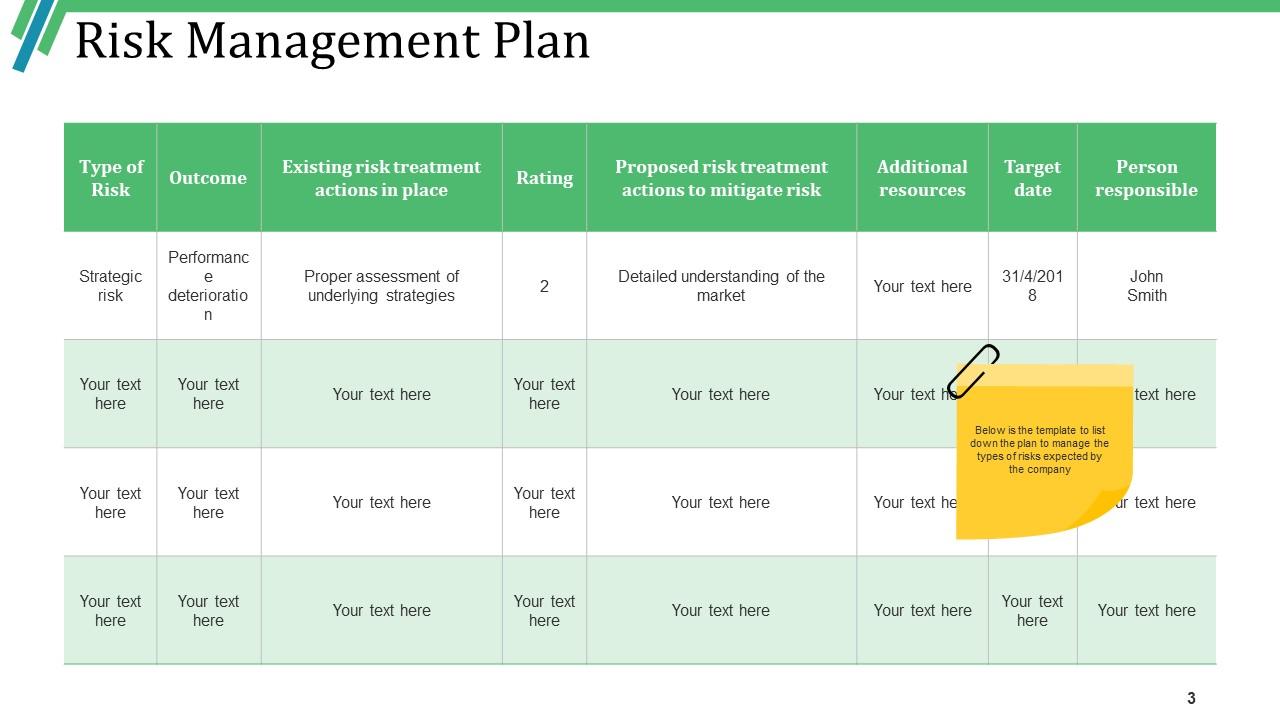
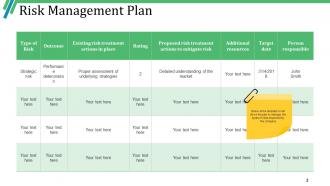
Folie 3 : Diese Folie zeigt den Risikomanagementplan. Listen Sie hier den Plan auf, um die vom Unternehmen erwarteten Arten von Risiken zu steuern.
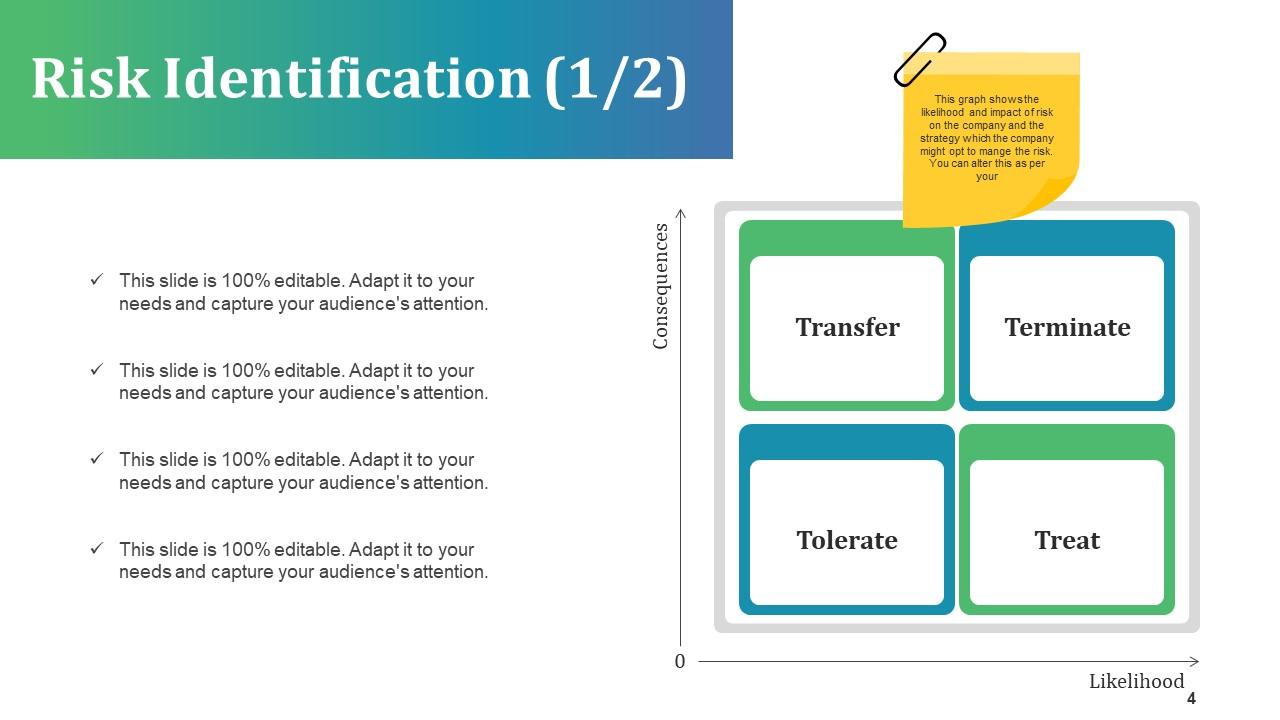
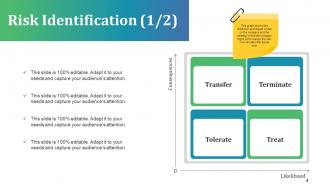
Folie 4 : Diese Folie zeigt das Diagramm zur Risikoidentifikation. Diese Grafik zeigt die Wahrscheinlichkeit und die Auswirkungen von Risiken auf das Unternehmen und die Strategie, die das Unternehmen zum Risikomanagement wählen könnte. Sie können dies nach Bedarf ändern.
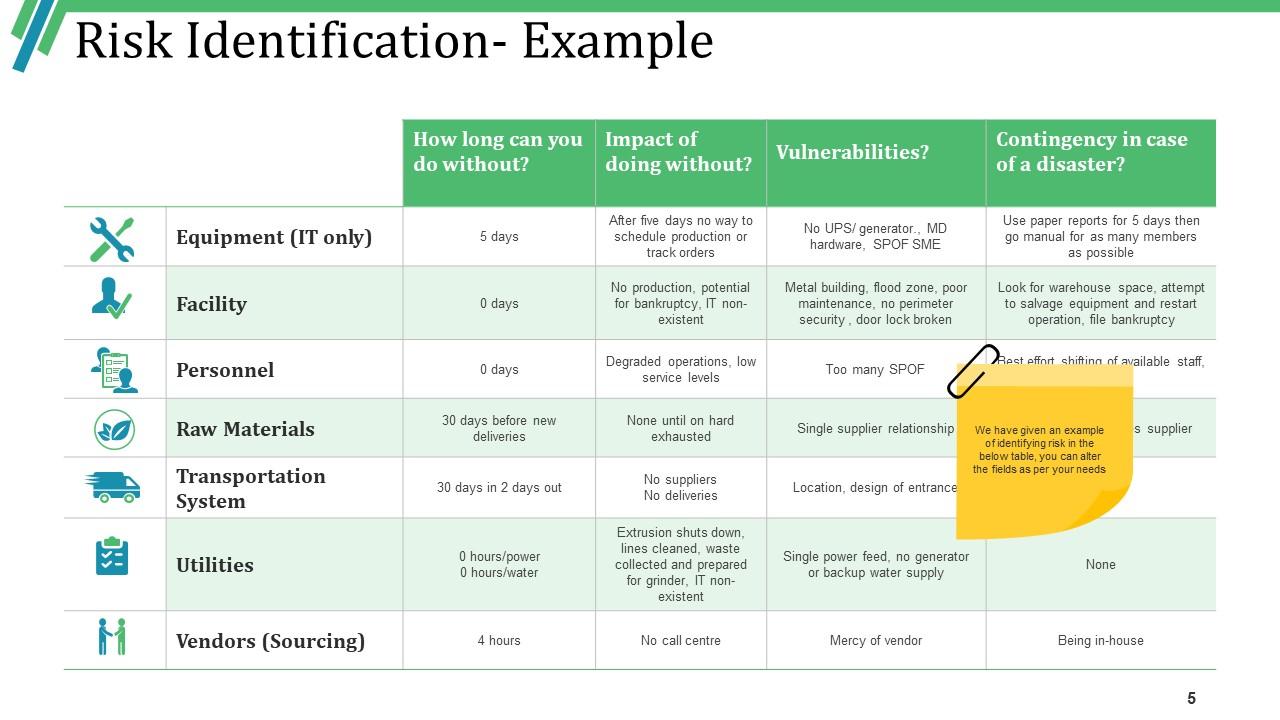
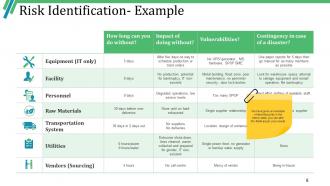
Folie 5 : Diese Folie erläutert die Risikoidentifikation anhand eines Beispiels. Sie können die Felder nach Ihren Wünschen ändern.
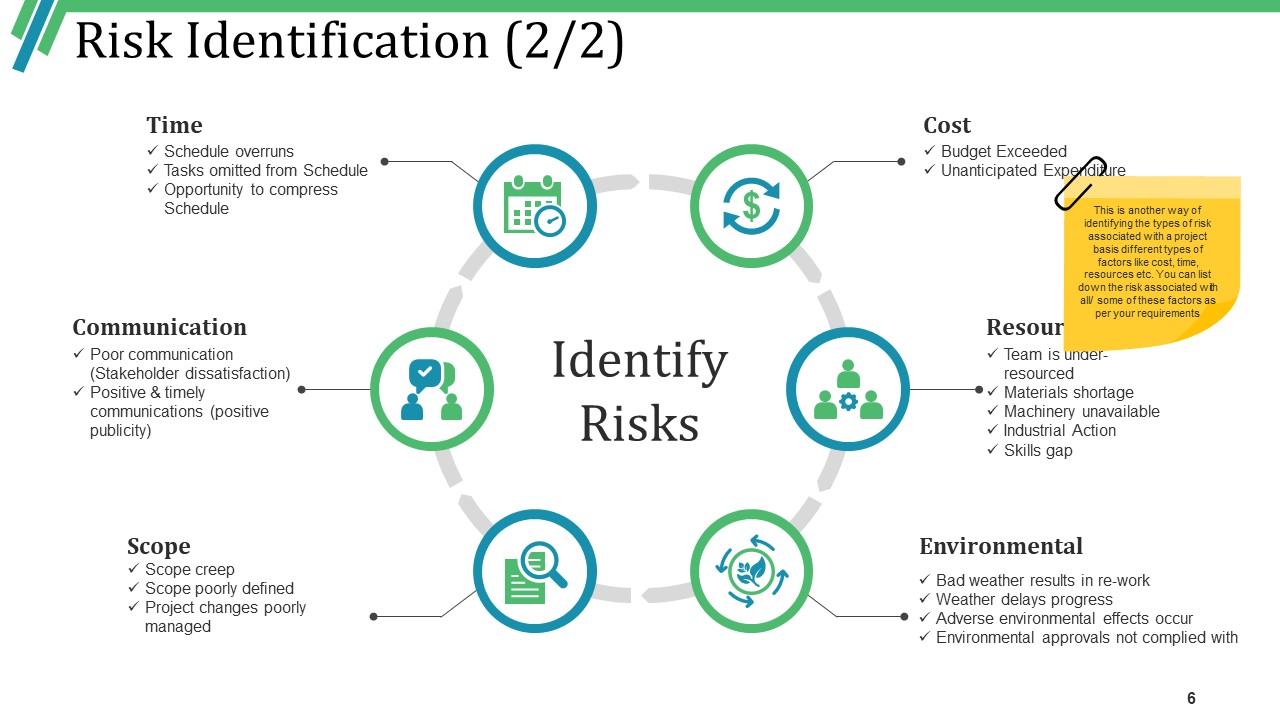
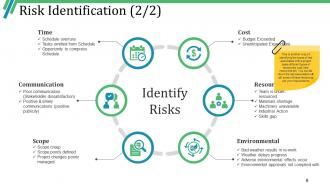
Folie 6 : Diese Folie zeigt eine andere Art der Risikoidentifikation mit mehreren Faktoren wie Kosten, Zeit, Ressourcen usw. Sie können das mit allen/einigen dieser Faktoren verbundene Risiko gemäß Ihren Anforderungen auflisten.
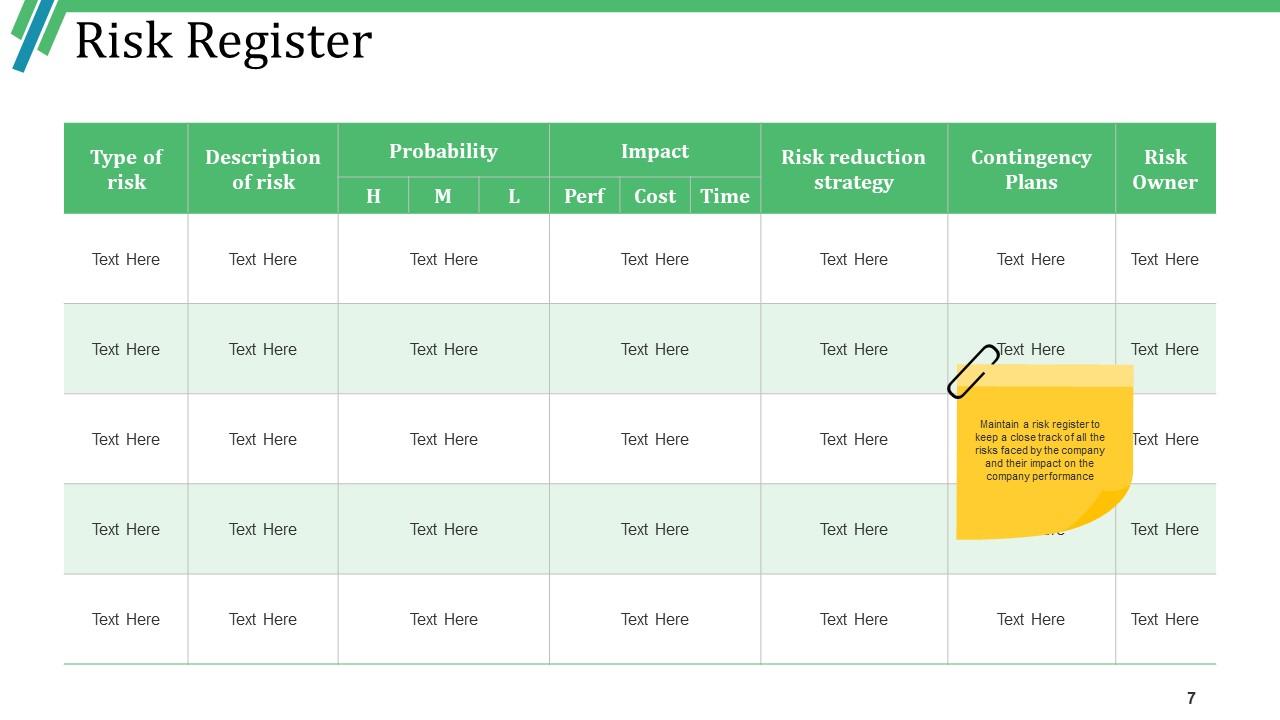
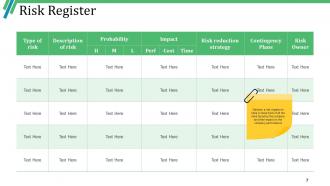
Folie 7 : Diese Folie zeigt das Risikoregister. Führen Sie ein Risikoregister, um alle Risiken, denen das Unternehmen ausgesetzt ist, und deren Auswirkungen auf die Unternehmensleistung genau zu verfolgen.
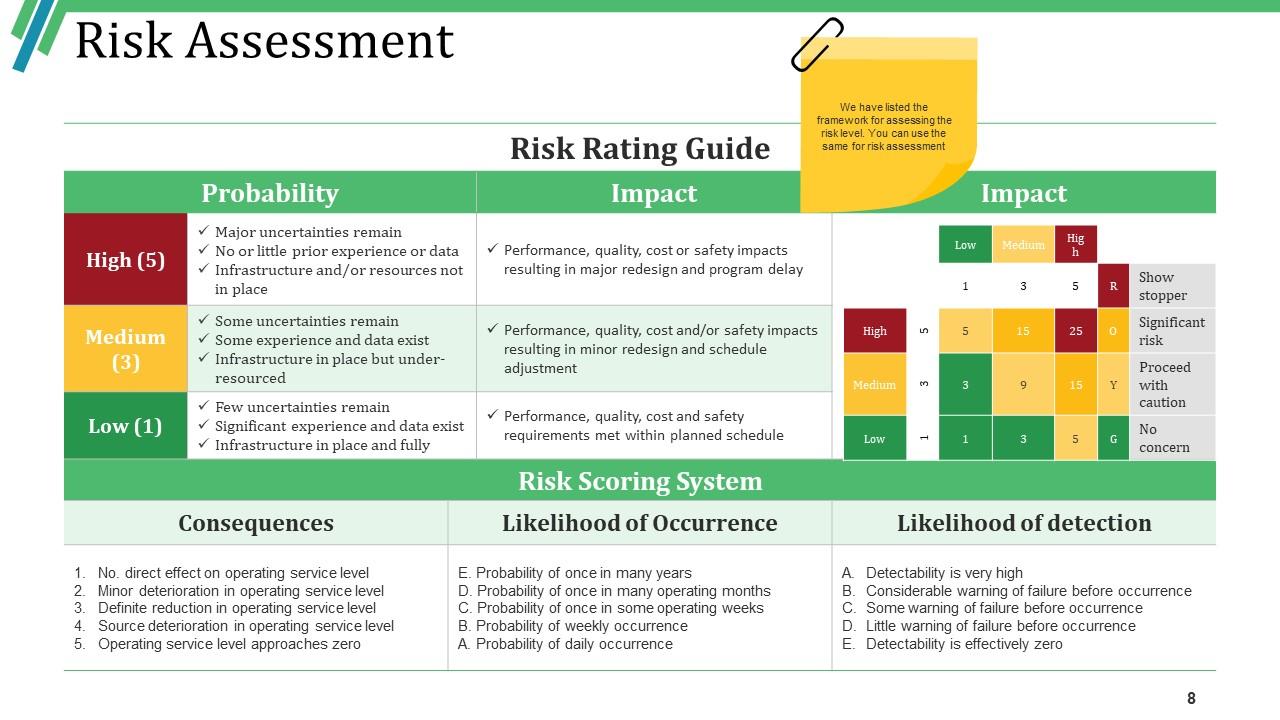
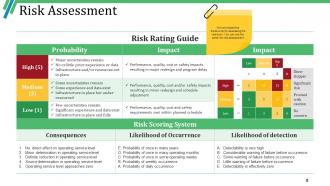
Folie 8 : Diese Folie zeigt einen Leitfaden zur Risikobewertung mit Risikobewertung. Wir haben in dieser Folie den Rahmen zur Bewertung des Risikoniveaus aufgelistet, den Sie nach Bedarf ändern können.
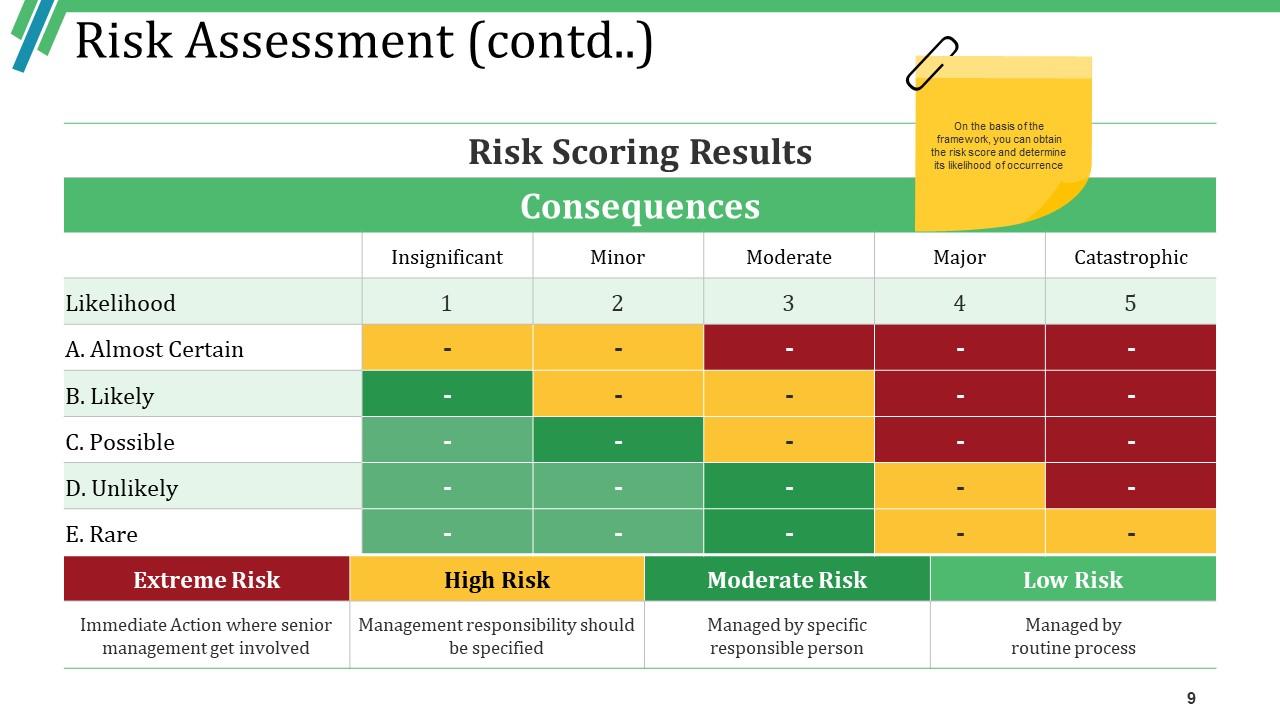
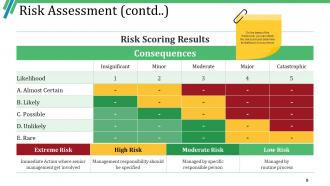
Folie 9 : Diese Folie zeigt auch die Risikobewertung mit den Ergebnissen der Risikobewertung.
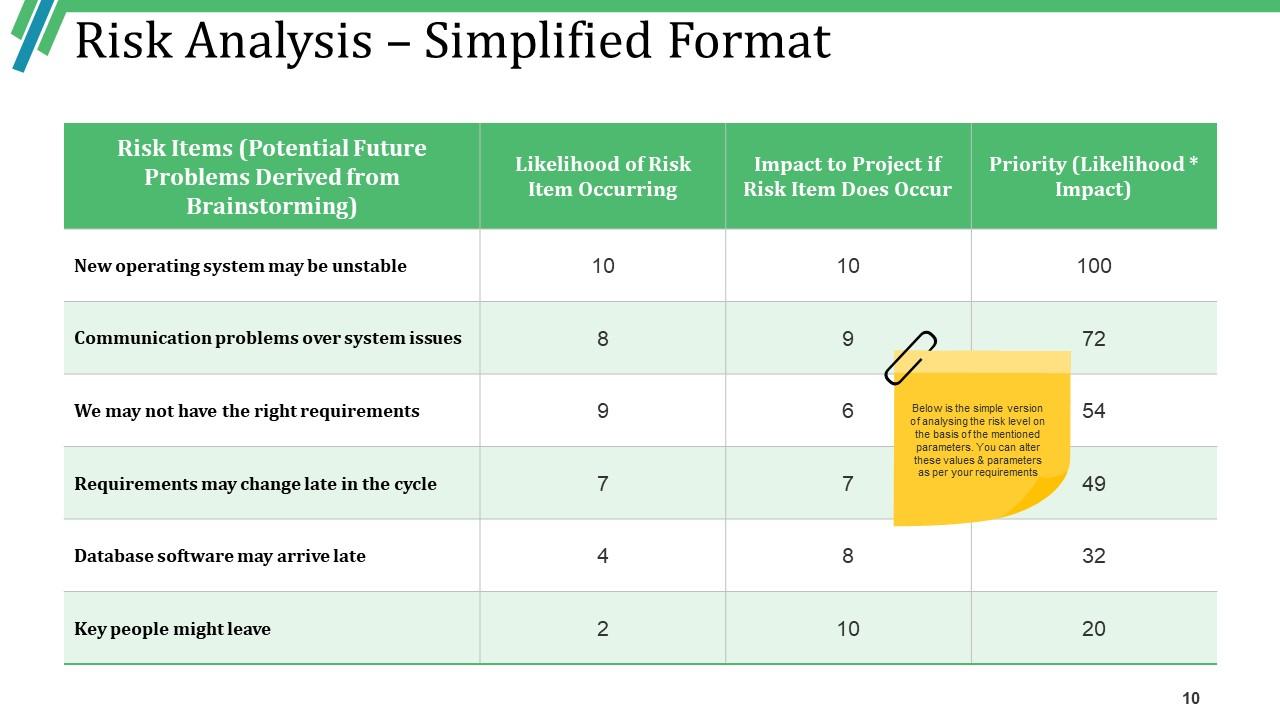
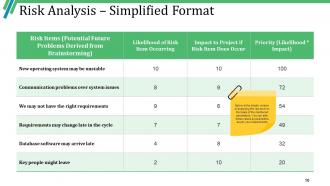
Folie 10 : Diese Folie zeigt die Risikoanalyse in einem vereinfachten Format. Wir haben auch einige Parameter und Werte der Risikoanalyse erwähnt, die Sie nach Ihren Anforderungen ändern können.
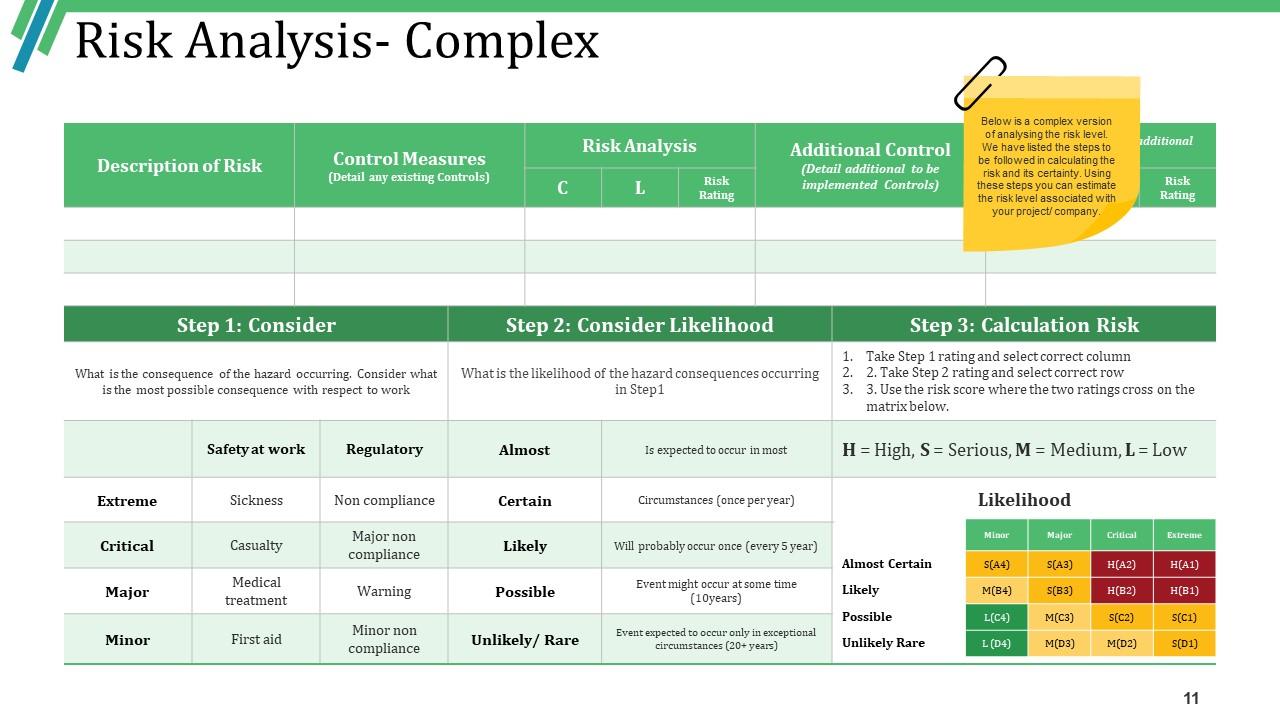
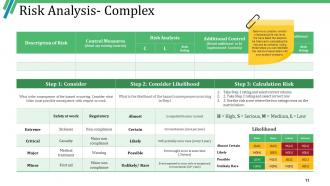
Folie 11 : Diese Folie zeigt auch die Risikoanalyse, jedoch in ihrem komplexen Format. Wir haben auch die Schritte aufgelistet, die bei der Berechnung des Risikos und seiner Sicherheit zu befolgen sind. Anhand dieser Schritte können Sie das mit Ihrem Projekt/Unternehmen verbundene Risikoniveau abschätzen.
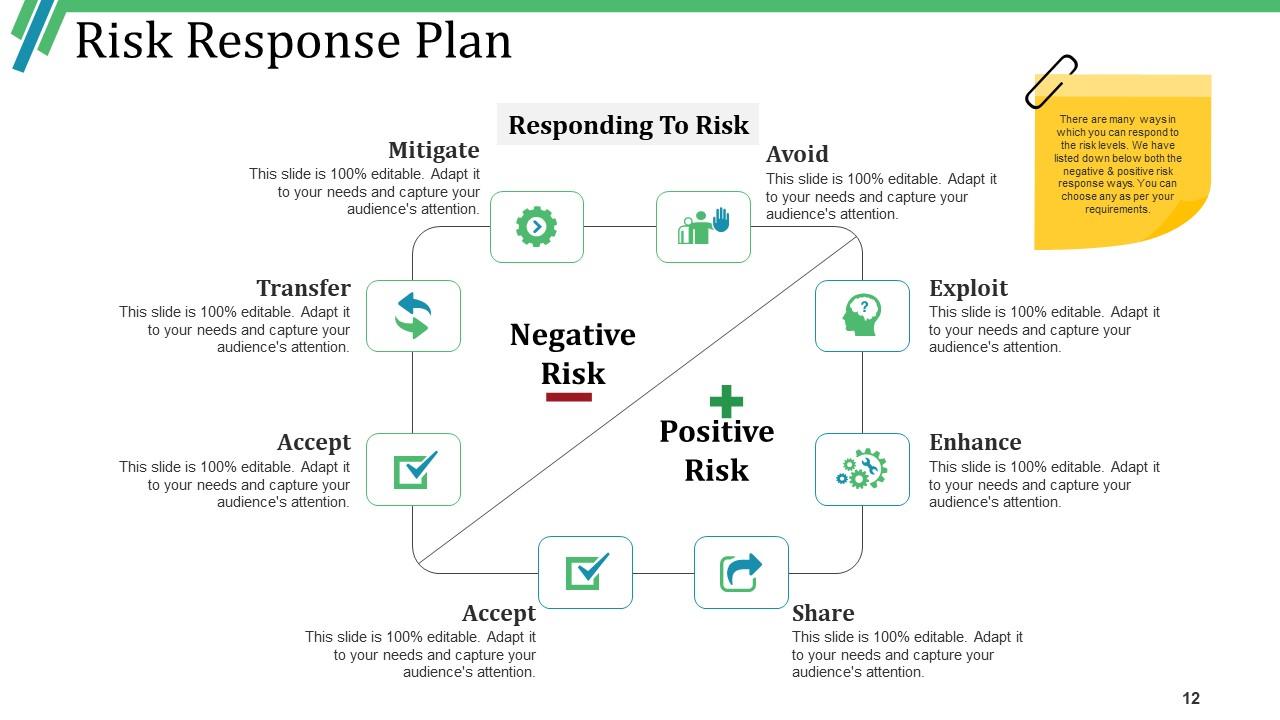
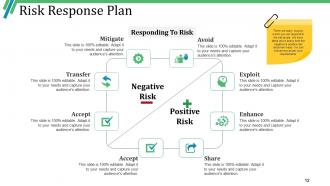
Folie 12 : Diese Folie zeigt den Risikoreaktionsplan. Es gibt viele Möglichkeiten, auf die Risikostufen zu reagieren. Wir haben hier sowohl die negativen als auch die positiven Risikoreaktionswege aufgelistet, aus denen Sie gemäß Ihren Anforderungen auswählen können.
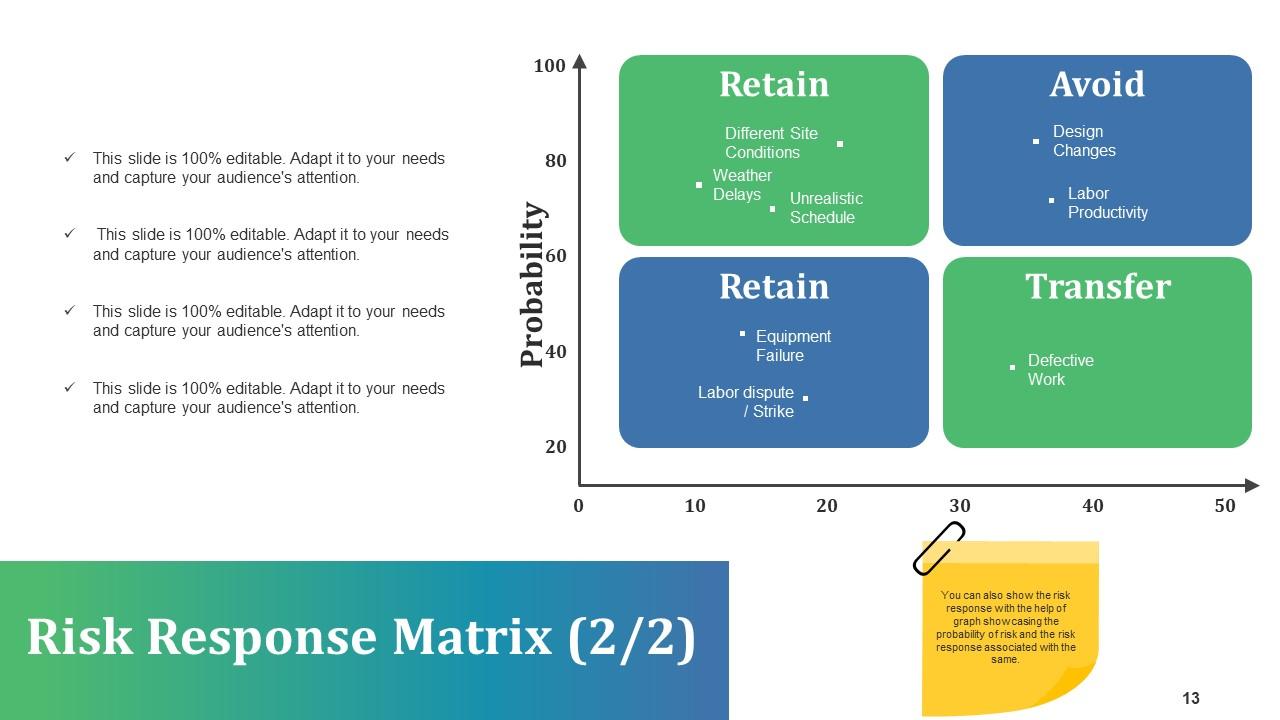
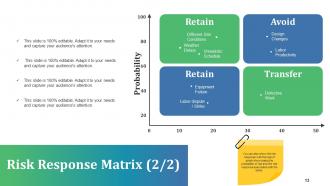
Folie 13 : Diese Folie zeigt die Risikoreaktionsmatrix. Sie können die Risikoreaktion auch mit Hilfe eines Diagramms anzeigen, das die Wahrscheinlichkeit des Risikos und die damit verbundene Risikoreaktion darstellt.
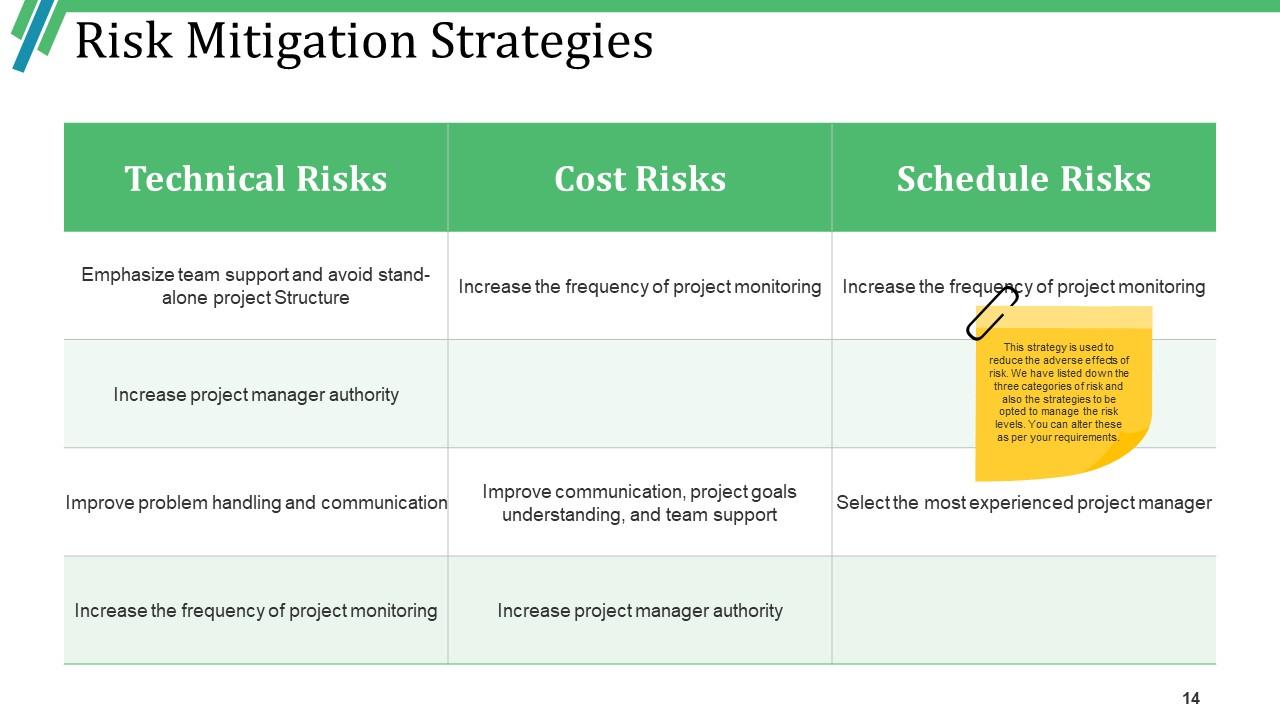
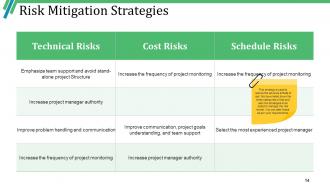
Folie 14 : Diese Folie zeigt Strategien zur Risikominderung. Diese Strategie wird verwendet, um die negativen Auswirkungen von Risiken zu reduzieren. Wir haben die drei Risikokategorien sowie die Strategien zur Steuerung der Risikostufen aufgelistet. Diese können Sie nach Ihren Wünschen ändern.
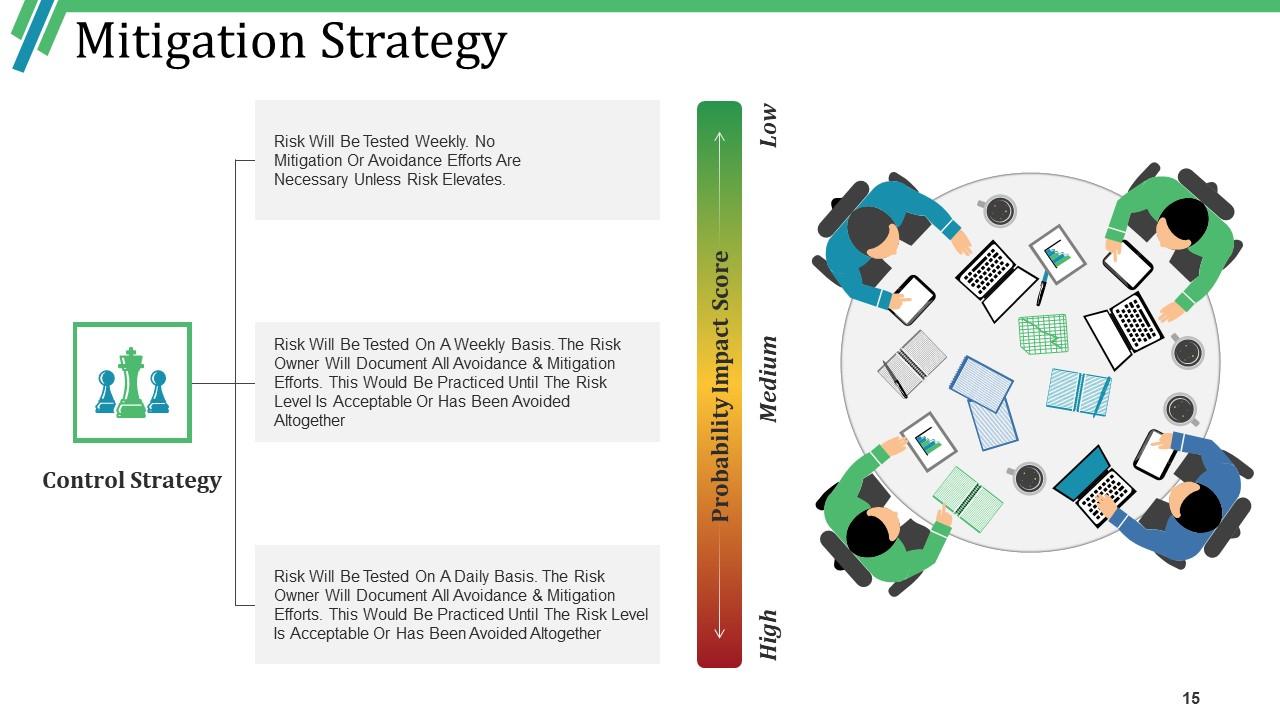
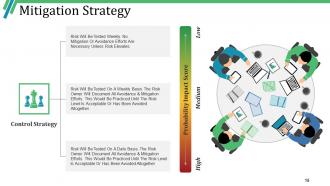
Folie 15 : Diese Folie zeigt die Minderungsstrategie mit hohen, mittleren und niedrigen Parametern.
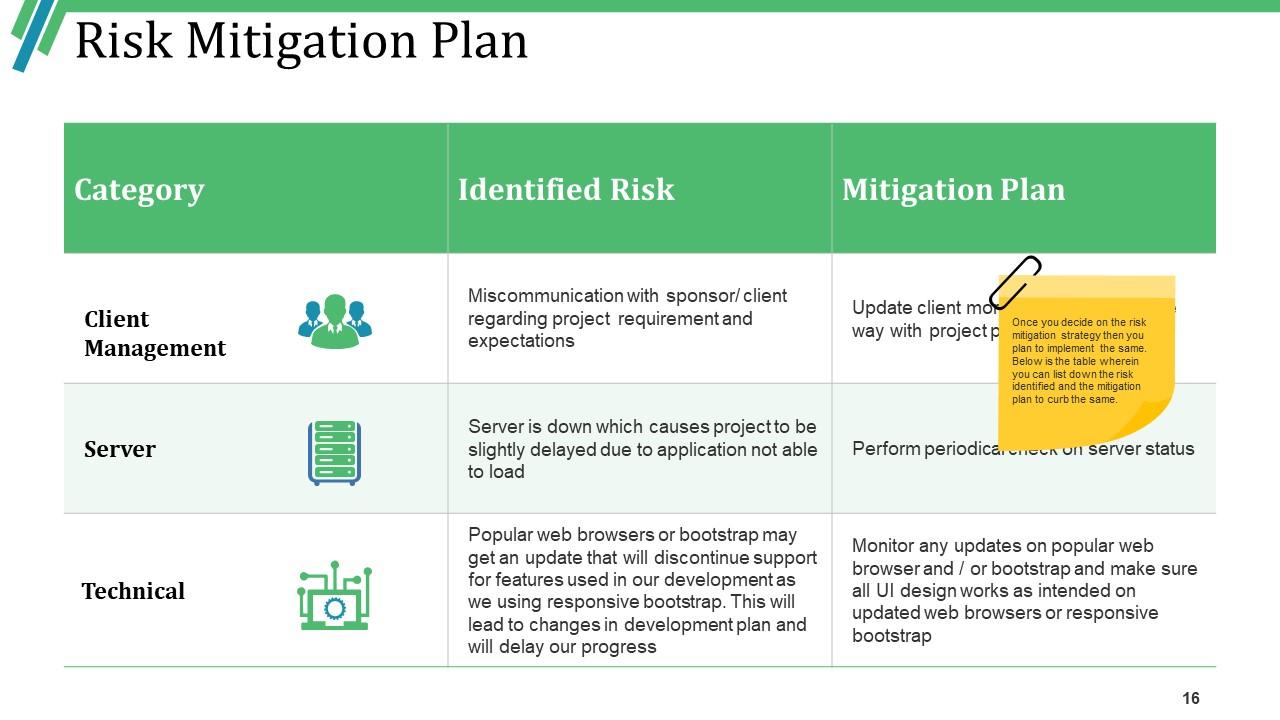
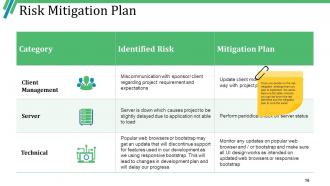
Folie 16 : Diese Folie zeigt den Risikominderungsplan. Sobald Sie sich für die Risikominderungsstrategie entschieden haben, planen Sie, diese umzusetzen. Hier ist die Tabelle, in der Sie das identifizierte Risiko und den Risikominderungsplan auflisten können, um dasselbe einzudämmen.
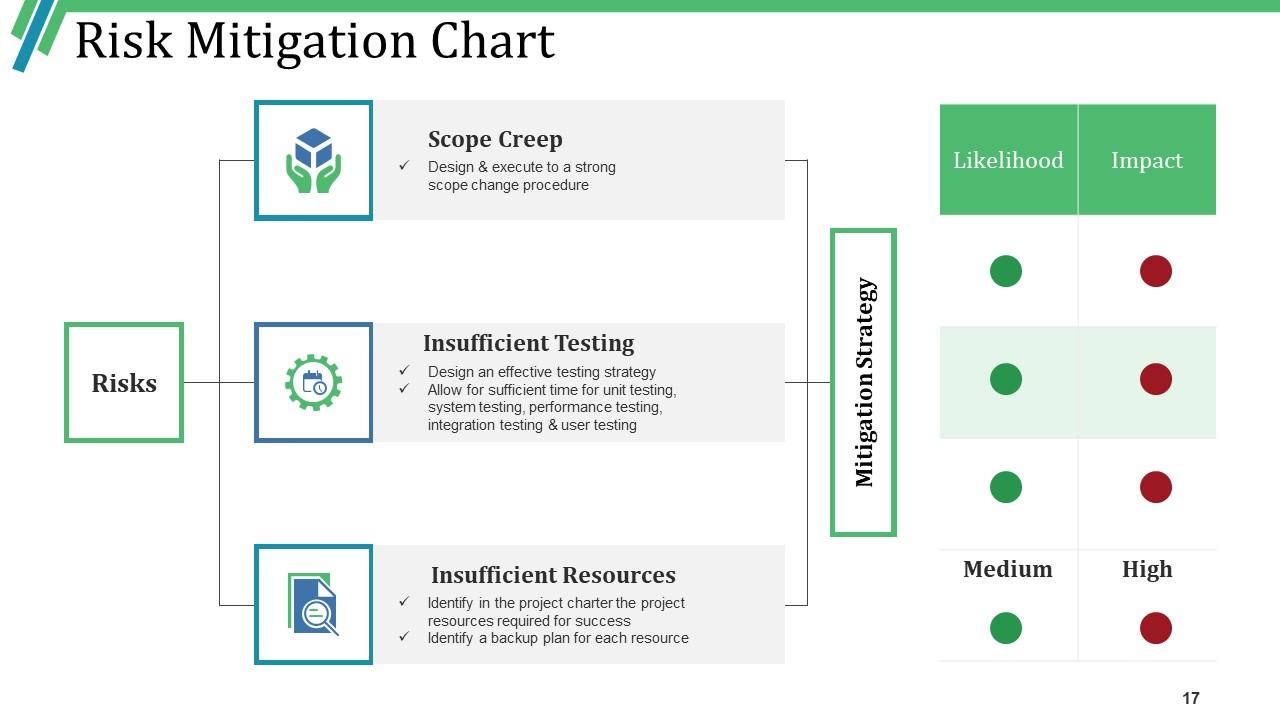
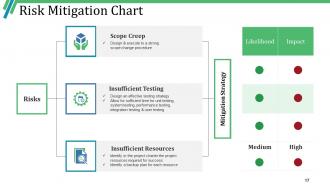
Folie 17 : Diese Folie zeigt ein Risikominderungsdiagramm, das drei Arten von Risiken zeigt: Umfangskriechen, Unzureichende Tests, Unzureichende Ressourcen zusammen mit einer Minderungsstrategie.
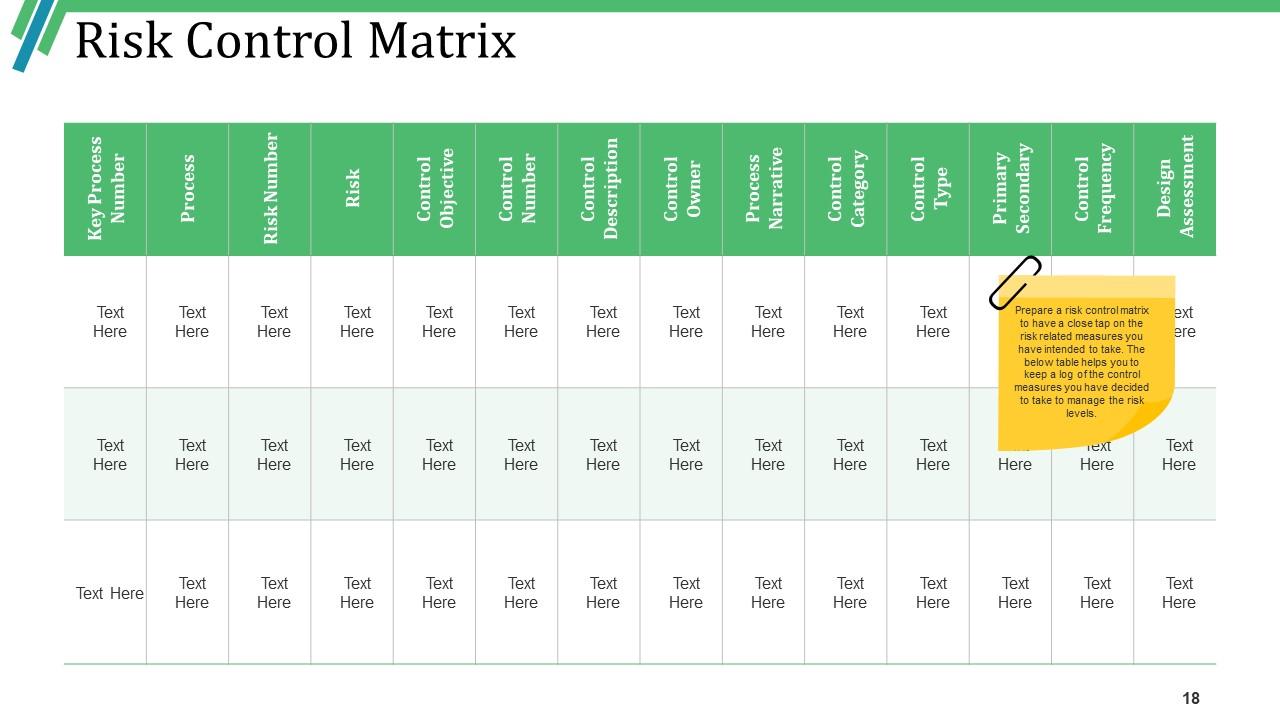
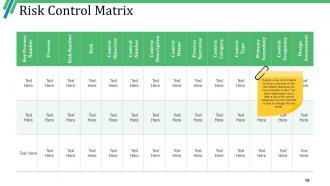
Folie 18 : Diese Folie zeigt die Risikokontrollmatrix. Bereiten Sie eine Risikokontrollmatrix vor, um die risikobezogenen Maßnahmen, die Sie ergreifen möchten, genau zu erfassen. Die gezeigte Tabelle hilft Ihnen, ein Protokoll über die Kontrollmaßnahmen zu führen, die Sie beschlossen haben, um die Risikostufen zu steuern.
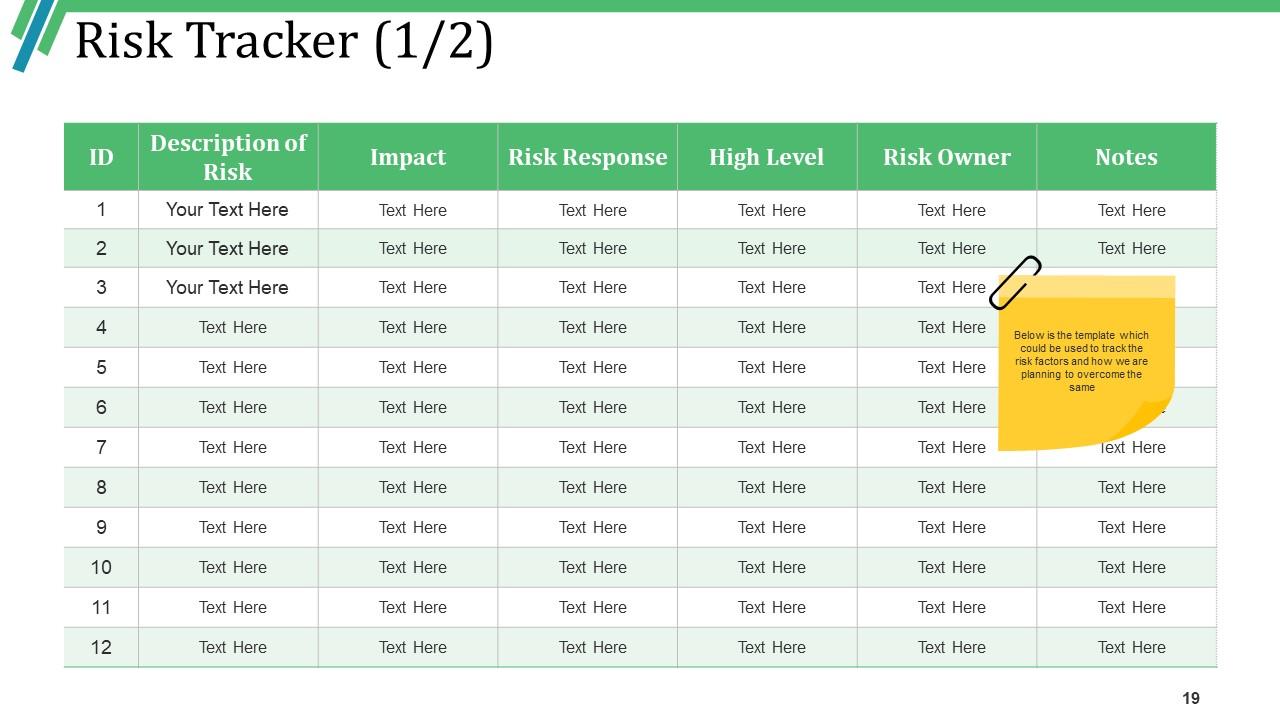
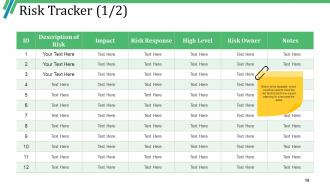
Folie 19 : Diese Folie zeigt den Risk Tracker, mit dem Sie die Risikofaktoren verfolgen können und wie Sie diese überwinden möchten.
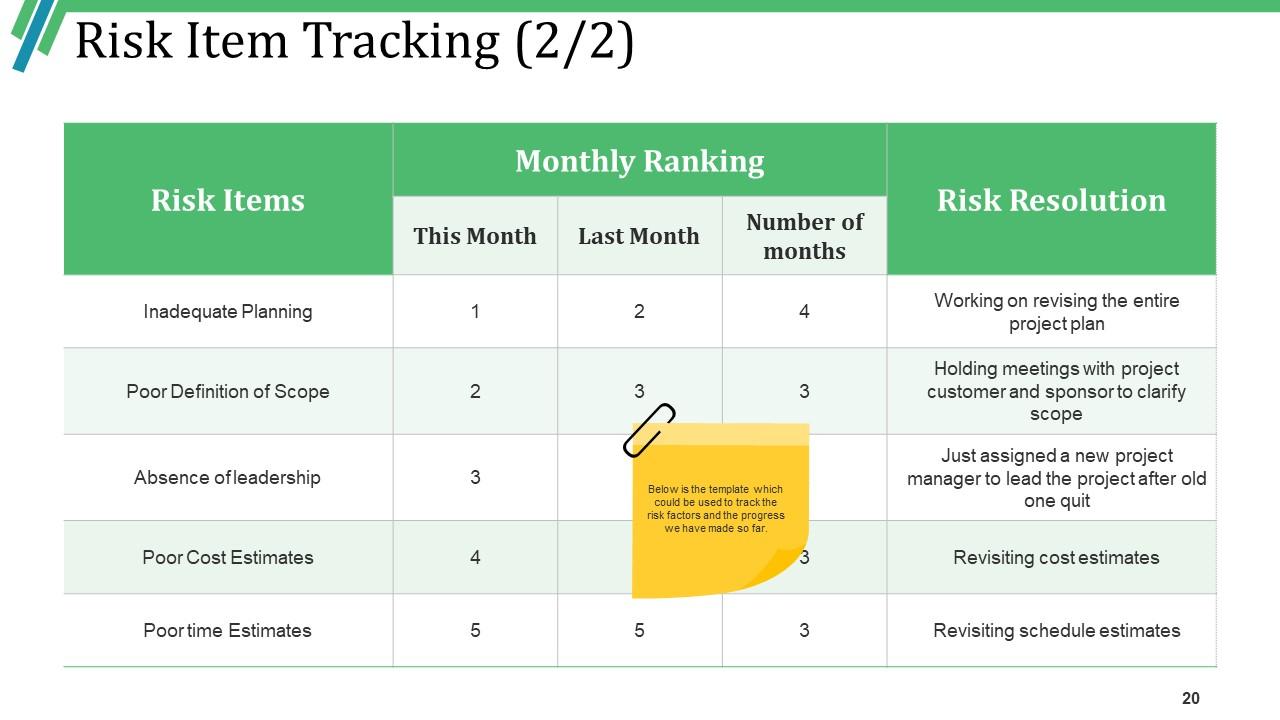
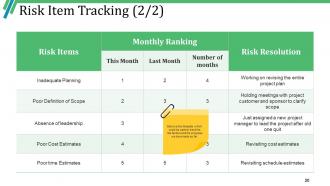
Folie 20 : Dies ist die Folie zur Verfolgung von Risikoobjekten. Verwenden Sie dies, um die Risikofaktoren und die bisher erzielten Fortschritte zu erörtern.
Folie 21 : Dies ist eine Symbolfolie für eine Risikobewertungsstrategie. Ändern / modifizieren Sie die Symbole nach Ihren Wünschen.
Folie 22 : Diese Folie zeigt das Bild der Kaffeepause. Sie können den Inhalt nach Bedarf ändern.
Folie 23 : Diese Folie zeigt den nächsten Abschnitt von Diagrammen und Grafiken.
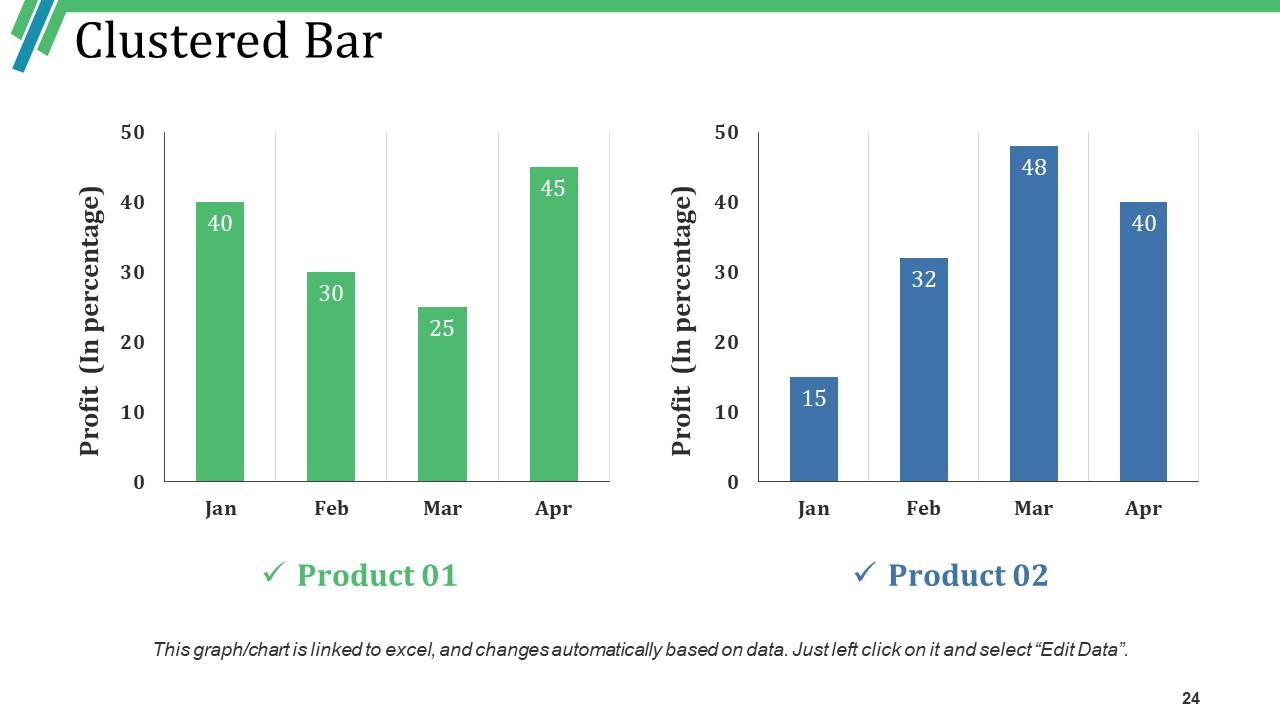
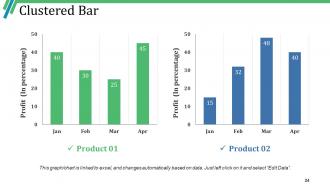
Folie 24 : Dies ist eine gruppierte Balkendiagrammfolie zum Anzeigen von Produkt-/Entitätsvergleichen, Spezifikationen usw.
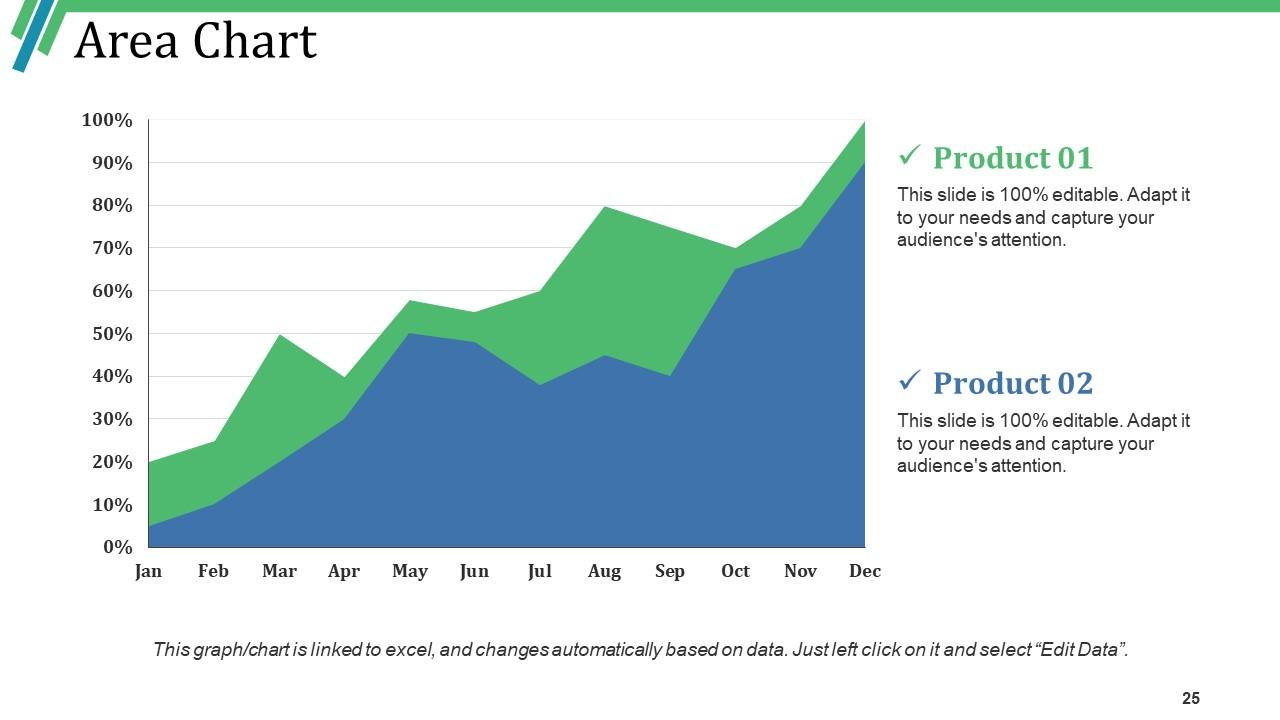
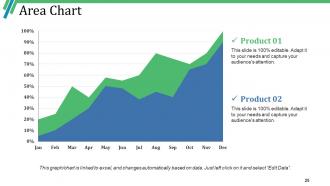
Folie 25 : Dies ist eine Flächendiagrammfolie, die das Wachstum von Produkten/Einheiten, Vergleiche, Spezifikationen usw. zeigt.
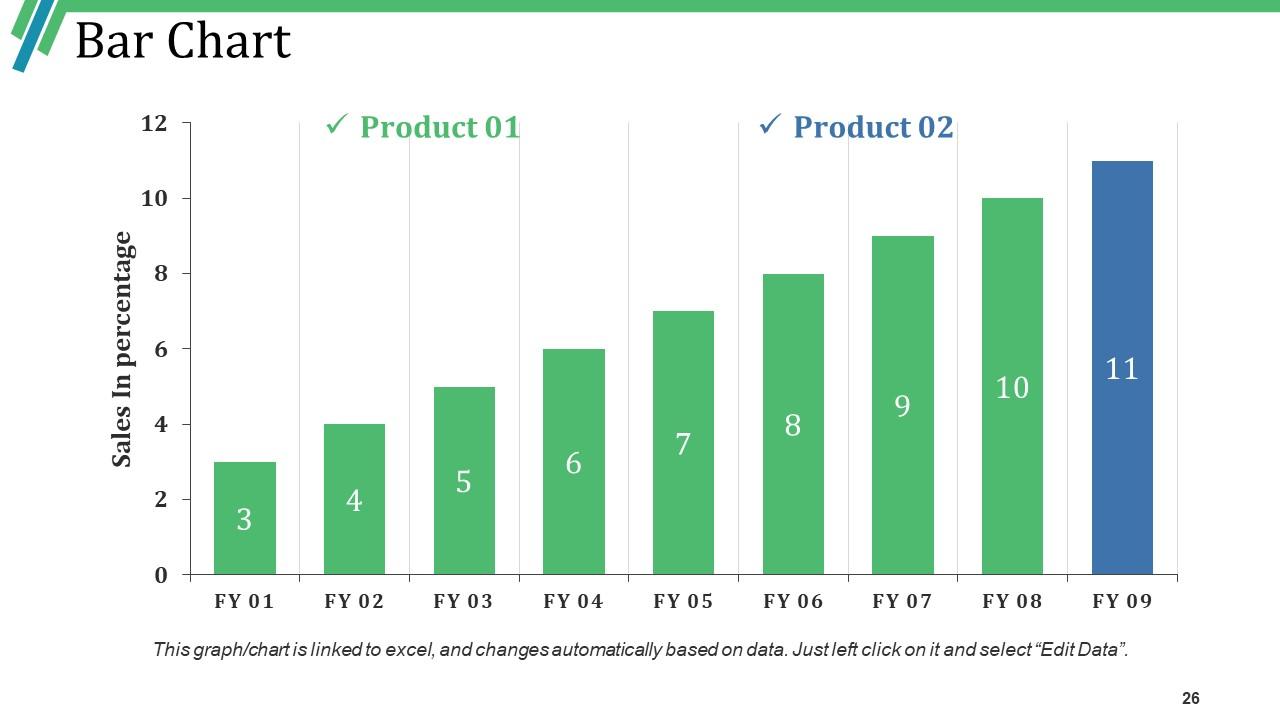
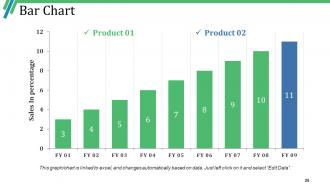
Folie 26 : Dies ist eine Balkendiagrammfolie, um das Wachstum von Produkten/Einheiten, Vergleiche, Spezifikationen usw. zu zeigen.
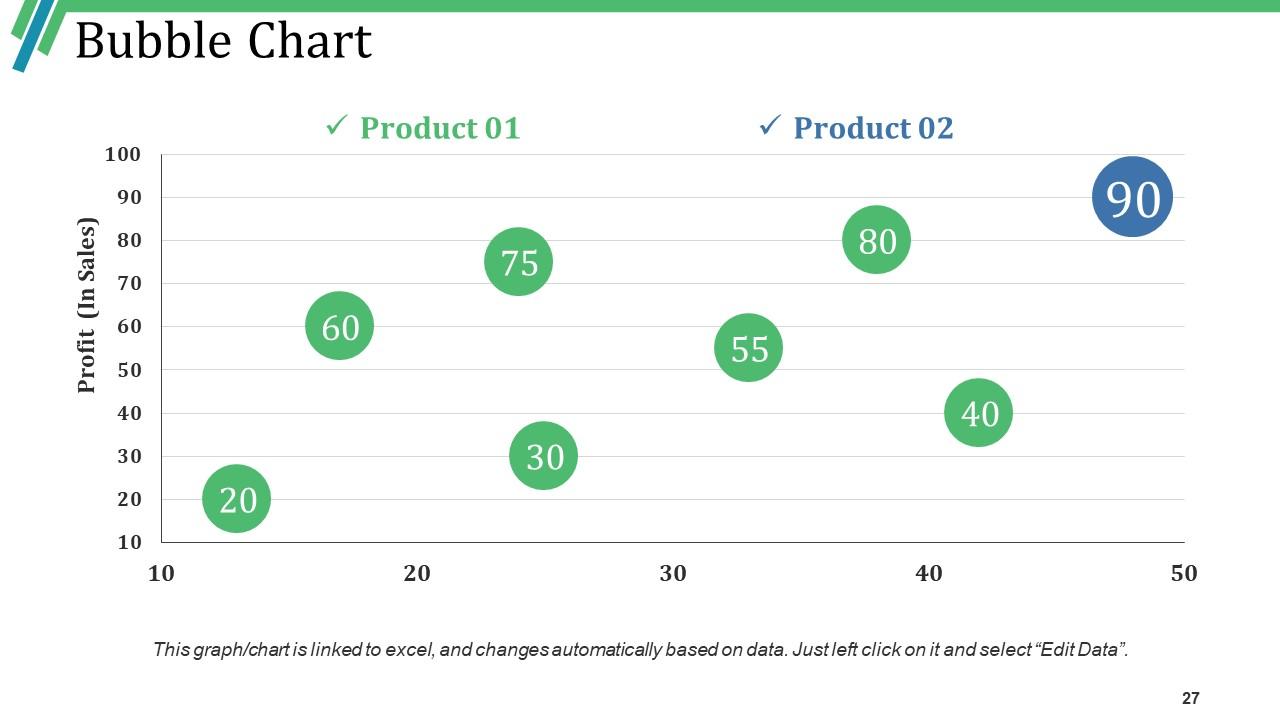
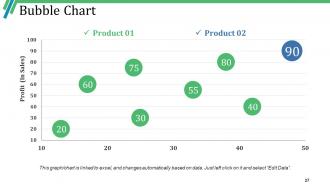
Folie 27 : Dies ist eine Blasendiagrammfolie, die den Vergleich von Produkten/Einheiten, Spezifikationen usw. zeigt.
Folie 28 : Diese Folie trägt den Titel Zusätzliche Folien, um vorwärts zu gehen. Sie können den Folieninhalt nach Bedarf ändern.
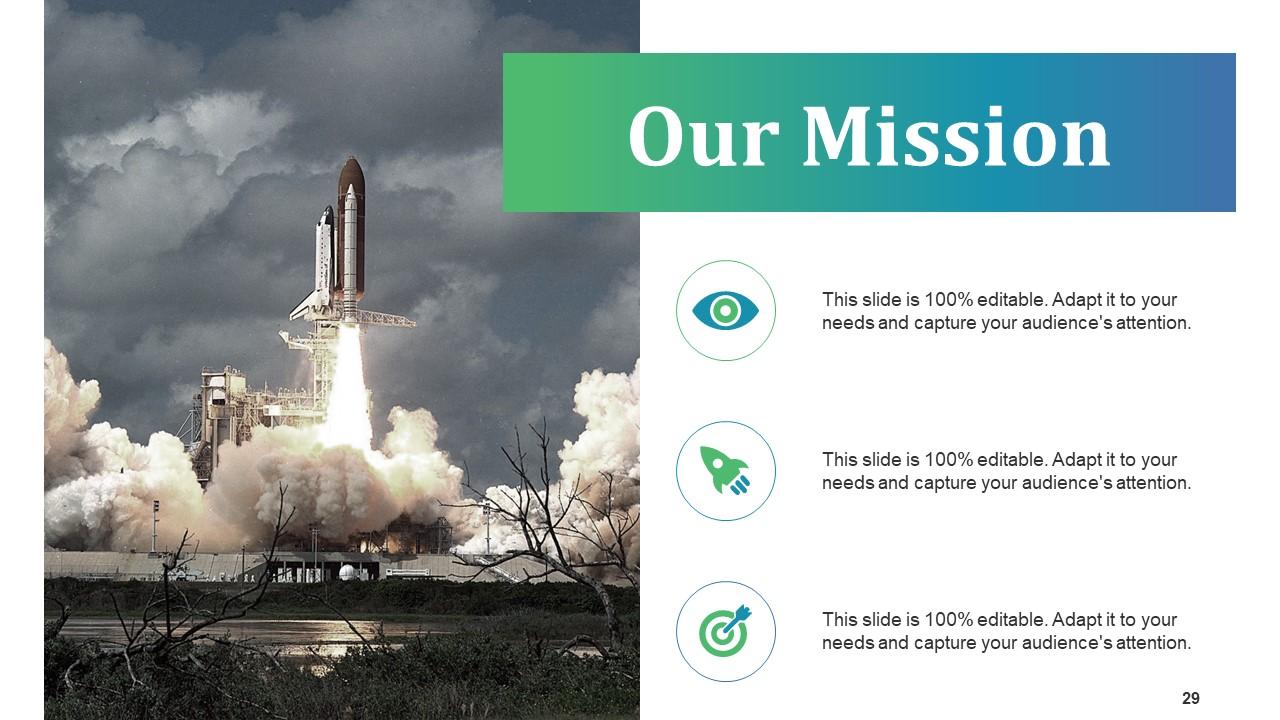
Folie 29 : Dies ist unsere Missionsfolie. Zeigen Sie hier Ihre Unternehmensmission und -ziele.
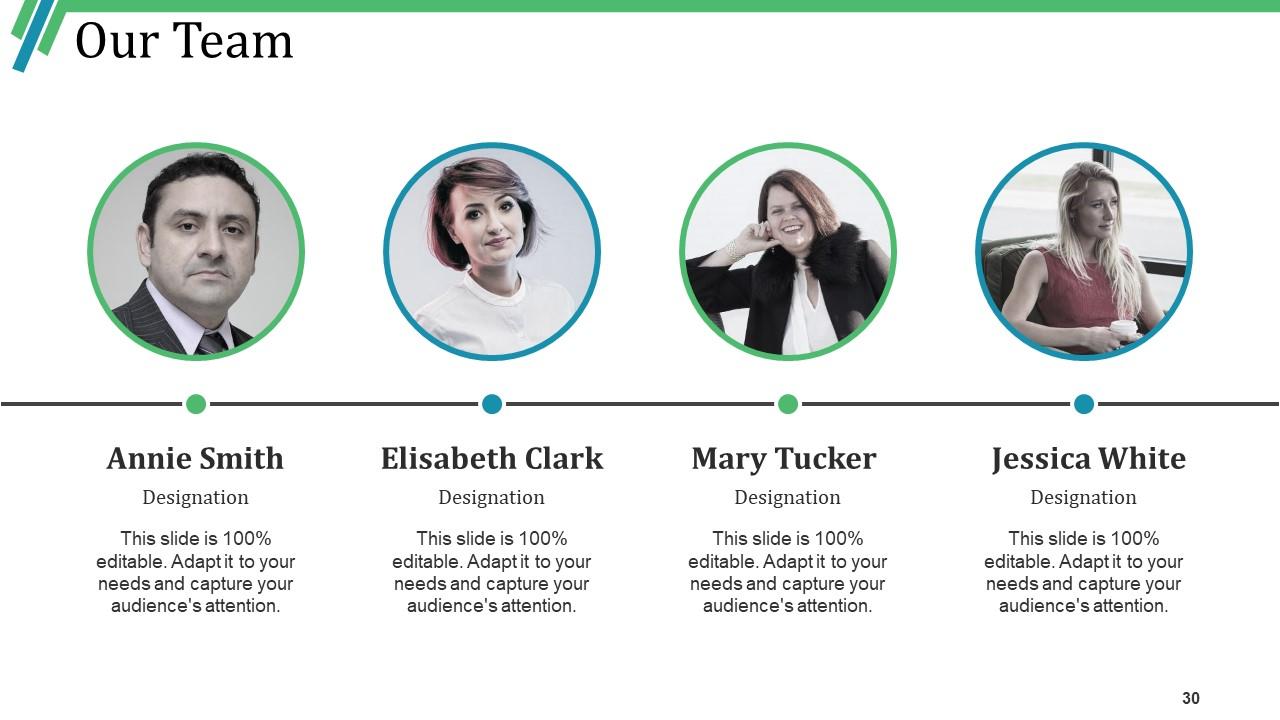
Folie 30 : Diese Folie zeigt unser Team mit Bezeichnung, Textfeldern und passendem Bild.
Folie 31 : Dies ist eine Über uns-Folie, die als Beispiele Premium-Dienste, geschätzte Kunden und von Vielen bevorzugt zeigt.
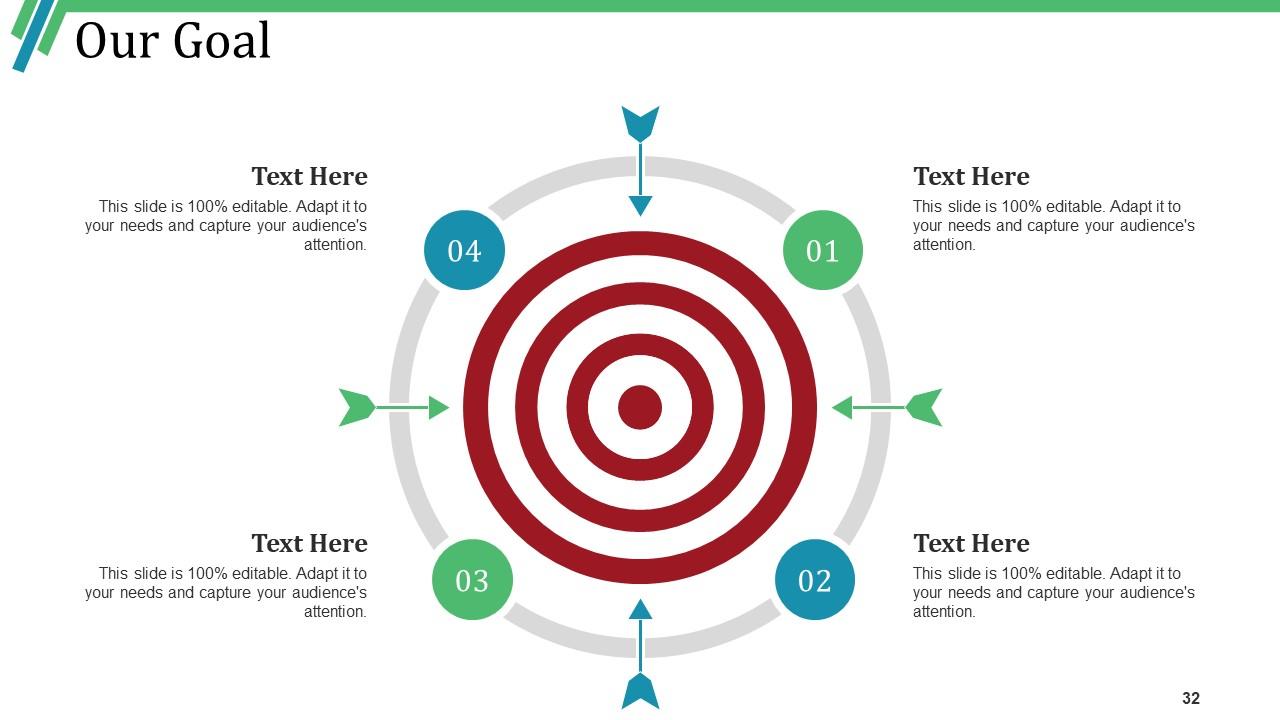
Folie 32 : Dies ist eine Unser Ziel-Folie. Geben Sie sie hier an.
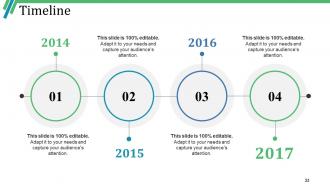
Folie 33 : Dies ist eine Zeitachsenfolie, die Meilensteine, Wachstum oder Hervorhebungsfaktoren zeigt.
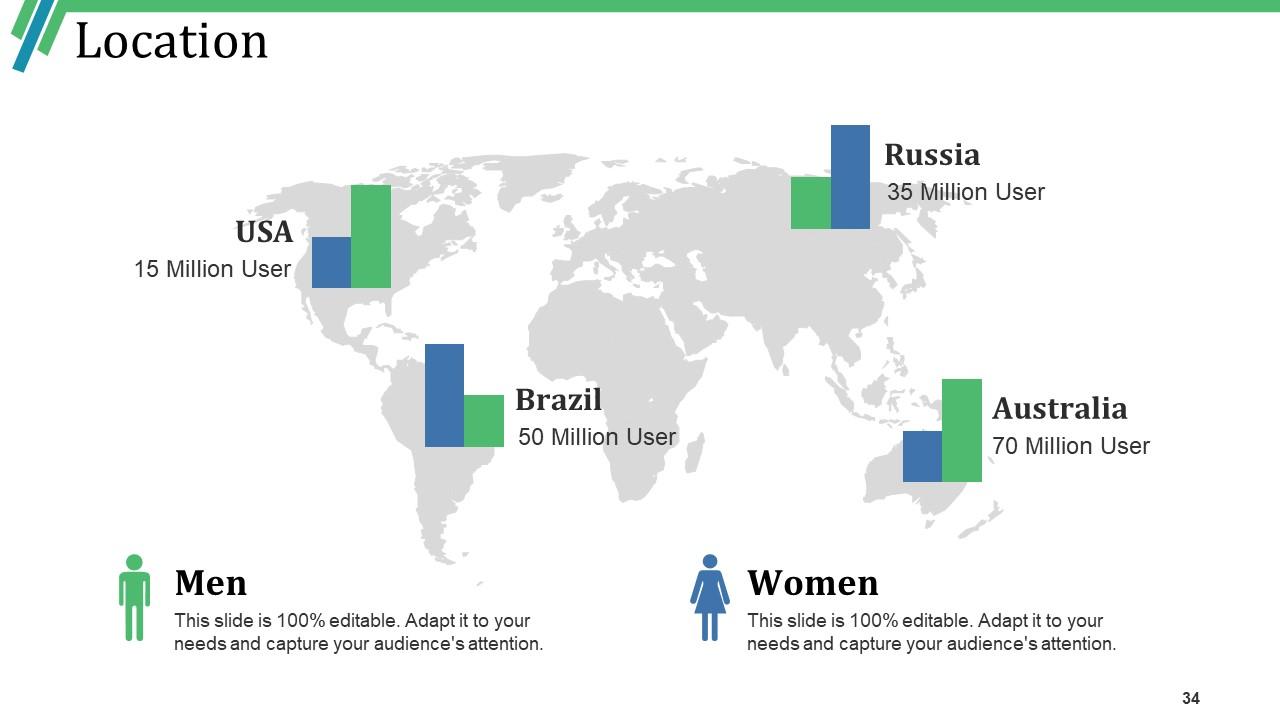
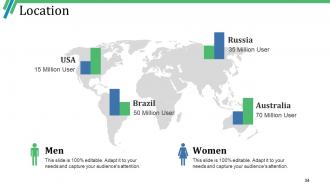
Folie 34 : Dies ist eine Standortfolie in Bezug auf Männer und Frauen, um die weltweite Segregation aufzuzeigen.
Folie 35 : Dies ist eine Post-It-Folie. Pinne deinen wichtigen Text hier.
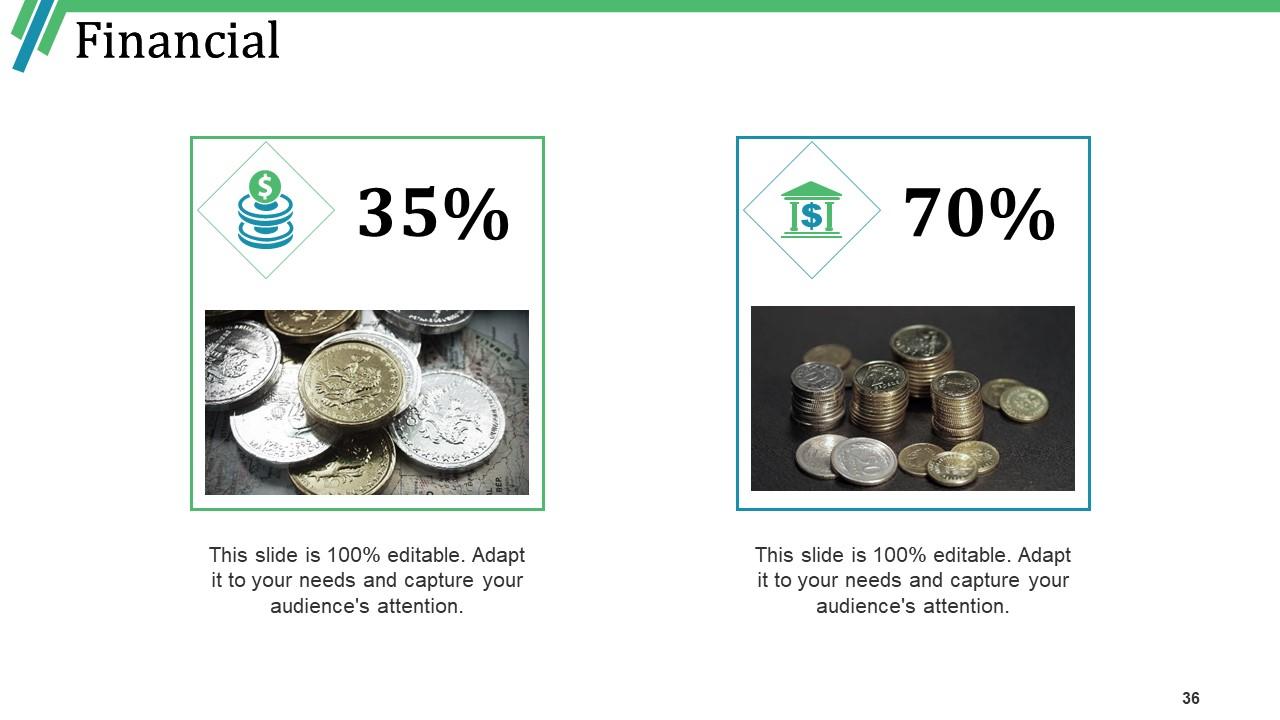
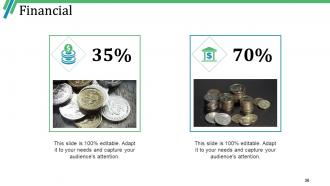
Folie 36 : Geben Sie auf dieser Folie Ihre Finanzbewertung mit relevanten Bildern und Texten an.
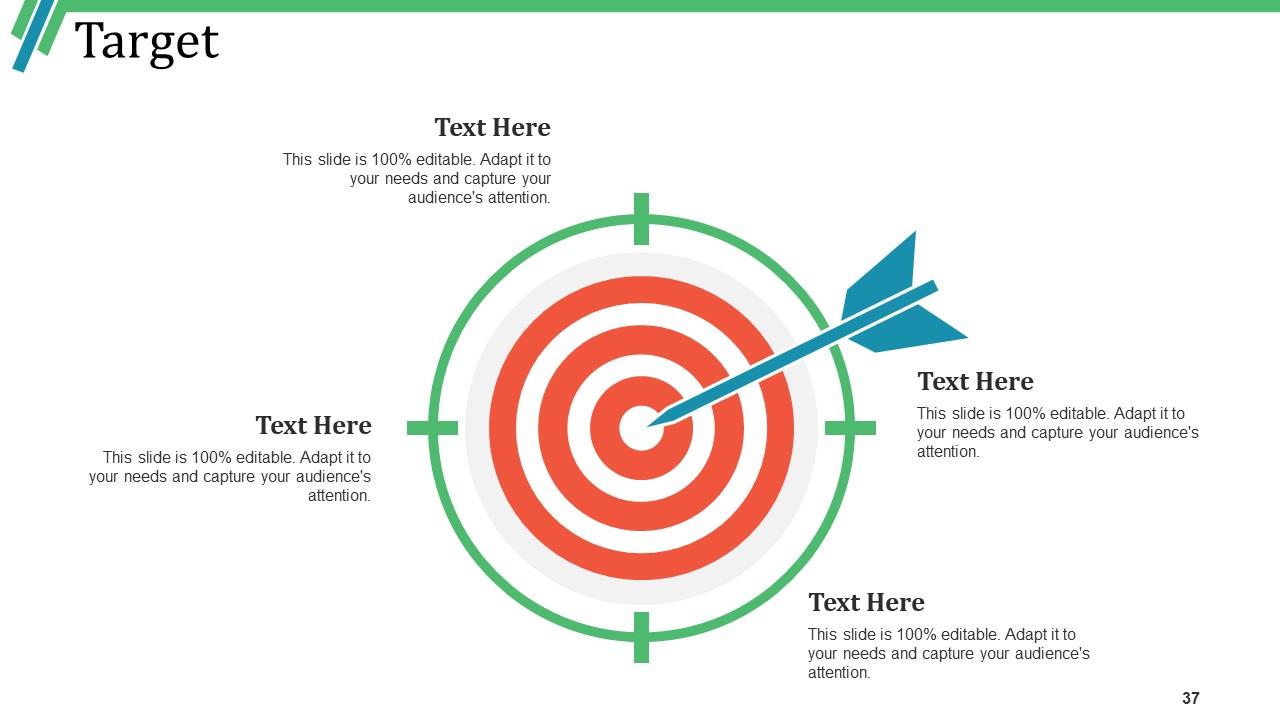
Folie 37 : Dies ist eine Zielfolie. Geben Sie hier Ihre Ziele an.
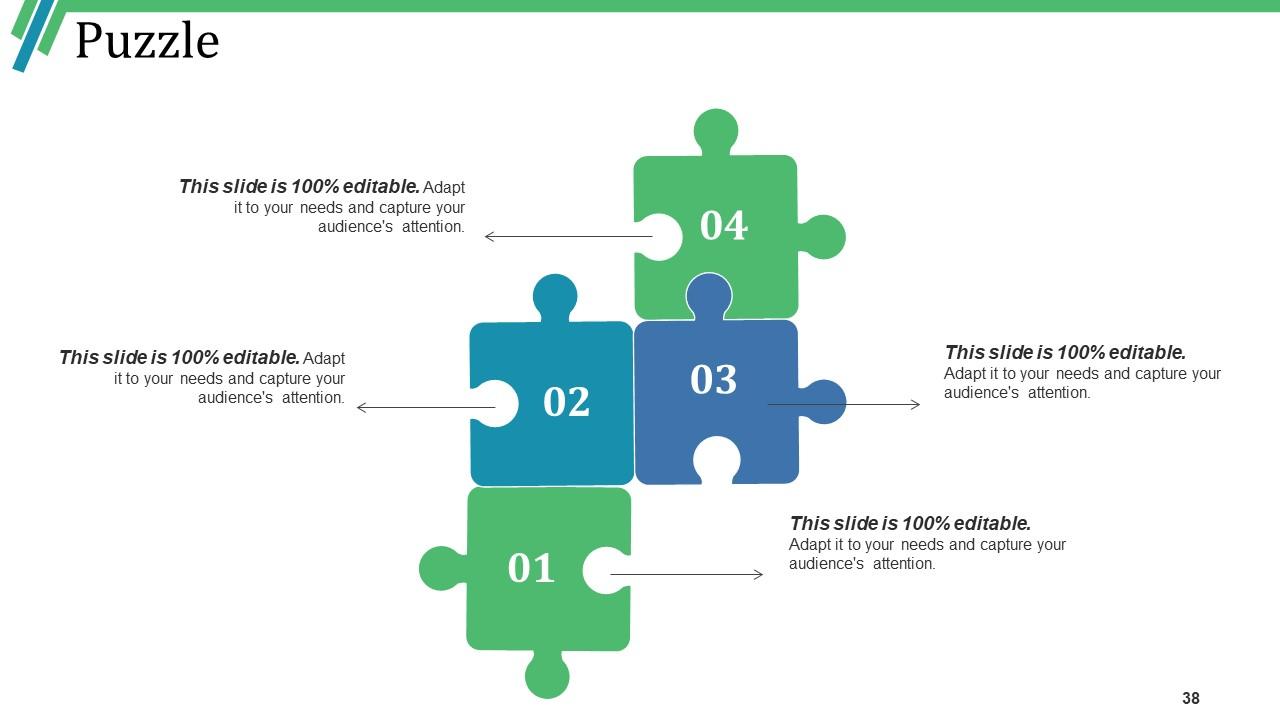
Folie 38 : Dies ist eine Puzzle-Bildfolie, um Informationen, Spezifikationen usw. anzuzeigen.
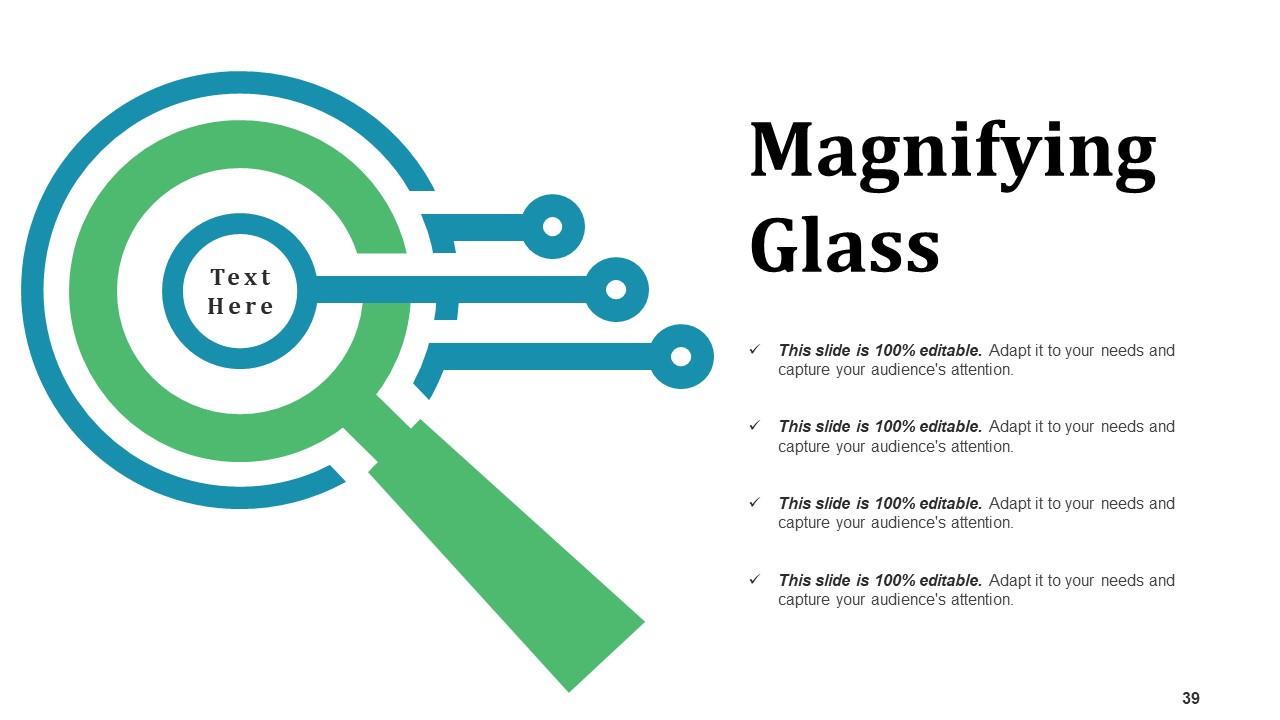
Folie 39 : Dies ist eine Lupenbildfolie, die Informationen, Scoping-Aspekte usw. zeigt.
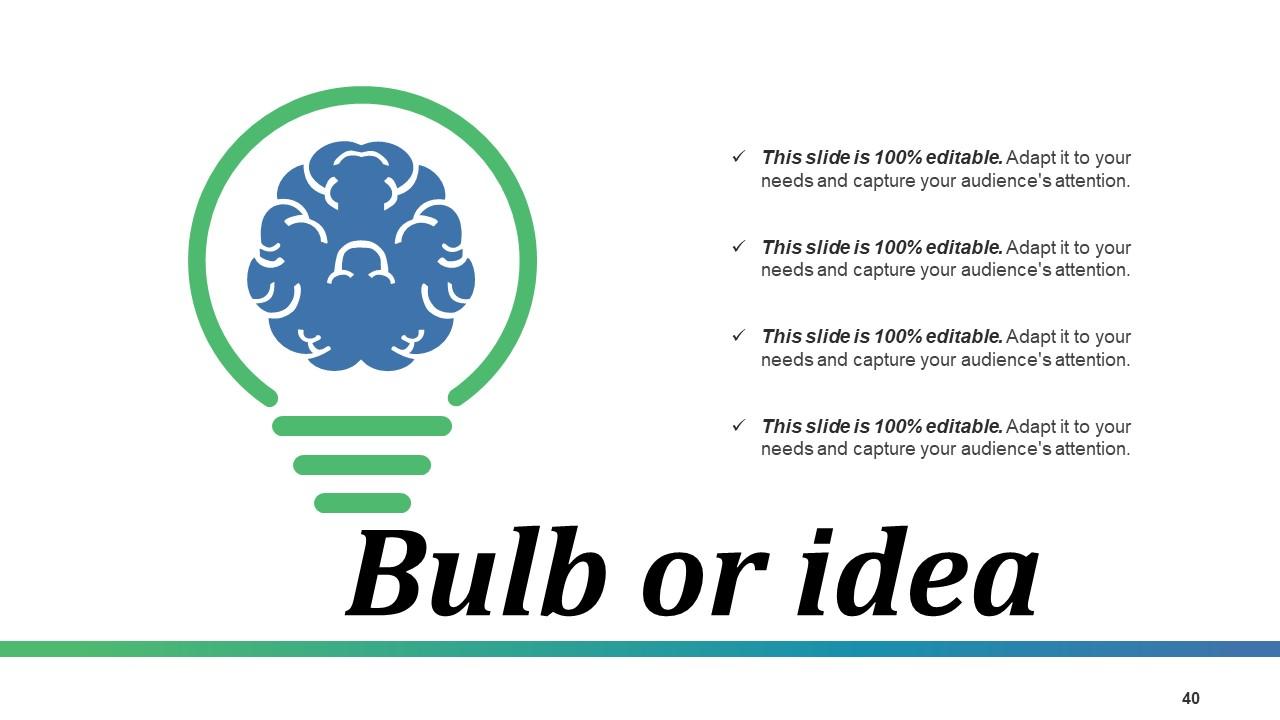
Folie 40 : Dies ist eine Bulb- oder Ideen-Bildfolie, die Informationen, innovative Aspekte usw. zeigt.
Folie 41 : Dies ist eine Dankesfolie mit Adresse# Hausnummer, Stadt, Bundesland, Kontaktnummer, E-Mail-Adresse.
Risikobewertungsstrategien Powerpoint-Präsentationsfolien mit allen 41 Folien:
Fördern Sie das Wachstum der Zuneigung mit unseren Powerpoint-Präsentationsfolien zu Risikobewertungsstrategien. Lassen Sie nicht zu, dass sich Hass aufbaut.
-
Commendable slides with attractive designs. Extremely pleased with the fact that they are easy to modify. Great work!
-
The Designed Graphic are very professional and classic.
