


Risk Management Procedure And Guidelines Powerpoint Presentation Slides
Don't sacrifice style. We offer you world class Risk Management Procedure And Guidelines Powerpoint Presentation Slides designs at bargain prices.
Don't sacrifice style. We offer you world class Risk Management Procedure And Guidelines Powerpoint Presentation Slides des..





















-

- Google Slides is a new FREE Presentation software from Google.
- All our content is 100% compatible with Google Slides.
- Just download our designs, and upload them to Google Slides and they will work automatically.
- Amaze your audience with SlideTeam and Google Slides.
-

Want Changes to This PPT Slide? Check out our Presentation Design Services
-

- WideScreen Aspect ratio is becoming a very popular format. When you download this product, the downloaded ZIP will contain this product in both standard and widescreen format.
-

- Some older products that we have may only be in standard format, but they can easily be converted to widescreen.
- To do this, please open the SlideTeam product in Powerpoint, and go to
- Design ( On the top bar) -> Page Setup -> and select "On-screen Show (16:9)” in the drop down for "Slides Sized for".
- The slide or theme will change to widescreen, and all graphics will adjust automatically. You can similarly convert our content to any other desired screen aspect ratio.
Compatible With Google Slides

Get This In WideScreen
You must be logged in to download this presentation.


Do you want to remove this product from your favourites?
PowerPoint presentation slides
Presenting this set of slides with name - Risk Management Procedure And Guidelines Powerpoint Presentation Slides. This deck consists of total of forty eight slides. It has PPT slides highlighting important topics of Risk Management Procedure And Guidelines Powerpoint Presentation Slides. This deck comprises of amazing visuals with thoroughly researched content. Each template is well crafted and designed by our PowerPoint experts. Our designers have included all the necessary PowerPoint layouts in this deck. From icons to graphs, this PPT deck has it all. The best part is that these templates are easily customizable. Just click the DOWNLOAD button shown below. Edit the colour, text, font size, add or delete the content as per the requirement. Download this deck now and engage your audience with this ready made presentation.

People who downloaded this PowerPoint presentation also viewed the following :
Content of this Powerpoint Presentation
Slide 1: This slide introduces Management Procedure and Guidelines. State Your Company Name and get started.
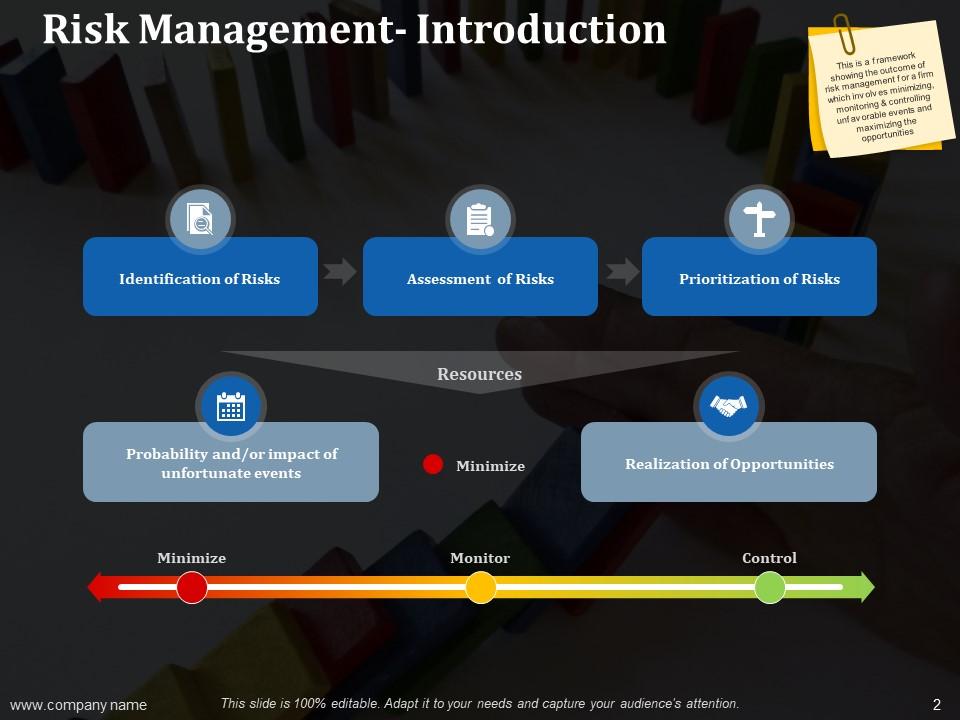
Slide 2: This slide shows Risk Management- Introduction with these of the following Assessment of Risks, Identification of Risks, Prioritization of Risks, Realization of Opportunities, Probability and/or impact of unfortunate events, This is a framework showing the outcome of risk management for a firm which involves minimizing, monitoring & controlling unfavorable events and maximizing the opportunities.
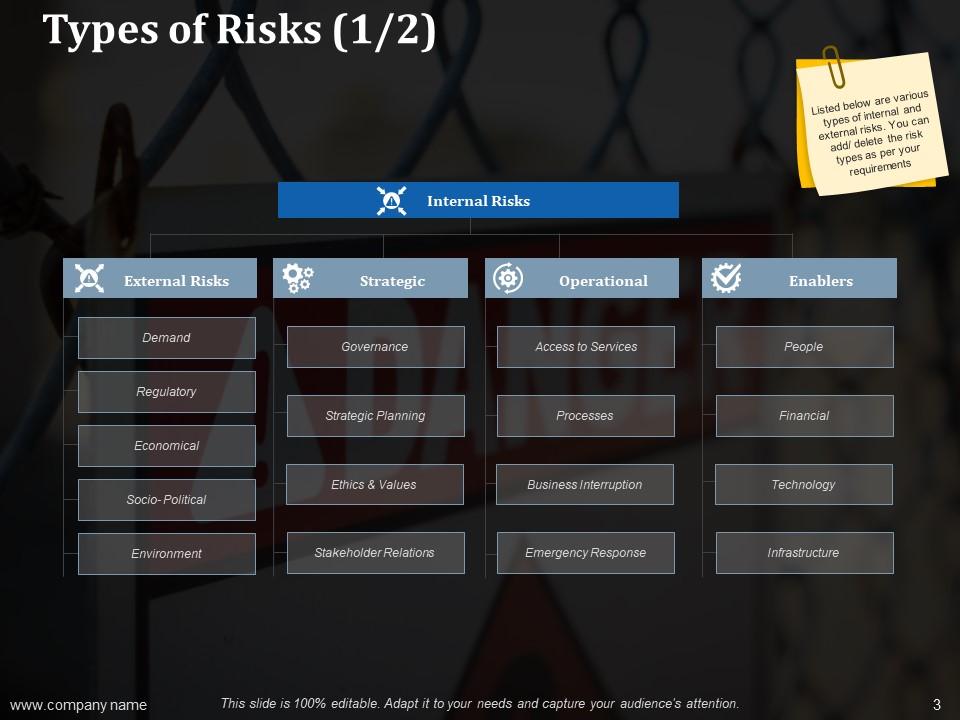
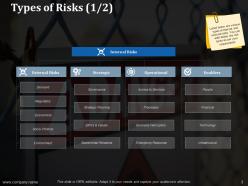
Slide 3: This slide showcases Types of Risks (1/2). Listed below are various types of internal and external risks. You can add/ delete the risk types as per your requirements.
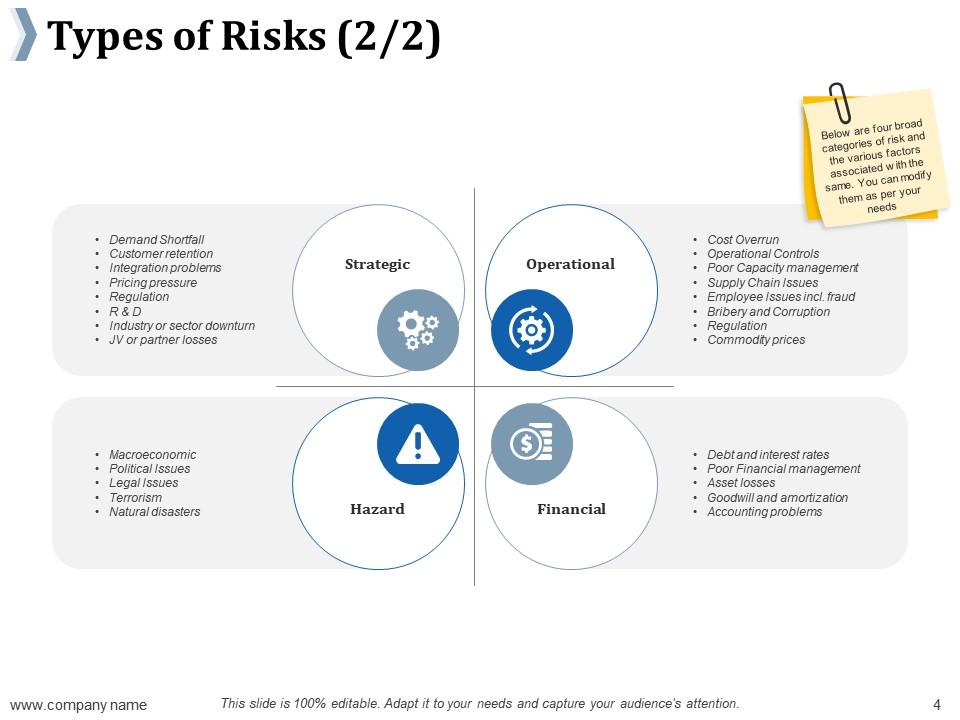
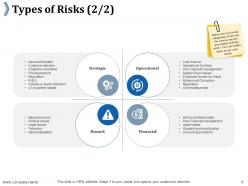
Slide 4: This slide shows Types of Risks (2/2) with these of the four tpes we have listed- Operational, Financial, Hazard, Strategic, Below are four broad categories of risk and the various factors associated with the same. You can modify them as per your needs
Slide 5: This slide presents Risk Categories. We have mentioned the six broad categories of risk and few factors associated with them. You can alter them as per your requirements.
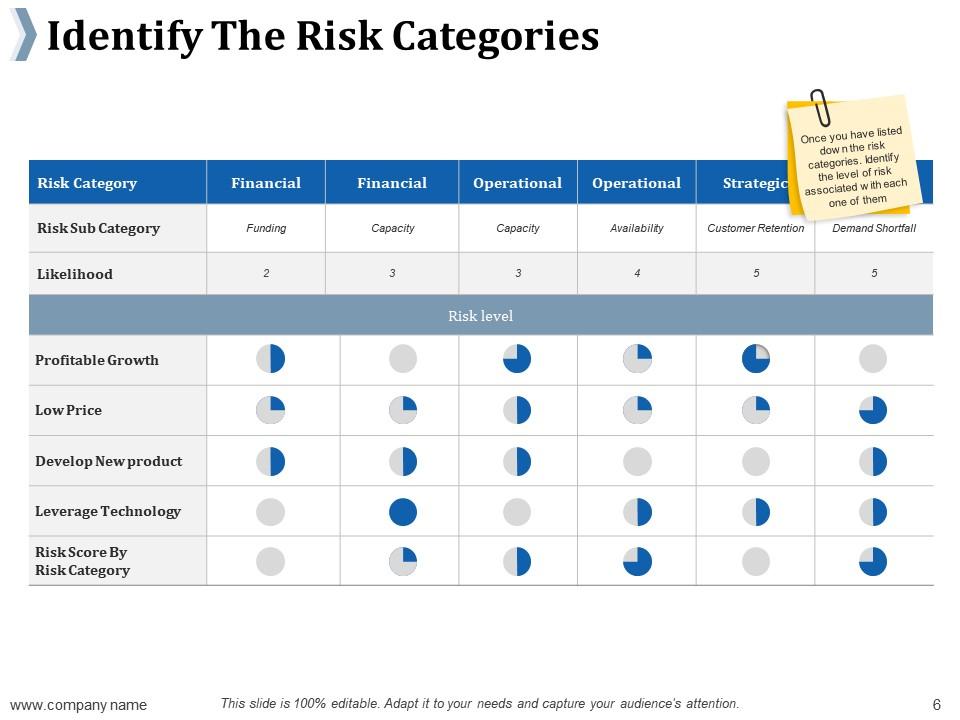
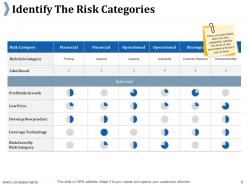
Slide 6: This slide showcases Identify The Risk Categories. Once you have listed down the risk categories. Identify the level of risk associated with each one of them.
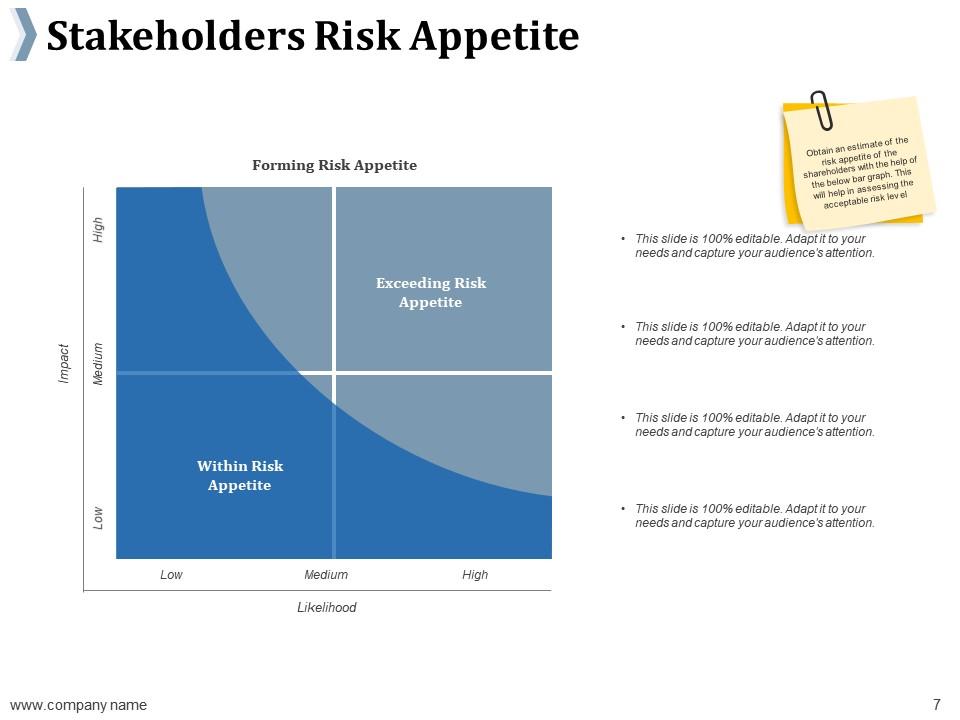
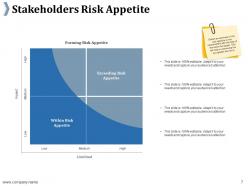
Slide 7: This slide presents Stakeholders Risk Appetite which further showcases- Forming Risk Appetite, Within Risk Appetite, Exceeding Risk Appetite, Obtain an estimate of the risk appetite of the shareholders with the help of the below bar graph. This will help in assessing the acceptable risk level
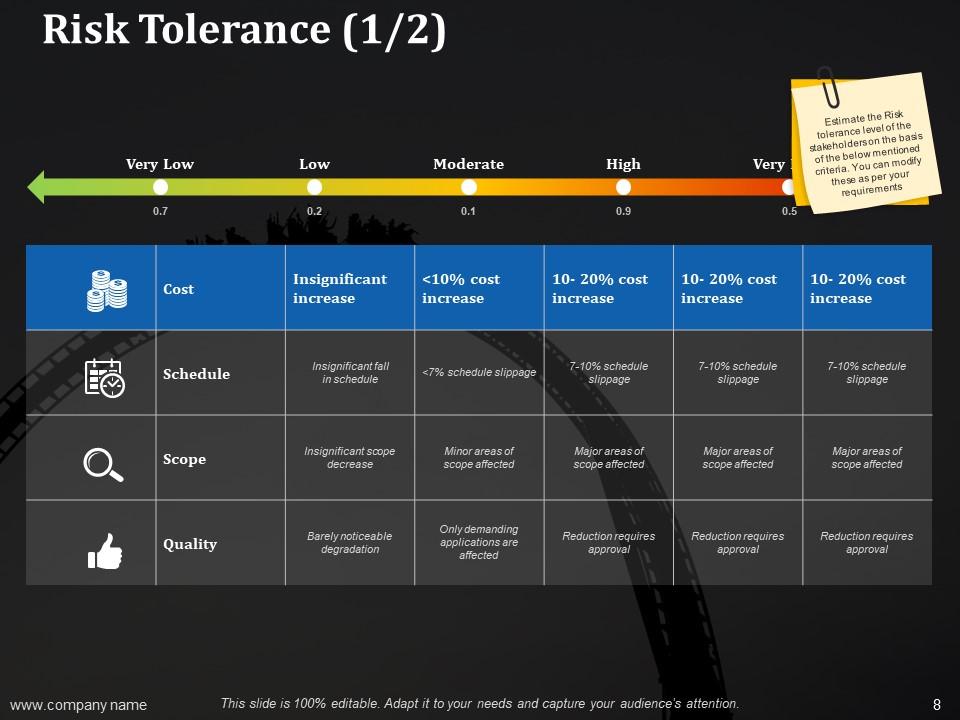
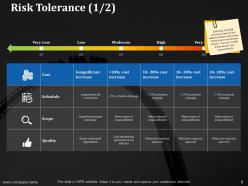
Slide 8: This slide presents Risk Tolerance (1/2).Estimate the Risk tolerance level of the stakeholders on the basis of the below mentioned criteria. You can modify these as per your requirements.
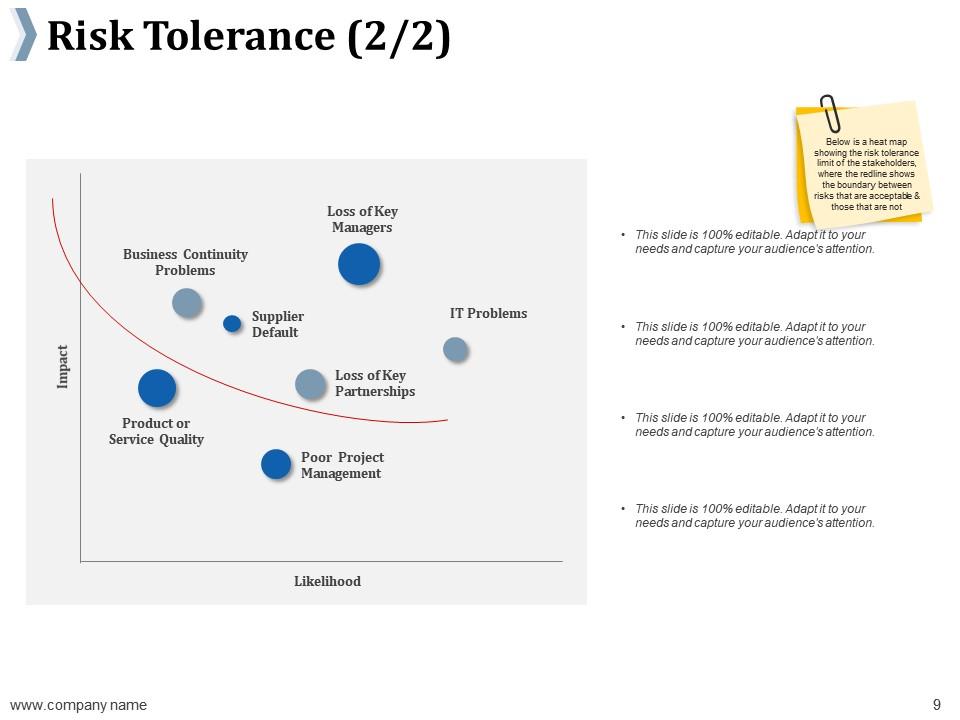
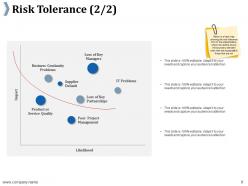
Slide 9: This slide presents Risk Tolerance (2/2).
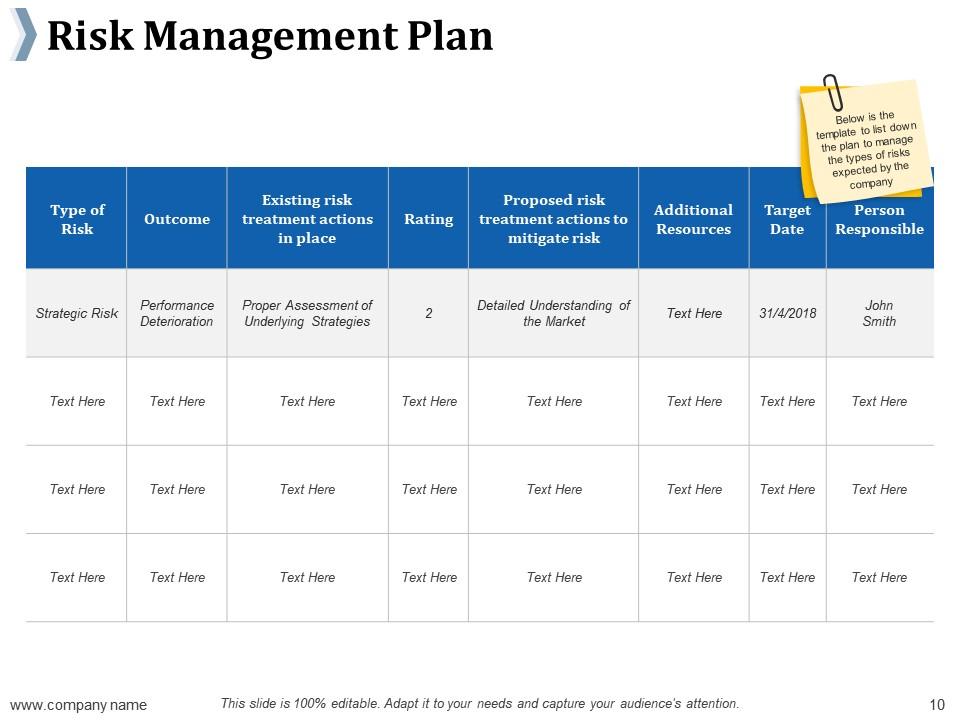
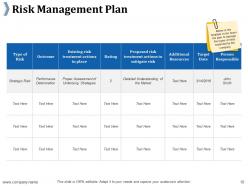
Slide 10: This slide shows Risk Management Plan. Below is the template to list down the plan to manage the types of risks expected by the company.
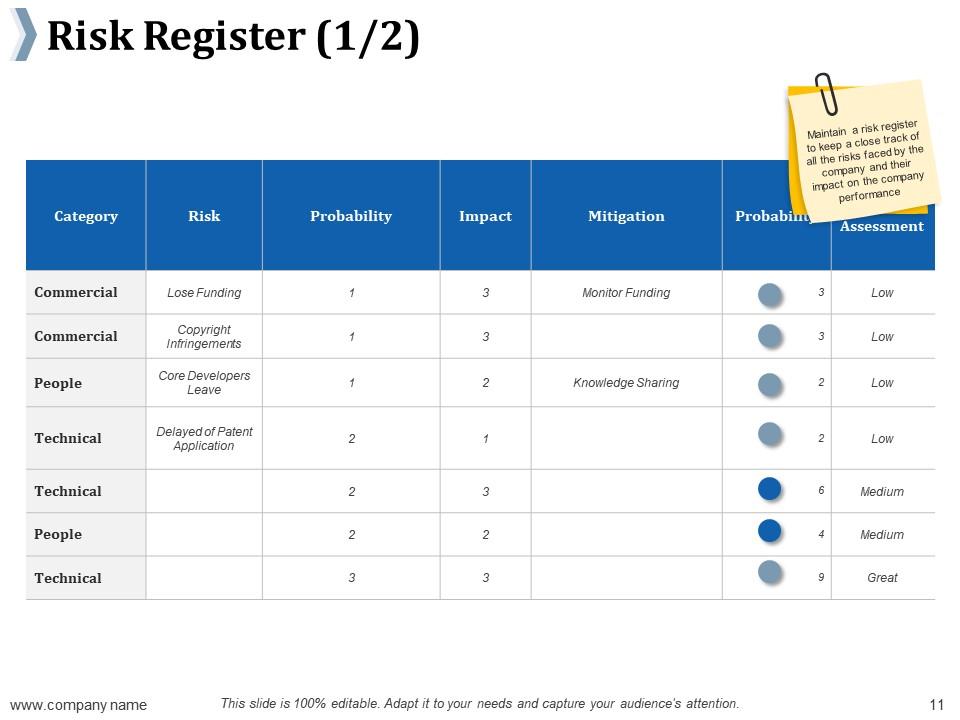
Slide 11: This slide presents Risk Register (1/2). Maintain a risk register to keep a close track of all the risks faced by the company and their impact on the company performance.
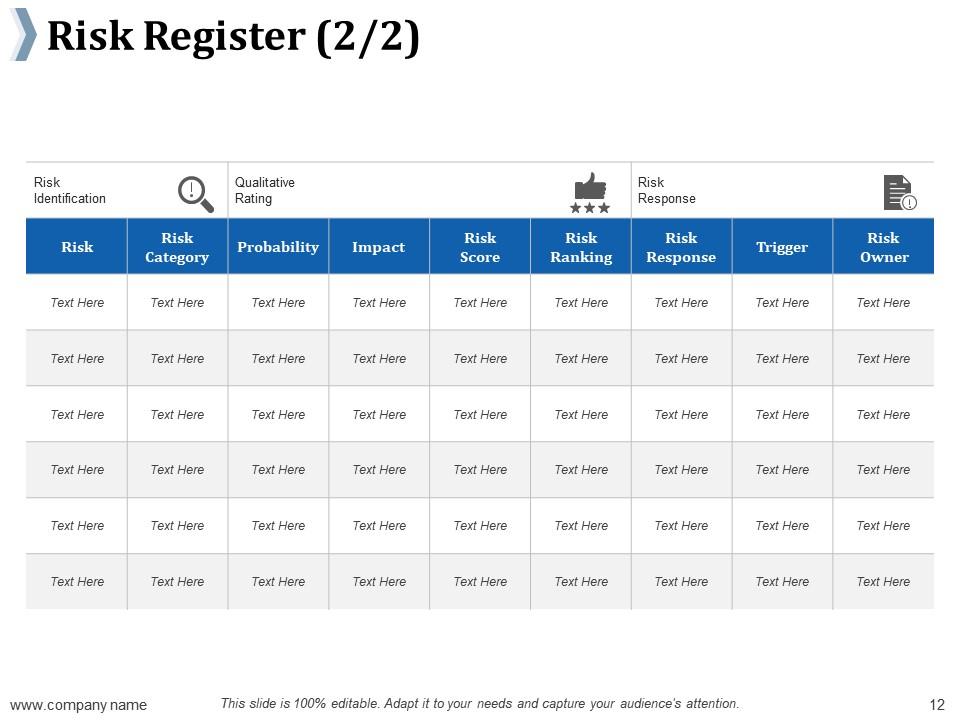
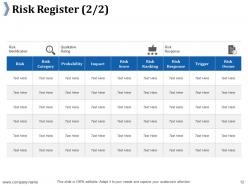
Slide 12: This slide presents Risk Register (2/2).
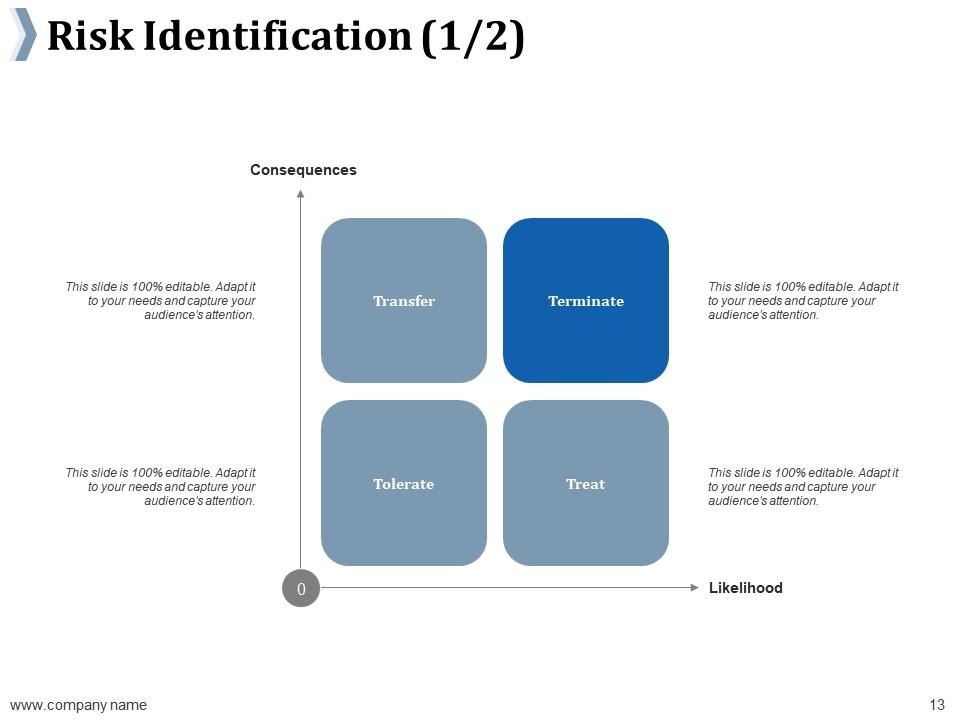
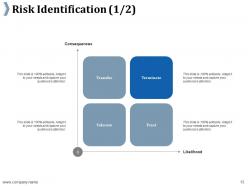
Slide 13: This slide showcases Risk Identification (1/2) with these of the following parameters- Terminate, Treat, Tolerate, Transfer, Consequences, Likelihood.
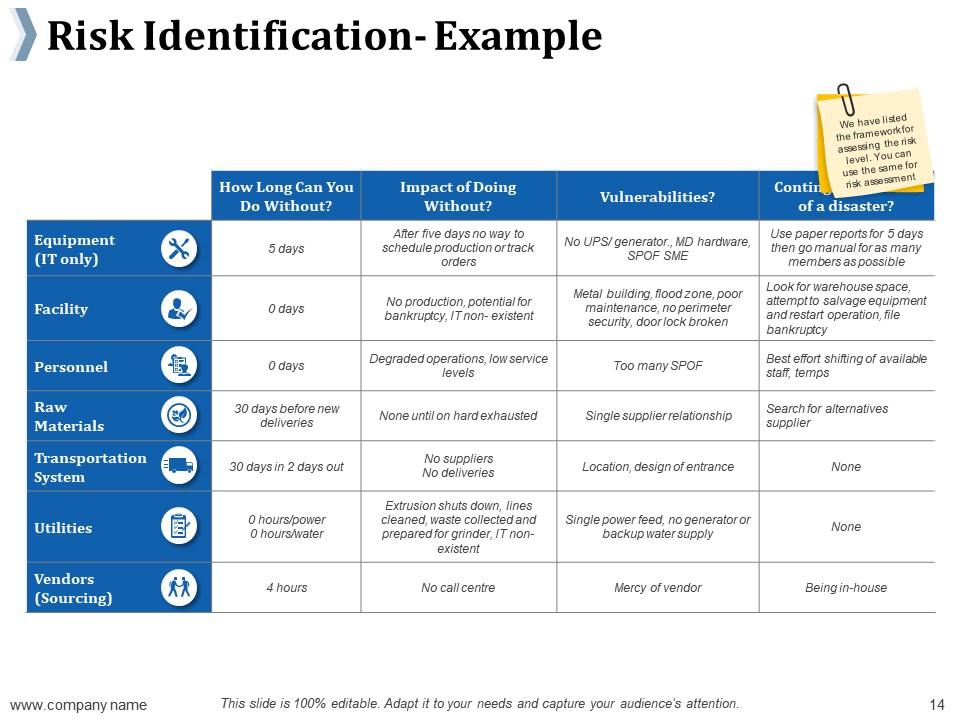
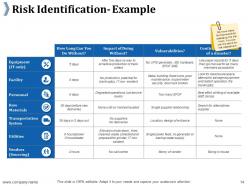
Slide 14: This slide presents Risk Identification- Example. We have listed the framework for assessing the risk level. You can use the same for risk assessment.
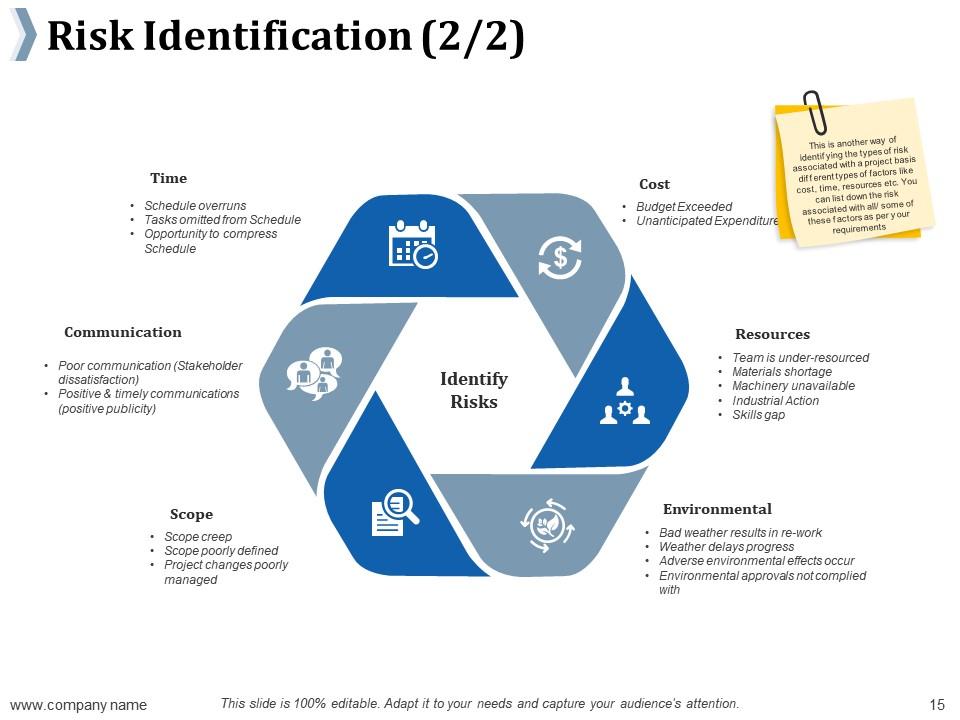
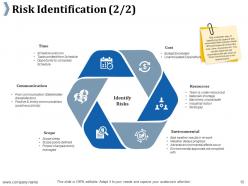
Slide 15: This slide showcases Risk Identification (2/2) which further presents .This is another way of identifying the types of risk associated with a project basis different types of factors like cost, time, resources etc. You can list down the risk associated with all/ some of these factors as per your requirements.
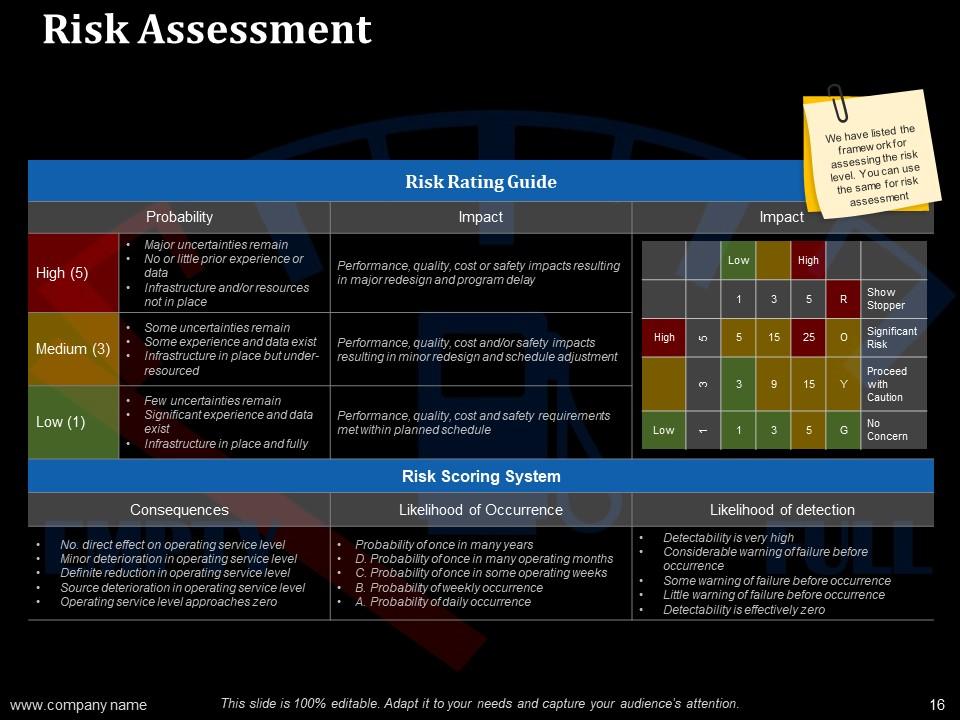
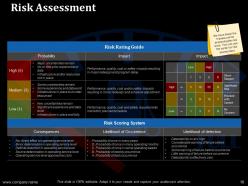
Slide 16: This slide presents Risk Assessment. We have listed the framework for assessing the risk level. You can use the same for risk assessment.
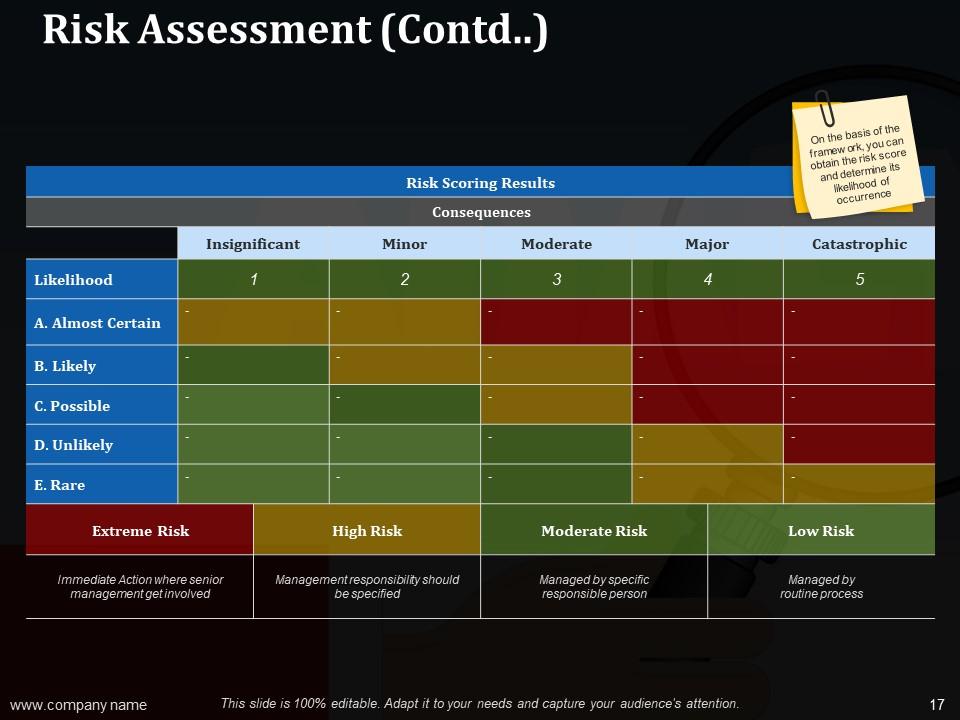
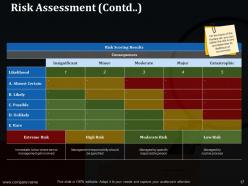
Slide 17: This slide showcases Risk Assessment (Contd..).On the basis of the framework, you can obtain the risk score and determine its likelihood of occurrence.
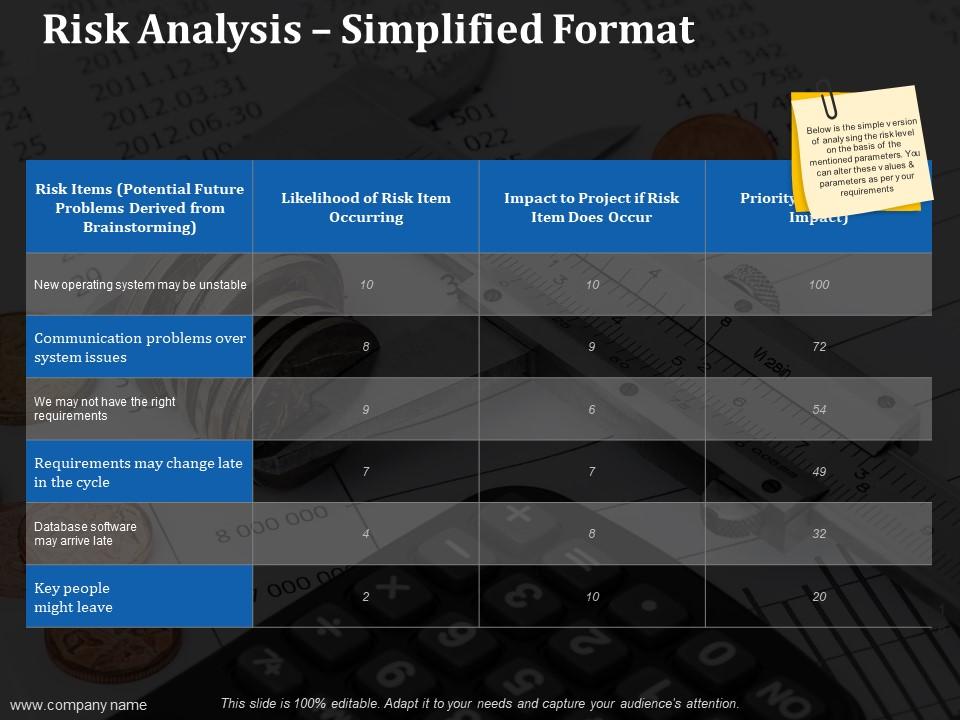
Slide 18: This slide shows Risk Analysis – Simplified Format.Below is the simple version of analysing the risk level on the basis of the mentioned parameters. You can alter these values & parameters as per your requirements.
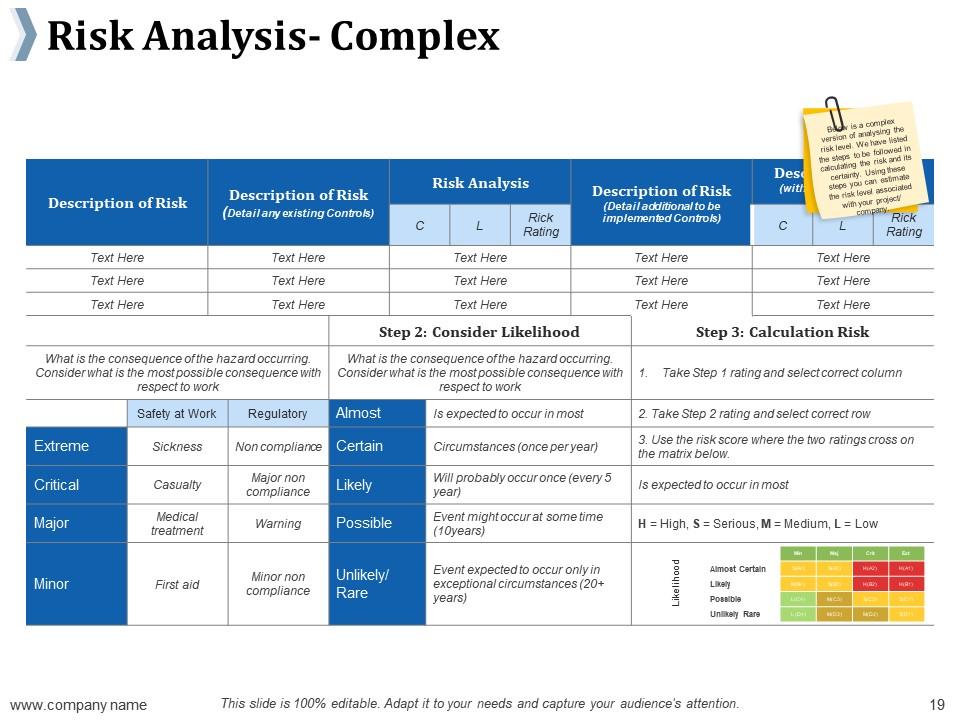
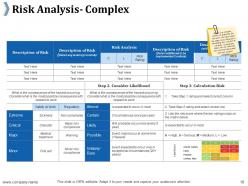
Slide 19: This slide presents Risk Analysis- Complex. Below is a complex version of analysing the risk level. We have listed the steps to be followed in calculating the risk and its certainty. Using these steps you can estimate the risk level associated with your project/ company.
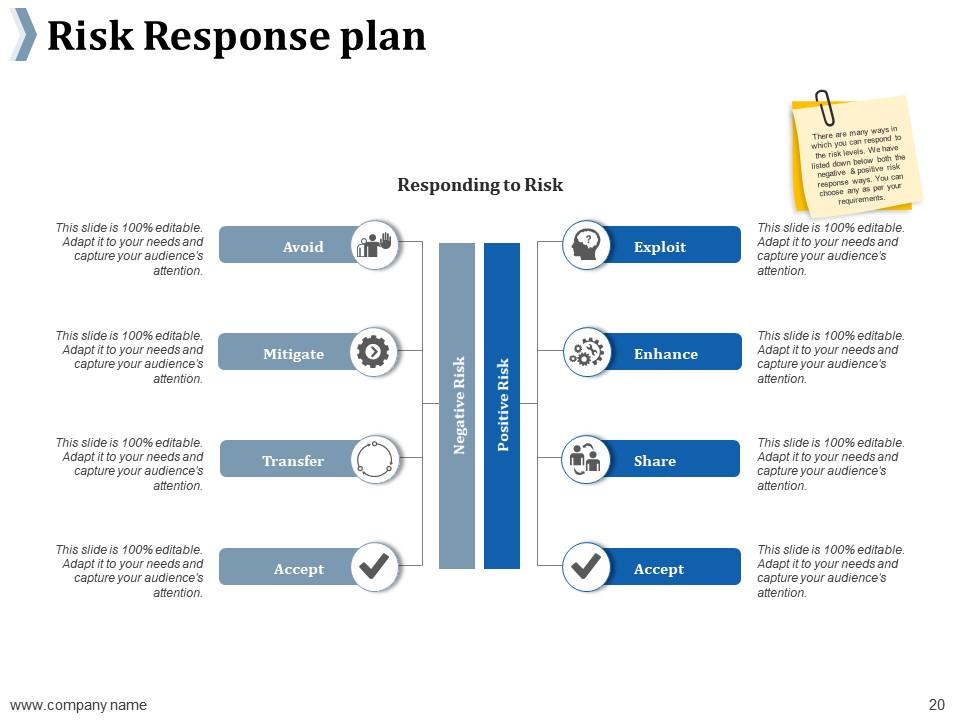
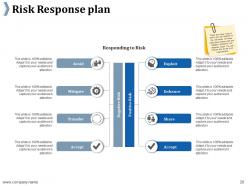
Slide 20: This slide showcases Risk Response plan with these of the following factors. There are many ways in which you can respond to the risk levels. We have listed down below both the negative & positive risk response ways. You can choose any as per your requirements.
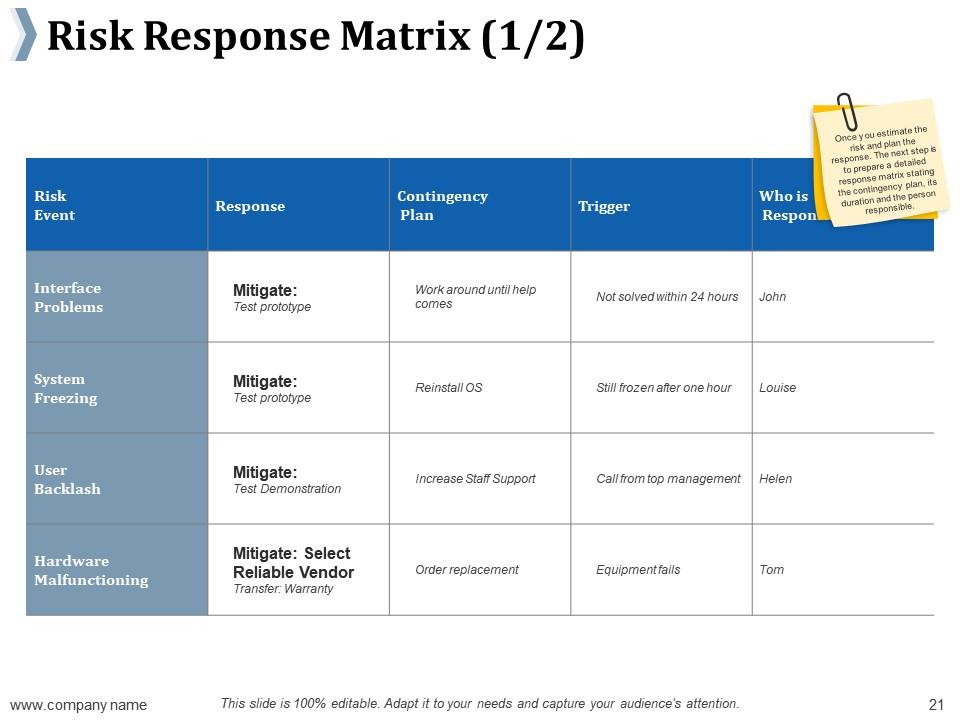
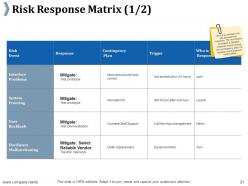
Slide 21: This slide presents Risk Response Matrix (1/2). Once you estimate the risk and plan the response. The next step is to prepare a detailed response matrix stating the contingency plan, its duration and the person responsible.
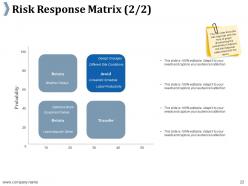
Slide 22: This slide showcases Risk Response Matrix (2/2). You can also show the risk response with the help of graph showcasing the probability of risk and the risk response associated with the same.
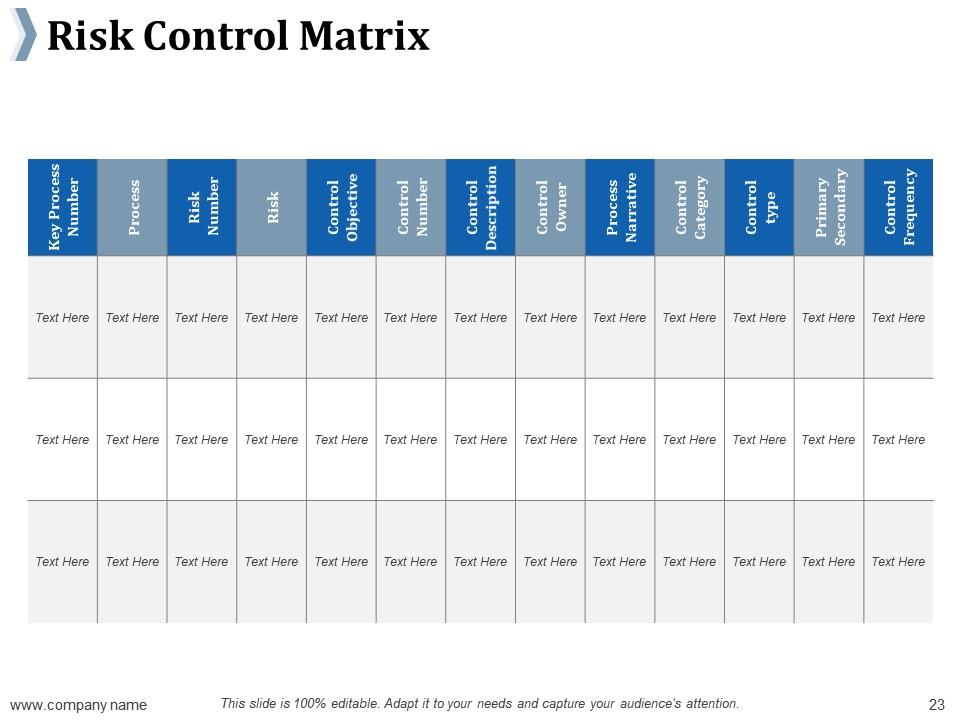
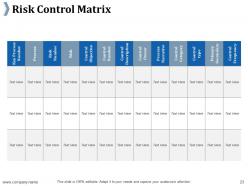
Slide 23: This slide presents Risk Control Matrix.
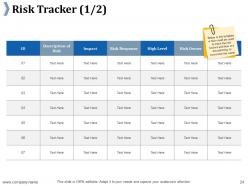
Slide 24: This slide showcases Risk Tracker (1/2). Below is the template which could be used to track the risk factors and how we are planning to overcome the same.
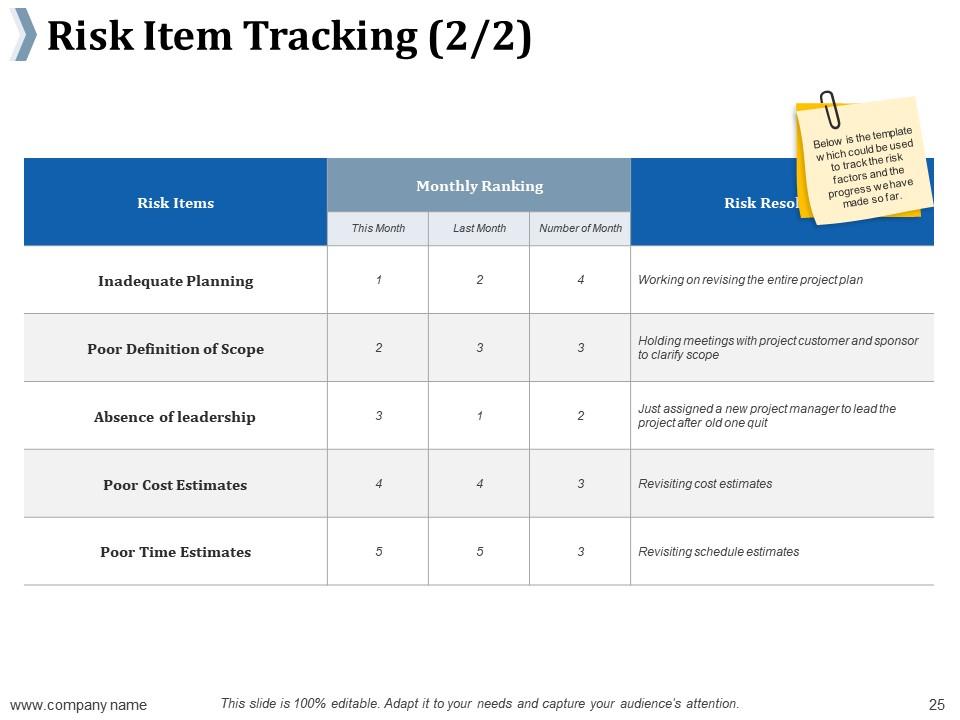
Slide 25: This slide presents Risk Item Tracking (2/2). Below is the template which could be used to track the risk factors and the progress we have made so far.
Slide 26: This slide showcases Risk Management Procedure Icon Slide.
Slide 27: This is a Coffee Break slide to halt. You may change it as per requirement.
Slide 28: This slide is titled Additional Slides to move forward.
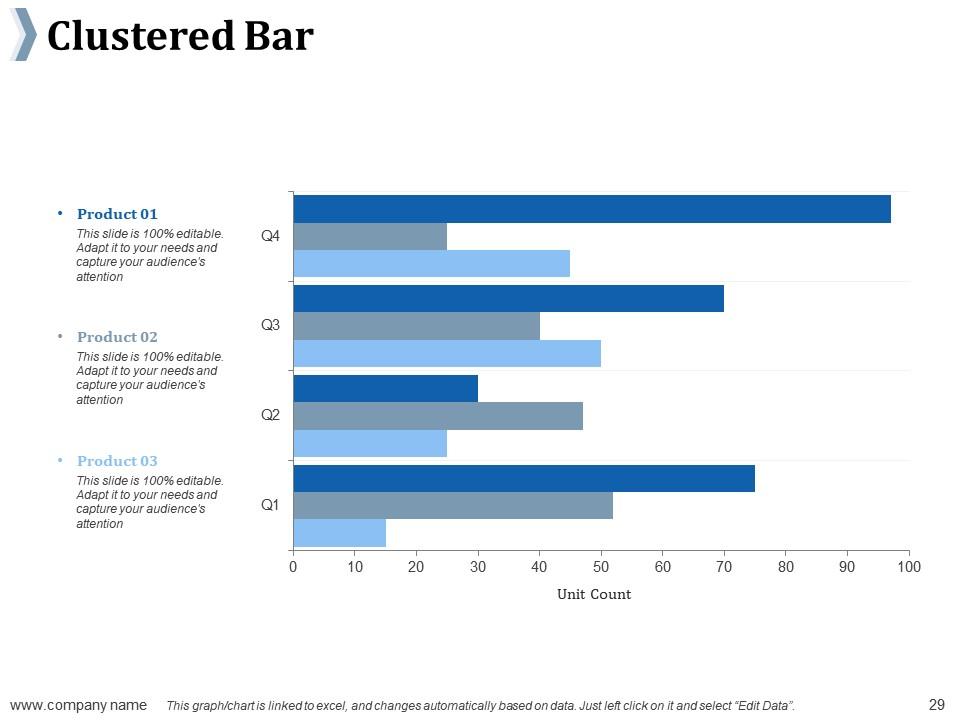
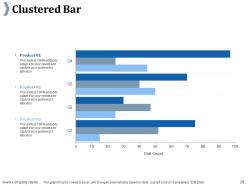
Slide 29: This slide showcases Clustered Bar.
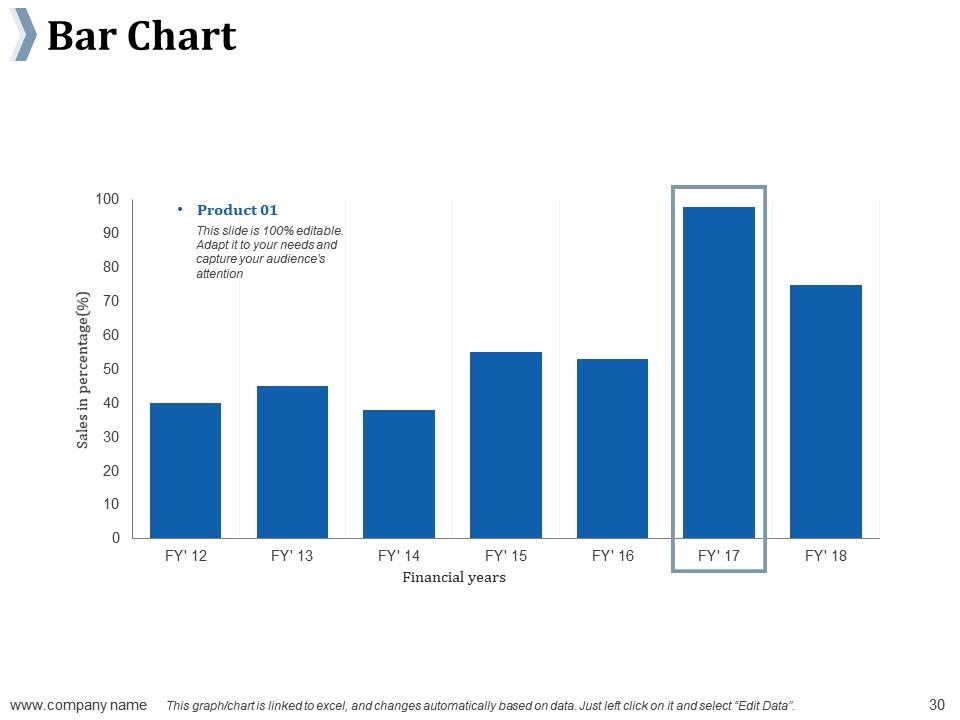
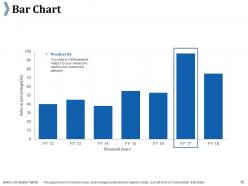
Slide 30: This slide presents Bar Chart.
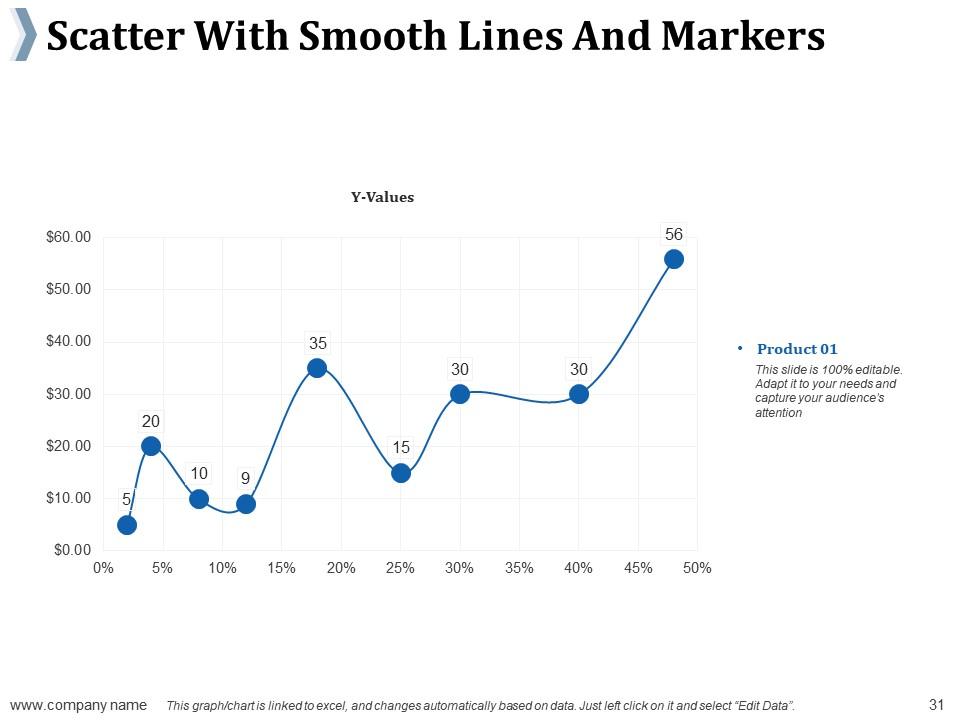
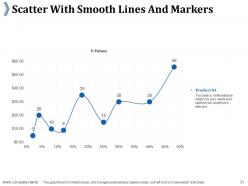
Slide 31: This slide showcases Scatter With Smooth Lines And Markers.
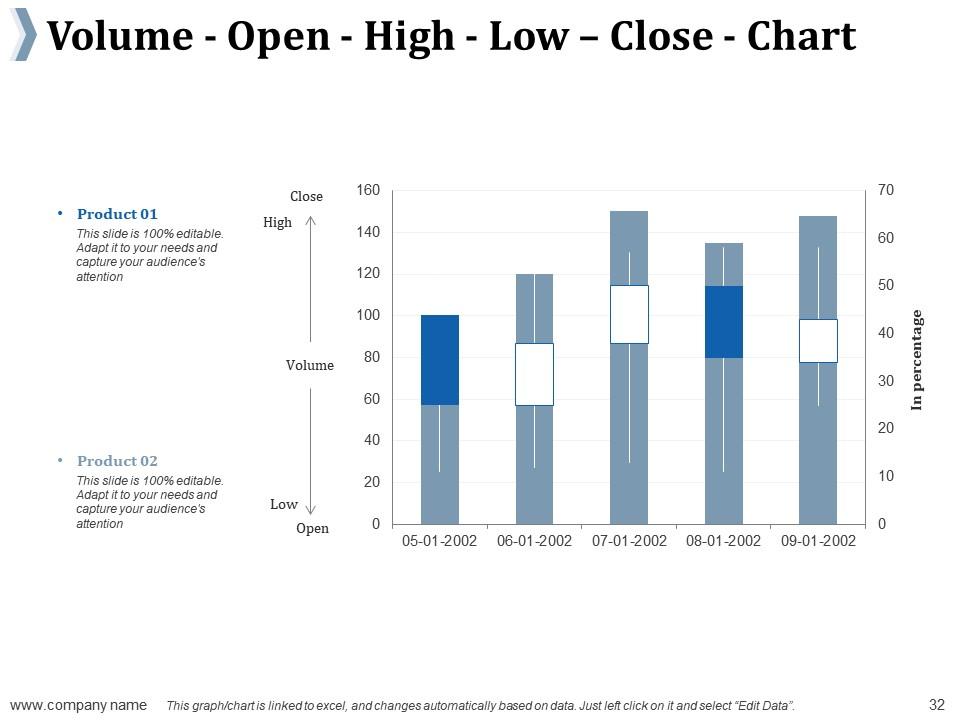
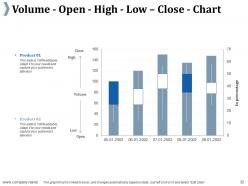
Slide 32: This slide presents Volume - Open - High - Low – Close - Chart.
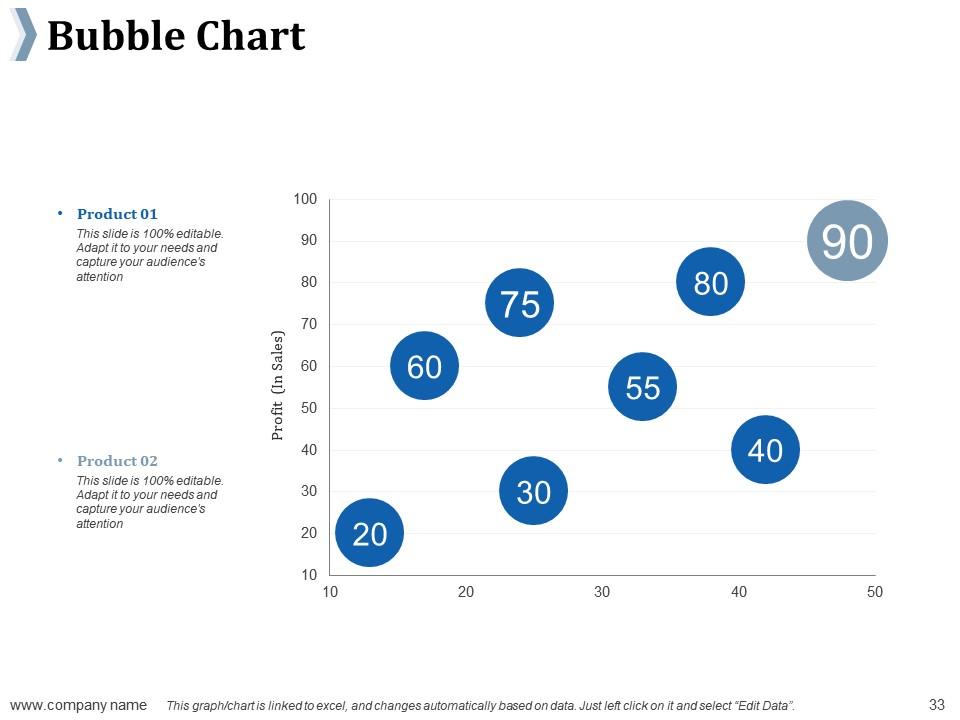
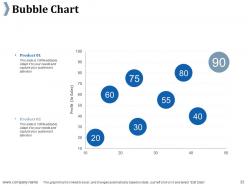
Slide 33: This slide showcases Bubble Chart.
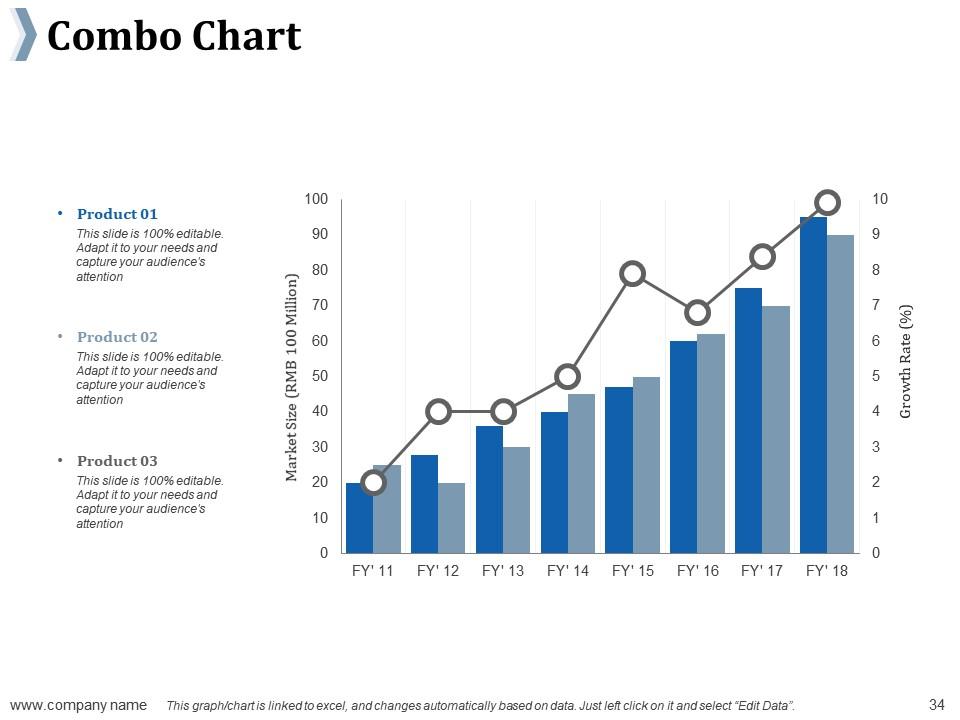
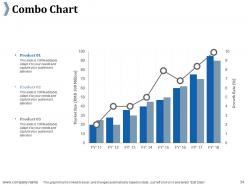
Slide 34: This slide presents Combo Chart.
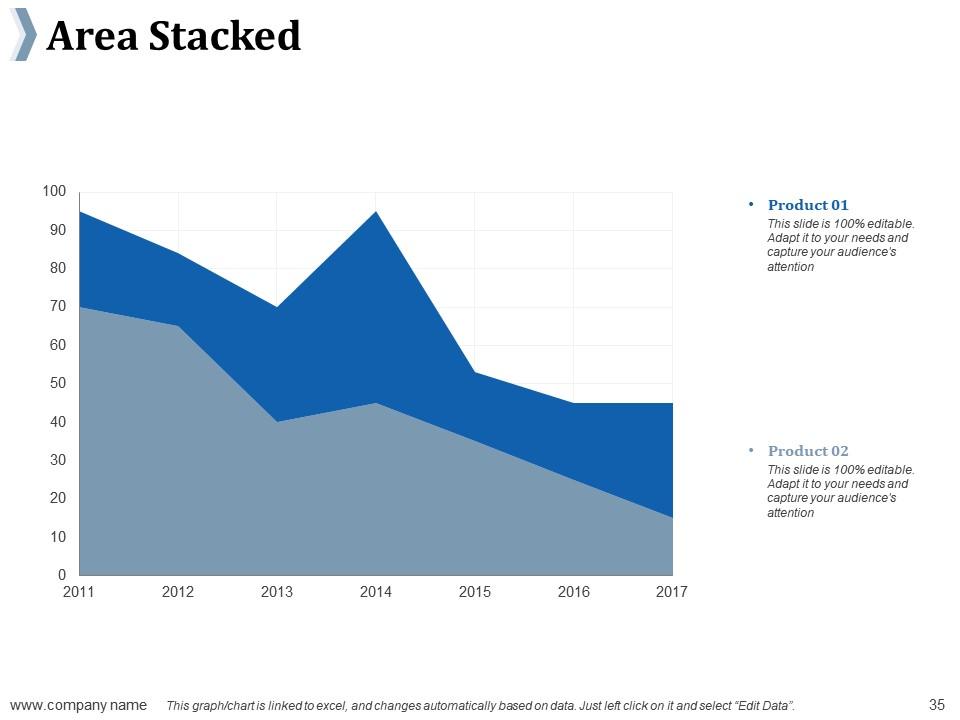
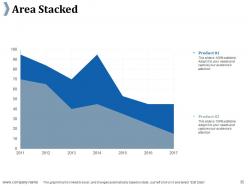
Slide 35: This is an Area Chart slide for product/entity comparison
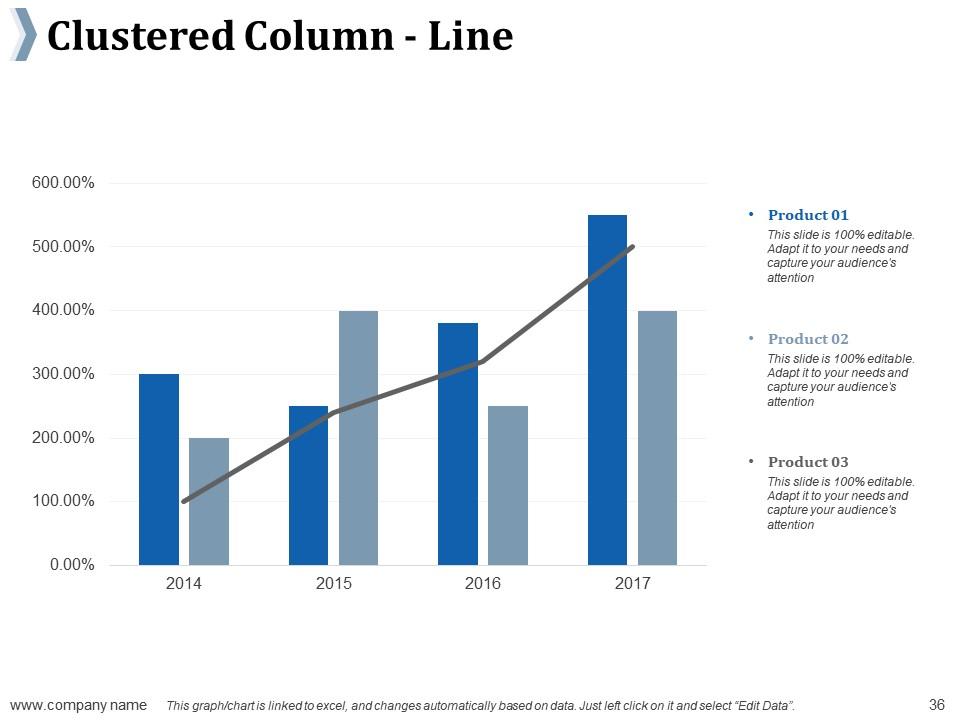
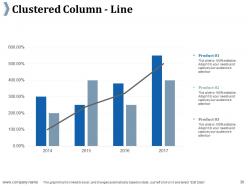
Slide 36: This slide shows Clustered Column - Line.
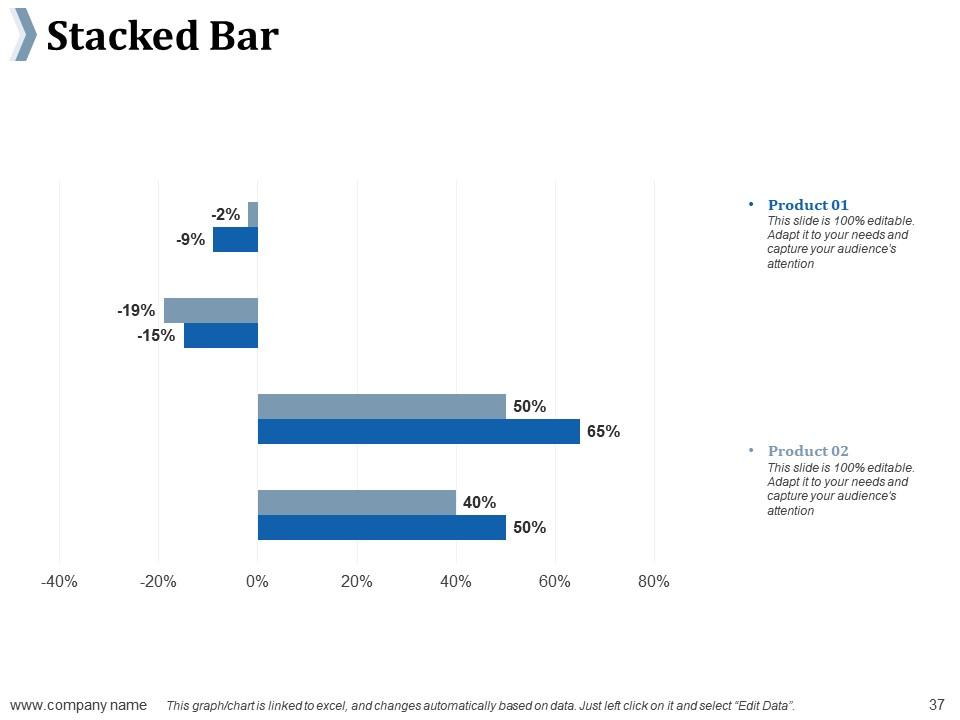
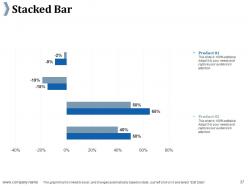
Slide 37: This slide shows a Stacked Line graph in terms of percentage and years for comparison of Product 01, Product 02, Product 03 etc.
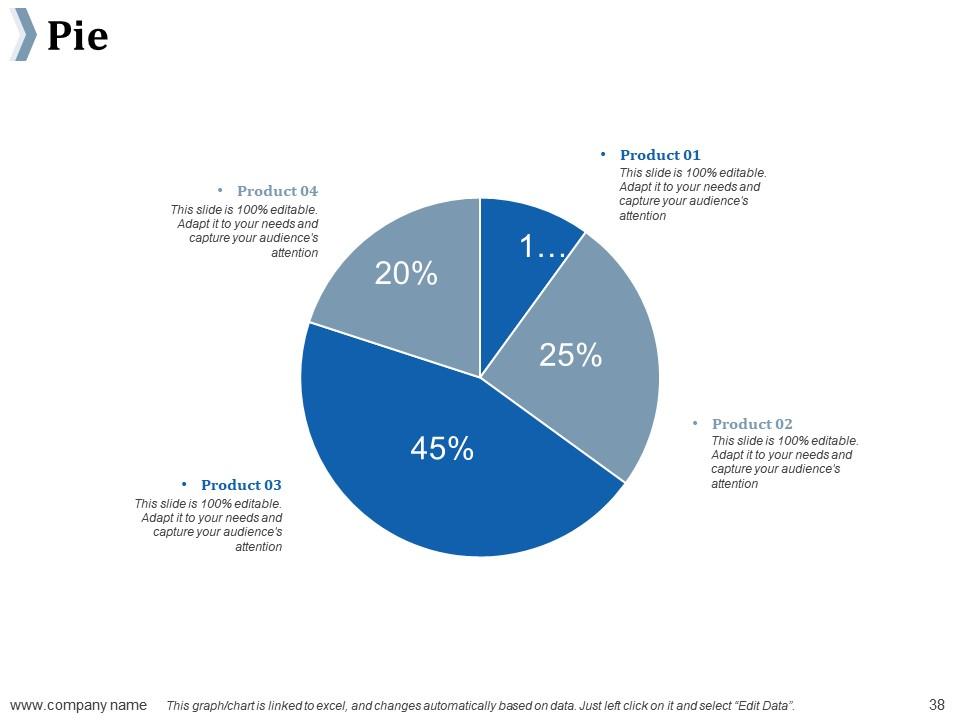
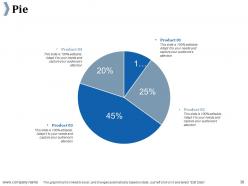
Slide 38: This slide presents Pie. Add the pie chart data and use it as such.
Slide 39: This slide represents Our Mission. State your mission, goals etc.
Slide 40: This slide showcases Our Team with Name and Designation to fill.
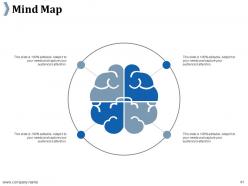
Slide 41: This slide shows a Mind map for representing entities
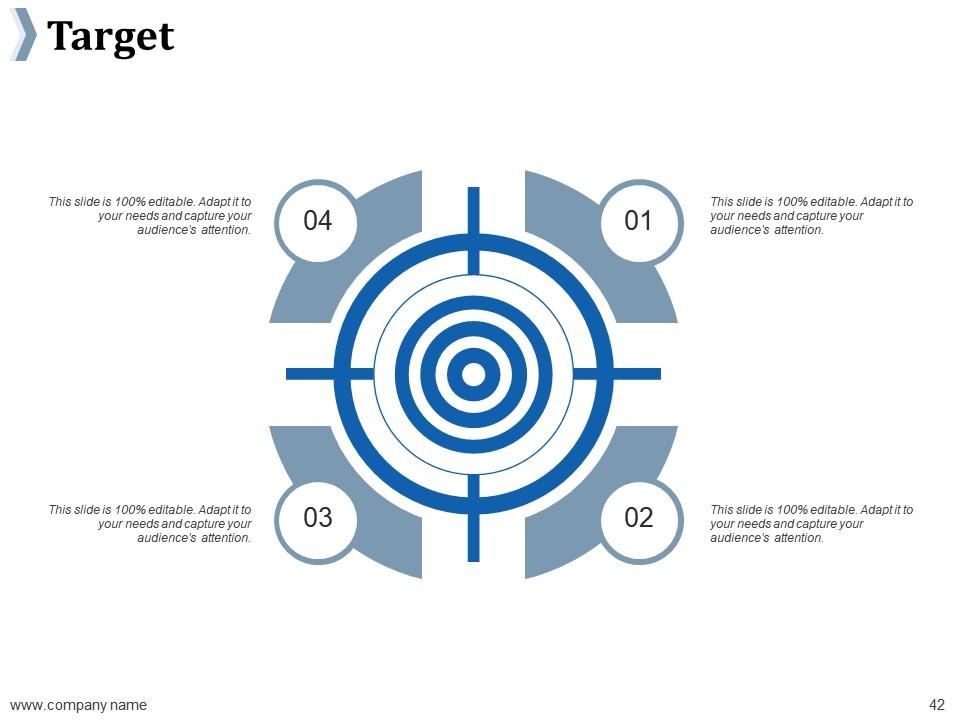
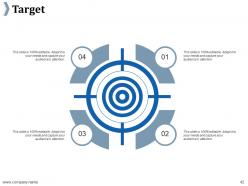
Slide 42: This is a Target slide. State your targets here.
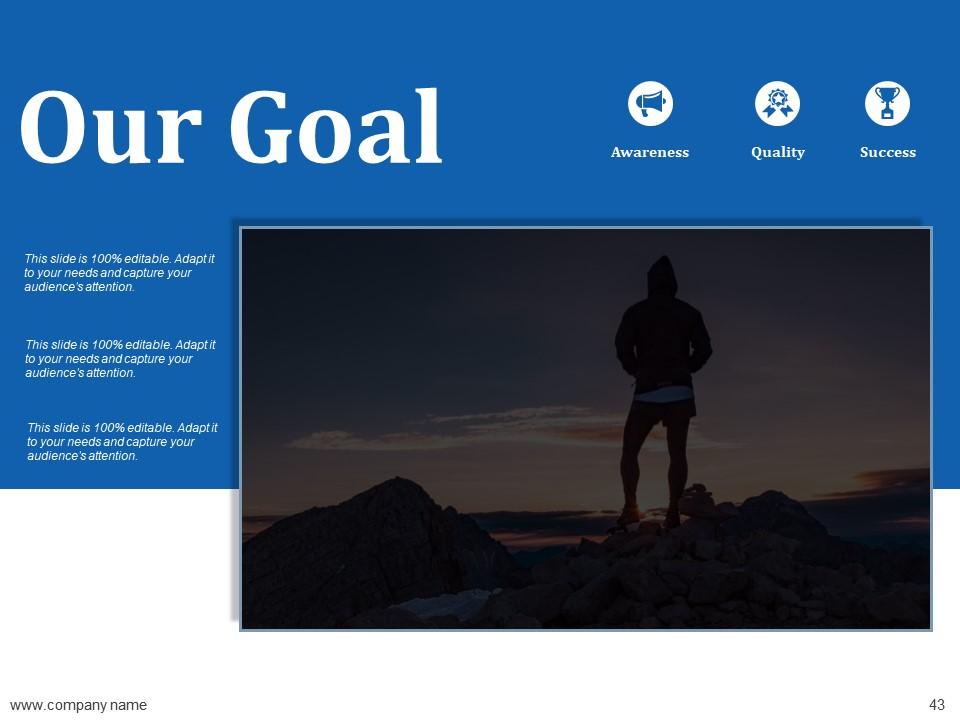
Slide 43: This is an Our Goal slide. State them here.
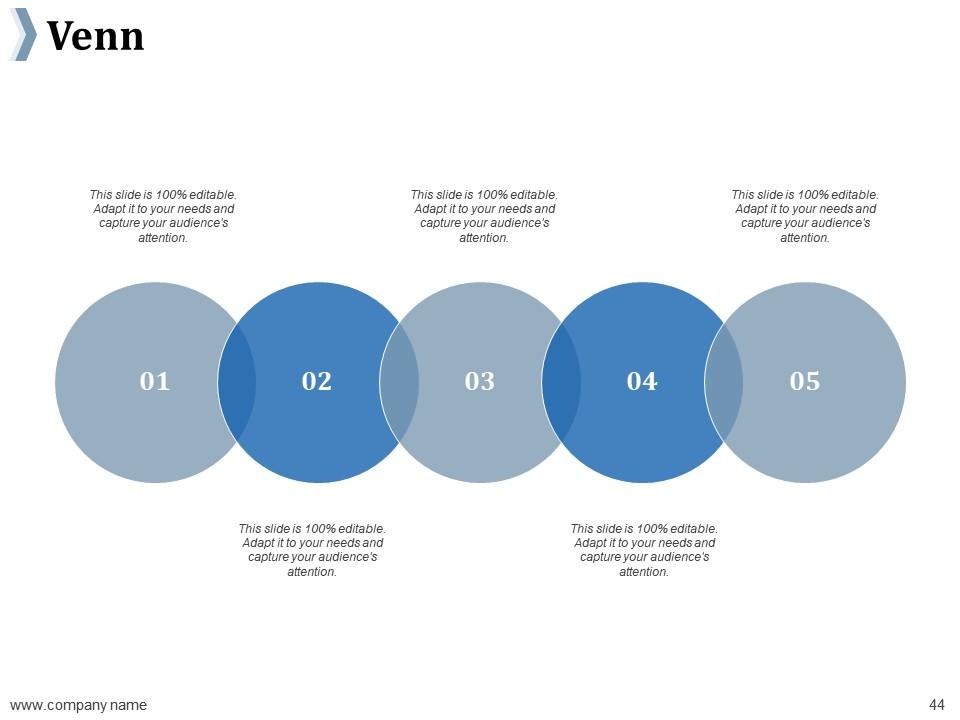
Slide 44: This is a Venn diagram image slide to show information, specifications etc.
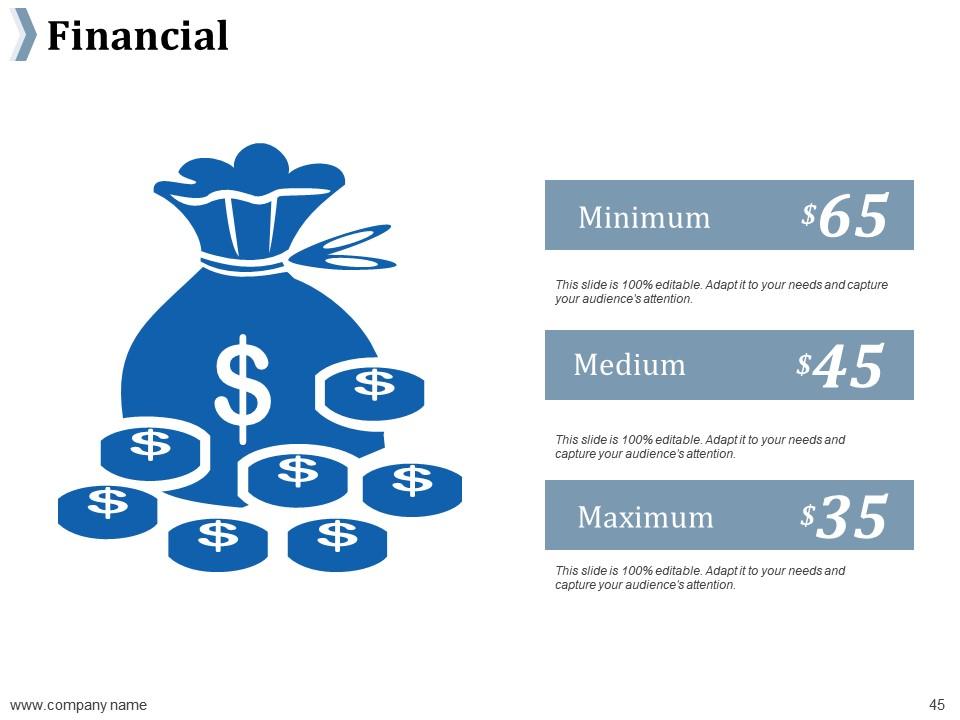
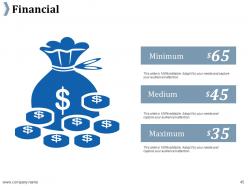
Slide 45: This is a Financial Score slide to show financial aspects here.
Slide 46: This is a Bulb Or Idea image slide to show information, innovative aspects etc.
Slide 47: This slide showcases a Puzzle with imagery.
Slide 48: This is a Thank You image slide with Address, Email and Contact number.
Risk Management Procedure And Guidelines Powerpoint Presentation Slides with all 48 slides:
Brief them on first aid with our Risk Management Procedure And Guidelines Powerpoint Presentation Slides. Enlighten folks on handling injuries.
No Reviews
