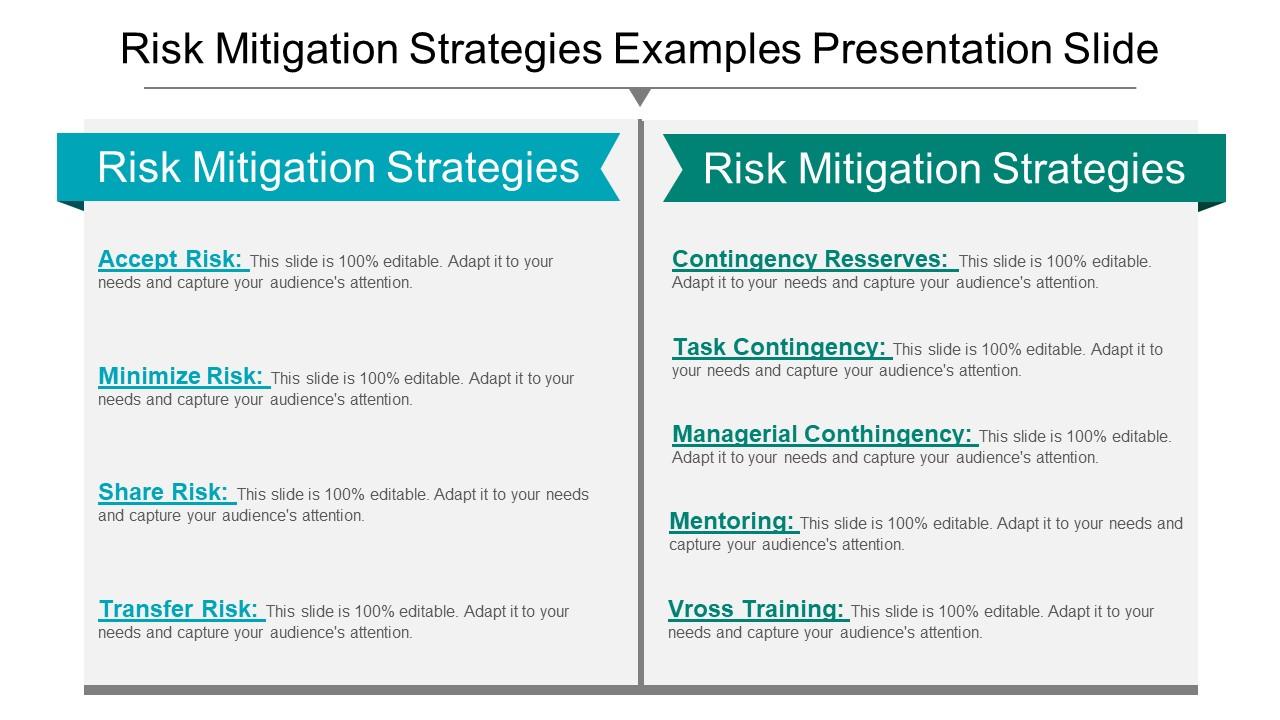
Diapositiva de presentación de ejemplos de estrategias de mitigación de riesgos

Rating:
80%
Risk mitigation strategies examples presentation slide
Slide 1 of 5
Favourites Favourites

Try Before you Buy Download Free Sample Product

Audience Impress Your
Audience
Editable 100%
Editable
Time Save Hours
of Time
The Biggest Sale is ending soon in
0
0
:
0
0
:
0
0
Rating:
80%

Características de estas diapositivas de presentación de PowerPoint:

Presentación de diapositivas de presentación de ejemplos de estrategias de mitigación de riesgos. Esta es una diapositiva de presentación de ejemplos de estrategias de mitigación de riesgos. Este es un proceso de dos etapas. Las etapas de este proceso son la gestión de riesgos, la mitigación de riesgos, la planificación de riesgos, los riesgos y las estrategias de mitigación.

People who downloaded this PowerPoint presentation also viewed the following :

FAQs for Risk mitigation strategies

Scope creep is probably your biggest enemy - seriously, it kills more projects than anything else. Budget overruns and missed deadlines usually follow right behind. Your team getting yanked away for "emergency" work mid-project? That'll mess you up too. Technical stuff not working like it should, stakeholders who can't agree on anything, vendor drama you can't control. Oh, and don't rush quality just to hit dates - that always comes back to haunt you later. Figure out which ones are most likely to hit your project and plan around those first.

Start by making a list of everything that could go wrong - literally just brainstorm every risk you can think of. Then score each one on how likely it is vs how badly it'd hurt you. A simple spreadsheet totally works for this, don't overthink it. Plot them on a basic grid so you can see your "oh shit" zone clearly. Those high-probability, high-impact ones? Hit those first. Work your way down from there instead of just putting out fires randomly. I mean, we've all been there with the constant crisis mode thing. Being systematic about it actually saves your sanity.

Honestly, data analytics is like having a crystal ball for spotting trouble early. It catches patterns in your data that you'd never notice manually - stuff like customer churn suddenly jumping or supply chain hiccups hitting specific regions. The cool part? Algorithms churn through massive datasets way faster than any human could. I'd start by figuring out what data you're already sitting on that might flag problems. Then set up automated alerts for weird patterns. Way better than scrambling to fix things after they've already gone sideways, you know?

Honestly, most disasters happen because someone spotted the red flags but didn't tell anyone who could actually do something about it. Set up regular check-ins so teams can surface problems early - way better than scrambling during a crisis. Create shared channels for risk updates and make sure everyone knows exactly who to ping when things start going south. The whole blame game thing kills communication, so people need to feel safe speaking up. I've seen way too many "we knew this might happen" conversations after the fact. Make these risk chats feel routine, not like emergency meetings where heads are gonna roll.

Start with your biggest risks and rank them - don't go crazy trying to fix everything at once. Figure out what could actually mess up your project, then prioritize by how likely they are and how much damage they'd cause. I used to overthink this step way too much! Pick someone to own each risk and give them realistic deadlines. Document it all and check in regularly since things change. Oh, and honestly? Keep it simple - nobody wants to read some giant binder that'll just collect dust. Short, actionable plans actually get used.

Yeah, culture totally affects how people see risk. Some teams jump on problems right away, others kinda dance around issues instead of saying them directly (honestly can drive you nuts). Risk-averse cultures want everything planned out while others are like "let's figure it out as we go." Time perspective matters too - quick fixes vs. long-term solutions. I'd set up clear ways for people to report problems from day one. Then do regular one-on-ones to catch stuff before it blows up. You'll probably miss cultural cues at first, but you get better at reading the room.

So you'll want to spread things out - different vendors, platforms, team members. That way if one thing crashes, you're not completely screwed. Set up alerts for downtime, security stuff, performance issues. Trust me, I got burned once when our server died at 2am and nobody knew until morning. What a nightmare. Build backup systems too and have a disaster plan ready. Oh, and tackle your biggest risks first instead of trying to fix everything at once. Being ahead of problems beats scrambling after they happen. Start with your top 3 weak spots.

So you basically brainstorm all the ways shit could hit the fan, then figure out what you'd actually do about it. Pick your biggest fears first - losing key people, supply chain mess, economy tanking, whatever. For each one, sketch out maybe 3-4 scenarios from "annoying but manageable" to "oh god we're screwed." Here's the thing though - you can't just identify problems and call it a day. Actually write down your action plans for each situation. Think of it like those fire drills we hated in school, except useful. I'd say meet with your team every few months to update everything since things change fast.

Start by figuring out who actually cares about this project - like, who's gonna be pissed if things go wrong? Get those people in a room regularly to talk through what could blow up. Visual stuff like heat maps really helps because suddenly everyone's looking at the same picture instead of talking past each other. People actually participate when they feel like you're listening, not just checking boxes. Give them real jobs in your backup plans too. Oh, and set up proper ways for them to reach you when stuff gets weird. Honestly, the whole thing works way better when they feel like partners rather than just getting updates from you.

Look, quarterly reviews are the bare minimum - but that's kinda outdated thinking. If something big shifts in your business or market, don't wait around for your next scheduled check. I'd honestly go monthly if you're dealing with anything risky or unpredictable. Your mitigation plans from six months ago? Probably useless now. Things move too fast these days. The whole point is making sure your strategies actually fit what's happening right now, not some old assumptions. Oh, and set those calendar reminders immediately or you'll totally space on it.

Honestly, training your team is like building a radar system for problems. People catch issues way faster when they actually know what red flags look like. Cross-training is a lifesaver too - you won't panic when someone quits unexpectedly (trust me on this one). Keep everyone updated on industry changes and compliance stuff regularly, not just once a year. The trick is making it ongoing. I'd start by figuring out your biggest skill gaps first, then connect those to whatever keeps you up at night business-wise. Makes the whole thing feel less overwhelming.

Ugh, regulatory changes are such a pain - they can flip your whole risk strategy upside down basically overnight. What was totally fine yesterday? Could be a major problem today. First thing you gotta do is completely reassess everything when new rules come out. Update policies, retrain your team, maybe buy new systems. The smart move is tracking what's coming down the pipeline before it hits. I set up news alerts for my industry so I'm not caught off guard. Also helps to build some wiggle room into your current processes - trust me on this one, scrambling at the last minute sucks.

You need both types of indicators - the early warning stuff like training rates and near-misses (leading), plus actual results like fewer incidents or lower losses (lagging). Honestly, most people skip the baseline measurement part, but you can't tell if you're improving without knowing where you started. Monthly dashboards work pretty well for tracking this stuff. Pick maybe 3-5 metrics that actually matter for your specific risks and stick with them consistently. The regular monitoring is where teams usually drop the ball, but that's what makes or breaks the whole thing.

Honestly, the whole crisis management thing boils down to preparing before stuff hits the fan. I've seen companies that recover super quick, and they all have one thing in common - they actually practiced their response plans beforehand. Like, they'd run fake scenarios with their teams and figured out who makes what decisions. The ones that struggled? They were winging it. Start by spotting where you're most vulnerable, then build specific playbooks for different situations. Test them out regularly too - you don't want to find your weak spots during an actual emergency.

Real-time visibility is game-changing for risk management. Your team can share dashboards and see the same data instantly - no more playing phone tag when issues pop up. Those endless email chains? Gone. Digital tracking also makes audits way less painful since everything's documented automatically. Honestly, most companies overlook how much time they waste on communication delays. Map out where your team currently gets stuck coordinating responses - that's where you'll see the biggest wins. Short version: get everyone on one platform so stuff doesn't slip through cracks.

Ratings and Reviews

80% of 100
Review Form
Write a review
Most Relevant Reviews
  1. 80%

    by Davies Rivera

    Unique design & color.
  2. 80%

    by Brown Baker

    Great product with highly impressive and engaging designs.

2 Item(s)

per page: