Roadmap For GDPR Project Plan Compliance
Try Before you Buy Download Free Sample Product
Audience
Editable
of Time
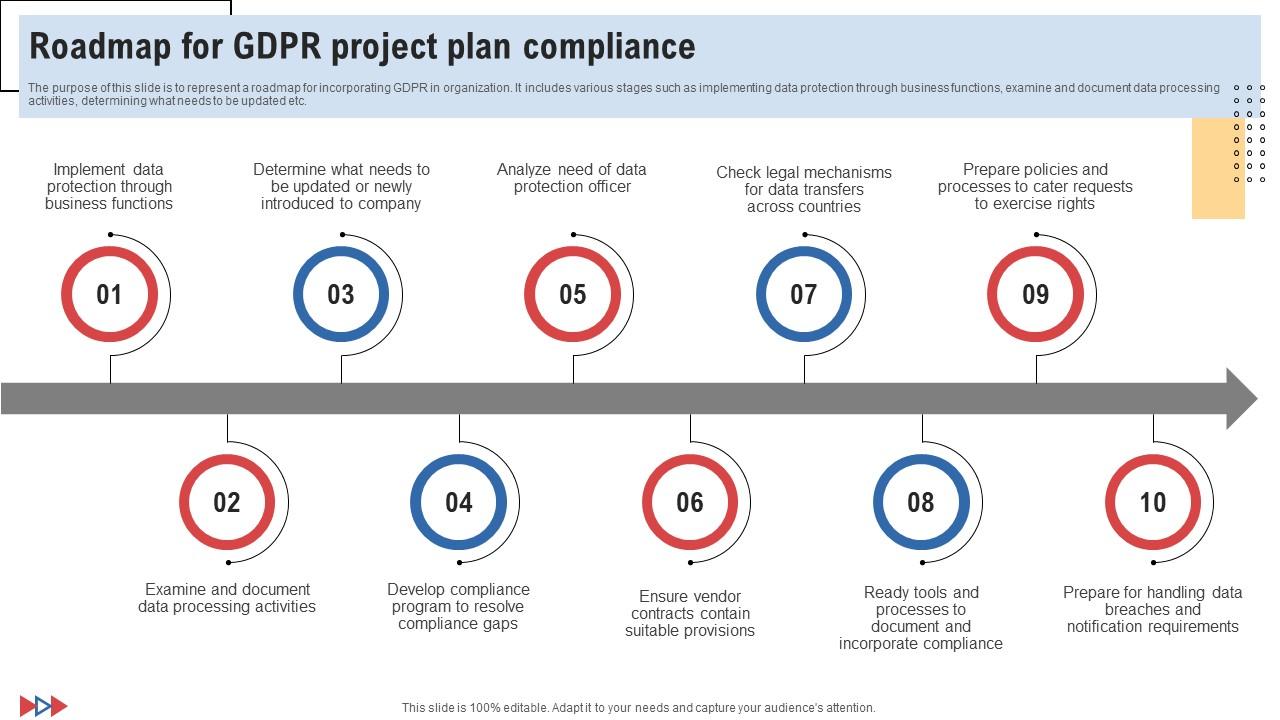
The purpose of this slide is to represent a roadmap for incorporating GDPR in organization. It includes various stages such as implementing data protection through business functions, examine and document data processing activities, determining what needs to be updated etc.
People who downloaded this PowerPoint presentation also viewed the following :
Roadmap For GDPR Project Plan Compliance with all 9 slides:
Use our Roadmap For GDPR Project Plan Compliance to effectively help you save your valuable time. They are readymade to fit into any presentation structure.
FAQs for Roadmap For GDPR
GDPR's fundamental principles include lawfulness and transparency, purpose limitation, data minimization, accuracy, storage limitation, integrity and confidentiality, and accountability. These principles streamline compliance by ensuring organizations collect only necessary data, maintain transparent processing practices, and implement robust security measures, ultimately delivering enhanced customer trust, reduced regulatory risk, and competitive advantage in an increasingly privacy-conscious marketplace.
Businesses can conduct comprehensive data inventories by mapping data flows across all systems, documenting collection points, storage locations, processing purposes, and retention periods. Through automated discovery tools and departmental audits, organizations systematically catalog personal data in databases, applications, and file systems, while engaging stakeholders across HR, marketing, and operations to ensure complete visibility and regulatory compliance.
A Data Protection Impact Assessment involves identifying processing activities that pose high privacy risks, documenting data flows and storage methods, evaluating potential impacts on individual rights, and implementing mitigation measures. Organizations typically conduct stakeholder consultations, assess necessity and proportionality of data collection, and establish monitoring procedures, with many financial services and healthcare institutions finding that structured DPIAs streamline compliance while enhancing customer trust.
Organizations can effectively establish GDPR legal bases by identifying appropriate lawful grounds such as consent, legitimate interest, contractual necessity, legal obligation, vital interests, or public task for each processing activity. Through comprehensive data mapping and privacy impact assessments, companies systematically align processing purposes with specific legal foundations, while implementing clear documentation and consent management systems, ultimately ensuring regulatory compliance and enhanced customer trust.
Organizations should implement automated request management systems, clear data mapping protocols, regular staff training programs, robust identity verification processes, and standardized response timeframes to fulfill data subject rights effectively. These measures streamline compliance by enabling faster access requests, seamless data portability, and transparent deletion processes, with many financial institutions and healthcare providers finding that strategic automation ultimately delivers enhanced customer trust and operational efficiency.
Companies can develop GDPR-compliant data privacy policies by conducting comprehensive data audits, establishing clear consent mechanisms, defining data retention schedules, implementing robust security measures, and creating transparent user rights procedures. These policies should clearly articulate data collection purposes, processing lawful bases, and individual rights like access and deletion, with many organizations finding that proactive transparency ultimately enhances customer trust and competitive advantage.
Employee training serves as the foundation for GDPR compliance, ensuring staff understand data protection principles, recognize personal data types, implement proper handling procedures, and respond appropriately to data breaches or subject requests. Through comprehensive training programs, organizations significantly reduce compliance risks, enhance data security practices, and build a privacy-conscious culture, with many companies finding that well-trained employees become their strongest defense against costly regulatory violations.
Businesses ensure proper data breach notification procedures by establishing automated detection systems, creating clear escalation protocols, and maintaining updated contact databases for regulators and affected individuals. Organizations across sectors like healthcare and finance streamline compliance through comprehensive incident response plans, designated privacy officers, and regular training programs, ultimately delivering faster notification timelines and reduced regulatory penalties while enhancing customer trust.
Businesses should establish comprehensive vendor assessment protocols, including data processing agreements, regular compliance audits, breach notification procedures, and clear data transfer mechanisms. These frameworks streamline vendor relationships by ensuring contractual obligations align with GDPR requirements, implementing ongoing monitoring systems, and establishing incident response protocols, ultimately delivering regulatory compliance and enhanced data protection across the entire vendor ecosystem.
Organizations achieve transparency by implementing clear privacy policies, user-friendly consent mechanisms, accessible data processing notifications, comprehensive audit trails, and regular compliance reporting. Through automated consent management systems and transparent communication protocols, companies streamline disclosure processes while enhancing user trust, with many financial services and healthcare organizations finding that proactive transparency ultimately delivers competitive advantage and regulatory confidence.
GDPR compliance tools include data mapping software, privacy management platforms, consent management systems, data loss prevention solutions, and automated audit tools. These technologies streamline compliance by tracking data flows, managing subject requests, and monitoring access controls, with many organizations finding that integrated platforms deliver enhanced transparency, reduced manual oversight, and sustained regulatory adherence.
Businesses should update their systems by implementing automated data discovery tools, establishing centralized request portals, creating standardized verification processes, and developing cross-system deletion capabilities that ensure complete data removal. These updates enable organizations to respond within GDPR's 30-day timeframe while maintaining data integrity, with many companies finding that streamlined request handling ultimately enhances customer trust and operational efficiency.
GDPR non-compliance consequences include substantial fines up to €20 million or 4% of annual turnover, operational disruptions, legal proceedings, and significant reputational damage. These penalties create cascading effects across organizations, with many companies finding that non-compliance ultimately undermines customer trust, restricts market access, and diminishes competitive positioning in increasingly privacy-conscious markets.
Businesses can create a privacy culture through comprehensive employee training, clear data handling policies, regular compliance audits, leadership commitment, and integrating privacy considerations into all business processes. This cultural transformation enables organizations to build customer trust, minimize regulatory risks, and gain competitive advantage, with many companies finding that strong privacy cultures enhance both employee accountability and customer loyalty.
Regular GDPR audits should encompass data mapping reviews, processing activity assessments, consent mechanism evaluations, security control testing, and third-party vendor compliance verification. Through systematic quarterly reviews and annual comprehensive assessments, organizations streamline compliance monitoring, identify potential vulnerabilities early, and maintain regulatory alignment, with many enterprises finding that proactive auditing ultimately delivers enhanced data governance and reduced regulatory risk.
-
I discovered some really original and instructive business slides here. I found that they suited me well.
-
The website is jam-packed with fantastic and creative templates for a variety of business concepts. They are easy to use and customize.