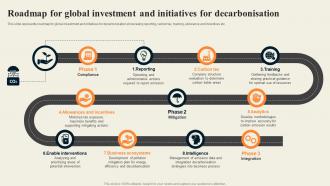
Roadmap For Global Investment And Initiatives For Decarbonisation
Try Before you Buy Download Free Sample Product
Audience
Editable
of Time
This slide represents roadmap for global investment and initiatives for decarbonisation showcasing reporting, carbon tax, training, allowance and incentives etc.
People who downloaded this PowerPoint presentation also viewed the following :
Roadmap For Global Investment And Initiatives For Decarbonisation with all 6 slides:
Use our Roadmap For Global Investment And Initiatives For Decarbonisation to effectively help you save your valuable time. They are readymade to fit into any presentation structure.
FAQs for Roadmap For Global Investment And
Honestly, start with an energy audit of your municipal buildings - figure out where the biggest emissions are coming from first. Electric buses and trains make a massive difference, way more than people realize. Building codes for energy efficiency are boring but they work. Oh, and don't sleep on waste management programs - I know it sounds unglamorous but the impact is legit surprising. Smart traffic systems help cut emissions too. District heating is clutch if you can swing it. Renewable energy transition obviously, but mapping your current situation first will save you tons of headaches later.
Start with the GHG Protocol - it's basically the gold standard for this stuff. Breaks everything into Scope 1, 2, and 3 emissions. Most companies grab software like Watershed or Salesforce's Net Zero Cloud to handle the data collection automatically. Scope 3 is honestly where things get annoying because you're tracking supplier emissions, business travel, the works. My advice? Pick your biggest emission sources first and nail those down. Stay consistent with whatever method you choose year to year. You can always get fancier later, but at least you'll have solid baseline data to work from.
Renewables are basically how we ditch fossil fuels and stop pumping CO2 everywhere. Solar, wind, hydro - they're replacing coal and gas for electricity, which is massive for cutting emissions. The crazy part? They keep getting cheaper each year, so politicians actually want to back them now. Electric cars and heat pumps run on that clean electricity too, so you're hitting transport and heating at the same time. Pretty smart if you ask me. Check what renewable mix actually works for your area's grid - some places are way better suited for certain types than others.
Honestly, it all comes down to money and what's urgent right now. These countries need huge upfront cash for clean tech, but they're still building basic stuff and fighting poverty. Like asking someone to get a Tesla when they can't even afford their first car, right? Technical expertise is another massive hurdle - they just don't have the know-how or systems in place yet. Oh, and here's the kicker: many depend on selling oil and gas for their income. So going green literally threatens their economy. When you're working there, focus on stuff that saves them money immediately while cutting emissions. Win-win solutions are your only shot.
So CCS is basically trapping CO2 from power plants and factories before it escapes into the air. Then you pump it underground into old oil wells or rock formations. Pretty clever, right? It's super helpful for industries like steel and cement that can't easily go green yet. Honestly though, renewables are still way better long-term - this is more like a stopgap while we figure everything else out. If your company's thinking about it, CCS could work as a bridge technology. Just don't expect it to solve everything.
Carbon pricing is probably your best bet - carbon taxes or cap-and-trade systems both work pretty well. BC and the EU have had solid results with this stuff. Feed-in tariffs and renewable subsidies have been huge for solar and wind adoption too. But honestly? Don't put all your eggs in one basket. The places that do best mix pricing with regulations and clean energy mandates - kind of a carrot-and-stick thing. Oh, and definitely check what's already happening in your area first. Way easier to build on existing momentum than start from scratch.
Yeah, EVs definitely help with emissions but honestly it depends on where you live. Coal-heavy grid? Not gonna make as big a difference. Manufacturing does create some upfront pollution, though most EVs break even after like 1-2 years of driving. The cool thing is they just keep getting cleaner as more solar and wind comes online. Oh and they're super quiet which I didn't expect to care about but it's actually really nice. I'd say look up your local energy mix first - might be worth waiting if your area's going greener soon.
Look, going green isn't just about saving polar bears - there's real money in it. Renewable energy creates tons of jobs, and your energy bills drop long-term. ESG investors are throwing cash at sustainable companies right now. Plus you're dodging future carbon taxes instead of getting slammed later. The whole green tech boom means new markets opening up left and right. Insurance gets cheaper too, weirdly enough. Oh, and banks love lending to green businesses these days. Honestly? Figure out which eco-friendly changes actually slash your operating costs first. That's your starting point.
Honestly, start small with stuff you can actually stick to. Switch to renewable energy if you can, drive less, cut back on meat - I know that last one's annoying but it genuinely helps. Buying from sustainable brands matters too, especially when tons of people do it. The bigger moves? Electric car, better home insulation, voting for people who actually care about climate stuff. You could bug your work about going greener or throw some money into clean energy funds. Pick like one or two things that won't stress you out right now.
Honestly, it's all over the place. Tech and finance are crushing it because they're mostly digital anyway. But steel and cement? They're literally fighting the laws of physics here. Energy companies are throwing billions at renewables, though oil & gas... yeah, still being oil & gas. Manufacturing sits somewhere in between - decent progress on efficiency and going electric. Here's the thing: your timeline totally depends on whether you can just swap stuff out or rebuild everything from scratch. When you're looking at benchmarks, compare within your sector. Comparing a software company to a steel mill is pretty pointless.
Honestly, the big movers right now are battery storage, green hydrogen, and carbon capture - though that last one still feels crazy expensive. Battery tech has gotten so much better that renewables aren't as unreliable anymore. Green hydrogen's finally becoming realistic for heavy industry since electrolyzers are way cheaper now. Heat pumps and EVs just hit that point where they actually make financial sense too, which is wild. My cousin just got a heat pump and loves it, random but whatever. If you're thinking investments or partnerships, these are the sectors I'd watch.
You can't expect people to change if they don't get why it matters, you know? Education is huge here. Once communities understand carbon footprints and renewable energy benefits, they'll actually support green policies and make changes themselves. Informed citizens also put pressure on businesses and politicians to move faster. Plus education fights all that climate misinformation floating around - which honestly drives me crazy. I'd start by figuring out what your audience doesn't know yet. Then tailor your message to their specific worries and show them real benefits they'll care about.
So carbon markets put a price tag on pollution - companies have to pay when they emit, which obviously makes them want to cut back. There's two flavors: compliance markets where the government sets limits and companies trade permits, plus voluntary ones where businesses buy offset credits. It's like charging for something that used to cost nothing. The concept works pretty well, though honestly? The voluntary market is kinda messy with sketchy credits floating around. My take - focus on actually reducing your emissions first, then maybe use solid credits to cover what's left over.
Look, don't think of going green as just burning money - flip it into a profit thing. Energy efficiency cuts your bills right away. Eco-conscious customers will actually pay more for sustainable stuff. Green loans have better rates too, which is pretty sweet. Honestly, investors are already baking climate risks into company values, so you're protecting yourself down the road. Start small with obvious wins like LEDs or renewable contracts that basically pay for themselves. Then use those savings for bigger projects. Companies jumping on this now are gonna have a huge edge while everyone else panics later.
So the big one everyone talks about is the Paris Agreement - 196 countries trying to keep warming under 1.5°C. There's also the UN Framework Convention on Climate Change, which basically runs the whole show. COP26 in Glasgow added stronger language about cutting fossil fuels, though they definitely watered it down from what activists wanted. The EU has their Green Deal thing too. Oh, and if you're doing any climate work stuff, you should probably know the Paris targets since companies love referencing them in their strategies.
-
SlideTeam provides PPTs on every single topic. Their templates suit my job very well. I am very grateful!
-
Like always a great experience with you guys. Always there on the drop of hat to help.