RPA In Healthcare Powerpoint Ppt Template Bundles
Try Before you Buy Download Free Sample Product
Audience
Editable
of Time
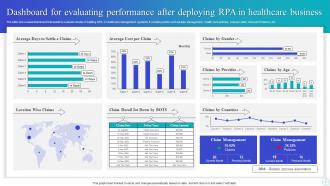
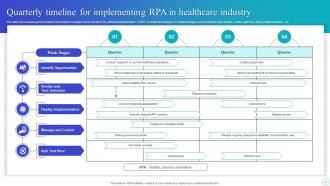
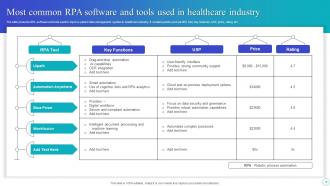
Introducing our cutting edge PowerPoint presentation, RPA in Healthcare, a comprehensive and insightful deck that delves into the revolutionary impact of Robotic Process Automation RPA on the Healthcare industry. This dynamic presentation is meticulously designed to provide healthcare professionals with a deep understanding of RPA applications in streamlining administrative tasks, optimizing patient data management, and enhancing overall operational efficiency. With compelling visuals and real world case studies, the PPT highlights how RPA technology can transform healthcare processes, reduce human error, and improve patient outcomes. Emphasizing key benefits and successful RPA implementations, this presentation equips healthcare stakeholders with the knowledge needed to harness the full potential of RPA and revolutionize healthcare service delivery. Embrace the future of automation in healthcare with our game changing RPA in Healthcare PowerPoint presentation.
People who downloaded this PowerPoint presentation also viewed the following :
RPA In Healthcare Powerpoint Ppt Template Bundles with all 22 slides:
Use our RPA In Healthcare Powerpoint Ppt Template Bundles to effectively help you save your valuable time. They are readymade to fit into any presentation structure.
FAQs for RPA In Healthcare Powerpoint
So RPA basically handles all that mind-numbing data entry stuff - patient registration, insurance checks, updating records across different systems. Your nurses won't waste hours moving lab results around anymore since bots do it instantly without screwing up. Gone are those annoying duplicate entries and missing info problems. Patients get processed way faster, fewer admin mistakes happen, and your staff can actually do patient care instead of drowning in paperwork. Honestly, the productivity jump is pretty wild. Just start with whatever tasks make your team want to bang their heads against the wall - those repetitive ones are perfect.
Look, patient registration and scheduling are the big wins - bots just crush all that repetitive data entry stuff. Claims processing saves tons of time too since they pull info from forms and submit everything automatically. Most hospitals I know are saving like 30-40 hours weekly just on billing alone, which is nuts. Insurance verification, discharge workflows, compliance reports - all that tedious admin work nobody wants to touch. Oh, and those compliance reports are such a pain to do manually. Start with whatever's eating up the most time for your team first.
So those stupid typos we make when rushing through patient codes? RPA totally fixes that. The bots check everything against databases instantly and catch mismatched diagnosis codes before claims even go out. Honestly, they're way better at keeping up with coding updates than any of us - I swear those requirements change every other week. You'll get fewer rejections for sure, plus spend way less time fixing mistakes later. My advice? Start with whatever process makes you want to scream the most. That's probably where you'll see the biggest difference.
Honestly, compliance and data security are gonna be your biggest headaches - healthcare regs are insane compared to other industries. IT will fight you on integration because hospital systems are ancient and messy (I swear some still run on Windows XP). Staff freaking out about losing jobs is probably the worst part though. Makes total sense why they'd be scared. Patient privacy stuff is no joke either - one data leak and you're screwed. My advice? Start with boring back-office stuff first. Build some wins there before you touch anything patient-related.
So RPA is basically like having robots do all the boring stuff nobody wants to do anyway. Patient registration, insurance checks, scheduling - all that tedious data entry that makes your staff want to pull their hair out. Your team gets to actually focus on patients instead of copying info between ten different systems. The bots just quietly handle billing, spit out reports, manage prescription refills. Honestly, it's kind of amazing watching productivity jump when people aren't stuck doing mindless clicking all day. I'd say start with whatever process currently makes everyone groan the loudest.
So your RPA bots can hook into EHRs a couple ways - either through APIs (which is cleaner) or by basically watching and mimicking what you'd do on screen. Epic and Cerner already have decent API setups, though honestly the screen-scraping thing works fine too if you don't mess with your interface much. Perfect for automating patient registration, scheduling, moving data around between systems. I'd start small - figure out what's eating up your team's time with repetitive EHR stuff, then talk to IT about which method fits your setup best.
So RPA just takes over all those boring scheduling tasks your team hates doing. Patients can book appointments 24/7 without bothering anyone, which is honestly pretty great. The system automatically checks who's available, sends confirmations and reminders, plus handles rescheduling when people cancel last minute. Everything syncs with your EHR too - no more entering the same info twice. My advice? Start with automating reminders since that's the easiest thing to set up and you'll probably see fewer no-shows right away.
RPA is honestly a game-changer for compliance stuff. Your bots can handle all those boring regulatory reports and submit them automatically. No more missed deadlines or data entry mistakes. They'll track everything across departments and ping you when something needs attention. I'd probably start with quarterly reporting since that's usually the biggest pain point. Once you see how much time your staff saves, you can expand from there. My friend at another facility said their team went from drowning in paperwork to actually focusing on patients again. Pretty sweet deal.
Honestly, RPA can boost healthcare security if you do it right. Bots cut down on those human mistakes that cause breaches - which happens way more than people think. Plus they track everything automatically, so you've got solid audit trails. That said, you really can't mess around with access controls and encryption here. Patient data is no joke. Make sure whatever solution you pick is HIPAA-compliant from the start, and keep tabs on what those bots are actually doing. My advice? Get your compliance folks involved early and run a proper security assessment before you flip the switch on anything.
Honestly, RPA is perfect for this stuff. You can set up bots to track inventory and automatically reorder when you're running low. They'll monitor expiration dates too and ping you before things go bad. The invoice reconciliation part is where it gets really useful - bots match deliveries against what you ordered and update everything in real-time. Oh, and they handle all that tedious vendor communication for purchase orders. Way less room for screwups compared to doing it manually. I'd start with your most annoying repetitive tasks first, like those daily inventory counts that nobody wants to do.
Honestly, RPA is pretty solid for patient engagement. It handles all the boring stuff - appointment reminders, medication alerts, follow-ups. Your staff won't have to chase people down anymore. Patients can get answers to basic questions anytime, even at 2am when they're overthinking their symptoms (we've all been there). The bots also deal with insurance verification and portal updates automatically. I'd say the biggest win is freeing up your team to actually talk to patients instead of sending the same reminder emails all day. Way better use of everyone's time.
So basically you want to track time savings first - like how many hours your team was burning on manual stuff before vs after automation. Times that by their hourly rate and boom, there's your cost savings. Accuracy improvements matter too since fewer billing screwups = less money down the drain. Most healthcare places go nuts when they see how much they were blowing on basic data entry (honestly it's usually way more than they think). Start with something repetitive and high-volume like patient registration or claims processing. Pick one process, get your baseline numbers first, then automate. Way easier to show ROI that way.

So first thing - your team needs basic computer stuff down pat. Excel, navigating software, that kind of thing. Then they gotta learn how to babysit the bots - watching for when things break and knowing who to call when stuff goes sideways. Data checking is huge too since automated processes can spit out some seriously wonky results sometimes. The bot monitoring part isn't super complicated, but people need to actually understand what's happening under the hood (otherwise they're just staring at screens confused). I'd do like a 2-day training thing, then monthly meetups to fix whatever new problems pop up.
So RPA can handle all that boring telehealth admin work nobody wants to do. Bots schedule appointments and send patient reminders automatically. They'll pull up medical records before virtual visits too - saves doctors time digging around. Remote monitoring gets way easier since bots collect data from fitness trackers and smartwatches, then alert you if someone's vitals look sketchy. Reports get generated without anyone lifting a finger. I'd probably start small though, maybe just automate your most annoying repetitive tasks first and see how it goes.
So RPA in healthcare is getting way smarter - we're talking AI integration, predictive analytics, even clinical decision support. Beyond just data entry now. The cool part? Bots are starting to handle complex stuff that used to need human judgment. Patient-facing automation is huge too - appointment scheduling, treatment reminders, all that. Honestly, "hyper-automation" sounds like buzzword hell but it's actually happening. Healthcare orgs are going all-in on this. My advice? Get familiar with AI-enhanced RPA platforms soon because this combo will be standard in like two years max.
-
I am not the best at presentations but using SlideTeam’s PPT template made it easier for me. Thank you SlideTeam!
-
I joined SlideTeam last month and there’s no doubt that I tend to find our bond only strengthening over time. Best place to find world-class themes, templates, and icons.