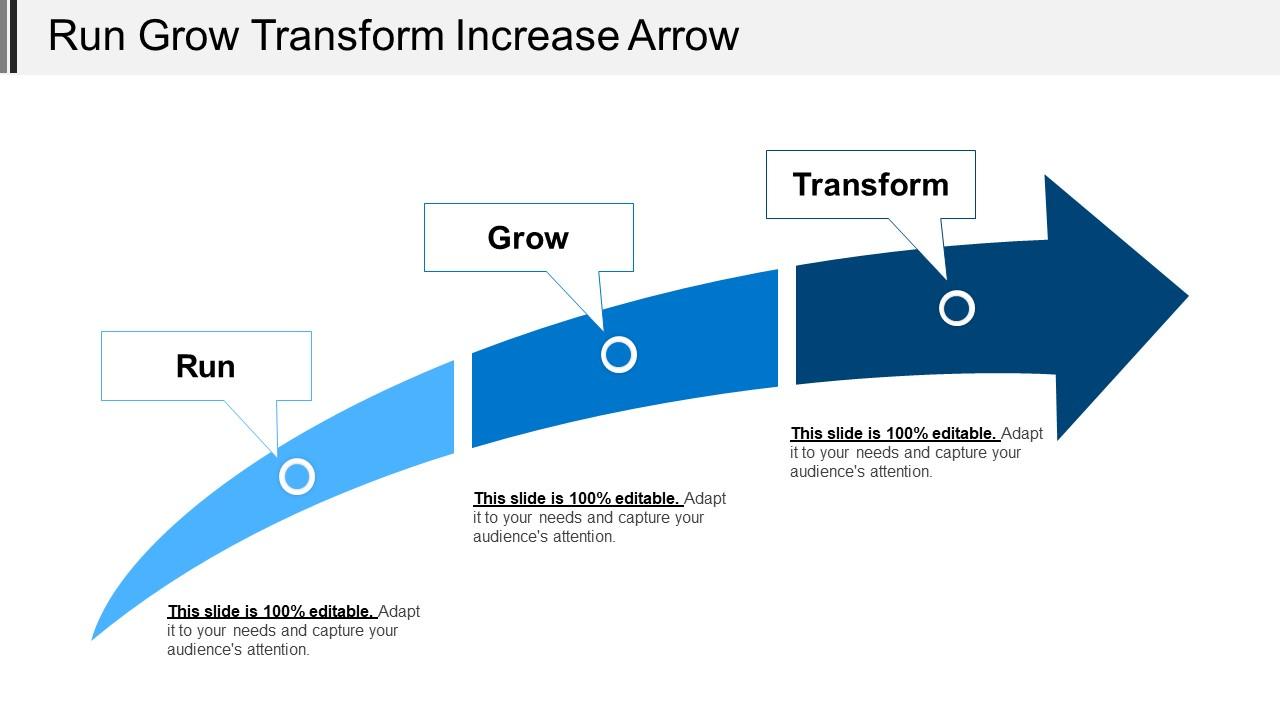
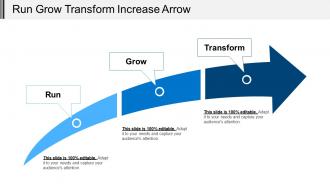
Seta de aumento Run Grow Transform

Rating:
90%
Slide 1 of 5
Favourites Favourites

Try Before you Buy Download Free Sample Product

Audience Impress Your
Audience
Editable 100%
Editable
Time Save Hours
of Time
The Biggest Sale is ending soon in
0
0
:
0
0
:
0
0
Rating:
90%

Recursos desses slides de apresentação do PowerPoint:

Apresentando este conjunto de slides com o nome - Execute a seta de aumento da transformação de crescimento. Este é um processo de três estágios. Os estágios desse processo são Run Grow Transform, Rgt Model, It Systems.

People who downloaded this PowerPoint presentation also viewed the following :

Conteúdo desta apresentação em PowerPoint

FAQs for Run grow

Honestly, start with getting everyone on board with WHY you're doing this before you worry about the how. Leadership needs to be all-in, and bring your team into the conversation early - that's where most resistance comes from, people feeling blindsided. Track progress with real numbers because transformations feel super vague otherwise. Budget like 2x the time you think it'll take (learned this the hard way). Communication has to be brutally honest throughout. Celebrate the small stuff too - momentum dies fast without wins along the way. Clear vision ties it all together.

Track your leading indicators like adoption rates and process improvements, plus the lagging stuff - revenue, cost savings, customer satisfaction. Honestly, the baseline metrics are crucial though. Set those up before you start or you'll have no clue what actually worked later. For ROI, compare your total investment against the measurable benefits over like 12-18 months. Monthly dashboards help you pivot fast if things go sideways. Oh, and don't skip pulse surveys for cultural shifts - that stuff's impossible to quantify but it'll make or break everything.

Look, tech is pretty much what makes any real business change possible these days. Automating the boring stuff, getting actual useful data, completely changing how customers experience your company - cloud stuff, AI tools, digital platforms, you know the drill. My old boss tried doing a transformation without proper tech and it was painful to watch. Map out your biggest headaches first, then find tech that actually fixes those specific problems. Don't just chase whatever's hot right now. Short sentences work. But you'll save yourself a ton of frustration if you think through what you really need before jumping into solutions.

Honestly, culture is make-or-break for any big change you're trying to pull off. People will fight you tooth and nail if the transformation doesn't mesh with how they actually work and think. Even with all the right plans and budget. The annoying part? Culture changes way slower than your strategy timeline. You've got to work on shifting how people communicate and what gets rewarded, not just the technical stuff. Figure out what parts of your current culture will help vs. hurt - then you can actually tackle the resistance before it kills your whole project.

Oh man, communication breakdowns are killer - people freak out when they don't get the "why" behind changes. Makes total sense though, right? Don't try changing everything overnight either. Start with small stuff and actually celebrate those wins. Most places also mess up by waiting too long to loop in the important people, then wonder why there's pushback. Timelines always take longer than you think too. Leadership needs to practice what they preach instead of just talking about it. And here's the thing - transformation never really "ends" like most orgs assume it will.

Honestly, your leaders will make or break this whole thing. I've watched so many projects crash because executives said all the right words but then acted completely different. People aren't stupid - they pick up on that stuff immediately. You need leaders who actually believe in what they're selling and show it through their actions. They've got to explain why this matters, not just what's changing. Oh, and they can't bail when things get messy (which they will). The resource decisions? That's on them too. Don't even bother starting unless leadership is genuinely all-in from day one.

Don't just announce the change and expect everyone to get on board - that never works. Get people actually involved in the process instead. The "why" has to be crystal clear, and you'll probably need to repeat it more than feels necessary. I've watched too many leaders bomb because they assume everyone just gets it right away. Set up Q&As where people can voice their concerns without getting shut down. Find your biggest supporters first and let them do some of the convincing for you. Quick wins are huge - show results fast so people see this isn't just another corporate fad. Oh, and definitely figure out who your main resisters are this week and have real conversations with them.

Dude, engaged employees will literally make or break your transformation. I've seen this play out so many times - when people are actually bought in, they become your biggest cheerleaders instead of roadblocks. They'll help other teammates adapt and give you honest feedback about what's working (or isn't). Plus they won't bail when things get messy, which they always do. My advice? Get everyone on board from the start. Without engagement, you're basically just shuffling deck chairs and burning cash.

First thing - actually talk to your stakeholders instead of guessing what they want. I learned this the hard way on a project last year. Regular meetings where people can complain openly are crucial because hidden resistance will torpedo everything later. Someone always feels left out otherwise, and they'll sabotage you without even realizing it. Find metrics that each group actually cares about, then update them with real numbers frequently. Oh, and spot your champions early - they'll do way more convincing than any executive memo ever will. Peer influence beats corporate mandates every single time.

Honestly, just tell stories that show the whole journey - where people started, what happened, and where they ended up. Customer stories crush abstract ideas every time because they're real and hit you in the feels. Start with problems your audience actually has right now, then show them what winning looks like. Use real names if you can, specific details, and don't pretend it's all smooth sailing - people smell BS from miles away. Oh, and always end with what they should do next. Otherwise you've just entertained them but they won't actually move.

You need both types of metrics - the stuff that shows you're heading in the right direction (employee engagement, training rates, process adoption) and the results that prove it worked (revenue, customer satisfaction, efficiency). Most people just stare at the results though, which is kinda backwards. The early indicators let you fix things before they're broken. Also throw in some qualitative stuff like how people sound in meetings or common complaints. Keep it simple - maybe 6 metrics tops. Check them weekly with whoever's steering this thing.

Honestly, market trends don't give you much choice - they show you exactly where your company's falling short of what customers actually want. New tech disrupts everything, consumer habits shift, competitors start doing things totally different. That's when you know sitting still will kill you. The pandemic was crazy for this - so many businesses had to reinvent themselves overnight or die. You've got to stay on top of these changes though. Otherwise you're always playing catch-up instead of getting ahead of the curve, which sucks.

Look, digital transformation is just way faster and messier than the old-school approach. Instead of fixing one department at a time over like 6 months, you're basically overhauling everything simultaneously - your processes, culture, business model, the whole thing. It's honestly pretty chaotic but the results stack up quick. Traditional transformation? Much more controlled. You can tackle stuff piece by piece without everything being connected. But here's the thing with digital - you can't think in individual projects anymore. Everything's linked, so you've got to plan like you're rewiring an entire ecosystem. Way more intense but worth it.

Don't treat this like a one-and-done project - that's where most companies mess up. Build the new stuff into your daily routine instead. Leadership has to actually walk the walk, not just talk about it. Update your metrics so they match what you're trying to change, and do regular check-ins to catch problems early. Oh, and train every new hire on the new processes from day one. Pick maybe 2-3 habits that absolutely can't go back to the old way - focus there first. You'll need feedback loops to course-correct quickly, plus celebrate the wins that show the changes are actually working.

Honestly, design thinking is a game-changer for transformation stuff. You put people first instead of just throwing new processes at everyone and crossing your fingers. Those five stages - empathize, define, ideate, prototype, test - they're like breadcrumbs leading you through the mess. Start by actually talking to the people who'll be affected (I know, revolutionary concept). Figure out what's broken and why before you build anything new. Sure, transformation will still feel like controlled chaos sometimes, but at least you're solving real problems instead of creating pretty solutions nobody asked for. Way better than flying blind.

Ratings and Reviews

90% of 100
Review Form
Write a review
Most Relevant Reviews
  1. 80%

    by Edison Rios

    Perfect template with attractive color combination.
  2. 100%

    by Darin Chen

    Out of the box and creative design.

2 Item(s)

per page: