Diapositivas de presentación de PowerPoint del libro de jugadas del representante de desarrollo de ventas
Try Before you Buy Download Free Sample Product
Audience
Editable
of Time
Un libro de jugadas sirve como modelo para su organización, ya que ayuda a la organización guiándola de manera eficiente y optimizando el proceso. Aquí hay un libro de jugadas para representantes de desarrollo de ventas diseñado profesionalmente que lo ayuda con el proceso de incorporación de nuevos SDR. El siguiente libro de jugadas es útil para las organizaciones y los gerentes de ventas que tienen la intención de ayudar a su representante de desarrollo de ventas a incorporarse y aprender sobre el proceso de ventas de la organización. Este libro de jugadas se divide en cuatro partes principales, estas partes sirven como una guía paso a paso para la organización, ya que guían a su organización al trazar un plan para la organización. La primera parte incluye la introducción, que proporciona una descripción general del libro de jugadas SDR. La segunda parte muestra todo el proceso de ventas, que destaca el proceso de incorporación, el proceso de identificación del perfil del cliente ideal, el recorrido del cliente, etc. La tercera parte del libro de jugadas muestra las herramientas esenciales que permiten el proceso de ventas; estas herramientas se evalúan en varias métricas. Al final, se muestran las mejores prácticas para las ventas junto con un caso de estudio. Descarga nuestra plantilla 100% editable y personalizable.

Características de estas diapositivas de presentación de PowerPoint:
Esta plataforma completa cubre varios temas y destaca conceptos importantes. Tiene diapositivas PPT que se adaptan a las necesidades de su negocio. Esta presentación de plataforma completa enfatiza las diapositivas de presentación de Powerpoint del libro de jugadas del representante de desarrollo de ventas y tiene plantillas con imágenes de fondo profesionales y contenido relevante. Esta plataforma consta de un total de treinta y ocho diapositivas. Nuestros diseñadores han creado plantillas personalizables, teniendo en cuenta su conveniencia. Puede editar el color, el texto y el tamaño de fuente con facilidad. No solo esto, también puede agregar o eliminar el contenido si es necesario. Obtenga acceso a esta presentación completa totalmente editable haciendo clic en el botón de descarga a continuación.

People who downloaded this PowerPoint presentation also viewed the following :
Contenido de esta presentación de Powerpoint
Diapositiva 1 : Esta diapositiva presenta el Libro de estrategias para representantes de desarrollo de ventas. Indique el nombre de su empresa y comience.
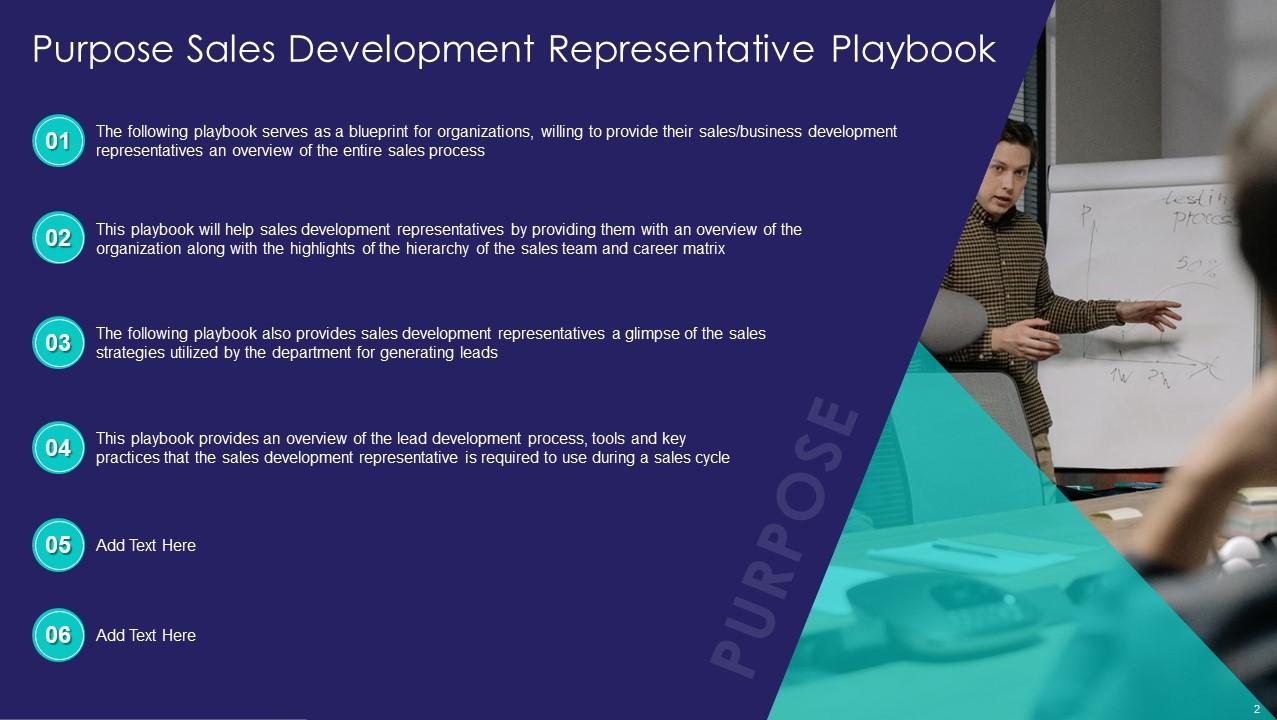
Diapositiva 2 : esta diapositiva muestra el propósito del libro de jugadas del representante de desarrollo de ventas.
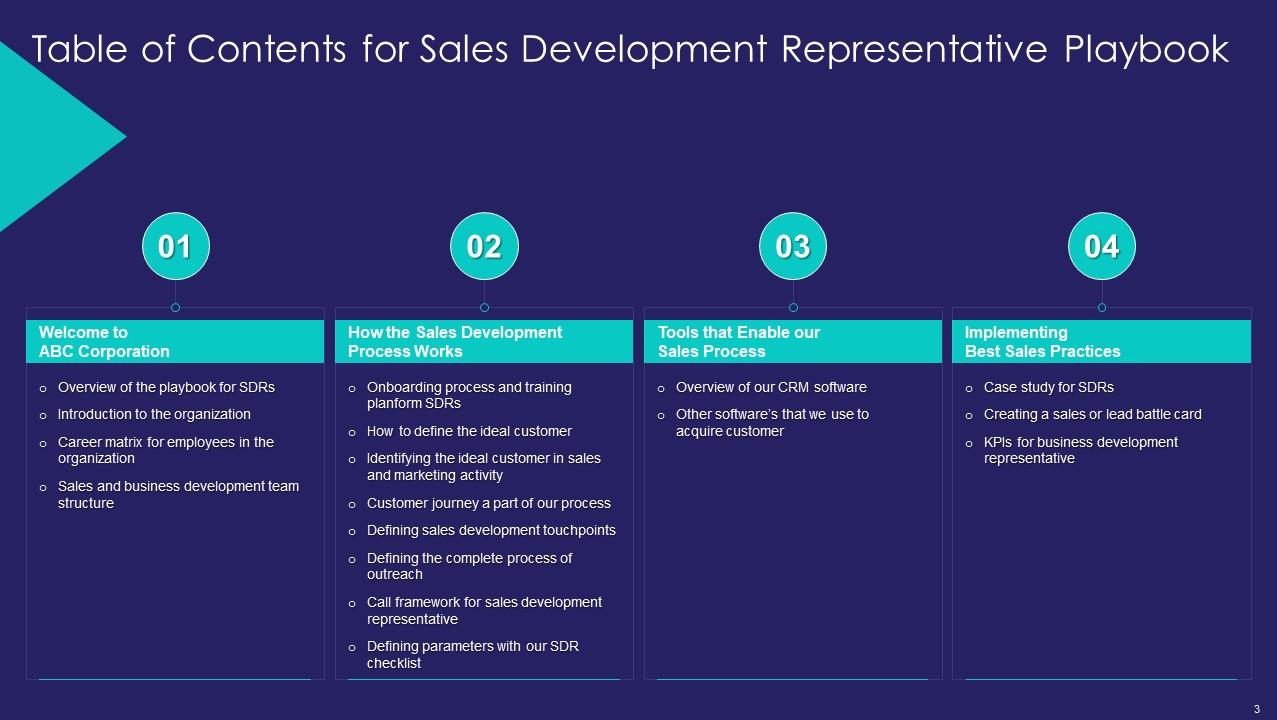
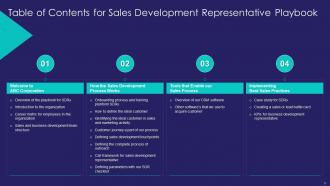
Diapositiva 3 : Esta diapositiva presenta la tabla de contenido de la presentación.
Diapositiva 4 : esta diapositiva resalta el título de los temas que se cubrirán a continuación en la plantilla.
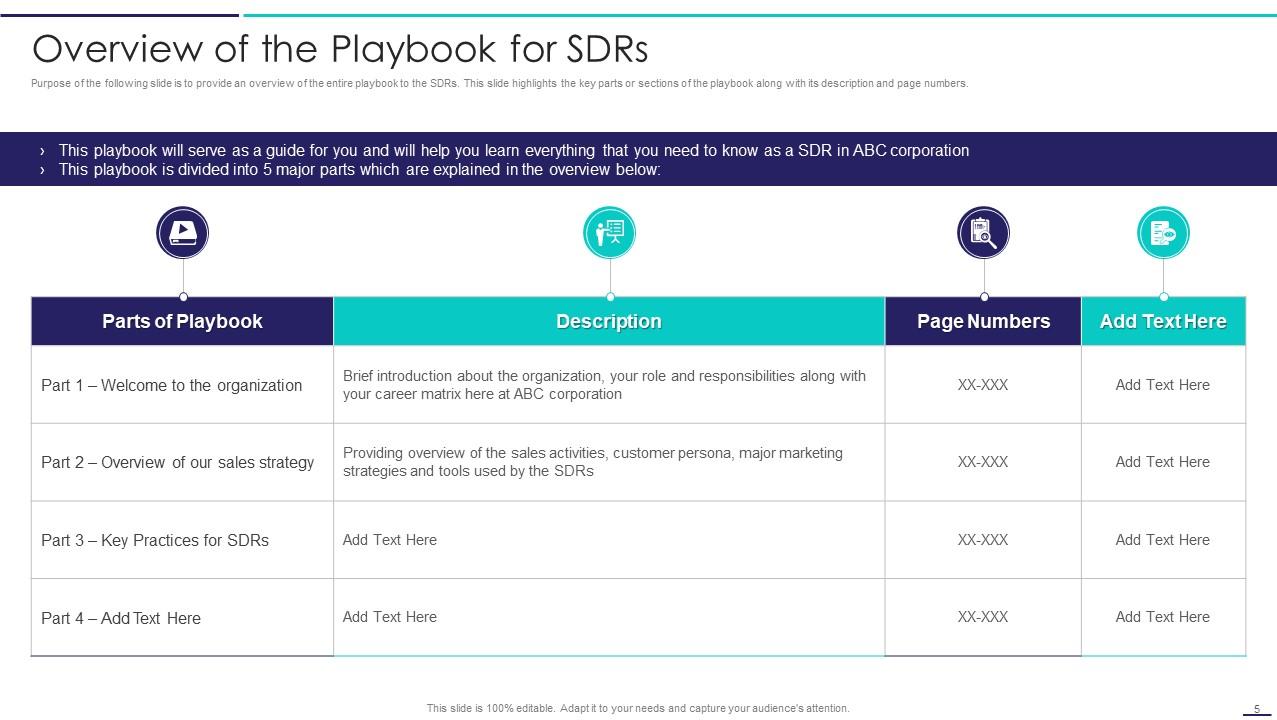
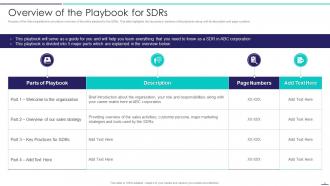
Diapositiva 5 : esta diapositiva muestra una descripción general de todo el libro de jugadas para los SDR.
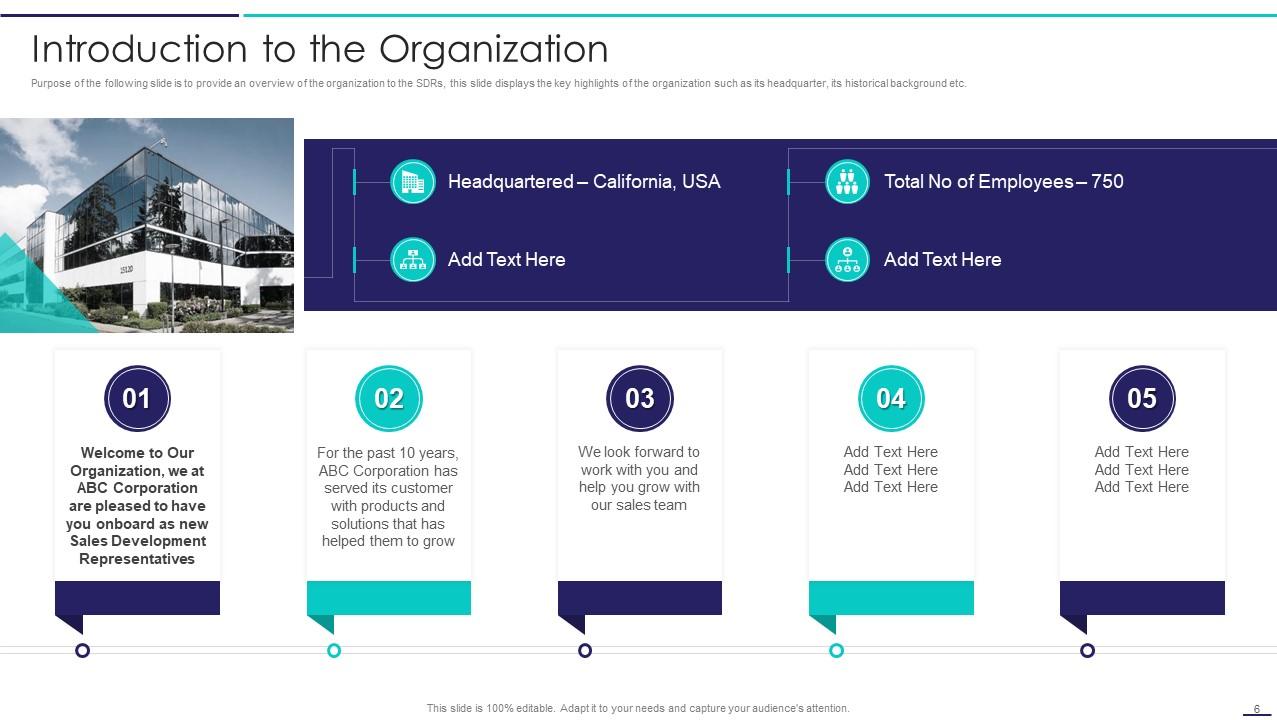
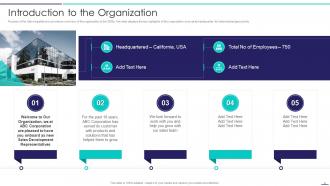
Diapositiva 6 : Esta diapositiva representa los aspectos más destacados de la organización, como su sede, sus antecedentes históricos, etc.
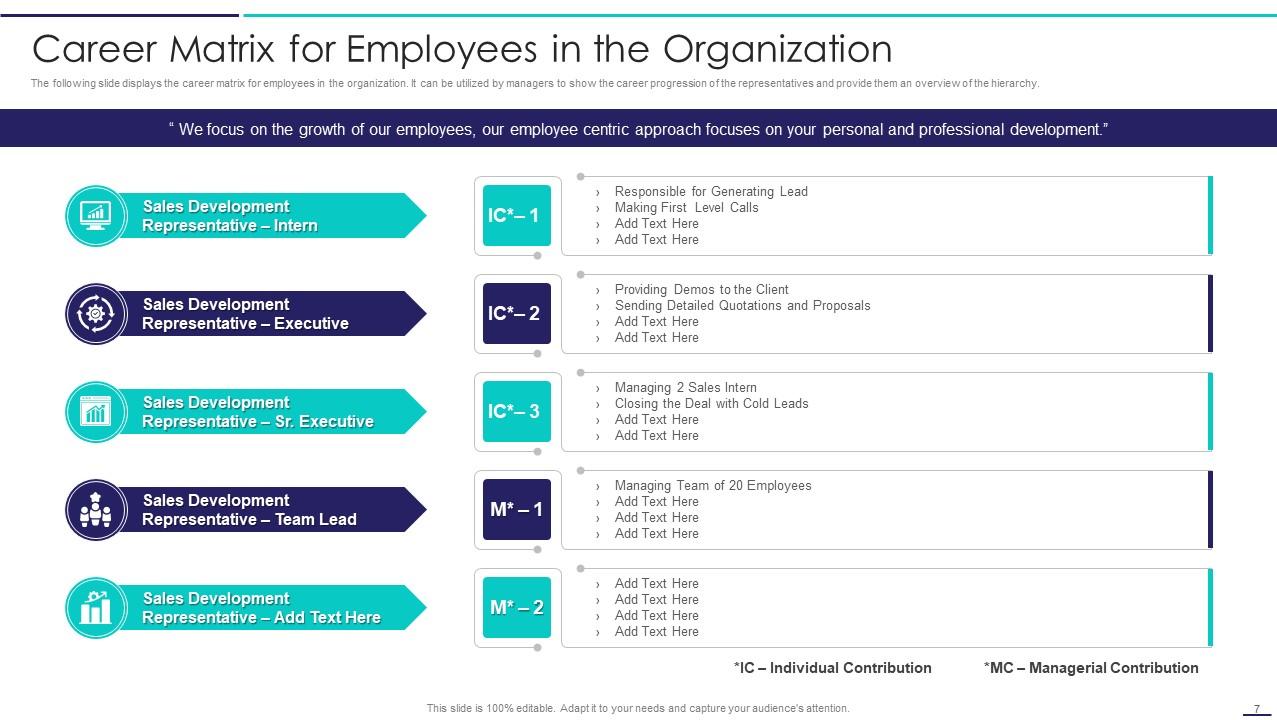
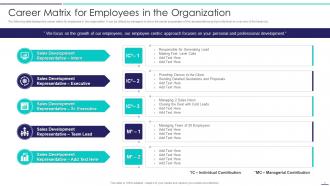
Diapositiva 7 : Esta diapositiva muestra la matriz de carrera para los empleados de la organización.
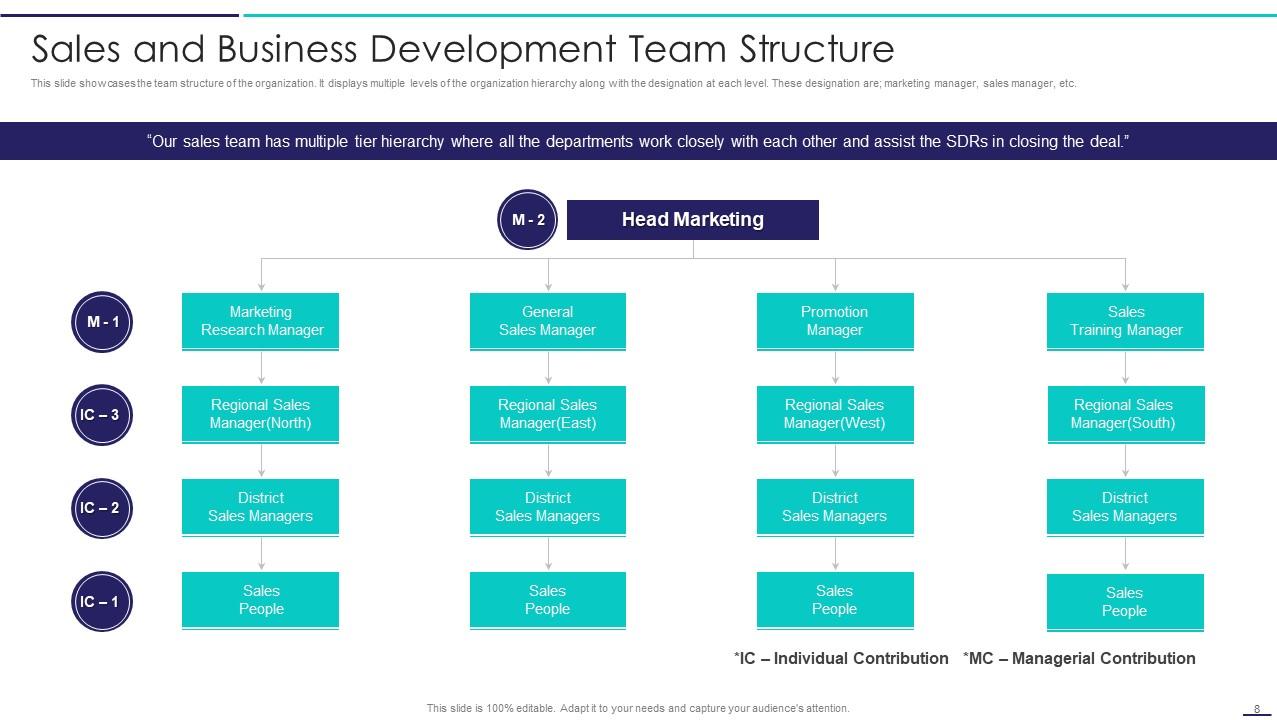
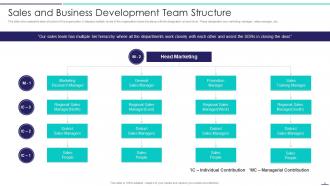
Diapositiva 8 : Esta diapositiva muestra la estructura del equipo de ventas y desarrollo comercial.
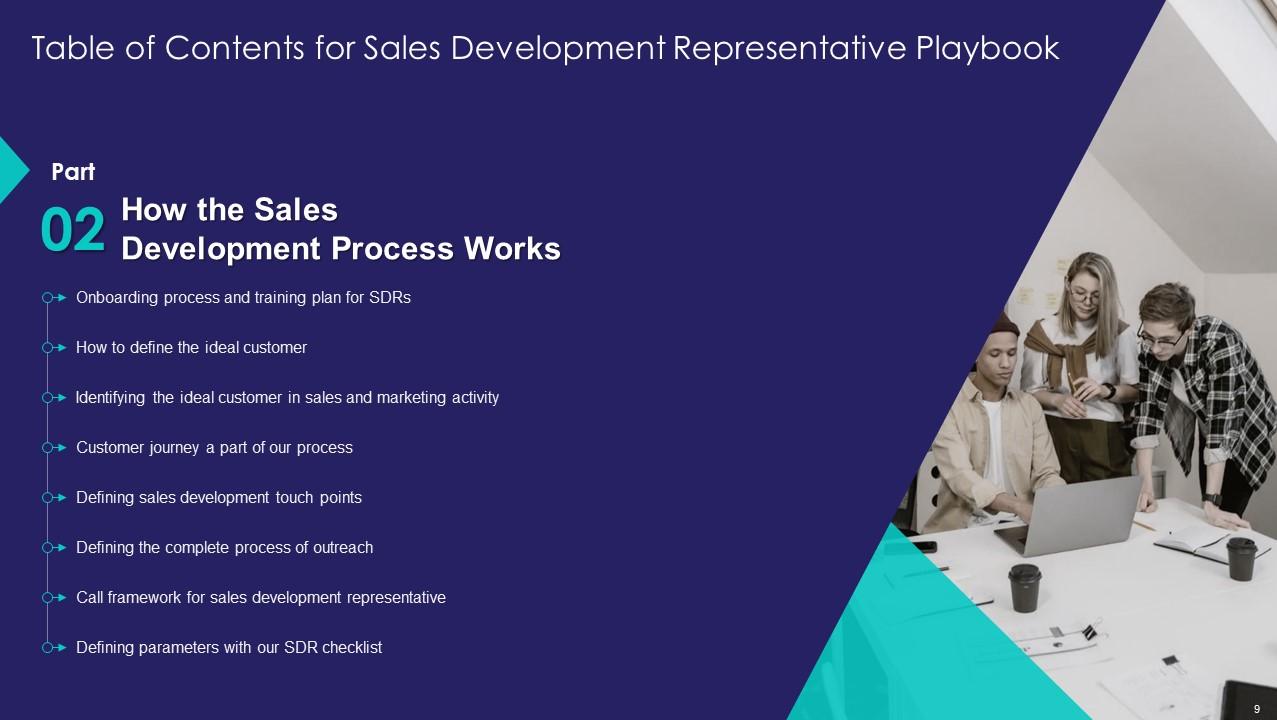
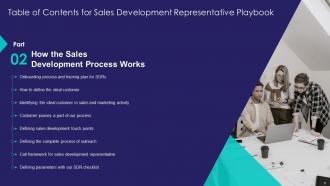
Diapositiva 9 : esta diapositiva resalta el título de los temas que se cubrirán a continuación en la plantilla.
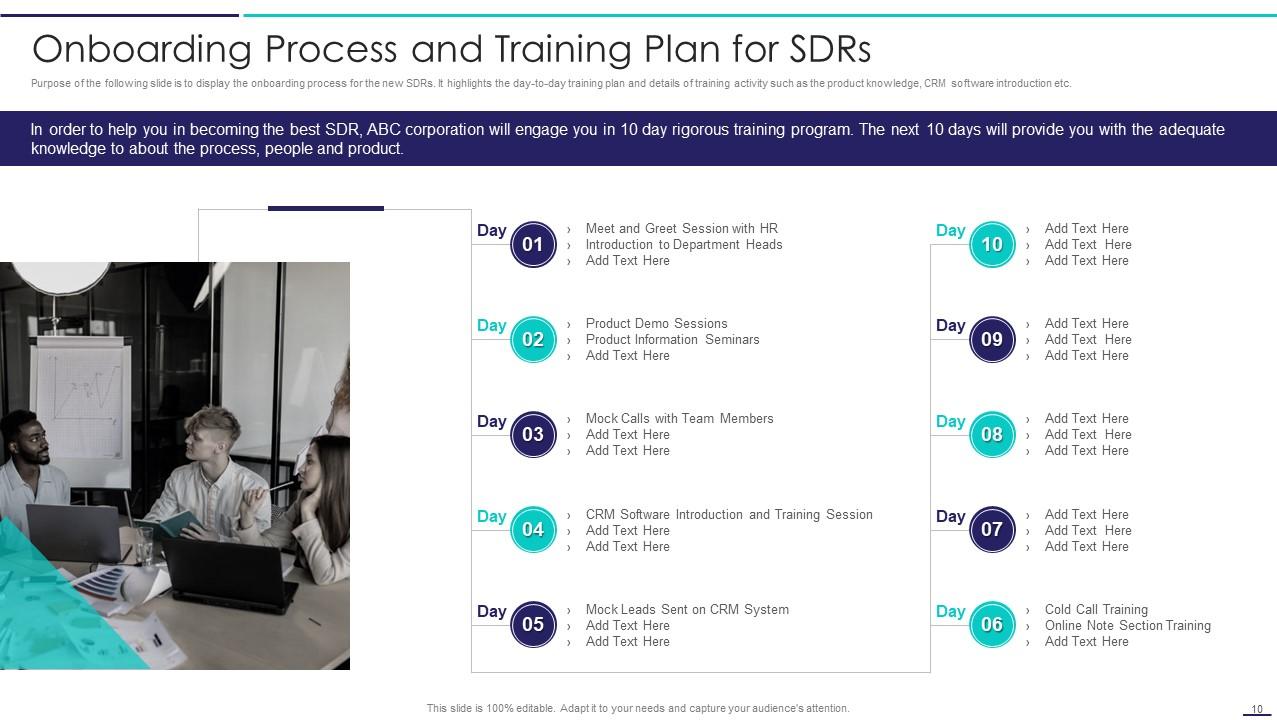
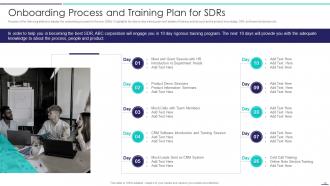
Diapositiva 10 : esta diapositiva presenta el proceso de incorporación y el plan de capacitación para los SDR.
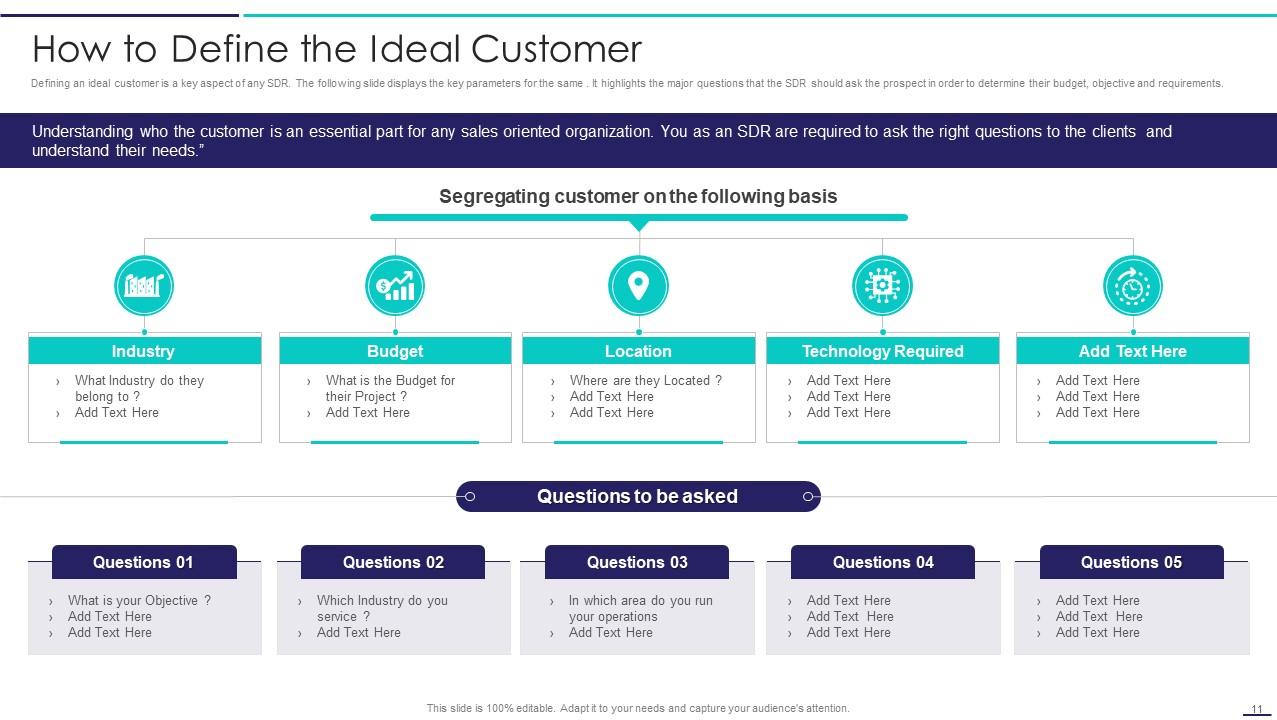
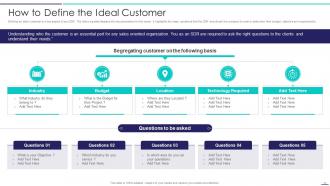
Diapositiva 11 : esta diapositiva muestra las principales preguntas que el SDR debe hacerle al cliente potencial para determinar su presupuesto, objetivo y requisitos.
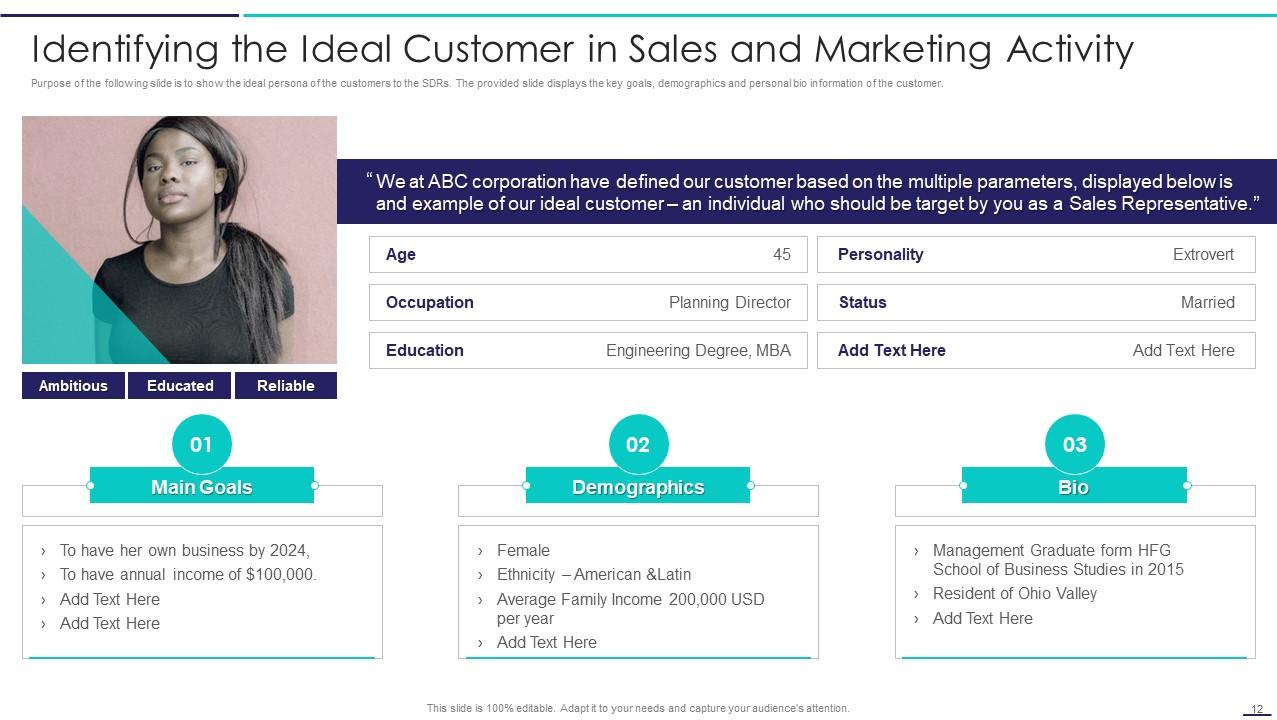
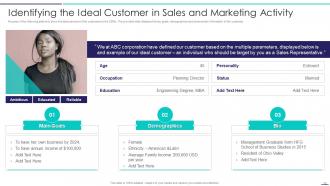
Diapositiva 12 : Esta diapositiva representa la identificación del cliente ideal en la actividad de ventas y marketing.
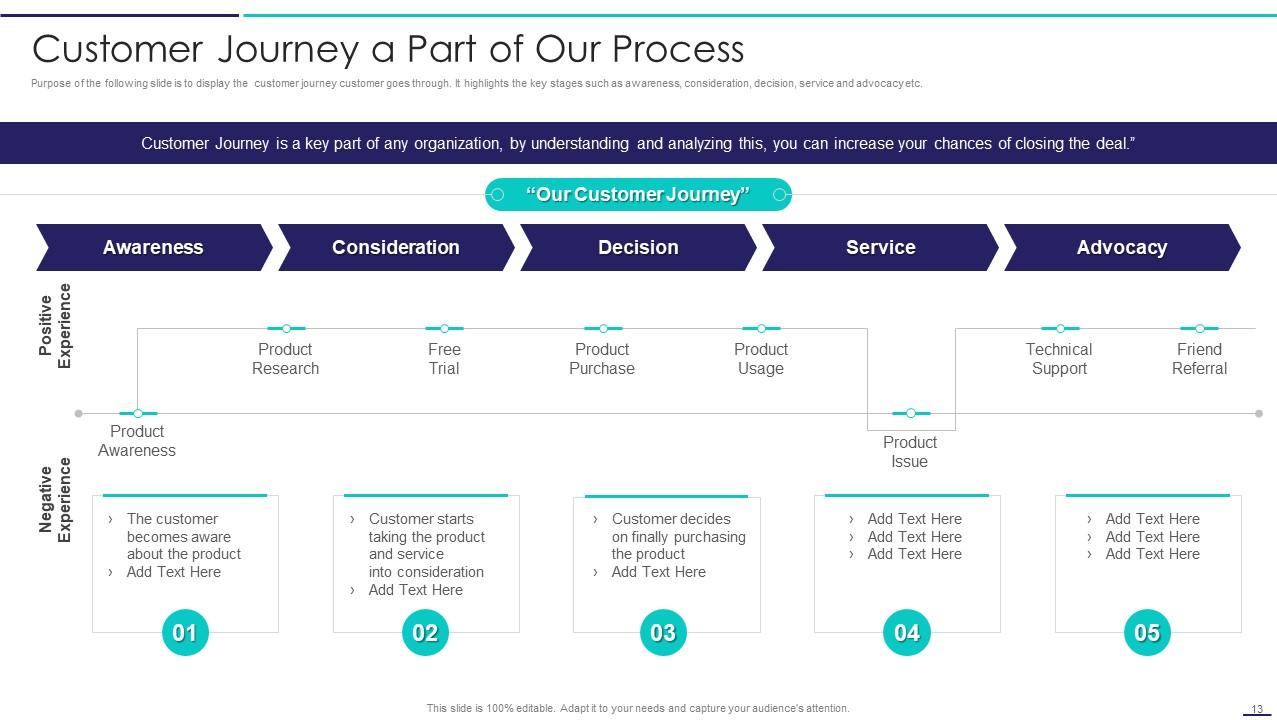
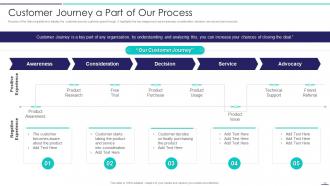
Diapositiva 13 : Esta diapositiva muestra el recorrido del cliente como parte de nuestro proceso.
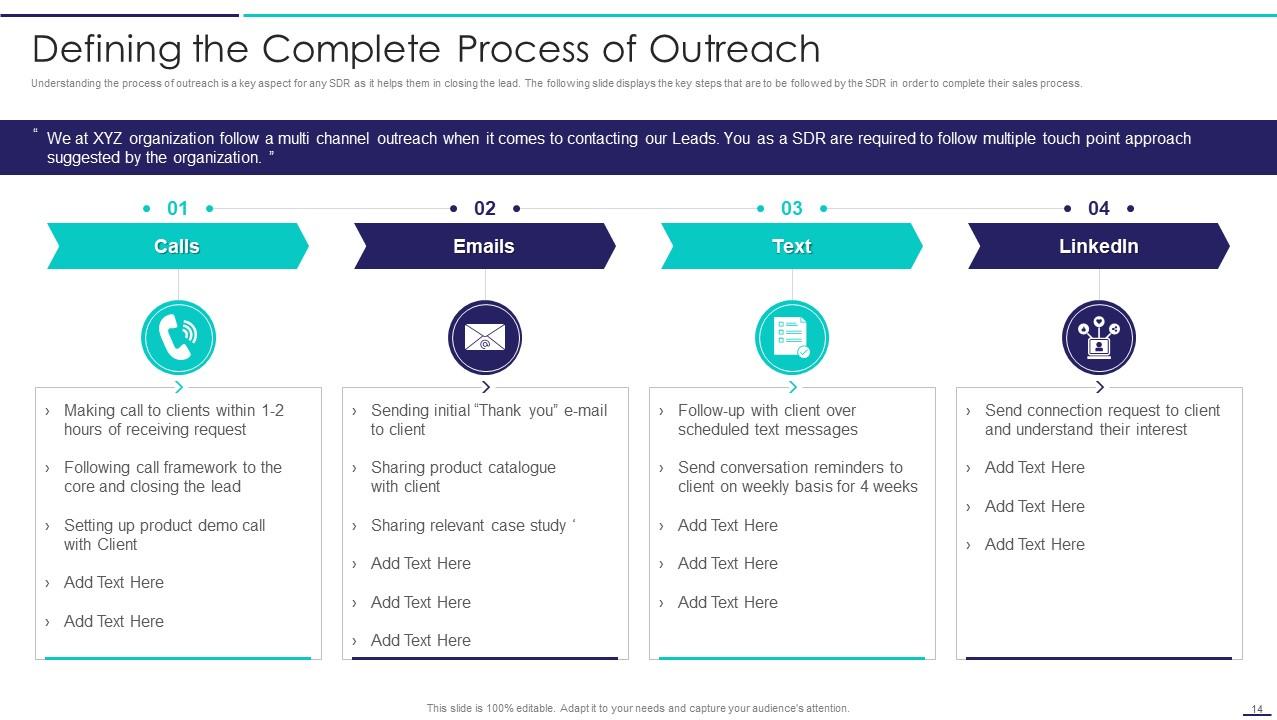
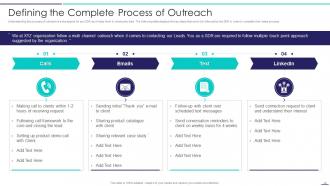
Diapositiva 14 : Esta diapositiva muestra la definición del proceso completo de divulgación.
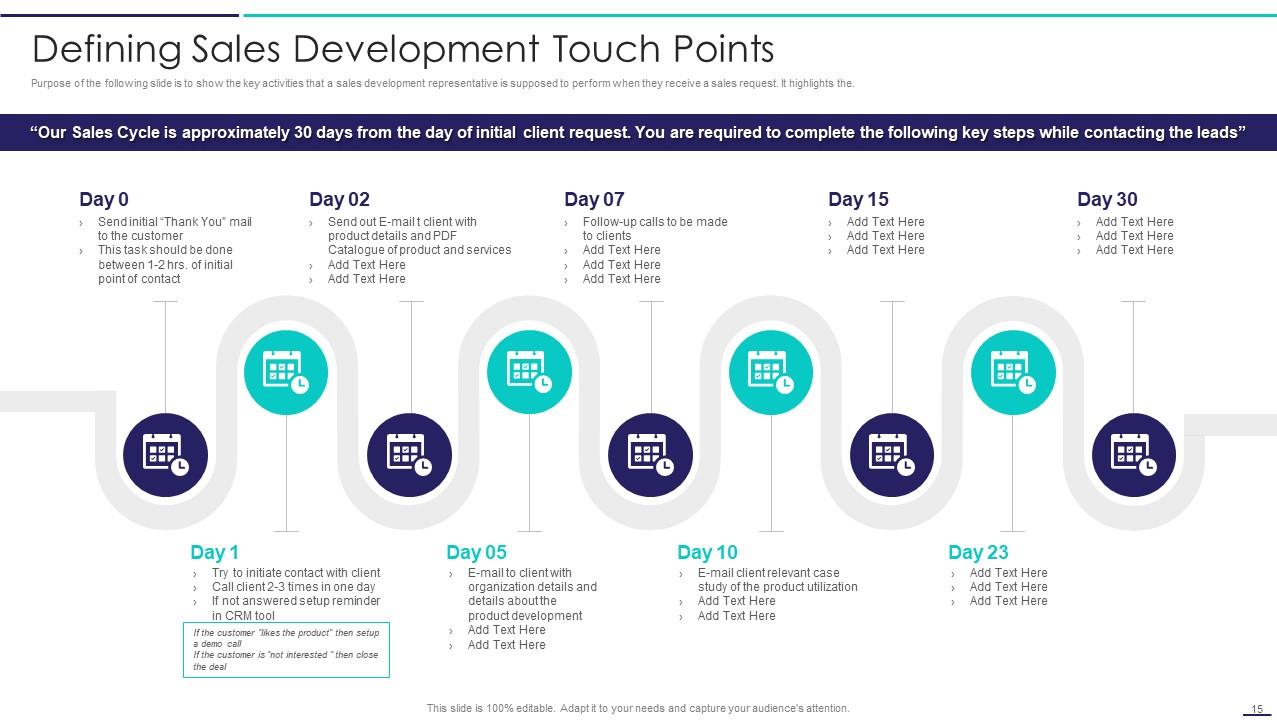
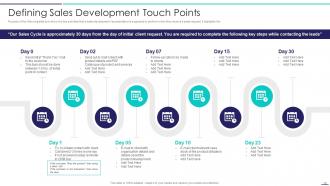
Diapositiva 15 : esta diapositiva presenta las actividades clave que se supone que debe realizar un representante de desarrollo de ventas cuando recibe una solicitud de ventas.
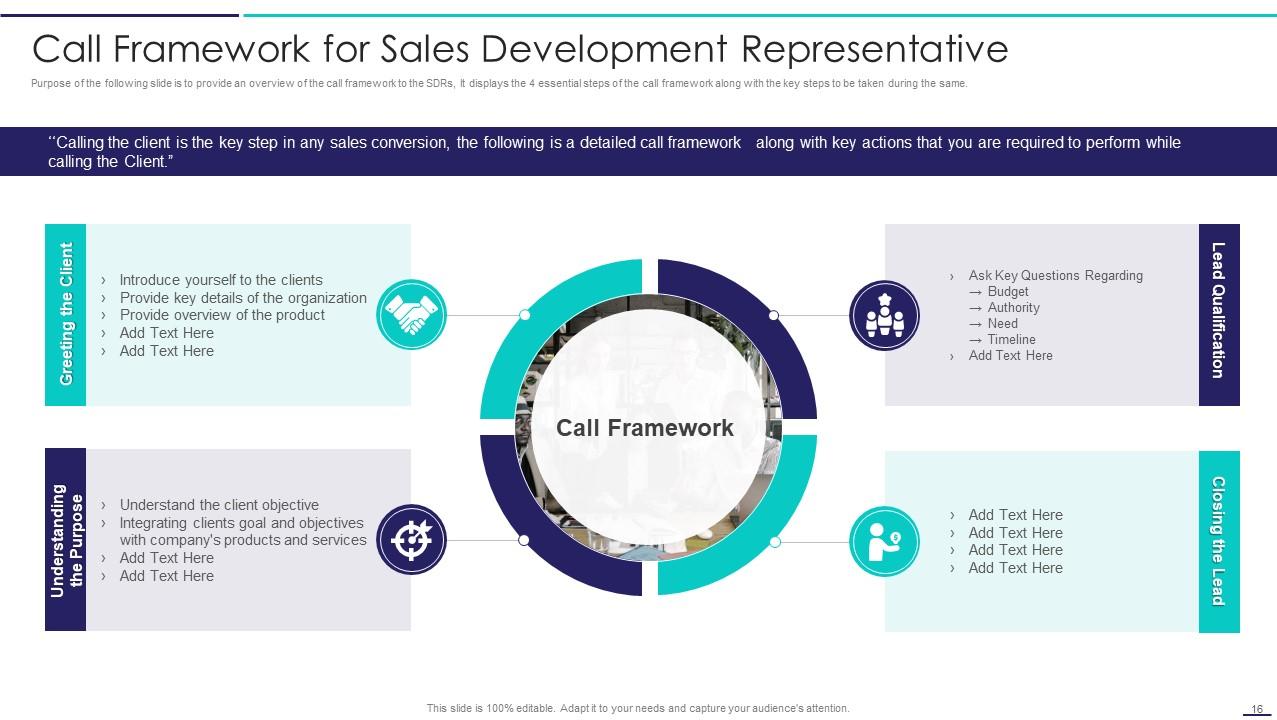
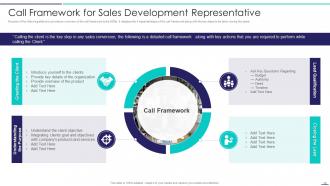
Diapositiva 16 : esta diapositiva muestra el marco de llamadas para el representante de desarrollo de ventas.
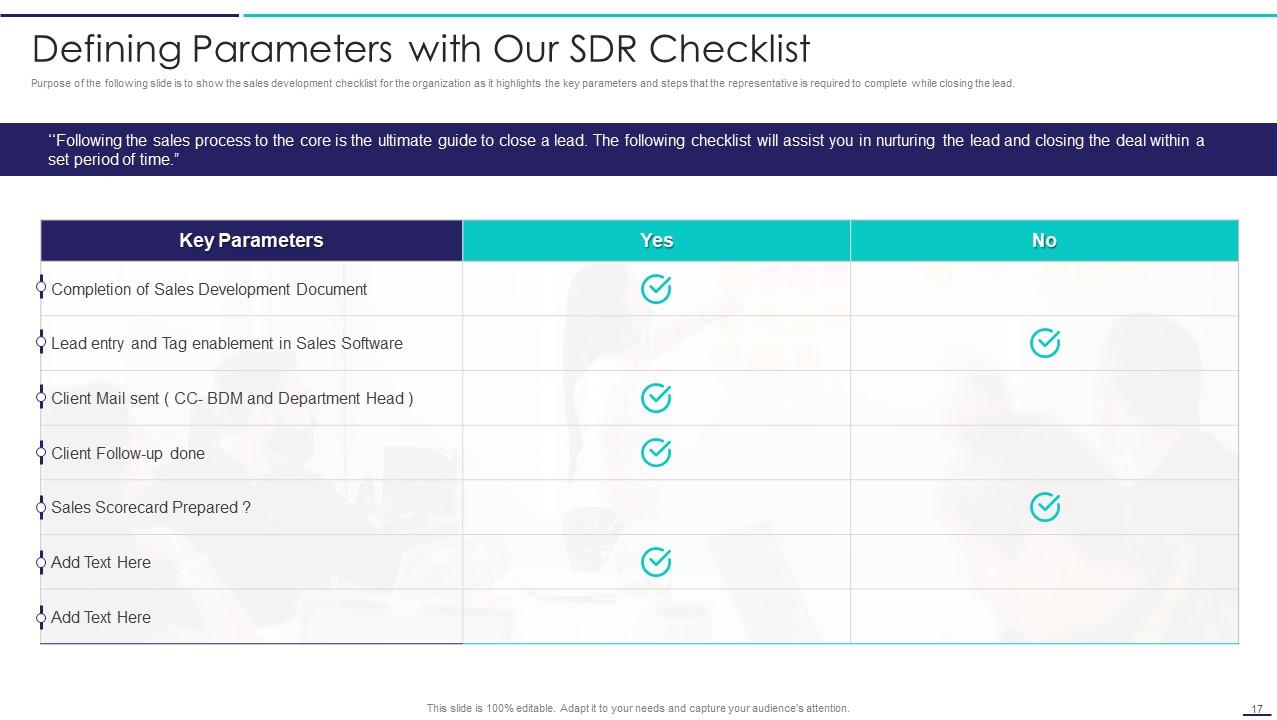
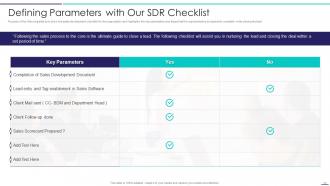
Diapositiva 17 : Esta diapositiva representa la definición de parámetros con nuestra lista de verificación SDR.
Diapositiva 18 : esta diapositiva destaca el título de los temas que se cubrirán a continuación en la plantilla.
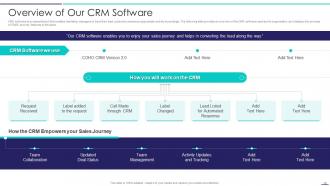
Diapositiva 19 : esta diapositiva muestra la descripción general de nuestro software CRM que permite a los gerentes de marketing realizar un seguimiento de su ciclo de oportunidades de venta.
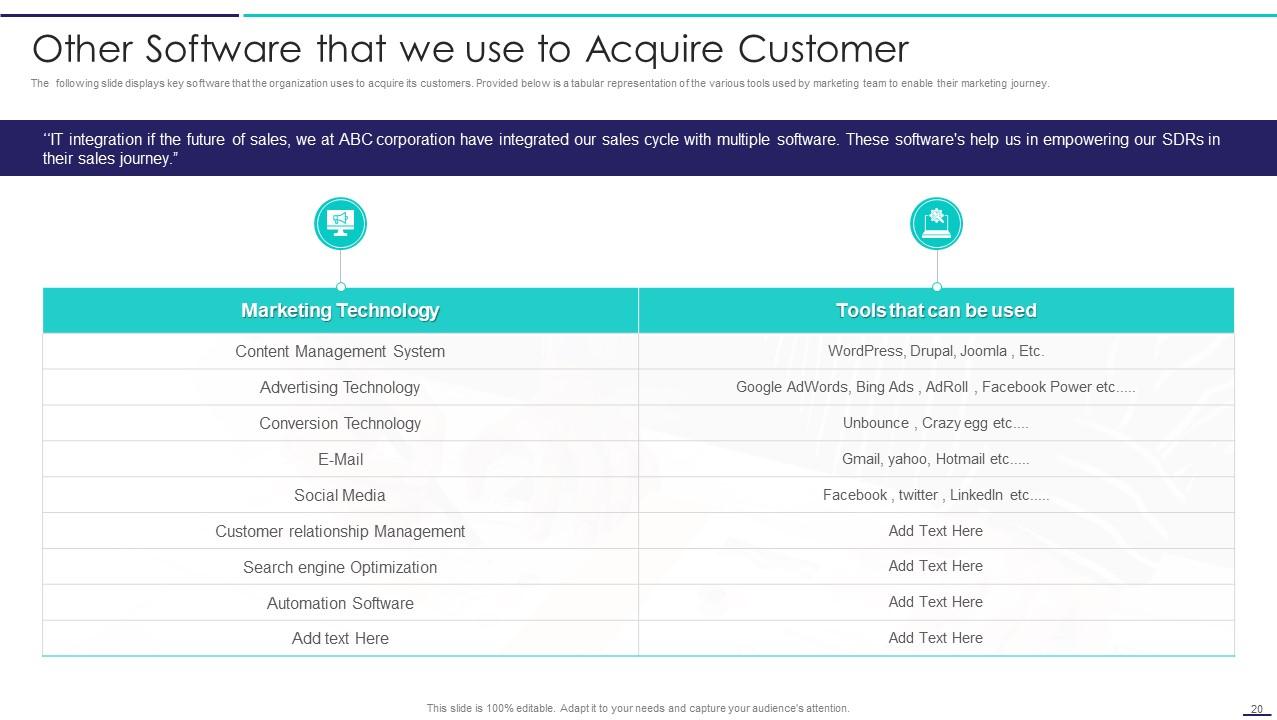
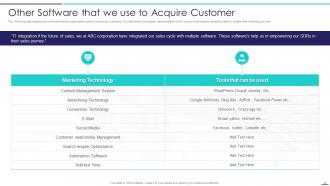
Diapositiva 20 : esta diapositiva muestra otro software que usamos para adquirir clientes.
Diapositiva 21 : esta diapositiva destaca el título de los temas que se cubrirán a continuación en la plantilla.
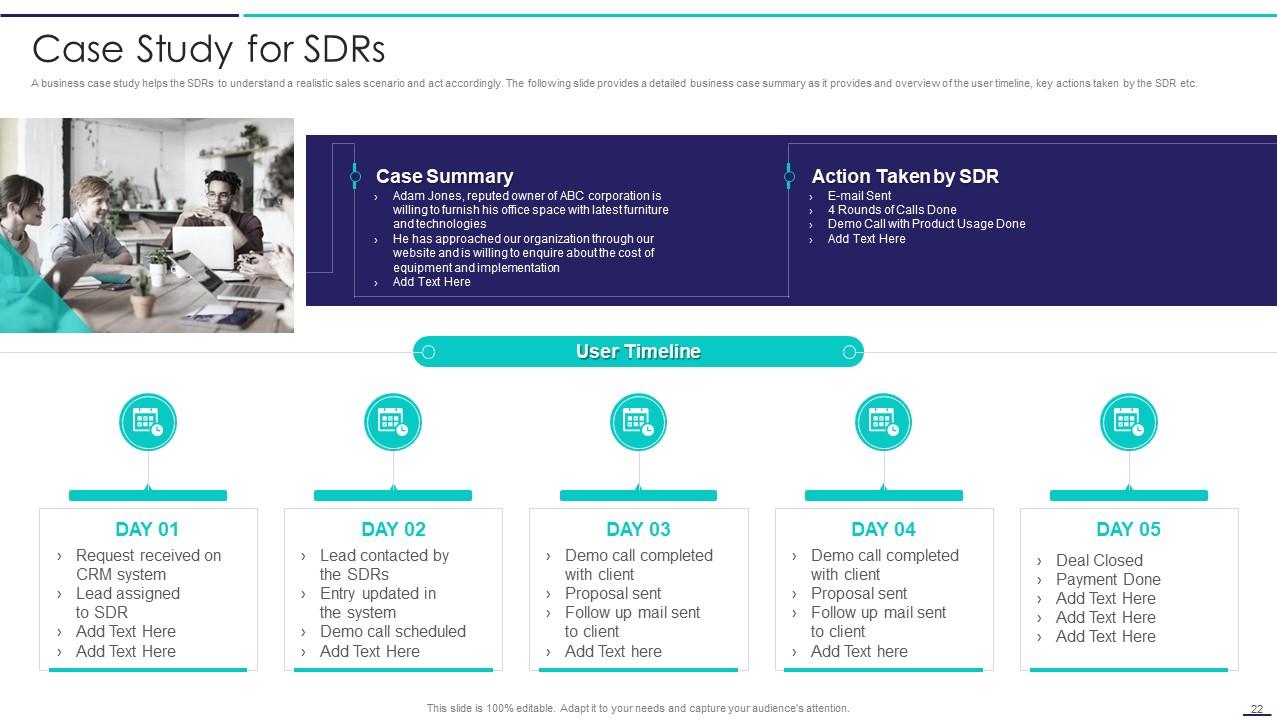
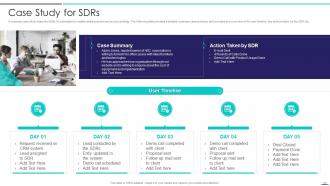
Diapositiva 22 : Esta diapositiva presenta un estudio de caso que ayuda a los SDR a comprender un escenario de ventas realista.
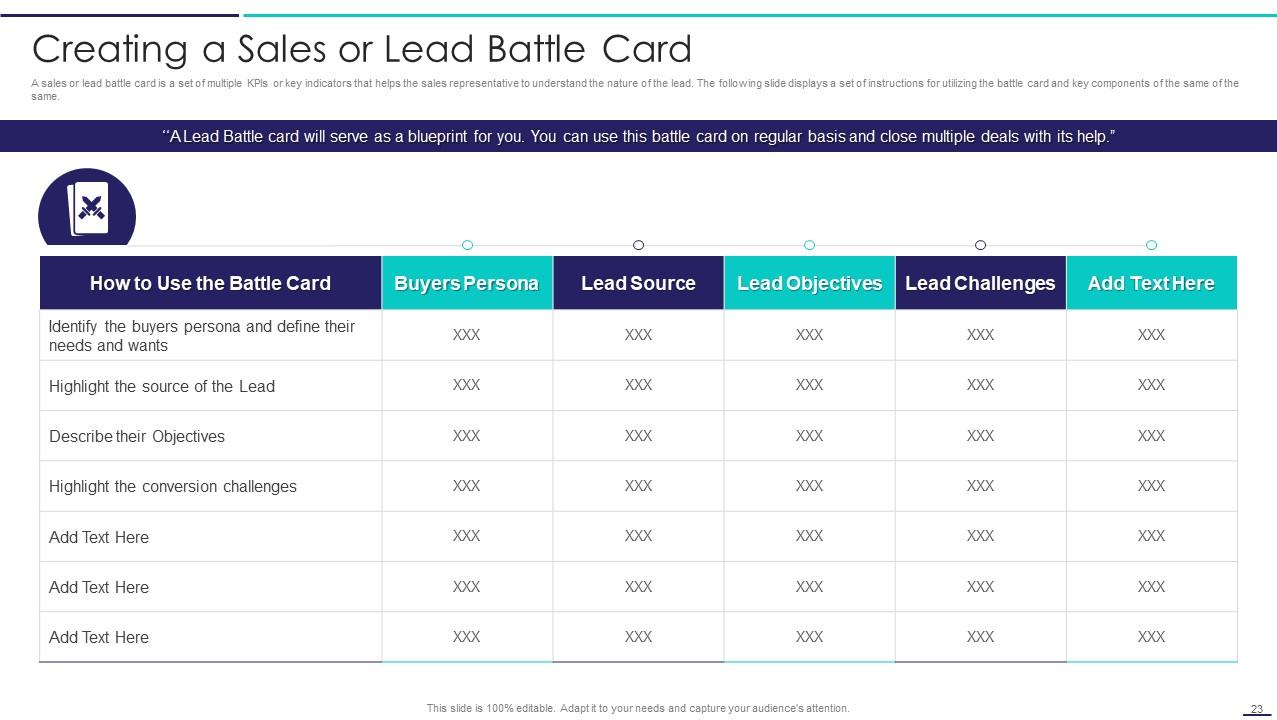
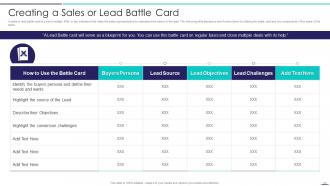
Diapositiva 23 : Esta diapositiva muestra la creación de una tarjeta de batalla de ventas o prospectos.
Diapositiva 24 : esta diapositiva destaca el título de los temas que se cubrirán a continuación en la plantilla.
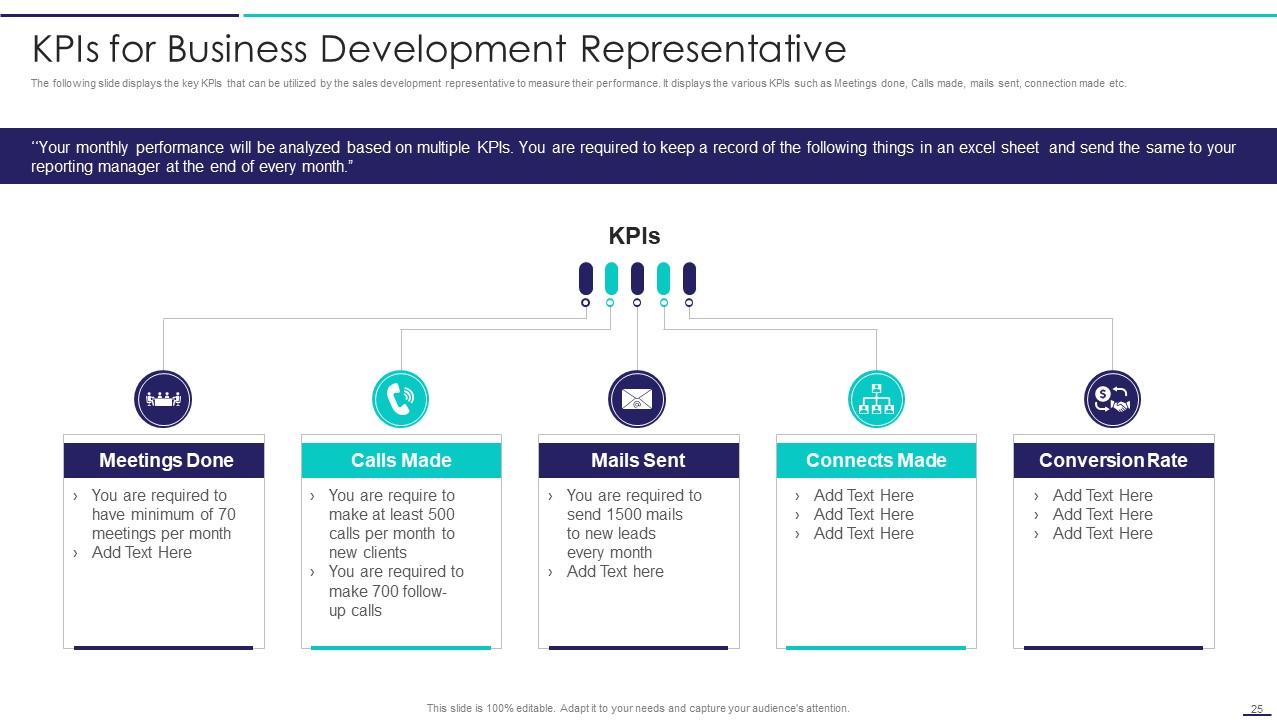
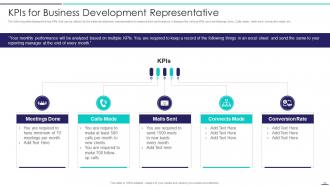
Diapositiva 25 : esta diapositiva representa los KPI para el representante de desarrollo comercial.
Diapositiva 26 : Esta diapositiva muestra Iconos para el libro de jugadas del representante de desarrollo de ventas.
Diapositiva 27 : esta diapositiva se titula Diapositivas adicionales para avanzar.
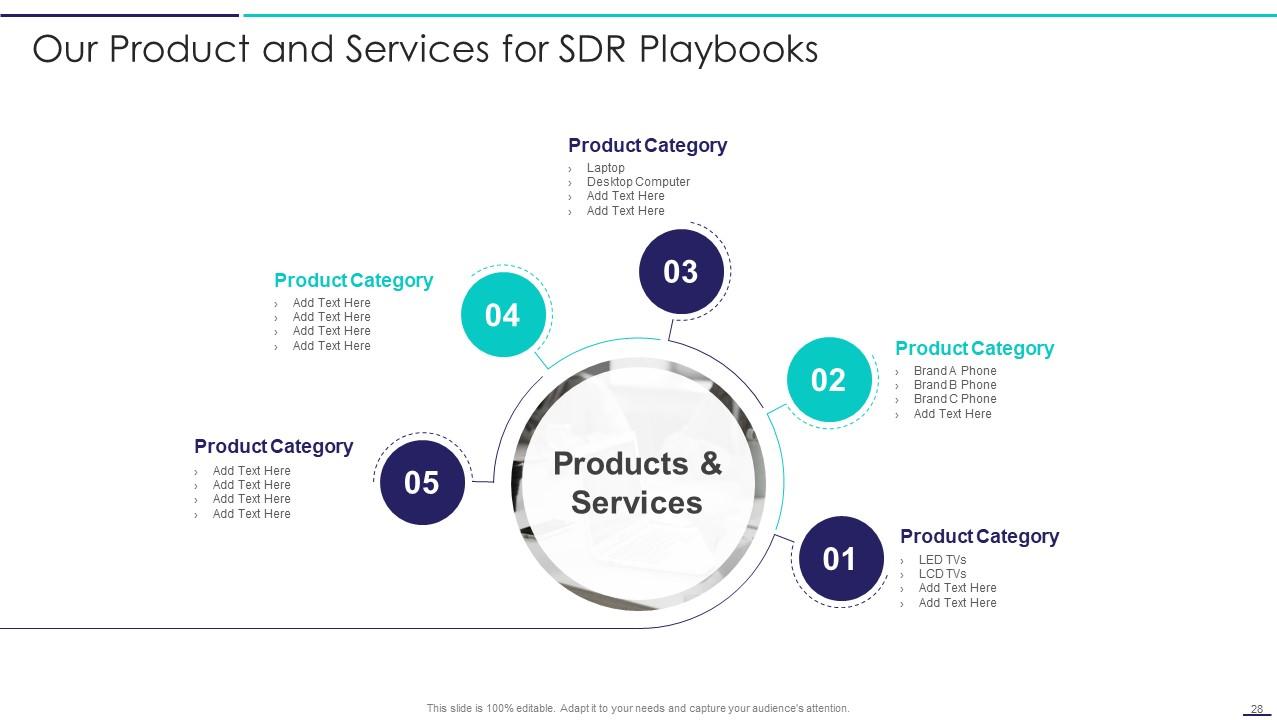
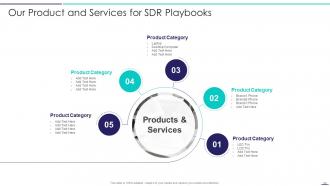
Diapositiva 28 : esta diapositiva muestra nuestros productos y servicios para SDR Playbooks.
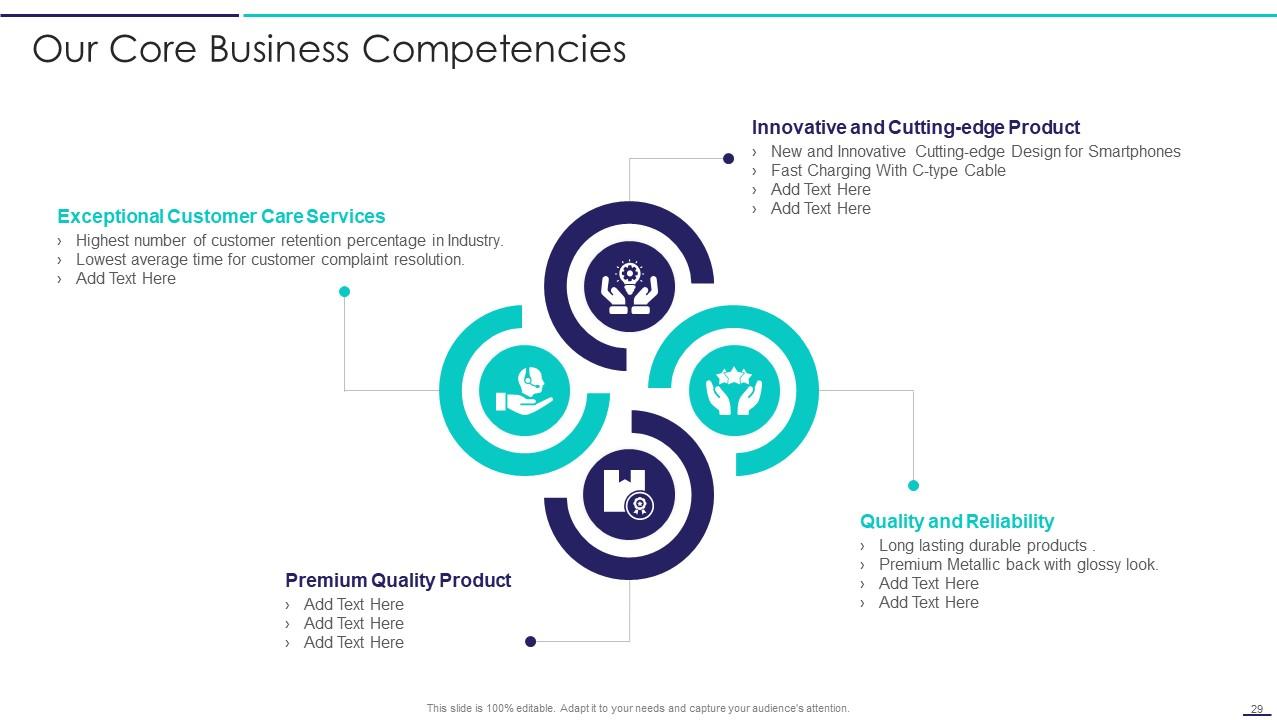
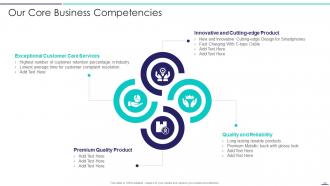
Diapositiva 29 : Esta diapositiva presenta nuestras competencias comerciales principales.
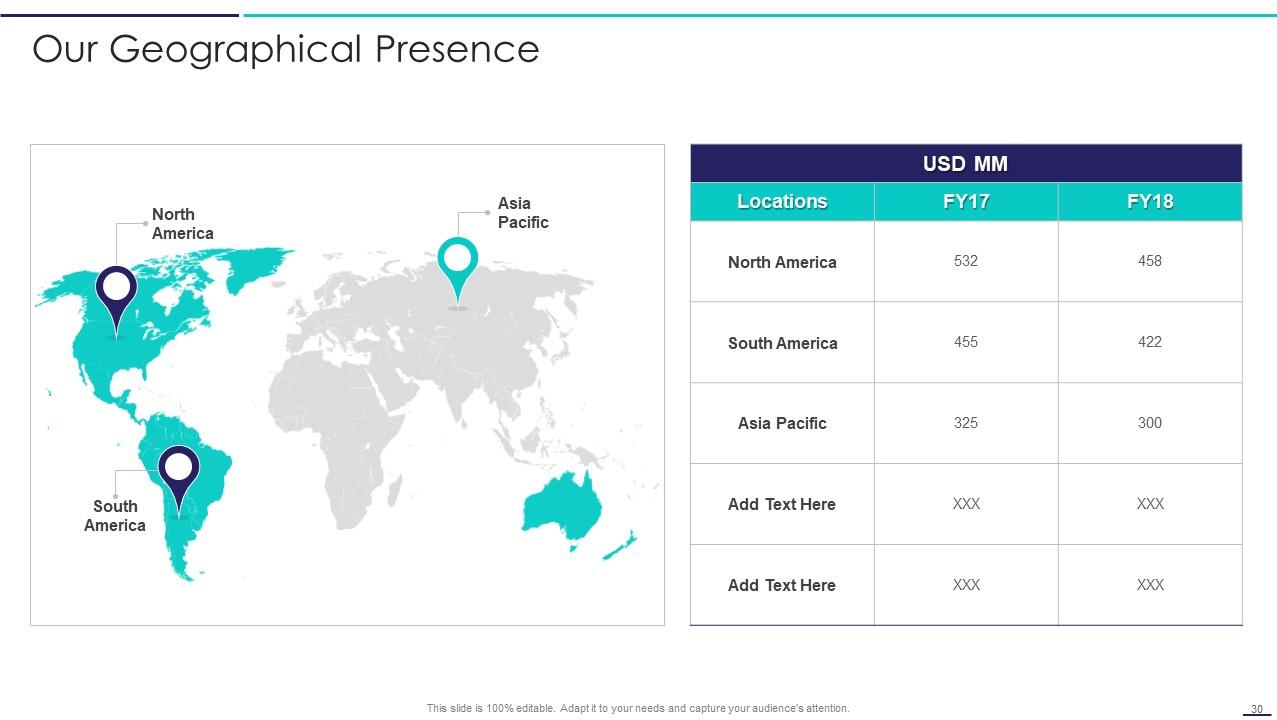
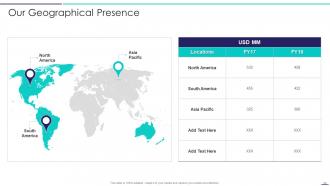
Diapositiva 30 : Esta diapositiva muestra Nuestra presencia geográfica.
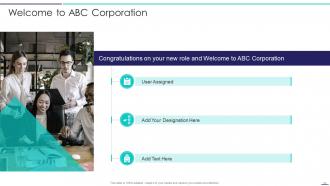
Diapositiva 31 : Esta diapositiva se titula Bienvenido a ABC Corporation.
Diapositiva 32 : Esta es la diapositiva Nuestro equipo con nombres y designación.
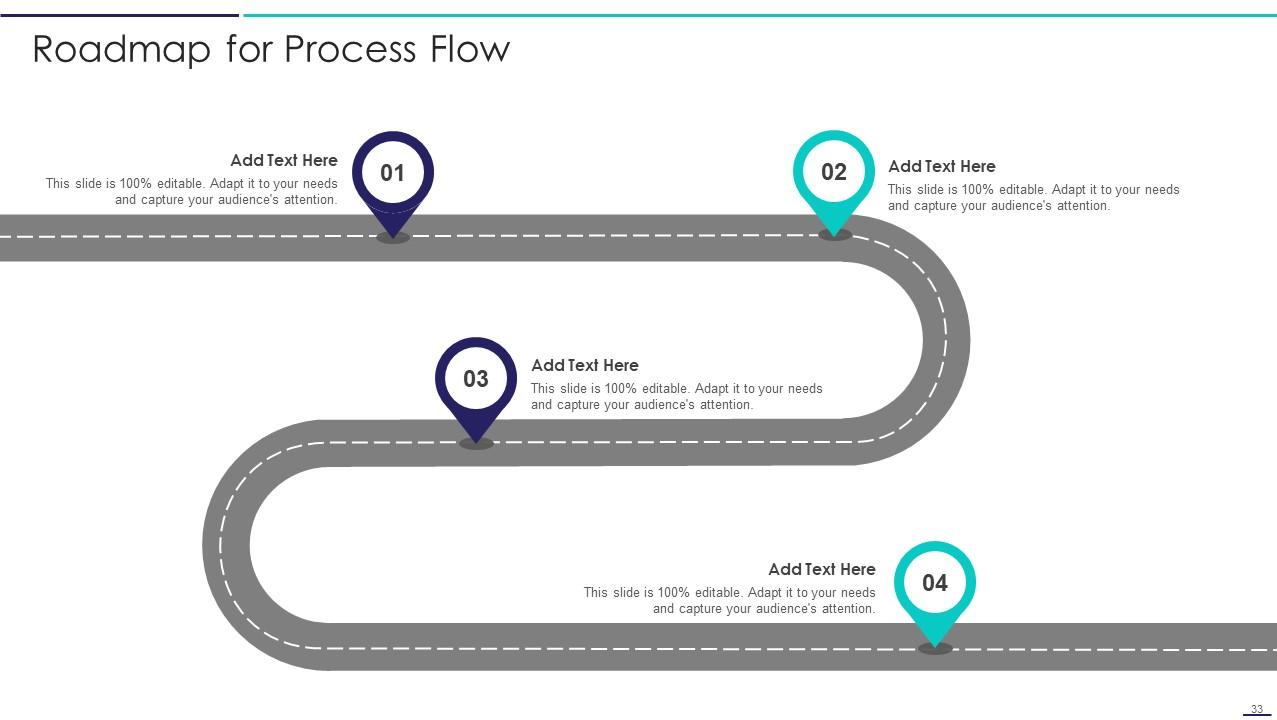
Diapositiva 33 : esta diapositiva muestra la hoja de ruta para el flujo de procesos.
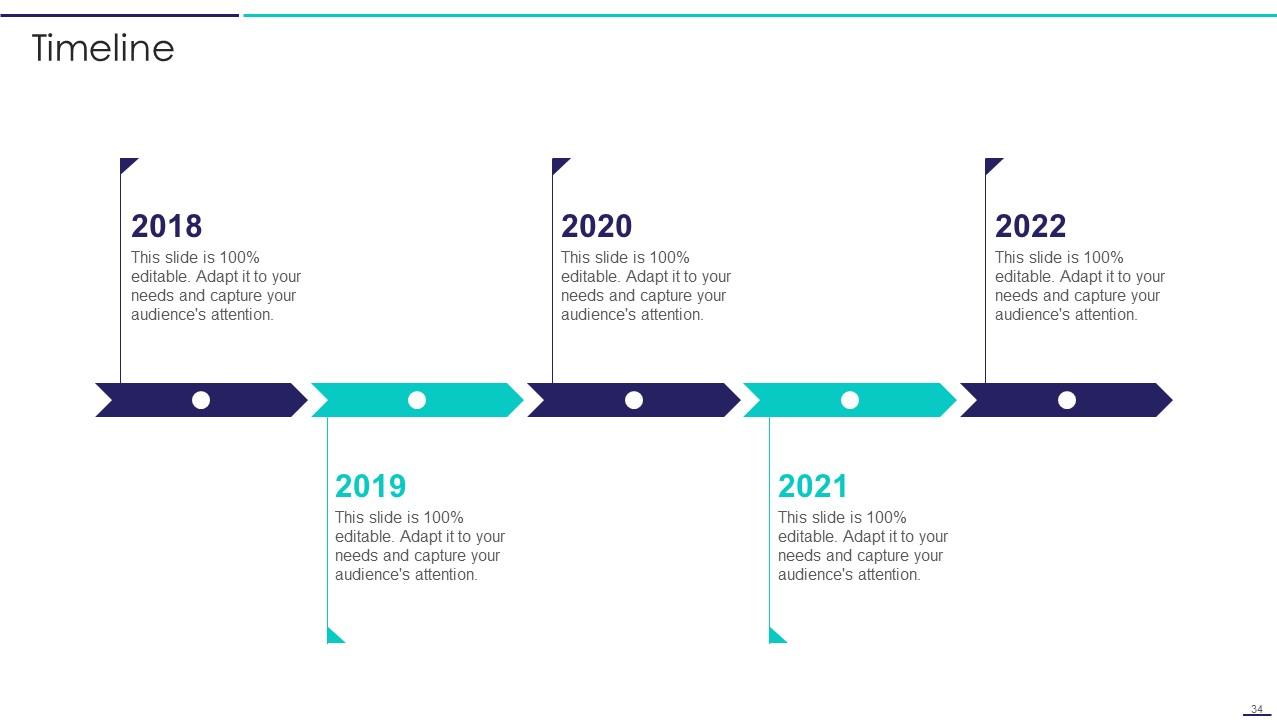
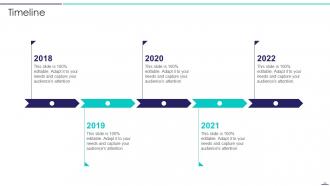
Diapositiva 34 : Esta es una diapositiva de la línea de tiempo. Mostrar datos relacionados con los intervalos de tiempo aquí.
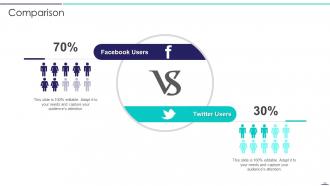
Diapositiva 35 : Esta es una diapositiva de comparación para establecer la comparación entre productos básicos, entidades, etc.
Diapositiva 36 : Esta diapositiva muestra Post-It Notes. Publique sus notas importantes aquí.
Diapositiva 37 : Esta diapositiva muestra el diagrama de Venn con cuadros de texto.
Diapositiva 38 : Esta es una diapositiva de agradecimiento con dirección, números de contacto y dirección de correo electrónico.
Representante de desarrollo de ventas Playbook Diapositivas de presentación de Powerpoint con las 43 diapositivas:
Utilice nuestras diapositivas de presentación de Powerpoint del libro de jugadas para representantes de desarrollo de ventas para ayudarlo a ahorrar su valioso tiempo de manera efectiva. Están listos para encajar en cualquier estructura de presentación.
FAQs for Sales Development Representative Playbook
So as an SDR, you're basically finding and qualifying leads for your sales team. Most of your day is cold calling, emailing prospects, and following up on inbound stuff. Research takes up way more time than you'd think too. You're not actually closing deals - which is honestly a relief because that's a lot of pressure. Instead, you figure out who has budget, decision-making power, and actually needs what you're selling. Getting good at asking the right qualifying questions upfront will save you from chasing people who were never gonna buy anyway. You're like the bridge between marketing interest and actual sales.
Honestly, lead qualification comes down to asking smart questions and actually listening to the answers. I used to way overthink this when I was starting out - classic mistake. Focus on their pain points, budget, who makes decisions, and timeline. Basically BANT but without sounding like a robot about it. The real trick? Figure out if they're just window shopping or if they've got a legit problem that's actually costing them. Don't do all the talking. And here's something I learned the hard way - always end with clear next steps. If someone won't even commit to a quick 15-minute follow-up call, they're probably not serious anyway.
Dude, log everything in your CRM right after it happens - don't wait until end of day when you've forgotten half the stuff. I made this mistake once and completely lost track of a really promising lead because my notes were trash. Use the same naming format for all your accounts, and actually update lead status after every call or meeting. Set those automated follow-up reminders too (seriously, use them). Oh and review your pipeline weekly - you'll start seeing patterns in what's actually working vs what isn't. Trust me, you'll be so grateful when you can find that random conversation from weeks ago instead of panicking about what you discussed.
Focus on call volume, email open rates, meetings booked, and pipeline generated. Conversion rates are huge too - track how many calls become qualified convos and how many turn into actual meetings. Activity metrics? Sure, but they're pretty useless if nothing's converting. What really matters is figuring out which activities and messaging actually work with your prospects. Honestly, I'd start with just 3-4 metrics so you don't go crazy trying to track everything. Review weekly and you'll start seeing patterns that help you tweak your approach.
Honestly, you've gotta dig into what each type of person actually cares about first. Like, a CEO just wants to hear ROI and strategic stuff in maybe 2 sentences max. But your actual users? They want to know how this helps their daily grind and don't mind longer explanations. I used to send identical messages to everyone - such a waste. Switch up your channels too: hit executives on LinkedIn, email the managers, maybe even call technical buyers since half of them ignore written stuff anyway. Build 3-4 templates per type of person, then customize based on what you know about their company. Start with your top 2-3 personas and figure out what makes them tick.
Dude, social media is clutch for prospecting. I spend like 30% of my research time scrolling through prospects' profiles before I even think about calling them. LinkedIn's the obvious choice, but honestly Twitter's goldmine for tech people - they're always sharing hot takes about their industry. Check out what they're posting about recent job moves, company news, whatever. Then when you reach out, mention something specific they shared instead of sending the same boring template to everyone. Makes such a difference. Way better than cold calling blind, you know?
Honestly, the biggest game-changer is doing like 2-3 minutes of research before you call. Check their LinkedIn, company news, whatever - so you can actually open with something that matters to them. Don't sound like a robot reading a script because people can smell that BS immediately. Ask if it's cool to chat for a few minutes early on. When they object (and they will), acknowledge it first, then pivot. Oh, and here's what most people mess up - you're not trying to close anything on that first call. Just book the next conversation with a specific time. Way less pressure for everyone.
Actually listen to what they're saying instead of just waiting for your turn to speak. Start by acknowledging their concern - like "I hear you're worried about budget" - then ask follow-up questions to get to the real issue. Here's the thing: most objections aren't actual rejections, they're just asking for more info or reassurance. When someone says "we don't have time," they usually mean they don't see the value yet. So dig deeper with stuff like "what would need to change for this to become a priority?" Then hit their specific concern with examples that actually matter to them.
Honestly, start with a solid CRM like Salesforce or HubSpot - keeps all your leads organized. Email automation is huge too, something like Outreach will save your sanity with follow-ups. LinkedIn Sales Navigator is basically mandatory for prospecting, I don't know how people do this job without it. Gong's great for call recording if you want to actually improve your pitch. Oh and get Calendly or something similar - cuts down on all that "what time works for you" back-and-forth nonsense. Just don't go crazy adding everything at once though, you'll end up more confused than productive.
Definitely follow up within 24-48 hours - you want to stay fresh in their mind. Reference something specific from your chat, like that project or problem they brought up. Generic "checking in" emails are the worst, honestly. Nobody wants those sitting in their inbox. After that, space things out about a week apart. Always bring something useful to the table - maybe an article they'd find interesting or connect them with someone who could help. Oh, and if you don't hear back after 3-4 attempts? Time to put them in your longer nurture sequence and focus on people who are actually engaging.
Ditch those pointless "checking in" emails - nobody cares. Instead, send stuff that actually helps solve their problems. Industry insights, case studies, useful tools. I'm talking 6-8 solid touches over 2-3 months, mixing emails with LinkedIn activity and maybe throw in a quick video. Honestly, timing matters way more than people think. Hit them when they're already thinking about their challenges. Watch for signals like email opens or website visits to see if they're interested. Oh, and build your sequences around their buying process, not when YOU need to hit quota. That's backwards thinking.
Honestly, stop just throwing leads over the fence and hoping for the best. Give your AEs the full story - what's bugging the prospect, their timeline, who makes decisions, everything you talked about. I do quick weekly check-ins with mine to talk strategy and upcoming deals. Also? Stay in touch after the handoff since you'll probably still be involved anyway. The SDRs crushing it at my company have shared Slack channels with their AEs and actually work together on messaging. Makes a huge difference. Help them win and they'll return the favor.
Get solid on product knowledge and your ideal customer profile first. Role-playing feels super cringey but honestly it's the best prep you'll do. Learn whatever sales framework your team uses - BANT, MEDDIC, whatever. Master your CRM and tech stack early or you'll hate yourself later. Shadow the top reps right away and record everything for review. Don't blow off the soft skills training either. Active listening and email workshops actually matter way more than you'd think. Oh, and nail down those objection handling scripts - you'll need them.
Honestly, just tackle your best leads when you've got the most energy - that's usually morning for me. Block out chunks of time for specific stuff like calls, follow-ups, admin crap. Otherwise you'll bounce around all day and get nothing done (been there). The 80/20 thing is real - most of your time should go toward actually closing deals, not busy work. Track your numbers daily so you're not just guessing what works. Each morning, I'd look at my pipeline and pick three must-dos for the day. Sounds super basic but it actually keeps you focused instead of just winging it and feeling scattered by 3pm.
Honestly, most people just blast the same boring template to everyone and wonder why nobody responds. Do like 2-3 minutes of research first - check their LinkedIn, company news, whatever. Makes a huge difference. Your follow-up timing matters too. Wait 3-5 business days between messages and actually reference what you said before. Oh, and stop talking about your product features - nobody cares. Talk about their problems instead. I'd definitely start tracking open rates by message type. You'll figure out what actually works pretty fast, and it's kind of addictive once you see the patterns.
-
Their templates are super easy to edit and use even for the one like me who is not familiar with PowerPoint. Great customer support.
-
This PowerPoint layout is very helpful from a business point of view, and it's visually stunning too! I'm so happy with this product because it has helped me understand and deliver great presentations.