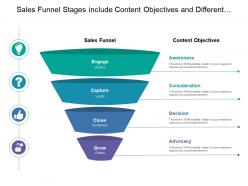
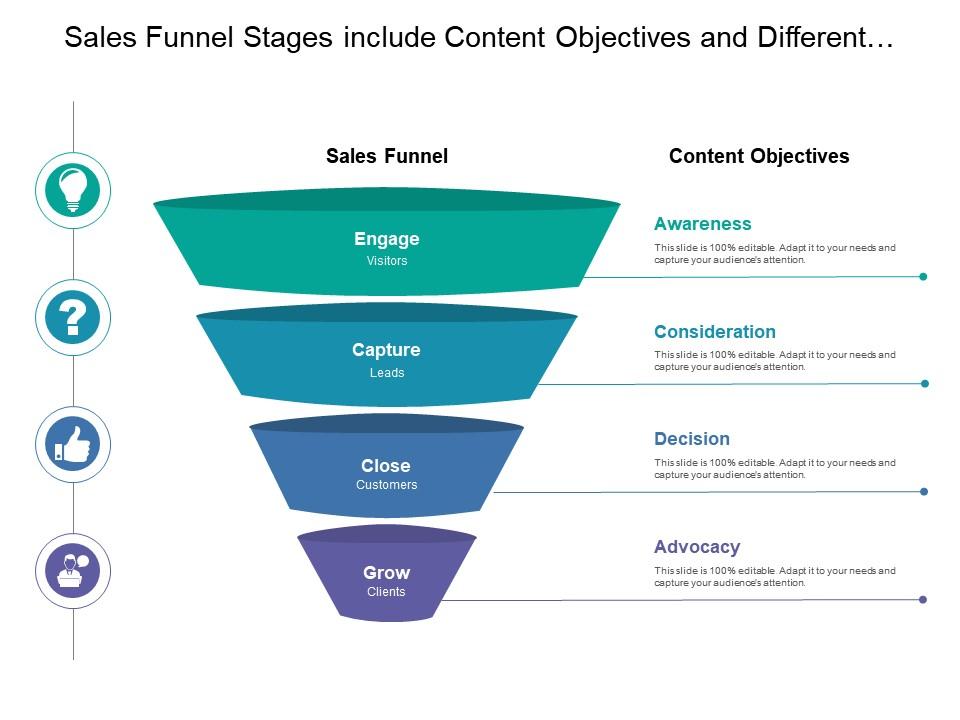
Las etapas del embudo de ventas incluyen objetivos de contenido y diferentes pasos del proceso
Try Before you Buy Download Free Sample Product
Audience
Editable
of Time
Marque su curso de acción futuro con nuestro embudo de ventas. Las etapas incluyen objetivos de contenido y diferentes pasos del proceso. Explique cómo piensa hacerlo.
Características de estas diapositivas de presentación de PowerPoint:
Presentar este conjunto de diapositivas con nombre: las etapas del embudo de ventas incluyen objetivos de contenido y diferentes pasos del proceso. Este es un proceso de cuatro etapas. Las etapas de este proceso son Etapas del embudo de ventas, Fases del embudo de ventas, Pasos del embudo de ventas.
People who downloaded this PowerPoint presentation also viewed the following :
Las etapas del embudo de ventas incluyen objetivos de contenido y diferentes pasos del proceso con las 5 diapositivas:
Cree que puede hacerlo con nuestro embudo de ventas. Las etapas incluyen objetivos de contenido y diferentes pasos del proceso. Están equipados con todas las instalaciones.
FAQs for Sales funnel stages include content objectives and
Key sales funnel stages include awareness, interest, consideration, intent, evaluation, and purchase, each designed to guide prospects through progressive decision-making touchpoints. These stages influence customers by building trust through targeted content, addressing specific pain points, and reducing friction at critical moments, with many organizations finding that optimized funnels increase conversion rates and streamline the path to purchase.
Presentation templates enhance sales funnel visualization by providing structured frameworks for mapping prospects through awareness, interest, consideration, intent, and purchase stages, with consistent visual hierarchies and data integration capabilities. Through customizable charts, infographics, and progress indicators, sales teams can clearly demonstrate conversion rates, identify bottlenecks, and communicate pipeline health to stakeholders, ultimately streamlining reporting processes.
Key metrics include lead volume and quality at awareness, conversion rates and engagement scores at interest, proposal-to-close ratios at consideration, deal velocity and win rates at intent, and customer lifetime value at purchase stages. These metrics enable sales teams to identify bottlenecks, optimize resource allocation, and enhance conversion strategies, with many organizations finding that tracking stage-specific KPIs ultimately delivers improved forecasting accuracy and revenue growth.
Different sales funnel stages significantly influence marketing material design through targeted messaging, visual complexity, and call-to-action strategies that align with customer readiness levels. Awareness-stage materials emphasize broad appeal and educational content, while consideration-stage designs incorporate detailed comparisons and testimonials, ultimately delivering higher conversion rates with many organizations finding that stage-specific customization improves campaign effectiveness by streamlining customer journeys.
Content marketing at the awareness stage attracts potential customers through valuable, educational materials like blog posts, social media content, videos, and infographics that address their pain points. This strategic approach builds brand visibility, establishes thought leadership, and generates qualified leads by providing solutions-focused information, with many organizations finding that consistent, high-value content significantly expands their prospect pipeline.
Businesses effectively nurture consideration-stage leads through targeted content marketing, personalized email campaigns, detailed product demonstrations, and strategic follow-up communications that address specific pain points. Companies like software providers and financial services find that offering free trials, case studies, and consultative calls builds trust while accelerating decision-making, ultimately converting prospects into customers.
Companies should avoid overwhelming prospects with excessive information, applying high-pressure tactics, neglecting personalized communication, and failing to address specific objections or concerns. These missteps often result in decision paralysis or prospect withdrawal, with many organizations finding that streamlined processes, consultative approaches, and clear value demonstrations ultimately deliver higher conversion rates and stronger customer relationships.
Social proof can be leveraged through customer testimonials and case studies in awareness stages, product reviews and ratings during consideration phases, and success stories with ROI data at decision points. Organizations increasingly integrate user-generated content, industry endorsements, and peer recommendations throughout their funnels, with many finding that strategic social proof placement significantly enhances conversion rates and accelerates buyer journey progression.
CRM systems, marketing automation platforms, lead scoring software, analytics tools, and conversion optimization technologies can enhance each funnel stage effectively. These solutions streamline lead management, automate nurturing sequences, and provide data-driven insights, with many organizations finding that strategic implementation across awareness, consideration, and decision phases ultimately delivers higher conversion rates and improved sales efficiency.
B2B sales funnels typically involve longer consideration periods, multiple decision-makers, and complex approval processes, while B2C funnels emphasize faster, emotion-driven purchasing decisions with shorter cycles. B2B stages include extensive relationship-building and consultative selling across departments, whereas B2C focuses on immediate conversion through streamlined experiences, with many organizations finding that B2B requires more nurturing touchpoints and personalized content throughout each stage.
Customer feedback varies by funnel stage, including awareness surveys and content engagement metrics, consideration-stage product demos and competitor comparisons, decision-stage pricing discussions and objection handling, and post-purchase satisfaction scores and testimonials. This strategic feedback collection enables sales teams to refine messaging, address pain points, and optimize conversion rates, with many organizations finding that targeted questioning at each stage ultimately delivers higher close rates and improved customer experiences.
Personalization significantly enhances sales funnel effectiveness by increasing engagement rates, improving conversion percentages, and reducing customer acquisition costs through targeted messaging and customized experiences. Through advanced analytics and CRM integration, organizations streamline lead nurturing, accelerate decision-making processes, and ultimately deliver higher-quality prospects, with many companies finding that personalized approaches generate substantially better ROI than generic campaigns.
Businesses identify bottlenecks by analyzing conversion rates between funnel stages, tracking lead response times, monitoring deal velocity, and examining customer feedback patterns. Through CRM analytics and performance dashboards, organizations can pinpoint where prospects stall, streamline processes accordingly, and implement targeted interventions, ultimately improving conversion rates and accelerating revenue generation across their sales pipeline.
CRM systems streamline sales funnel management by tracking lead progression, automating follow-ups, centralizing customer data, and providing analytics across all stages. Through integrated dashboards and automated workflows, sales teams can nurture prospects more effectively, identify bottlenecks faster, and personalize interactions, ultimately delivering higher conversion rates and enhanced customer experiences.
User personas inform targeted presentation templates by revealing specific pain points, decision-making criteria, communication preferences, and information needs at each funnel stage. These insights enable sales teams to customize content depth, messaging tone, visual elements, and call-to-action strategies, with many organizations finding that persona-driven templates significantly improve conversion rates and streamline their sales process.
-
Enough space for editing and adding your own content.
-
Best way of representation of the topic.