


SARSA Reinforcement Learning IT Powerpoint Presentation Slides
Discover the groundbreaking capabilities of reinforcement learning through our professionally designed PowerPoint presentation, SARSA Reinforcement Learning IT. This presentation offers a concise overview of the company, the reasons to choose its services, and an introduction to reinforcement learning. The Reinforcement Learning PowerPoint Presentation provides insights into the fundamental elements of reinforcement learning, including policy, reward signal, value function, and model. It covers the features, key terminology, benefits, and implementation challenges of reinforcement learning. Furthermore, Elements of Reinforcement Learning PPT slides explore the working principles of reinforcement learning, its workflow, various approaches, and learning models such as the SARSA. Moreover, the Approaches of Reinforcement Learning PPT template showcase real-world examples and applications of reinforcement learning across diverse industries. Lastly, the Types of Reinforcement Learning PPT deck includes a comprehensive training program, timeline, roadmap, and performance tracking dashboard. Take advantage of the opportunity to explore the transformative potential of reinforcement learning. Gain access to this invaluable resource now.
Discover the groundbreaking capabilities of reinforcement learning through our professionally designed PowerPoint presentat..



















































-

- Google Slides is a new FREE Presentation software from Google.
- All our content is 100% compatible with Google Slides.
- Just download our designs, and upload them to Google Slides and they will work automatically.
- Amaze your audience with SlideTeam and Google Slides.
-

Want Changes to This PPT Slide? Check out our Presentation Design Services
-

- WideScreen Aspect ratio is becoming a very popular format. When you download this product, the downloaded ZIP will contain this product in both standard and widescreen format.
-

- Some older products that we have may only be in standard format, but they can easily be converted to widescreen.
- To do this, please open the SlideTeam product in Powerpoint, and go to
- Design ( On the top bar) -> Page Setup -> and select "On-screen Show (16:9)” in the drop down for "Slides Sized for".
- The slide or theme will change to widescreen, and all graphics will adjust automatically. You can similarly convert our content to any other desired screen aspect ratio.
Compatible With Google Slides

Get This In WideScreen
You must be logged in to download this presentation.


Do you want to remove this product from your favourites?
PowerPoint presentation slides
This complete presentation has PPT slides on wide range of topics highlighting the core areas of your business needs. It has professionally designed templates with relevant visuals and subject driven content. This presentation deck has total of sixty five slides. Get access to the customizable templates. Our designers have created editable templates for your convenience. You can edit the color, text and font size as per your need. You can add or delete the content if required. You are just a click to away to have this ready-made presentation. Click the download button now.

People who downloaded this PowerPoint presentation also viewed the following :
Content of this Powerpoint Presentation
Slide 1: This slide introduces SARSA Reinforcement Learning (IT). State your company name and begin.
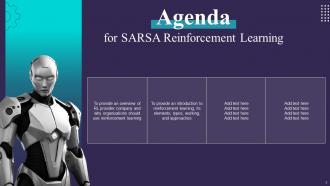
Slide 2: This is an Agenda slide. State your agendas here.
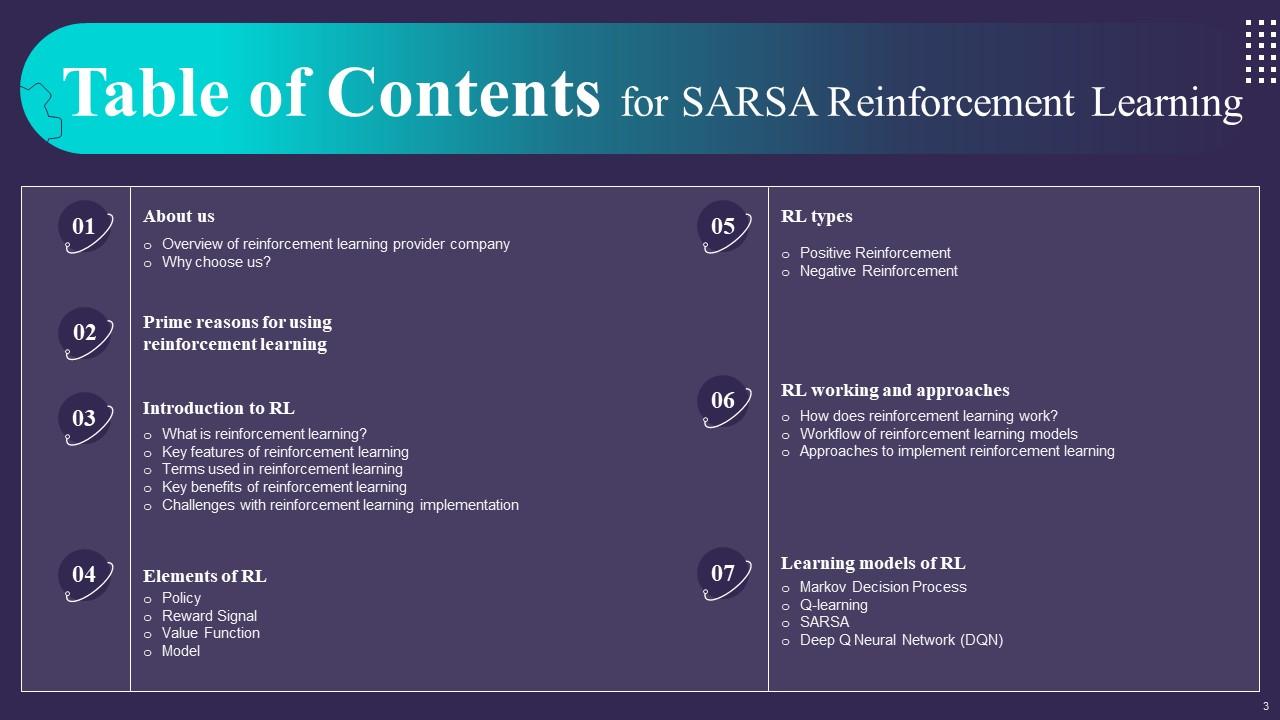
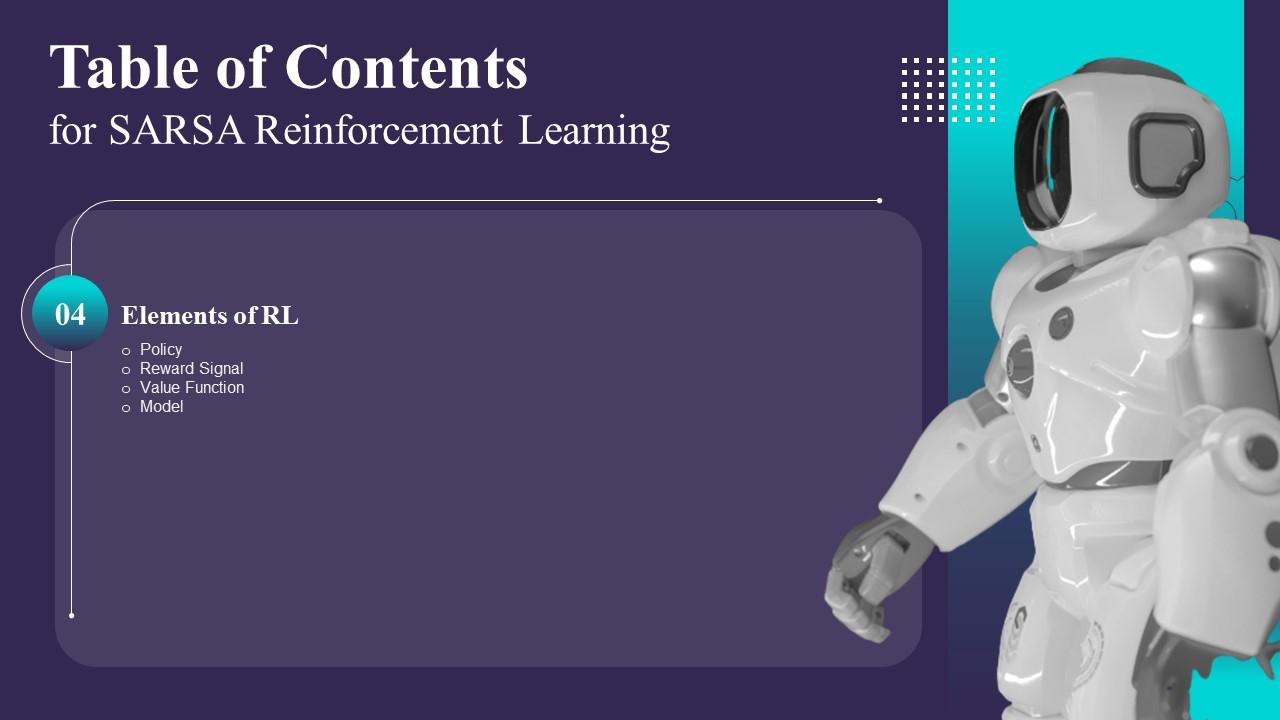
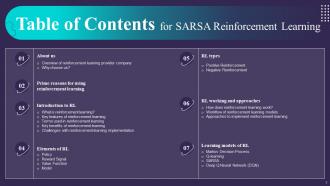
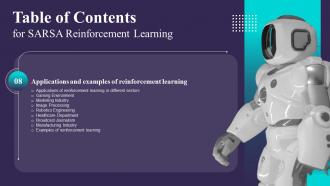
Slide 3: This slide shows Table of Content for the presentation.
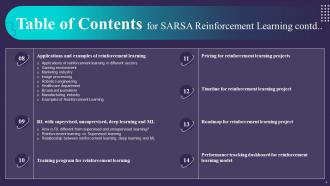
Slide 4: This slide also shows Table of Content for the presentation.
Slide 5: This slide shows title for topics that are to be covered next in the template.
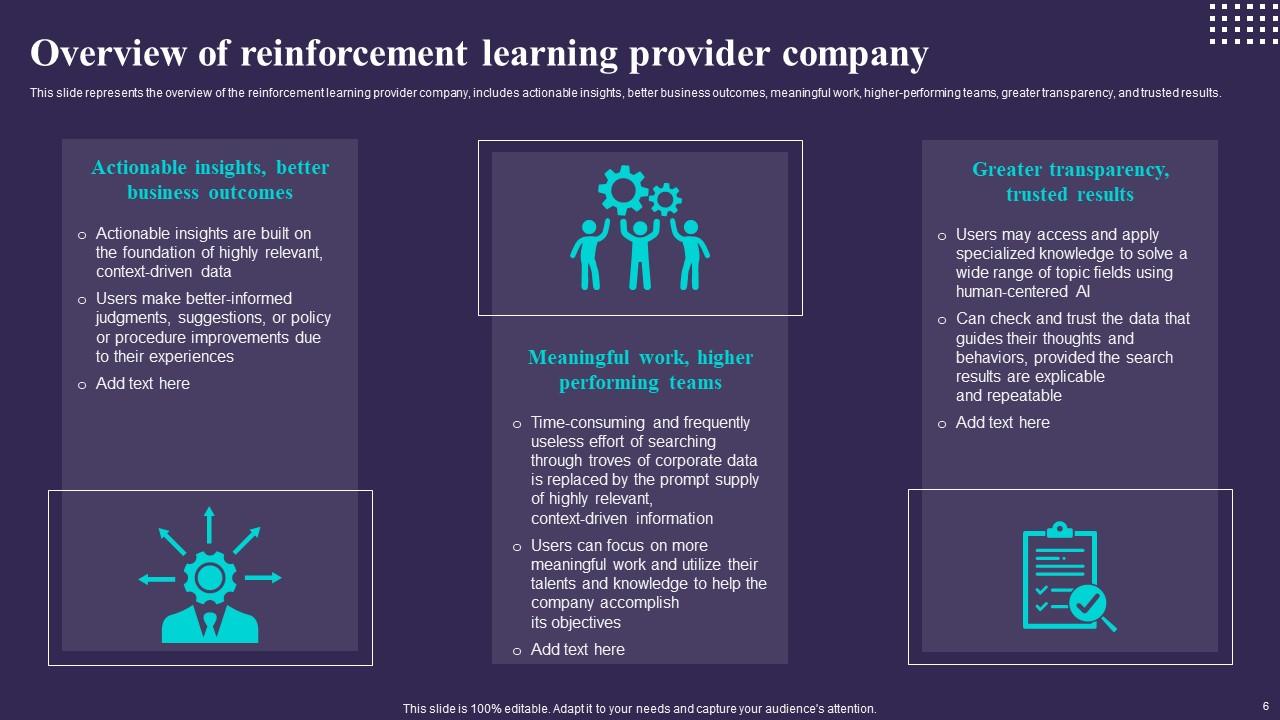
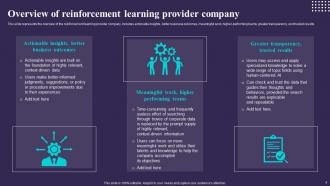
Slide 6: This slide presents the overview of the reinforcement learning provider company.
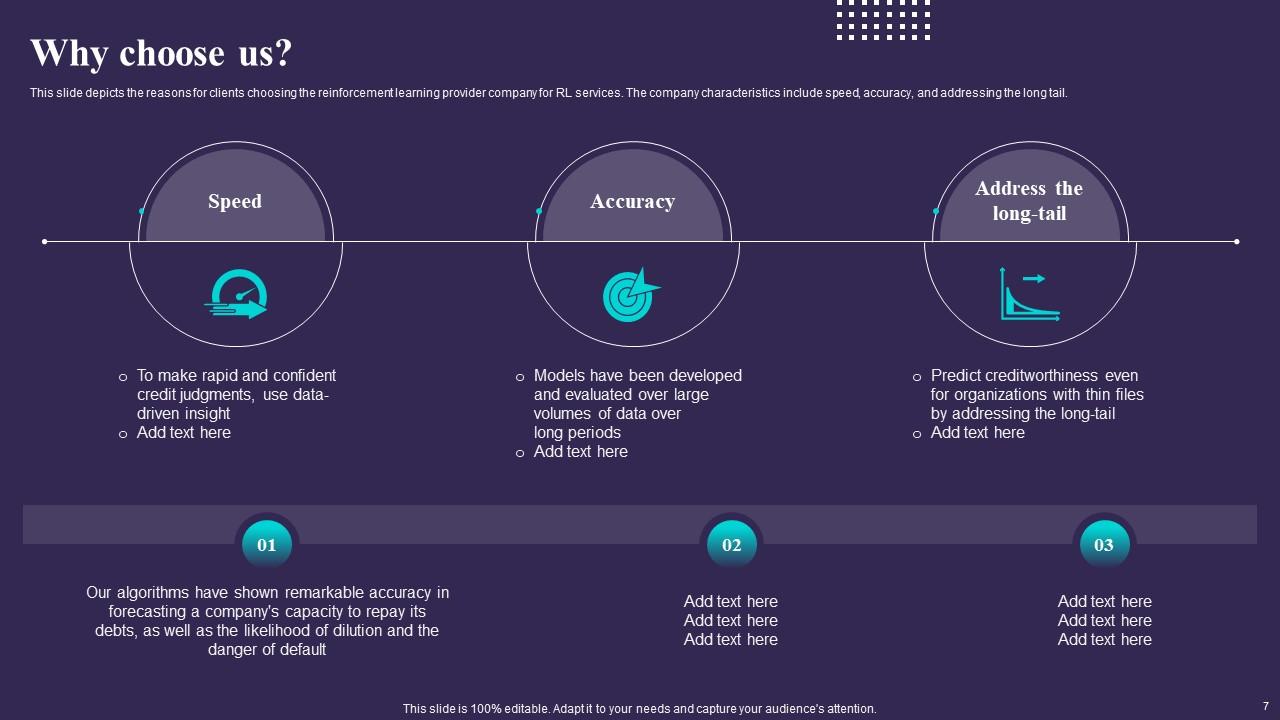
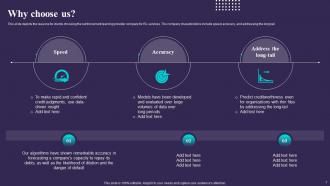
Slide 7: This slide depicts the reasons for clients choosing the reinforcement learning provider company for RL services.
Slide 8: This slide shows title for topics that are to be covered next in the template.
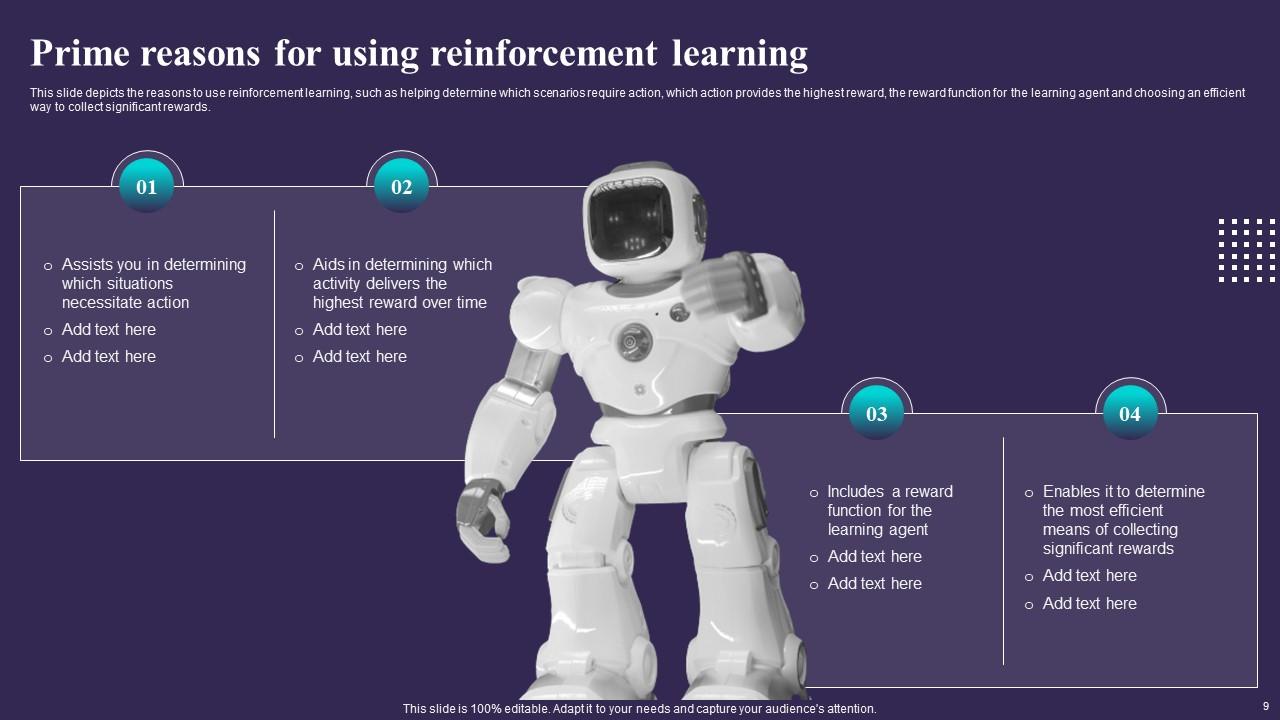
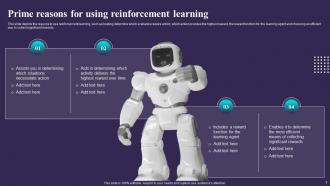
Slide 9: This slide depicts the reasons to use reinforcement learning.
Slide 10: This slide shows title for topics that are to be covered next in the template.
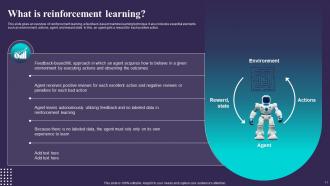
Slide 11: This slide provides an overview of reinforcement learning, a feedback-based machine learning technique.
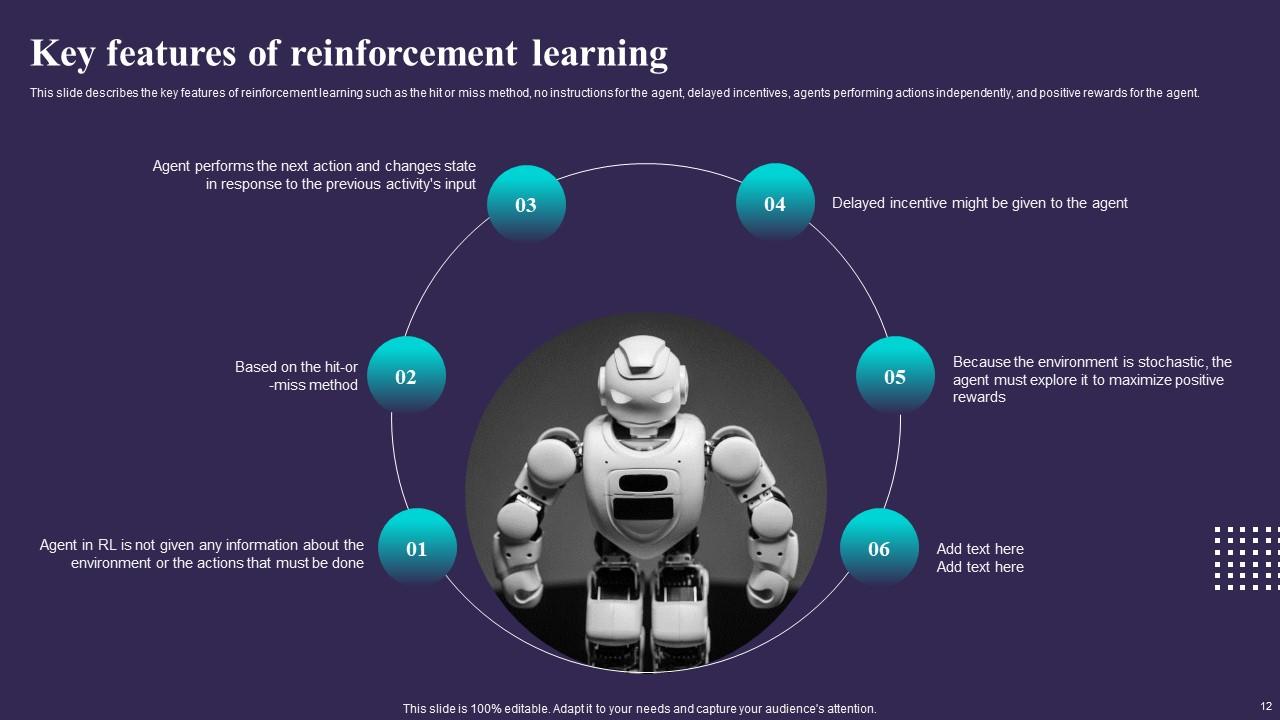
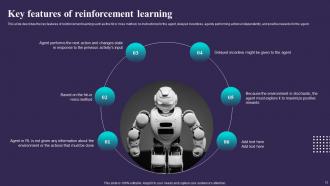
Slide 12: This slide describes the key features of reinforcement learning.
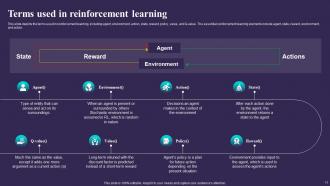
Slide 13: This slide presents the terms used in reinforcement learning.
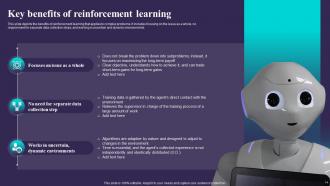
Slide 14: This slide depicts the benefits of reinforcement learning that applies to complex problems.
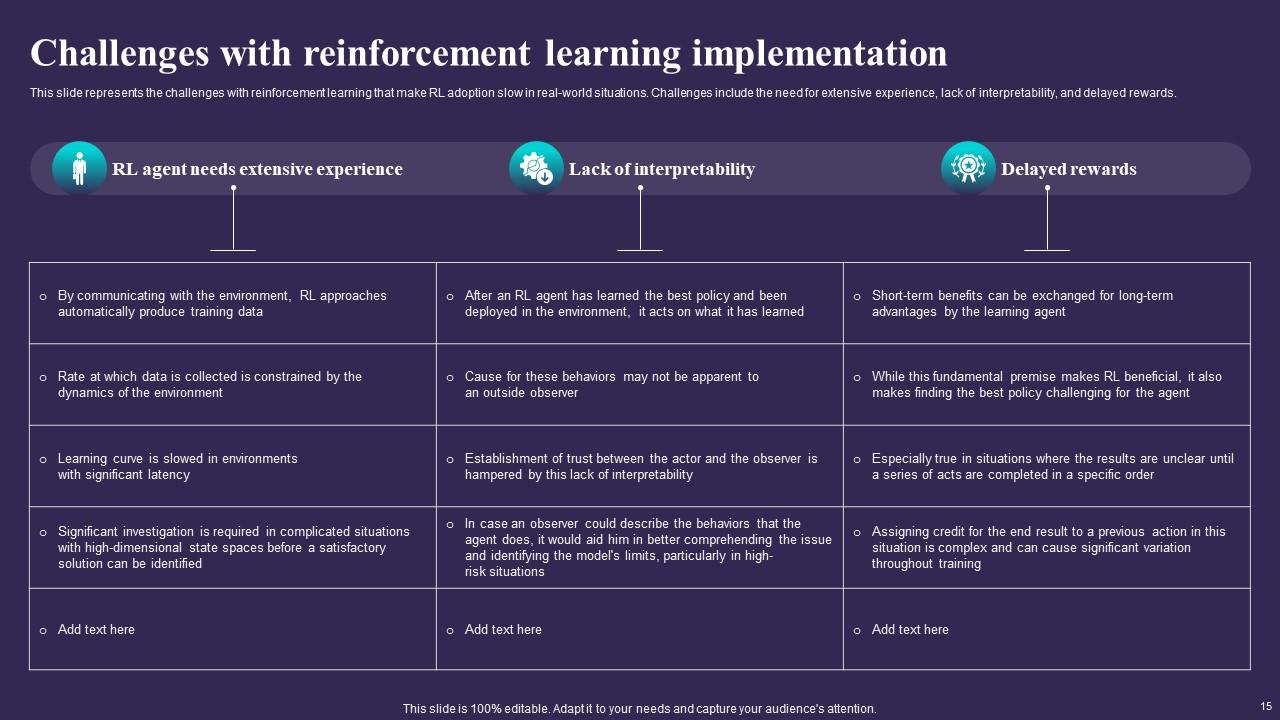
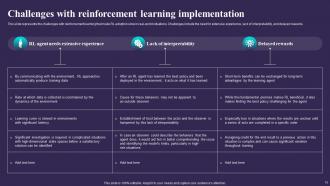
Slide 15: This slide represents the challenges with reinforcement learning that make RL adoption slow in real-world situations.
Slide 16: This slide shows title for topics that are to be covered next in the template.
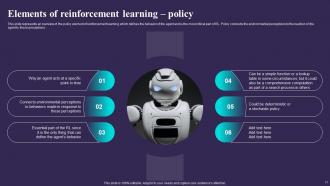
Slide 17: This slide represents an overview of the policy element of reinforcement learning.
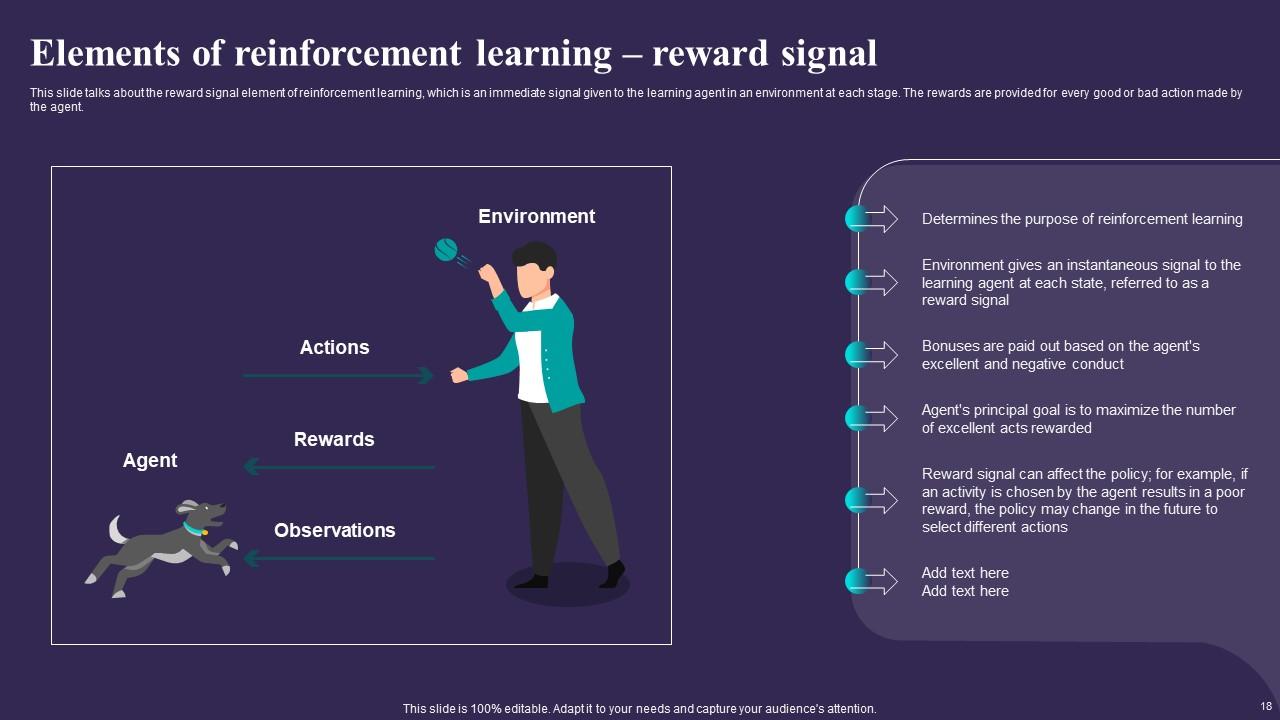
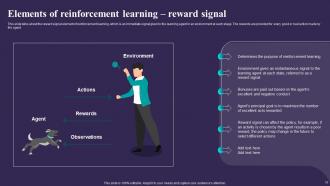
Slide 18: This slide describes the reward signal element of reinforcement learning.
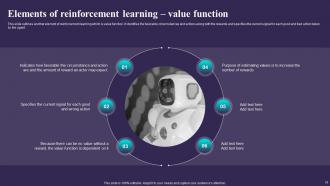
Slide 19: This slide outlines another element of reinforcement learning which is value function.
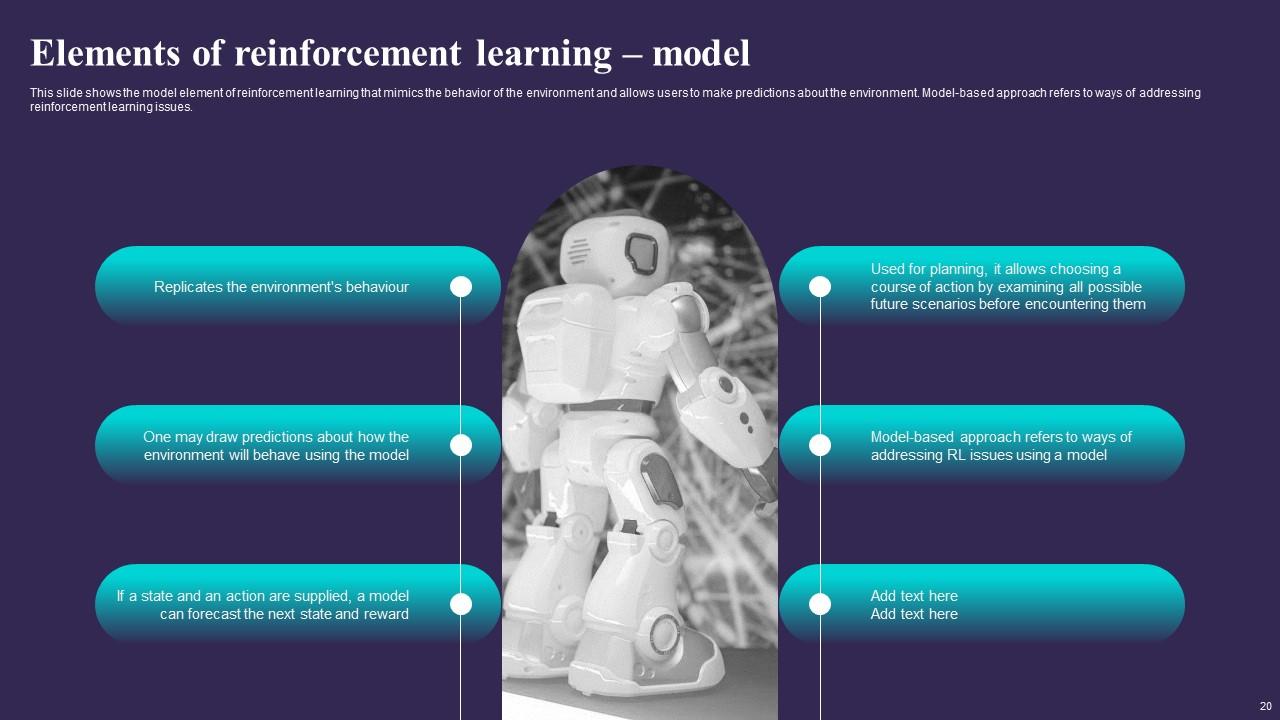
Slide 20: This slide presents model element of reinforcement learning that mimics the behavior of the environment.
Slide 21: This slide shows title for topics that are to be covered next in the template.
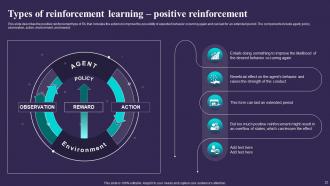
Slide 22: This slide describes the positive reinforcement type of RL.
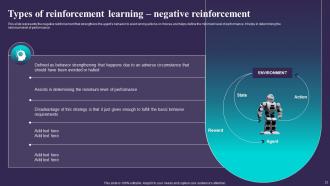
Slide 23: This slide represents the negative reinforcement that strengthens the agent's behavior to avoid wrong actions.
Slide 24: This slide shows title for topics that are to be covered next in the template.
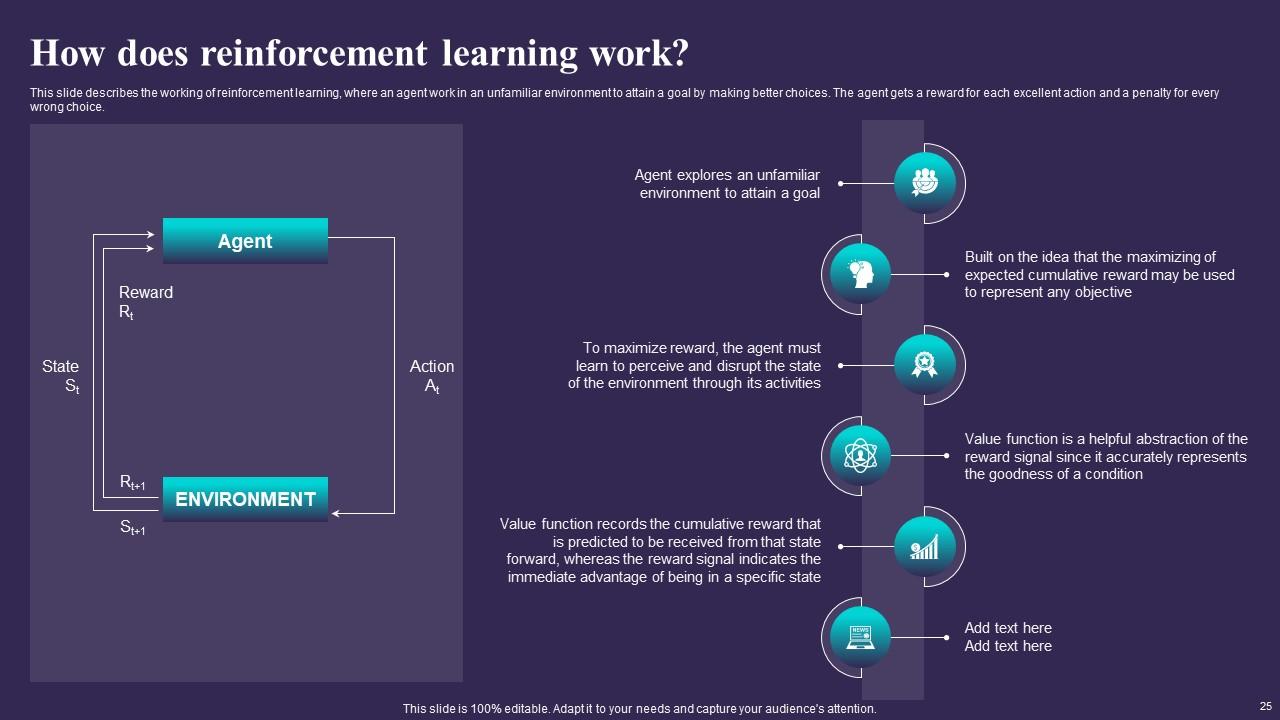
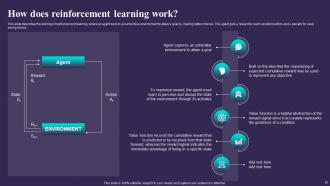
Slide 25: This slide describes the working of reinforcement learning.
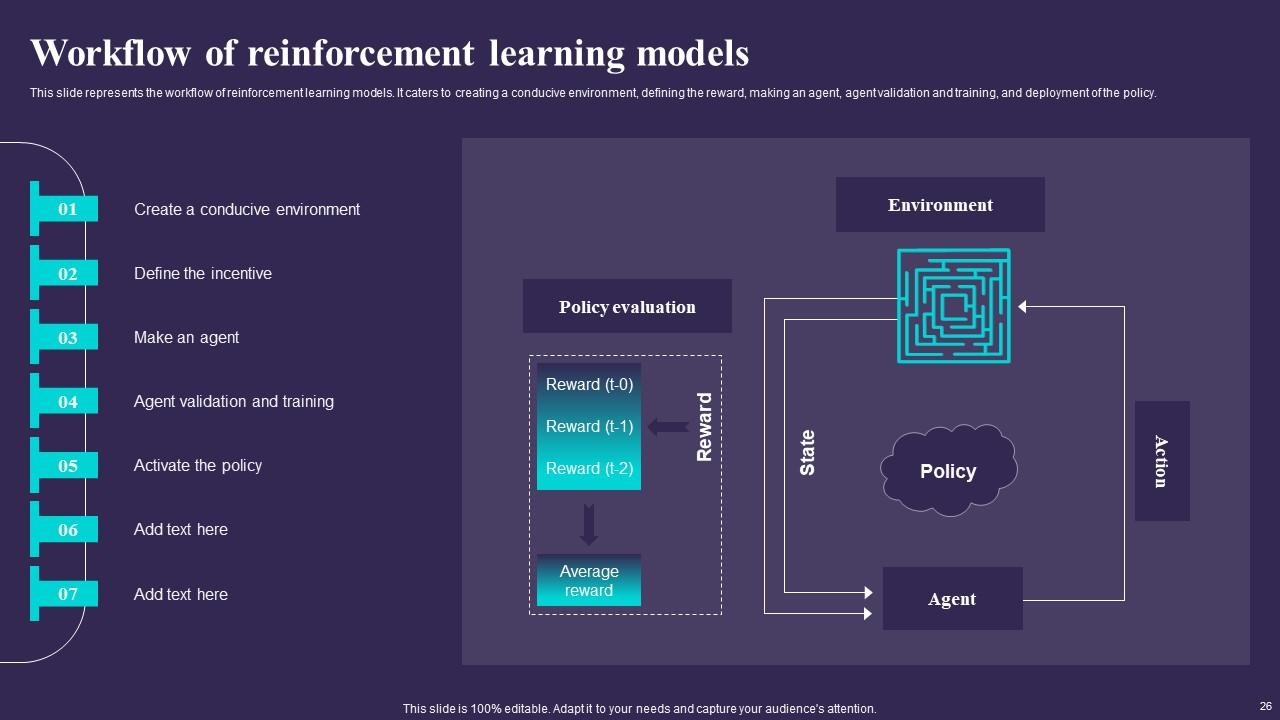
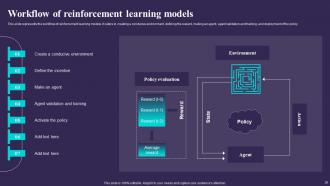
Slide 26: This slide represents the workflow of reinforcement learning models.
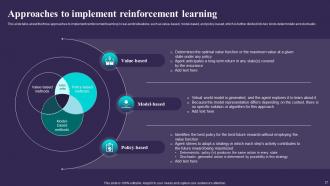
Slide 27: This slide describes the three approaches to implement reinforcement learning in real-world situations.
Slide 28: This slide shows title for topics that are to be covered next in the template.
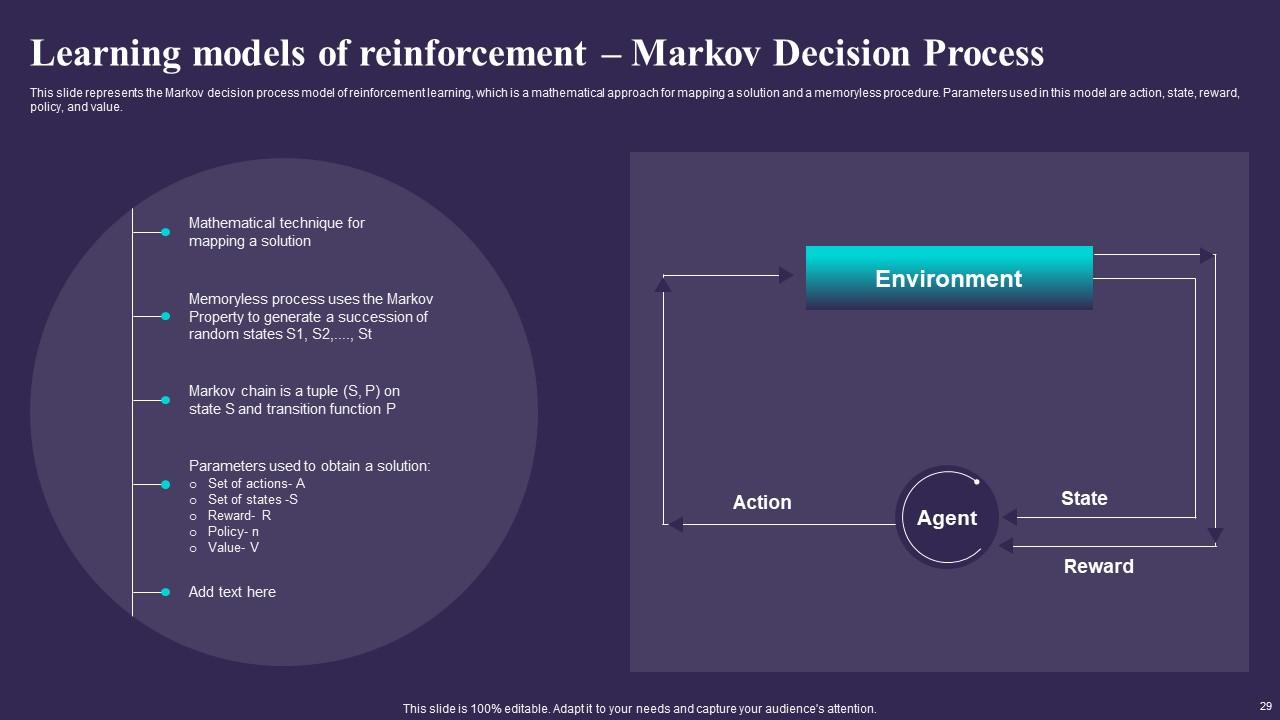
Slide 29: This slide presents the Markov decision process model of reinforcement learning.
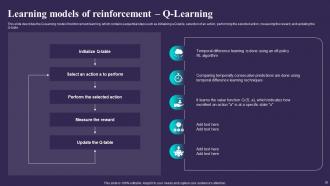
Slide 30: This slide describes the Q-learning model of reinforcement learning.
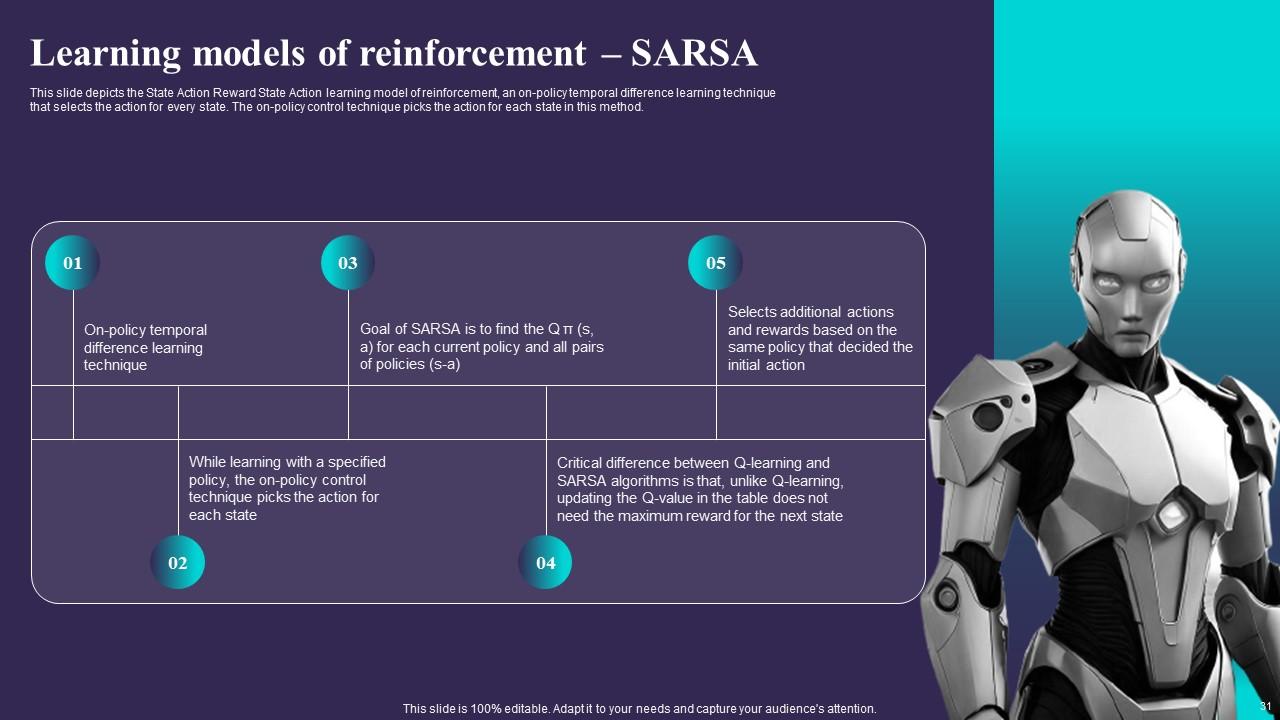
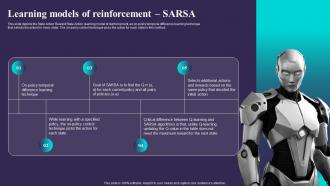
Slide 31: This slide depicts the State Action Reward State Action learning model of reinforcement.
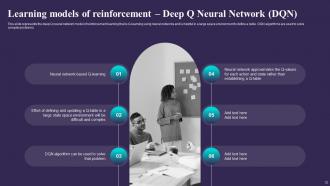
Slide 32: This slide represents the deep Q neural network model of reinforcement learning that is Q-learning using neural networks.
Slide 33: This slide shows title for topics that are to be covered next in the template.
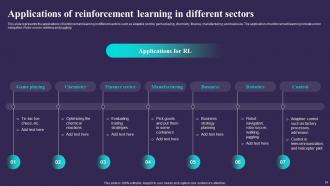
Slide 34: This slide presents the applications of reinforcement learning in different sectors.
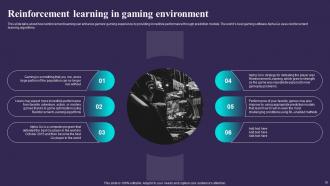
Slide 35: This slide describes how reinforcement learning can enhance gamers' gaming experience.
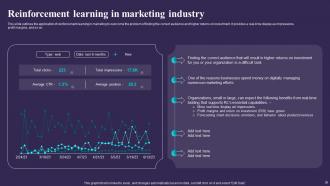
Slide 36: This slide outlines the application of reinforcement learning in marketing to overcome the problem of finding the correct audience and higher returns on investment.
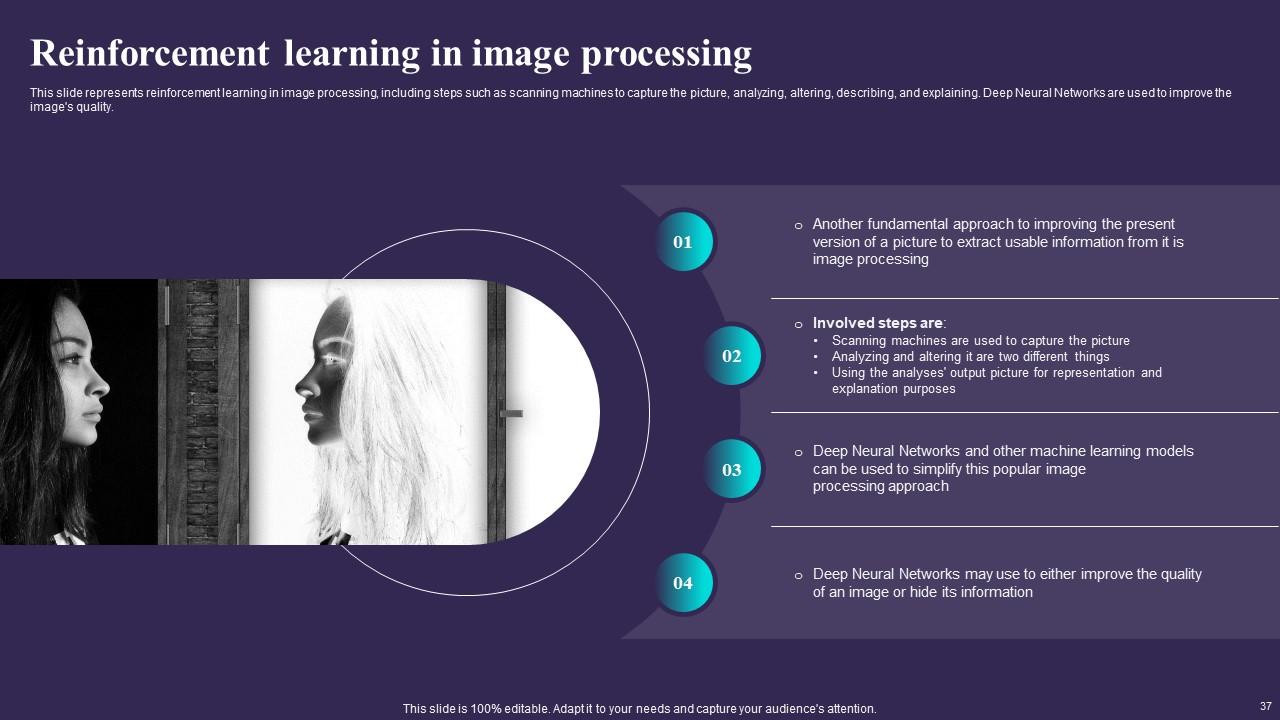
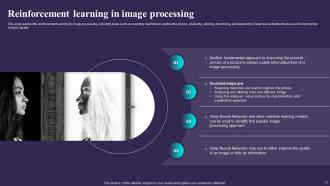
Slide 37: This slide presents reinforcement learning in image processing.
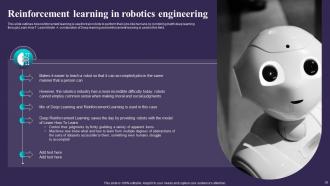
Slide 38: This slide describes how reinforcement learning is used to train robots to perform their jobs like humans.
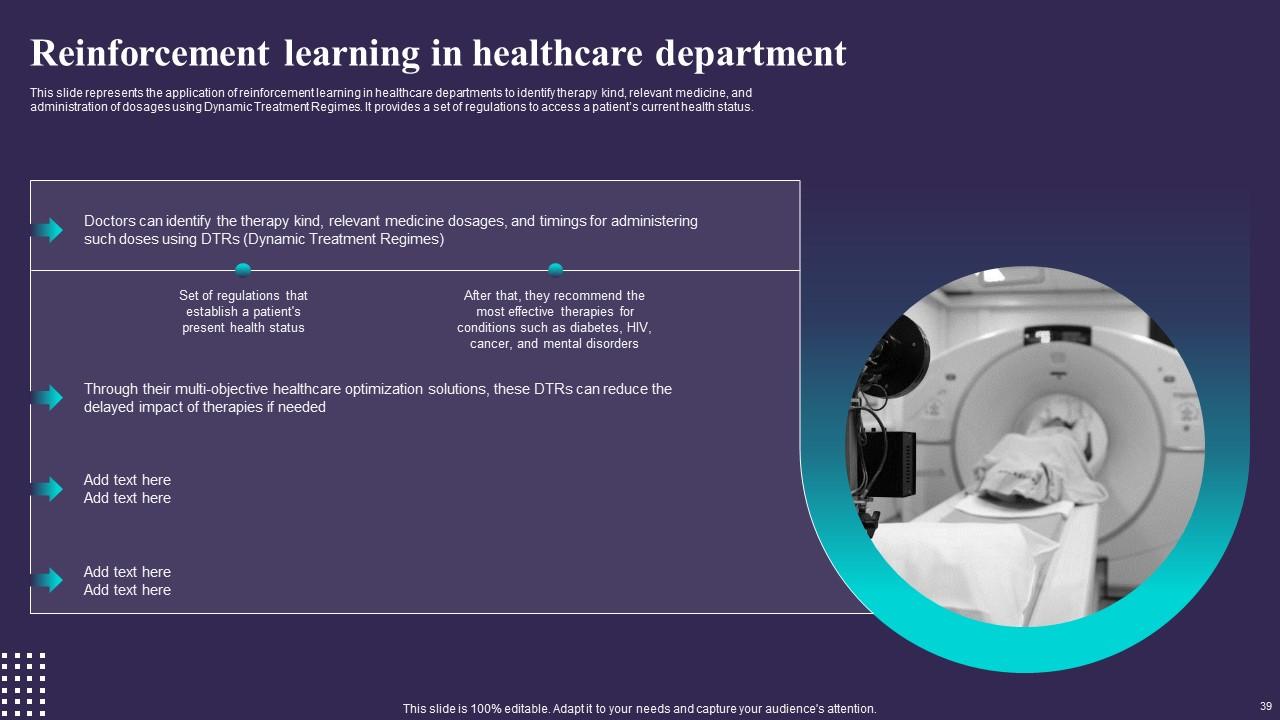
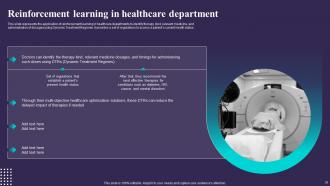
Slide 39: This slide presents the application of reinforcement learning in healthcare departments.
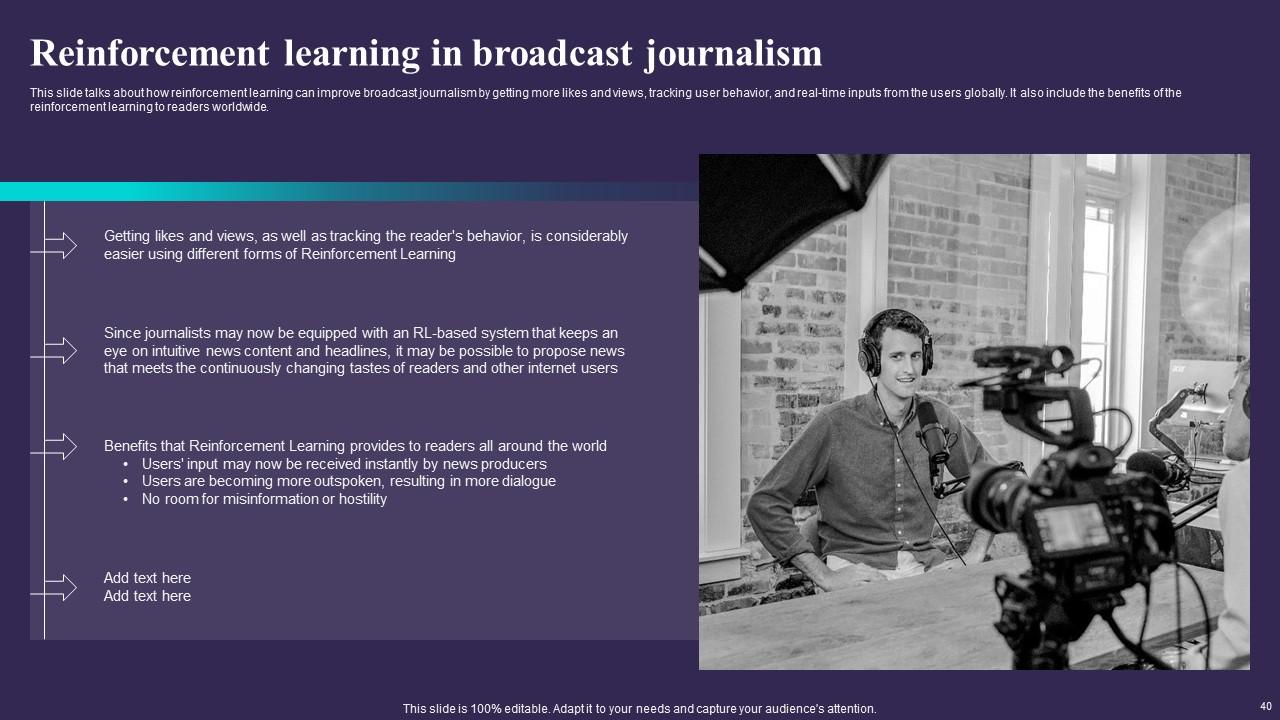
Slide 40: This slide describes how reinforcement learning can improve broadcast journalism.
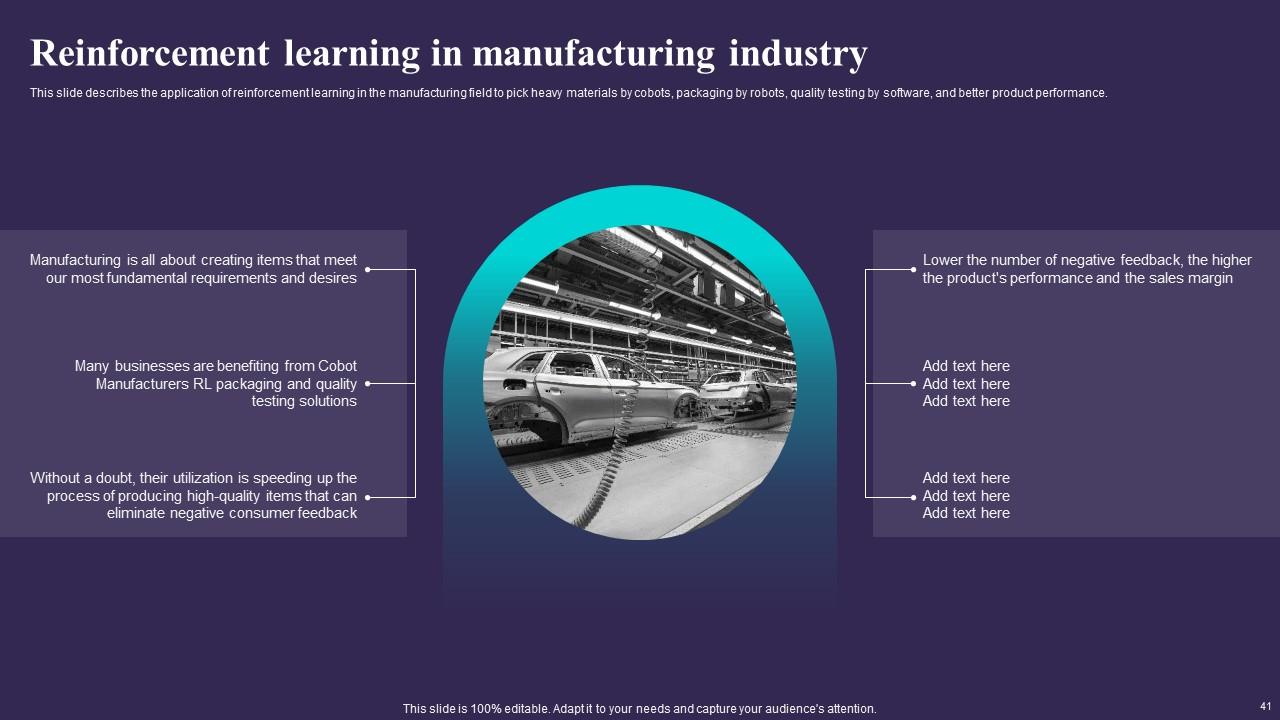
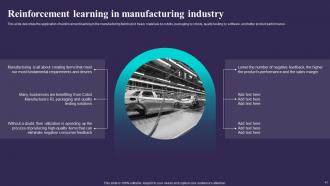
Slide 41: This slide presents the application of reinforcement learning in the manufacturing field.
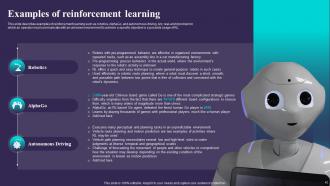
Slide 42: This slide describes examples of reinforcement learning such as robotics, AlphaGo, and autonomous driving.
Slide 43: This slide shows title for topics that are to be covered next in the template.
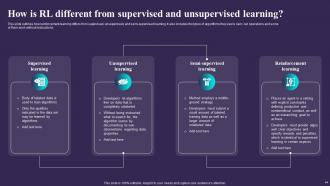
Slide 44: This slide depicts how reinforcement learning differs from supervised, unsupervised, and semi-supervised learning.
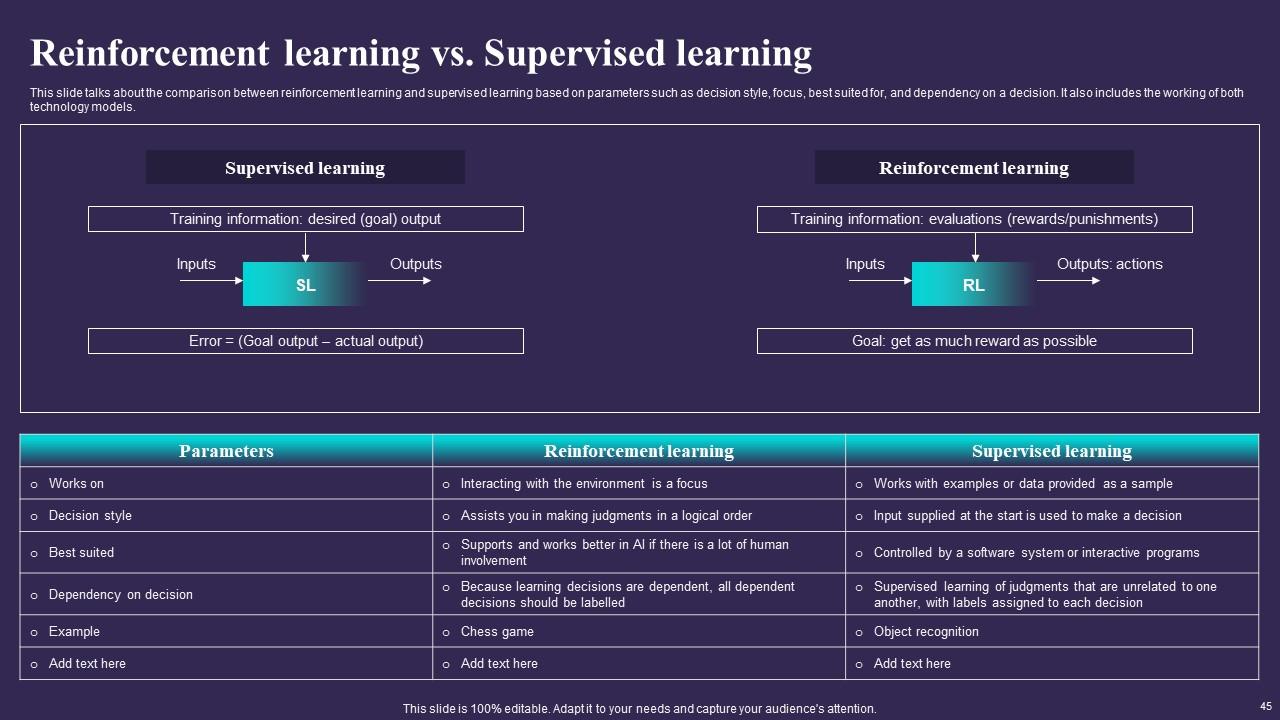
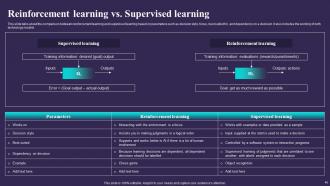
Slide 45: This slide describes the comparison between reinforcement learning and supervised learning.
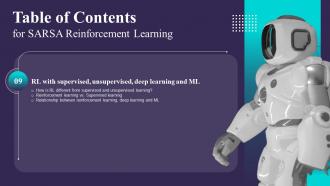
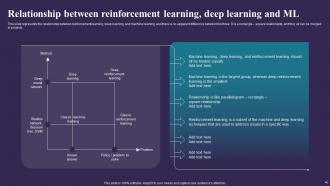
Slide 46: This slide presents the relationship between reinforcement learning, deep learning, and machine learning.
Slide 47: This slide shows title for topics that are to be covered next in the template.
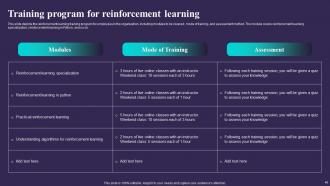
Slide 48: This slide depicts the reinforcement learning training program for employees in the organization.
Slide 49: This slide shows title for topics that are to be covered next in the template.
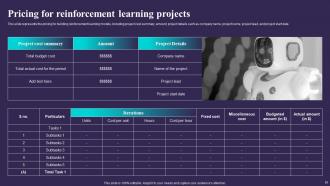
Slide 50: This slide presents the pricing for building reinforcement learning models.
Slide 51: This slide shows title for topics that are to be covered next in the template.
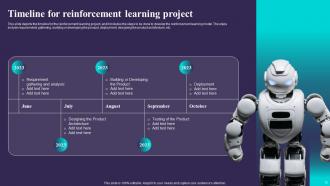
Slide 52: This slide depicts the timeline for the reinforcement learning project.
Slide 53: This slide shows title for topics that are to be covered next in the template.
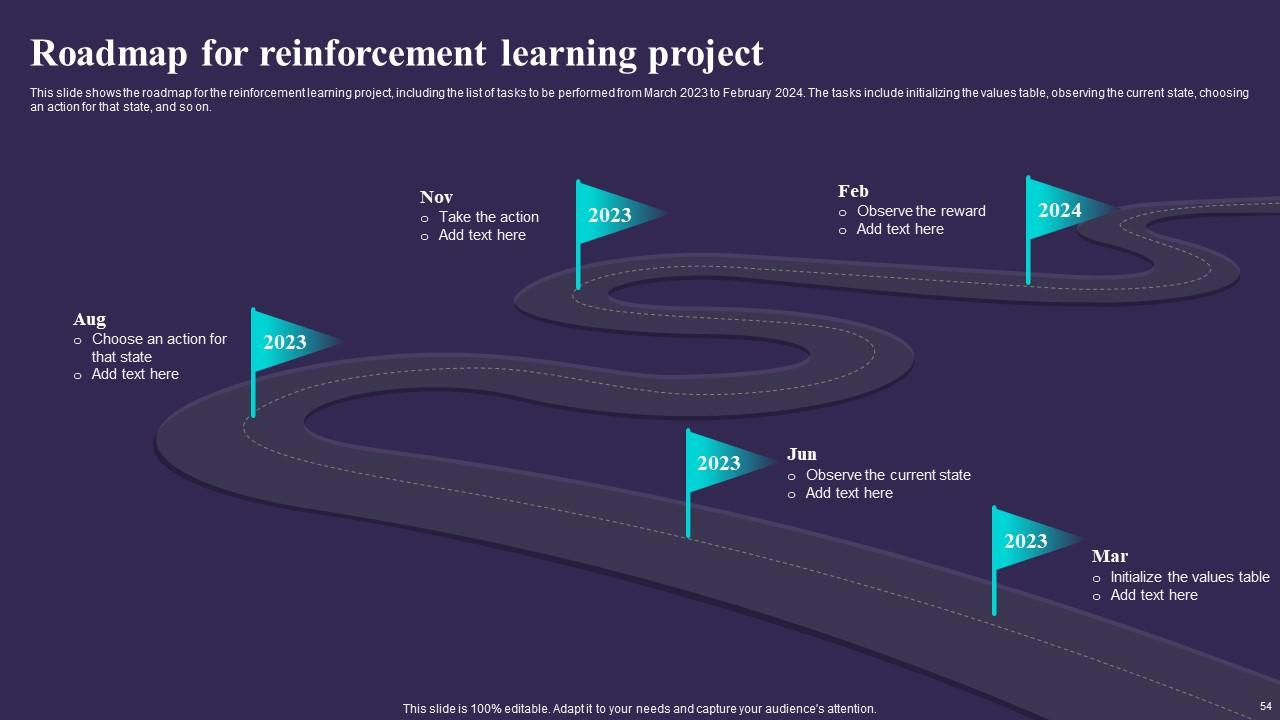
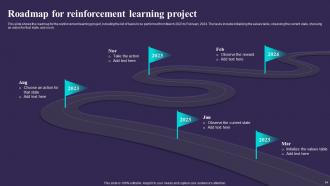
Slide 54: This slide shows the roadmap for the reinforcement learning project.
Slide 55: This slide shows title for topics that are to be covered next in the template.
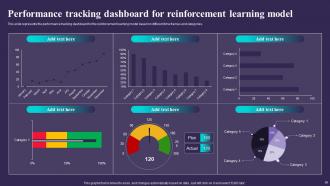
Slide 56: This slide presents the performance tracking dashboard for the reinforcement learning model.
Slide 57: This slide shows all the icons included in the presentation.
Slide 58: This slide is titled as Additional Slides for moving forward.
Slide 59: This is an Idea Generation slide to state a new idea or highlight information, specifications etc.
Slide 60: This slide displays Mind Map with related imagery.
Slide 61: This slide presents Roadmap with additional textboxes.
Slide 62: This slide showcases Magnifying Glass to highlight information, specifications etc.
Slide 63: This slide shows Post It Notes. Post your important notes here.
Slide 64: This is a Timeline slide. Show data related to time intervals here.
Slide 65: This is a Thank You slide with address, contact numbers and email address.
SARSA Reinforcement Learning IT Powerpoint Presentation Slides with all 70 slides:
Use our SARSA Reinforcement Learning IT Powerpoint Presentation Slides to effectively help you save your valuable time. They are readymade to fit into any presentation structure.
-
Excellent template with unique design.
-
The designs by SlideTeam are honestly the best I have seen so far. Will be definitely coming back for more.
