


SDN Security IT Powerpoint Presentation Slides




Try Before you Buy Download Free Sample Product
 Impress Your
 Audience
 100%
100% Editable
 Save Hours
 of Time


Grab our insightfully designed SDN Security IT PowerPoint presentation. It provides a comprehensive overview of hyper-automation technology, covering its various aspects, advantages, functionalities, and automated processes. Our Software Defined Networking Architecture deck delves into why businesses adopt hyper-automation, drawing a comparison between automation and hyper-automation based on insights from ISG. It encompasses an end-to-end view of hyper-automation, presenting an overview of hyper-automation testing, different tools, technologies for implementation, essential components requiring tools, etc. Additionally, our SDN Overview PPT explores the practical implementation of hyper-automation in a business setting, offering a checklist, step-by-step guidance on developing an automation plan and platform, implementation steps, framework, etc. It further highlights the wide-ranging applications of hyper-automation in various sectors such as healthcare, banking and finance, retail, supply chain, and general business operations. Moreover, our SDN Security template includes valuable elements like cost considerations, a timeline, a roadmap for hyper-automation implementation, etc. Lastly, it features the impact of hyper-automation implementation and a compelling case study to demonstrate its effectiveness. Get access to this powerful template now.
People who downloaded this PowerPoint presentation also viewed the following :
Content of this Powerpoint Presentation
Slide 1: This slide introduces SDN Security (IT). Commence by stating Your Company Name.
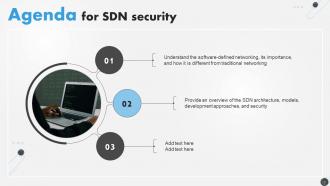
Slide 2: This slide depicts the Agenda of the presentation.
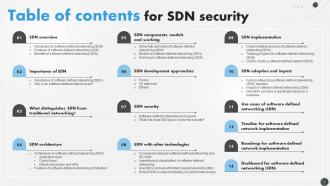
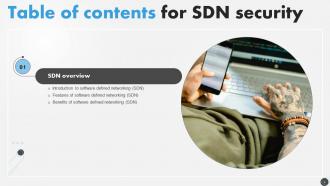
Slide 3: This slide includes the Table of contents.
Slide 4: This slide highlights the Title for the Topics to be discussed further.
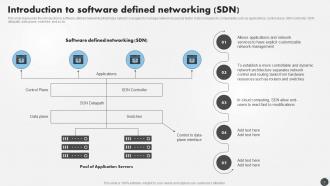
Slide 5: This slide shows the introduction to software-defined networking that helps network managers to manage network resources faster.
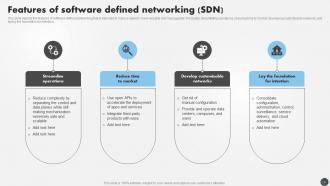
Slide 6: This slide displays the Features of software defined networking (SDN).
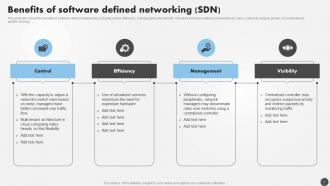
Slide 7: This slide exhibits the Benefits of software defined networking (SDN).
Slide 8: This slide presents the Heading for the Contents to be covered next.
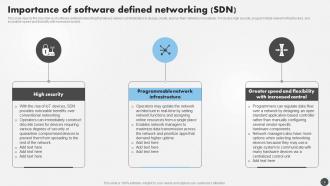
Slide 9: This slide reveals the Importance of software defined networking (SDN).
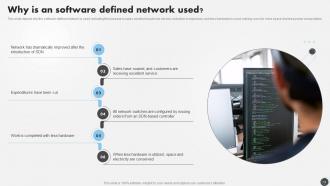
Slide 10: This slide depicts why the software-defined network is used.
Slide 11: This slide indicates the Title for the Ideas to be discussed further.
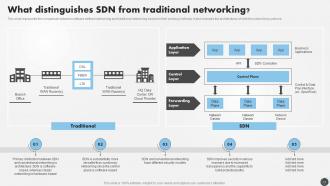
Slide 12: This slide represents the comparison between software-defined networking and traditional networking based on their working methods.
Slide 13: This slide highlights the Heading for the Ideas to be covered next.
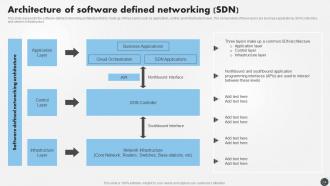
Slide 14: This slide reveals the Architecture of software defined networking (SDN).
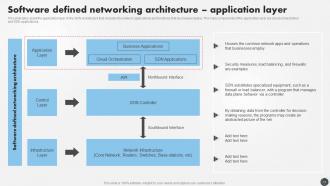
Slide 15: This slide talks about the application layer of the SDN architecture.
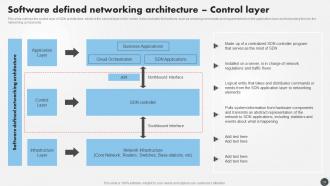
Slide 16: This slide outlines the control layer of SDN architecture, which is the second layer in the model.
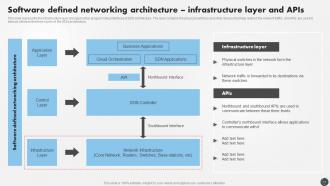
Slide 17: This slide represents the infrastructure layer and Application programming interfaces of SDN architecture.
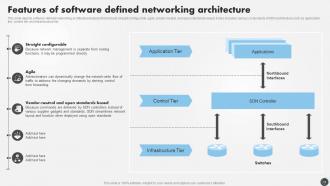
Slide 18: This slide depicts software-defined networking architecture features.
Slide 19: This slide presents the Title for the Contents to be discussed further.
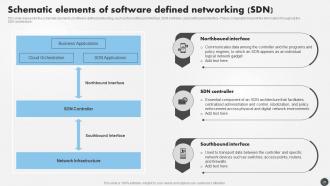
Slide 20: This slide shows the schematic elements of software-defined networking,.
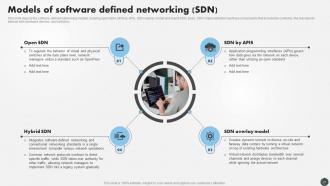
Slide 21: This slide illustrates the Models of software defined networking (SDN).
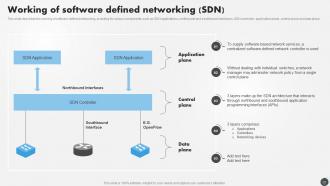
Slide 22: This slide displays the Working of software defined networking (SDN).
Slide 23: This slide indicates the Heading for the Topics to be covered next.
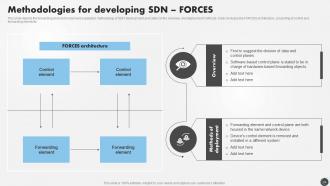
Slide 24: This slide depicts the forwarding and control element separation methodology of SDN development.
Slide 25: This slide represents the 4D methodology of SDN development and includes the architecture and principles of the 4D approach.
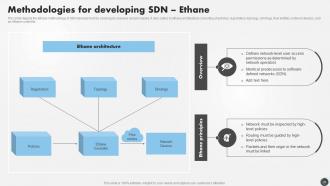
Slide 26: This slide portrays the ethane methodology of SDN development by covering its overview and principles.
Slide 27: This slide reveals the Title for the Contents to be discussed further.
Slide 28: This slide describes the security in software-defined networking.
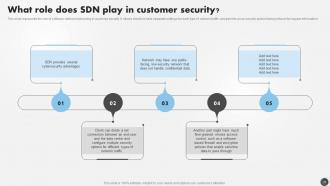
Slide 29: This slide represents the role of software-defined networking in customer security.
Slide 30: This slide depicts the Heading for the Topics to be covered next.
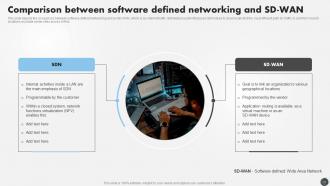
Slide 31: This slide reveals the Comparison between software defined networking and SD-WAN.
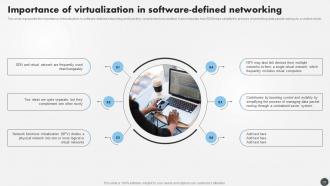
Slide 32: This slide represents the importance of virtualization in software-defined networking and how they complement one another.
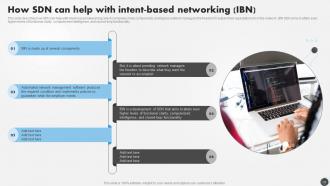
Slide 33: This slide describes how SDN can help with intent-based networking.
Slide 34: This slide represents the role of software-defined networking.
Slide 35: This slide contains the Title for the Contents to be further discussed.
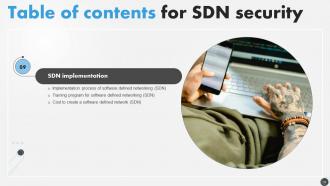
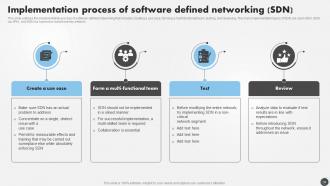
Slide 36: This slide outlines the implementation process of software-defined networking.
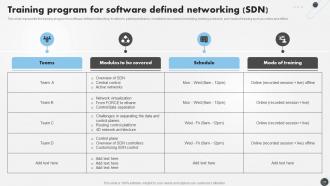
Slide 37: This slide includes the Training program for software defined networking (SDN).
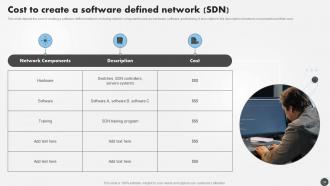
Slide 38: This slide depicts the cost of creating a software-defined network, including network components.
Slide 39: This slide displays the Heading for the Topics to be covered next.
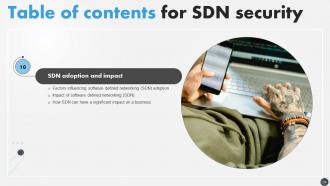
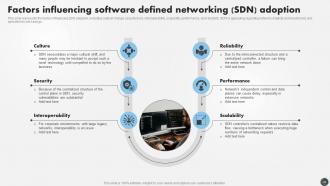
Slide 40: This slide highlights the Factors influencing software defined networking (SDN) adoption.
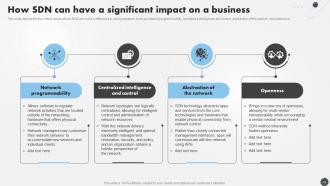
Slide 41: This slide reveals the Impact of software defined networking (SDN).
Slide 42: This slide depicts the four critical areas where SDN can make a difference in an organization.
Slide 43: This slide presents the Title for the Topics to be discussed next.
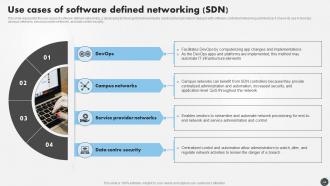
Slide 44: This slide represents the use cases of software-defined networking.
Slide 45: This slide portrays the Heading for the Contents to be covered in the upcoming template.
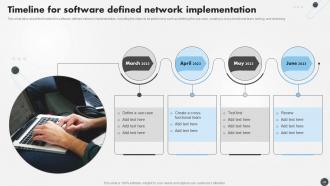
Slide 46: This slide displays the Timeline for software defined network implementation.
Slide 47: This slide reveals the Title for the Ideas to be discussed further.
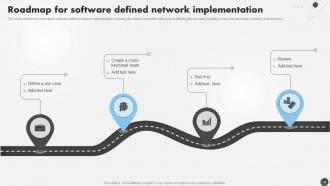
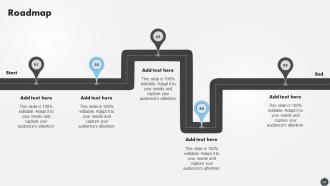
Slide 48: This slide outlines the roadmap for software-defined network implementation.
Slide 49: This slide contains the Heading for the Ideas to be covered in the upocming template.
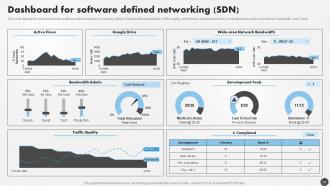
Slide 50: This slide depicts the dashboard for the software-defined network.
Slide 51: This is the Icons slide containing all the Icons used in the plan.
Slide 52: This slide is used for revealing some Additional information.
Slide 53: This is the Column chart slide.
Slide 54: This slide contains the Post it notes for reminders and deadlines.
Slide 55: This slide exhibits the firm's goals.
Slide 56: This is the 30-60-90 days plan slide for effective planning.
Slide 57: This is the Puzzle slide with related imagery.
Slide 58: This slide displays the Roadmap of the organization.
Slide 59: This is the Thank You slide for acknowledgement.
SDN Security IT Powerpoint Presentation Slides with all 64 slides:
Use our SDN Security IT Powerpoint Presentation Slides to effectively help you save your valuable time. They are readymade to fit into any presentation structure.
















FAQs for SDN Security IT
So the biggest thing with SDN security is your controller - it's basically one giant target since everything runs through it. Man-in-the-middle attacks are nasty too, especially on that southbound API connection. DDoS hits can completely wreck your controller, and sometimes traffic just bypasses your security policies entirely which is... fun. East-west visibility is another headache. Honestly, I'd focus on locking down that controller first with good auth and encryption. Network segmentation helps too - limits the damage if things go sideways.
SDN totally flips security on its head. The controller becomes this massive single point of failure - honestly, if hackers get in there, you're pretty much screwed. Your old perimeter defenses won't cut it anymore since traffic flows are constantly changing and programmable now. But there's good news too. You'll get crazy good visibility across everything, and microsegmentation becomes way easier. Plus you can actually respond to threats in real-time instead of waiting around. Just make sure you're auditing those controllers like your life depends on it and build in redundancy from the start. Don't learn that lesson the hard way.
So basically SDN rocks for visibility because those centralized controllers see everything happening across your network in real-time. Traffic patterns, topology changes, the whole deal. Traditional networks? You're pretty much guessing what's going on between switches - it's rough. The cool part is you get granular monitoring of every packet flow, plus controllers can spot weird traffic behavior and unauthorized devices right away. Oh, and deploying security policies network-wide from one spot is clutch. Definitely turn on flow monitoring first though. You'll be shocked at the traffic patterns you never even knew were there.
Think of the SDN controller as your network's brain for security stuff. It sees everything happening across all your switches and can push out policies instantly. Way better than configuring each device separately, which honestly is a nightmare. You can set it up to automatically catch sketchy traffic, quarantine infected machines, and do micro-segmentation so attacks don't spread everywhere. The cool part? Since it controls all switches from one spot, your security rules stay consistent network-wide. I'd start by figuring out which policies you want centralized first - that's where you'll see the biggest impact right away.
Dude, SDN is actually perfect for this. Your security tools can talk directly to the SDN controller through APIs - so when they spot something sketchy, boom, the network instantly isolates infected devices or reroutes traffic around compromised areas. Way faster than doing it manually. You can even build automated playbooks that execute complex responses in seconds instead of waiting hours for someone to notice. I got sidetracked setting mine up last week because the documentation was terrible, but once it's running? Game changer. Just start by connecting your current monitoring tools to the controller first.
Definitely start with multi-factor auth and role-based access - can't have random people messing with your controllers. Segment your networks too, keep control and data plane traffic separate. I know security audits are annoying but honestly they'll save your ass when they catch stuff early. Keep everything updated obviously, and go distributed instead of having single failure points. Oh and encrypt all your communications - learned that one the hard way at my last job. Basically treat these things like they're made of gold because one breach and you're totally screwed.
So with SDN you're not stuck with physical network boundaries anymore - you can just define segments in software instead. Pretty neat actually. Microsegments let you isolate workloads on the fly based on whatever policies you set up. It's like having virtual firewalls scattered everywhere. When you throw microservices into the mix, things get super granular since each service gets its own security rules. You can literally spin up isolated zones whenever you need them. Just make sure you've got your segmentation strategy figured out beforehand and automate the policy stuff, or you'll be drowning in management chaos across all those dynamic segments.
For your SDN setup, I'd start with securing the controller since that's where attackers usually hit first. OpenDaylight and ONOS have decent built-in security stuff. FlowVisor's pretty good for network slicing too. TLS + strong auth for controller comms is basic but crucial. Monitoring-wise, you could go with Radware's DefensePro if budget allows, or just run Snort with SDN plugins - works fine honestly. Oh, and microsegmentation is huge for SDN environments since you can spin up security zones on the fly. That dynamic aspect is probably SDN's biggest security advantage.
Think of encryption as your SDN's security blanket - it protects everything from controller-to-switch chatter to actual data moving around. Most setups use TLS for control stuff, IPsec for data protection, sometimes app-level encryption too. SDN's centralized setup actually makes this way less painful than old-school networks (thank god). Your controller just pushes encryption policies everywhere at once instead of configuring each device separately. But honestly? Secure your controller communications first. That's where attackers will hit hardest if they get the chance.
The main pain point? Legacy systems don't play nice with SDN's centralized approach. Your old network gear wants to make its own decisions, while SDN demands everything goes through the controller. Honestly feels like banging your head against a wall sometimes. OpenFlow isn't supported on legacy devices either, so you're flying blind on visibility. Security policies end up all over the place between old and new systems. My advice - figure out what legacy stuff you're stuck with first, then build your SDN security around those limitations. Way easier than trying to force everything together.
So ML can seriously help your SDN security game. Anomaly detection is where I'd start - way easier to deploy than you'd think and catches weird traffic patterns that normal rule-based stuff misses. You'll also get automatic DDoS response and threat prediction, which is honestly pretty sweet. The algorithms basically learn what your network normally looks like over time. Oh, and it handles automated threat classification too - lets you do dynamic policy changes across everything. I'd probably focus on network flow analysis first since that's where you'll see the biggest impact right away.
So zero-trust with SDN is pretty cool - nothing gets trusted automatically, even stuff already inside your network. The SDN controller checks every single flow before letting it through. Think of it like having security guards at literally every door instead of just the front entrance (which sounds exhausting but whatever, security's paranoid like that). Map out your traffic flows first though - you'll want to see what's actually happening before you lock everything down. Then you can start adding stricter policies bit by bit. The controller handles all the micro-segmentation for you.
So basically you want to set up your security policies at the controller level and push them down through northbound APIs. Way easier than dealing with each switch separately, trust me. Create policy templates that work across different network segments and user roles - saves tons of headaches later. The controller's global view is perfect for keeping security consistent everywhere. I'd start by mapping your current security zones to SDN policies first, then slowly add dynamic stuff based on real-time traffic analysis. Oh and don't forget threat detection - that's where things get interesting.
Check out Google's B4 network - they've been running their entire WAN on SDN for years with real-time security policies. Pretty impressive stuff. NTT Communications did something smart too, creating isolated network slices for different security levels. AT&T's Domain 2.0 thing automatically detects and stops DDoS attacks using SDN controllers, which honestly sounds like a nightmare to set up but works well once it's running. I'd dig into their published case studies and see what matches your specific security headaches. Way more useful than generic advice.
Honestly, AI threat detection is becoming the norm in SDN setups now. Zero-trust integration is getting way tighter too. The automated security orchestration stuff is huge - your network can actually fight back against threats without anyone touching it. Quantum-resistant encryption sounds like sci-fi nonsense but it's legit important for the future. Oh, and edge computing growth means more ways for hackers to get in. My advice? Look at vendors who are already building this into their platforms instead of trying to add it later. Trust me, retrofitting security is always a nightmare.
-
You guys are life-saver when it comes to presentations. Honestly I cannot do much without your services. Thank you!!!
-
The Designed Graphic are very professional and classic.