Modèles PowerPoint de présentation de processus d'affaires de référencement Ppt
Try Before you Buy Download Free Sample Product
Audience
Editable
of Time
Identifiez les habitudes enracinées avec nos modèles PowerPoint de présentation Ppt de processus d'affaires de référencement. Influencez les gens pour qu'ils acceptent de changer.
Caractéristiques de ces diapositives de présentation PowerPoint :
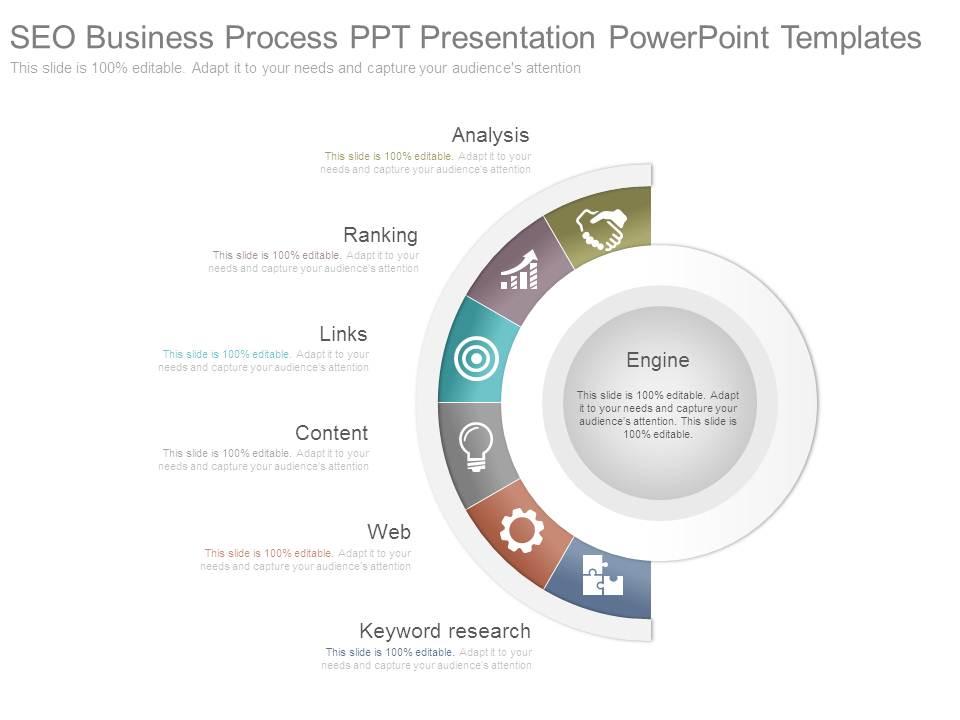
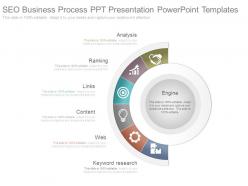
Présentation de modèles PowerPoint de présentation de processus d'affaires de référencement ppt. Il s'agit d'un processus de référencement des modèles PowerPoint de présentation ppt. Il s'agit d'un processus en six étapes. Les étapes de ce processus sont l'analyse, le classement, les liens, le contenu, le web, la recherche de mots clés, le moteur.
People who downloaded this PowerPoint presentation also viewed the following :
Modèles PowerPoint de présentation de processus d'affaires SEO avec les 7 diapositives :
Créez le désir de cohésion avec nos modèles PowerPoint de présentation de processus d'affaires de référencement. Conduisez à la maison l'avantage de fonctionner en groupe.
FAQs for Seo business process ppt
So first you gotta figure out what people are actually typing into Google - that's your keyword research. Then do a technical audit to make sure search engines can even crawl your site properly. Content's honestly where you'll see the biggest wins though - write stuff that actually helps people while working in those keywords naturally. Oh, and this part trips up everyone: you can't just do this once and walk away. Check your rankings and traffic every month because what works changes constantly. Track conversions too, not just vanity metrics. SEO's basically a long game that requires consistent tweaking.
Honestly, keyword research is like the foundation of your whole SEO game. It tells you what content to make, which pages need work, and how to set up your site structure. Most people think they know what their audience searches for - spoiler alert: they're usually wrong. The data shows you the real searches happening. I always look at search volume and competition to figure out what's worth going after first. Don't skip this step though, seriously. Make those keyword decisions before you dive into content creation or any major site changes.
Think of content as the fuel for your SEO - without it, you're basically trying to rank nothing. Google wants to see fresh, useful stuff that actually helps people. My approach? Write for humans first, then sprinkle in your keywords naturally. Map out what content hits which search terms, but honestly, don't overthink it. Consistency matters way more than perfection. Set up a publishing schedule you won't abandon after two weeks. Oh, and make sure each piece actually answers what someone's searching for. That's where the magic happens.
Organic traffic from Google Analytics is your main thing to watch. Rankings for your target keywords matter too, though honestly they can be pretty misleading sometimes - clients love seeing them though! CTR from search results is huge. Don't forget conversion rates from that organic traffic and how much revenue it's actually bringing in. Monthly reports work way better than obsessing over daily changes, trust me on that one. The real magic happens when you track everything together over a few months.
Google Analytics and Search Console are must-haves - Search Console's performance reports are honestly addictive once you start using them. For rank tracking, SEMrush or Ahrefs are solid choices (Serpstat works too if money's tight). PageSpeed Insights will catch technical issues before they tank your rankings. Oh, and set up automated weekly reports instead of manually checking everything - learned that one the hard way after spending way too much time logging into different dashboards. Trust me, your future self will thank you.
So here's the deal - on-page SEO is way faster to see results from because you control everything directly. Your content, titles, site structure, all that stuff. Off-page (mostly link building) takes forever but builds real authority that lasts. Business-wise? On-page gives you quick wins with conversions and user experience. Off-page slowly builds domain authority that lifts everything up. Honestly, I'd go 70% on-page when you're starting out - it's just more predictable. Then shift toward off-page once your foundation doesn't suck. Both matter long-term though.
Ugh, honestly the worst part is everyone expecting instant results when SEO takes like 3-6 months minimum to show anything meaningful. Plus getting stakeholders to understand why keyword research isn't just a quick Google search - that stuff drives me crazy. You'll spend forever coordinating between content, dev, and marketing teams who all have totally different goals. And don't get me started on proving ROI when organic traffic attribution is such a mess. Set expectations super early or you'll hate your life. A shared dashboard helps people see you're actually doing stuff, even when progress feels glacial.
Responsive design is your biggest priority right now. Google's mobile-first indexing means they're literally ranking based on your mobile version, so this isn't optional anymore. Test on real phones - dev tools lie to you half the time. Make sure everything loads fast and navigation works with thumbs, not mouse clicks. Oh, and people should be able to read your text without squinting or zooming in. Google's Mobile-Friendly Test catches the technical stuff you'll probably miss. Honestly, most sites still suck on mobile even in 2024. Start auditing yours this week.
Your Google Business Profile is huge - claim and optimize that first. Keep your name, address, and phone number identical everywhere online. Seriously, one wrong digit will tank you. Ask customers for reviews and actually respond to them (yeah, even the meh ones). I'd also hit up local directories for citations in your area. Oh, and create some content targeting those "near me" searches people do. Honestly the whole thing comes down to consistency - Google's weirdly obsessive about matching info across platforms.
Honestly, competitor analysis is like peeking at someone's homework - but legal. Check what keywords they're ranking for that you're not, see what content types are getting them traffic, and study how they set up their sites. Their backlink profiles are goldmines too since they show partnership opportunities you probably missed. Google basically tells you what works in your industry through your competitors' success. Track your top 3-5 competitors monthly - I'd focus on their keyword changes especially. You still gotta execute better than them though, which is the fun part.
Dude, technical SEO is like the foundation of your whole site. Without it? All that amazing content you're creating just won't get found. Search engines need to actually crawl your pages, and if your site's slow or has broken stuff, you're screwed. I've watched people pour money into content that nobody ever sees because of dumb tech problems - like redirects that don't work or pages that take forever to load. Super annoying when it happens. Get a tech audit done if you haven't lately. Check your Core Web Vitals especially - Google's obsessed with page speed now. Fix the crawl errors too. It's not sexy work, but it makes everything else actually work.
Honestly, I'd say every quarter for the big stuff - like really digging into your keywords, checking what's working, fixing any broken things. Monthly quick checks are smart too though, especially since Google loves to mess with us by changing their algorithm constantly. If you see competitors doing something new or your traffic tanks, don't wait for your quarterly review. Just jump on it. The whole "check everything obsessively" approach will drive you nuts - I learned that the hard way. Block out some time every three months for the deep dive, but peek at your numbers monthly so nothing crazy slips by.
Okay so the big things right now - AI search is everywhere and Google's obsessing over E-E-A-T stuff (basically whether you actually know what you're talking about). Voice search is still huge, so write like people actually speak. Page speed will absolutely tank your rankings if it sucks - I learned this the hard way last year. Video content is dominating search results right now. Featured snippets are amazing if you can grab them. Oh, and forget keyword stuffing. Focus on what users actually want to know and create content that genuinely helps. That's honestly what's working best.
Honestly, UX and SEO aren't enemies - good user experience actually boosts your rankings now. Create stuff that answers real questions people have. Fast loading times matter too. Google's gotten pretty sophisticated at spotting keyword stuffing (thank god, that era was awful). When you're deciding between cramming more keywords in or making something readable, pick readable. Users staying on your site signals to Google that it's worth ranking higher. Maybe start by looking at your most popular pages - like, would you actually find them helpful as a visitor? Simple navigation goes a long way too.
So here's the thing - social media won't directly boost your SEO rankings, but it creates this whole web of traffic that Google definitely picks up on. You share stuff on Instagram or Twitter, people click through to your site, maybe they link to it later. That traffic adds up. Your social profiles also show up when people search your brand name, which is pretty neat. I always tell people to make sure their social posts actually link back to good pages on their website though - otherwise you're just sending traffic into the void. It's like... why waste all that potential?
-
Topic best represented with attractive design.
-
Professional and unique presentations.