Set Employee Expectations Path By Manager

Rating:
90%
Set Employee Expectations Path By Manager Set Employee Expectations Path By Manager
Slide 1 of 9

or

Favourites Favourites

Try Before you Buy Download Free Sample Product

Audience Impress Your
Audience
Editable 100%
Editable
Time Save Hours
of Time
The Biggest Sale is ending soon in
0
0
:
0
0
:
0
0
Rating:
90%
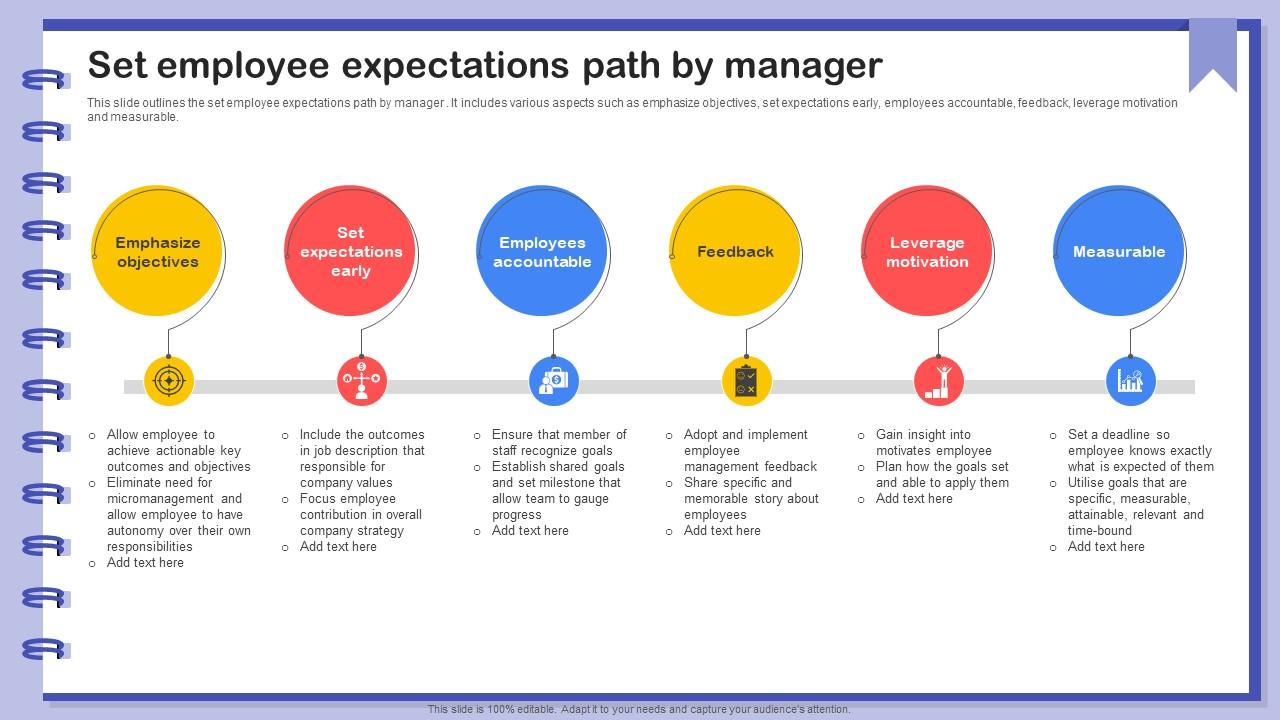
This slide outlines the set employee expectations path by manager. It includes various aspects such as emphasize objectives, set expectations early, employees accountable, feedback, leverage motivation and measurable. Presenting our set of slides with Set Employee Expectations Path By Manager. This exhibits information on six stages of the process. This is an easy to edit and innovatively designed PowerPoint template. So download immediately and highlight information on Emphasize Objectives, Employees Accountable.

FAQs for Set Employee Expectations

Honestly, just be super clear about what you want from the start. Most managers suck at this and then act shocked when things go sideways. Set goals that actually make sense - not some crazy deadline you pulled out of nowhere. Check in regularly instead of disappearing for weeks. Oh, and write stuff down! People forget conversations all the time. Let your team help set their own goals when you can - they'll buy in more. Things change, so don't be stubborn about adjusting expectations. The real trick? Don't make people guess what's in your head. Spell it out clearly and keep talking.

So here's the thing - when your team actually knows what "good work" looks like, they perform better AND they're happier. Makes sense, right? Fuzzy expectations just lead to people spinning their wheels trying to guess what you want (been there, it sucks). Instead of wasting mental energy on that guesswork, they can focus on actually getting stuff done. They'll feel way more confident making decisions too. Oh, and less stressed about whether they're screwing up. Next time you meet with your team, be super specific about deadlines and what quality means to you.

Dude, you gotta give feedback constantly or things get weird fast. Like those moments where you think everything's fine and then find out your person has been doing something completely wrong for weeks? Yeah, that's what happens when you don't check in. Quick weekly chats - literally 5 minutes - can save you from those "wait what?" conversations later. People aren't mind readers, even the good ones. They need to know if they're hitting the mark or missing it entirely. Don't wait for formal reviews either. By then it's too late and everyone's frustrated.

Honestly, people just need to see how their daily stuff actually moves the needle for the company. Break down those big goals into smaller chunks each team can actually own. Then sit with individuals and map their personal goals right into those team objectives - it's like fitting puzzle pieces together, but less frustrating lol. Regular check-ins are huge here. During those convos, really spell out how their work connects to the bigger wins. Everyone should be able to draw that line from "I did this task" to "company made money." Without that connection? Yeah, they'll just feel like hamsters on a wheel going nowhere.

Honestly, you've gotta be super specific about what you want from the start. Like, write down exact deliverables, deadlines, the whole thing. I made this mistake once where my team kept delivering stuff that wasn't even close because I thought they could read my mind lol. Get them involved in planning too - they'll actually care more and can tell you if something's unrealistic. Check in regularly instead of waiting until everything's due to find out it's a mess. Oh, and document it all so nobody can pretend they didn't know what was expected later.

Honestly, tech tools are a game-changer for managing expectations. Project management stuff like Asana shows everyone exactly what's due and when - no more "wait, I thought that was next week" confusion. Slack keeps the whole team updated without those awkward hallway ambushes asking for status reports. Performance platforms let you do regular check-ins instead of those awful once-a-year reviews (seriously, who invented those torture sessions?). Just don't pick some overly complicated system that'll make everyone hate you. Find something that actually works with how your team already operates.

Dude, this is huge and most managers completely miss it. Different cultures have totally different work expectations - like some want individual shoutouts while others think that's awkward and prefer team recognition. Your feedback style matters too. Being super direct works great for some people but can come across as rude to others who expect a softer approach. Even stuff like meeting formats and work-life balance hits differently depending on background. Honestly, skip the cultural assumptions and just ask your team members what works for them individually. Way more effective than guessing.

Transformational and coaching styles work best - they're about development, not just barking orders. Be upfront about goals and deadlines, but also explain the why behind everything. Micromanaging? That'll just piss people off and create more confusion. I'd do regular check-ins instead so you can catch issues early and actually celebrate wins. Consistency is huge here - if you promise something, follow through. Oh, and maybe start with some one-on-ones this week? You'll probably discover your team's priorities don't match yours, which happens more than you'd think.

Honestly, your onboarding probably sucks because it's too vague. Skip the company values fluff and get specific about day-to-day stuff - like how people actually communicate here and what good work looks like. Write down those unwritten rules that everyone just "knows" somehow. Pair new people with a buddy for their first month (not their manager, someone who remembers being confused). I'd do a check-in after two weeks too. The worst thing is when someone's struggling but nobody told them what success even means, you know? Oh, and cover work styles upfront - saves so much awkwardness later.

Honestly, the worst thing you can do is be vague about what "good" looks like. People will just guess and usually guess wrong. Also don't promise deadlines you can't actually hit - that's setting yourself up to fail. I've watched so many managers just agree to whatever in meetings because they want to get out of there faster. Terrible idea. Be super specific upfront about what you want, when you want it, and how good it needs to be. When stuff inevitably changes, explain why you're switching gears. Trust me, your team handles bad news way better than getting blindsided.

Oh totally, people's expectations change all the time as they move up. Early career folks usually want to learn everything, but once you've been around a while you're more like "just give me flexibility and trust me to do my job." Market stuff matters too - when jobs are everywhere, people get pickier fast. Generational differences are real, plus everyone's comparing notes about what their friends are getting at other companies. Honestly the only way to stay on top of it is actually talking to your team regularly instead of guessing what they want. Sounds obvious but most managers don't do it.

So there's the obvious stuff - engagement scores, retention rates, performance reviews. If people know what's expected, those numbers usually get better. But honestly? Just listen during your one-on-ones. Are they stressed about priorities or totally lost on what matters? I swear pulse surveys are clutch here - ask about role clarity and whether their goals make sense. The trick is being consistent with measurement instead of random check-ins. Maybe do quarterly reviews so you can actually see patterns. Oh, and team meetings are goldmines for this stuff too.

Honestly, engaged people are so much easier to work with on expectations. They'll actually tell you when they spot issues early instead of staying quiet. You know how some people just nod and agree to impossible deadlines? Engaged employees push back with realistic timelines - which saves everyone's ass later. They ask real questions too, not just "sounds good" responses. When priorities shift (and they always do), these folks roll with it because they understand the bigger picture. The trick is being upfront about why things change. Nobody likes being kept in the dark.

Don't let it fester - tackle it right away. First thing? Actually listen to their side before you jump into explaining yourself. I can't tell you how many managers mess this up. Maybe the expectations were fuzzy from the start, or things shifted and nobody communicated properly. Own whatever went sideways on your end. Then figure out realistic expectations together and write them down so there's no confusion later. You've got to be willing to change your approach too, not just expect them to deal with it. Oh, and document everything so this doesn't become a recurring nightmare.

Look, most places mess this up by setting expectations once then never touching them again. Don't do that. Get feedback monthly from both managers and employees about what's actually working. Track your goal achievement rates and satisfaction scores too - they'll show you patterns you might miss otherwise. Here's what really matters though: review your whole expectations framework quarterly, not just individual performance. Oh, and create some way for people to flag confusing expectations in real-time. Honestly, it sounds like a lot but once you get the rhythm down, it becomes second nature. Think of it as tweaking a system that's always evolving.

Ratings and Reviews

90% of 100
Review Form
Write a review
Most Relevant Reviews
  1. 80%

    by Chase Howard

    It's always a delight to see new templates from you! I am extremely pleased with the fact that they are easy to modify and fit any presentation layout in seconds!
  2. 100%

    by Liam Perez

    Stunning collection! With a wide variety of options available, I was able to find a perfect slide for my presentation. Thank you, SlideTeam!

2 Item(s)

per page: