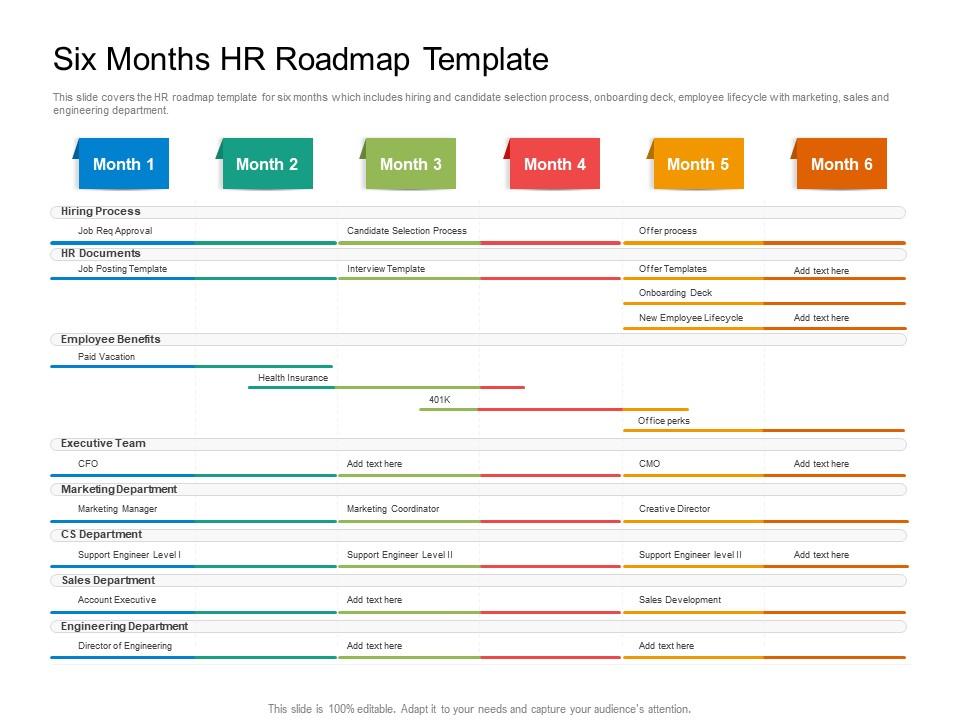
Sechs Monate HR-Roadmap-Zeitleiste Powerpoint-Vorlage

Rating:
88%
Six months hr roadmap timeline powerpoint template
Slide 1 of 2
Favourites Favourites

Try Before you Buy Download Free Sample Product

Audience Impress Your
Audience
Editable 100%
Editable
Time Save Hours
of Time
The Biggest Sale is ending soon in
0
0
:
0
0
:
0
0
Rating:
88%

Merkmale dieser PowerPoint-Präsentationsfolien:

Dies ist eine sechsmonatige HR-Roadmap-Timeline-Powerpoint-Vorlage mit integrierten bearbeitbaren Komponenten, um Ihre persönliche Note hinzuzufügen. Passen Sie diese Vorlage nach Ihren Wünschen an und zeigen Sie sie auf einem Breitbild- oder Standardbildschirm an, Sie haben die Wahl.

FAQs for Six months hr roadmap

Honestly, break it into four main chunks. First up is assessment and planning - basically figuring out where you are now and where you want to go. Then design and development where you actually build your HR stuff. Implementation is next (total chaos but exciting), and finally monitoring to see how it's all working. Each phase takes maybe 2-6 months depending on how big your company is. Pro tip though - always add buffer time because people will keep adding "quick requests" that aren't quick at all. Oh, and get your leadership to agree on timelines from day one. Trust me on this one - it'll save you so many awkward conversations later about why everything's behind schedule.

Look, you need to get your HR team into those strategy meetings from day one - not just briefed afterward. Map everything back to actual business goals. Expanding into Asia? Your hiring better reflect that. I've seen too many companies treat HR like some separate thing instead of a core business driver. Figure out which objectives need people power, then build your HR roadmap around those priorities. We're talking workforce planning, skill gaps, culture shifts - whatever moves the needle on real metrics. And honestly? Stop measuring HR stuff that doesn't connect to business results. It's pointless. Your talent strategy should directly enable what the company's trying to accomplish.

Honestly, stick to the basics that actually matter - engagement scores, retention rates, time-to-fill, and internal promotions. Those boring operational ones like onboarding time? They're surprisingly telling. Don't go crazy tracking everything though - I've seen teams drown in data. Pick maybe 4-6 metrics tops and check them quarterly so you can pivot if things aren't working. The whole leading vs lagging indicator thing is real, but really it comes down to: are people staying, are they happy, and can you fill roles without it taking forever? That's your roadmap health check right there.

Honestly, I'd say check in quarterly and then do a big review once a year. Those quarterly ones are lifesavers - you can pivot when stuff inevitably goes sideways (and it always does). Don't overthink them though. Save the heavy lifting for your annual review where you're looking at budget, major projects, all that fun stuff. Oh and if you're growing fast, maybe throw in a mid-year check too. But seriously, put those quarterly reviews on your calendar right now or you'll keep pushing them off like I always do with my dentist appointments.

Honestly, the worst part is always employee pushback - nobody wants their routine messed with. Getting leadership to actually fund it properly is brutal too. Oh and whatever timeline they give you? Double it, maybe triple. HR transformations drag on forever. Data migration will make you want to scream, trust me on that one. Plus executives always want concrete ROI numbers for stuff that's inherently hard to measure - like how do you quantify "better employee experience"? Start your change management early though. That's probably the only thing that'll save you sanity-wise.

Dude, you gotta get some kind of project management tool - I swear by Asana but Monday works too. Set up your whole roadmap with deadlines and it'll ping you when stuff's due. No more drowning in random spreadsheets (seriously, why do we do that to ourselves?). The dashboards are clutch because you can actually see where things are going sideways in real time. Plus your stakeholders can check progress themselves instead of bugging you every five minutes. Oh, and don't go crazy trying to set up something fancy right away. Just pick one tool and move your current mess over there this week.

Look, employee feedback is everything when building your HR roadmap. Without it, you're just guessing at problems that may not even exist. Surveys and exit interviews are obvious, but don't sleep on casual conversations - I've learned more from random coffee chats than formal processes sometimes. The feedback shows you what's actually broken (not what executives assume is broken) and helps prioritize fixes that matter. Skill gaps, terrible managers, outdated policies - it all comes out. Plus people actually support changes when they feel heard. Honestly, most roadmaps tank because they're created in some leadership bubble.

Don't treat change management like something you tack on at the end - weave it right into your HR roadmap from day one. Figure out who's getting hit by each change, then plan your comms and training alongside everything else. Honestly, I've watched so many HR projects crash because people forgot about... well, the people part. Map out where you'll get pushback early on. Build in pilot runs and extra adoption time. Oh, and track both your project goals AND how well people are actually using the new stuff - that second part's crucial.

Honestly, just match your vibe to whoever you're talking to. Executives want ROI numbers and big picture stuff. Managers? They need the nitty-gritty about how it'll mess with their teams. Always lead with WHY you're doing something before you dump timelines on people. Visual roadmaps are clutch - nobody's reading your 10-page project doc, trust me. Don't just fire off email updates either. Actually schedule check-ins so you can catch problems early. Oh, and be real about what could go wrong. Yeah, it feels scary to mention roadblocks, but people respect the honesty and it saves your butt when deadlines shift.

So for your HR roadmap, break DEI down into quarterly chunks with actual measurable stuff - like bias training schedules, hiring targets, pay audits, that kind of thing. Honestly way better to be proactive about it than scrambling later. Set up regular data check-ins so you can see what's actually working (or not). Oh and make sure someone's actually responsible for each piece - otherwise it just sits there. Treat it like you would any other major initiative with real deadlines and ownership. The systematic approach really does make a difference here.

Honestly, just pick something your team will actually stick with - that's way more important than finding the "perfect" tool. Asana and Monday.com are pretty decent for mapping out timelines. SHRM has some solid templates too, though their site can be a bit clunky to navigate. If you want to get fancy with the strategic stuff, Lattice or 15Five work well for connecting HR goals to business outcomes. But seriously, don't get stuck in analysis paralysis here. Even a basic Excel Gantt chart works if that's what feels manageable right now. Start simple and add bells and whistles later.

Honestly, I'd focus on three things: business impact, how urgent stuff is, and what you can actually pull off. Quick wins are gold - they make you look good and give you momentum for the bigger asks later. Map out what's mission-critical vs nice-to-have, then be real about your team's capacity. Compliance stuff obviously can't wait, but that random project someone mentioned last month? Yeah, that can. I always do this simple grid thing - high impact vs low effort - and it makes the priorities super obvious. ROI matters but so does not burning out your people.

Honestly, start by getting cozy with people in other departments - you're gonna need them on your side later. Project management and communication skills are obvious musts. Change management is huge too because, let's face it, most people hate change even when it's good for them. Data analysis helps you actually see if things are working or if you need to switch gears. Oh, and you need both the big picture strategic stuff AND attention to detail - kinda contradictory but both matter. The relationship building part though? That's what'll make or break the whole thing.

Look, your HR roadmap really depends on how big you are and how things actually work there. If you're a startup, keep it simple - focus on hiring basics and staying compliant. Honestly, planning 5 years out when you're going from 10 to 50 people? Kind of pointless. Bigger companies can handle the complex stuff like leadership development timelines. Decentralized teams need more coordination time built in, while centralized places can push company-wide changes faster. Map out what you've got now, then build phases that match reality instead of some textbook approach.

Honestly, talent management is like the foundation everything else builds on. You can't really separate it from your HR roadmap because recruiting, developing, and keeping good people affects literally everything else. I'd start by figuring out where your talent gaps are first - that way you're not panicking when a big project kicks off and you realize you don't have the right people. Performance reviews in Q3, succession planning earlier in the year, all that timing matters. If you mess up the sequencing, other stuff just doesn't work. Map your talent needs to what the business actually wants to achieve.

Ratings and Reviews

88% of 100
Review Form
Write a review
Most Relevant Reviews
  1. 80%

    by Darrin Porter

    Helpful product design for delivering presentation.
  2. 80%

    by Cruz Hayes

    Great designs, Easily Editable.
  3. 80%

    by Darren Olson

    Wonderful templates design to use in business meetings.
  4. 100%

    by Claud Hughes

    Qualitative and comprehensive slides.
  5. 100%

    by Daren Henry

    Amazing product with appealing content and design.
  6. 80%

    by Chi Ward

    Awesomely designed templates, Easy to understand.
  7. 80%

    by Dallas Medina

    Excellent template with unique design.
  8. 80%

    by Delmar Wagner

    Best way of representation of the topic.
  9. 100%

    by Charles Peterson

    Top Quality presentations that are easily editable.
  10. 100%

    by Chet Cox

    Visually stunning presentation, love the content.

10 Item(s)

per page: