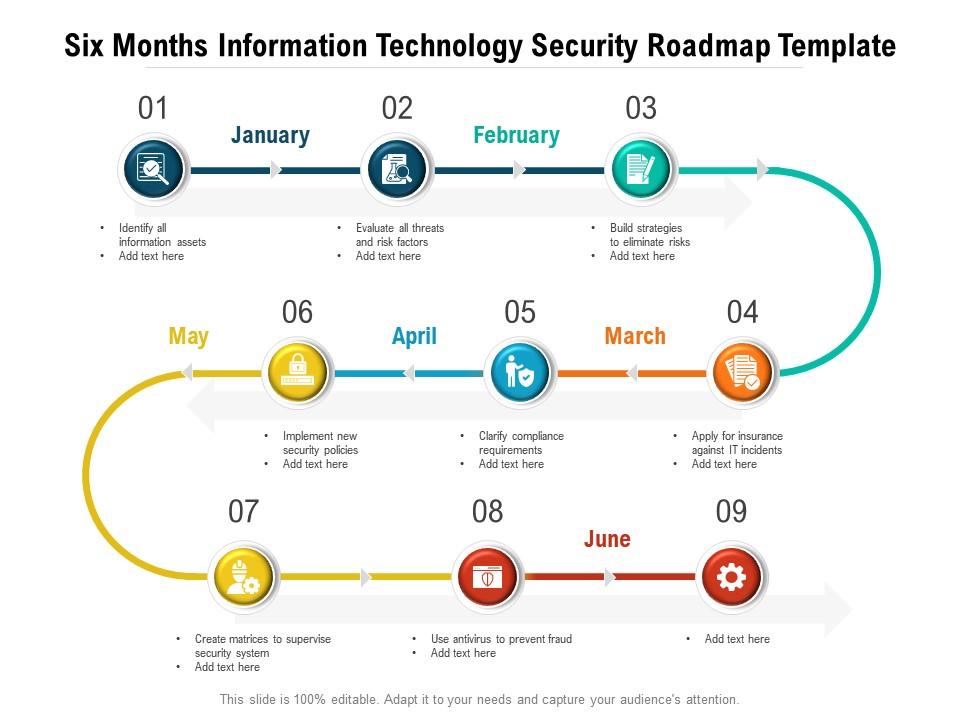
Plantilla de hoja de ruta de seguridad de la tecnología de la información de seis meses

Six months information technology security roadmap template
Slide 1 of 2
Favourites Favourites

Try Before you Buy Download Free Sample Product

Audience Impress Your
Audience
Editable 100%
Editable
Time Save Hours
of Time
The Biggest Sale is ending soon in
0
0
:
0
0
:
0
0

Características de estas diapositivas de presentación de PowerPoint:

Presentación de diapositivas de PowerPoint de plantilla de hoja de ruta de seguridad de tecnología de la información de seis meses. Esta diapositiva PPT está disponible en relaciones de aspecto de 4,3 y 16,9. Puede descargar este tema PPT en varios formatos como PDF, PNG y JPG. Esta plantilla de PowerPoint es completamente editable y puede modificar el tamaño de fuente, el tipo de fuente y las formas según sus requisitos. Nuestro diseño PPT es compatible con Google Slides.

FAQs for Six months information technology

So you'll want to start by figuring out where your security actually stands right now - like, what's broken or vulnerable. Then set some clear goals that actually tie back to what your business needs. Honestly, the timeline part always gets messy, but prioritize what's urgent first. Make sure everyone knows their role in this thing. Budget stuff and compliance requirements - yeah, those matter too but don't let them derail everything. Oh, and build in review cycles so you can adjust later. Most roadmaps change anyway, so don't stress about perfection. Track your progress with actual measurable outcomes.

Start with a risk assessment - figure out what would absolutely destroy your business if hackers got in. Customer data? Financial systems? Map out the nightmare scenarios that would make your CEO panic. Factor in compliance deadlines too since those aren't optional. Go for some quick wins first (low effort, big impact) because honestly, you need those early victories to get leadership on board. Budget reality check is crucial - don't plan like you have unlimited resources. Build a simple scoring system weighing risk vs cost so when someone asks "why are we doing this before that other thing?" you've got solid reasoning ready.

Risk assessment is honestly where everything starts. You can't build a decent security plan without knowing what threats you're actually dealing with. Map out your critical assets first, then figure out what could realistically go wrong. I usually tell people to rank everything by how likely it is and how much damage it'd cause - makes prioritizing way easier. It's kinda like checking what's broken in your house before deciding what to fix first, you know? Start simple with a basic risk matrix. Update it every few months since things change constantly.

Honestly? Talk money and risk, not tech specs - that's what gets executives nodding. Map your security stuff directly to whatever they're trying to accomplish. Expanding globally? Focus on compliance for those regions first. I've watched so many security teams get totally ignored because they couldn't explain how their work actually helps the business make money or avoid disasters. Check in with department heads regularly too - they'll tell you what's genuinely urgent versus what just looks good in presentations. Oh, and don't be the "no" team that blocks everything. Position security as something that actually helps them hit their targets and suddenly budgets open up.

Honestly, the biggest thing is knowing your audience. Execs want ROI numbers and business impact - technical folks need the nitty-gritty details and timelines. Charts help a ton since security stuff can be mind-numbing otherwise. Don't just list tools though. Talk about what risks you're actually reducing and tie it back to business goals. Real examples of potential disasters work way better than theoretical threats - trust me on this one. Be upfront about what resources you'll need and don't oversell timelines. Oh, and set up regular check-ins instead of doing one presentation and vanishing.

Quarterly reviews work best for most teams. Every three months gives you enough time to spot new threats without drowning in constant updates. Monthly is overkill - trust me, tried that once and it just became background noise. Annual deep dives should sync with your budget planning anyway. That's when you tackle the bigger strategic stuff and actually get funding for new initiatives. Oh, and set those calendar reminders right now. This stuff always gets pushed aside when you're dealing with whatever security fire is burning that week. Happens to everyone.

Track vulnerability reduction rates and how fast you detect/respond to incidents - those are your bread and butter metrics. Implementation rates matter too (what you actually deployed vs. what you planned). Don't forget training completion stats since, honestly, employees will always find creative ways to mess things up. Compliance audit results and budget ROI are solid picks as well. Oh, and actual breach reduction obviously. Pick maybe 4-5 that tie back to your original goals instead of going crazy with data. Monthly dashboards work great so you can pivot when things aren't working.

Start with AI-powered SIEM tools for threat detection - the speed difference vs manual monitoring is insane. Also look into ML for behavioral analytics (great for catching insider threats) and automated incident response. Phase it in slowly though. Pick one area, show it works, then expand from there. Otherwise you'll have expensive tech sitting around that nobody understands how to use. Oh, and make sure your data quality isn't garbage first - learned that one the hard way at my last job. The three main areas you'll want to focus on are threat detection, incident response, and risk assessment.

Honestly, the worst thing companies do is try to fix everything at once - like creating these monster roadmaps that nobody can actually execute. Teams love skipping risk assessments too and just jumping on whatever's trending (zero trust is the hot buzzword right now). But here's what really kills projects: not getting leadership on board first. I've seen so many solid plans turn into expensive paperweights because executives didn't buy in upfront. My advice? Start with your biggest risks. Keep it small initially. Get your boss's boss excited about it before you spend weeks building some elaborate strategy document.

Look, bake compliance stuff right into your roadmap from the start - don't wing it later. Figure out what regulations hit your industry first (GDPR, SOX, HIPAA, whatever). Then work those controls into your security plans. Trust me, retrofitting compliance when auditors show up is a nightmare. Document everything as you build it out. Assign someone to own each requirement too. I've seen teams treat compliance like it's killing their vibe, but honestly it can actually help your business if you frame it right. Set up regular check-ins so you catch gaps early before they bite you.

Look, your security is only as good as your weakest person. Best firewalls in the world won't help if Karen from accounting clicks that sketchy email link. Training basically turns employees from security risks into actual defenders - and honestly, it's probably the cheapest way to boost your defenses. Just don't do those boring annual sessions that everyone sleeps through. Make it ongoing and hit the real problem areas. Figure out where people mess up most (usually passwords or phishing) and train around those specific things. Way more effective than generic stuff.

You'll want different strategies for insider vs external threats. Insiders are honestly the scarier problem - they already have legit access, so focus on behavior monitoring and zero-trust stuff. Don't give anyone blanket permissions to everything. External attacks need the usual suspects: firewalls, endpoint protection, threat intel feeds. Start by auditing who has access to what right now (probably more people than you think). Then build monitoring for weird behavior patterns. Run both tracks at the same time since you're dealing with threats from all directions anyway.

Dude, vendor management is such a pain but you can't ignore it anymore. These companies basically have keys to your house if they're handling your data. Before bringing anyone on, dig into their security practices - don't just take their word for it. Make them prove they meet your standards and keep checking on them regularly. Honestly, the contract stuff is just the beginning. You need actual security reviews and a game plan for when (not if) they get breached. Start simple though - just list out who you're currently working with and figure out which ones scare you the most based on what they can access.

So basically, having a security roadmap means you're not completely screwed when something bad happens. Map out your priorities first - monitoring tools, communication plans, team training (which everyone always puts off but seriously don't). It helps spot the holes in what you've got right now. Budget for recovery stuff before you're panicking and need it yesterday. Give yourself a timeline for testing everything too. I'd start by figuring out what's already working, then plan quarterly upgrades to your response game. Way better than winging it during a crisis.

Yeah, cloud migration totally flips your security game. That whole "build a fortress around everything" mindset? Doesn't work when your stuff is everywhere. Now you're dealing with identity management and zero-trust setups instead of just locking down your office servers. Honestly feels like drinking from a fire hose at first, but cloud providers have some seriously good security tools - way better than what most of us could cook up internally. I'd start by figuring out what you're actually moving first, then work backwards to see what new controls each thing needs.

Ratings and Reviews

0% of 100
Review Form
Write a review
Most Relevant Reviews

No Reviews