Sechs-Monats-Zeitplan für PMO mit Beispiel

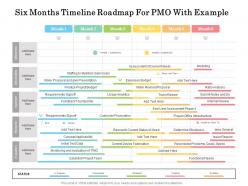
Six months timeline roadmap for pmo with example
Slide 1 of 2
Favourites Favourites

Try Before you Buy Download Free Sample Product

Audience Impress Your
Audience
Editable 100%
Editable
Time Save Hours
of Time
The Biggest Sale is ending soon in
0
0
:
0
0
:
0
0

Merkmale dieser PowerPoint-Präsentationsfolien:

Präsentation einer sechsmonatigen Zeitachsen-Roadmap für PMO mit Beispiel-PowerPoint-Folie. Diese PPT-Folie ist in den Seitenverhältnissen 4,3 und 16,9 erhältlich. Sie können dieses PPT-Design in verschiedenen Formaten wie PDF, PNG und JPG herunterladen. Diese PowerPoint-Vorlage kann vollständig bearbeitet werden, und Sie können die Schriftgröße, den Schriftarttyp und die Formen gemäß Ihren Anforderungen ändern. Unser PPT-Layout ist mit Google Slides kompatibel.

FAQs for Six months timeline roadmap for

So a PMO does three main things. It standardizes how everyone runs projects - templates, reporting, that kind of stuff. Strategic oversight is the second part, where they prioritize which projects actually matter for business goals. Third, they support PMs with training and resources. Think of it as mission control for your projects (though honestly that makes it sound cooler than it usually is). The whole point should be making your teams' lives easier, not adding more red tape. If your PMO feels like bureaucratic hell, something's probably wrong with how it's set up.

Honestly, you've gotta start by actually understanding what leadership cares about - revenue, costs, whatever their main priorities are. Map your PMO stuff back to those goals. I've watched so many PMOs just do their own thing and then act shocked when execs don't care. Build a simple matrix showing how your projects connect to business outcomes. That becomes your guide for where to spend time and money. Oh, and definitely schedule regular check-ins with leadership because their priorities change constantly. It's way easier to adjust course early than scramble later when you're off track.

So you need four main things: governance structure, standardized processes, tools/tech, and ways to measure success. Honestly, most PMOs crash and burn because they try doing everything at once - total mistake. Start with governance and processes first. Then add your tools and metrics later. Get executive buy-in before you even think about starting (learned this the hard way). Build it in phases over like 12-18 months instead of some crazy sprint. Your team will thank you for not overwhelming them right out the gate. Trust me on this one.

So PMO maturity basically comes down to five areas - governance, standardized methods, resource management, performance tracking, and how well projects actually connect to business strategy. Most places use a 1-5 scale from basic reactive stuff up to fully optimized. Quick self-assessment is your best starting point. Check if you've got consistent project templates, whether you're tracking KPIs that matter (not just busy work), and honestly evaluate your strategic alignment. I swear most PMOs I've worked with get trapped at level 2 and never climb out. Frameworks like OPM3 help, or just make your own scorecard and be brutally honest about gaps.

So first grab a decent PM platform - Microsoft Project or Smartsheet both work great. For reporting, PowerBI or Tableau will save your life when executives start asking questions. Honestly, I'm kind of obsessed with Confluence for docs because it actually keeps teams from losing everything in random folders. Resource management is huge too - Clarity or Planview handle that well. Obviously you need Teams or Slack for the day-to-day chaos. The trick is making sure everything connects instead of turning into separate islands of data. Start with one solid PM tool, then add pieces slowly.

Get everyone involved from the start - seriously, don't try to build this thing in secret. Regular check-ins are key, but make them actual work sessions where people can give real input on your processes. I've watched so many PMOs crash and burn because they disappeared for months then rolled out something nobody asked for. Build in feedback at every step and be honest about what's bombing. Oh, and find your allies in each department - give them ownership over pieces they actually care about. People will fight for stuff they helped design, so bring them into the creation process right away.

Dude, change management is huge for your PMO roadmap - you're asking people to completely flip how they work. Map out stakeholder buy-in first, then figure out communication and training. Honestly, I've watched so many PMOs totally bomb because they thought the technical stuff was enough. It's not. People hate change, even good change. Your roadmap needs specific milestones for this, plus feedback loops so you know what's actually working. Oh, and find your change champions super early - like, involve them in building the roadmap itself. They'll sell it way better than you ever could.

Stop trying to control *how* teams work and focus on *what* they're actually delivering. Ditch those rigid stage gates - they're honestly just slowing everyone down. Set up quick checkpoints that match sprint cycles instead. You'll want to track value delivery, not whether someone checked off their tasks. Think of yourself as more of a facilitator than a micromanager (way less headaches, trust me). Replace those boring status reports with burn-down charts and team health stuff. Oh, and gradually bring in some agile portfolio tools that give you visibility without being annoying about it. Your governance should help teams move faster, not bog them down.

Honestly, the biggest pain is dealing with people who think you're just adding more red tape. I've watched PMOs crash and burn because everyone's immediately defensive about "bureaucracy." Leadership usually gives you fuzzy goals too, which makes proving your worth super tricky. Oh, and good luck getting resources when you're trying to standardize processes for teams that work totally differently - that's always fun. My take? Start with small wins that actually matter. Find a couple people who'll champion what you're doing. Also, nail down exactly what success looks like upfront with whoever's backing you, or you'll be scrambling later.

Honestly, you've gotta bake feedback loops into everything your PMO touches. After each project phase, run retrospectives and actually collect data on what's working vs. what's bombing. Build a knowledge base where teams dump their lessons learned - make it systematic because people won't just magically get better (trust me on this one). Track the usual stuff: delivery times, budget overruns, how happy stakeholders are. Then tweak your processes based on what the data tells you. Oh, and create a culture where screwing up equals learning, not getting thrown under the bus. Start simple - grab one retrospective template and roll it out next week.

So you'll want hard numbers like project delivery rates, budget stuff, and timeline performance - that's the obvious part. But the soft metrics are honestly just as crucial. Stakeholder satisfaction scores, how well your processes are actually getting used (not just sitting in some manual), and whether your PMs are growing their skills. Cost savings and risk mitigation show your PMO's real value too. Start with maybe 5-7 metrics that match what your company cares about. More than that gets overwhelming fast. Monthly reviews work best - gives you enough data without getting lost in the weeds.

So the PMO is basically like having a translator between all the different teams. They run those weekly sync meetings where everyone shares what they're working on and what's blocking them. You know how teams always have their own weird jargon? The PMO creates standard reporting so people actually understand each other. They also manage shared dashboards and project wikis - honestly pretty helpful when you need to see if another team's delay will mess up your timeline. Most importantly, they stop critical info from getting trapped in silos. No more surprise delays ruining your project because nobody bothered to mention them.

Start by figuring out what your team's missing first - saves you tons of time later. Get the obvious certs like PMP or PRINCE2, but honestly? The soft skills training will make or break you. Stakeholder management, communication, that stuff. Your PMO will live and die by dashboards and reports, so definitely hit portfolio management tools and data analysis hard. Oh, and change management training is huge since you'll basically be pushing transformation whether you planned for it or not. Mix formal certification with hands-on workshops over like 6 months. Don't skip the governance frameworks either.

Look, technology can seriously change how your PMO operates by cutting out all that boring manual stuff. Real-time dashboards showing actual useful metrics (not just pretty numbers) are game-changers. Pick project management platforms that play nice with what you already have - your team won't use tools that make their lives harder, trust me. AI analytics can catch problems early, which honestly feels like magic sometimes. Don't go crazy trying to implement ten different systems at once though. Start with one solid platform and expand from there. It's way less overwhelming that way.

Start with who reports to what - that's your foundation. Monthly meetings work for most companies, but honestly adjust based on your chaos level. Track KPIs that executives actually care about, not vanity metrics. Yeah, documentation sucks but you need project charters and decision logs or you'll lose your mind later. Standardize how projects get approved and how changes happen. Dashboards make everything visible to leadership without constant emails. Risk registers sound boring but they'll save you when things go sideways.

Ratings and Reviews

0% of 100
Review Form
Write a review
Most Relevant Reviews

No Reviews