Skills Gap Analysis Template Ppt Infográficos
Try Before you Buy Download Free Sample Product
Audience
Editable
of Time
Transmita suas ideias de uma forma ideal com nossos Infográficos Ppt de Template de Análise de Lacunas de Habilidades. Inclui todas as imagens concebíveis.
Recursos desses slides de apresentação do PowerPoint:
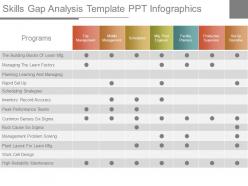
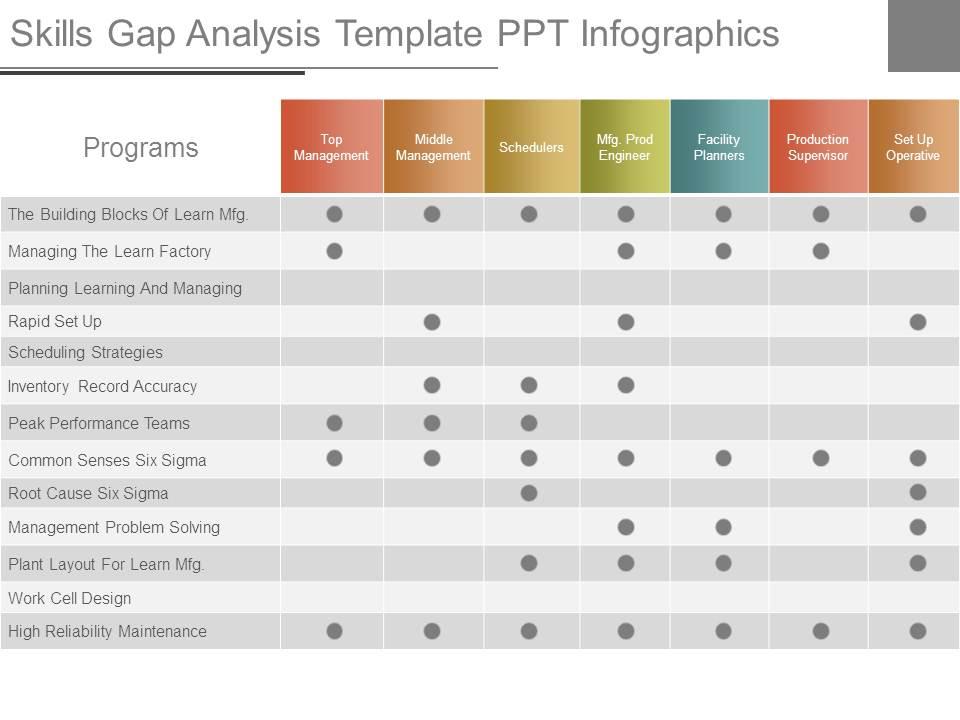
Apresentação de infográficos de ppt de modelo de análise de lacunas de habilidades. Este é um infográfico de ppt de template de análise de lacuna de habilidades. Este é o processo de sete estágios. Os estágios neste processo são programas, alta gerência, média gerência, planejadores, engenheiro de produção de mfg, planejadores de instalações, supervisor de produção, instalação operacional, os blocos de construção de learning mfg, gerenciamento da fábrica de aprendizado, planejamento de aprendizagem e gerenciamento, configuração rápida , estratégias de agendamento, precisão de registro de inventário, equipes de desempenho de pico, senso comum six sigma, causa raiz six sigma, solução de problemas de gerenciamento, layout de planta para aprender mfg, projeto de célula de trabalho, manutenção de alta confiabilidade.
People who downloaded this PowerPoint presentation also viewed the following :
Skills Gap Analysis Template Ppt Infographics com todos os 7 slides:
Chegue ao fundo de seus medos com nossos Infográficos de modelo de análise de lacunas de habilidades. Identifique corretamente quaisquer inseguranças.
FAQs for Skills gap analysis
Look for the obvious stuff first - missed deadlines, more errors than usual, people constantly needing help with basic tasks. High turnover in certain roles is huge (seriously, that's like a neon sign). Performance metrics dropping, customer complaints going up. If you're relying on outside consultants for everyday work, that's another red flag. People struggling with new tech or processes they should've mastered by now. Oh, and if positions stay open forever because you can't find qualified candidates - yeah, that's telling you something. Just ask your team directly where they feel lost. They'll probably be brutally honest about what training they actually need.
Start with having people rate their own skills, then get their managers to do the same - you'd be surprised how different those ratings can be. Performance reviews are perfect for this if your company actually keeps decent records. For technical stuff, throw in some skills tests or just observe people doing their actual jobs. Honestly, self-reporting alone is pretty unreliable. Most people either undersell themselves or think they're way better than they are. Use multiple sources to get a real picture. Then figure out what skills you actually need now versus where you're heading as a company and map it all out.
Honestly, you can't skip getting employee feedback - it's like your sanity check for everything else. People know their own skill gaps way better than management thinks they do. When you actually ask what they're struggling with and where they need help, you get the real picture instead of just guessing from above. I mean, why would you want to build training programs that miss the mark completely? Their input shows you what's actually happening on the ground level. Survey them early in the process and keep checking back. Trust me, you'll save yourself from focusing on totally wrong areas.
Honestly, tech makes this so much easier than the old spreadsheet nightmare. Learning management systems can track where everyone's at skill-wise right now. AI assessment tools pinpoint exactly what's missing - though some are better than others, just saying. Analytics platforms are pretty cool for predicting what skills you'll need based on industry shifts. Your HR platform probably already maps employee skills against job requirements automatically, which saves forever. Many tools will even suggest specific training once they spot the gaps. I'd check what you've already got first - you might be sitting on features you don't even know about.
Hard skills are basically the technical stuff you can test - coding, data analysis, whatever software your job needs. Soft skills? That's communication, leadership, problem-solving. Way harder to measure but honestly just as crucial. Most managers obsess over hard skills because they're easier to spot and fix. Don't make that mistake in your analysis though. Hard skills gaps show up fast in reviews, but soft skills issues? They mess with team dynamics and project results over time. Start by figuring out what mix each role actually needs. Both types matter more than people think.
Honestly, I'd say every 6-12 months depending on your field. Tech moves crazy fast so maybe quarterly checks make sense there. More traditional stuff? Once a year's probably fine. The real trigger is when your business strategy shifts or new tech disrupts things - that's when you don't want to be caught with outdated skills. Oh, and definitely do a quick review before any big projects or restructuring. I learned this the hard way at my last job when we suddenly needed data analysts and had zero. Set a calendar reminder now or you'll totally forget until it's too late.
Honestly, start with competency mapping and job analysis frameworks - they're lifesavers. Map what skills people have now vs what they actually need for their roles. Then do structured interviews and dig into performance data to find the gaps. So many companies just wing it and guess (huge mistake). DACUM works really well for technical stuff since it breaks everything down into specific competencies. Oh, and definitely mix quantitative assessments with feedback from managers and employees. Test it out with one department first before you go crazy and roll it company-wide. Trust me on that one.
Honestly, think of it like using GPS for your team's skills. First figure out where you're headed in the next few years - new markets, different tech, whatever. Then see what capabilities those moves actually require. Compare that to what your people can do right now. The gaps you find? Those are your training priorities. I mean, it sounds obvious but most companies just throw money at random workshops instead of connecting skill development to their actual strategy. Focus on the competencies that'll make or break your future plans, not just what's trendy or cheap.
Dude, skills gaps are brutal for keeping people around. Your team gets frustrated when they can't actually do what you're asking of them - like, imagine struggling through every workday because you're missing key abilities. That sucks. People start feeling incompetent and worry their careers are going nowhere. So they bail for jobs where they won't feel lost all the time. Honestly, I've seen this happen way too often. You need to figure out what skills are missing first, then get training programs going. Catch these gaps early before half your team walks out the door.
Honestly, tech is going crazy right now - every company wants cybersecurity people, AI specialists, data scientists. Healthcare's also desperate, especially for nurses and mental health workers since COVID burned everyone out. Manufacturing's weird though, they need people who can work with robots and automated stuff, not just regular assembly line work. My cousin's been looking at tech jobs and literally every posting mentions machine learning somehow. These industries just moved too fast for schools to catch up. If you're thinking about switching careers, these three are where the money is. Demand's not gonna slow down.
Target the exact gaps you found instead of just dumping random training on everyone. Technical stuff? Go with hands-on workshops. Soft skills work better with role-playing or pairing people up with mentors. Oh, and don't forget some folks are visual learners while others need to actually do the thing to get it. Generic programs are honestly a waste of money. Test a small pilot first - see what actually works before you roll it out everywhere. Track real progress against your gap metrics, not just who showed up. That completion rate stuff doesn't tell you much anyway.
Honestly, your boss has to be on board or you're fighting an uphill battle. Without leadership backing this stuff, people won't admit what they don't know - and who can blame them? Nobody wants to look incompetent. Get your manager involved in the skills assessment early on. They need to actually fund training programs and show employees there's a real path forward. The best leaders I've seen do the learning themselves first (sets a good example). Oh, and make sure there's career growth tied to closing these gaps - otherwise why would anyone bother? Bottom line: no leadership support = no results.
Okay so basically a skills gap analysis shows you exactly what you're missing instead of just guessing. Like, you'll know you need someone with Python and cloud architecture skills rather than posting some vague "developer wanted" job. Way more targeted that way. You can figure out which gaps matter most too - honestly, this part's crucial because you can't hire everyone at once. Then use what you find to write job descriptions that actually attract people with the skills you don't have. It's kind of like having a shopping list vs wandering around aimlessly.
Track your training completion rates and skill assessment scores first - that's the easy stuff. But honestly? Most companies totally miss the retention angle, which is where the real money is. Skilled people who feel invested in will actually stay. Monitor productivity gains and error rates too. I'd also do confidence surveys before/after training sessions. Time-to-competency is clutch for measuring if people are actually getting up to speed faster. Internal promotions are another solid metric - shows your program is creating real career paths. Set up monthly check-ins so you can pivot if things aren't working.
Honestly, just weave learning into the actual day-to-day stuff instead of making it some weird HR thing. Give people dedicated time to mess around with new skills - like actual hours, not just "do it when you can." Internal mentorship works great too. The companies I've seen bomb at this treat it like checking boxes. Your leadership has to actually do it themselves or nobody takes it seriously. Oh, and celebrate when someone shares cool stuff they picked up - makes a bigger difference than you'd think. Start by asking what skills your team wants, then figure out what's stopping them from getting there.
-
Unique and attractive product design.
-
Very unique and reliable designs.