


Smart Electronics Manufacturing Company Profile Powerpoint Presentation Slides CP V
Our meticulously designed Smart Electronics Manufacturing Company Profile PowerPoint presentation offers a comprehensive overview of our organization, serving as a valuable resource for investors and stakeholders to assess our business value and performance. Beginning with an executive summary, the profile covers key aspects such as company introduction, mission, vision, core values, business model, global presence, historical milestones, product portfolio, and employee base. It also highlights our Board of Directors, key statistics, revenue growth from 2018 to 2022, and essential financial metrics including gross profit, operating profit, net profit, assets, liabilities, and cash flow in the Business Financials section. Insights into our business strategies, such as product differentiation, marketing, and supplier management, are provided. Additionally, the Service Business Outline offers a detailed analysis of our business performance through competitor and SWOT analysis, along with plans for future business launches and CSR activities, showcasing our forward-thinking approach. Real-life examples are included to illustrate the companys operations. Download our fully editable and customizable template, compatible with Google Slides, to delve into the intricacies.
Our meticulously designed Smart Electronics Manufacturing Company Profile PowerPoint presentation offers a comprehensive ov..






















-

- Google Slides is a new FREE Presentation software from Google.
- All our content is 100% compatible with Google Slides.
- Just download our designs, and upload them to Google Slides and they will work automatically.
- Amaze your audience with SlideTeam and Google Slides.
-

Want Changes to This PPT Slide? Check out our Presentation Design Services
-

- WideScreen Aspect ratio is becoming a very popular format. When you download this product, the downloaded ZIP will contain this product in both standard and widescreen format.
-

- Some older products that we have may only be in standard format, but they can easily be converted to widescreen.
- To do this, please open the SlideTeam product in Powerpoint, and go to
- Design ( On the top bar) -> Page Setup -> and select "On-screen Show (16:9)” in the drop down for "Slides Sized for".
- The slide or theme will change to widescreen, and all graphics will adjust automatically. You can similarly convert our content to any other desired screen aspect ratio.
Compatible With Google Slides

Get This In WideScreen
You must be logged in to download this presentation.


Do you want to remove this product from your favourites?
PowerPoint presentation slides
This complete deck covers various topics and highlights important concepts. It has PPT slides which cater to your business needs. This complete deck presentation emphasizes Smart Electronics Manufacturing Company Profile Powerpoint Presentation Slides CP V and has templates with professional background images and relevant content. This deck consists of total of fourty eight slides. Our designers have created customizable templates, keeping your convenience in mind. You can edit the color, text and font size with ease. Not just this, you can also add or delete the content if needed. Get access to this fully editable complete presentation by clicking the download button below.

People who downloaded this PowerPoint presentation also viewed the following :
Content of this Powerpoint Presentation
Slide 1: This slide introduces Smart Electronics Manufacturing Company Profile. State your company name and begin.
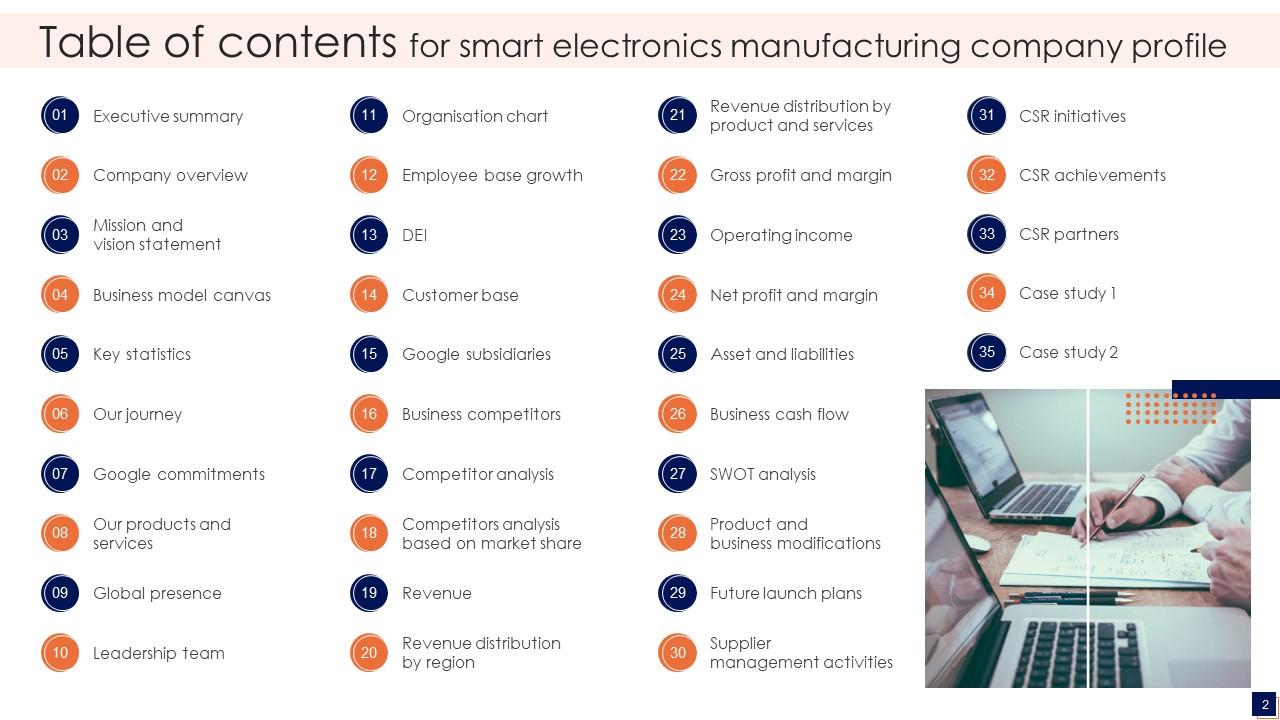
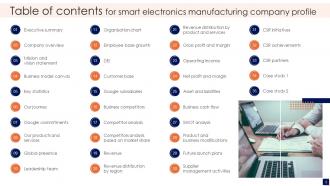
Slide 2: This slide shows Table of Content for the presentation.
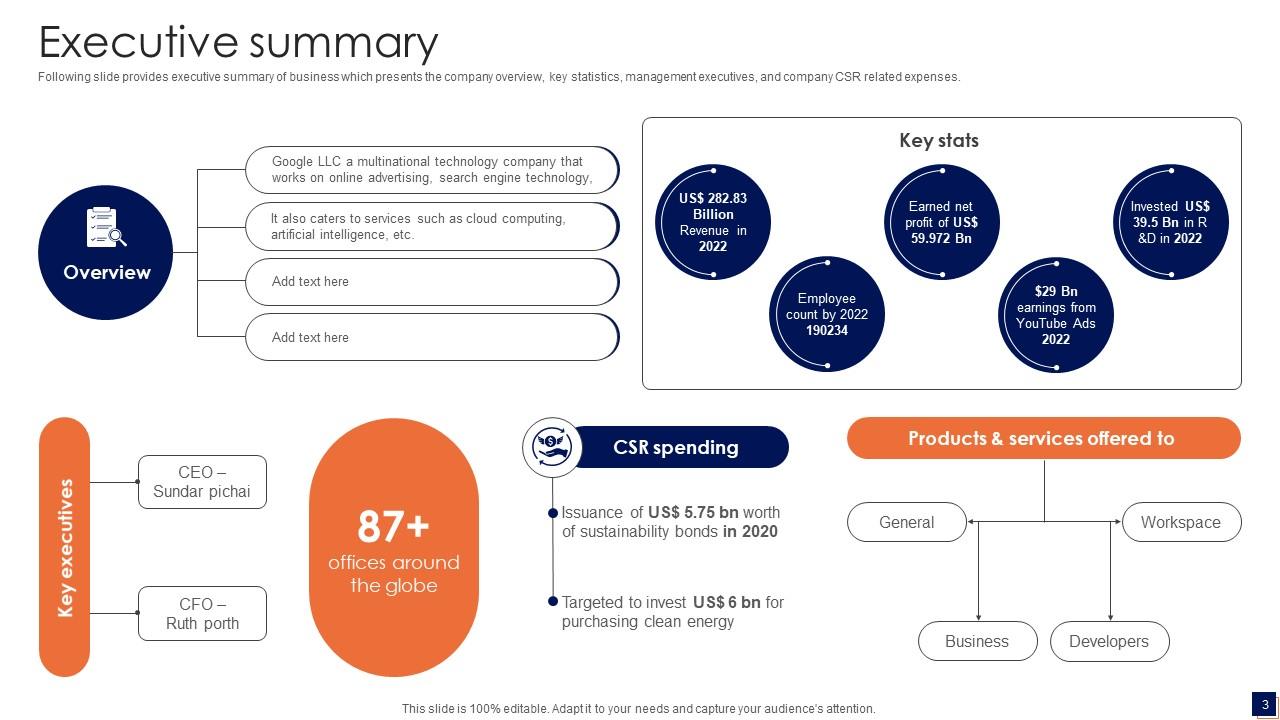
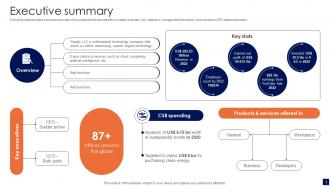
Slide 3: This slide provides executive summary of business which presents the company overview, key statistics, management executives, and company CSR related expenses.
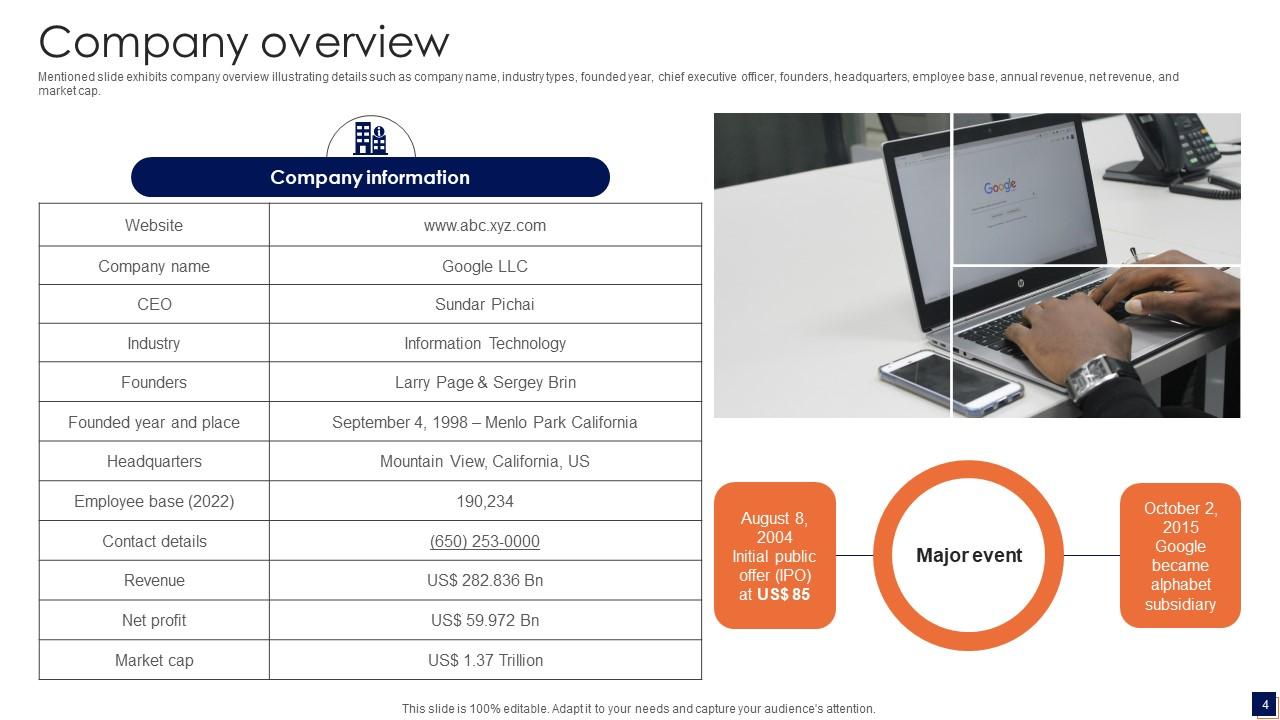
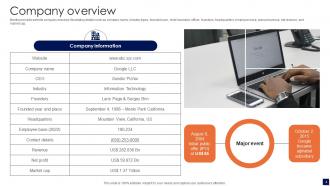
Slide 4: This slide exhibits company overview illustrating details such as company name, industry types, founded year, chief executive officer etc.
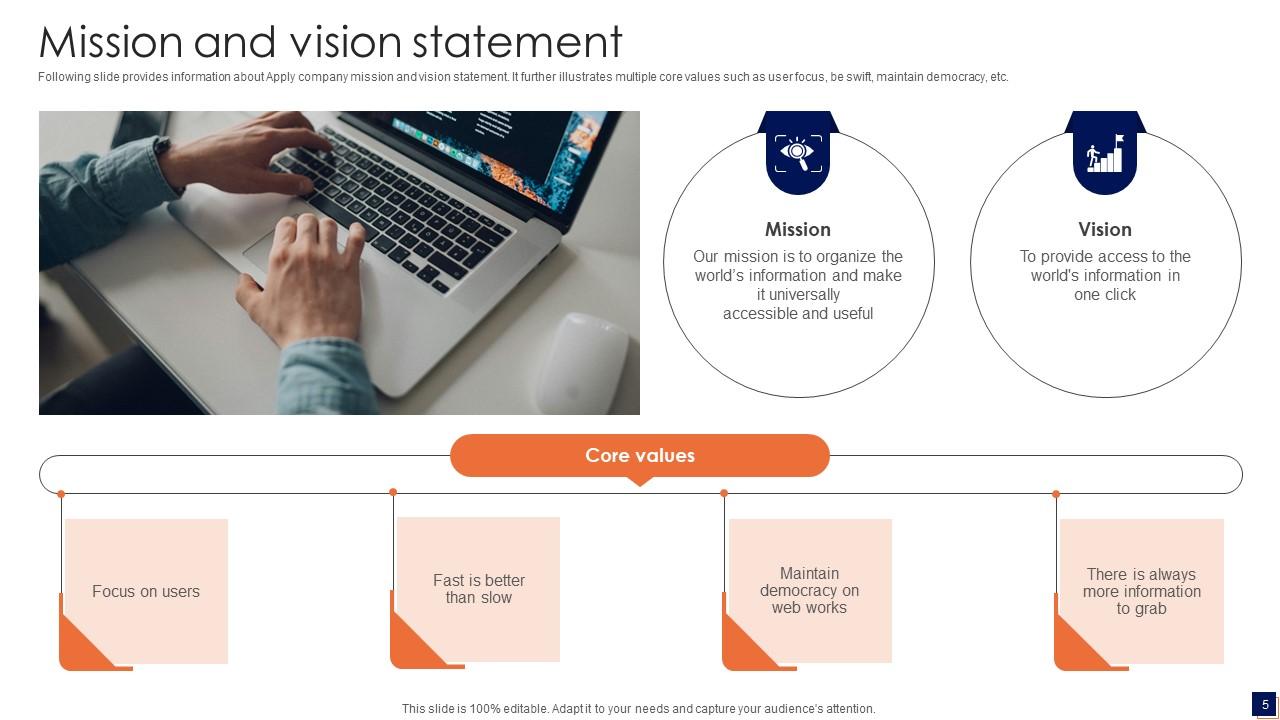
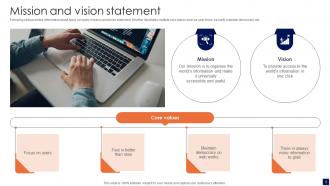
Slide 5: This slide provides information about Apply company mission and vision statement. It further illustrates multiple core values such as user focus, be swift etc.
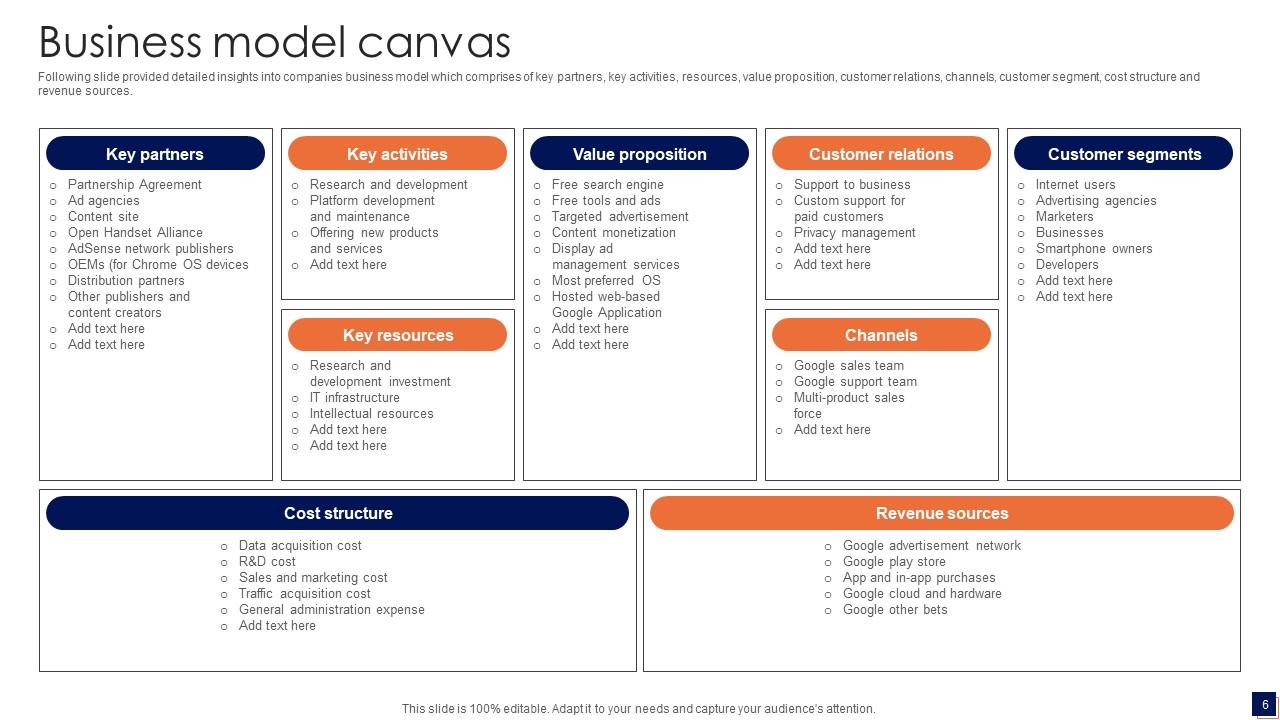
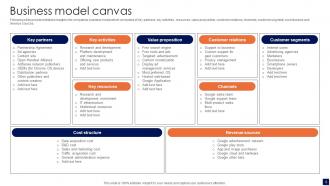
Slide 6: This slide displays detailed insights into companies business model which comprises of key partners, key activities etc.
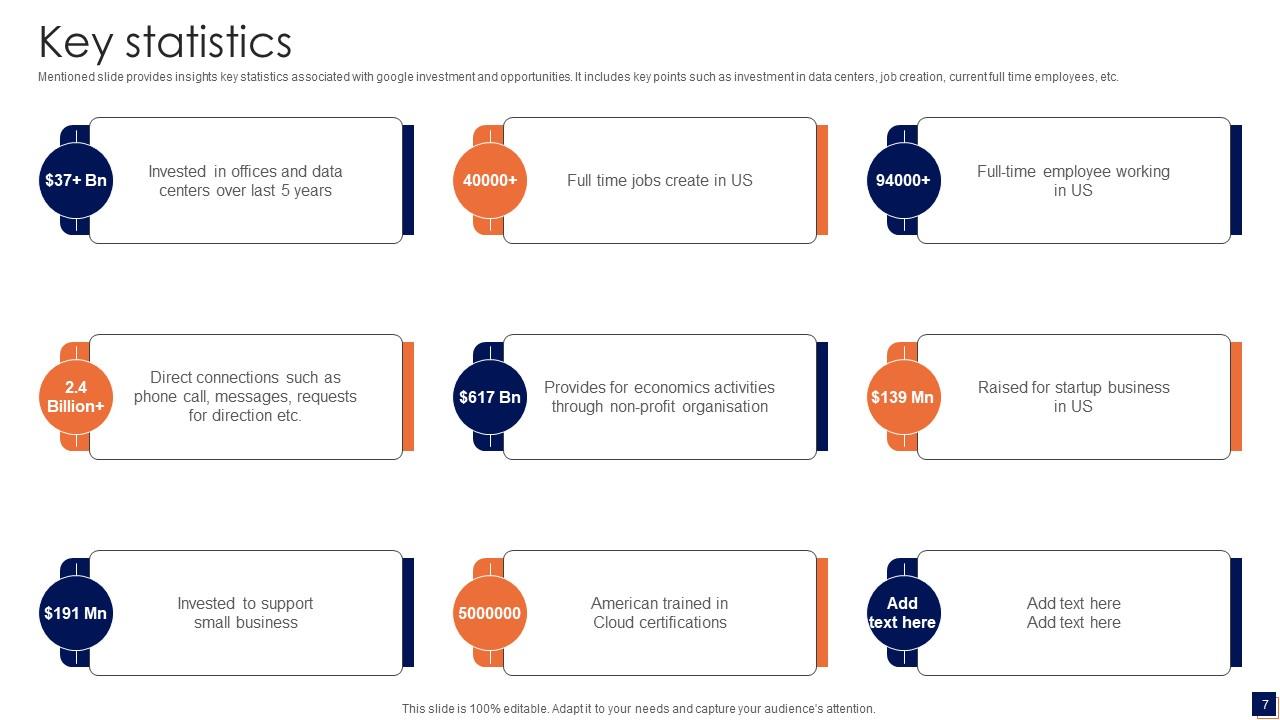
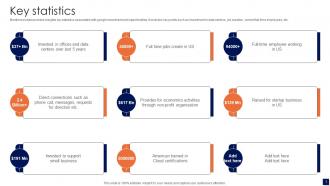
Slide 7: This slide provides insights key statistics associated with Google investment and opportunities. It includes key points such as investment in data centers etc.
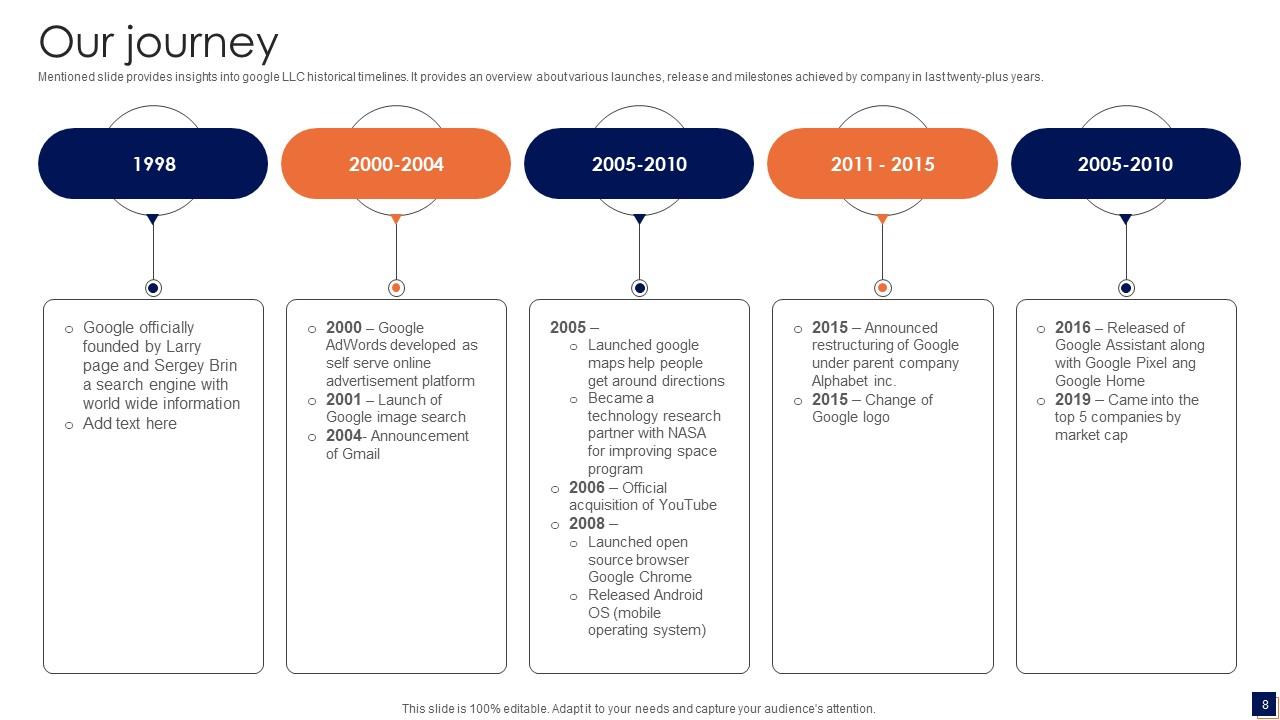
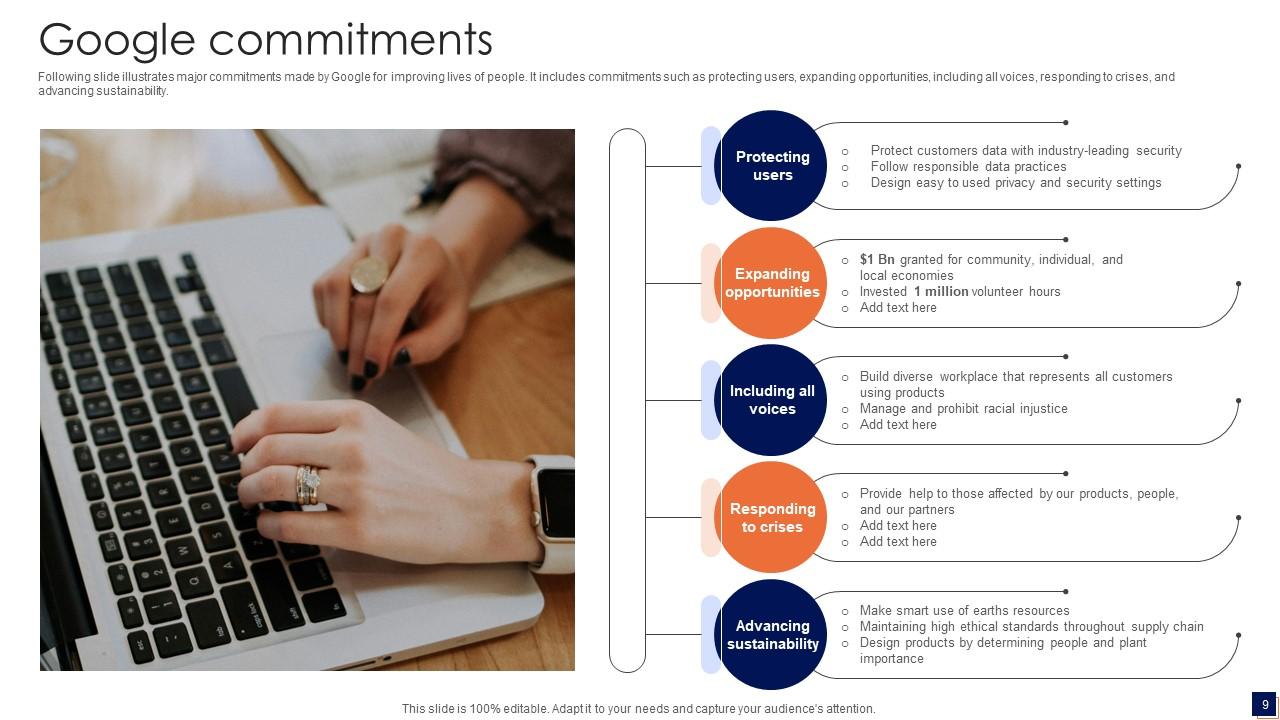
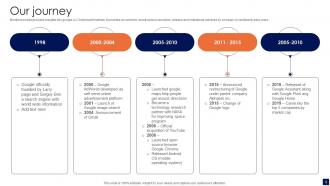
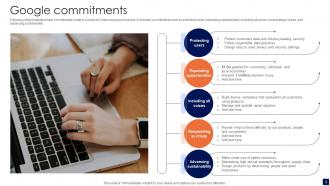
Slide 8: This slide presents insights into Google LLC historical timelines. It provides an overview about various launches, release and milestones achieved by company. br/>Slide 9: This slide illustrates major commitments made by Google for improving lives of people. It includes commitments such as protecting users etc.
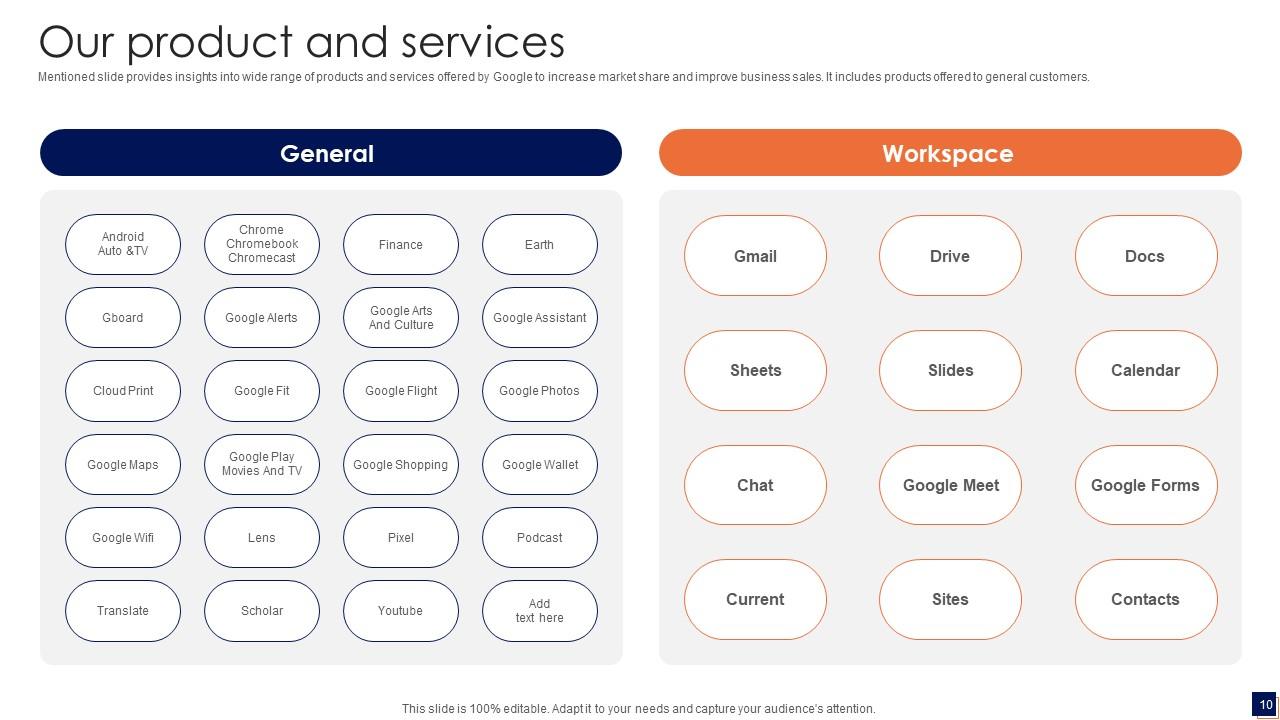
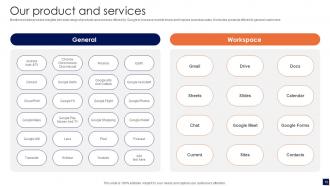
Slide 10: This slide provides insights into wide range of products and services offered by Google to increase market share and improve business sales.
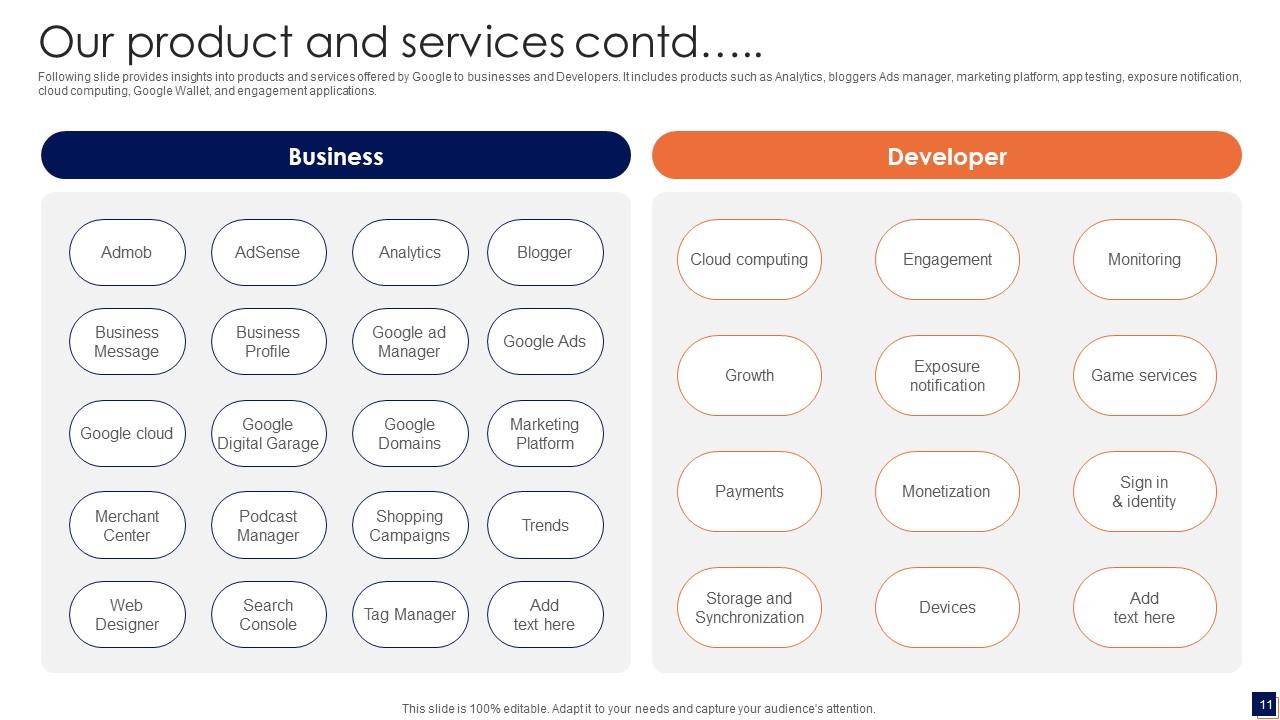
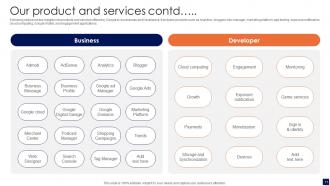
Slide 11: This slide displays insights into products and services offered by Google to businesses and Developers. It includes products such as Analytics, bloggers Ads manager etc.
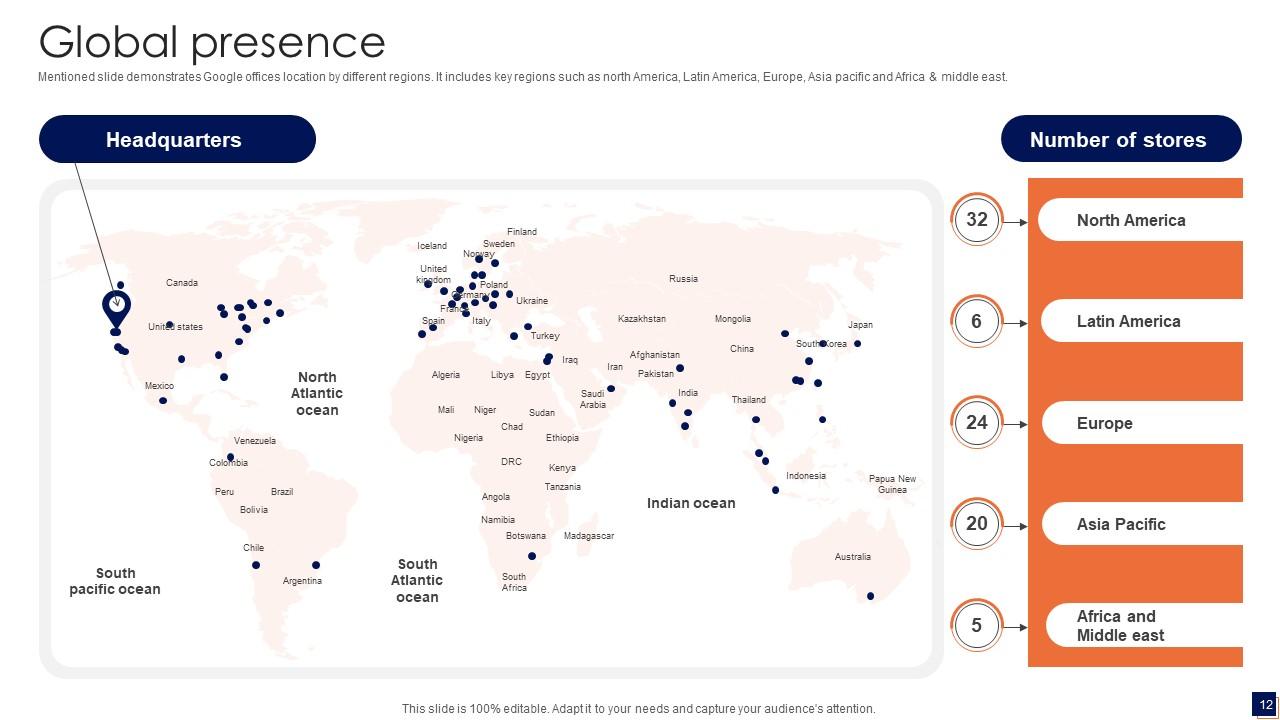
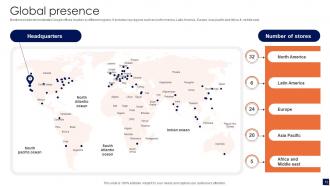
Slide 12: This slide demonstrates Google offices location by different regions. It includes key regions such as north America, Latin America, Europe etc.
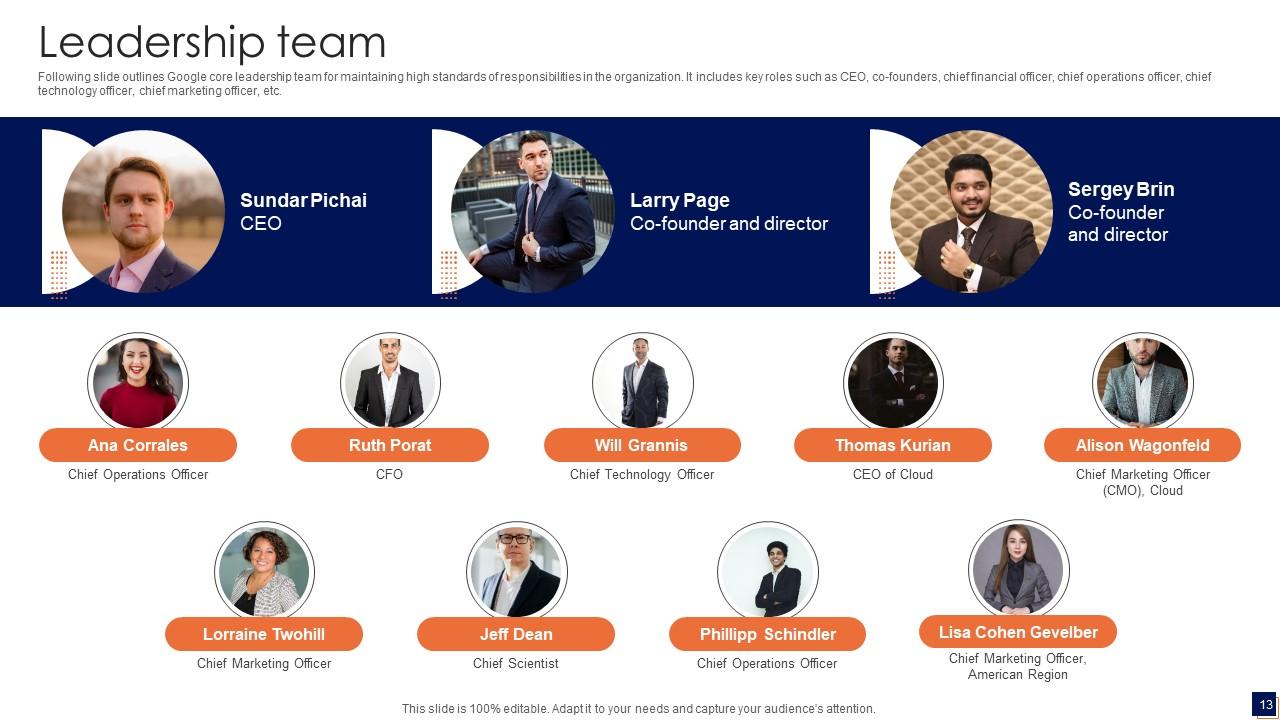
Slide 13: This slide outlines Google core leadership team for maintaining high standards of responsibilities in the organization.
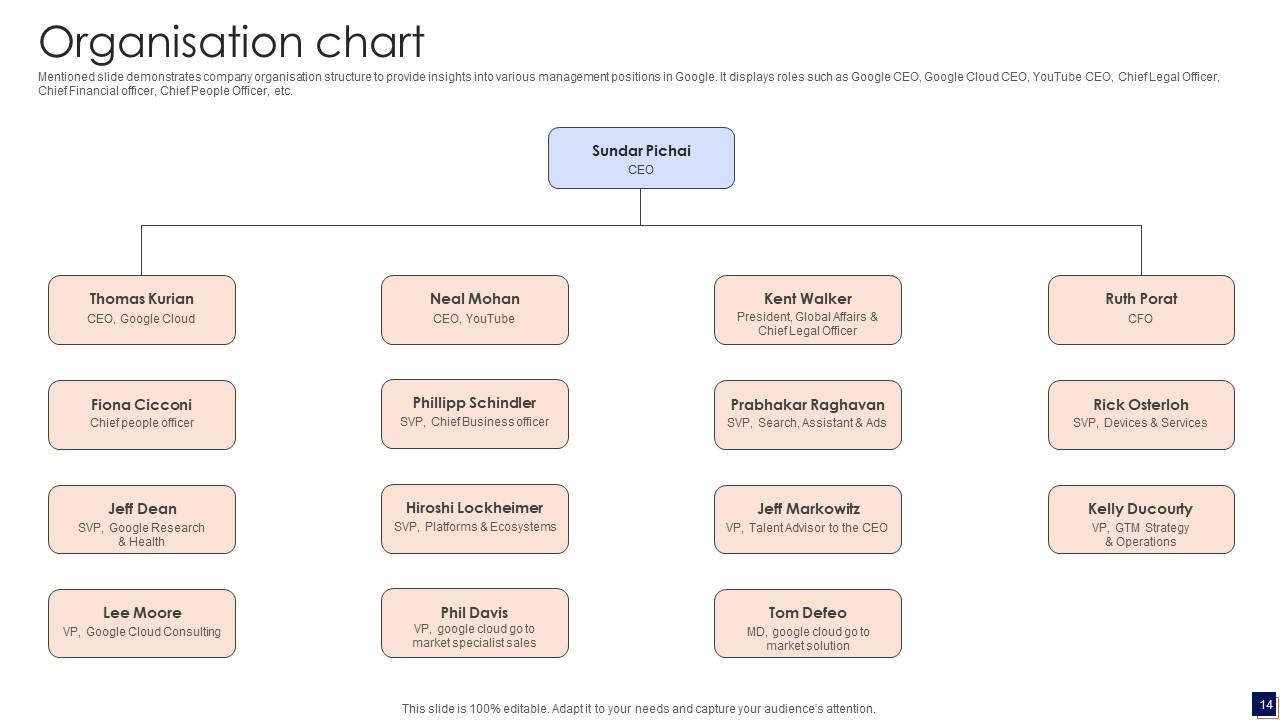
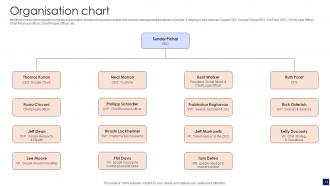
Slide 14: This slide demonstrates company organisation structure to provide insights into various management positions in Google.
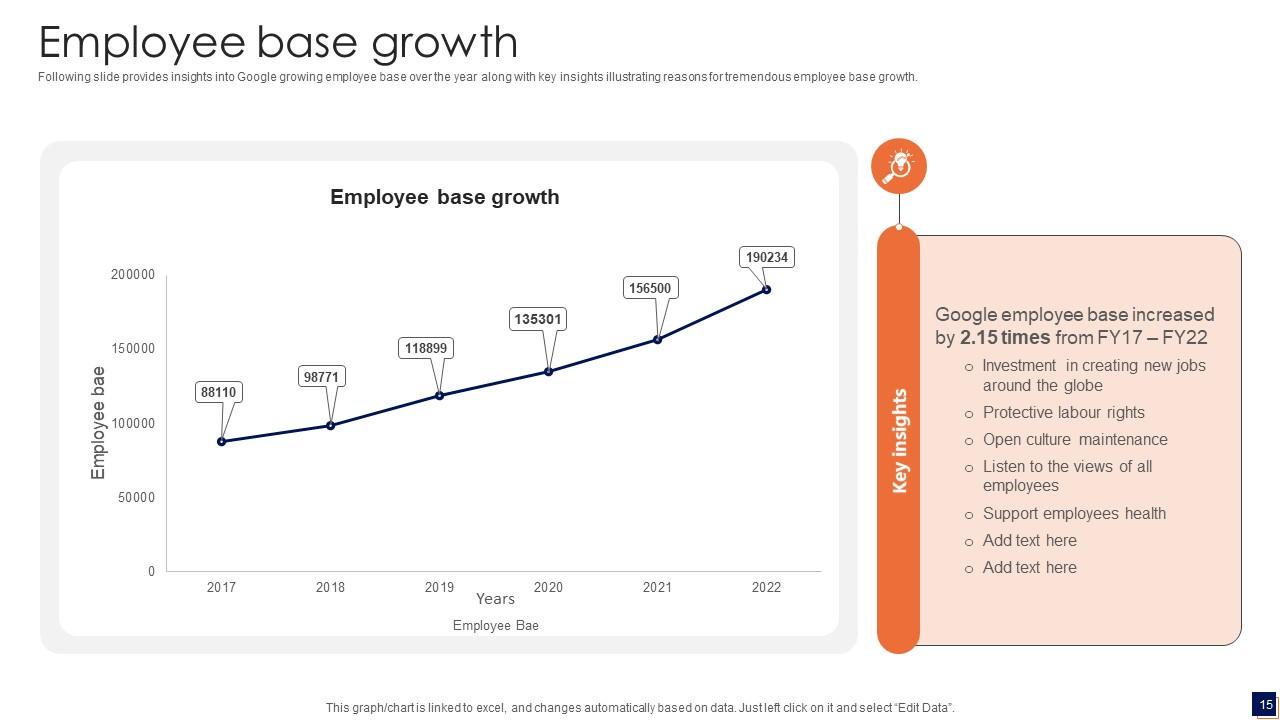
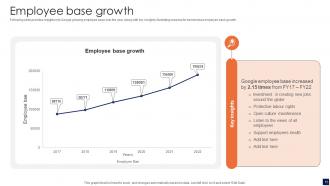
Slide 15: This slide provides insights into Google growing employee base over the year along with key insights illustrating reasons for tremendous employee base growth.
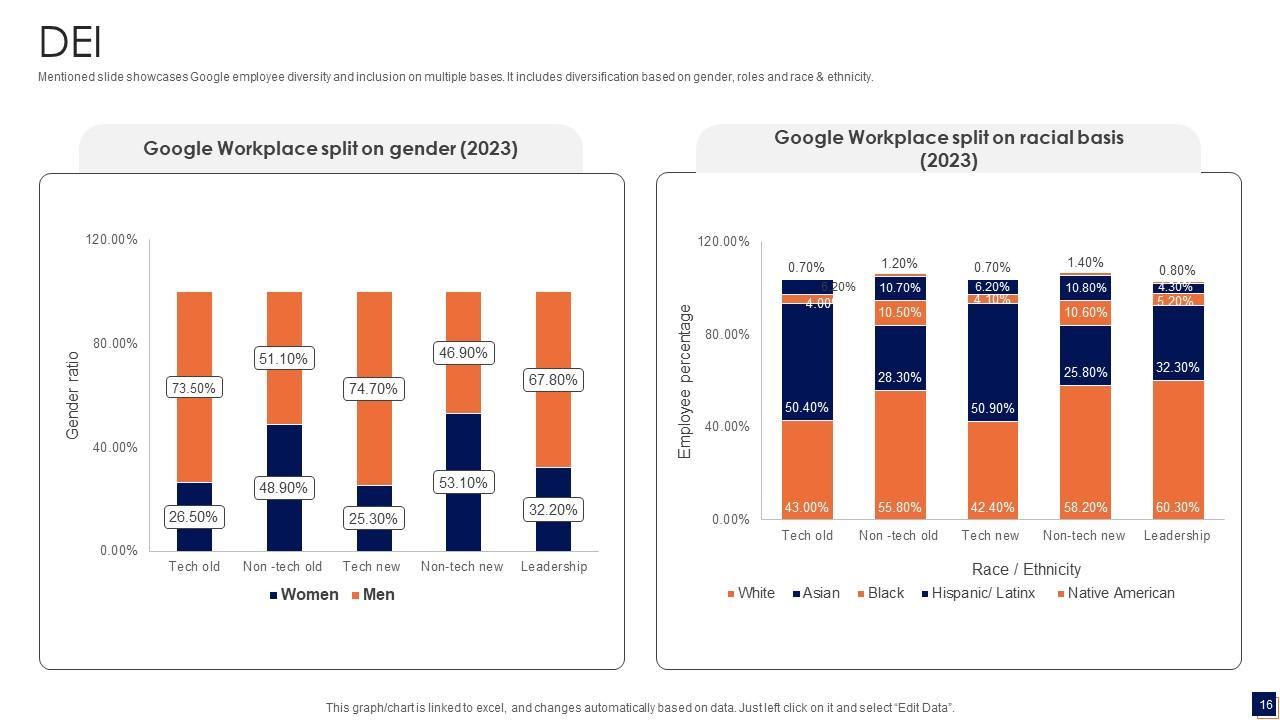
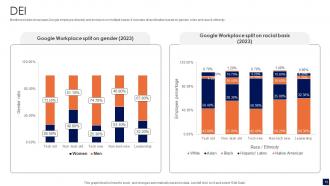
Slide 16: This slide showcases Google employee diversity and inclusion on multiple bases. It includes diversification based on gender, roles and race & ethnicity.
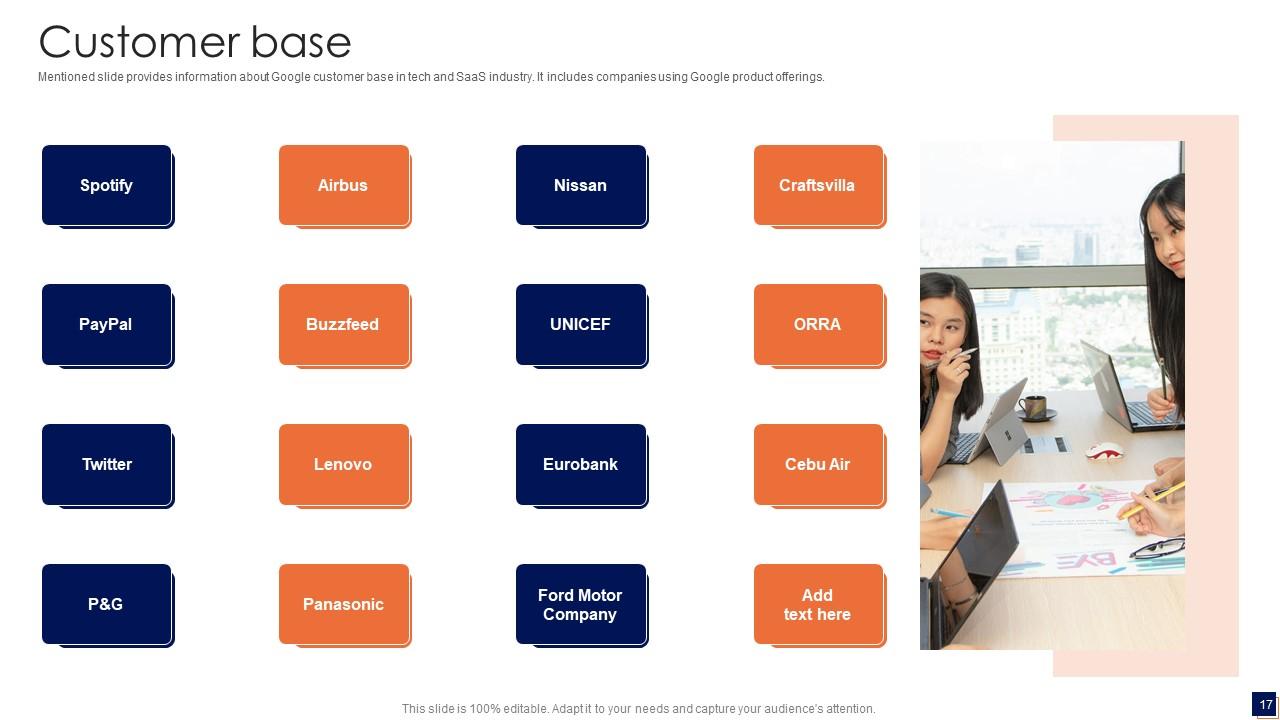
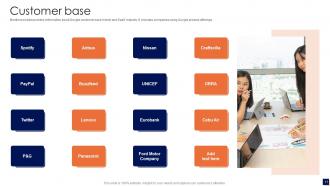
Slide 17: This slide provides information about Google customer base in tech and SaaS industry. It includes companies using Google product offerings.
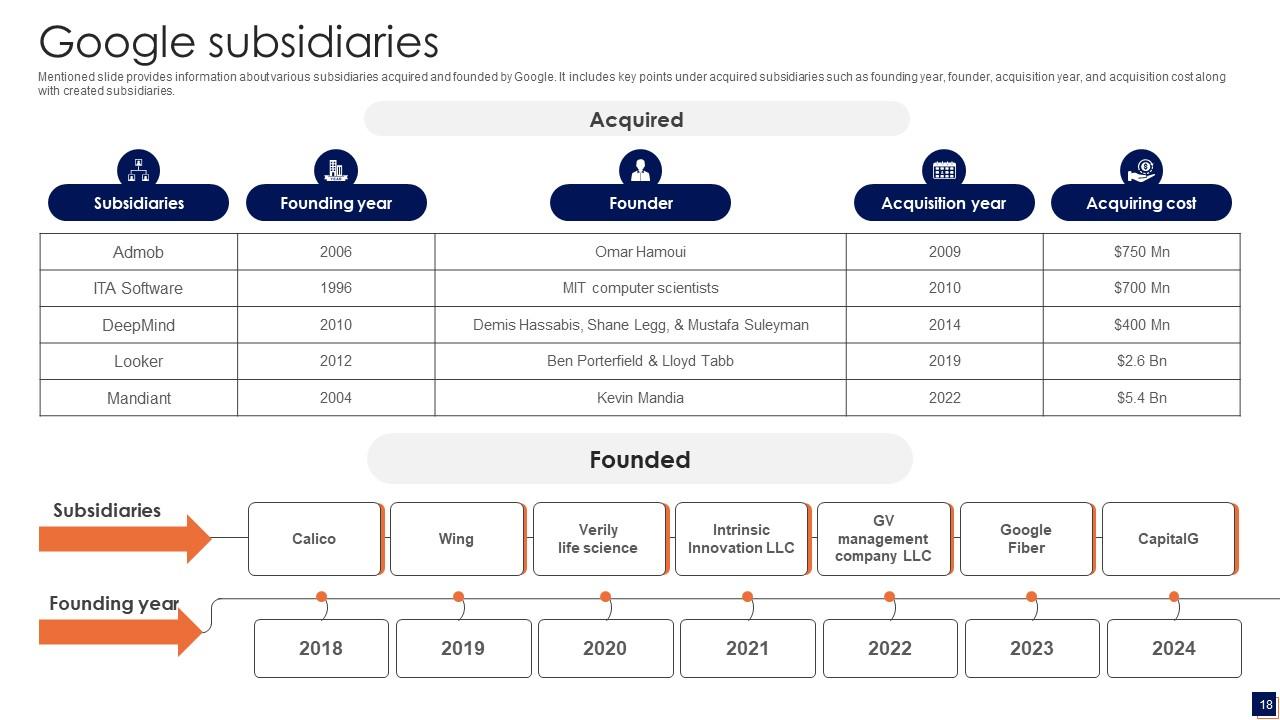
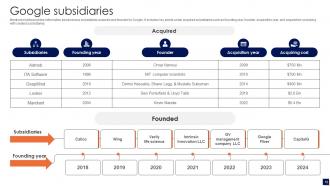
Slide 18: This slide displays information about various subsidiaries acquired and founded by Google. It includes key points under acquired subsidiaries.
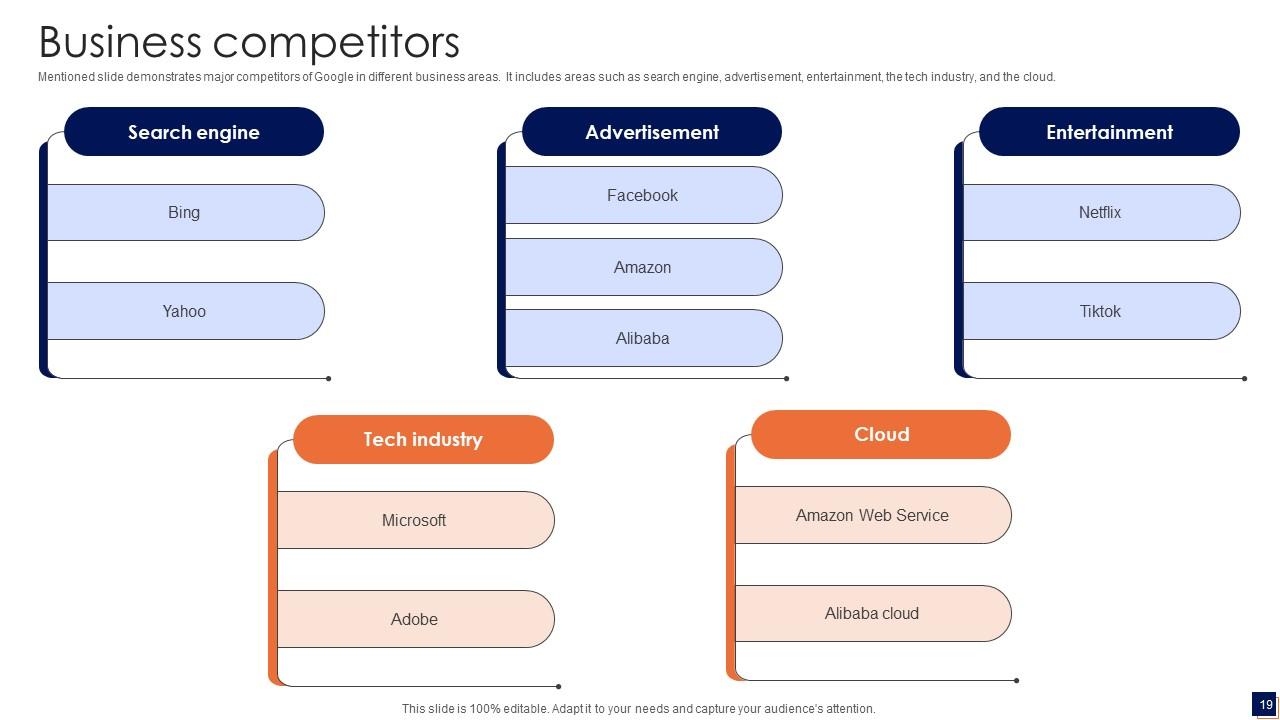
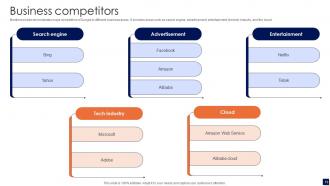
Slide 19: This slide demonstrates major competitors of Google in different business areas. It includes areas such as search engine, advertisement etc.
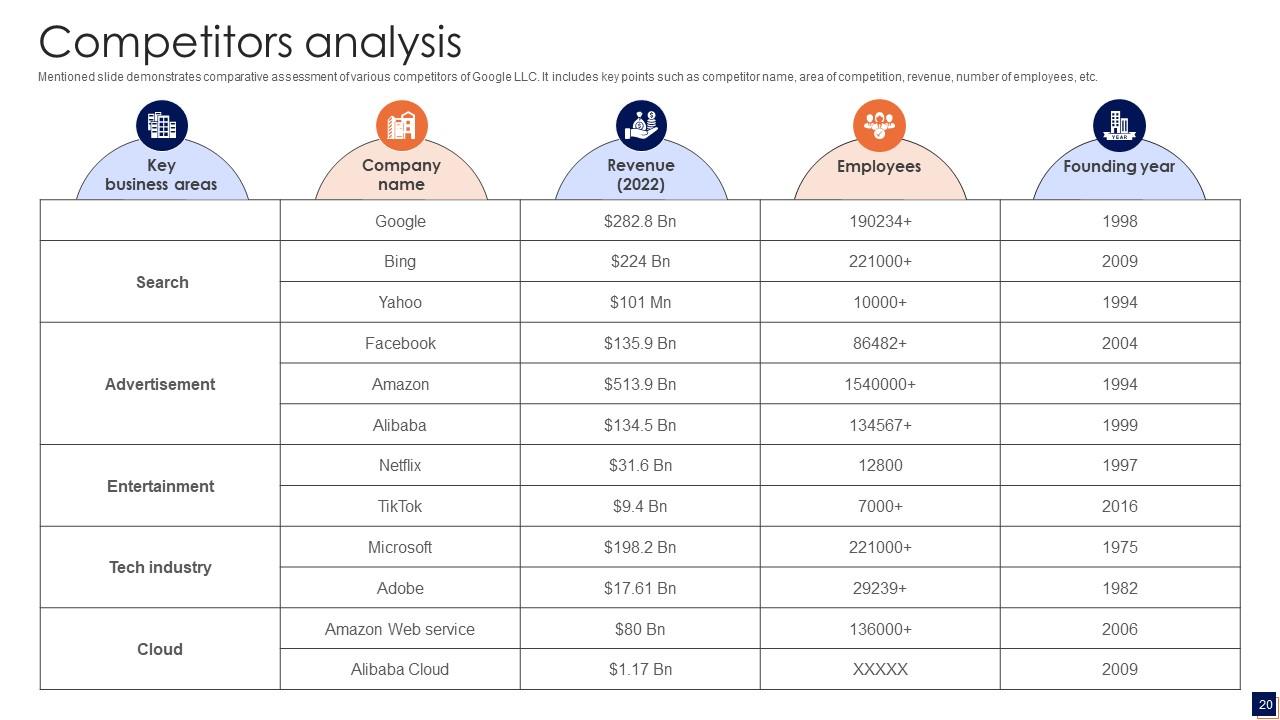
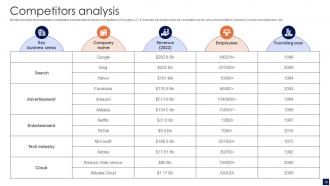
Slide 20: This slide presents comparative assessment of various competitors of Google LLC. It includes key points such as competitor name, area of competition etc.
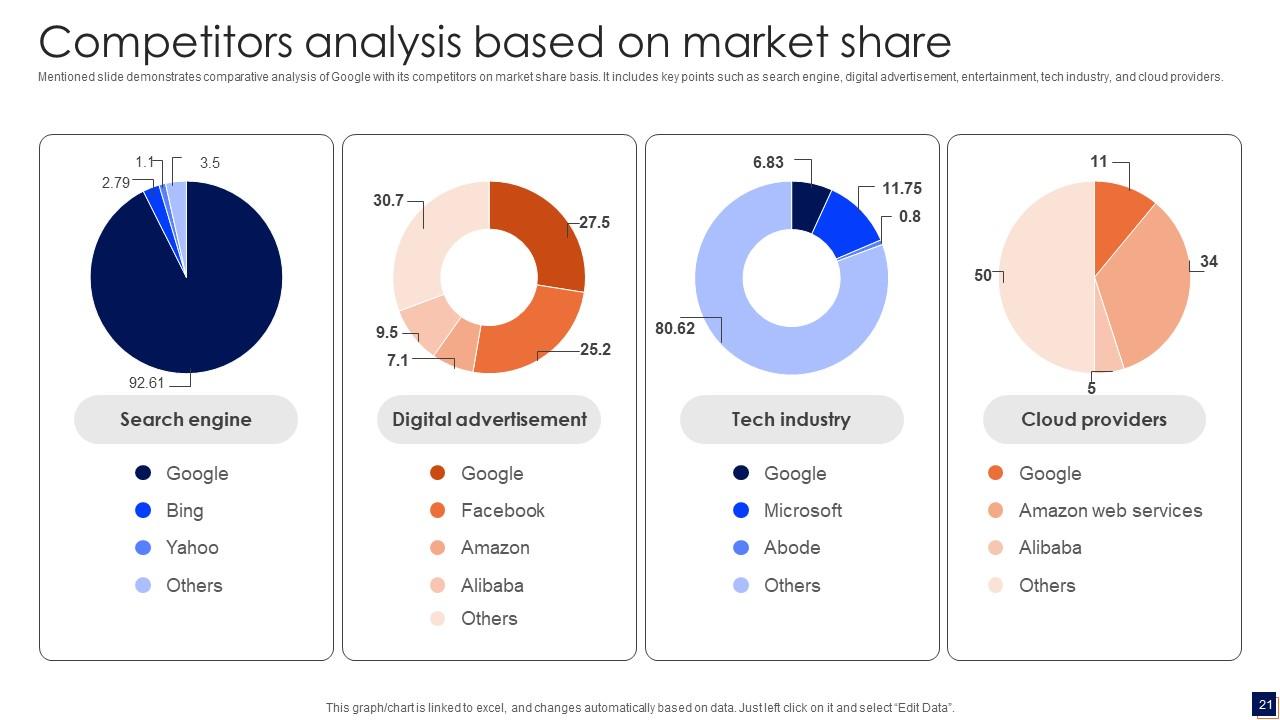
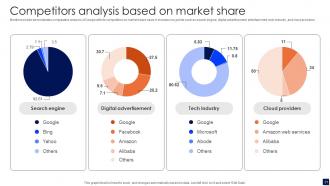
Slide 21: This slide demonstrates comparative analysis of Google with its competitors on market share basis. It includes key points such as search engine, digital advertisement etc.
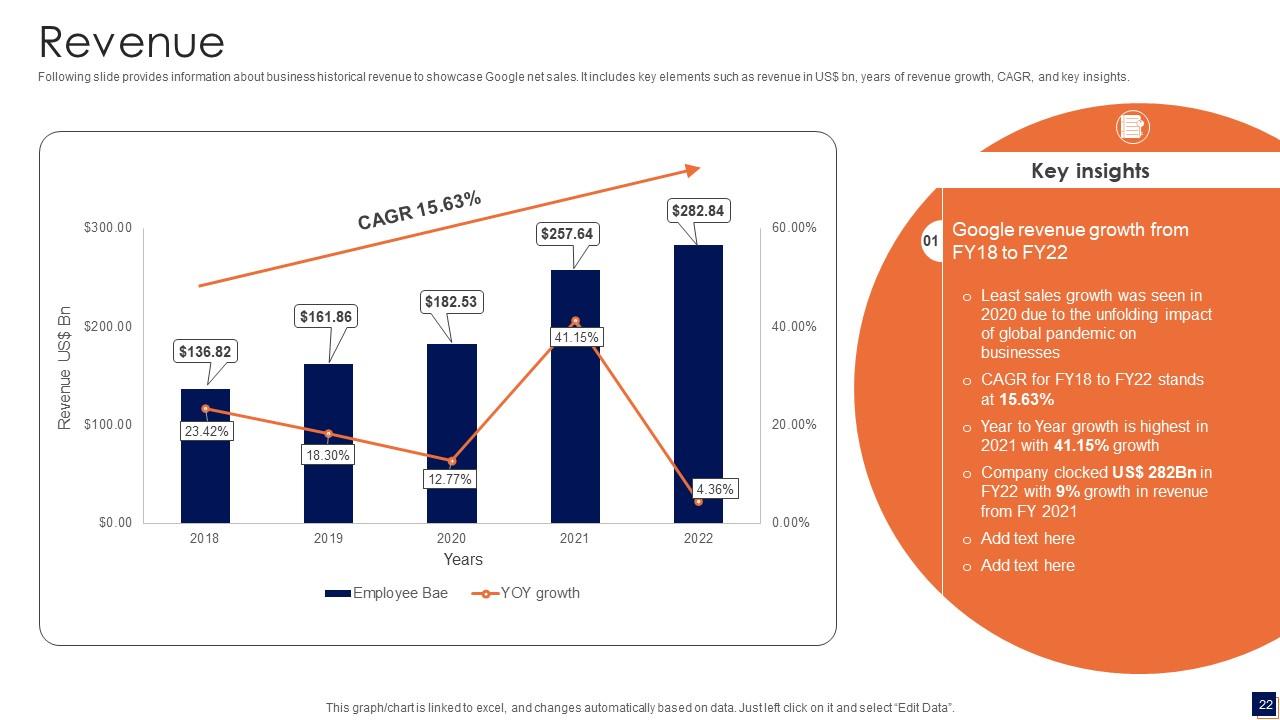
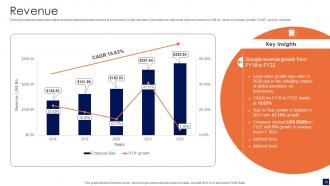
Slide 22: This slide provides information about business historical revenue to showcase Google net sales. It includes key elements such as revenue in US$ bn etc.
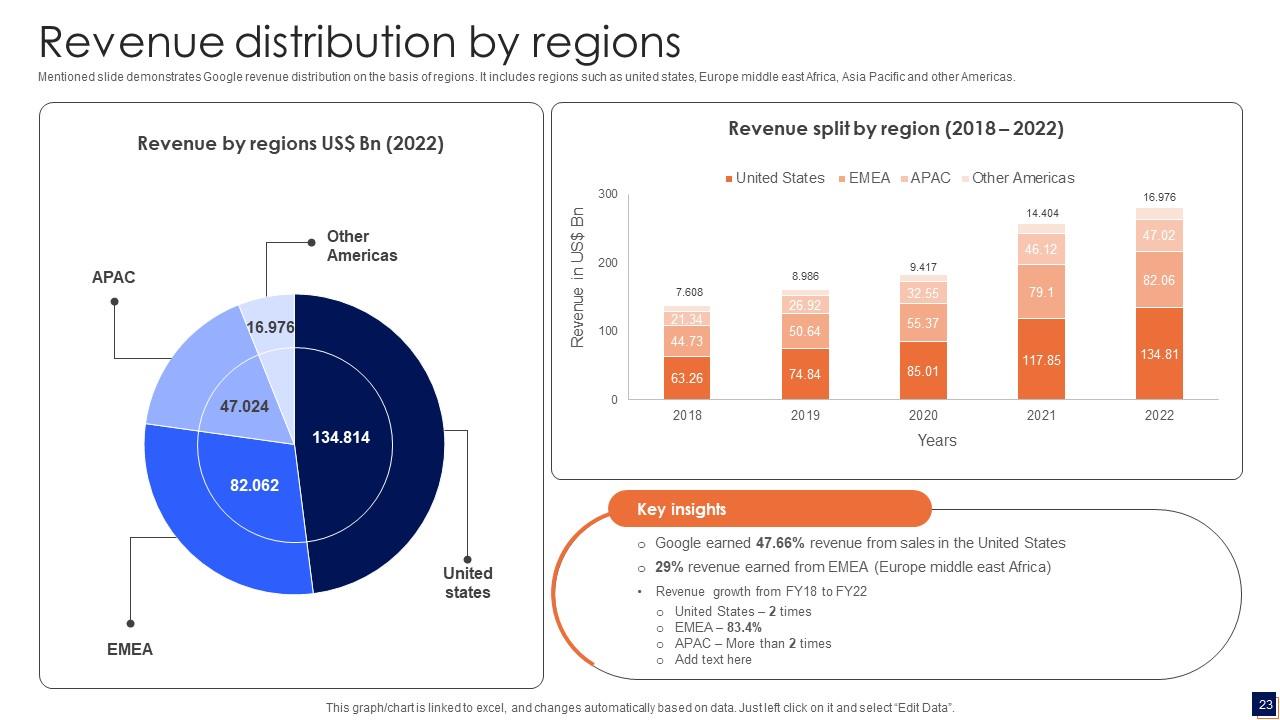
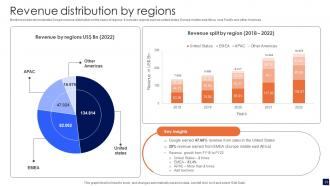
Slide 23: This slide demonstrates Google revenue distribution on the basis of regions. It includes regions such as united states, Europe middle east Africa etc.
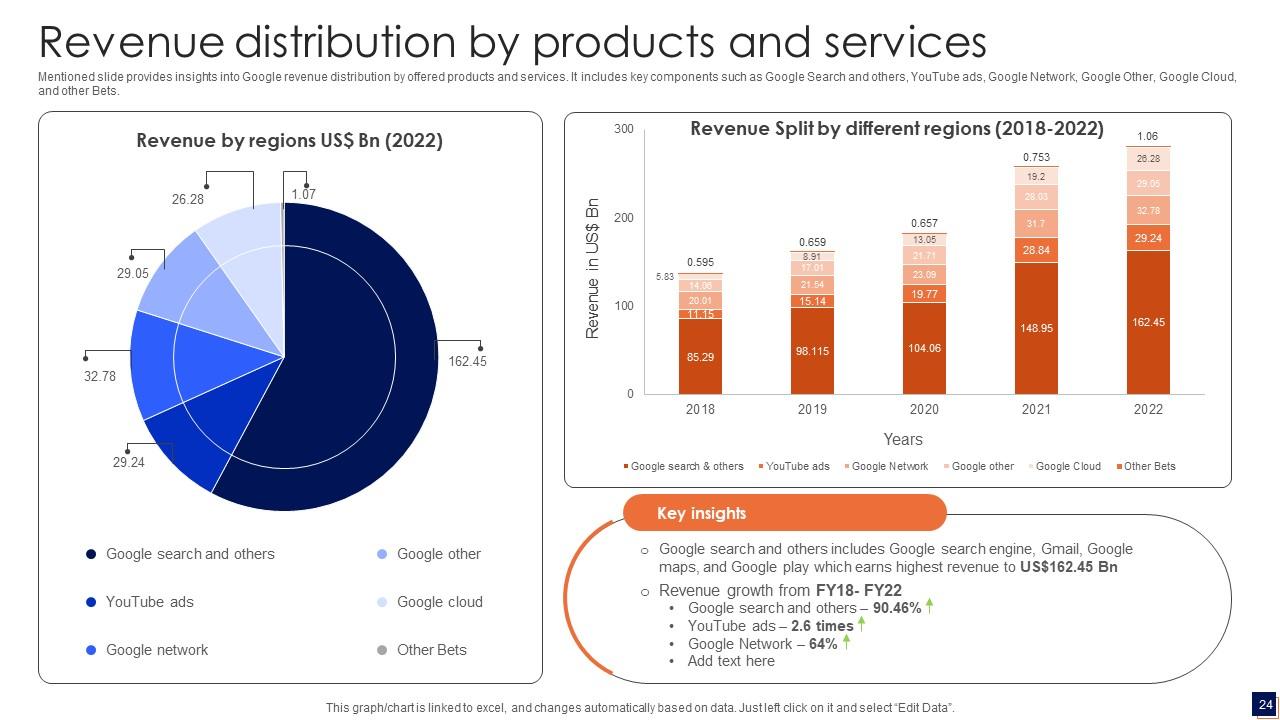
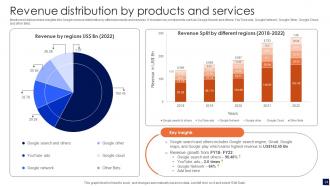
Slide 24: This slide provides insights into Google revenue distribution by offered products and services. It includes key components such as Google Search and others.
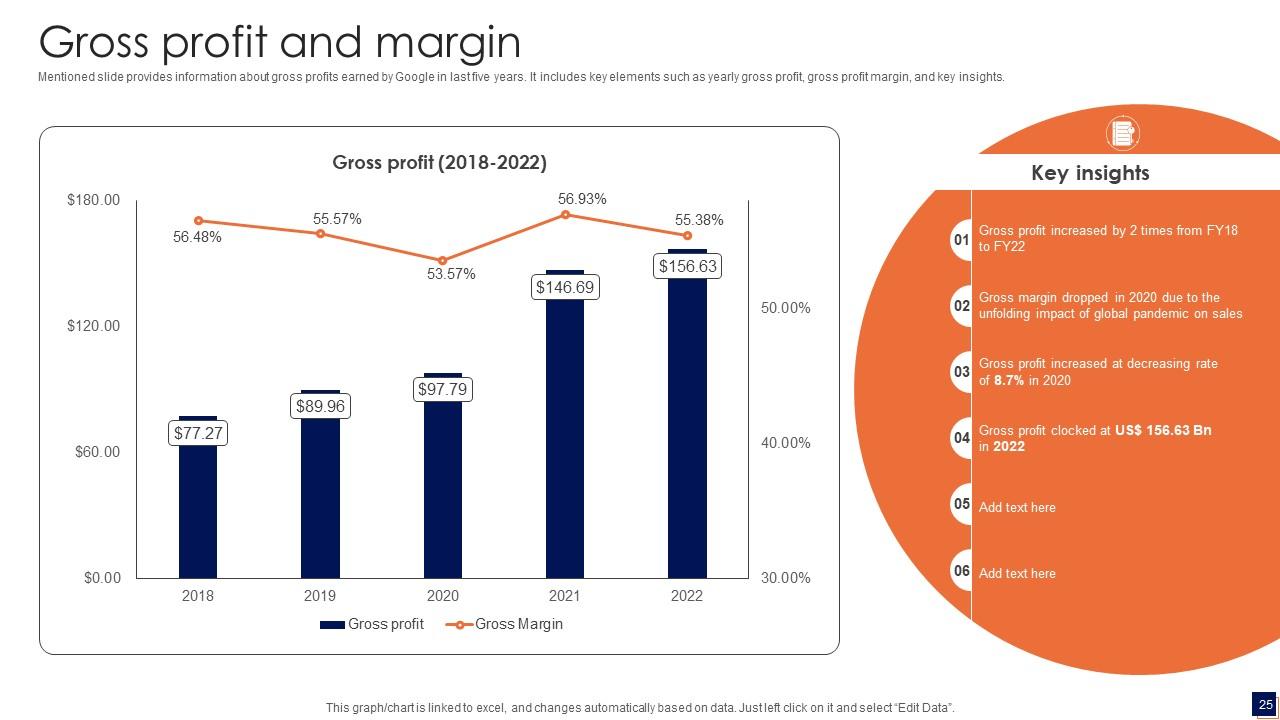
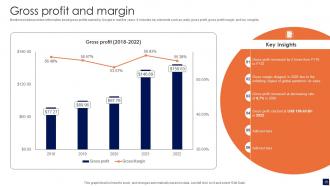
Slide 25: This slide displays information about gross profits earned by Google in last five years. It includes key elements such as yearly gross profit etc.
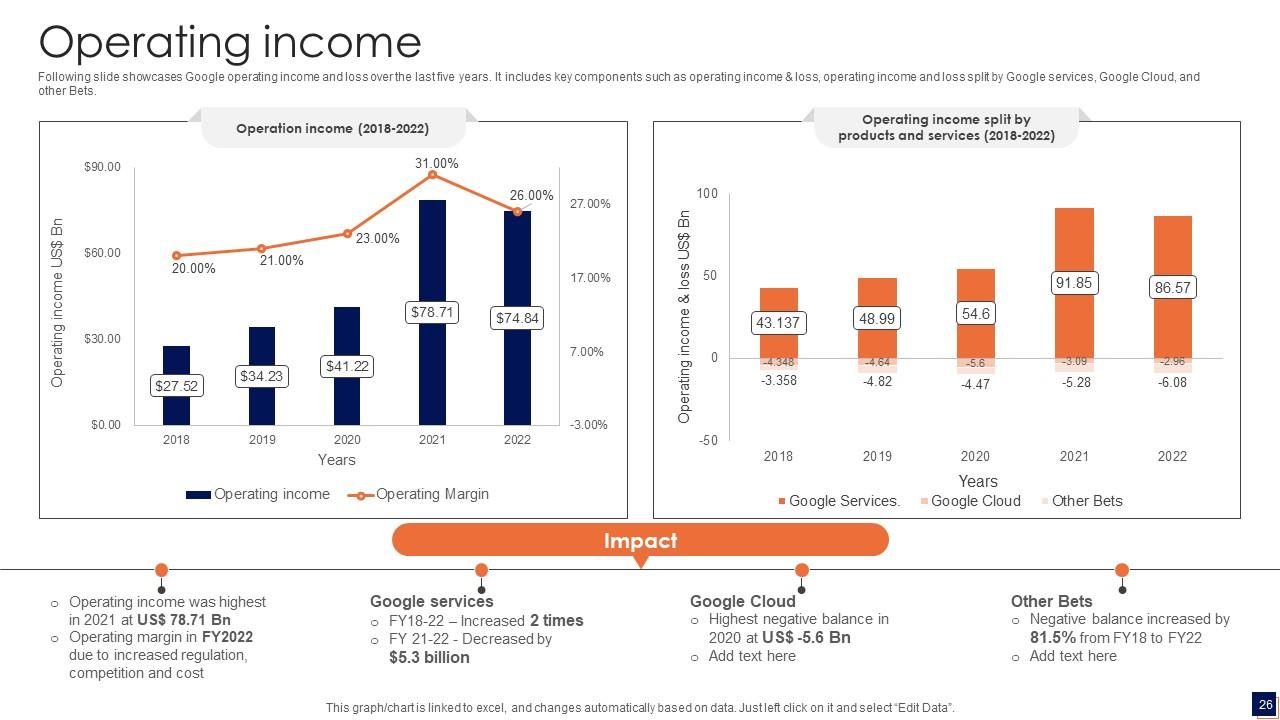
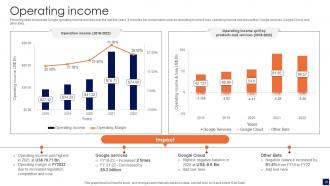
Slide 26: This slide showcases Google operating income and loss over the last five years. It includes key components such as operating income & loss etc.
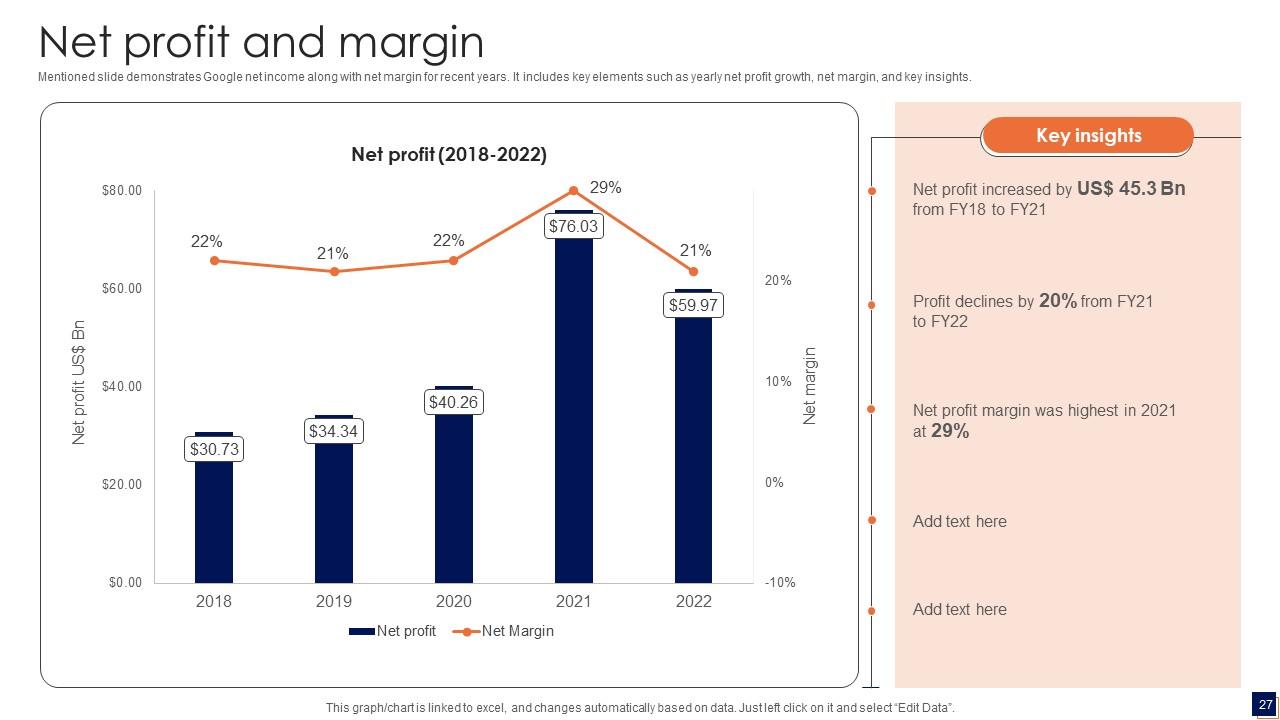
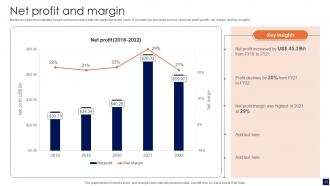
Slide 27: This slide demonstrates Google net income along with net margin for recent years. It includes key elements such as yearly net profit growth, net margin, and key insights.
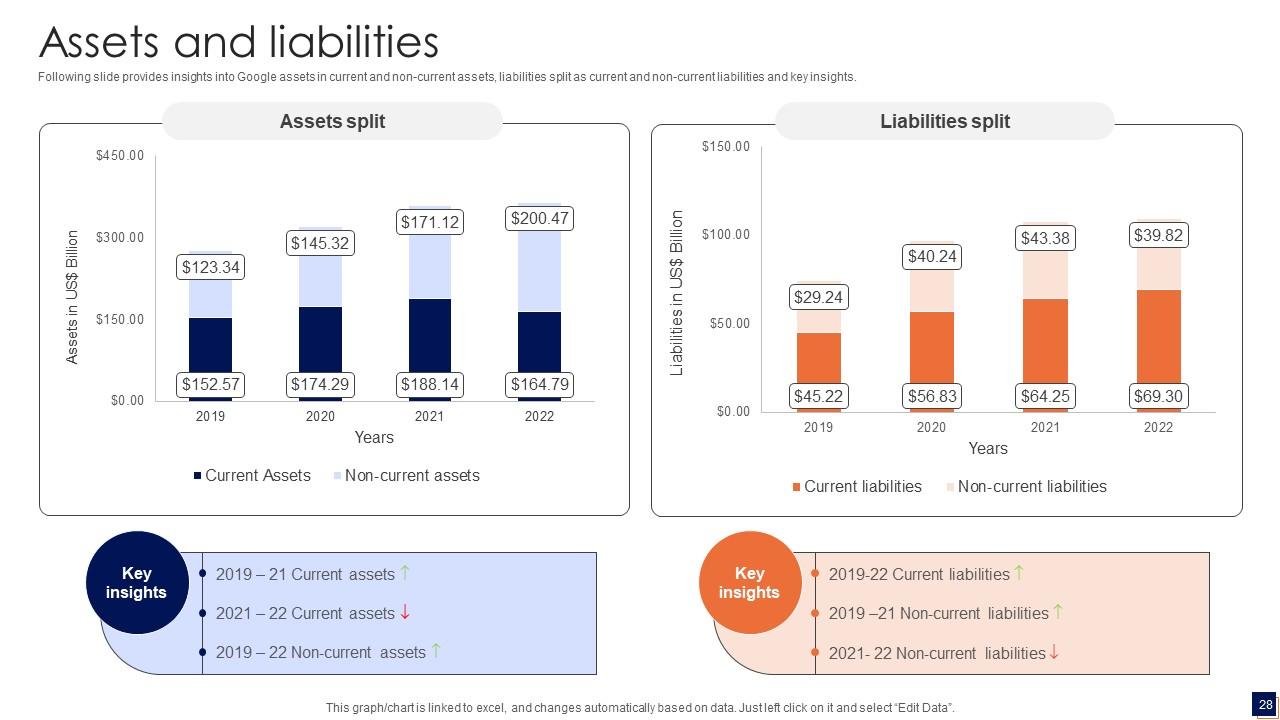
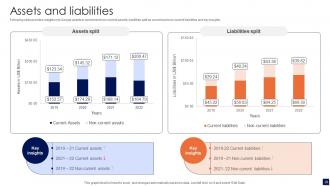
Slide 28: This slide provides insights into Google assets in current and non-current assets, liabilities split as current and non-current liabilities and key insights.
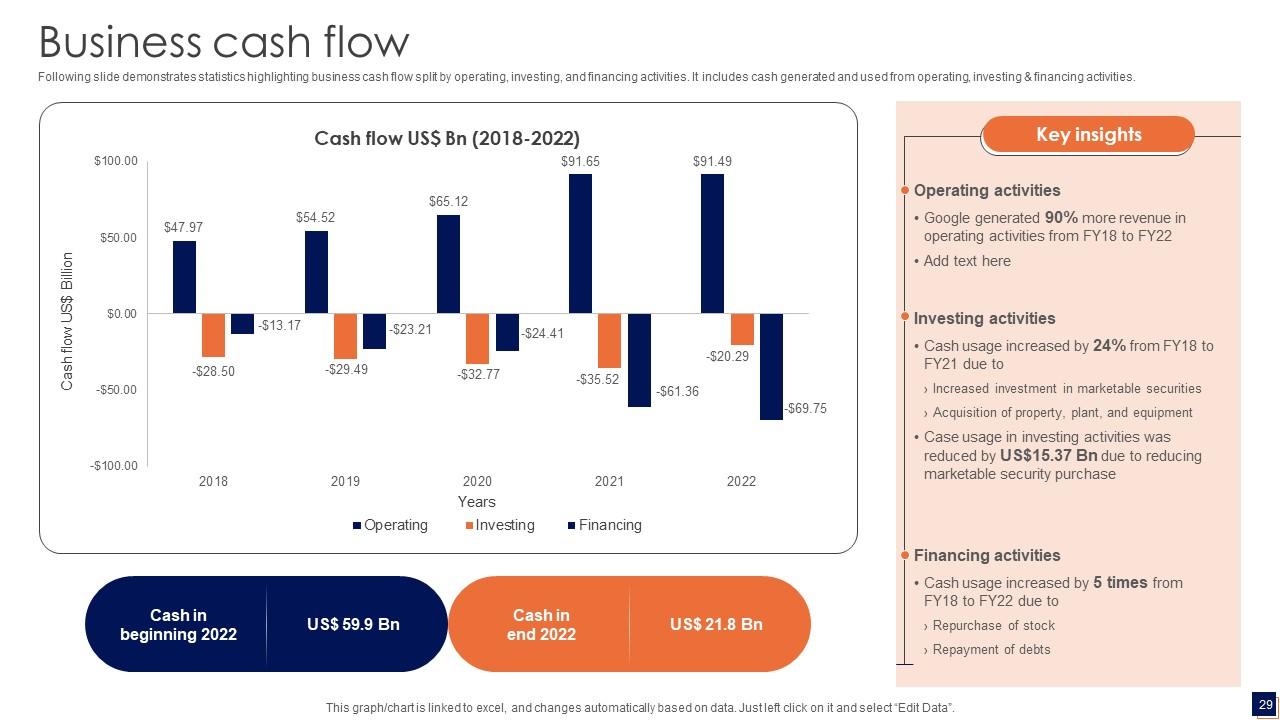
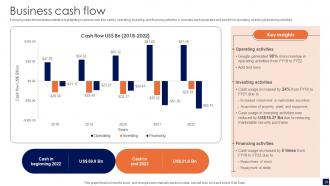
Slide 29: This slide demonstrates statistics highlighting business cash flow split by operating, investing, and financing activities.
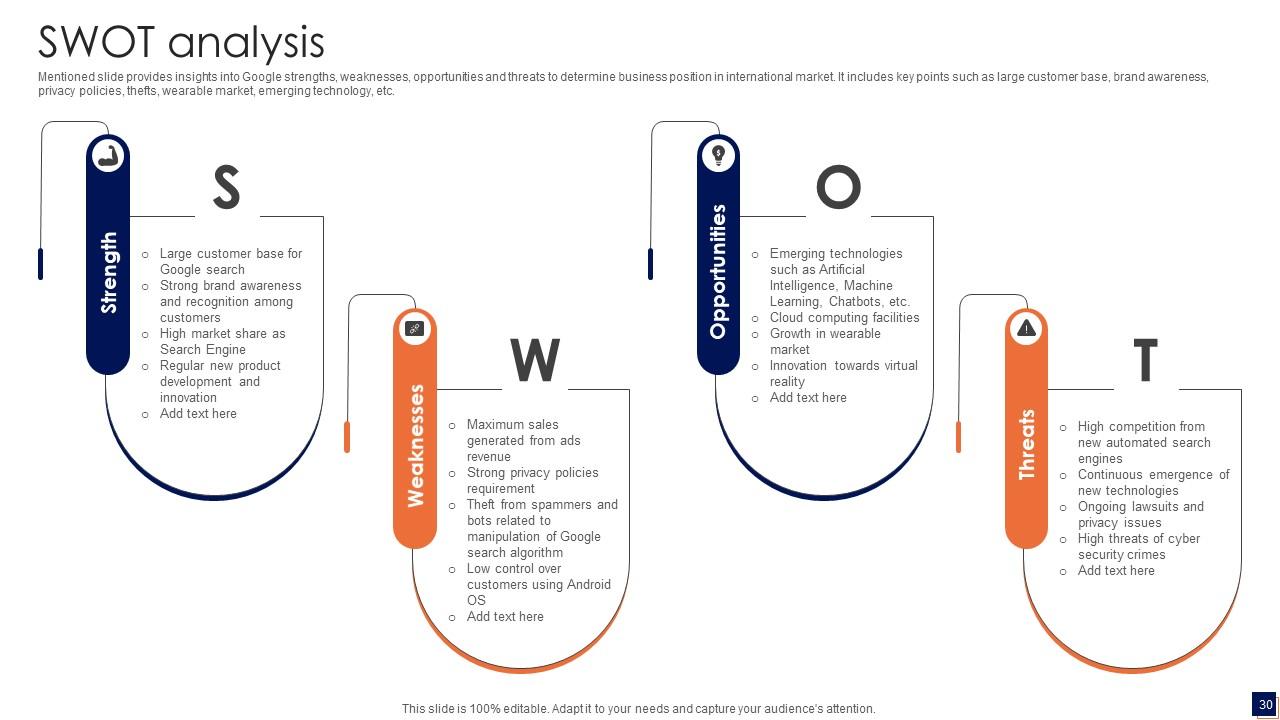
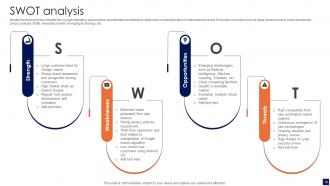
Slide 30: This slide provides insights into Google strengths, weaknesses, opportunities and threats to determine business position in international market.
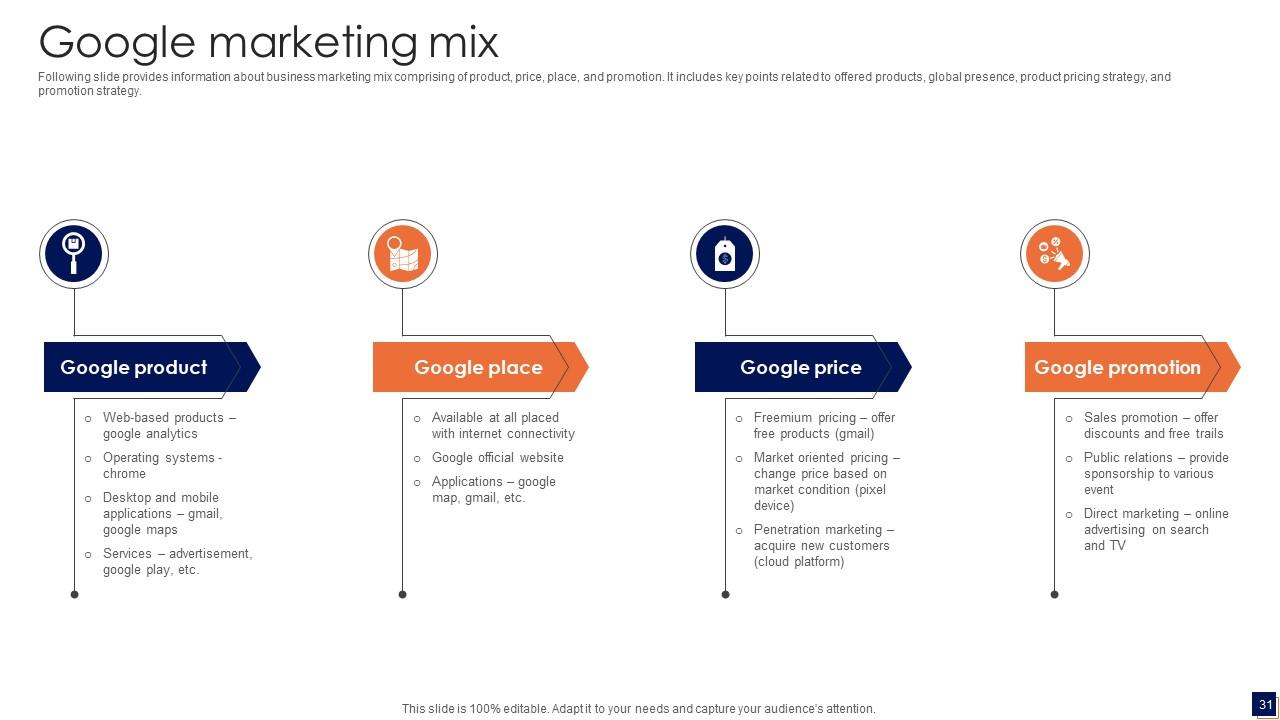
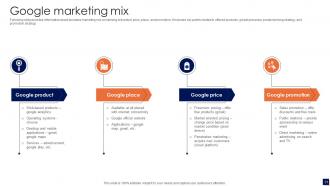
Slide 31: This slide displays information about business marketing mix comprising of product, price, place, and promotion.
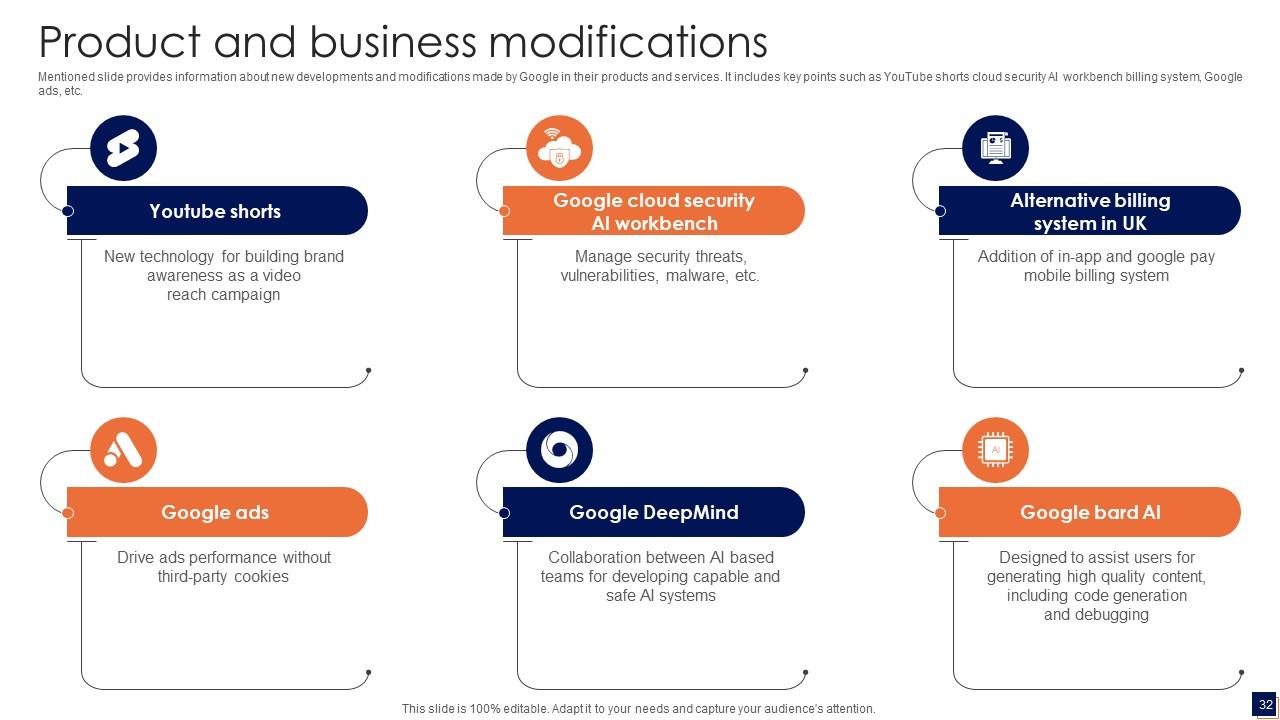
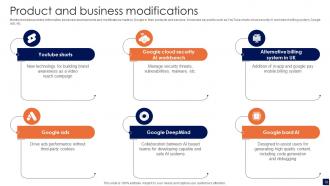
Slide 32: This slide provides information about new developments and modifications made by Google in their products and services.
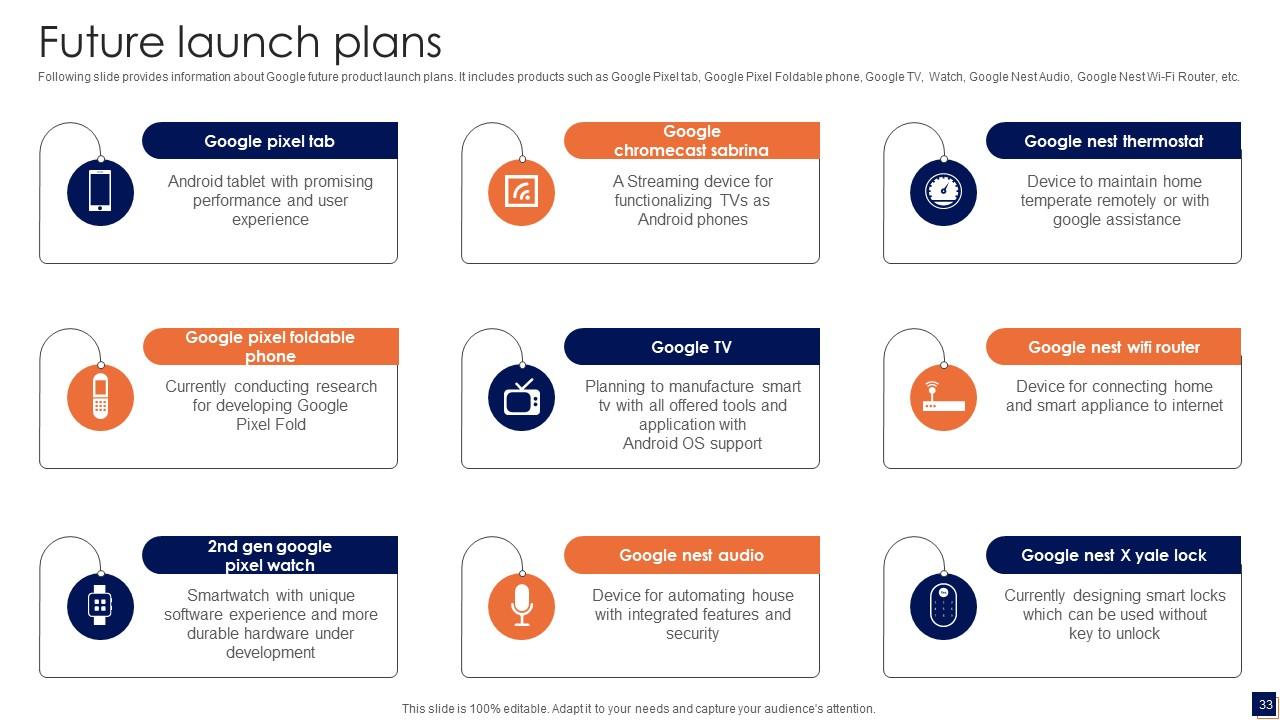
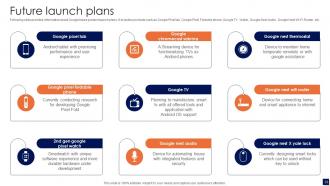
Slide 33: This slide presents information about Google future product launch plans. It includes products such as Google Pixel tab, Google Pixel Foldable phone etc.
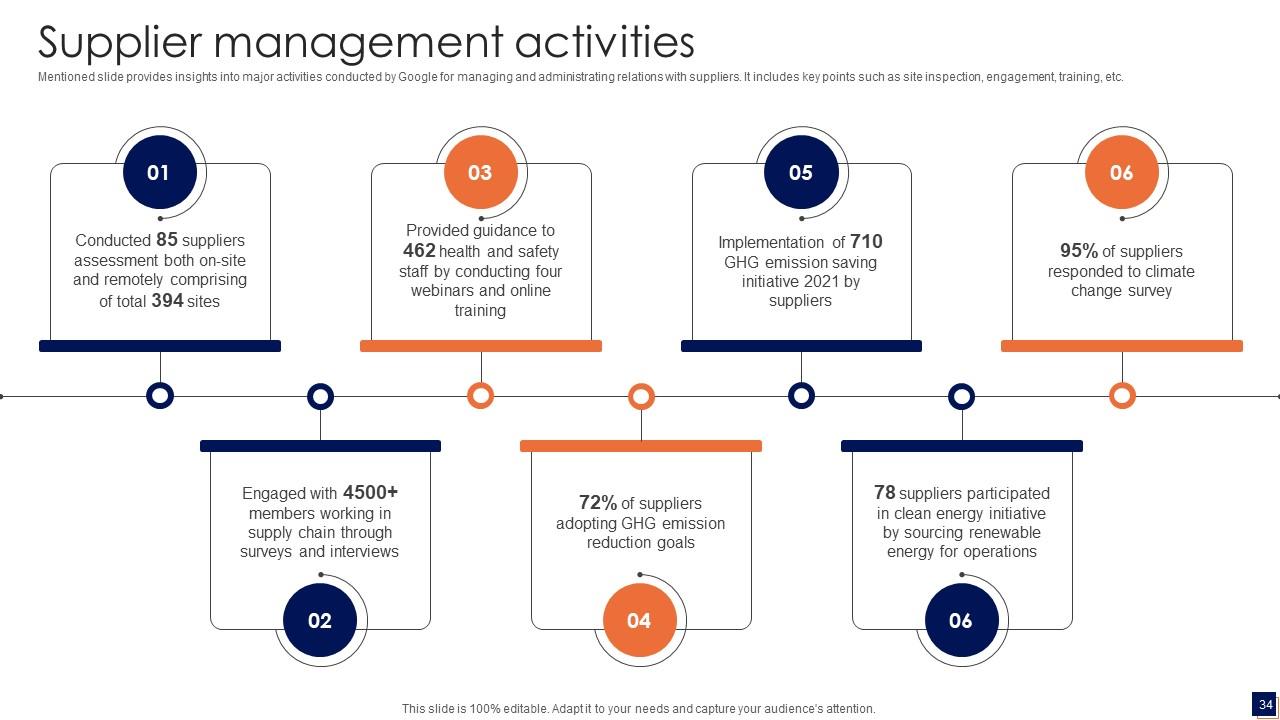
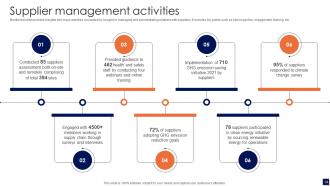
Slide 34: This slide provides insights into major activities conducted by Google for managing and administrating relations with suppliers.
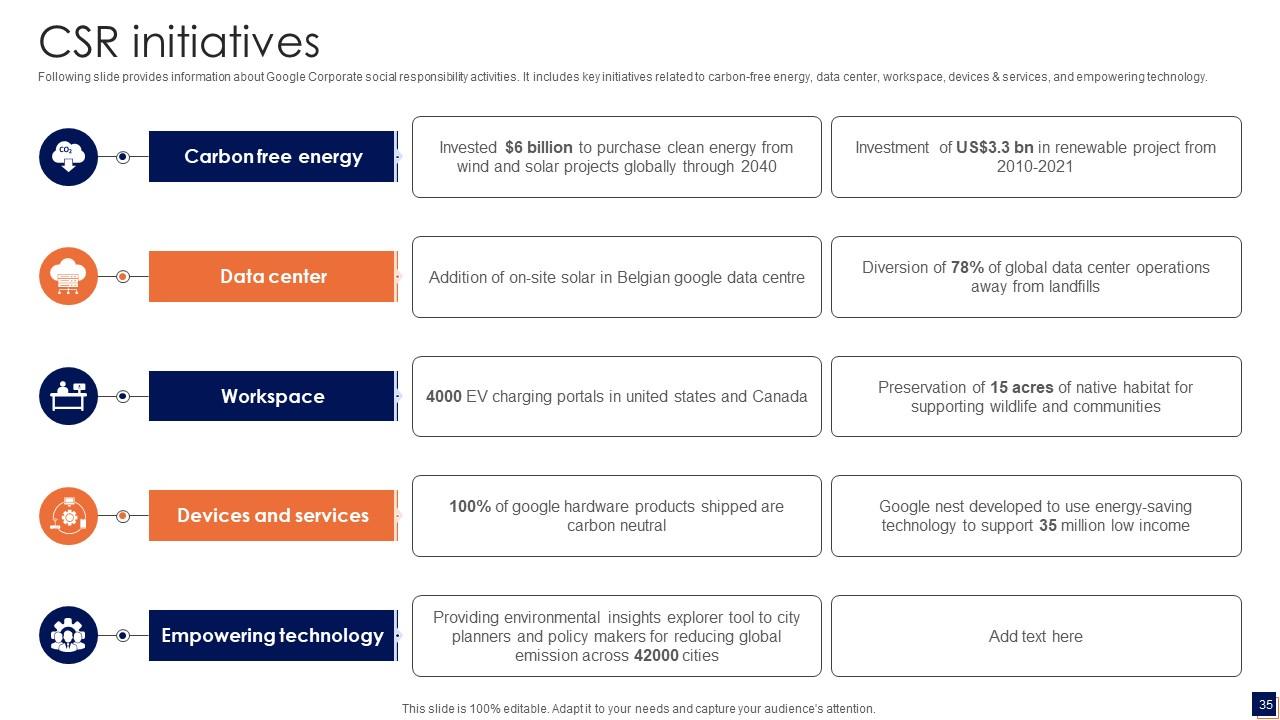
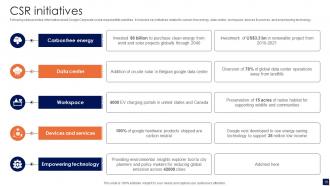
Slide 35: This slide displays information about Google Corporate social responsibility activities. It includes key initiatives related to carbon-free energy, data center etc.
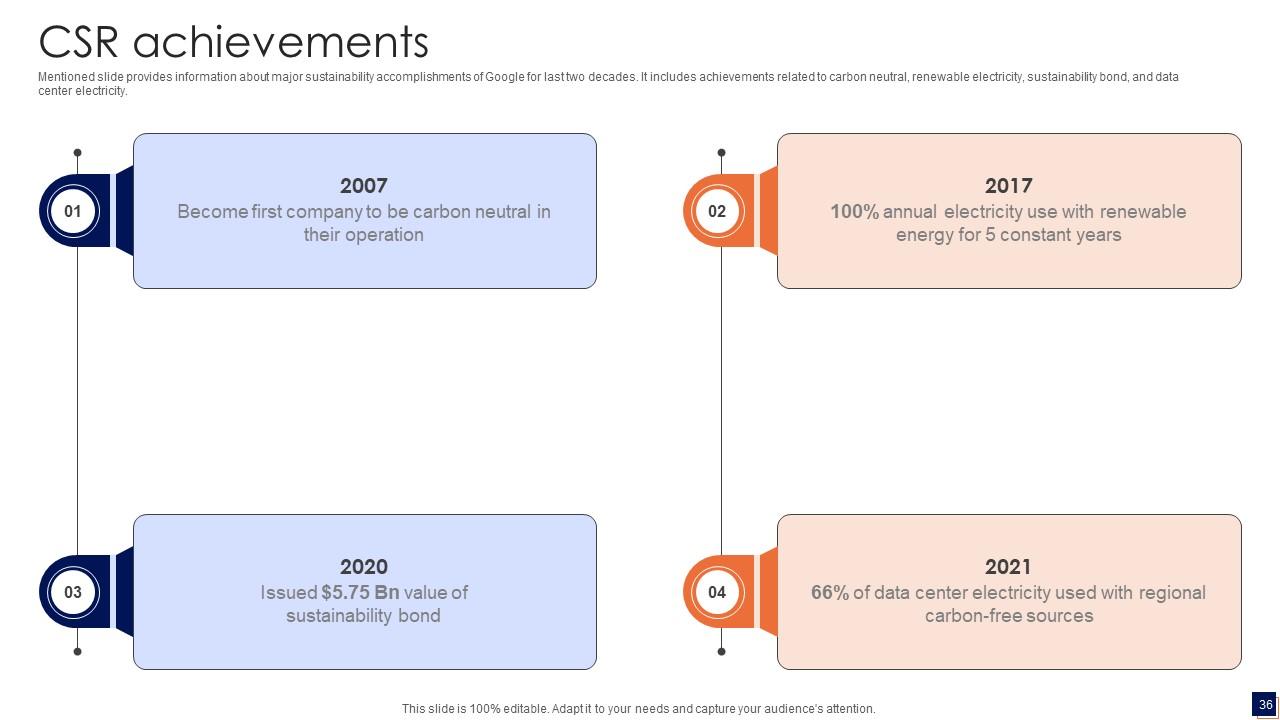
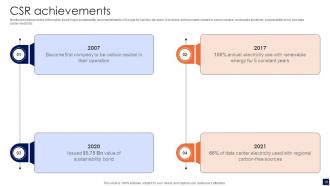
Slide 36: This slide provides information about major sustainability accomplishments of Google for last two decades.
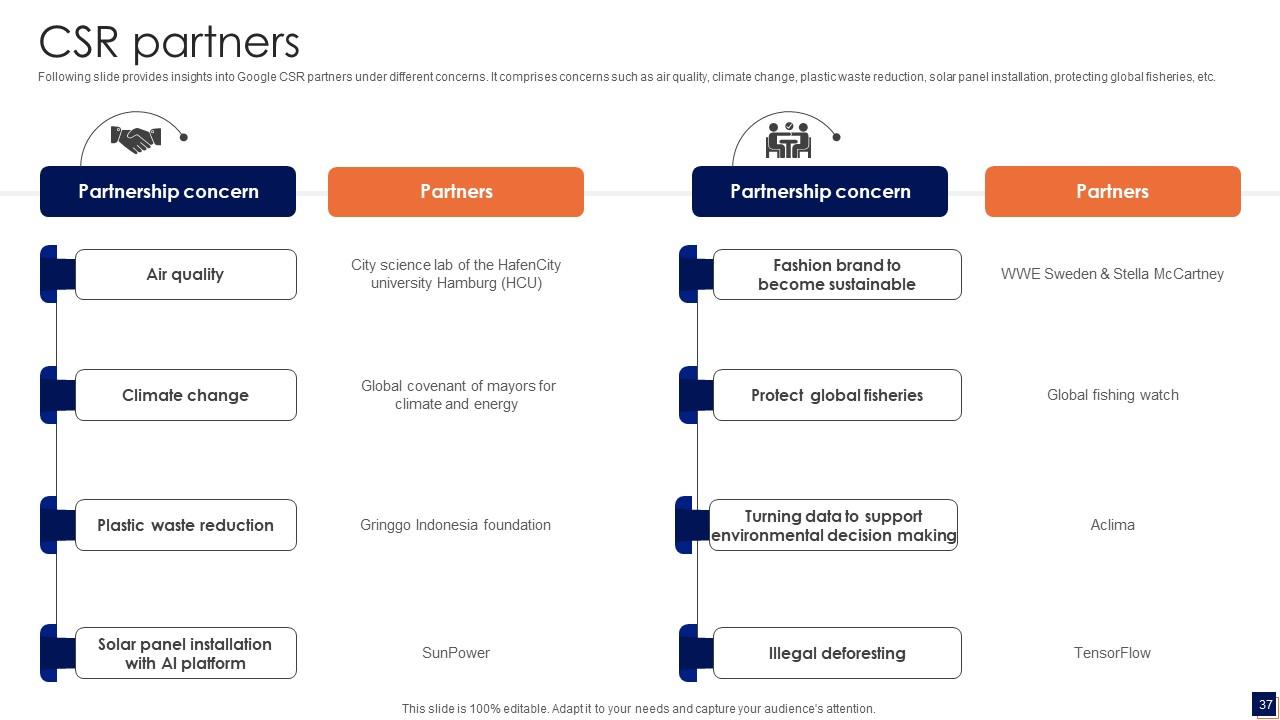
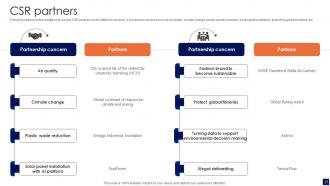
Slide 37: This slide displays insights into Google CSR partners under different concerns. It comprises concerns such as air quality, climate change etc.
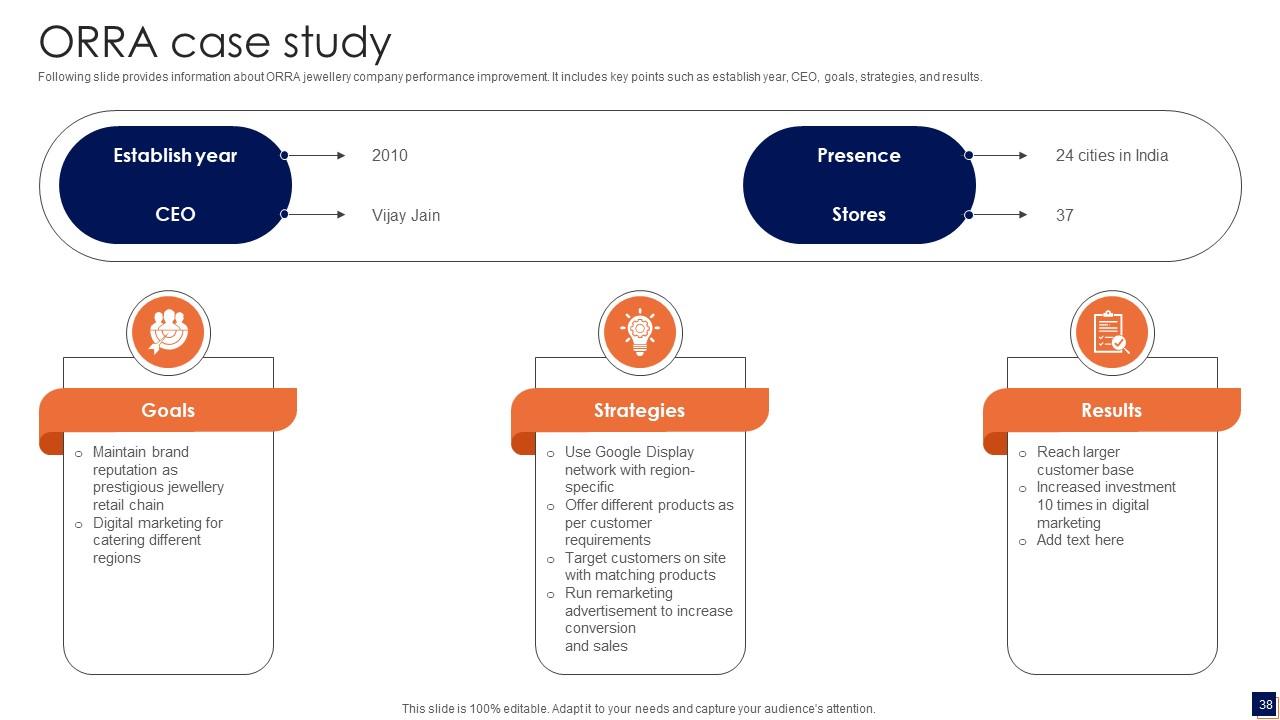
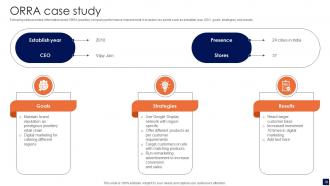
Slide 38: This slide provides information about ORRA jewellery company performance improvement. It includes key points such as establish year, CEO, goals, strategies, and results.
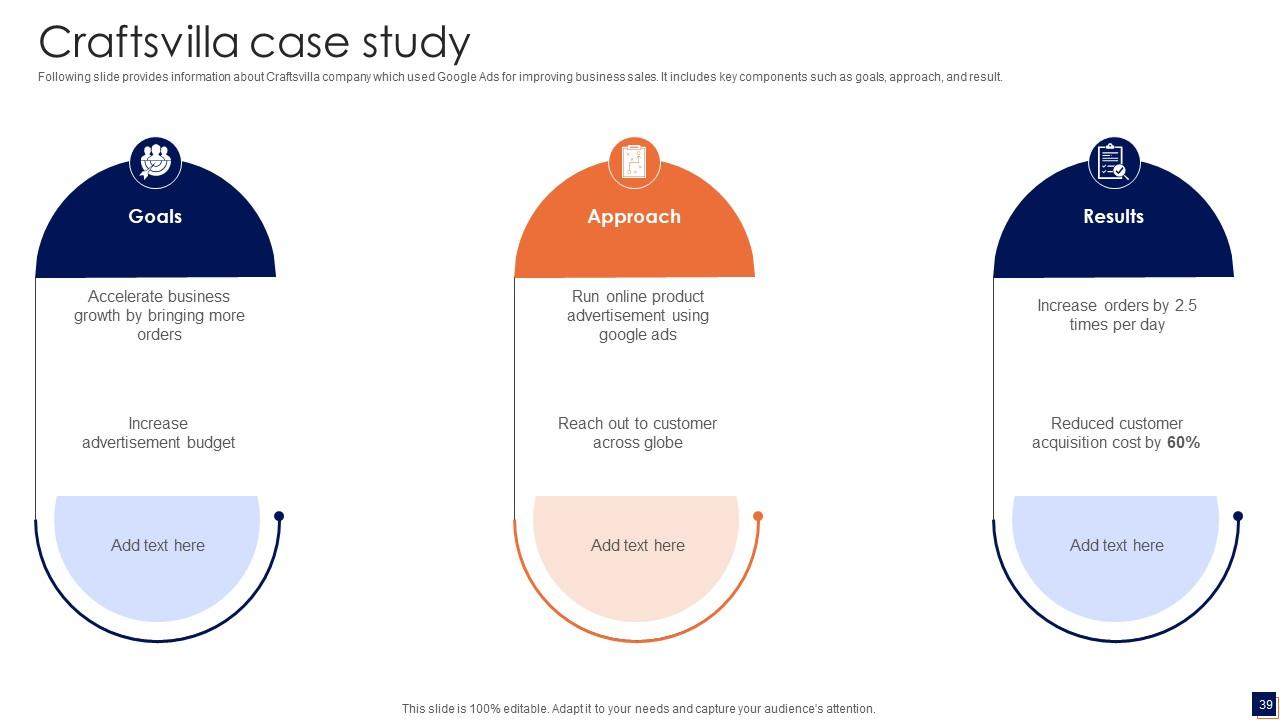
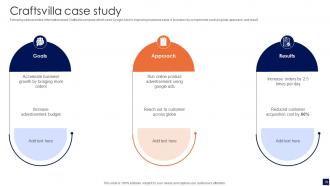
Slide 39: This slide displays information about Craftsvilla company which used Google Ads for improving business sales. It includes key components such as goals, approach, and result.
Slide 40: This slide shows all the icons included in the presentation.
Slide 41: This slide is titled as Additional Slides for moving forward.
Slide 42: This slide depicts Venn diagram with text boxes.
Slide 43: This slide contains Puzzle with related icons and text.
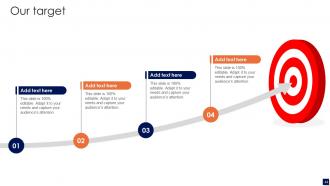
Slide 44: This is Our Target slide. State your targets here.
Slide 45: This is a financial slide. Show your finance related stuff here.
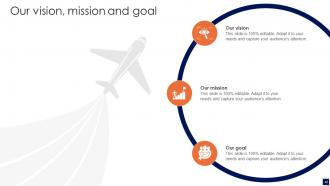
Slide 46: This is Our Vision, Mission & Goal slide.
Slide 47: This slide showcases Magnifying Glass to highlight, minute details, information, specifications etc.
Slide 48: This is a Thank You slide with address, contact numbers and email address.
Smart Electronics Manufacturing Company Profile Powerpoint Presentation Slides CP V with all 57 slides:
Use our Smart Electronics Manufacturing Company Profile Powerpoint Presentation Slides CP V to effectively help you save your valuable time. They are readymade to fit into any presentation structure.
-
Amazing product with appealing content and design.
-
Editable, diversified, compatible with MS PPT and Google Slides, and on top of that finest graphics!! I mean in the words of the famous Ross Geller, “What more do you want!”
