


Smart Grid Implementation Powerpoint Presentation Slides
Explore our comprehensive PowerPoint presentation titled, Smart Grid Implementation which provides a concise yet detailed overview of intelligent grid technology. This informative deck covers various aspects, including a comparison with traditional grids, market size, objectives, importance, technology gap, and its integration with the Internet of Things IoT. Explore the relationship between the smart grid and IoT in the Smart Grid Technology PPT, addressing user involvement, energy decentralization, the innovative grid maturity model, and various smart grid technologies. The presentation also offers a comparison between intelligent and traditional grids, discussing the implementation and impact of smart grid technology. The Smart Grid Maturity Model deck covers the modernization cost of conventional grids, an evolution roadmap, and an innovative home dashboard for appliance monitoring. Download our 100 percent editable and customizable template, compatible with Google Slides, to gain valuable insights into the world of Smart Grid technology and its transformative impact on the energy landscape. Stay ahead with this dynamic and informative presentation.






























































-

- Google Slides is a new FREE Presentation software from Google.
- All our content is 100% compatible with Google Slides.
- Just download our designs, and upload them to Google Slides and they will work automatically.
- Amaze your audience with SlideTeam and Google Slides.
-

Want Changes to This PPT Slide? Check out our Presentation Design Services
-

- WideScreen Aspect ratio is becoming a very popular format. When you download this product, the downloaded ZIP will contain this product in both standard and widescreen format.
-

- Some older products that we have may only be in standard format, but they can easily be converted to widescreen.
- To do this, please open the SlideTeam product in Powerpoint, and go to
- Design ( On the top bar) -> Page Setup -> and select "On-screen Show (16:9)” in the drop down for "Slides Sized for".
- The slide or theme will change to widescreen, and all graphics will adjust automatically. You can similarly convert our content to any other desired screen aspect ratio.
Compatible With Google Slides

Get This In WideScreen
You must be logged in to download this presentation.


Do you want to remove this product from your favourites?
PowerPoint presentation slides
Enthrall your audience with this Smart Grid Implementation Powerpoint Presentation Slides. Increase your presentation threshold by deploying this well-crafted template. It acts as a great communication tool due to its well-researched content. It also contains stylized icons, graphics, visuals etc, which make it an immediate attention-grabber. Comprising sixty nine slides, this complete deck is all you need to get noticed. All the slides and their content can be altered to suit your unique business setting. Not only that, other components and graphics can also be modified to add personal touches to this prefabricated set.

People who downloaded this PowerPoint presentation also viewed the following :
Content of this Powerpoint Presentation
Slide 1: This slide introduces Smart Grid Implementation. Commence by stating Your Company Name.
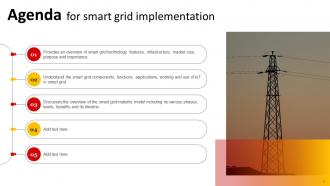
Slide 2: This slide depicts the Agenda of the presentation.
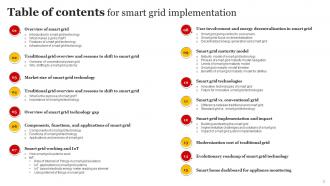
Slide 3: This slide includes the Table of contents.
Slide 4: This slide highlights the Title for the Topics to be covered further.
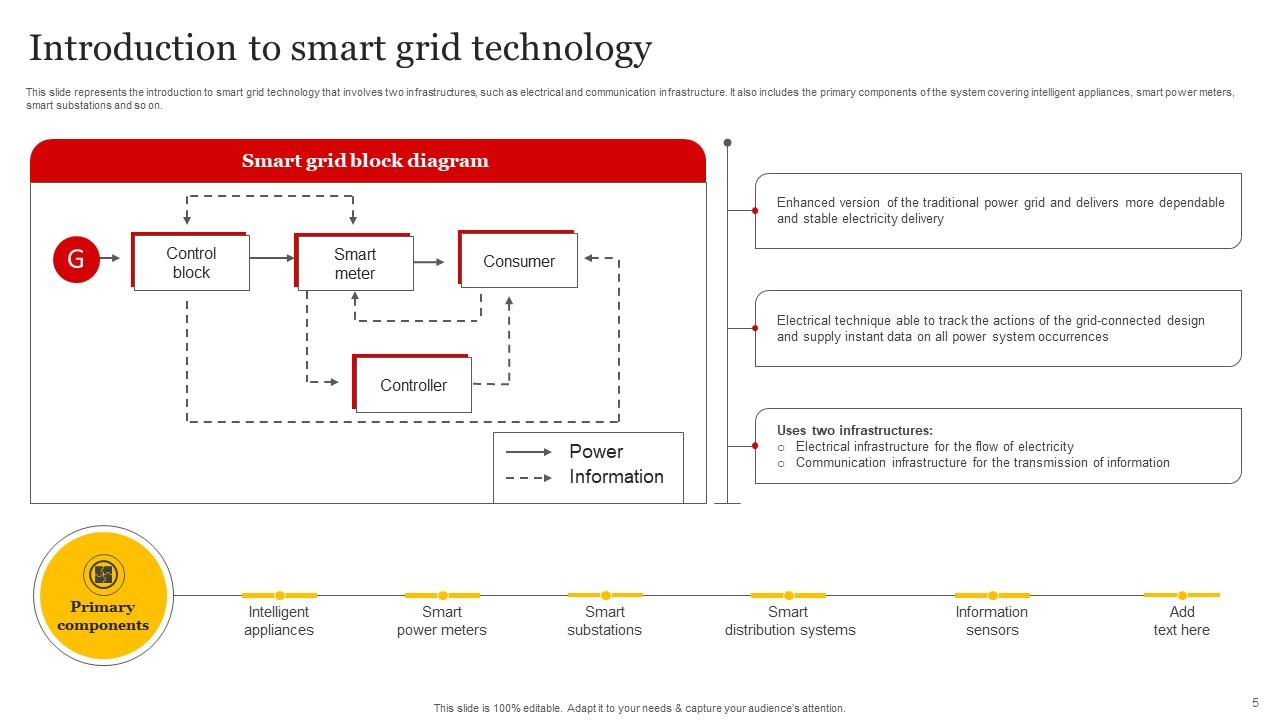
Slide 5: This slide represents the introduction to smart grid technology.
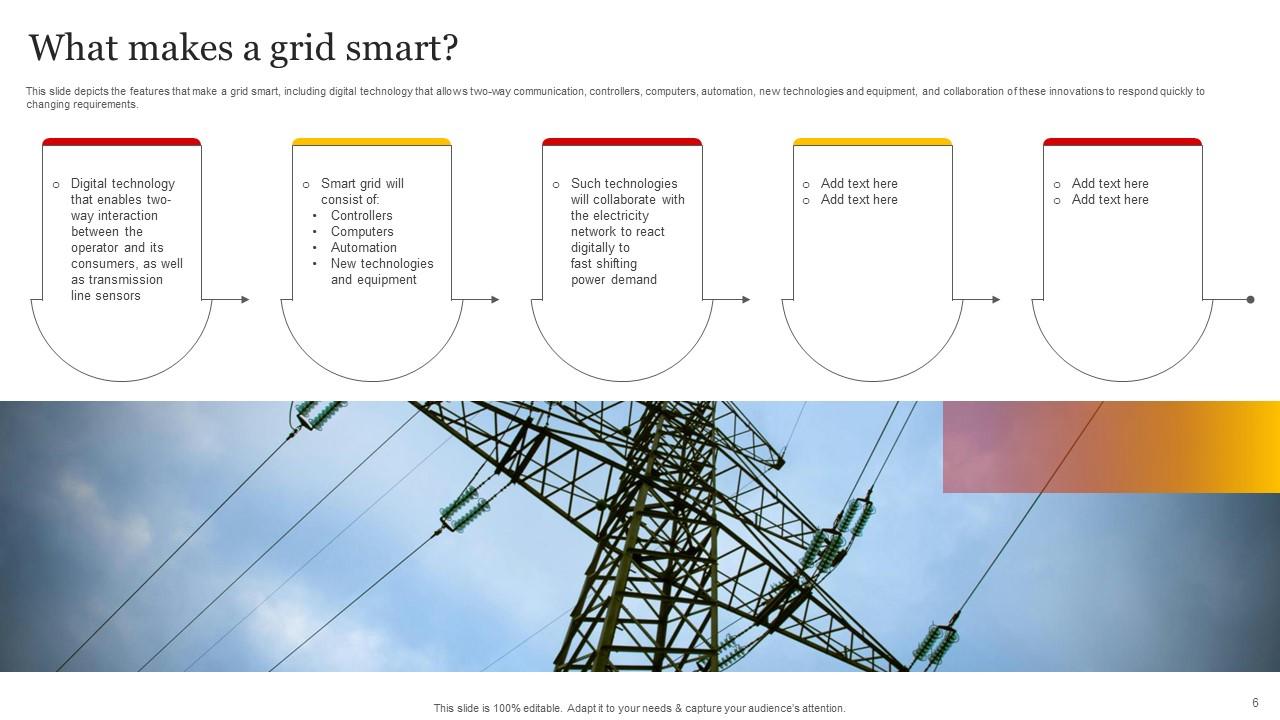
Slide 6: This slide depicts the features that make a grid smart.
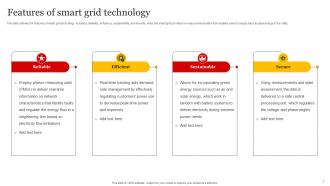
Slide 7: This slide outlines the features of smart grid technology.
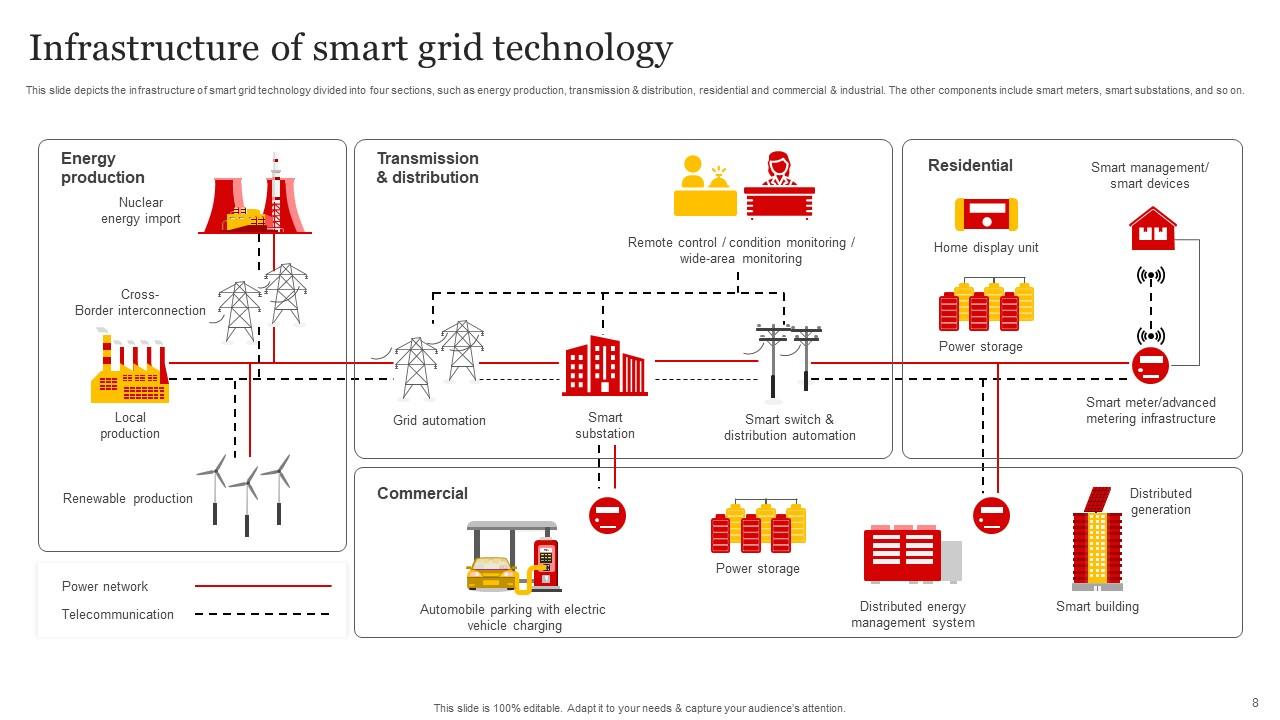
Slide 8: This slide displays the infrastructure of smart grid technology divided into four sections.
Slide 9: This slide includes the Heading for the Contents to be discussed next.
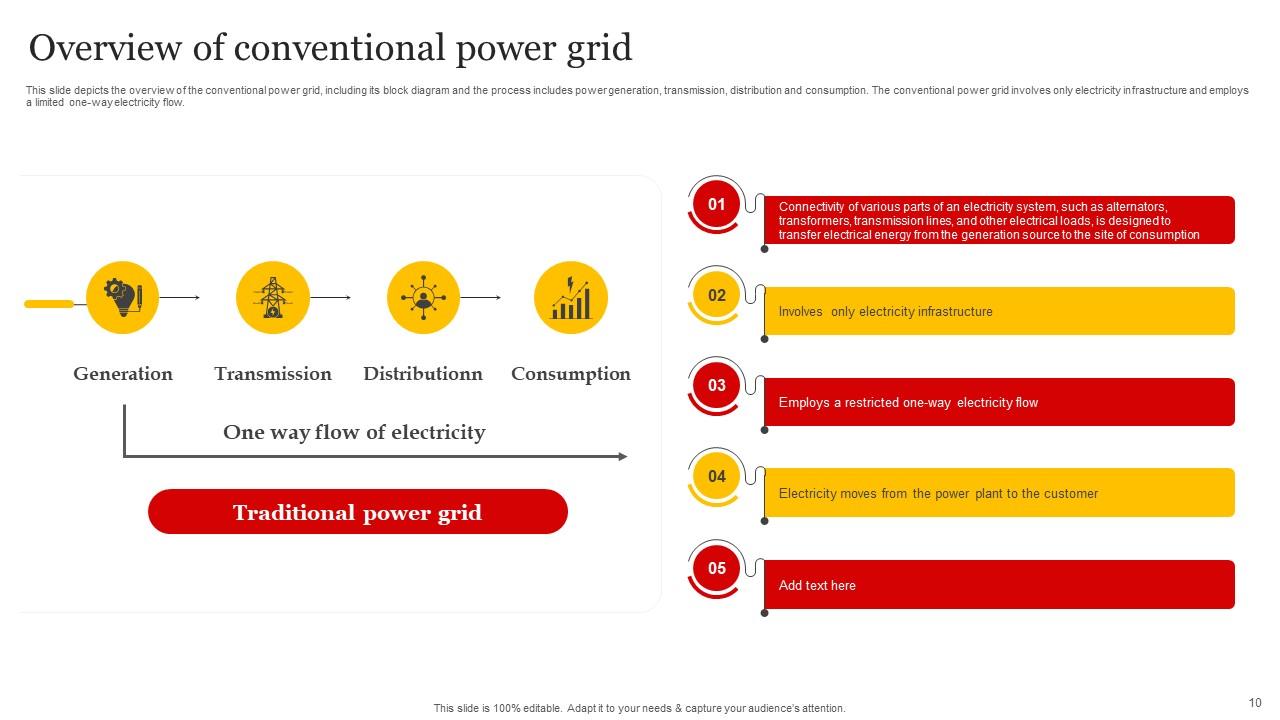
Slide 10: This slide portrays the overview of the conventional power grid.
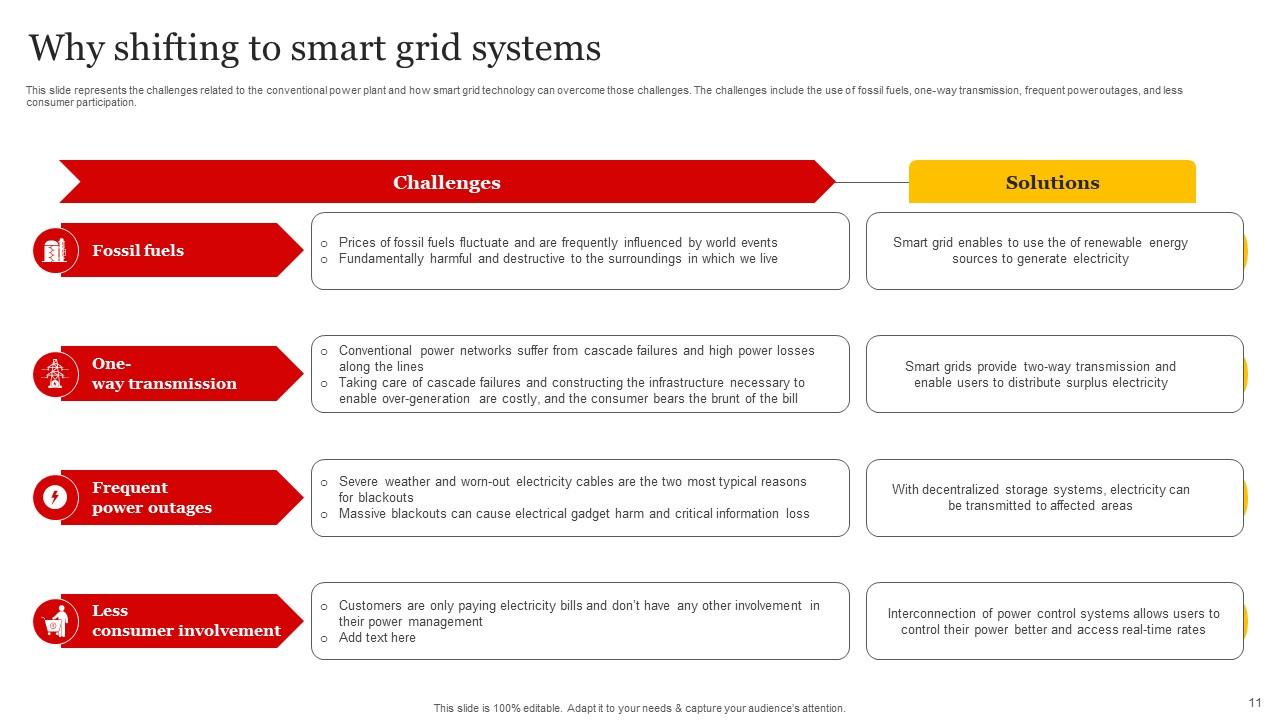
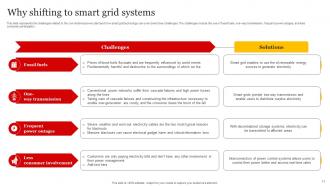
Slide 11: This slide represents the challenges related to the conventional power plant and how smart grid technology can overcome those challenges.
Slide 12: This slide contains the Title for the Ideas to be covered in the upcoming template.
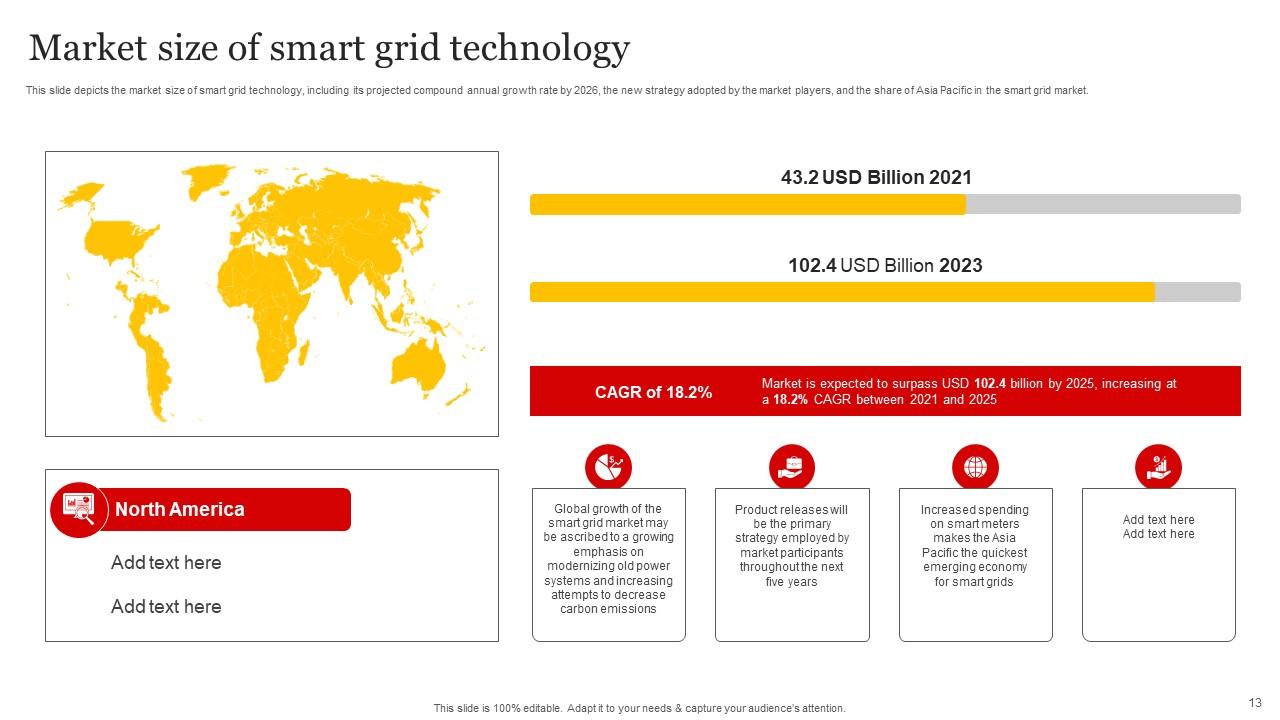
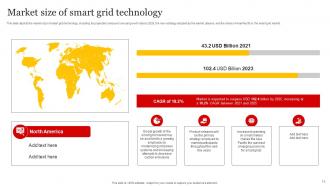
Slide 13: This slide depicts the market size of smart grid technology.
Slide 14: This slide highlights the Heading for the Ideas to be discussed in the next template.
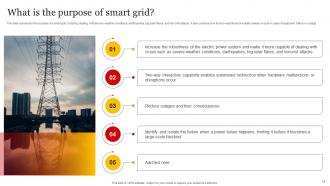
Slide 15: This slide represents the purpose of a smart grid.
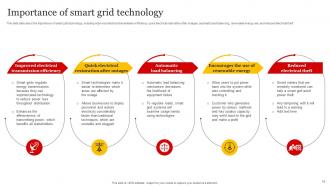
Slide 16: This slide reveals the Importance of smart grid technology.
Slide 17: This slide exhibits the Title for the Contents to be covered in the upcoming template.
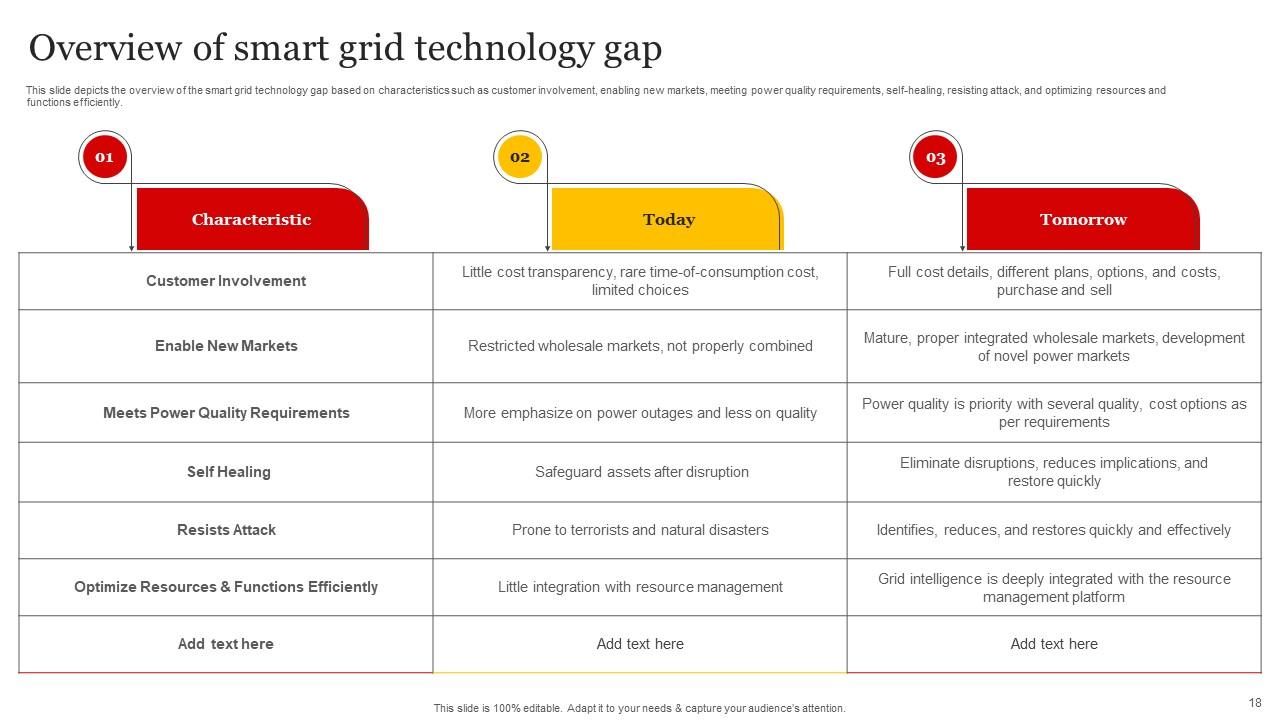
Slide 18: This slide depicts the overview of the smart grid technology gap.
Slide 19: This slide includes the Title for the Contents to be covered in teh upcoming template.
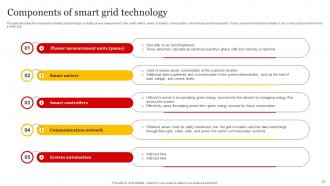
Slide 20: This slide describes the components of smart grid technology.
Slide 21: This slide depicts the functions of smart grid technology.
Slide 22: This slide represents the applications and services of smart grid technology, including the real-time market.
Slide 23: This slide portrays the Heading for the Topics to be discussed further.
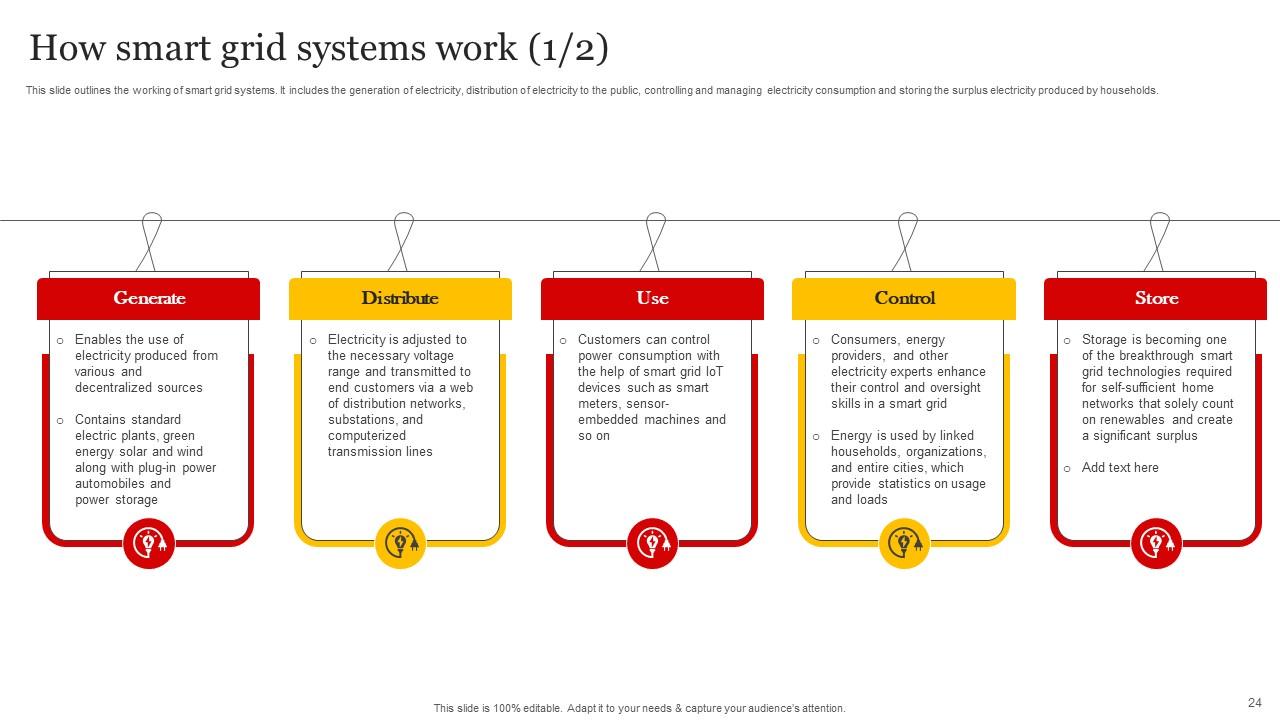
Slide 24: This slide outlines the working of smart grid systems.
Slide 25: This slide describes the working of a smart grid system.
Slide 26: This slide includes the Title for the Topics to be covered in the upcoming template.
Slide 27: This slide represents the role of the internet of things in the evolution of the smart grid.
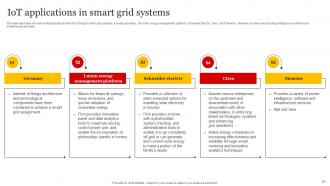
Slide 28: This slide describes the real-world applications internet of things in smart grid systems.
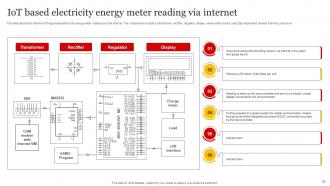
Slide 29: This slide depicts the internet of things based electricity energy meter reading over the internet.
Slide 30: This slide talks about the use cases of IoT in smart grid systems.
Slide 31: This slide includes the Heading for the Contents to be discussed enxt.
Slide 32: This slide outlines how the smart grid gives control to consumers.
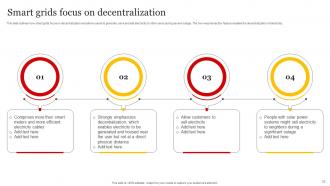
Slide 33: This slide portrays how smart grids focus on decentralization.
Slide 34: This slide exhibits the process of decentralized energy generation in the smart grid.
Slide 35: This slide presents the Title for the Idaes to be covered in the upcoming template.
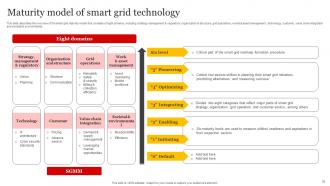
Slide 36: This slide describes the overview of the smart grid maturity model that consists of eight domains.
Slide 37: This slide reveals the Phases of smart grid maturity model navigation.
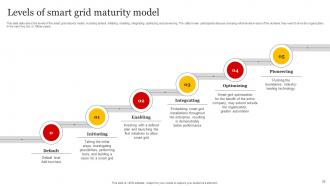
Slide 38: This slide talks about the levels of the smart grid maturity model.
Slide 39: This slide represents the smart grid maturity model timeline developed by the global intelligent utility network for utilities.
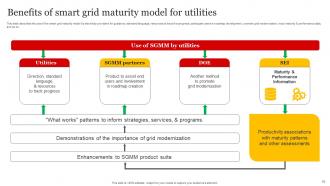
Slide 40: This slide describes the use of the smart grid maturity model by electricity providers.
Slide 41: This slide reveals the Heading for the Ideas to be discussed further.
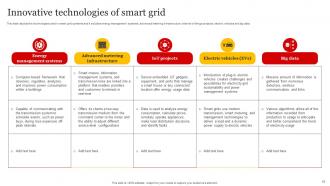
Slide 42: This slide depicts the technologies used in smart grid systems.
Slide 43: This slide shows the Future for innovative smart grid technologies.
Slide 44: This slide displays the Title for the Contents to be covered in the upcoming template.
Slide 45: This slide highlights the Difference between traditional and smart grid.
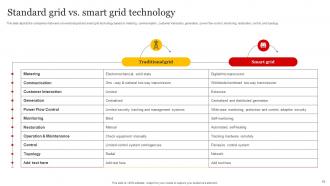
Slide 46: This slide depicts the comparison between conventional grid and smart grid technology.
Slide 47: This slide includes the Heading for the Topics to be discussed in the upcoming template.
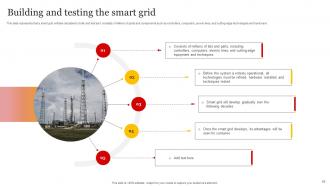
Slide 48: This slide represents that a smart grid will take decades to build and test as it consists of millions of parts and components.
Slide 49: This slide deals with Implementation challenges and solutions of smart grid.
Slide 50: This slide highlights the Impact of smart grid system implementation.
Slide 51: This slide includes the Title for the Topics to be covered in the upcoming template.
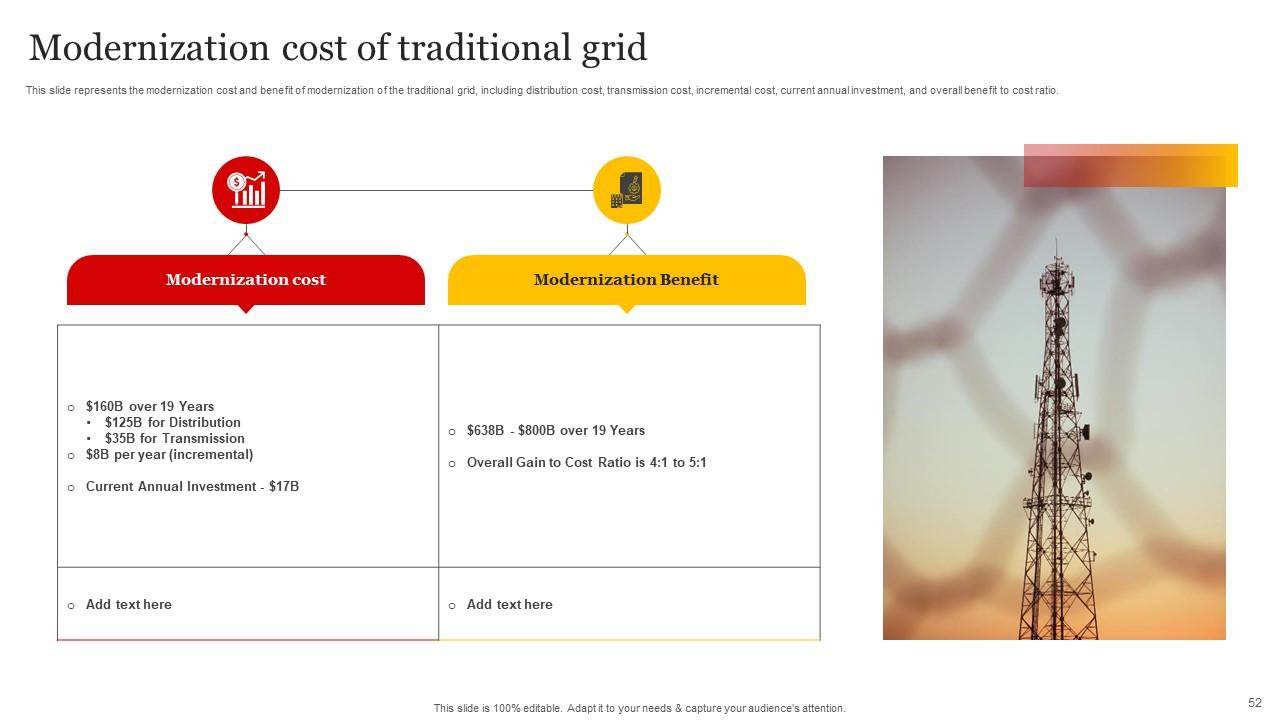
Slide 52: This slide represents the modernization cost and benefit of modernization of the traditional grid.
Slide 53: This slide presents the Heading for the Contents to be further discussed.
Slide 54: This slide represents the evolutionary roadmap of smart grid technology.
Slide 55: This slide contains the Title for the Ideas to be covered in teh next template.
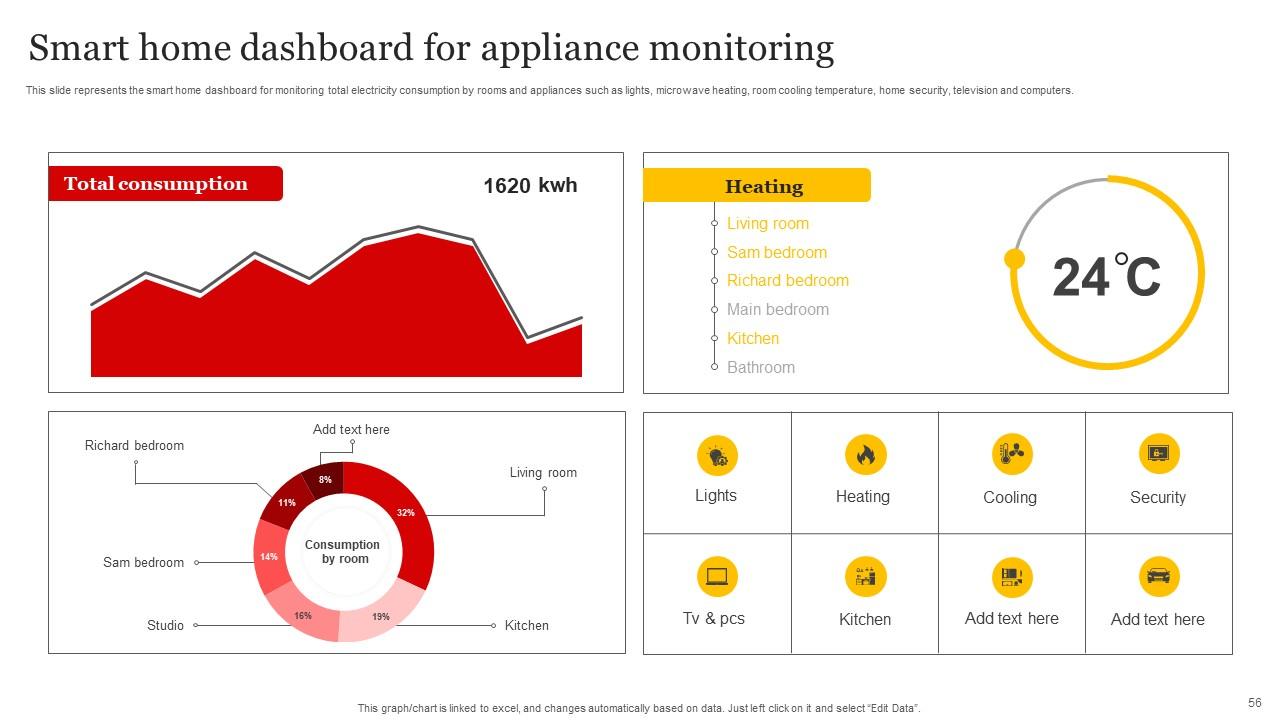
Slide 56: This slide represents the smart home dashboard for monitoring total electricity consumption by rooms and appliances.
Slide 57: This is the Icons slide containing all the Icons used in the plan.
Slide 58: This slide is used for depicting some Additional information.
Slide 59: This is the Quotes slide for motivation.
Slide 60: This slide elucidates information related to the Financial topic.
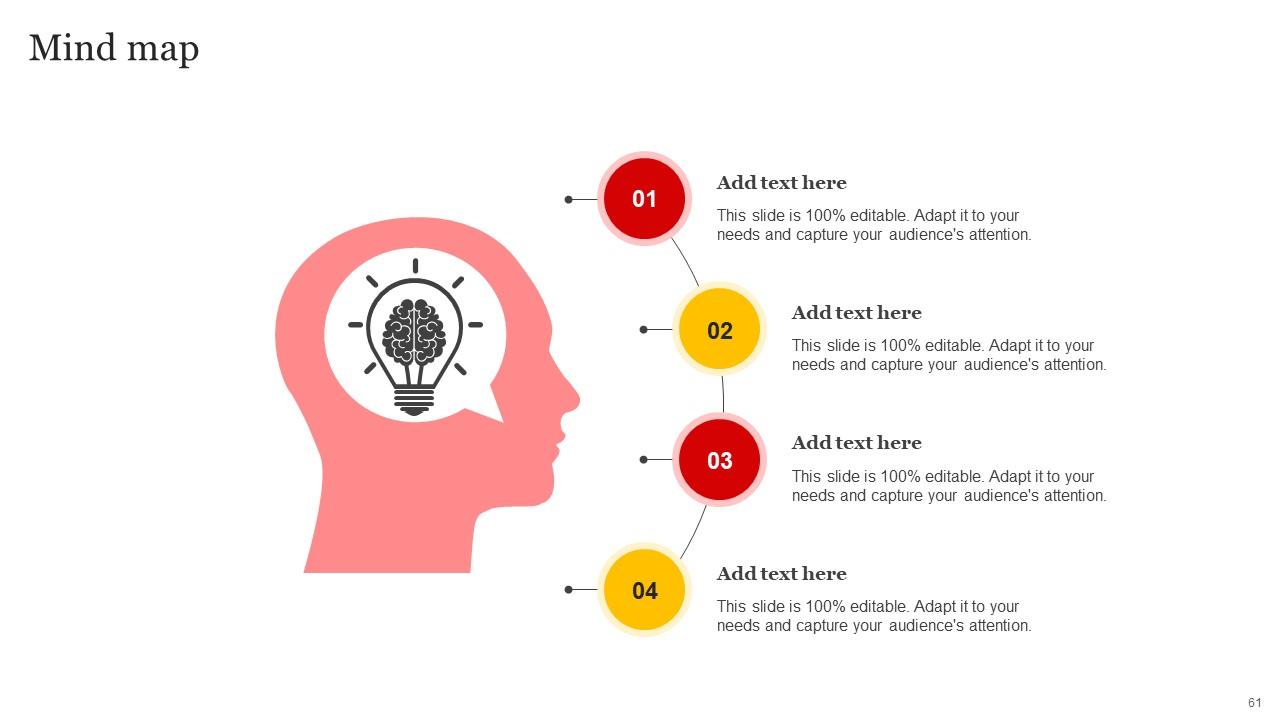
Slide 61: This slide exhibits the Mind map of the company.
Slide 62: This slide includes the organization's mission, vision, and values.
Slide 63: This is the 30,60,90 days plan slide for effective planning.
Slide 64: This is the Venn diagram slide.
Slide 65: This slide exhibits the firm's Timeline.
Slide 66: This is the Idea Generation slide for encouraging fresh ideas.
Slide 67: This is the Target slide. State your company-targets here.
Slide 67: This slide exhibits the firm's Roadmap.
Slide 69: This is the Thank You slide for acknowledgement.
Smart Grid Implementation Powerpoint Presentation Slides with all 78 slides:
Use our Smart Grid Implementation Powerpoint Presentation Slides to effectively help you save your valuable time. They are readymade to fit into any presentation structure.
-
I loved the hassle-free signup process. A few minutes and, I had this giant collection of beautiful designs.
-
Crisp and neat slides. Makes it fun and easier to curate presentations.
